Women, Diversity, and Sexual Minorities in the Psychedelic Community

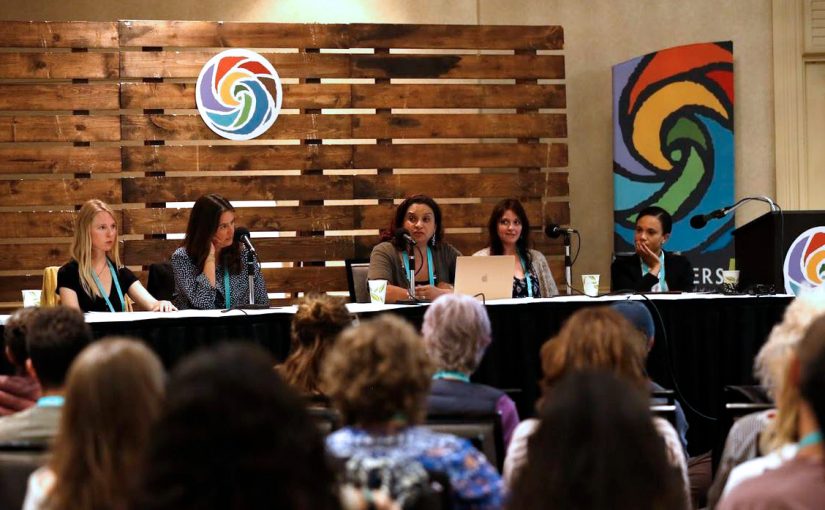
Although the enormous growth of interest in and research on psychedelic substances’ potential for psychological healing and consciousness expansion is exciting, there are shadow sides of the psychedelic community that require attention. Women’s contributions to the field have too often been downplayed, and the abuse of women in some psychedelic underground circles has been a serious problem. Also, people of color, LGBTQ and other minority communities have been under-represented in psychedelic conclaves. A stellar panel of figures at the cutting-edge of inclusivity advocacy in the psychedelic community shared their perspectives on how to remedy these problems.

Hosted by Bia Labate, Ph.D., Executive Director of the Chacruna Institute, on the faculty of The California Institute of Integral Studies (CIIS), and Public Education and Culture Specialist at the Multidisciplinary Association for Psychedelic Studies (MAPS). With: Emily Sinclair, leader of the Ayahuasca Community Guide for the Awareness of Sexual Abuse initiative; Sarah Scheld, a coordinator of MAPS’ MDMA Therapy Training Program; Monnica T. Williams, Ph.D., Associate Professor of psychology at the University of Connecticut; Sara Reed, MS, MFT, a study therapist in the Psilocybin-assisted Psychotherapy for Major Depression initiative at Yale University.

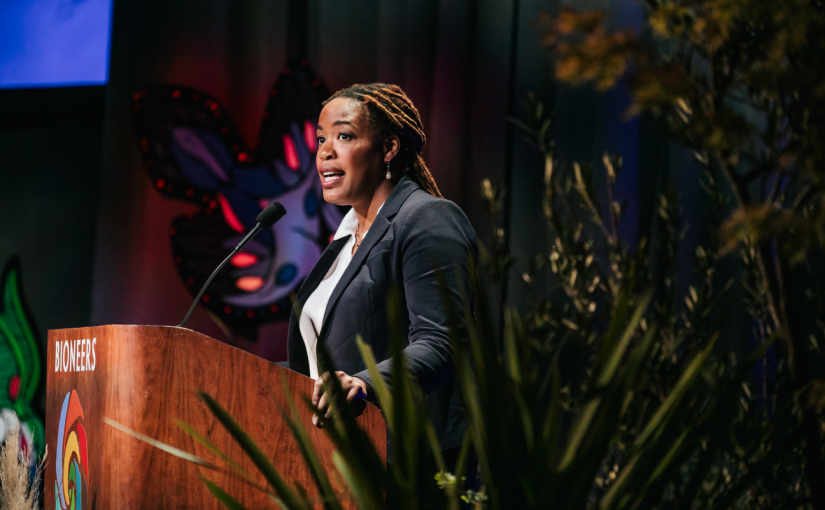
This discussion took place at the 2019 Bioneers Conference.

Explore our Visionary Plant Consciousness & Psychedelics media collection >>


BIA: My name is Beatriz (aka “Bia”) Labate. I am the Executive Director of the Chacruna Institute for Psychedelic Plant Medicines and a Public Education and Culture Specialist at the Multidisciplinary Association for Psychedelic Studies, also known as MAPS.

I have been drinking ayahuasca for 23 years. I’m Brazilian and I am grateful about that. It gave me the opportunity to encounter this brew and its traditions and to go to the Amazon and learn from Indigenous and mestizo people. I have a lot of gratitude for this path, which for me is a very sacred one, but I’m also a researcher and an anthropologist using scientific approaches to analyze this phenomenon.

Bia Labate

The first thing I want to make clear is that sacred plants and most psychedelics are not “drugs” in the way our culture uses that term. They are not associated with pathologies and crime, and it’s been great that we have been seeing a cultural shift around this topic and that psychedelics are no longer demonized. We are, in fact, currently experiencing what some people call a psychedelic renaissance: a revisiting of the nature of these substances and compounds that looks at their healing potential and their benefits, accompanied by a very vibrant resumption of the research that had mostly been abandoned after the 1960s. So we have had a renaissance of studies, and MDMA and psilocybin are closer and closer to becoming regulated medicines, largely thanks to MAPS’ pioneering work.

At the same time that our understanding of the healing potentials of these wonderful plant medicines and psychedelics more generally and of these sacred plant traditions has grown, we also must acknowledge that there are shadow sides of this whole movement that have not gotten sufficient visibility and that have to be addressed. These include: sexual abuse by ayahuasca shamans and psychedelic-assisted therapists; a lack of attention to equal access to these medicines for historically disenfranchised and marginalized groups, such as people of color and the LGBTQ community; and the lack of recognition for women pioneers whose work has been frequently at the forefront of this research but who have been written out of the historical narrative.

This panel’s goal is to focus on these issues. If the psychedelic renaissance is to grow and be able to bring healing and benefits for humanity, it has to include everybody. We have to start discussing how to include everyone in this movement’s expansion. Our institute has been trying to do some work in this regard, to highlight the contributions of black and Indigenous women and people from the global south, and also people working not just in biomedicine but in other fields and forms of knowledge. We don’t have anything against white male, straight, psychedelic biomedical stars. We love them as well, but they have a lot of space already, and we want to create space for other voices.

I now pass the microphone to my dear friend and colleague Dr. Monnica Williams, who is on the board of our institute and who paid her own way to come here all the way from Canada. She is a clinical psychologist, specializing in cognitive-behavioral therapies, an Associate Professor in the School of Psychology at the University of Ottawa, Canada Research Chair in Mental Health Disparities, and Director of the Laboratory for Culture and Mental Health Disparities. She is also the Clinical Director of the Behavioral Wellness Clinic, LLC in Tolland, Connecticut. Dr. Williams has conducted clinical research on psychological and pharmacological treatments of OCD, PTSD, and anxiety disorders. Her research interests also include the role of culture and race on mental illness. She is an authority on obsessive-compulsive disorder, including sexual orientation-themed OCD (called SO-OCD or HOCD), racial trauma, and one of very few researchers focused on the inclusion of people of color in psychedelic medicine.

MONNICA: I’m thrilled to be here to talk about this. My little piece of this is going to be discussing racial equity and access as psychedelics go mainstream. Our mission at the Chacruna Institute is to provide public education and cultural understanding about psychedelic plant medicines and promote a bridge between the ceremonial use of sacred plants and psychedelic science. As a scientist myself, I often think in terms of anatomy, biology, and molecules, but I always have to remind myself that there’s a lot more to a human being beyond that—heart, and soul, and spirit. Our vision is a world in which plant medicines and other psychedelics are preserved, protected, and valued as part of our cultural identity, and integrated into our social, legal, and healthcare systems, and so I’m really excited to be a part of Chacruna.

Dr. Monnica Williams

I’m going to talk a little bit about racism today, and you may wonder how racism is connected to psychedelics. Obviously we all know that racism is real and alive and continues to impact people in a range of disenfranchised groups. Just about every economic, health and educational indicator shows that people of color are in far worse shape than their white counterparts in the U.S. There are of course individuals out there with racist attitudes, but the real problem is the pervasive, tenacious, deep structural racism in nearly all our society’s systems and institutions. And one of my areas of research is the impact racism has on mental health. There’s been a lot of solid research in the last 20 years that underscores how racism exacerbates just about every mental health problem that one can measure, and living in racist social structures causes its own form of PTSD. Racism is traumatizing.

And now psychedelic medicines are being advanced as potential solutions or at least treatment options to some of these mental health problems. And I personally do believe that the research is showing that psychedelic-assisted psychotherapy has the potential to heal or alleviate many types of psychological and emotional wounds, and not just MDMA, but psilocybin, iboga, and other substances as well. But people of color have not been included as research participants in these studies. In a recent review of research literature that we conducted in my lab, we tabulated 282 participants in a number of studies on psychedelics, and almost none were people of color.

Some of us in this psychedelic movement have been pointing out that black Americans are being left out of psychedelic research. My feeling that if white people are benefiting from it, people of color should too, and if we truly believe psychedelics can bring people together, we as a movement need to figure out ways we can do better. It seems pretty clear that psychedelic therapy is coming, but as it becomes legal and goes mainstream, it has to be available to all, and we will need, for example, therapists and healers of color who can take these therapies back to their communities to break stigmas and help people get well. We will need to explore whether psychedelics can help heal racial trauma. That is one of the things I’m dedicated to seeing happen, but psychedelic healing is only as effective as those who have access to it. Will these healing opportunities just be for white and elite people or for everyone? Will we simply replicate the oppression and exclusion in the larger society, or as psychedelics go mainstream, are we going to do this Right?

What would racial equity in this field look like? At Chacruna we put together a Racial Equity and Access Committee (there are also Women’s, Gender Diversity, and Sexual Minorities working groups) to promote inclusion and diversity by including the voices of those who’ve rarely been heard or included. So, to start, we want to give a prominent voice to, for example, women, queer people, Indigenous people, and people of color in the field of psychedelic science. Additionally, a social justice-oriented approach has to involve a more equitable distribution of funds and resources within the field and the transformation of systems and infrastructures to ensure fair access and equitable outcomes.

We need to start seeing diversity in our organizations at every level. We need to exemplify cultural humility and admit we don’t all have the answers. We can’t be experts in every culture. No one of us can which is why we need all of us. We need to develop and support culturally appropriate care because healing methods that are appropriate for one group may not be appropriate for another group. Community engagement is also critically important because for too long dominant structures have been imposing their idea of what communities need rather than participating and partnering with communities to hear their voices. We need to monitor disparities and, when necessary, call them out.

On our website, in the Chacruna Chronicles section, we have articles up on inclusion and diversity, and the pieces there include such topics as how white feminists can at times oppress black women, how unconscious white privilege affects psychedelic medicine, why psychedelic science should pay speakers and trainers of color, and how some groundbreaking people of color are making a difference in psychedelic healing (the catalyst for that was going to conference after conference and reading article after article and seeing no people of color reflected there, and asking where are all the people of color were and having conference organizers tell me, well, we just can’t find them. Well, now you can find them. We’ve put them on a webpage.) In fact, I see one of them here in the audience. Dawn Davis, a member of the Shoshone-Bannock Tribes from Idaho, a groundbreaking researcher on peyote conservation.

Another thing Bia and I have done to help amplify the voices of people of color and draw attention to this work is to be the guest editors of a special issue of the Journal of Psychedelic Studies on diversity, equity, and access in psychedelic medicine, and we will be including many people of color in the upcoming Psychedelic Liberty Summit we’re organizing for the spring of 2020. I encourage all of you who are interested in this to get involved. We can all make a difference in some way: you can volunteer, register for our newsletter, donate, follow us on our social networks, etc. We’re excited to welcome all of you to help to do this work because nobody can do it alone, and it’s an issue that affects everyone, and so everyone ideally will be part of the solution.

BIA: Our next speaker, Sara Reed, also came from far away, Connecticut, where’s she’s a therapist and the Director of Psychedelic Services at the Behavioral Wellness Clinic in the town of Tolland. She is the only black therapist in the United States who has treated patients in an MDMA clinical trial. Sara has expertise with a variety of anxiety ailments, including obsessive-compulsive disorder, PTSD, depression, phobias. She also works extensively with patients who have endured discrimination-related stress and trauma, helping them detoxify from internalized racism. Sara has also been trained in ketamine-assisted psychotherapy and is currently a therapist in a psilocybin study at Yale for patients with major depressive disorders.

SARA: Greetings to you all. It’s really an honor to be here. Special thanks to Bia for her commitment to this work and for bringing me here, and I also want to thank the coordinators, the organizers, volunteers, and founders of Bioneers for creating a space of visibility for visionary work. And last but certainly not least, I want to thank spirit for another opportunity to be a vessel and to share a small part of some knowledge I’ve learned within the field of psychedelic medicine.

Sara Reed

I’m here to talk about equitable and inclusive practices in psychedelic medicine, and I want to touch briefly on how we can move from theory to actual practice, or, said differently, how we move from a “head space” to a “heart space.” One key issue is the tension between making sure we are doing sound, rigorous science in our clinical research and not losing the essence of the work, which is connection, witnessing, and honoring the possibilities and the power of the present moment.

I often do dedications to my presentations as a way to remind myself to bring my full humanness into the room. My dedication for this presentation is to a spiritual teacher who is teaching me how to be more present and to bring all parts of myself forward. And even though I don’t know her personally, I highly recommend each and every one of you to read Emergent Strategy by Adrienne Maree Brown. Her work has really impacted my life and has really helped guide this presentation.

To give some context and some background about me that’s relevant to this presentation, I was a study coordinator and a sub-investigator for the MAPS MDMA-Assisted Therapy Research study at UConn Health. Our site was focused on treating people of color and the specific traumas that face people of color, such as race-related stress and trauma. And unfortunately our site had to shut down before we could move on to the phase III clinical trials due to a variety of barriers, but even though we’re not an active phase-III site, we are still continuing the mission of advancing health equity for people of color in psychedelic research though advocacy work, though getting more in touch with the communities we serve, and by critically examining how race and power show up in psychedelic research. And these three topics—advocacy though storytelling, community, and understanding race in psychedelic—in the psychedelic context—will be the focus of my presentation.

At the MDMA-therapy study at UConn Health, we were under some pretty difficult constraints concerning the population that we wanted to serve. One constraint was that none of the therapists were native to Connecticut, and so we really needed to learn more about the community that we wanted to serve. We understood theoretically that we needed to build alliances with the movers and shakers in the community and to have buy-in, but that’s not easy to do as outsiders. We wanted to do community based work that wasn’t exploitative. We really needed to understand the heartbeat of the community. Another constraint is that in the clinical research realm, there are pretty strict deadlines and timelines that one has to adhere to, so we really had to be clear about the specific demographic-recruitment strategy we were going to use. We understood that “people of color” is a broad term, and that recruitment strategies for different racial groups might look different especially within the geography of Connecticut, so we were really thinking about all of these things as we were doing recruitment.

We reached out to a community organizer who helped us understand what was happening in Hartford, Farmington, Bridgeport, and the surrounding communities in Connecticut. From those conversations, we decided, given our time pressures, that it would be best for us to start with university students of color because there tends to be less stigma about seeking mental health services in that population and because they were likely to be more receptive to an alternative approach such as MDMA therapy. We gave talks on campus about MDMA therapy; we did a podcast called Can MDMA Treat Racial Trauma? Our approach was that people of color needed to hear about these experiences from people of color.

What the psychedelic medicine movement needs is inclusive community building. We need to build a multi-sector alliance that includes folks in drug policy reform and decriminalization, in harm reduction, in clinical research, and other organizations to sustain the working in related fields. Our work is connected. The milestones in our respective disciplines may look different, but we are all on the collective path towards healing and liberation.

We also need more diversity of people among those who hold positions of power. We need a greater number of black, brown, trans, queer, rural and neuro-divergent folks in those roles to help create spaces that actually represent and reflect multiple realities. In the psychedelic-assisted psychotherapy world, we need to recruit, retain, and support clinicians of color. There are not enough of us in the developmental phases of these drug-assisted treatments, let alone enough of us as researchers or clinicians. Without our voices in these spaces, we run the risk of creating treatments that don’t fit or exclude certain populations, or become elitist. And let me be honest: with the current systems and institutions in psychedelic medicine, it will be very difficult to advance health equity for many marginalized groups. Some parts of the current systems need dismantling and restructuring.

I participated in a psychedelic medicine and cultural trauma event in Kentucky, a day-and-a-half workshop that focused on the political and social factors that impact trauma and healing for people of color. I was able to expose people in my community to a very different way of being in their bodies and to talk about trauma and the effects of racism. Many people came up to me and were deeply appreciative and moved. We laughed, we cried, we danced, and we felt called to action to uphold our end of the sacred bargain as we fight for health equity for all people, especially those most marginalized in psychedelic medicine.

James Baldwin wrote: “Color is not a personal reality. It’s a political one.” Understanding that point is critical in the realm of psychedelic medicine. I’ll use a personal experience to illustrate. I took MDMA in a clinical context as part of the MAPS MDMA-therapy training. I was sitting on a couch, eyeshades on, music playing, two therapists in the room with me—the standard set-up for an MDMA clinical trial. As I started to feel the effects of the drug, my deceased grandmother appeared, and we shared a beautiful but brief moment. Tears of love flowed down my face and joy filled my heart. She carried me energetically to a place I knew existed but had never seen, a place that felt so familiar. I was a small part in this whole, but I finally felt like I had a place where I belonged. For the first time in my life, I felt free, me, a young, black woman, free.

Photo by Natalie Parham

In these sacred, precious moments, I was able to transcend the constraints of my political realities and connect to my humanness, the essence beyond masks and constructs. Soon enough, however, I started to notice the heaviness of my body, that my body was somehow slowing me down. I started to feel flooded with stories of my past and the ancestral past, my body reminding me of the fight it takes to stay alive in this black and female body. I had to learn how to sit with these stories in a way that I never had before. I had to be reminded that my political realities were just as present as my personal reality, and that my humanness is connected to both. So how do we move from theory to practice in understanding race? By moving past our theoretical understanding of race and courageously sitting in our racial wounds, by being present with our fears and intergenerational traumas no matter what our race is so we can all begin to heal and work towards healing from the wounds of racism and white supremacy.

As I close, I want to leave you all with one actionable item that can help you stay present and connected to your healing work, and specifically in healing from racism and white supremacy. Too often we get caught up in the liberation of others while forgetting to attend to ourselves, our own wounds and the parts of ourselves that have either benefitted from or been impacted by racism. So I ask, what’s something that you need to do to move towards healing that you’ve been putting off? What do you need to heal from in your own internalized racism? Take a second to think about it. Be honest about it, and sit with it. In the words of Adrienne Maree Brown, “The harder things are to say, the more necessary they are to say.” It’s time that you uphold your end of the sacred bargain and do the work. Show up in the way that is necessary and keep doing the work until you find your truth. We are all counting on you. The world needs your voice.

BIA: It’s my honor to pass the microphone now to Emily Sinclair, who is a Ph.D. candidate in anthropology in the UK and is part of our Ayahuasca Community Committee. She has been the lead of our initiative on creating awareness about sexual abuse in ayahuasca underground circles and has been working hard going to different countries to raise awareness and share the set of guidelines we created on this subject. Thank you for coming all the way from the United Kingdom to California, Emily.

EMILY: I’ve been working for Chacruna for a couple of years. I’m an anthropologist and my main recent research has been on ayahuasca shamanism in Iquitos, Peru, which is the major hub of ayahuasca tourism, a Mecca for international ayahuasca use. That tourism and the spread of ayahuasca use globally have engendered a number of issues, so Bia and I came up with the concept of the Ayahuasca Community Committee, as a way to begin addressing key issues of concern across the global ayahuasca community, which of course includes a wide range of diverse communities working with ayahuasca in different contexts and settings.

Emily Sinclair

One of the challenges of our work is trying to make it applicable for all of these often very different communities and to include people collaboratively in the work that we do. Our aim is to provide support and advice to participants and practitioners that address these issues, and one major concern in ayahuasca circles is sexual abuse of participants by healers and facilitators of ceremonies. Our first initiative was to produce the Ayahuasca Community Guide for the Awareness of Sexual Abuse. I was motivated to produce these guidelines due to my own experiences in Iquitos. I’ve lived there and worked there for the past six years, and I actually ran a small ayahuasca center for a time. I started to realize how many people were coming through that center and the wider region to work with ayahuasca in order to heal trauma caused by sexual abuse that they’d suffered in their lives. And then I was very shocked to discover that sexual abuse was also quite prevalent in the very setting in which they were seeking healing.

Sexual abuse in ayahuasca communities happens mostly to women, so we produced these guidelines addressing them mainly to female participants, but we also hope that they can be of benefit to everyone to help to raise awareness generally across the community that this is indeed happening. One key issue is that because there are so many new participants unfamiliar with ayahuasca rituals, there is a lot of potential for facilitators to take advantage of their ignorance to take advantage of them. In the guidelines we try to explain typical scenarios of abuse specific to ayahuasca settings and provide advice for ceremonial participants so they can avoid unsafe situations, and we seek to encourage awareness and positive action across the community to combat this problem.

The process of writing them involved collaboration with victims and survivors of abuse, long-term practitioners and participants across diverse ayahuasca contexts and communities, consultation with colleagues across the psychedelic community, and also with experts on sexual abuse. And of course we also drew on our own fieldwork experiences, anthropologists, and long-term participants in the ayahuasca community. As well as providing general safety guidelines such as checking out the healer and the context in which you’re going to drink through community contacts beforehand, speaking to people in the know, drinking with trusted companions, etc., we also created more specific guidelines aimed at empowering women by informing them about what is usual practice and what is not so that they can recognize red flags and feel more confident about speaking up if something doesn’t feel right. So, for instance guideline number four is: “It is not necessary for healers to touch intimate parts of your body or any area to which you do not consent.” Or number five is: “Ayahuasqueros do not require you to remove your clothes.” One of the main aims of these guidelines is to demystify the figure of the shaman. Another key issue we wanted to draw attention to is consensual sex between healer and participant. We found that many occurrences of abuse take place in this context whether the abuser has manipulated a participant or assistant’s trust and taken advantage of the uneven power dynamics between them. Another aim of these guidelines was to promote a sense of collective responsibility for this problem in our midst and to encourage collaborative action to combat it.

We also created a legal resources companion to the guidelines, which provides information about laws related to sexual abuse in popular destinations for ayahuasca in South America, and a list of helpful organizations where victims and survivors can seek support. These are available currently for Peru and Brazil online though our website via this link. I think this is a really important part of the work. I personally know of a couple of examples of women who have gone to the police in Peru to complain about sexual abuse and actually been laughed at by the policemen there which of course causes much more trauma, so it’s really important to know safe places where you can go should this happen. 

Most people in the ayahuasca community were very supportive of the initiative, but I did experience some resistance. Notably, there was a prominent figure who tried to tell me that sexual abuse was no longer a problem in Iquitos, or in general, and that an insider organization called the Ayahuasca Safety Association was already set up to deal with the problem, should it occur. This is something I knew not to be true because I was closely connected to that group. So was demonstrative of the fact that the truth about sexual abuse in the community is being suppressed by some people either perhaps because they are complicit in it, do not want supposed outsider intervention, and/or do not want to draw attention to negative aspects of the ayahuasca community in the interest of protecting its reputation and their own livelihoods. This is a very dangerous attitude, and fortunately we seem to be moving away from that kind of behavior in addressing these problems in our midst.

I distributed the guidelines in ayahuasca tourist information hubs that included cafes and hostels as well as the Peruvian Tourism Agency. And I spoke to a lot of newcomers in the region who were new to ayahuasca and were very surprised to learn that sexual abuse occurs in this context, and this is very common. It’s the main reason this information needs to be available to these new participants.

I also had formal and informal conversations about the guidelines with local practitioners and Westerners in the community including ceremony leaders, participants, local artisans and local healers. And sexual abuse is recognized as a big problem in the wider society as well as in ayahuasca contexts. Local people especially emphasized the importance of education to address this issue. I also met with the Ministry of Tourism and the British Consul in Iquitos. One of the great successes of this project is that the British Embassy in Peru has taken an interest in the guidelines and has actually disseminated them throughout all the western embassies aiming for them to be used as safety advisory information for travelers to Peru. And I’ll be attending a meeting at the British Embassy in Peru next month to discuss these issues with representatives from all the relevant organizations. The British Consul pointed out to me that governments are becoming less interested in trying to dissuade people from drinking, probably because it didn’t work, and more interested in trying to ensure their safety while doing it. That’s a really positive development, and it shows that ayahuasca-related practices are becoming more widely accepted.

I have given presentations in local schools and had great discussions with Peruvian students which addressed sexual abuse in general, gender inequality issues, as well the growth of ayahuasca tourism in their community. It was really interesting to hear their points of view. Many of them consider the tourists who come to drink ayahuasca as “crazy gringos.” I think that more education of this kind with local and young people in the community would be welcomed and beneficial for all.

This process has highlighted for me a few key points. Firstly, I think it’s essential that we acknowledge the abuse in our midst. Abuse is happening within healing communities as much as beyond them in the larger society. We cannot overcome this problem if we choose to ignore or suppress it. Community self-regulation involving communication and collaboration across cultural and gender boundaries is also essential for combating this and other safety issues in medicine and healing spaces.

I think the inclusion of men in this conversation and in this effort is also particularly important. Otherwise we run the risk of creating further segregation, which of course is one of the underlying causes of abuse. So on that note, in ayahuasca contexts specifically and perhaps beyond them, the division in many cases between Western and Indigenous and mestizo Amazonian people, and the lack of understanding that exists between them is a huge issue and a causal factor of abuse of many kinds which goes both ways. In Iquitos and more widely there is a great need for improved cross-cultural communication and educational initiatives that would serve both Amazonian and Western groups and encourage reciprocal relations between them. We’re currently formulating projects to be based in Iquitos that will try to address these issues for which we’re currently seeking funding. So if you’d like to come and speak to me afterwards to find out more about those projects or visit us at the Chacruna booth, that would be very welcome. We’re also selling plant products and textiles from the Iquitos region there, and those sales benefit the local people in that community as well as helping to sustain Chacruna’s work.

BIA: Following this thread about the importance of addressing the shadow sides of psychedelics, we are now going to hear our last speaker, Sarah Scheld, a Training and Supervision Associate for the Multidisciplinary Association for Psychedelic Studies (MAPS) Public Benefit Corporation. Sara helps coordinate and develop curriculum for MAPS’ MDMA Therapy Training Program and recently collaborated on a Code of Ethics for MDMA-assisted psychotherapy providers (that was published in the MAPS bulletin issue that I had the pleasure to be the guest editor of, Women in Psychedelics). Her work focuses on trauma awareness, somatics, and the ethical use of psychedelic medicines to help heal people, communities, culture and the environment. Before I hand it off to Sarah I want to mention that MAPS faced a challenging situation involving an incident of therapeutic abuse and responded by stepping up and insisting on clear accountability and transparency, and I think that’s worthy of praise.

SARAH: Thank you, Bia. Thank you, Bioneers. It’s amazing to be back here. Thank you to my co-panelists. I’ve been really grateful to collaborate with most of these women doing a lot of behind-the-scenes work with the MDMA Therapy Training Program that teaches therapists to facilitate MDMA-assisted psychotherapy mostly as a treatment for people with post-traumatic stress disorder.

Sarah Scheld

I want to share the caveat that I’m not here specifically as a representative from MAPS, and will not be talking a lot about the MDMA Training Program in detail. I’ll mostly be speaking about my own experience and how my interest in psychedelics developed into a passion for trauma awareness and trauma resolution, as well as the role of the body in personal and cultural healing.

When I started working with psychedelics in 2010, I was in the underground psychedelic scene of New York City in both ceremonial and recreational settings, and there I had quite a variety of experiences, some healing and illuminating and some challenging. On the challenging side were experiences that were facilitated by, for example, untrained and unskillful basement shamans, and some experiences with actual predators, men in positions of power in the psychedelic community who attempted to, or in some cases did, cross sexual boundaries with me. At the time I had graduated with a degree in film, and I was working as a production designer, and I was very devoted to my own creativity, but I’d also struggled with a severe eating disorder for several years as well as chronic migraines and no menstrual cycle, but at that time no medical professional had ever attributed my symptoms to trauma. I was even making experimental films about sexual violence while on another level abusing my own body.

When I started experimenting with psychedelics, I was reminded of this spiritual connection to nature that I’d known deeply in childhood, but I wasn’t yet aware that I was being drawn into this work to address trauma. I wasn’t aware that the issues I was navigating were related to a history of sexual trauma. I wasn’t thinking about the fact that in college I had been drugged and date raped by a stranger, or that I had experienced this trauma in an altered state of consciousness. By opening up to psychedelic experienced, I was unconsciously trying to re-constellate and heal that trauma, but I was ending up in situations that were actually replaying it and were actually re-traumatizing. This was a period of spiritual opening for me but also of confusion and I would say of spiritual emergency. I had really murky boundaries and experienced a lot of symptoms—trauma symptoms reemerging—becoming withdrawn, and ungrounded, and I started developing addictions to other substances.

Not long after my home in New York was destroyed by Hurricane Sandy, I chose to move to California in 2013 to pursue a master’s in East-West psychology at the California Institute of Integral Studies—I see a couple of my alums are here—out of a strong interest in psychedelic healing work and out of a need for my own personal healing. And there were a couple of things that I encountered during that time that really changed my approach to how I was healing with these medicines. One was I began to work with MDMA-assisted psychotherapy in a one-on-one context with a really skillful underground therapist, and through that work I began for the first time to realize that I have trauma and that MDMA can be a powerful ally in trauma healing. Through this work I gradually began to work not only with the trauma of this rape in college but to uncover completely repressed memories of early childhood sexual abuse. I understood that a lot of my behaviors and addictions were really a trauma response, and I also realized that my childhood interest in art and in nature had emerged as a way to distance myself from those traumatic experiences.

The experience of safety with my guide during this journey also taught me about the importance of the container for this work—the set, setting, and quality of the human relationship. All of this is context for why I’m so interested in the ethics of psychedelic spaces. In recent months I had the great opportunity to collaborate with many others who are more deeply versed in this realm of work on a code of ethics for MDMA-assisted- psychotherapy providers working on MAPS protocols. And it’s through my own experience as a trauma survivor that I can see how people with trauma could have difficulty holding their boundaries with unethical practitioners.

As you can imagine, psychedelic work carries heightened ethical challenges for practitioners including very strong transference and projections that can affect both practitioners and participants. Repressed sexual feelings can arise in these spaces, and in American culture many of us use substances to let our guards down sexually. It’s such a common phenomenon, and so it’s just really natural that repressed sexual feelings would come up in altered states.

I’m not going to go deep into the ethics of MDMA work but want to highlight one aspect of it. In deep experiential or psychedelic therapy, and especially in trauma work, it’s not just about the psychedelic substance that’s doing the healing work. It’s really the relationship that’s a key agent of healing. A participant in a psychedelic session can experiment with new ways of being in a relationship, feeling a new sense of safety or self-expression, or a capacity to set boundaries, and then they can internalize this experience as embodied knowledge and rewrite new neural pathways such as: “Oh, safety is possible,” or “I can be received by this person who looks different from me and whose difference I might have mistrusted before.” And for myself, the more I work with medicines, it’s more about which people I’m sitting with to have these experiences and what their values are rather than about which substances I’m using.

I’m interested in this topic of ethics not just for the MDMA work but because, as all of us here are, I want to raise awareness in this wider community and protect people having experiences in any setting above ground or underground. And while I’m working professionally within a medical model, I do believe that people should have the right to have these experiences and to be held by community in a safe way and in a container that’s appropriate to their own personal and cultural needs. And I’m really grateful to see this expansion of dialogue around ethics—sexual ethics and ethics around cultural differences in this community in the past couple of years.

Another key piece of my own healing has been the study and practice of somatics and somatic therapy. Around the time that I moved here, I started studying these somatic- psychotherapy methods—Hakomi and Somatic Experiencing—which more so than other therapies are interested in tracking and working directly with the felt sense of the body alongside emotional processes. These approaches, particularly Somatic Experiencing and also MDMA-assisted psychedelic therapy, all work on the principle of allowing the body to complete interrupted trauma responses, to move towards comfort, to do what our bodies are actually as animals designed to do but might have been prevented from doing in the moment of a traumatic event. These methods help people move beyond the narrow story of trauma to a sense of their organic self, and really through trusting the intelligence of the body to release, and self-regulate, and regulate in relationship.

Photo by Neungstockr

As I studied trauma therapy, I also learned about the concept of titration, going slowly and managing emotional processes in bite-size pieces small enough that they can be contained by our nervous systems. With titration, you build safety, touch into trauma but pull back if it’s too much for the nervous system to handle. And with that, I started to realize that in my earlier psychedelic work I had been doing the exact opposite of titration. I’d been blasting myself open and actually staying caught in a trauma cycle. Being—for example, in ceremonies with people screaming all around me was actually just overwhelming for my nervous system and was preventing me from being able to do the deeper work that I needed to do.

I’m so grateful for somatic practice because my psychedelic experiences were really ungrounded without it. I was chasing altered states as a means of chaos seeking, or alternatively as a means of spiritual bypass. And I now realize at the time I was also taking in a dominant narrative about how to use these substances. A lot of psychedelic research tends to overwhelmingly focus on ego-dissolving experiences, these kinds of cosmic- oneness experiences when we’re not connected to the body, and I think in part this tendency is because a lot of the writing in our field still comes from older, white men that tend to privilege mystical experience and bypass the body.

Also our understanding of trauma in neurobiology has vastly advanced since the ‘60s and ‘70s when therapy in psychedelic work both tended to explore catharsis and this idea that we have to break through repression. And while catharsis and ego-dissolving experiences have their place, what I’ve learned from my own experience and from witnessing other trauma survivors is that some of us actually need to rebuild our egos rather than shattering them.

Through somatic work I realized that my unconscious and my shadow really live in my body, and once I started studying through these somatic practices how I was dissociating, I realized how shockingly disconnected I’d been from bodies, especially my body, since I was quite young. I’d learned to dissociate at a very early age as a way of coping with extreme physical discomfort I had experienced, and I had turned, as others do, this abuse against myself into addiction.

Thankfully we’re learning more about how addiction is rooted in trauma, and there’s been a real failure until now in Western medicine to recognize this, and I have felt personally failed by that. Eating disorders specifically are rooted in trauma, very often, sexual trauma. And I’ve been learning about this from my colleagues who are developing a research study sponsored by MAPS to explore the potential of MDMA-assisted psychotherapy in the treatment of eating disorders. I’m really excited about what I think can be really groundbreaking work. So with somatics, all of my personal work gradually became about my own embodiment, and this has been a really slow process. I’ve been humbled again and again to be reminded that psychedelics are not a panacea and that healing developmental trauma takes a long time. It’s difficult work to become re-sensitized to the world and to learn to self-regulate.

Embodiment work begins with learning safety through relationship, and for me community, in particular healing friendships and healing partnerships, have been more influential than any therapeutic relationship. Throughout this process I began to think that if I had a trauma history without knowing it and was dissociated without knowing it, what might that say about the general public?

I’ve become really interested in looking at how trauma symptoms show up in our culture and how trauma awareness and trauma resolution play a part in collective healing. Psychedelics are repressed precisely because they teach us about trauma, and our culture has done a lot in our history to deny trauma, and we tend to look away from it and dissociate from it unless we absolutely have to look at it. It’s notable that it was only after the Vietnam War and the Civil Rights Movement that PTSD became an official diagnosis. And so now as a student of trauma work, I see trauma symptoms everywhere, in climate denial for example, which Benjamin White more aptly calls “climate dissociation.” Dissociation is a trauma response in which one leaves the body when experience is overwhelming. I’ve also been unpacking the relationship between dissociation and whiteness and privilege, and seeing privilege as this dissociative mechanism that protects people from dealing with their trauma or others’ trauma. And how do you work with someone who’s dissociated? Not by ideologies, or rationalizing, or yelling, but by beginning with safety, and relationship, and resource, and asking what they care about.

I really see that trauma work brings people out of old survival strategies and back to the body into the present, and in this way, healing trauma is a crucial task in the broader work of responding effectively to the needs of our time. And I really appreciated Eve Ensler this weekend telling us to trust our bodies. It’s that simple. I’ve become really interested in the work of people focused on the intersection of somatics and social justice, organizations such as Generative Somatics and people such as Resmaa Menakem who work specifically with racialized trauma in the body and explore how our bodies and bodily interactions are shaped by systems of oppression and how we tend to perpetuate those systems in our relationships. They also show us we have the power to reshape ourselves and to reshape our interactions. This is an important piece for me when it comes to thinking about ethics—understanding our bodies within the greater ecology of our relationships and understanding our cultural shaping. Working with trauma is complex and confronting because it asks us to face all the intricate connections of trauma stories, intergenerational trauma, the whole ecology of trauma, and how we participate in it.

Coming out of dissociation from being a victim of sexual trauma has also made me feel the abuses I’ve perpetuated against the Earth’s resources and the ways that I’ve been complicit with suffering, or blocked from empathy. So for practitioners of psychedelic work, how might the oppressive structures we unconsciously carry affect our ability to support the empowerment of someone in our care? Kylea Taylor, author of The Ethics of Caring, which is a really amazing book on the ethics of non-ordinary-state therapy, writes, “We professionals are a combination of our programming by cultural paradigms and the deep self-reflective work we’ve done to discard whatever of the mainstream culture is not consonant with our authentic selves.” We have to work hard to see through and transform the oppressive structures underlying the systems that we’re working with.

I’ve been appreciating the way the author Ta-Nehisi Coates frames cultural semantics, that as a collection of living bodies, we actually have a collective cultural body, and the cultural body is also processing trauma, so we have to also work with this collective nervous system. He says that in effect we have to approach our activism, our cultural-body healing work with a somatic understanding of the world. It has become really important for me to think about that in movement work.

I’ll end by re-emphasizing the idea of titration I mentioned earlier, the importance of staying in relationship, staying kind and honoring the principle that growth happens when it can be held within the capacity of the nervous system. I want to express a lot of respect and gratitude to the people who have held these traditions alive for many generations in spite of colonization and to the lineage of underground practitioners who have also kept the flame alive, and to so many people who have dedicated decades to patiently working with the complex legal barriers to push these treatments and to make these treatments accessible to make it so much easier for young people like myself to join this work now. Thank you.

BIA: Thank you so much, Sarah. Before we open it up for questions and answers, I want to mention another minority we haven’t discussed, which, ironically, is something very dear to my heart, the LGBTQ community, which I’m part of. The Chacruna Institute organized a conference last June called Queering Psychedelics which aimed to explore the intersections and overlaps between the queer movement and the psychedelic movement, both historically but also looking into native traditions and the idea of two spirits, and thinking on how psychedelic therapy or shamanism could help these special populations that often suffer high levels of depression, anxiety, body dysmorphia, addiction, and stress. We addressed such issues as the special needs of these populations and how psychedelics might help them, and what special contributions this community could make to the larger movement. It was a wonderful meeting, and we just published a document called “10 Calls to Action Toward an LGBTQ-Affirmative Psychedelic Therapy” on our website, which I recommend highly.

I just also want to thank my wife: she has had a lot of patience because I took eight years to be able to say those words. It was a coming out for me as well, and I want to thank California because it’s much easier to be queer in California than in Brazil. I have a few cousins and aunts who voted for Bolsonaro who is incredibly homophobic among other problems; he makes make Trump look like a really nice guy. I think it’s very important that we embrace this topic of gender minorities and bring it to the heart of the psychedelic movement because it’s so overlooked. Very little attention is paid to this topic. So I want to invite you all to go to our website and read these materials.

I also want to share a story that illustrates what hard work we all have to do. We held an event called Women in Psychedelics, and one of the participants said the N word. I did issue an apology, but it definitely was not strong enough a reaction, and Sarah Reed, who has been so generous in joining us here today, was very upset and left the event. We didn’t know each other at that point, but she was a guest at our event, and she wrote me a very nice email explaining why that incident was so upsetting, and I felt really bad. I reached out to Sara and to Monnica to ask for their help and guidance in figuring out how to address what had happened. After millions of zooms, emails, and phone calls, we ended up issuing two apologies, including a collective one on behalf of all of the women there because silence is compliance with white supremacy, and everybody was silent. Nobody said anything. And it has been a very tough process, and I got very upset a number of times, but my wonderful team and friends told me to hang in there. And a few months later we’re all here sitting on this panel talking about these critical issues. I’m sharing this personal experience to show how we can grow together, and that hard conversations can bring healing and advancement, and I’m so proud to have Sara and Monnica as new friends, and I’m so thankful that they so graciously accepted my invitation to participate in this panel.

AUDIENCE MEMBER (AM): What can be done to get more participants of color in psychedelic therapy treatment?

SARA: I hesitate because I think the way that the psychedelic-medicine field is now, it may actually be more harmful for people of color to participate. Unless there’s a critical examination and understanding of race and power and how they play out in psychedelic-assisted therapy specifically, the set and setting might just not be right for many people of color. And there are other impediments as well. There are so many barriers we have to break down. In many communities it’s not okay to ask for help. There’s not enough mental health literacy for black folks particularly. They often don’t understand their symptoms as trauma, for example, so education will have to be a huge part of the movement.

AM: How might specific communities be able to have more autonomy over their medicines and healing processes and have more of their own people become licensed or trained in how to do this well to overcome the strict, clinical barriers that are in place now.

MONNICA: Right now those who are being trained to be psychedelic therapists are a very exclusive group in a lot of ways. There isn’t a lot of representation of people of color, and so one of the things we’ve been passionate about is bringing in more people of color to get this training, so I can go into my community and have clinicians who are a part of my cultural group administer this therapy to me in a safe, familiar container, and right now that can’t happen. I don’t think that’s an unreasonable thing to ask for.

BIA: I want to say that in the ayahuasca world one of the main problems is that traditional networks of power and of authority are being dissolved. So traditionally shamana operated within a community with authority structures they had to answer to. With globalization and the explosion of ayahuasca use and tourism, this tends to be dissolved, and you have, for example, a lot of itinerant shamans who aren’t accountable to anyone. So I very much encourage people that want to get engaged in this phenomenon to create supportive communities. The commodification of ayahuasca is posing many challenges. We just put out a document called Commodification of Ayahuasca: How Can We Do Better? One of our main recommendations is that people who want to use this medicine constructively should try to form communities around the medicine, communities that feature accountability and self-regulation.

SARAH: I just fully believe that certain kinds of community-based traumas, because they happen on a community level, are better held in community, and there are already examples of that in this work, and one that’s happening in a legal way is there’s a study at UCSF conducted by Brian Anderson called Researching the Effects of Psilocybin-Assisted Therapy in Long-Term AIDS and HIV Survivors, and they’re actually doing group preparation and integration work so that these survivors can be in community with other survivors. And for certain conditions such as PTSD, it’s helpful to have someone who’s deeply trained to work with that kind of material.

AM (addressed to Monnica): What specific therapy would you recommend for sexual abusers?

MONNICA: That’s a really important question and a hard one because abusers are so stigmatized that often they can’t come for help, and often abusers were abused themselves. Abusers need help like everyone else, and I think it takes a special kind of person to work with an abuser, and at the same time I think we do need a shift in our social consciousness to allow us to also approach abusers with compassion so that they can get the healing that they need which will then help everyone.


BIA: We have to wrap it up, but thank you all so much for coming. This was a really great session. If you can, I urge you to support the work of the Chacruna Institute and of MAPS, which is on the frontlines of so much of this work.

Youth on the Frontlines of COVID Relief on the Navajo Reservation

Tieron Johnson is a young staff member at Rez Refuge on the Navajo Reservation. He and others at Rez Refuge have been working tirelessly as first responders during COVID-19, distributing food, water and other essential resources to his community. To learn more about how to support their efforts, click here! Maya Carlson of Bioneers spoke with Tieron about his leadership providing mutual aid to people on the Navajo reservation and what it feels like to be a role model for young people in his community during these times. 

TIERON JOHNSON, REZ REFUGE: Hello! My name’s Tieron Johnson, I’m 19 and I’m pretty awesome. I’m calling from Fort Defiance, Arizona. It’s a little community just by Wind Rock, Arizona.

I am a Program Coordinator with Rez Refuge, a youth center for teens and Academic Success Program (ASP) students. We have programming for youth ages 6-18 where we hang out with the kids and do outdoor programs as well as arts and craft. We’re helping kids keep their minds off the bad in the neighborhood, as well as get kids inspired and motivated. I started off in the program when I was in middle school. Rez Refuge kept me off the streets and kept me focused on wanting to be better. I used to be really shy and I couldn’t communicate as well as I do now. My confidence level has risen as I’ve grown up with Rez Refuge. We have an amazing team here and I’m happy to be a part of this organization. It’s opened up a lot of opportunities. As I’ve gained more responsibility and experience with Rez Refuge, my confidence has risen. 

MAYA CARLSON, BIONEERS: I like the connection you make between responsibility and confidence. It’s a meaningful thing to be able to support other people.

TIERON: Out here on the reservation, we don’t have many role models, so it feels good to have some of the kids here say how much they look up to us. They tell us that they miss us when we’re dropping off food and supplies to families in quarantine. I miss running around and hanging out with the kids. 

MAYA: How has COVID changed your work with Rez Refuge?

Mutual Aid at Rez Refuge on the Navajo Reservation in Spring, 2020

TIERON: We weren’t paying much attention to COVID in the beginning, but then it started to hit home, and we started to get serious. Rez Refuge took a week off and then we went to the local high school and St. Mary’s Food Bank, where people were handing out food supplies. They gave us 110 boxes of food with cereal, basically canned goods and non-perishables. We drove around the neighborhood and handed out some to our participants, as well as other people we knew walking around the neighborhood. We got experience distributing food, and learned how we could do it better. After that, we got in contact with Navajo & Hopi Families Covid-19 Relief. They brought a bunch of food from Shamrock Farms and we distributed all our food. It was hectic because we had about 11 or 12 people a day coming through our doors, and we still had to do our desktop jobs. We’re trying to figure out how to recover and rebuild after all of this. 

It’s been challenging for us at Rez Refuge to balance personal life with the distribution we’re doing. We have family who obviously want to travel and go out, even during this COVID-19, and we have to isolate ourselves away from them because we don’t want to get anyone else sick because of the work we’re doing. We’re exposing ourselves every day, and we have to take extra steps to be safe. 

MAYA: How do you get in touch with families who are in need?  

TIERON: We get some recommendations from our participants, some people reach out on Facebook or through our email communityrelief@rezrefuge.org, where people can ask for a care package. A care package contains food for youth, elders, and toddlers. We’ve got diapers, wipes, and hygiene supplies. We have a lot of bottled water here too. We’re trying to figure out how to distribute those because we received donations of 275-gallon tanks and 330-gallon tanks. People are reaching out to connect us with people they know who live in areas where they don’t have connection to the Internet or the outside world. 

MAYA: Is this remoteness why it is important to distribute water and water tanks on the Navajo Reservation? 

TIERON: The water tanks are important to distribute because most natives live in isolated areas where they don’t have running water. Many don’t have utilities and it’s hard to get water. Many people on the reservation are elders stuck in places where there’s no food or supplies, and they have cattle on top of that. They’re hauling water in 55-gallon barrels, which is not enough for daily usage of washing, drinking, feeding animals and caring for crops. It’s just not enough so we’re really glad we got those tanks.

MAYA: Is that part of why you reached out to LifeStraw?

TIERON: Yes. I reached out to LifeStraw on my own because people really need water filters here, and I figured I might as well try. It doesn’t hurt to try, you know? They responded, and it was pretty exciting! We got three community tanks that purify water along with three medium sized and three small purifers. So in total we got nine donated water purifiers from LifeStraw.

MAYA: Why do you think it’s important that young people are making the effort to take on leadership roles to support their community right now?

TIERON: I felt how meaningful it was to be supported by my community. When I was little, I was in my own head. But as I got older, I got to travel and see the world. When I came back here, I saw how beautiful it is here. Many of our youth don’t get the opportunity to leave the rez and come back and feel that feeling of seeing your home again. It reopens your eyes and you’re going to want to make it look beautiful. That’s why after all this is in recovery. We’re hoping to start up our neighborhood watch, as well as a community beautification project and trash clean ups. Alvin Deahozy, another long time Program Manager at Rez Refuge, is starting projects in our garden as well. We’re pushing forward even as the numbers of COVID cases are still rising. Testing is taking a while so we’ve had to get used to coming in in the morning, checking our temperature, logging it every couple of hours, washing our hands, and wearing masks if other people are in the building.

During COVID, Alvin has been spending a lot of time out in the garden and teenagers will come up to the basketball court behind our building to watch him. Everyone stays 6 feet apart as Alvin explains parts of the plants. The teens are really interested. Everyone is bored and on their phones all day so they really want to get out of the house. We’re trying to find a way to get teens and volunteers to garden with us and flip some compost. 

It’s exciting to see how the kids who come here really like gardening and being outdoors. The kids can be kind of naughty when they’re inside, but once you take them outside and start showing them plants, they start seeing how peaceful it is. It’s cool to see how they relax when they’re gardening and watering plants. It’s like meditation. 

MAYA: Do you find that gardening together is another way to share stories with the kids you work with? That’s one of my favorite things about working with land alongside other people.

TIERON: Yes! It’s nice to share stories. I remember we used to do storytelling when we were harvesting corn. When we were like taking off the seeds of the corn and packaging them, we used to tell funny stories and old stories that our parents used to tell us that have been passed-down.

MAYA: I first met you down on the Dine College campus for the Bioneers Intercultural Conversations gathering where you and 40 other youth from across the country came together for an educational exchange to learn more about critical issues facing Indigenous and all peoples. That’s how you initially got connected to Bioneers, yes?

TIERON: Yes. I’ve been twice, and last year I was a facilitator. Intercultural Conversations is amazing. I’ve met a lot of interesting people. The first year, I hung out with a bunch of other natives from different places and we shared stories about how our cultures are different, but yet in a way the same. The experience made me really appreciate being Navajo. I learned a lot too. We heard stories of the North Dakota pipeline and how natives have an old story of the Black Snake running through North Dakota. It turned out to be the DAPL pipeline. It’s crazy! These stories make me believe that there are time travelers. We learned about petroglyphs and meanings behind them. Natives from Fort Defiance, from New Zealand, from California, all had petroglyphs. 

Youth participating the Intercultural Conversations project on the Navajo Reservation in 2019

MAYA: You just said that going to the Bioneers Conference and being with other native youth has made you proud to be Navajo. What do you feel proud of?

TIERON: I feel proud of being Navajo because of how resilient we are. We keep going forward. No matter what is thrown at us, we’re still going to be here. It’s that warrior mentality. You always want to be great, and that’s what we at Rez Refuge are trying to inspire and bring that out in youth.

We want them to step forward into confidence to be better, because we know they can be better. I didn’t know I could be here right now doing this type of work. It’s really eye opening to see how the staff at Rez Refuge helped me and how I’m now helping other youth. I wonder if I’m going to mentor a youth and if that youth will go on to do something great.

MAYA: Before we end, I am wondering if you have any advice you want to share with youth out there. What are you hopeful about in all this?

TIERON: I’m hopeful for a lot of things. More than anything, I’m hoping that everyone is staying safe, washing their hands, making sure they’re taking the right precautions, and that you’re taking care of yourself. If you feel like you’re getting a cold, make sure to get yourself checked. But it’s going to get better.

MAYA: Thanks for that. Is there anything else you want to share? 

TIERON: I got lifesavers and I wish Jim’s would open up. Just kidding… I’m all finished.

Lessons of Resilience from Queer Movements for Liberation

Vanessa Raditz (they/them) is one of the guiding voices of Queer Ecojustice Project and the producer of the film Fire and Flood. In this conversation with Maya Carlson of Bioneers, they offer insights into the many forms of queer resilience as well as the importance of visibilizing the vulnerabilities queer and trans folks face while also uplifting the resistance, regeneration and power of LGBTQ+ people in movements for justice, care and liberation. 

MAYA CARLSON: Can you tell me who you are, where your feet are grounded, and how you describe yourself?

Vanessa Raditz

VANESSA RADITZ: My name is Vanessa Raditz, and I currently live in Athens, Georgia, which is in Muskogee Creek territory, and within the range of Cherokee territory as well. I am originally from Silver Spring, Maryland, the suburbs outside in D.C. in Piscataway territory. And I lived out in Ohlone territory in the East Bay for about six years. 

I am a graduate student in a PhD program at the University of Georgia in the geography department. For my PhD research I look at queer resilience, particularly using visual methods to visibilize the vulnerability and resilience practices of queer and trans people, particularly marginalized queer and trans people, including those with disabilities, people of color, and folks who’ve been incarcerated or otherwise marginalized in the present systems. That work comes out of reflection, study, and community over the past four years with the Queer Ecojustice Project, which started in the Bay Area. We wanted to weave a narrative that understands how the extractive economy is also a gendered economy, and how ecological liberation requires liberation and sovereignty of the gendered body. 

MAYA:  What does Queer Ecojustice mean to you and how does the the Queer Ecojustice Project put that into practice? 

VANESSA: Ecojustice is a framework that brings together environmental justice, food justice, and climate justice. They are all related and inextricably bound by processes of racial subjugation, capitalism, nations and borders. Part of what Queer Ecojustice does is articulate how heteronormativity and cis patriarchy are also entangled with these other structures.

On a practical level, many of the queer and trans people who are in environmental justice organizations are leading incredible campaigns right now but don’t necessarily have a narrative for why their identities as queer and trans people are relevant in the struggle. Grounding our movements in that understanding is especially important for younger generations who are coming in bold and unapologetic about their identities. There’s an immense power in reclaiming that we are part of the natural system. 

Queer Ecojustice names the indivisible levels of vulnerability to climate change. I think about the facts that 40% of homeless youth are LGBTQ+ and one in two black trans people will be incarcerated over their lives. Incarcerated populations aren’t evacuated in natural disasters. They’re used as the unpaid and underpaid labor to deal with the catastrophes and are generally subjugated to incredibly harsh measures in carceral institutions that are only exacerbated in these moments when the public can’t be there for visitation and surveillance. The Queer Ecojustice Project also threads together the healing justice world, which is very queer and trans-led, and the food justice world, which has so many amazing queer farmers within it. All of these groups are in a concerted movement together. We’re not dying, we are fighting and building. We have a vast network of people who are doing the work in very different ways.

MAYA: What’s the relationship between Queer Ecojustice and Bioneers? 

VANESSA: I initially came to Bioneers through the youth program. I was a sophomore in college, and the chair of our student environmental club. Bioneers is where I was introduced to biomimicry and the magical world of fungi. It was the first environmental space in my life that had such an insistence on prioritizing indigenous voices and women’s leadership. I started doing environmental work in Kenya with Wangari Mathai so I think I was primed to receive some of the messages of Bioneers. Being in a conference space and seeing the way that indigenous leadership was prioritized had an enormous impact on my life. 

Bioneers has always been very queer to me. There is power in naming it with spaces like the Queer Mixer or programming in the Youth Unity Tent. Queer Ecojustice Project isn’t bringing the queers to Bioneers, we’re creating space to name and uplift all the folks that are already in our movements doing this work. 

This is especially important considering that we have youth who, because of this historical moment in which they are growing up, are able to articulate at very young ages that, “This is my identity; this is how I want you to call me; this is the restroom I should be able to use; these are the spaces that need to be provided for me.” Part of what Queer Ecojustice Project is doing at Bioneers is saying, “That’s right! We are affirming you and we’re going to provide those things for you. This is the space you deserve. You’re absolutely right, you deserve this space, let’s make it happen!” 

MAYA: Going back to Queer Ecojustice, would you say this framework both addresses the vulnerabilities and structures of oppression that queer and trans folks face while also reclaiming that narrative by centralizing queer resilience and resistance? 

VANESSA: Part of queer resilience right now is that resilience as a term is very fishy. It can be a trickster word. It’s used by nations and corporations in ways that go against some of the goals of ecojustice movements. Part of “queering” is questioning that co-optation. Indigenous Peoples have been on the frontlines of this global extractive economy and have continued to create driving cultures of not just survival but also regenerative reclaiming of beauty and sacredness. 

It’s important to ground Queer Ecojustice in that history and the history of LGBTQ+ movements, recognizing that the separation from our bodies is part of that colonial encounter. The history of the LGBTQ+ movement has resisted apathy from a government and a world that is not in support of queer and trans liberation. 

When I think of resilience, I first look through a lens of ecological resilience, and then through physical and psychological resilience. If I’m in a queer and trans space where people are talking about resilience, it’s almost always psychological resilience. You’ve been traumatized and thrown out of your home, you’re a homeless kid in the city trying to navigate these systems, what do you need to be resilient. That’s the conversation I so often hear in queer and trans spaces. 

If I’m in ecological spaces where people are talking about resilience, they’re talking about how we design rainwater catchment systems and how we create diversified polycultural food ecosystems that invite multi species, relationality. A lot of my thinking has been trying to bring those conversations together. 

Ultimately, the psychological resilience and the ecological resilience are melded through the body. That’s why I like working in food systems. Food is one of the first places where we can reweave those connections between body, Earth, mind, and spirit. 

In a conversation about resilience with an herbalist and healing justice advocate in the Bay Area for my film Fire and Flood, I was asked the question, “What do we want to be resilient towards?” Even if we just consider a 500-year colonization period in the Americas, what does resilience look like if we’re thinking about a 500-year future, and we think of resilience to that potential wound and not the wound of today?  If a hurricane comes and we are trying to be resilient from that hurricane, how are we trying to repair not just the world that we lost yesterday, but the world that was lost 500 years ago? 

MAYA: Taking into consideration ecological, psychological and physical resilience, what are different sites you profile in your film, Fire and Flood? 

VANESSA: I specifically profile Santa Rosa, following the Tubbs Fire of 2017, and Puerto Rico following Hurricane Maria. In both places, food systems, people, farmers, and other folks are involved, including healers, disability advocates as well as queer and trans nonprofit organizations. There are a lot of different people playing their role in that resilience ecosystem, recognizing the multiple aspects of resilience that are necessary to do that 500-year healing.

MAYA: What are the teachings and lessons we can all learn from queer resilience? 

VANESSA: Looking at LGBTQ+ history, one really important truth to hold is that we have always existed. Existence is resistance. It’s important in this moment that people understand that they can be who they are, even as crises continue. We’ve seen disaster after disaster, COVID-19 is nothing new, but the religious right and the political institutions that are connected to the religious right can declare that these disasters are the result of queer and trans people, and it’s God’s retribution against their immorality. This is a very old narrative. That is one level of oppression that we’re fighting against. The history of LGBTQ+ movements says no, we’re natural and we belong. 

The particular history of the AIDS crisis has a lot of lessons, especially for COVID-19. The government didn’t recognize the crisis and actively worked to suppress knowledge to inhibit scientists and to dismiss the deaths of people who were marginal to society – queer and trans people, people with disabilities, hemophiliacs, people that required blood transfusions were also part of the frontlines, and Haitians were actually part of the very first wave. There were always multiple parts of the AIDS Coalition to Unleash Power (ACT UP) movement that were very invested in resisting the State and doing direct actions in public. At the same time, others in the movement were providing care for the sick, and creating spaces and acts to mourn the dead. ACT UP also leveraged the privilege that was predominately white and middle-class, to create real, structural wins for all people with HIV and AIDS. One oral history from a white gay ACT UP organizer expressed that if anyone else had taken the actions that white folks with privilege were carrying out, they would have been arrested. But he wasn’t. White folks with privilege were allowed to keep going for longer before police encounters. They had our own TV station. They had our own radio station. I could talk about ACT UP for a long time.

MAYA: You mentioned earlier that young folks who identify as LGBTQ+ are arriving into a very different world. To me, this includes the openness with which they can express their identities, the legacies from queer elders who have laid this groundwork for care webs, for holding each other and grieving, for vulnerability, and for new family networks. A question I have is how queer and trans young folks growing up today are going to continue evolving and building even more inclusive movements for upcoming generations? 

VANESSA:  Another important lesson is from Mab Segrest who wrote Memoirs of a Race Traitor and is one of the founders of Southerners on New Ground (SONG). She gave this really impassioned speech in the early 90s at the first Creating Change conference to ever come to the South. The title was “A Bridge, Not a Wedge”. How can queer identities be a bridge not a wedge? How is understanding our history of marginalization within society a way to connect and build coalitions with people of color, with indigenous communities, with folks who don’t share whatever our pansexual, demiromantic, X Y Z identity is, but are also oppressed under the extractive economy of gender racial capitalism? How do we continue to use our deep understandings of our bodies and attractions and desires to build stronger coalitions?

MAYA: When you think about upcoming generations in that 500-year vision, what are the hopes for what we can learn from these times and move forward? 

VANESSA: When you first ask that question, I go to a very dark place. I hope they have a chance. My hope for the young folks is that the older folks – myself included – and the people on whose shoulders I’m standing,  have been able to do enough in the time that we have to get the young people coming into the world right now a chance to continue this journey.  My biggest hope is that we’ve done enough, not necessarily to fix the situation completely, but at least to give the ones still working on this a fighting chance.

And again, in the spirit of Southerners on New Ground and their commitment to liberation in our lifetimes, I hope for them, no matter what the world is that they are growing up into, that they’re able to manifest microworlds of tastes of liberation within their lifetimes. I really believe strongly in the power of that refiguration and the way that the radical imaginary can deepen, and that we can deepen our trust in our imaginations when we are given the opportunity to taste little moments of the prefiguration of those dreams. That’s what I hope for them, the opportunity to smell and hear and lick a tiny bit of that queer ecological future.

All Lives Can’t Matter Until Black Lives Matter Too

The following blog post was written by Bioneers board member and the Othering and Belonging Institute’s Director, john a. powell, on June 16, 2020. It was originally posted on the Othering and Belonging Institute’s website.


john a. powell

I’ve lived in and traveled to all corners of the country talking to people about race for many years. One question that many people new to understanding racism are asking is, “What’s wrong with saying all lives matter?” Sometimes the question is asked earnestly, and sometimes it’s a defiant retort to “Black Lives Matter.”

The idea that all lives matter is certainly true. All lives should matter. We all have a stake in supporting our shared and collective humanity. As the pandemic has shown, every person’s health and well-being is intimately bound together, whether you’re in a city of 10 million in China, in a small town in Italy, or at Carnival in New Orleans. Our care needs to extend to all of us, as well as to other species.

Yet the problem with “all lives matter” is that it’s based on the myth that all racial groups are situated similarly, that we all have equal opportunity and access to things like a good elementary school, a bank loan, a doctor who believes us, healthy food, and that we can all rely on and trust government institutions, like schools and law enforcement, to care for us. For example, most white people more or less have faith that they can call the police, and the police will help them out. Black communities are much more hesitant because they understand that the outcomes can be deadly.

All lives matter also ignores history and resists efforts to improve the lives of Black people specifically, who have been struggling for 400 years under the weight of anti-Black racism to belong in this country and to have our humanity seen. A recent study found that the impact of trauma from oppression and violence can be detected in families for five generations. Could your great, great grandparents vote? Could they own property? Were they lying in bed at night afraid? Were they allowed to go to school? Could they read? Were they migrating across the country to escape violence? Were they barely surviving or dreaming of an exciting future?

Putting Our Different Experiences in Context

Consider a statement that women managers in the workplace should be treated with respect. One could say all managers in the workplace should be treated with respect. While the second statement may be true, it ignores the reality that women are much less likely to be accorded respect in the formal workplace, and women managers should be treated with respect too.

One more example may be helpful. If someone is physically attacked, it is an assault. If someone is physically attacked because they are gay, it constitutes two crimes: An assault and a hate crime. A hate crime is an attack on the person and all people in the category. It is a form of terrorism and treated differently than a simple assault.

Black Lives Matter is saying people are being attacked by the police because they are Black. While whites might be concerned about being mistreated by the police, I have not heard of a white person saying they were mistreated or attacked because of their whiteness.

So when you say “all lives matter,” you are making a statement based on the false perception of a post-racial society, which means we’re free from racism. We know that’s not true. And by denying the reality of where racial groups are situated, that statement in effect maintains structures built on a foundation of white supremacy.

Breaking vs Bridging

Because it can be easily misunderstood, I’ve even been critical of the term “Black Lives Matter.” What that term is really saying is that “black lives matter too.” But that nuance gets lost to many whites when you don’t explain that, and you instead risk engaging in what I call “breaking.”

Breaking language frames efforts for equality and justice as being “us vs. them,” a zero-sum game where one group’s benefit comes to another group’s detriment, and inevitably gives rise to a backlash. The “all lives matter” retort is an example of that backlash.

As an alternative, what I advocate for is “bridging,” meaning we want to engage with other groups, and we are willing to hear their story and their suffering. Their humanity is not called into question. We can be part of a shared fabric. To recognize someone’s full humanity does not entail either agreeing with them or measuring against our own. We understand that racial justice and equality are not zero-sum games.

To assert that Black lives, that gay lives, that women are of equal value does not entail a put-down of cis straight white males. But it suggests that much of our practices and norms at one time were explicitly designed to say some people matter, and others don’t.

Building a Pro-Justice, Antiracist Society

This article contains the content from the 6/18/2020 Bioneers Pulse newsletter. Sign up here to get the newsletter straight to your inbox!


American history is inseparable from the anti-Black racism and exploitation weaved into its very foundation. As we seek to topple systems of violence and oppression against Black communities, we must acknowledge these uncomfortable truths, but also the people power that has driven the most powerful civil rights movements throughout history. That includes the one we’re living through now. We’re beginning to see glimmers of action towards pathways forward and practical solutions that, on their own, will not “fix” systemic racism but represent real steps in the right direction.

This week, we explore anti-racism with Ibram Kendi, restorative justice with Fania Davis and public health at the nexus of racism and state violence with Dr. Rupa Marya. Read on and share widely, help us move forward towards a united, antiracist society.


Celebrating Juneteenth

President Abraham Lincoln issued the Emancipation Proclamation in 1863, declaring that all enslaved people were to be set free. But it wasn’t until two years later, on June 19, 1865, that Major General Gordon Granger had delivered that message to the last group of Black Americans subjected to slavery in Galveston, Texas.

As a celebration of Black freedom and liberation, Juneteenth is a powerful kind of Independence Day. Find a list of Juneteenth resources below, including essential readings and events near you.

  • From Teen Vogue: “What Is Juneteenth, How Is It Celebrated, and Why Does It Matter?” | This article is a great place to educate yourself on the historical context of Juneteenth, from 1865 until today.
  • From Six Nineteen: This nonprofit organization is organizing Juneteenth uprisings nationwide, to send the message that Black Lives Matter.
  • From the New Yorker: “Growing Up with Juneteenth” | Professor and historian Annette Gordon-Reed reflects on how a Texan holiday transformed into a national tradition.
  • From Demos: This digital letter includes ways to support Black leadership and to take action against racial injustice.


Restorative Justice: From Harm to Healing | Fania Davis & Cameron Simmons

The restorative justice movement has boldly shown that arresting the cycle of youth violence and incarceration early can lead to significant changes. Restorative justice leaders Fania Davis and Cameron Simmons describe the incredibly effective work being done to transform schools and juvenile justice policies in Oakland, CA and around the country.

Listen to the full episode here.


How to Be an Antiracist: A Conversation With Ibram X. Kendi

In his book How to Be an Antiracist, professor Ibram X. Kendi challenges traditional definitions of racism, and who can be racist. In this interview, Kendi discusses what’s missing from the discourse around racism, the difference between antiracism and non-racism, and more.

Read more here.


Rupa Marya – Health and Justice: The Path of Liberation through Medicine

Dr. Marya has been working to make visible the health issues at the nexus of racism and state violence through: her medical work; The Justice Study (national research investigating the health effects of police violence on Black, Brown and other disenfranchised communities); helping set up a free community clinic for the practice of decolonized medicine under Lakota leadership at Standing Rock (the Mni Wiconi Health Clinic); and international outreach with her band, Rupa and the April Fishes.

Watch her full keynote here, or listen to her Bioneers podcast episode.


What We’re Tracking:


Take Action with the American Civil Liberties Union (ACLU)

Today, years of hard-fought civil liberty protections are under threat — and to influence lawmakers, the ACLU needs everyone to get involved. Click the button below for actions that you can take, both big and small, to help make a difference.

Take action here!

Special Release: Three Recordings Featuring Racial Justice Leaders

We’re currently witnessing a national and international uprising, demanding an end to the systemic racism that enabled the unforgivable police murder of George Floyd and many other black men and women. In support of this movement for change, we’re sharing the following series of short episodes.

Kimberlé Crenshaw on the Origins of the #SayHerName Campaign

At the Bioneers Conference in 2016, we spoke with visionary law professor and changemaker Kimberlé Crenshaw. A respected attorney, Crenshaw popularized the concept of intersectionality and was instrumental in the creation of the #SayHerName campaign to raise awareness about the many women and girls who are killed by the police.

Patrisse Cullors on How Black Lives Matter Began

In 2018, Patrisse Cullors, co-founder of Black Lives Matter shared a moving speech at a Bioneers Conference. Cullors is a performance artist and award-winning organizer from Los Angeles, and is one of the most effective and influential movement builders of our era. She was a key figure in the fight to force the creation of the first civilian oversight commission of the LA Sheriff’s Department, but is most widely known as one of the three original co-founders of Black Lives Matter and for her recent, best-selling book, When They Call You a Terrorist: A Black Lives Matter Memoir.

Heather McGhee on Confronting the Denial of Racism

At the Bioneers Conference in 2017, we spoke with Heather McGhee, Distinguished Senior Fellow at the organization Demos. McGhee describes how the election of Barack Obama resulted in both a racial backlash and the illusion that we were suddenly living in a post-racial society. She also shares a hopeful story that demonstrates a pathway towards healing the divisions that harm us all.

Click here to browse the full collection of programs. You can also tune in on Apple Podcasts, Spotify, Soundcloud, Google Podcasts, and Stitcher!

The Bioneers: Revolution From the Heart of Nature is an international, award-winning radio and podcast series. Free to everyone, this series offers listeners and 165 radio stations access to in-depth interviews with leading social innovators, scientists, and diverse grassroots leaders. Our programs cover a wide range of topics, including intelligence in nature, climate justice, gender equity, Indigenous knowledge, youth activism and more.

If you’re already a listener, thanks so much for your support. Please recommend Bioneers to your friends and review us on your platform of choice!

Heather McGhee On Confronting The Denial Of Racism

At the Bioneers Conference in 2017, we spoke with Heather McGhee, Distinguished Senior Fellow at the organization Demos. McGhee describes how the election of Barack Obama resulted in both a racial backlash and the illusion that we were suddenly living in a post-racial society. She also shares a hopeful story that demonstrates a pathway towards healing the divisions that harm us all.

Patrisse Cullors on How Black Lives Matter Began

In 2018, Patrisse Cullors, co-founder of Black Lives Matter shared a moving speech at a Bioneers Conference. Cullors is a performance artist and award-winning organizer from Los Angeles, and is one of the most effective and influential movement builders of our era. She was a key figure in the fight to force the creation of the first civilian oversight commission of the LA Sheriff’s Department, but is most widely known as one of the three original co-founders of Black Lives Matter and for her recent, best-selling book, “When They Call You a Terrorist: A Black Lives Matter Memoir.”

Kimberlé Crenshaw on the #SayHerName Campaign

At the Bioneers Conference in 2016, we spoke with visionary law professor and changemaker Kimberlé Crenshaw. A respected attorney, Crenshaw popularized the concept of intersectionality and was instrumental in the creation of the #SayHerName campaign to raise awareness about the many women and girls who are killed by the police.

Soil Erosion, Civilizations and a New Way to Farm

By David Montgomery

David Montgomery, a MacArthur Fellow, is a professor of Earth and Space Sciences at the University of Washington and the author of Dirt: Erosion of Civilizations and Growing a Revolution: Bringing Our Soil Back to Life. This is an edited version of his presentation at a past Bioneers Conference.


On the journey that I’ve been on intellectually for the last decade, I started as a pessimist and have become an optimist in regards to the state of the world’s soils. The pessimistic part is that soils are degraded all around the world. We’re losing about 0.3% of our ability to feed ourselves each and every year due to degradation of the soil, the degradation of soil life – the microbes in the soil – and soil organic matter, and soil lost to erosion. 0.3% may seem like a small number; it’s probably about what we’re all getting in interest for our savings accounts. It takes a while to notice, but if you play that out over the next 100 years it adds up to 30%. We cannot afford to lose 30% of our ability to feed the world as our population increases by 50%. Those are numbers that would make Malthus proud.

That’s the problem I wrote about in Dirt: The Erosion of Civilizations. The book looks at the history of how societies treated their land and how that affected land would treat their descendants. Soil erosion played a role in the demise of civilizations all the way back to the earliest agricultural civilizations in the Middle East, Neolithic and Bronze Ages in Europe, Classical Greece, Rome, the southern United States, and Central America. I collated the archaeological literature, the historical literature and the modern geological literature and found that there are degraded soils in those parts of the world today. Syria and Libya are examples of places where there are Roman tax records of high harvests several thousand years ago, but where they essentially cannot feed a growing population today.

What you generally find in environmental historical textbooks is that deforestation caused erosion and degraded the land. But the real problem was the tillage that followed. It was the plow, not the axe, that degraded soils and societies around the world.

The plow is very good at controlling weeds by turning the soil over, but it also leaves the soil bare and vulnerable to erosion by wind or rain until something grows on it whether that is a weed or the next crop. The accumulated erosion adds up over time.

In the American Southeast Piedmont region – the hill country ranging from Virginia to Alabama –  topsoil loss, since colonial agricultural era, ranges from 4 inches to over 10 inches. There was only about 6-12 inches of topsoil there to begin with.

David Montgomery

The early settlers and plantation owners wrote in journals telling their colleagues in Europe about how wonderful the land was for a few years, but then they had to clear more forest because they had eroded their topsoil.

If farmers in this country, in a couple hundred years, could erode virtually the entire topsoil off of a region that was one of the breadbaskets of the early American colonies, imagine what the Greeks did with 1,000 year run in Southern Greece or the Romans with the 800-year run in Central Italy. It puts into perspective the idea that accumulated soil loss could undermine civilizations.

A couple years ago the journal Sustainability made the point that the soil organic matter – the soil carbon content – of many soils in North American is only about half of what it was when they were first converted from forest or prairie lands to farms. In just 100 to 200 years of farming across North America, we’ve managed to take our soil organic matter levels and drop them by 50%. These depressing trends are happening in civilizations all over the world.

In writing the Dirt book, I synthetized about 1200 studies to understand how fast the world’s top soils are eroding. Conventional farm soils around the world are eroding about a millimeter-and-a-half a year. That means it takes 20 years to lose an inch of topsoil.

How fast does nature make soil? It takes about 1,000 years, based on the global average. The USDA says 500 years. So, it takes centuries for nature to make an inch of topsoil, but we are losing it in decades. We are basically bleeding topsoil.

The loss of a millimeter a year means that you could lose topsoil on a typical hillside in just 500 to 1,000 years. The average longevity of agricultural civilizations around the world is 1,000 years, plus or minus.

The civilizations that are exceptions to this trend are those based along the Nile, the Tigress and the Euphrates, the Indus, the Brahma Putra, and the big rivers of lowland China. Why have people been able to plow for thousands of years productively in those places? Because they’re on big flood plains, and floods deposit silt and clay. Nature rebuilds the fertility year after year unless you build levies or dams.

Egypt is now the biggest user of nitrogen fertilizer in that part of the world. They used to farm for thousands of years without it, but when they built the Aswan High Dam they shut off their silt supply.

In writing Dirt: The Erosion of Civilizations, I struggled with these questions: Is soil restoration possible? Can we actually reverse the historical pattern of land degradation? I learned watching what my wife, Anne Biklé, did to our yard in urban Seattle. She’s a gardener who started with 1% organic matter in the soil and built it up to 10% in about 10 years. That is almost a percent a year.

When we saw that she could dramatically restore soil in less than a decade, we asked ourselves, “Could this be done at scale on operational farms?”

We found the answer by visiting farmers around the world who had done to their soil something similar to what Anne had done. They followed the principles of conservation agriculture. They did not disturb the soil by plowing. They always maintained living plants in the soil by planting cover crops, and they planted a diversity of crops whether in their cover crops or in their cash crops. Those are the common elements. Those three things are a recipe for feeding the microbial life in the soil.

Those practices define an essentially new agricultural philosophy that is contrary to what is being taught in major agronomy schools, which is full tillage, lots of agrochemicals, and specializing in one or two crops; the exact opposite of all three points.

These general principles translated to different settings around the world, but the specific practices that farmers were using were different. The farmers we visited in Ghana did not use the same practices as the farmers we visited in North Dakota. They have different climates, different soils and different crops, but they tailored those basic principles to their farms.

Dwayne Beck operates Dakota Lakes Research Farm in collaboration with South Dakota State University. By adopting no-till, cover crops and complex rotations, he was able to get his conventional farmers to reduce their use of chemical fertilizers and pesticides by more than 50%. That’s a huge change. These are not organic farmers. What happened to their yields when they reduced their agrochemical use? Their yields went up not down. This is not a conflict between the economy of farm profits and the environment. These interests start to align in the context of conservation agriculture.

I visited Kofi Boa in Ghana in equatorial West Africa. He taught the farmers in his area to go from the traditional slash and burn farming to using no-till with cover crops. They don’t use agrochemicals for the simple reason that they don’t have the money to buy them. This is why the green revolution did not work for subsistence farmers around the world. It’s the wrong business model for them.

Kofi teaches his people a style of agriculture that involves growing a polyculture in their fields with minimal soil disturbance [by reducing and eliminating plowing]. They cut erosion by a factor of twenty. Their corn yield tripled and their cowpea yields doubled. They got better yield returns doing conservation agriculture than they did with green revolution practices.

David Brandt from Brandt Family Farm in Ohio grows corn, wheat and soybeans for the North American commodity crop markets. He also grows a very diverse mixture of cover crops in between his cash crops.

David walked me through the economics of his operation and his neighbor’s operation. His neighbor has glyphosate-resistant weeds in his fields. He is using full tillage, 200 pounds of nitrogen per acre and two-and-a-half quarts of Roundup per acre at a total cost of $500 an acre. He is harvesting a hundred bushels an acre at $4 a bushel. He is losing $100 an acre.

On the other hand, David Brandt has been doing no-till for 44 years. He then moved into cover crops. He’s not an organic farmer, but he hardly uses any fertilizer or pesticides. He’s reduced nitrogen use to about an eighth of his previous use. He’s using a little over a third of the Roundup. As a result, he is spending less money. He made $400 an acre while his neighbors lost $100 an acre.

This is the kind of math that made me optimistic that we could actually change conventional farming into more regenerative practices. David Brandt is successful because he has built up the health of his soil by following the principles of regenerative agriculture.

Gabe Brown is adding another element to those practices by bringing livestock into the equation. His cows grazed the cover crops in the field which he then planted as his market garden for farmers’ markets. Gabe’s another one of these organic-ish farmers who’s weaned himself off of agrochemicals, and he’s done it because he doesn’t like writing checks to the fertilizer dealer. He’s figured out a better way to farm by improving his soil. There is data that seems to back up his claims that the food he grows using regenerative agricultural principles is more nutrient dense. This may not just be good for the land, it may be good for people as well.

The benefits of rebuilding healthy, fertile soil are higher farmer profits, comparable yields, less fertilizer, less pesticide, less fossil fuel use, and an increase in soil carbon and water retention with less off-site pollution.

Anne and I came up with a slogan that we hope everyone will repeat and spread around the world, “Ditch the plow, cover up, and grow diversity.” Those three principles work as a recipe for rebuilding the health of the land.

I’m hopeful that we are poised to pull off, at a global scale, what I like to call the fifth agricultural revolution to bring life back to our agricultural land. I talk about the other four in Growing a Revolution.

If we bring soil back to life, we are taking carbon out of the atmosphere and putting it in the ground. The magnitude of what could be done with that in regards to mitigating climate change is highly debated in scientific circles, but what’s not debated is that it would be a damn good thing to do as much as possible as soon as we can.


Protesting corporations does have an impact — here’s how!

By Rebecca Adamson

This article is reposted with permission from Women’s Media Center.

Jane Fonda’s final Washington, D.C. Fire Drill Friday was a huge success, with a crowd that grew from the first gathering of about 40 people to several hundred activists, citizens, youth, elders, families, celebrities, and community leaders from all over the country protesting the lack of action on climate change. Thanks to Jane and her friends’ star power, the Fire Drill Fridays civil disobedience captured extensive news coverage, from Facebook and Twitter to The Washington Post. But most of our local protests don’t have this kind of media draw, so people may wonder: What difference does civil disobedience make?

At a time in this country when our social institutions are failing us, politicians are spineless, our elections are rigged, and our government has been bought by big business, people are showing up en masse to protest this corruption. Civil disobedience is on the rise, and whether or not our leaders are listening, the market is. It is not the episodic call for consumer boycotts that has the financial markets’ attention, but a fundamental shift in the material risk a company faces when it does not have the social license to operate.

Social license and social risk are the terms the financial markets use to describe the social conflicts — protests, demonstrations, boycotts, and civil disobedience — that occur when people organize to get their voices heard. Social license is what we give companies when their operations improve our welfare and the well-being of our communities. Social risk is what a company incurs when people no longer see a benefit or actually see harm in what the company does. Material risk, whether it is legal, technical, social, or environmental, means the risk is so significant it will damage profits or the financial viability of the company. Once a risk becomes material, it must be reported to the Securities and Exchange Commission (SEC), it must be disclosed to investors, and it sets the cost of capital. Whether you are a company or individual, the cost of capital is what you pay to use or borrow someone’s money. The ability to repay the money is what drives the interest rate. So the cost of capital should go up if you or the project is risky; less risk means lower interest.

Over the past three decades, investment practices have been shifting as more and more focus is given to companies’ impact on long-term sustainability and companies’ generation of positive social and environmental impact. This trend is called ESG investing — where environment, social impact, and governance are three pillars of analysis that are applied to companies in addition to profit. Social performance includes concerns such as equal pay, diversity, CEO pay, human rights, and community engagement. In 1998, ESG funds totaled $639 billion AUM (assets under management). By 2018, the AUM total was over $12 trillion, meaning that $1 in every $4 invested is in ESG management. 

In August of 2016 I was asked by the Standing Rock Sioux Tribe to lead their investor engagement strategy for the protests against the Dakota Access Pipeline (DAPL), a project being developed by Energy Transfer Partners. While DAPL put social risk on the financial community’s radar, it also put the power of social media front and center in today’s civil society.

EFFECTIVE SOCIAL MEDIA: In 2013, the share of Americans who received their news on a mobile device was 54%. In 2018 it was 72%. Community organizing and networking can be seen keeping pace. In 2015, the First Nations in Canada launched protests against the large-scale extractive projects that were being conducted on their lands. At that time, their website, Idle No More, had 300,000 hits in five days. When the Standing Rock Sioux Tribe launched its protest against the Dakota Access Pipeline, the tribal website had over 1.5 million hits in two weeks. This did not include hits for protest partners such as Stop Fossil Fuels, 350.orgBreak Mega Banks, or the freestanding DAPL website. The power of social media is growing. It was the organizing force behind the #NoDAPL Day of Action, coordinating 500 NGOs and 300 events across all 50 states and numerous international cities including Kyoto, London, Sydney, Paris, and Marrakesh.

SOCIAL COSTS, MATERIAL LOSS: On June 23, 2017, a Yahoo Finance headline read, “Avoid Energy Transfer Partners (ETP) Stock Until This Is Resolved.” The accompanying article said: “ETP stock is down more than 60% since its 2014 highs, less because of oil’s pullback, and more because of the rhetoric associated with the Dakota Access pipeline.” First Peoples Worldwide Investor Engagement Center, a collaboration between Leeds Business School and the American Indian Law Clinic at the University of Colorado, conducted an event study to track ETP stock over the course of the protests. Not only did ETP stock lose 60% of its value, which it still has not recovered, but the event study found that ETP lost an additional $7.5 billion on the DAPL project. One investor sued and other investors with a combined worth of $1.7 trillion in AUM signed statements demanding full disclosure of social risk and social costs.

No other event in the 21st century has done more to demonstrate how social risk can become material risk than DAPL. Material ESG factors should be factored into pricing securities, and bank lending should take into account the higher probability of lower and more variable returns. ETP was not alone in its failure to recognize the social risk inherent with the DAPL project. The 17 banks that were financing DAPL lost over $4.4 billion in account closures, causing three of the banks — BNP, DNB, and ING — to pull their loans.

The kind of detailed research that was done on DAPL is not the norm. We need investors to more routinely have access to much better ESG data like the research done on DAPL. However, there is growing evidence that social risk has concreate implications for the value of companies. From the hundreds or thousands of local protests to the sites of major social conflict, the aggregate impact of social risk is becoming material:

  • A mining company loses between $20 and $30 million a week when its site is delayed or shut down.
  • In 2018 there was $25 billion in mining assets lost due to operations being tied up or shut down by community protests.
  • The risk portfolios for extractive and land-based companies show that 73% of company risk and delays are nontechnical, meaning community protests, boycotts that result in operational delays, or shutdowns.
  • Social risk is now rated the number one greatest risk to extractive companies, according to professional services firm Ernst and Young.

As we see today, when a government fails to uphold the rule of law, or inadequately regulates corporations in the first place, when benefits accrue to only a few, when people are disenfranchised from decisions that impact their lives — there is something you can do about it: Protest, protest, protest.

This article is reposted with permission from Women’s Media Center.

We’re in a Moment of Collective Trauma. But There Are Glimmers of Hope.

The following letter was written by john a. powell, director of UC Berkeley’s Othering & Belonging Institute. It is reposted with permission from the Othering & Belonging Institute’s website. powell is also a member of the Bioneers Board of Directors and has spoken at the Bioneers conference numerous times.

I’m writing firstly to express my sincere condolences to the families of George Floyd, Breonna Taylor, Ahmaud Arbery, and the many others who have been killed in recent months at the hands of police and related violence, including the protesters who lost their lives over the weekend around the country demanding their voices be heard, and their grievances be addressed.

I also want to acknowledge the profound grief and trauma being experienced particularly in Black communities which, after centuries of struggle for freedom and equality, have seen the struggle move with fits and starts. Now we are in a situation where many of the country’s resources are being used to terrorize the Black community and others who would stand up for justice. With the collective trauma that the nation is facing, it is more than understandable to despair.

john a. powell

And yet, we must resist this inclination. Not only because there are glimmers of hope and cracks in the solid wall of injustice and hatred, but also because our care for the world calls on us to keep the struggle for love and humanity alive. This does not mean we do not despair, feel pain, and just get tired. But these feelings are only part of who we are and who we insist on becoming. We must acknowledge our pain and embrace hope at the same time.

It is not surprising in a country that has a long history of anti-Black racism, fear of Black bodies and a criminal justice system that does not see the humanity of Black and Brown people that there will be a continued killing of Blacks with impunity. There was some hope that if these killings could be recorded, their frequency would slow down, if not end. But this would only be true if police who murder Blacks were punished by the state. In most cases they were not.

Also: Listen to prof. powell speak on the murder of George Floyd in this podcast

Social unrest resulting from the massive inequalities experienced in Black communities, ignited almost always by state violence, has been with me my entire life. I was 20 years old at the time of the uprising in my home city of Detroit in 1967. It took place over many days, left many people dead, and was just one of the dozens of similar events that erupted in cities around the country that year prompting President Johnson to form what would be called the Kerner Commission to investigate the root causes of the unrest.

The findings of the commission—poor housing and schools, high unemployment, police violence and lack of accountability, and others—still apply today. If we just take the last point on the relationship of the police to the Black community, some of the recent events we’ve witnessed reveal something interesting on how the perpetrators understand the nature of those relationships.

In the case of Amy Cooper, the white woman who called the police on a Black man in Central Park after he asked her to leash her dog, just take note of what she did.

She threatened and then acted on the threat to call the police. She said an African American man was threatening her, which he wasn’t. She was in fact threatening him. She could only do that because of the history that we all share.

She believed she could summon the police to bring the raft of the state onto the body of a Black man. She knew that being a Black man or woman alone could expose you to racialized state violence, especially where white women are concerned. But how did she know that? Where did she learn that she had the ability to call the police, lie, and potentially have a Black man beaten, arrested, or even killed for merely asking that she follow the rules?

Black people have known for generations the danger of standing up to white people even to exercise what should be basic rights. Whites have the power of the state to protect their prerogatives no matter how small or petty. But the white community often denies this reality. Amy did not just acknowledge it, she threatened, then tried to use it.

In the case of George Floyd, how did the police know they could kill a Black man, on camera, and in such cavalier fashion as demonstrated by the posture of the officer who was suffocating his victim, and not have to answer for it?

He kneels with his knee on George’s neck for more than 8 minutes while being filmed and ignoring the pleas of George and bystanders. The witnesses and cameras are of no concern. Like Amy, he knows he can call on the state to protect him in the killing of Black bodies when a police officer is involved. He is doing his job, and Blacks are expendable.

The brutal murder of Ahmaud Arbery as he jogged down a road in Georgia is another example of this understanding. The perpetrators went more than two months without being arrested, until video surfaced revealing the shocking nature of the crime.

And in case one thinks that the solution is for Black people to stay home, just remember how the life of Breonna Taylor was cut short while she was sleeping in her house with her boyfriend. The only charge brought in that case thus far was not against the police who shot Breonna 8 times while firing 20 rounds of bullets, but against Breonna’s boyfriend who tried to protect her and himself from unannounced intruders.

What these cases reveal is that yes, police officers, but even liberal whites like Amy Cooper, understand how the relationship between institutions and different racial groups truly functions. They are cognizant of the role police play as an instrument to protect white society, and to harm Black and Brown bodies, even if that reality goes against official narratives and codes of ethics.

So, where are the glimmers of hope I mentioned earlier?

In each of those cases with the exception of Breonna’s, we witnessed subsequent actions taken against the perpetrators, contrary to how prevailing logic until now has played out. Amy lost her job and was widely censured almost immediately. The two men who killed Ahmaud Arbery were finally arrested, and their actions widely denounced, even by the right-wing governor of Georgia and many conservative officials. And perhaps most significant were the subsequent actions to the murder of George Floyd.

In that case, the four police officers involved in George’s murder were fired within a day of the killing, even before demonstrations erupted. The mayor of Minneapolis and governor of Minnesota expressed shock and demanded justice. The mayor in one of his press conferences had to fight back tears as he described what the police had done. Police chiefs and police unions, which typically form a blue shield to protect their officers from the consequences of their crimes, issued a flurry of statements denouncing those responsible for his killing. And then just four days after the killing, one of the officers was arrested and charged with murder.

We’re even witnessing similar reactions and statements of solidarity from corporations, and international figures. A number of the major tech companies have expressed disgust. The head of Target, after having a store looted, expressed support for the demonstrators. The Prime Minister of Canada spoke passionately about addressing not prejudice, or implicit bias, not even racism, but specifically anti-Black racism. While the Black community has raised its voice to say enough, their voices have been joined by other voices and other communities in many parts of the United States, and indeed the world.

The extent and expediency in which these actions were taken are unprecedented. While there remains strong anti-Black sentiments in our governments and institutions, led by the White House, there is a crack, a glimmer.

To be clear, I’m not saying this is enough. The work is far from over in the larger goal of creating a just society where institutions, including the police, serve all people. What I am saying is that fissures are beginning to appear in the system. And when cracks start to show, we have to keep on hammering.

We also have to recognize that we are in a country where anti-Black racism runs deep, and there is much suffering visited upon Black people. My family and I have been the subjects of white violence against Blacks. Sometimes the violence is physical. Sometimes it is emotional. Often it is both. And yet, there is a glimmer. We must hold on to that as well.

This requires acknowledging and welcoming all those who truly stand for a country where all people count. This may be difficult. And it is understandable if some reject this or are not quite ready. But this is how we gain power. This is how we support humanity. This is how we nurture love. This is how we build belonging.

When we experience injustices like those that the people of our country are currently responding to in the streets, we should be upset. There will be more police brutality and killing as the police and military is egged on by Trump’s call for dominance. We should protest. We should organize. We should demand that police departments across the country be held accountable when they violate the law.

But we also need to remember that policing is but a single component of the larger system of oppression so acutely felt in the Black community. That means we simultaneously need to continue to fight for housing justice, school reforms and integration, job opportunities, and healthy neighborhoods. We are not just fighting for justice in our relationship with the police. We are fighting for the full humanity of Black people.

If we get fatalistic, if we believe nothing will ever change and give up, then we’ve sealed that fate. But if we recognize this moment as an opportunity to invite new people into our movements and propel forward with unstoppable force, then we can cause that wall of injustice to crumble, and replace it with a system that works for all of us. We can build a circle of humanity where no one is outside.