This article contains the content from the 6/04/2020 Bioneers Pulse newsletter. Sign up here to get the newsletter straight to your inbox!
Bioneers stands in solidarity with Black communities and allies who are collectively rising up in resistance to systemic racism and state-sanctioned violence against Black lives. The unforgiveable murder of George Floyd and so many others is not evidence of a broken system as much as the direct legacy of a nation built on colonization, genocide and slavery, evidence of a system working as initially designed. It is well past time for change and it is incumbent upon us all to work to dismantle white supremacy towards a just and equitable society.
“The city I live in has been alive with resistance. People have been in the streets. Hundreds have been arrested. And thousands now have faced tear gas, rubber bullets, and police violence while protesting.”
These are the words of activist Arielle Klagsbrun, not in response to the protests taking place in recent weeks, but in response to the Ferguson protests that took place nearly six years ago. Despite the relentless efforts of activists and organizers within the movement to dismantle systemic racism, it is all too clear that progress toward racial justice has been painfully slow at the cost of innocent human lives.
Thousands of individuals and organizations have been pouring their hearts and souls into this work for so long. As professor, scholar (and Bioneers board member) john a. powell suggests in a recent essay for the Othering and Belonging Institute, “…fissures are beginning to appear in the system. And when cracks start to show, we have to keep on hammering.”
This week, we lift up and highlight voices within our community for clarity and guidance as we seek to tear down the systems that have allowed — and encouraged — systemic racism and violence to persist.
Black Lives Matter Co-Founder: Protests Are the Result of “Police Terror with No Accountability”
“We have created a system that overrelies on law enforcement and prioritizes their money, their budget, their needs over everything else,” says Patrisse Cullors, co-founder of Black Lives Matter and Reform L.A. Jails.
“I think these protests are massive in a way that we haven’t seen them in years, for a number of reasons. Number one, we’ve had to live under four years of a Trump regime that has completely devastated communities financially, spiritually, emotionally. And number two, we have dealt with years of police brutality, police violence and police terror, with no accountability whatsoever. And this generation is tired. Enough is enough.”
We’re in a Moment of Collective Trauma. But There are Glimmers of Hope.
In this recent essay, professor john a. powell acknowledges “the profound grief and trauma being experienced particularly in Black communities which, after centuries of struggle for freedom and equality, have seen the struggle move with fits and starts.”
But he says we must acknowledge our pain and embrace our hope at the same time, and let our care for the world guide us to create a better one together.
Backlash Moment: Converging at the Crossroads of Identity and Justice | Kimberlé Crenshaw
When Donald Trump rode a wave of white anxiety into the White House, it was part of a backlash to the Obama presidency, one that revealed an increasingly explicit white nationalism and revived an overtly exclusionary agenda: roll back rights and protections for people of color, immigrants, Muslims, women, and gay and transgender people. Then came the backlash to the backlash: a rapidly spreading awakening that all these peoples, movements and struggles are actually connected in one story. Visionary law professor and change-maker Kimberlé Crenshaw shows that it’s only at the crossroads of our many identities that will we will find a story big enough to embrace the diversity and complexity of our globalized 21st century world.
Arielle Klagsbrun – Open Letter from Ferguson Protestors and Allies | Bioneers
In this video from the Bioneers archive, a leader of the “Take Back Saint Louis” campaign, which seeks to remove tax incentives to corporations profiting from climate change, reads “An American Horror Story — Open Letter from Ferguson Protestors and Allies.” Unfortunately, this message still resonates today.
As Black, Indigenous and People of Color (BIPOC) share their lived experiences of oppression and discrimination — as well as their wisdom for moving forward to dismantle the systems that perpetuate it — the value of listening to these voices right now cannot be overstated. Here are a few of so many inspiring BIPOC organizers and leaders that you should be paying attention to.
Patrisse Cullors, best known for being a co-founding partner of the Black Lives Matter movement, also wrote the New York Times best-selling book, “When They Call You a Terrorist.”
Kimberlé Crenshaw is the executive director of the African American Policy forum and the host of their podcast, Intersectionality Matters!
The Audre Lorde Project is a community organizing center for LGBT and gender non-conforming people of color.
Code Switch is an NPR podcast hosted by a multi-racial, multi-generational team of journalists. Their episodes span overlapping themes of race, ethnicity and culture, how they play out in our lives and communities, and how all of this is shifting.
PolicyLink is a national research and action institute advancing racial and economic equity by Lifting Up What Works®.
Dr. Rupa Marya is a doctor, professor and leading activist whose work connects medicine with social justice.
The Othering & Belonging Institute at UC Berkeley, directed by professor john a. powell, advances research, policy, & communications in order to realize a world where all belong.
Anti-Racist Research Policy Center convenesvaried specialists to figure out novel and practical ways to understand, explain, and solve seemingly intractable problems of racial inequity and injustice.
The Southern Poverty Law Center, founded in 1971, combats hate, intolerance, and discrimination through education and litigation.
Repairers of the Breach is a nonprofit organization that seeks to build a moral agenda rooted in a framework that uplifts our deepest moral and constitutional values to redeem the heart and soul of our country.
Color of Change is an online racial justice organization that designs campaigns powerful enough to end practices that unfairly hold Black people back, & champion solutions that move us all forward.
Maya Wiley is a legal analyst for NBC News and MSNBC, as well as a University professor at the New School in NYC.
Dream Corps closes prison doors and opens doors of opportunity. This nonprofit organization brings people together across racial, social, and partisan lines to create a future with freedom and dignity for all.
White Awake is a network of people combatting white supremacy by focusing on educational resources and spiritual practices designed to engage people who’ve been socially categorized as “white” in the creation of a just and sustainable society.
How to Support the Protesters Demanding Justice for George Floyd
This Teen Vogue article shares important resources — such as bail funds and organizations to know about — for helping protesters in need, along with further tools for getting involved and making your voice heard.
From Democracy Now!: “‘America’s Moment of Reckoning’: Cornel West Says Nationwide Uprising Is Sign of ‘Empire Imploding’” | As thousands from coast to coast took to the streets this weekend to protest the state-sanctioned killing of Black people, and the nation faces its largest public health crisis in generations and the highest unemployment rate since the Great Depression, professor Cornel West calls the U.S. a “predatory capitalist civilization obsessed with money, money, money.”
From MSNBC: “Nikole Hannah-Jones: Black Americans are ‘demanding their full citizenship’” | Pulitzer Prize-winning New York Times Magazine reporter Nikole Hannah-Jones and New Yorker staff writer Jelani Cobb discuss policing’s roots in slave patrols and enforcement of white supremacy during Reconstruction.
From the New Yorker archives: “Letter from a Region in My Mind” | This essay by James Baldwin opens with a thematic quote from 1962: “Whatever white people do not know about Negroes reveals, precisely and inexorably, what they do not know about themselves.”
Bill McDorman is the founder of a number of small regional seed companies and seed organizations and the former Director of Native Seeds/ SEARCH. He is currently the co-founder and Director of the Rocky Mountain Seed Alliance working to connect communities with locally adapted seeds. McDorman was interviewed by Bioneers Restorative Food Systems Director Arty Mangan.
Arty: Why is genetic diversity in seeds important?
Bill: The strength of any ecosystem is its diversity. Drought-tolerant varieties will make it through the droughts and flood tolerant varieties will make it through the floods. But if we’re only planting a handful of varieties worldwide, conditions don’t have to change much before we lose huge parts of the food system either to diseases or the climatic conditions.
According to the United Nations Food & Agriculture Organization, by 1990 compared to 100 years prior, about 90% of the food plant diversity that was planted in farms and gardens was gone.
For the majority of the food being produced worldwide, everyone is growing the same 10%. That doesn’t mean that there isn’t huge diversity still available all over the world, it’s just that it’s not being grown very much, and a lot of it isn’t being grown at all.
To face climate change with a 90% decrease in diversity just doesn’t make sense. Even if we got it all back, we may not have enough to deal with some of the environmental and climatic changes that have been unleashed, but at least, we need to start working on diversity as a primary aspect for developing resilience in the food system.
Arty: How has plant breeding changed over time?
Bill: We have a delusional scientific community that thinks they have the answers by being able to speed up breeding with genetic engineering, but it just hasn’t worked. You can genetically engineer single genes now, but single-gene traits don’t cover heat tolerance, or drought tolerance, or some of the other things that we’re facing. Generally, it’s been used to increase chemical sales by engineering plants to be resistant to herbicides. That’s the vast majority of all the genetic engineering. Even more destructive is the idea that that kind of science will save us.
It takes $150 million to release a new variety and that can only be done in highly centralized locations. 100 years ago, as Dr. Bill Tracy of the University of Wisconsin in Madison says, we had millions of plant breeders breeding for every crop in every microclimate all over the planet for every kind of disease and for every kind of cultural and flavor need. That’s what we had in 1900. Now we have a handful of professional breeders breeding crops for high profit and yield only in the places that they grow best. That’s a recipe for disaster.
I’ve never said that genetic engineering may not have a breakthrough someday that saves us. I don’t know about that. I’m too much of a scientist to say never. But what I do know is that with the $150 million it takes to create one new crop, we could teach seed schools in all 50 states. I could create hundreds of new, small, bioregional seed companies; thousands of seed libraries; tens of thousands of seed exchanges; and re-engage the population in a beautiful ritual that’s been the foundation of civilization. We should be putting all our resources into going back and using the tried-and-true system that we’ve had for 10,000 years.
Bill McDorman leading a seed school
Arty: 100 years ago, there were a million grassroots seed breeders; 50 years ago, 1,000 small companies producing seeds for sale; today, four companies control 60% of the seeds sales. Those are the same companies who produce all of the agro-chemical sales. Why isn’t that level of consolidation being challenged in the courts as a monopoly?
Bill: Because we’re in late-stage monopoly capitalism. The large corporations have totally co-opted the government. They’re writing their own checks, and they’ll bail themselves out if they have to. Bernie Sanders is right. We don’t just need a new president; we need to upend the whole way we think about the system. I’m afraid it’s not going to happen just through education and gatherings. It’ll probably take a serious disruption for people to actually realize that the food system is only three days deep. Even the local organic food system, which is being highly industrialized, is not going to save them.
Dr. Carol Deppe, who taught genetics at Harvard for 25 years, in her book How to Breed Your Own Backyard Garden Vegetables, said that until recently all farmers and gardeners saved their own seeds. The only kind of plant breeding was amateur plant breeding. We created most of what we eat from wild plants that are largely inedible. That happened over roughly a 10,000-year period by people who were saving their own seeds and had no idea of genetics. Much of it happened before Gregor Mendel [founder of the modern science of genetics]. It happened in a natural culturally driven process largely by indigenous women.
We are hugely indebted to them. We don’t have time to recreate what they’ve done. We should save what we have. We should go back to the kinds of processes that are low-carbon input, decentralized, and shorten our supply lines; all these things can be done.
Seeds are self-replicating. They can take information on each life cycle and change themselves each generation. It’s an intelligent, self-replicating system. You can take a pocketful of seeds anywhere on the planet and start a whole new agriculture.
Arty: For 10,000 years, farmers bred seeds working with the genetics that their ancestors developed and now biotech companies genetically alter seeds, place patents on them and legally own all the genetic development that was previously in the commons.
Bill: Vandana Shiva said the most compelling thing about that that I’ve ever heard. She said that kind of thinking is the same as believing that people had the right to sail a ship from Spain to the New World and plant a flag in the beach and say, “I claim all of North America for Spain.”
Arty: She identifies DNA as the latest arena of colonization. Explain how utility patents are being used.
Bill: The basic thing to understand is that, until relatively recently, patenting seed-producing plants was never allowed. It’s an abhorrent thought to peoples around the world. Seeds were held in common. The original Plant Patent Act happened in the United States in 1930 after 40 years of lobbying by the American Seed Trade Association, which was one of the first trade associations. They exempted seed-producing plants. Only cloned plants like fruit trees and ornamentals could be patented. Everybody knew that farmers should be able to grow and save their own seeds. That’s how the system works. There was a deep understanding about that.
Then 40 more years of lobbying got the Plant Variety Protection Act (PVPA) passed in Congress in 1970. That was not patenting per se. It is not run through the Patent and Trade Office; it’s a program in the USDA. The PVPA allowed an exemption for farmers to save their own seeds and for breeders to use any kind of seed to breed new varieties. It gave a 20-year protection to somebody who came up with a new variety. It said that no one else will be able to sell that variety or the traits that you found in it for 20 years unless they pay a royalty.
You can find those varieties in seed catalogs, even organic seed catalogs, with the moniker PVP. After 10 years of the industry filing lawsuits, the Supreme Court finally ruled that plants can be patented. In fact, “anything under the sun that is made by man” is patentable, that’s a direct quote out of the majority opinion written by Clarence Thomas, of all people, who had worked for Monsanto as an attorney at one point in his career.
After that, if you look at the graph, the number of seed companies that were purchased, largely by pharmaceutical and chemical companies, went up in the hockey stick exponential curve. We went from maybe 20,000 independent entities to, as you said, four that now control 60% of the world’s seeds.
I believe it was Joy Hought, who succeeded me as director of Native Seeds/ SEARCH, who said when you choose a variety, you’re choosing a whole agricultural system. Patents are a tool of industrialized agricultural monopolies.
Arty: The corporate seed industry claims that patents are necessary for innovation.
Bill: That’s a delusion on an unbelievable scale. I was at the UN with groups that were representing 55 million smallholder farmers around the world who have what’s left of the world’s diversity growing on their farms. A lot of it has been moved to seed banks that are underfunded and are falling apart. Millions of varieties have been there for 40 years and are dying. The Global North wants access to all that living genetic diversity. Those varieties have been created from wild plants historically by small farmers, and their descendants today are stewarding them. Those farmers know that corporate “innovation” leads to monopolistic control of seeds, poverty and starvation.
Sure, corporate innovation has increased yields. But yield at the expense of destroying whole communities and ecosystems is a pretty narrow definition of yield.
Small farmers are organizing and are going to take their seeds and refuse to participate in the International Treaty on Plant Genetic Resources for Food and Agriculture because they just don’t believe it anymore. There’s no benefit sharing; the whole thing has just been a rip-off. The corporations take the small farmer’s varieties, patent them, and then say they own them. They make it illegal for small farmers to grow their own seeds.
Arty: What are some utility patents that are egregious in terms of their claims?
Bill: There’s a color purple in lettuce that’s been patented. If we had a rational patent system, they would never allow that because it’s too wide; it’s too undefined. Plant breeder Frank Morton of Wild Garden Seed says, “I’ve got 20 purple lettuces growing. I don’t know which ones are illegal now and which ones aren’t. Why should they be illegal after the fact, if I had them in the public domain before they patented them?”
We’re starting to see utility patents creep into our organic seed catalogs. Organic farmers are good people who want to do the right thing, but forty percent of the lettuces in Johnny’s catalog carry utility patents. In a sense, farmers are not farming anymore; they’re sharecropping. They don’t own the seeds. They’re just borrowing the seeds from the seed companies. Legally, you can’t even let those plants go to seed. I called Johnny’s to talk to them about it, and I got banned from customer service. I just kept asking. I was nice.
When you look at that 10,000-year arc of adapting plants to a location and think about the potential to exponentially increase supply of seeds everywhere, it’s just the biggest rip-off to keep people from saving seeds. I learned this at the United Nations that the corporate aim is to have everything patented before anybody even knows it happens.
Arty: What are some of the strategies to push back against this kind of corporate bio-piracy?
Bill: Save seeds wherever you are, and get everybody everywhere doing that. We don’t have the money to fight the world’s biggest corporations, but we don’t have to as long as we have our own seed system operating underneath the corporate system. They closed down a seed library in Pennsylvania, but we worked with them to make sure that seed libraries can be open.
Every bit of local food should be grown with local seeds. That’s a big change we could all make. That’s number one. There’s an organic local food movement in the Bay Area. My guess is that 90% of those seeds are not coming from California but are coming from Johnny’s or High Mowing or Territorial who contract to have seeds grown in China.
Number two is just be aware of the utility patents. When you buy seeds – if you’re still buying seeds – find out if they’re utility patented or not. If they’re selling utility patented seeds, ask them why. I think that kind of awareness aimed at Johnny’s would be the only thing that could make them change.
We have a sticker that we give away for free that says Grown with Local Seeds. That should be on every piece of produce in the farmers’ market so people know that these people are actually doing the right thing with their seeds as well as with their growing practices.
Arty: Is there a legal mechanism that grassroots seed breeders can use to put varieties into the public domain and protect them from being patented?
Bill: There’s questions about it legally because when you’re going up against some of the world’s largest corporations in a court case, it may not hold up. But after years of research, Jack Kloppenburg helped spearhead the Open Source Seed Initiative (OSSI) where you can register new varieties. It does not cover all the heirlooms and the landrace varieties, those cannot be protected by OSSI. To register, it has to be a new variety that is uniform, distinct, and somewhat stable – the same kinds of requirements for regular breeding protection.
There are 200 to 300 varieties that plant breeders have registered with OSSI. It’s a grassroots movement. Jack has been meeting with people from the alternative seed movement in Europe and they are ready to adopt it. European Union law and the European Patent Office have both agreed not to allow patents on anything that is created using traditional biological breeding methods. The only things allowed to be patented as a new invention would be genetically engineered seeds.
Arty: How is the Rocky Mountain Seed Alliance working to protect seed sovereignty?
Bill: Our whole thing is to inspire, educate, and try to recreate a network of people in our region like we had in the 1900’s. We chose one region because it’s easier to pass seeds around and we all speak the same language. The bioregional development of the grassroots seed movement is going to be so important.
We teach seed schools. We’ve done about 60 programs in 10 years and graduated about 1500 students. We’ve trained 130 seed teachers to teach their own seed schools. We give all of our information and data away, so our seed teachers can go and replicate what we’re doing. They’re starting to do that in their own communities now. We’re really proud of that. That’s the only way we’ll exponentially grow this.
We went to Rome for the international treaty. We were the first grassroots representative at that international treaty meeting since the treaty was signed. We represent smallholder farmers from the United States. Before we became involved, only big corporations were represented.
We need a grassroots movement to save agro-biodiversity in order to be sustainable and to face the storms that we will be encountering. Nobody is coming to save us. Our vice president doesn’t even believe in evolution. We’re the only people who can do this. We need millions of people growing and saving seeds right where they are to get millions of new varieties that are adapted to that place. That’s diversity. The more people we get involved, the more diversity we’ll have. No top-down, centralized institution will have the time, energy, money or vision to do that. It’s up to us.
The following essay was written by author and Bioneers Senior Producer J.P. Harpignies. The views and opinions expressed are his own and do not reflect the official policy or position of Bioneers.
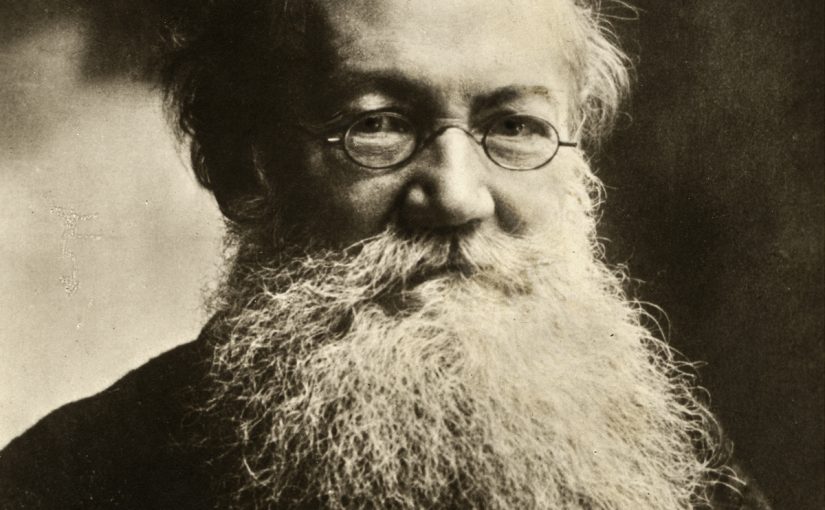
The last several months the term “mutual aid” has come up quite a bit in public discourse to describe the wide range of neighborhood/community-based altruistic behaviors that have arisen in response to the Covid-19 pandemic. The contrast between this outpouring of so many inspiring, grassroots acts of solidarity with the also widespread manifestation of extremely selfish behaviors has reminded me of the ideological battle that prompted a remarkable historic figure, the aristocratic Russian anarchist activist/philosopher/scientist/naturalist/geographer/biologist, etc, Prince Pyotr Alexeyevich Kropotkin, to pen a now infrequently read but, in my view, absolutely seminal text, Mutual Aid: A Factor of Evolution, in 1902.
Kropotkin has not been totally forgotten. His name comes up on occasion in articles when a writer seeks to excavate the roots of the concept of mutual aid, and scholarly books about him appear once in a while, but, by and large, he’s read by very few people these days, and he’s hardly known to younger generations. This wasn’t always so. In the early 20th Century, even though he was an anarchist revolutionary who spent time in prisons, he was also an international intellectual superstar. Oscar Wilde even described him as “a beautiful white Christ.”
One reason I wanted to pen this little homage to him here on the Bioneers site is that I think a strong case can be made that he is the single most important forebear of so many of the themes that are central to our own work. Kropotkin’s ideas laid a very solid, rigorous intellectual foundation for a great many of the most progressive socio-political tendencies of the 20th and now the early 21st century, from awakened ecological awareness to a respect for Indigenous life-ways to an emphasis on egalitarian relationships and cooperative, decentralized economic systems. When our great friend Jeremy Narby discusses “Intelligence in Nature” or our allies at the New Economy Coalition advocate worker ownership of enterprises, just to cite two random examples out of so many in the Bioneers community I could cite, they are standing on Kropotkin’s shoulders. In fact the entire “green” movement owes a huge debt to the anarchist prince.
Kropotkin did not invent the concept of mutual aid and was not the first European thinker to emphasize cooperation among animals. Such illustrious figures as Goethe and Alexander von Humboldt had discussed it here and there, and the German/Russian zoologist Karl Fedorovich Kessler (1815 – 1881) who was a strong advocate of the importance of cooperation within animal species had a profound influence on Kropotkin, but Kropotkin built on these antecedents to develop a much broader theory of the fundamental role of cooperation in all of evolution and in human social development, so he became the figure whose name is forever intimately tied to the concept of mutual aid.
Today those who recognize Kropotkin’s name at all think of him first and foremost as an anarchist activist and philosopher, but while he was clearly that, people have forgotten that he was a great scientific observer and thinker in many different disciplines, one who has not gotten his proper due in the history of science. In my view it is in his critique and demolition of “Social Darwinism” that he made his greatest contribution, the one that resonates most strongly with contemporary ecological consciousness and social justice movements, because we are still very much locked in battle with contemporary proponents of variants of social Darwinism.
Kropotkin enthusiastically embraced Darwin’s basic tenets about evolution and natural selection, but he felt that the (unfortunately predominant) wing of Darwin’s followers known as “social Darwinists” (most prominently Francis Galton) had in fact distorted Darwin’s legacy by overemphasizing the role of savage competition to the exclusion of the equally important factor of cooperation in securing the survival of species. These thinkers were, in Kropotkin’s view, not only misguided but dangerous because their ideas were invoked by capitalists and authoritarians as justifications for a brutally competitive society, rigid hierarchies and grotesque levels of inequality. His attack on these thinkers echoed the earlier fundamental philosophical battle between Hobbes’ pessimism and Rousseau’s optimism as regards human nature, which helped define the core right/left ideological divide in Western thought for at least two centuries, but, unlike Rousseau, Kropotkin was able to build his views of evolution and of human nature on a solid scientific foundation.
His extensive and detailed observations of myriad animals in his geographic mapping expeditions, especially to Siberia, revealed to him just how critical cooperative and often altruistic behaviors were in the preservation of a given species, and that these were not purely reducible to “instinct.” He was a century ahead of his time in recognizing that various forms of intelligence, adaptation, and decision-making permeated the natural world, and that humans were not separate from the continuum of the web of life. So his social utopianism (while, in my personal, subjective view, most likely unattainable in a pure form in a world with 7 to 11 billion people on it) was grounded in a rigorous observation of nature.
Kropotkin was really the first Western thinker to build a cogent theoretical edifice based on extensive evidence that convincingly argued that cooperation was at least equal to competition as a fundamental cornerstone in evolution and that a capacity for cooperation was in fact the key factor to a given species’ success. This is a view that remained marginal until just the last couple of decades but that is now far more accepted by many in the scientific mainstream as more and more research on animal (and plant and fungal!) cooperation, symbiosis and intelligence emerges almost weekly. Over the years we have had such renowned figures as Jane Goodall, Carl Safina, Paul Stamets, Lynn Margulis, Monica Gagliano, and the aforementioned Jeremy Narby discuss different aspects of this type of research at the Bioneers Conference.
And, most relevant to this discussion, Kropotkin felt that this far more holistic grasp of evolutionary mechanisms had immense implications for human societies, and that, while of course strong competitive urges existed in all of us, a sophisticated understanding of nature had to lead us to believe that cooperation and free, mutual exchange should be the central organizing principles of human communities. He argued that most Indigenous cultures and early societies were mostly so structured, and that the hyper-competitive, selfish, hierarchical, exploitive socio-economic models promoted by social Darwinists and robber baron capitalists were recent aberrations that needed to be relegated to the “trash heap of history.”
So as we seek to navigate our way through the enormous crises we are currently in the midst of, from the pandemic to climate change to ever more glaring inequality and injustice to the unraveling of so many of our institutions and social norms to the global rise of far right authoritarian political forces, and we see flickers of hope pointing toward a far more harmonious, life-affirming civilization in the remarkable groundswell of grassroots altruism, solidarity and cooperation we are witnessing around the world, let’s take a moment to honor one of the great ancestors who helped point the way to a far more satisfying and accurate understanding of our place in the web of life and, one has to hope, ultimately to far more humane social structures, Prince Kropotkin.
Note: This essay by author and Bioneers Senior Producer J.P. Harpignieswas originally written as a template of a talk to be delivered at the World Ayahuasca Conference in 2019.The views and opinions expressed are his own and do not reflect the official policy or position of Bioneers.
Obviously the judicious use of ayahuasca and a number of other consciousness-altering plants and substances can have a wide range of very positive effects. If I didn’t believe that, I wouldn’t be here at this conference, but as with any powerful tools, there are also very real problems associated with their use, and I think that those of us who are psychedelic insiders have a responsibility to acknowledge these risks and not just to focus on the positive aspects.
These problems can of course include physical and mental health complications for some vulnerable individuals, something some overzealous proselytizers of psychedelics don’t warn enough about in their discourse, but there is ample information available on mitigating such risks, and my focus here today is not on individual health but on psychedelics’ impacts on the larger socio-cultural sphere and on ideologies.
Many people in the psychedelic community, probably the majority, have an at least somewhat utopian, in some cases even messianic, view of these substances’ potential to contributing to making our society far more enlightened and compassionate. I am highly skeptical of those claims.
Psychedelics do tend to shake loose and bring to the surface a great deal of material from the personal and collective unconscious, and this can indeed be healing and liberating in the right context. It certainly tends to enliven creative juices and to unleash Dionysian impulses. But Dionysian energies invariably engender reactions from the gatekeepers of social orders, so psychedelics can contribute to exacerbating culture wars and political divisions. Helping shake up a stale social order can certainly be a positive thing, but it tends to heighten conflict, not to usher in an age of peace and love.
In the case of ayahuasca, another problematic issue is the large-scale appropriation of Indigenous practices by “first world” peoples without sufficient acknowledgement of the debt owed to those whose cultures developed the use of this medicine in the first place and definitely without sufficient tangible assistance to help empower these often highly threatened and impoverished groups to defend their lands and rights.
I’m not advocating banning cultural poaching, because cultures have borrowed and stolen from each other for all of human history, but we in the psychedelic community could do much better in supporting first peoples on the frontlines of environmental and human rights struggles. Ironically we too often overly romanticize these cultures but most of us don’t do anything concrete to actually support their battles for survival in the real world. And that romanticizing of shamanistic practices has had other problematic side effects, including an influx of “spiritual tourists” to the Amazon Basin, which does bring some economic benefit to some local people but also causes a whole lot of disruption to the social fabric. It has also indirectly led to a virtual epidemic of sexual predation of women by leaders of ayahuasca circles around the world, something that is thanks to the efforts of some courageous women starting to be forced out into the open and discussed, but that requires far more attention from the entire community.
But what I came to explore today is another aspect of the psychedelic world, that, while it is in some way common knowledge, is hardly ever discussed and analyzed in depth: the tendency among so many psychedelic users to embrace a wide range of half-baked megalomaniacal utopian and paranoid beliefs. The very widespread silliness surrounding supposed end-time prophecies in 2012 and an earlier iteration, the “Harmonic Convergence” episode in 1987, offer classic illustrations of mass delusions that swept much of the counterculture, including its psychedelic wings, with very little internal questioning of the dubious assumptions underlying the beliefs.
The dirty little secret is that a very large number of users of mind-altering substances, especially those who identify strongly with psychedelic subcultures, embrace a broad swath of “unconventional” ideas. They are, for example, far more likely to believe in the existence of aliens who actively engage with humans, in a range of esoteric divinatory systems and occult philosophies, in a range of political conspiracy theories, in the literal truth of a variety of prophecies, and so on; than other citizens (who are by no means free of such beliefs). I am not saying that all of these beliefs are invariably silly. There are some very serious thinkers who engage with some of these ideas and practices, but by and large, the large majority of the rank and file participants in psychedelic subcultures who flock to these untraditional beliefs are far from rigorous thinkers.
So, why do so many psychonauts have such weird beliefs? Some of it may be due to the fact that many psychedelic users are young, and over-enthusiasm and naïveté often come with the territory of youth, but the average age of psychedelic users is rising, so that relative youthfulness is at best only one factor.
It could also be argued that a majority of those seeking consciousness expansion are part of what is often called the “counterculture,” characterized by its plethora of untraditional beliefs, so psychoactive substance use isn’t the cause of weird ideas; it’s just that most psychonauts happen to be nestled in that larger counterculture ripe with offbeat worldviews. And, one could further argue that, actually, weird ideas have in recent years increasingly swept through all sectors of societies, far beyond just countercultures, so we definitely can’t blame psychedelics for creating the cacophony of delusions and paranoias we are inundated by. Psychonauts are perhaps just subject to the same disorienting social forces as everyone else, so their delusions are perhaps no different than everyone else’s. There is undoubtedly some truth to that argument, but psychedelics at the very least seem to give weirdness a radical booster shot, and the reason I’m focusing specifically on the psychedelic community’s embrace of distorted ideologies is that I’m part of it, and I think that our community’s widespread assumption that it is a wonderful force for universal healing needs to be challenged.
I think that to dig deeper and excavate the main reasons for this widespread embrace of “weird” ideas by so many psychedelic users, one has to consider the fundamental nature of psychedelics and their collision with contemporary social structures and values.
I think it’s fair to say that psychedelics are trickster molecules. They can act as truth serums in some instances, forcing individuals to confront issues they’re not facing; they can generate deeply healing states and life-changing realizations, but they can also engender delusions, spiritual inflation and a tendency to adopt grandiose, overly romantic ideologies.
Some believe psychedelics can at times grant us access to transpersonal sources of information, and this may be the case, but how one interprets those often usually ambiguous revelations and how one integrates them into one’s behavior and worldview can be very tricky territory. Above all, for most modern users, psychedelics tend to amplify pre-existing aspects of our psyches and belief systems and to release a great deal of material from the Id, to use a Freudian term. In many cases positive emotions of connectedness, interdependence and universal love as well as biophilic tendencies can be radically enhanced, but other deep psychic contents, such as extreme political or religious prejudices, or latent megalomaniacal and messianic tendencies, or cosmic paranoid states (not infrequently involving insectoid aliens for example) can be what gets most stirred up. Many experiences dredge up a mix of all these elements.
Traditional shamanic cultures refined the navigation of this confusing psychic terrain over centuries, and they did it within the context of far more cohesive societies than our own. Modern users seek to learn from the spiritual technologies of these traditions, but it’s impossible to replicate the level of control of altered states that pre-colonization shamans possessed, and even they could never fully control the experience.
Our own, far more individualistic and complex culture is characterized by very high levels of neurosis, anxiety and narcissism, and our increasing reliance on technologies has atrophied many of our perceptual skills. We may have more materially comfortable and longer lives than hunter-gatherer societies, but we are far less centered, embodied and socially rooted. So the collision of powerful consciousness-modifying substances with a by-and -large profoundly psychically wounded population engenders a range of bizarre epiphenomena.
But, one might ask, why should one care that many psychedelic enthusiasts have offbeat ideas about global conspiracies or megalomaniacal fantasies about their level of spiritual accomplishment? Well, besides the fact that especially silly beliefs can be annoying, and that self-appointed, poorly prepared or power hungry psychedelic gurus can be dangerous, what most concerns me is that our civilization is facing an existential crisis, as climate change and plummeting biodiversity threaten the very integrity of the biosphere, and socio-economic and political crises threaten the pillars of our social order.
Many people in psychedelic subcultures have convinced themselves that their “awakening” is a force for good in and of itself and that as their subculture grows the world will be magically healed, but very few of them, in my experience, are socially or politically engaged in a tangible way with serious groups. I worry that during a period in which we desperately need all those who share a broadly progressive, tolerant, compassionate, egalitarian worldview to work towards the common goal of preserving our planet’s capacity to sustain life and reducing gross injustice and inequality, that the energy of most of the psychedelic subculture is being dissipated in ideological black holes. Quite often members of this subculture, are, in my view, actually harming progress by diffusing conspiracy theories or romantic spiritual ideas that are counterproductive and impede realistic, effective mobilizations.
Obviously this is just a very quick overview of a complex question, but my intent in raising these issues is to try to get some of the more sober and sophisticated thought leaders in the psychedelic world to begin admitting with a bit more honesty the reality of this community’s fairly disturbing ideological landscape, to begin to at least try to nudge more of its members in more productive and less delusional directions. If we are not able to do that, though I acknowledge that psychedelics can definitely have highly beneficial effects on individuals, I think it will be hard to argue that the psychedelic community is contributing to solving our most pressing collective societal problems. It will just be another source of ideological noise.
The following essay was written by author and Bioneers Senior Producer J.P. Harpignies. The views and opinions expressed are his own and do not reflect the official policy or position of Bioneers.
For the past fifteen or so years Amazonian shamanism and the use of ayahuasca have elicited a great deal of interest around the world. This has encouraged a growing number of Europeans and North Americans motivated by a spiritual quest or a desire to seek healing or by simple curiosity to travel to the Amazon region. This wave of travelers is reminiscent in some ways of the hordes of young seekers who flocked to India in the 1970s.
The birth of a broad-based environmental movement, anti-colonial struggles, and a growing thirst for more visceral, holistic spiritual teachings all also contributed to a surge of interest in the worldviews and practices of “first peoples,” many of whom, paradoxically, were being threatened with cultural extinction or at the very least facing profound crises as modernity and the worst aspects of economic globalization bore down on their ancestral lands.
No one knows exactly how old Amazonian shamanic traditions are, but it’s a safe bet that they are many hundreds of years old, perhaps a millennium, perhaps far more, and their cultural antecedents and precursors certainly go back several thousand years. There are very few places on earth where one can find unbroken links to such an ancient shamanic tradition, and one that is still very much alive and dynamic. Many in the industrialized world feel alienated from the dominant contemporary ideologies and belief systems that have severed our sense of connection to the natural world and contributed to the unprecedented global ecological crisis we are in the midst of. The worldviews of indigenous peoples characterized by their profound respect for the entire web of life and by a belief in the possibility of direct, intimate engagement with the “spirits” that animate the world, is therefore very attractive to many of us.
Amazonian shamanism had until the 1980s, outside of some small circles of adventurous anthropologists and ethno-botanists, remained largely unknown beyond the Amazon Basin. That said, indigenous Amazonian shamanic healing practices had already spread beyond native groups into “mestizo” communities in the region starting in the early part of the 20 th Century, and at least three syncretic Brazilian churches whose founders had been exposed to the use of ayahuasca while working in the jungle and for whom that plant is a central sacrament, were founded long before the 1980s. All these new faiths, legally recognized by the Brazilian government, are thriving today. The two biggest, the Santo Daimé, founded in the 1930s, and the Uniao do Vegetal (UDV), founded in 1961, have spread internationally, opening new congregations in several locales in the “global North.” Also, the extraordinary and highly influential professor of botany at Harvard, Richard Evans Schultes, had done extensive research and solo traveling in the deep Amazon during the 1940s, and William Burroughs and Allen Ginsberg had both ventured to the region to seek out ayahuasca experiences in the 1950s (with pretty awful results). The anthropologist Michael Harner had done some more serious research on the region’s shamanic traditions in the 1960s, and slowly at first other researchers, explorers and travelers began trickling into the Amazon and publishing reports and accounts of their experiences. But despite all these forays, these traditions had remained largely unknown until roughly a quarter century ago, and have only become more widely known in the last 15 or so years.
The newfound global popularity of this hitherto obscure set of beliefs and practices, and this will surprise no one, has had both positive and destructive effects. On the one hand, as Jeremy Narby, has remarked, this is the first time since the arrival of Europeans in the “New World” that some outsiders have come to native peoples’ territories not to massacre and subjugate them, steal their land and pillage their resources, but to learn from them.
The global popularity of and interest in ayahuasca seems to be continuing its extraordinary expansion. Back in 2009 the immensely popular film Avatar was obviously heavily based on ayahuasca-induced visionary states. The sacred tree at the core of the film’s plot was even called Aya (!), but this all went over the head of nearly all those who saw the film because very few people in the general population had heard of ayahuasca then. Today though, mainstream magazines from the prestigious New Yorker to Hollywood rags that report on stars who have taken the brew, have all featured articles about ayahuasca. Hip comedians on late night television occasionally make jokes about it. More and more retreat centers are opening throughout Latin America, even beyond the Amazon region, varying enormously in price, ranging from the very rustic to the ultra luxurious. On any given Saturday night in a major North American city, a dozen or so underground ayahuasca-based ceremonies are most likely taking place, and I wouldn’t be surprised if that were true to a slightly lesser extent in Europe and in some corners of Asia.
This proliferation has made some of us worry about a wide range of potential problems, from the odds of eventual aggressive crackdowns by authorities to the problem of over-harvesting and depleting wild ayahuasca in the Amazon; to the emergence of more and more self-appointed, poorly trained ceremony leaders with the accompanying increased risks to attendees; to the rise of ever more half-baked ideologies generated by over enthusiastic neophytes suffering from the spiritual inflation that can accompany visionary drug use, etc., etc.
We also know that our rapidly “globalizing” planet is undergoing rapid and highly disruptive changes. The ever-growing, insatiable hunger for raw materials in “developing” countries is causing massive environmental and socio-cultural damage, and indigenous peoples are very often the main victims of these immensely powerful predatory forces. The Amazon’s forest is shrinking, and while some tribal groups have managed to organize themselves fairly effectively to defend their ancestral lands and to manage their social, cultural and political life and their “modernization” according to their own agendas, in general indigenous Amazonians are either facing difficult crises, being buffeted by forces beyond their control, or facing outright cultural extinction.
Under these conditions, it’s almost impossible to find any sort of “pure” shamanism practiced even by isolated groups. Nearly all the contemporary practitioners of Amazonian shamanism have, to varying degrees, long been affected and influenced by the onslaught of modernity to their region. These ancient techniques and beliefs have been colliding with and adapting to the modern world in a wide variety of ways, so strangers coming to seek wisdom in some sort of idealized, untainted form are sure to be disappointed, and all visitors will inevitably run into a slew of intense socio-economic, environmental and cultural contradictions, not to mention the communication problems inherent in trying to reconcile very different ways of seeing the world. And the mere presence of these large numbers of visitors is adding to the disruption of local life. Their money and possessions and (perceived) sexual looseness can’t help but engender temptations in such a poor part of the world.
So, on the one hand Amazonian spirituality has never received as much attention and respect, as there are now quite a number of shamans leaving the region to lead underground ceremonies in Europe, North America and Asia, and there are even some serious international academic colloquia and conferences on ayahuasca, etc. It’s an extraordinary global diffusion of a hitherto purely regional phenomenon. On the other hand, though, the massive dislocations caused by globalization and the existential threats to the integrity of the biosphere are threatening the very existence of many indigenous peoples and if not the outright extinction at least the dramatic mutation of their cultural and spiritual practices, and the popularity of Amazonian shamanism is itself a contributor to this disruption (there have in fact even been some recent Ph.D. theses penned on the complex effects of “ayahuasca tourism” in the Amazon). These shamanic traditions are not going to disappear, but there is no doubt that they are rapidly changing and becoming hybridized.
I feel that I have to offer some words of caution to those excited by the fascinating world of shamanic practices who might be considering dropping everything and heading down to the Amazon. First it’s important to bear in mind that these traditions have been created by cultures radically different than ours, by people living in an incredibly challenging environment, so their worldviews and moral codes often vary substantially from ours. Any apprentice shaman will eventually bump up against some aspects of “black magic” that are fairly common in the ayahuasquero’s world, and very few modern Westerners are psychologically equipped to handle this sort of menace effectively.
Even those who are just going to the Amazon for a more limited experience of ayahuasca can often encounter a variety of problems. The extreme poverty I mentioned earlier as well as the legacy of racism and oppression and the level of deforestation and environmental degradation generate intense contradictions, and travelers should be prepared to navigate them. Also, the seduction of naïve young “gringas,” made even more impressionable and vulnerable under the sway of ayahuasca (one effect of which is to open the heart), by shamans and their apprentices, is in all honesty an epidemic, almost more of a norm than an exception. Because the region is changing so rapidly and dramatically, even some hitherto reputable shamans can become less reliable. Some retreat centers can become so popular with visitors that the local resources are overtaxed, the quality of attention afforded to individual seekers declines, and the spiritual integrity of the entire enterprise deteriorates.
This doesn’t at all mean that one shouldn’t visit the Amazon and that positive experiences there aren’t possible, but for those who are considering such a journey, it is important not to depend on any one book, even the best among them, because books are already a few years old by the time we read them, and the places and people described within them may have changed in the interim. Before choosing a particular retreat center and/or shaman to visit, it is wise to seek information and objective, unbiased first-hand reports that are as recent and reliable as possible.
So, yes, Amazonian shamanism is one of humanity’s great spiritual traditions, and currently an especially vibrant one that seems to be resonating globally. One can find within its folds deep wisdom, a sense of profound connection to the underlying “intelligence” in evolution and nature, some highly effective physical and psycho-spiritual healing modalities, and even authentic mystical experiences, but it is not a path free of risks, so those who want to engage with it should exert common sense and sound judgment and keep their eyes open and their intuition sharp.
Those who seek to maintain traditions in a state of pristine, unadulterated “purity” are almost always fighting a losing battle, especially in a world as rapidly mutating as ours, where, for example, “world music” features every type of fusion and mixture one can conceive of, and electronic communication penetrates to every nook and cranny of the planet. In fact change is a constant in the flow of life, and cultures have always borrowed and influenced each other. The use of ayahuasca and the spiritual beliefs associated with it most likely began with one tribal group who passed it on to another, and then to others who all probably tweaked the cosmologies and practices. Today most indigenous ayahuasqueros incorporate Christian iconography in their rituals, and, as we saw earlier, the Brazilian ayahuasca-using churches, inspired by indigenous ayahuasca use, developed their own syncretic sets of practices and their own theologies. This is the way of cultural phenomena, but the rate of disruption and change is far faster today. We are seeing ever more hybrid uses of ayahuasca as it penetrates into new populations and it interfaces with existing systems of thought and spiritual practices. Some of those fusions may turn out to be interesting and promising, many are likely to be failures or plainly silly, some may be dangerous, but there is no stopping it at this point and where it will all end up is impossible to predict.
Paradoxically, in my opinion this makes rigorous accounts of Amazonian shamanism in its “classical” forms even more precious because it really helps to have a “baseline” to compare all these new forms of ayahuasca use and this pullulation of “neo-shamanic” experiments with the long-lived traditions of the indigenous peoples who engendered them. It is inevitable that people will innovate and experiment, and cultures evolve even when their members are trying to keep them the same, but if one is a serious person, it is best to at the very least be deeply informed by the spirit and the gravitas and the rigor of those original traditions’ practices, or one’s experiments are likely to lack depth and substance and to be short-lived and of little value.
In this new short film, get a sneak peek into a professional development training for educators hosted by the Biomimicry Institute, Bioneers, and Ten Strands in December 2019. Hear from participants and instructors and see how biomimicry offers an effective, engaging, and inspiring framework for STEAM education while empowering the next generation of problem-solvers to think differently about nature, engineering, and a sustainable future.
This article contains the content from the 5/21/2020 Bioneers Pulse newsletter. Sign up here to get the newsletter straight to your inbox!
The rapid rise of citizen journalism and nonprofit news organizations has provided a much-needed alternative to storytelling from media conglomerates. As the concentration of monopoly power in media has combined with the unprecedented power of digital technologies to vacuum up the media ecosystem into a reality distortion field of giants, influence peddling and infotainment, independent media sources are amplifying the underrepresented narratives that help us form a more informed, big-picture idea of what people are actually experiencing throughout the world.
This week, we highlight work from independent media groups and discuss how nonprofit media is adjusting to meet the demands of today’s readers, listeners and viewers.
How Sierra Magazine, At 126 Years Old, Is Keeping ‘Environmental’ Journalism Fresh
While today many national and traditional news outlets are covering not only wide-ranging climate activism, but the harrowing repercussions of a planet (and its inhabitants) in peril, Sierra magazine has been on the frontlines of climate- and conservation-focused journalism since the late 1800s.
Following, Bioneers Senior Director of Programs and Research Teo Grossman chats with Jason Mark, editor-in-chief of Sierra magazine, about the uptick of mainstream environmental media coverage, what it means for environmental activism as a whole, and how his over-100-year-old publication fits within the new media landscape.
Democracy is in crisis, and one central reason is the transformation of the media landscape resulting from the collapse of the economic model for news. From where will truth-seeking, fact-based, trustworthy journalism come as we rebuild our democracy? How do we overcome the hyper-capitalist algorithm devouring the free press?
Monika Bauerlein is the groundbreaking CEO and former Co-Editor of Mother Jones, which since 1976 has stood among the world’s premier progressive investigative journalism news organizations.
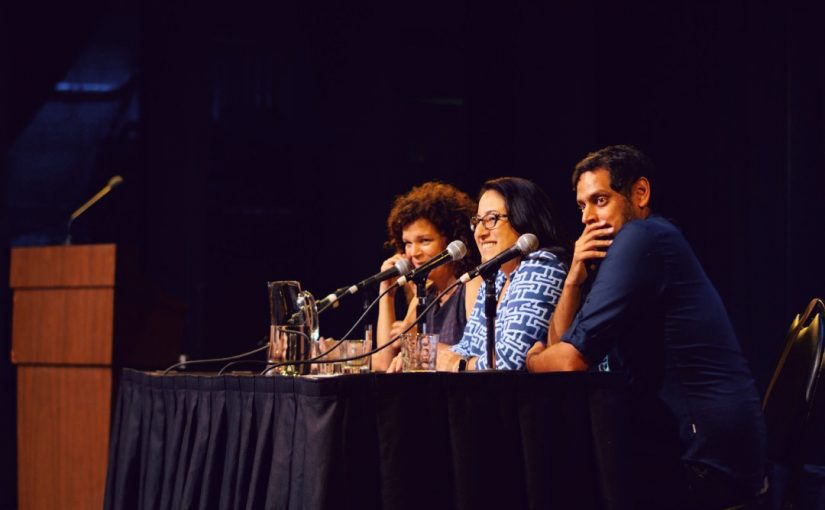
Fake news, junk news, viral headlines, scandals and newsroom layoffs. What’s happening in—and to—the news can make your head hurt. But there is a way to build a better, more just and democratic model for journalism than the corporate media of the past. In this panel, we hear from the courageous people doing it. Hosted by Mother Jones CEO Monika Bauerlein. With: Lila LaHood, Publisher, San Francisco Public Press; Nikhil Swaminathan, Executive Editor of Grist; Marcia Parker, publisher of CalMatters.
Listen Now: 9 of Our Favorite Independent Podcasts
The stories we’re told can determine how we view the world around us, and with the media industry monopolized by an elite few, it’s important to dig deeper than mainstream coverage.
Help Support COVID Relief to Indigenous Communities
At Bioneers, we have worked swiftly behind the scenes to help Indigenous communities hit hard by the COVID-19 pandemic and have already distributed rapid-relief support to those in the front lines, who are risking their lives to help Indigenous communities survive the latest pandemic.
Alexis Bunten, Bioneers Indigeneity Program Director, wrote this piece to share what her and her colleagues have learned about the disproportionate effects of COVID-19 on Indigenous communities, from historical perspectives to the current reality, and to offer several ways that you can donate to these efforts.
Supporting Women Leaders in the Environmental Movement
Women’s Earth Alliance and the Sierra Club are partnering to support women leaders by helping them grow or scale their grassroots environmental and climate initiatives.
This project, named the 2020 Women’s Earth Alliance Grassroots Accelerator, is accepting applications until June 8th. Encourage women in your network to apply now!
Help Support COVID Relief to Indigenous Communities | The Bioneers Indigeneity Program has worked swiftly behind the scenes to distribute rapid-relief COVID-19 support to Indigenous communities. The program co-director, Alexis Bunten, wrote this article to amplify how the COVID-19 outbreak is disproportionately affecting Indigenous communities and what Bioneers is doing to help.
COVID Near the Congo: Our Conversation with a Disease Ecologist Caught Abroad | On her way to the Congo, Belgian disease ecologist and wildlife biologist Anne Laudisoit got stuck in Uganda during their COVID-19 shutdowns. In this interview, she chats with Bioneers Senior Producer J.P. Harpignies about zoonotic diseases and how scientists around the world are managing outbreaks.
American Hemp Farmer | Hemp farmer, journalist and goat herder Doug Fine takes climate change personally since he witnessed a wild-fire-fleeing bear kill nearly all his goats. Fine shares his adventures and misadventures as an independent, regenerative farmer and entrepreneur.
Transitioning to a Crisis-Resilient Agriculture | Fred Kirschenmann, a Distinguished Fellow at the Leopold Center for Sustainable Agriculture, is a persuasive advocate for soil health and agricultural resilience and a farmer of 1,800 certified-organic acres in North Dakota. Dr. Kirschenmann is interviewed by Arty Mangan, Bioneers Restorative Food Systems Director.
This article contains the content from the 5/21/2020 Bioneers Pulse newsletter. Sign up here to get the newsletter straight to your inbox!
Media coverage of the climate crisis has gone mainstream. While today many national and traditional news outlets are covering not only wide-ranging climate activism, but the harrowing repercussions of a planet (and its inhabitants) in peril, Sierra magazine has been on the frontlines of climate- and conservation-focused journalism since the late 1800s.
Jason Mark is the editor-in-chief of Sierra magazine, the renowned national publication distributed by the Sierra Club. Hired in 2015, he joined the editorial team to lead the magazine into a new generation of readers—and present it to a new generation of activists.
Following, Bioneers Senior Director of Programs and Research Teo Grossman chats with Jason Mark about the uptick of mainstream environmental media coverage, what it means for environmental activism as a whole, and how his over-100-year-old publication fits within the new media landscape.
TEO: Can you tell me a little bit about the history of Sierra magazine?
JASON: Sierra magazine started out as the Sierra Club publishing in 1894. We’ve been around for a long time. The founding articles of the Sierra Club state that one of the foundational purposes of the organization was to publish authentic information about the Sierra Nevada and its environs. That’s what launched a quarterly magazine/newsletter just a couple of years after the organization began.
An early edition of the Sierra Club Bulletin. Credit: Sierra Club & Internet Archive
It’s really cool to go back and look at an old edition from the 1890s. It was a mix of science journalism from the Sierra Nevada and other alpine regions. There was a lot of stuff on the Cascades, around Mt. Rainier, about Muir’s travels to Alaska, as well as wild, largely intact ecosystems. It also incorporated adventure writing. Mountaineers and others would come back with their trail reports and send in their stories.
In the early 1900s, it became much more of a political publication as the Sierra Club engaged in its first major environmental battle, which was to prevent the construction of a dam in Yosemite National Park: Today, it’s called the O’Shaughnessy Dam, which flooded the Hetch Hetchy Valley.
The publication stayed in a quarterly format until after World War II, when David Brower took over. Brower was a media and publishing pioneer, and he started to publish four color photography, which in the 1950s and 60s was really cutting edge. Most publications, even big national magazines, just had black-and-white photography. The photography was mostly of wild places, bringing in artists like Elliot Porter and Ansel Adams (of course mostly shot in black and white).
In the 1970s, the publication became the bi-monthly glossy magazine that we have today.
TEO: You took over as Editor-in-Chief in 2015. Did you have any plans going in, in terms of what you wanted to accomplish?
JASON: It’s a real privilege to edit this magazine with this long lineage. When I was hired, I had really clear marching orders from Michael Brune, the executive director of the Sierra Club, and from the Board to bring the magazine into a new stage of evolution and to transform it into a 21st century magazine. What that means is to have a media enterprise that is completely threading together our long history of print publication but also using all the new tools, most obviously our online edition.
We’re publishing multiple stories daily at SierraMagazine.org in addition to our bi-monthly print edition. That’s really important for us to sustain our relevance and to keep up with the times. My focus is split between sustaining the excellence and the thoughtfulness of our print edition while also ensuring that we’re moving pretty quickly online.
We’ve done some other things too. We launched a full digital edition of the print magazine that goes out to all of our members and subscribers. We have a podcast, and we’re doing a lot of video production. It’s kind of incredible. This is the arena that we’re playing in: There are so many different modes of communications and so many different mediums. We think that to sustain the interest of our current audience and also grow our audience, this strategy is necessary.
In my view, Sierra magazine, our print edition, is for the members that we have. Our online edition is really for the members we aspire to have. It’s great to see that with our online edition, our leading demographic for much of the year has been 25 to 34 year olds. That’s what we want to be doing: attracting and enlisting a new generation of environmental activists and leaders.
Jason Mark
TEO: Where do you see the print and the online package fitting into the larger media ecosystem? What’s the particular niche that Sierra fills?
JASON: That’s a great question. The equally important question for me is: Where do we fit in the overall environmental movement?
There aren’t many other national publications entirely dedicated to environmental topics. Audubon is really the only other NGO-published print magazine at national scale. NRDC shuttered their really excellent magazine, onEarth, a couple of years ago. There’s Orion. But in terms of being at national scale and reaching hundreds of thousands of readers, there’s really only Sierra and Audubon that are focused on environmental topics.
We are trying to speak to what I would call the “ecologically committed.” People like Bioneers attendees who are really passionate and committed to environmental sustainability and social justice. But we’re also trying to reach the environmentally curious: people who are just now tuning into issues around environmentalism and the health and state of the planet. I don’t want to sound self-aggrandizing but we’d like to be kind of the Atlantic magazine of green. A place that’s featuring original journalism but also featuring thought leaders like E.O. Wilson or Naomi Klein or Kim Stanley Robinson. We’re trying to bring in some bigger names to write for us who are offering a bigger-picture vision of where we are and where we’re going.
We’re also providing book reviews and cultural coverage, but all through an environmentalist lens. For the most part it works. We are lucky to grab the attention of the national influencers. A couple of times this year already we’ve gotten mentioned in The New York Times newsletters. It’s wonderful to know the folks at the Times are reading our coverage. Sometimes we’ll see our stories repeated on other national media outlets. It goes to show some people are watching us. That allows us to hopefully, in some modest measure, expand the work outside of the environmentalist community and get it more into a mainstream community.
TEO: I was intrigued to hear you talk about the moment in the early 1900s when Sierra magazine became a political magazine. I hadn’t thought about Sierra in that way. The intention is not just for your audience to read the magazine and continue what they’re doing, but to really galvanize some sort of response.
JASON: Yeah, hopefully after they read the article or put down the magazine, that won’t be the end of their environmental activism.
A fight against a coal power plant, that’s a political battle. That’s not a partisan battle. It may not have anything to do with, at least in this country, the Democrats versus the Republicans, or right and left. It’s about X community, who has the power to decide how energy is generated. That’s what I mean by political. It’s not necessarily partisan in terms of what’s happening in Washington D.C. or the big houses. We do cover those issues, but it’s asking questions about who has power and how it is wielded. How does that power impact not only human communities but all the other communities with whom we’re sharing this planet—other forms of life and beings?
TEO: Less than a decade ago, it was fairly easy to keep up with climate science coverage in the media. Every now and then there’d be a story. Today, it’s totally taken off. Three-quarters of the major papers in the U.S. covered the September 2019 climate strikes in some way on their front pages.
What do you think is responsible for that shift? Do you think overall awareness of climate change drove the increase of coverage or the reverse?
JASON: Yes, there’s definitely more environmental coverage now than we’ve seen in a while, and that’s great. I think it’s kind of a three-legged stool.
1) The planet is sending out distress signals in terms of rising temperatures, declining biodiversity, super storms, and historically unprecedented wildfires. It’s harder and harder for people to ignore those distress signals. The fire alarm is starting to clang so loudly and persistently that you have to be willfully ignorant not to see it.
2) I think people are more attuned. They’re seeking out more information. The curiosity level is increasing among the general public. That is a positive feedback loop with the social movements pushing for dramatic action on climate, which we saw in September 2019 with the truly historic climate marches.
3) I think some of it is a righteous effort on the part of some journalists who self-organize. There’s this initiative called Covering Climate Now, which has mostly been spearheaded by the folks at Columbia Journalism Review and The Nation magazine, along with other partners, and they got I think hundreds of news outlets to sign up for this initiative and to agree to expand their coverage.
I think those are the three factors. Hopefully righteous feedback loops will continue, and not just on climate. It’s important not to let the situation in the atmosphere, as worrisome as it is, crowd out so many other important environmental issues: air quality, water quality, toxins, wildlife and biodiversity. I’m hoping there’s a long-tail effect in which people’s concerns about what’s happening with the atmosphere, with climate and the weather, will hopefully lead to other concerns and interests around the suite of what we call environmental issues.
TEO: One of the hazards of climate change being so big is it does tend to take up all the oxygen in the room, and there are so many other huge stories. What is your perspective on the coverage of the rest of the environmental concerns of the world keeping up?
JASON: Obviously these reports are dire and the indicators are worrisome, but I’m cautiously optimistic that we’re seeing a little bit more of a balance. I think it’s good news that people are paying attention to the bad news.
I’m hoping that we can start to wrap our heads around or break free from what some people call “carbon fundamentalists.” It’s not just about parts per million of carbon dioxide in the atmosphere. That is only one part of the overall environmental social crisis. And if we lose sight of the extinction emergency, or if we get sucked into carbon fundamentalism, the danger that I perceive is that we would have an environmental movement that is only committed to saving humans from a crisis that we are self-manufacturing. I for one am not really interested in living on a planet that’s just humans, crows, cows and cockroaches. I want to make sure we are also fighting for a world worth living in, and that is going to involve the whole spectrum of wildlife and ecosystems.
TEO: You mentioned that it’s good news that people are paying attention to the bad news. I’m curious what your take on solutions journalism is, and whether you see that emerging as a new paradigm.
JASON: I love the idea of solutions journalism. We definitely think about that here at Sierra magazine. Sometimes it is just pure play muckraking and trying to shine a light on bad actors. But much more of the time we are looking to tell the stories of creative individuals, communities, and initiatives that are finding new and innovative ways to respond to environmental or social threats. Sometimes it’s as simple as a profile: Here’s an interesting do-gooder, check them out. Sometimes it can be a bit more complicated: Here’s a scientist or researcher who is pursuing this question.
The old journalism maxim is still true: If it bleeds, it reads. People say they want good-news stories, but they will gravitate toward the bad-news stories. That’s true for our own little corner of the media sphere as well. Our story about the bird declines in North America definitely outpaced our coverage of the climate march.
TEO: As an editor and a journalist, I can’t fathom how difficult it must be to handle and report on the sheer quantity of environmentally backwards thinking coming from the federal level recently. How do you handle that?
JASON: It’s hard to keep up with. The short answer is we obviously don’t pick all the stories we want to. We’ve done an OK job, for example, on the Trump administration’s full frontal attack on the California clean air standards and tail pipe standards, but we’ve also kind of dropped the ball on some of those announcements. We do our best to watchdog what’s happening in the public landscape, but we can’t cover it all. The short answer is we do our best and try not to pour too many coals of hot fire on ourselves when we miss something.
Fake news, junk news, viral headlines, scandals and newsroom layoffs. What’s happening in—and to—the news can make your head hurt. But there is a way to build a better, more just and democratic model for journalism than the corporate media of the past. In this panel, we hear from the courageous people doing it. Hosted by Mother Jones CEO Monika Bauerlein. With: Lila LaHood, Publisher, San Francisco Public Press; Nikhil Swaminathan, Executive Editor of Grist; Marcia Parker, publisher of CalMatters.
Monika Bauerlein
MONIKA: I’m Monika Bauerlein, the CEO of Mother Jones. At my talk earlier today, I talked about what has happened to news as an industry in this country, and make the case for why news really cannot be an industry, and instead it has to be a participatory, democratic project. All of these organizations whose leaders are here today are engaged in that kind of endeavor. In fact these amazing journalists have had trajectories that really speak to what’s happened to the news and the media, how we can rebuild it in a better and more vigorous fashion.
NIKHIL: Hi. I’m Nikhil Swaminathan. I am the executive editor of Grist, which is about a 20-year old online environmental news site. We are primarily based in Seattle, although as a national publication we have people all over the place. I actually live in Atlanta, Georgia, though I used to live in the Bay Area. That’s where my story kind of starts, and how I ended up at Grist.
Nikhil Swaminathan
I was working at Al Jazeera America, which prided itself on being the voice of the voiceless. We did a lot of coverage of indigenous issues, community-level issues all around the country, early work on the Flint water crisis, and the opioid epidemic, just to name a few. Some of this comes down to how difficult it is to launch a cable news site or cable news network in 2013, but really relying on the traditional advertising model just wasn’t sustainable. Five days before my first child was born, they announced that we were going under. And luckily my wife worked for Monika, so we had good health insurance. [laughter]
But I had really caught that accountability bug, and being able to tell stories that weren’t necessarily splashy, entertainment that moves units and sells fashion ads. So I was looking for a place where I could continue to apply that kind of work. I took some fellowships afterwards and eventually landed at Grist, leading its environmental justice coverage. It is really, really important work, talking about communities that are on the frontlines of climate change, communities that are experiencing environmental burdens from power plants, from garbage incinerators, obviously Dakota Access Pipeline. Standing Rock is one of the biggest environmental justice stories of the last decade, as is Flint.
The nonprofit news model allows us to do that work, to find readers who will support us in digging into community-level stories, finding the right journalists to tell those stories, and not parachute in some place where they have no idea what the social dynamics are on the ground. And to really tell these difficult stories about how communities that are dealing with public health emergencies are also often the economic engines that sustain their communities.
Working in nonprofit news, relying on readers for funding, relying on like-minded foundations and major donors for money to allow us to do our work has really, really given Grist the opportunity – as I moved to the executive editor position – to grow our environmental justice work, and to continue to lead the conversation on climate change. Because at the end of the day, what we’re trying to do atGrist is give people the fuel to have conversations about this crisis at the dinner table at bars and restaurants, at Bioneers, at the lunch table, and hopefully in the halls of Congress.
Lila LaHood
LILA: Hi. I’m Lila LaHood. I’m the publisher of the San Francisco Public Press. We are based in San Francisco. We do local public interest journalism online and publish. We also have a low power FM station, KSFP 102.5 FM in San Francisco. We share it with another nonprofit organization, KXSF. They have 12 hours a day. We have 12 hours a day. They’re mostly music, we’re mostly talk. It’s a nice balance. Our marquee show there is called Civic, which is focused on local news and public affairs, airing at 8 AM and 6 PM Monday through Friday.
The San Francisco Public Press is 10 years old. I helped start it with Michael Stoll, our executive director. He and I vaguely knew each other in grad school and reconnected in San Francisco. Michael had been thinking about this idea of starting a publication. Ideally he wanted it to be a newspaper, but when we got started we thought, well, it’s going to be an online publication very much inspired by public radio – the idea being let’s create the news and put it out there, and if people like it, they’ll support us. And it has worked out that way for us.
Typically public radio stations around the country get support from about 10% of their regular listeners, and that’s something we have found to hold true for us as well. We think of our regular listeners as people who are signed up for our email newsletter, even though many more people see what we’re putting out there and seeing our stories on social media. So then perhaps they see them when they pick up our newspaper in retail locations, or when we’re out at events and handing them out.
We don’t do daily news or breaking news, we don’t have the staff for that. We have six people full time, and a bunch of freelancers. We’ve found that the best way for us to add to the conversation is by focusing on more in-depth reporting and analysis. We often do a lot of document requests. The kinds of stories that are being done by larger organizations like Mother Jones, which have the resources for that on the national level, is not something that’s being done at the local level .
When we got started, it was around the time that there had been a lot of layoffs and downsizing and contraction in the news industry, even here in San Francisco. In fact, we received our first grant and were just getting started. We had no full time employees and were about to hire an editor to manage a whole bunch of volunteers. Then Hearst made a big announcement that they wanted the union to help them get rid of 75 positions at the San Francisco Chronicle, and if they couldn’t get buyouts and early retirements, they might consider selling the paper. If they couldn’t sell the paper, they might shut it down. There was a lot of concern about this. People were asking us, “Are you going to replace the Chronicle?” We looked at each other and said, “No way. That’s not what we’re here for, that’s not what we want to do.” We think it’s important to have a diversity of news sources. We’re fortunate, we have a lot of great local coverage in print, online, from broadcasters, radio, and television doing a lot of the breaking news coverage that we’re not doing. So what we add is more in-depth analysis.
Some of the topics we spend a lot of time looking at are things like homelessness and affordable housing, education, and sea level rise. People had been talking about climate change and sea level rise, but very early on we looked at how it was going to affect the Bay Area. We did an analysis of new waterfront development that was being constructed or had been approved in 2014. At that time, no municipalities around the Bay Area had any regulations about what developers might have to do in light of consensus projections for future sea level rise. After we did this reporting, municipalities started bringing in regulations, and the conversations started shifting.
Then a couple of years later, we noticed a new trend. It was because our reporters spent a lot of time doing document requests, looking at lawsuits, reading the footnotes. They noticed that developers were using the California Environmental Quality Act (CEQA), as an excuse for why they shouldn’t have to do anything to prepare for future sea level rise. CEQA says we can’t have negative effects on the environment; it doesn’t say anything about what negative effects the environment might have on this development in the future. It was a very interesting project. That’s just one example.
We’re covering a geographic area where people can come together, so we do our reporting, then we host events like panels or interactive workshops to have conversations. We do a lot of nonpartisan election events.
MONIKA: This is all just so incredibly inspiring, and I hope you recognize that even though these folks are very nice and polite, this is actually a revolution in journalism. [APPLAUSE]
These are leaders of three of more than 200 nonprofit news organizations around the country. There’s one where you live, focused on the issues you care about. There’s one representing the community you feel a part of, and if there isn’t, maybe it’s time for somebody to start one. Part of what all of this is about is to build an ecosystem of news to replace the atrophied and withering ecosystem that we’ve had. So with that, Marcia.
Marcia Parker
MARCIA: Thank you. So glad to be here. That applause almost made me cry. I’m the publisher at CalMatters, a four-year-old nonprofit, non-partisan news organization covering state government news. We focus on environmental issues, on education, on health and welfare, and politics. We don’t cover daily or breaking news. Like my colleagues here, we pride ourselves on deep, insightful, explanatory news. That’s our goal.
We were created to fill the void in state government coverage, and that’s because we used to have big bureaus. The LA Times had 15 people in Sacramento, I think they have three now. Sacramento Bee had a huge team. Now they have two or three. These are our partners, we have 180 news partners in the state. We give all our news away for free, pretty much everyone uses our content. We don’t have TV partnerships, but we do have public radio.
One of the other things that makes me happy is the number of individual people who have become members of our organization. So even though we give our work away for free, they’re supporting us in some way, whether it’s $5 a month or $25 a year. We have institutional members too, so nonprofits are engaged and supporting us, we give them space on the site, things like that. We created an election guide, and we had sponsors for that. People are supporting their local, regional, topical, national news organizations. So this is a revenue model that might not have worked even two years ago. It’s growing in a really big way across our country, and that’s really exciting.
I’m also on the board of the Institute for Nonprofit News, which we’re all members of. We’re approving about five new organizations a month now, and lots of those are tiny and hyper-local.
We were at one of our meetings and somebody said there’s a reporter in Flint, Michigan who really wants to start a nonprofit. The whole paper had shut down, and in three months we had her up and running. She got support and toolkit things that she needed, and as a result that community has some news again.
So if you are in a community without coverage, INN can help you get there, even if you just have the idea and don’t really know how to get started. You don’t even have to be a journalist. You can get people who care about making sure your community’s informed, and we can help you get there. [APPLAUSE]
MONIKA: Let’s do a little bit of storytelling, since that’s what we do, and talk about some examples of the kind of work that can come out of this revolutionary model. Part of the goal is to open the box a little bit and tell you some of the crazy stuff that we go through. I have a story that I’ll maybe save for the end, but Nikhil, do you want to start?
NIKHIL: Sure. We had a reporter who was working at Grist who spent a year on and off visiting San Bernadino, California. She grew up about 20 miles away from it, so she had a familiarity with the rhythms of the community. It’s always been a sort of distribution center region. There was a large rail yard and for decades truck and train traffic was coming in and out of this area. There had been reports of childhood asthma, birth defects, cancer. A local group of women banded together after watching what was happening to their children, and started to fight back against this rail yard.
In the midst of all of that, San Bernardino became the first or second biggest hub for the delivery economy in the country. So every year, two or three warehouses were getting dropped in this region, and warehouses are pollution magnets. They bring in trucks, the trucks come in, they leave goods, they come out, they’re bringing out goods. This was an area of the country that desperately needed this industry. Its poverty rate was double what the national average was.
So we were able to give this reporter time to do a full panorama of what was going on, to spend time with a new generation of environmental activists who were fighting this totally new industry that anybody who’s ever ordered anything from Amazon is helping to feed. At the same time, the people that she was talking to – their brothers, their sisters, their mothers and fathers, sometimes their kids – were working for the industry because it was the biggest employer.
This was the type of story where once it was 75% completed, we looked at it and said, we can do this bigger and better. We went to our donor and members and asked for additional funding to make a 2,000 word story into a 4,500 word story. An illustrator created bespoke art and we put some money behind a public relations campaign to help us get our story onto local radio, into LA Times, newsletters, etc.
I want to leave it off there, because I know that Marcia wanted to talk about collaborations and partnerships, which is one of the things I love most about this model of journalism, rather than competition for ad dollars, impressions, clicks, and all this stuff that you need to keep the engine humming. The fuel to run these organizations is totally different, and it allows us to talk to each other and share knowledge, to go to INN and get a leg up, and to work with one another. I’ve done multiple collaborations already with Mother Jones. That’s particularly easy for me to do because it takes place in my household.
There’s a real power to this. You can have these things for regions, cities, neighborhoods. And for topics that Grist address, it allows you to plug in and know that you all have different audiences, funding streams, different members. And we can take our audience and marry it with Mother Jones’ audience and San Francisco Public Press’ audience and make a bigger audience. I’m not a religious person, but this is the closest I’ve gotten to religion in my life. [LAUGHTER]
MONIKA: Well, it is back to the ecosystem metaphor, that’s what we’re talking about. There is an element of living systems, and in living systems parts collaborate to make something larger.
MARCIA: I feel the best thing that has happened is the walls have come down in journalism in the nonprofit sector, and people only care about one thing: informing their communities. So they’re really finding a way to enlarge and expand the audience by working together.
The project I thought I would talk about is called “The California Divide”. At CalMatters, we were asking how can it be true that in a state as wealthy as California we have 20% of our 40 million residents living in poverty, and another 20% at the edge – one healthcare catastrophe away from being there. So we were thinking there’s some reporting that has been done, and we do some, but we thought, you know what, we have to break up the model and rethink this.
So we raised about 700,000, mostly from the Irvine Foundation, and some other donors for this two-year effort to look at and frame the issues of economic inequity in our state, and disparity over these next two years. And we do it with our media partners. We’re raising more to hire reporters to embed in our local communities, especially in underserved communities where poverty’s a huge issue and nobody’s really writing about it.
This is an amazing thing. Right? It takes our media partners being willing to work with us, we’re not competing. It also includes a big series of public events, which we already do now, and also small, town-based events so that we can talk about these issues in these communities.
This is just one level of collaboration. We’re working on raising additional funds for that so that we have ethnic media partners, Asian and black-owned media in the state, and we want to embed them in some of those communities as well so that we can do better. CalMatters will then take all that work and distribute it to all 180 media partners in the state. We have a lot of support right now. This is the model. The walls are down, this is an exciting time.
At this point, more than 13,000 CalMatters stories have been picked up by our 180 news partners in four years, and it’s growing all the time. I just say that because you can see the need is there and there’s an interest, and that’s why they’re running it. Yes, it’s free, so that’s a bigger incentive. I think it’s also because people are hungry for knowledge. All of us.
MONIKA: So if you keep going with the ecosystem metaphor, you’ve seen the specialized organism that Nikhil represents, you have this kind of network effect that Marcia is working on, and Lila, what you’re doing is really sort of at the very grassroots level. You’re like the soil organism almost.
LILA: Yes, and in fact we’ve worked with everyone at this table on some level. So in the print edition, we pick up partner stories, so we’ve had stories from Grist, from CalMatters. We really appreciate that, because especially many of our issues will devote half of the pages to one big topic, which can be very interesting. But we also want to offer our community a range of news stories about issues and topics that we think they would be interested in.
Perhaps there are some authors out there, or people who we’d like to interview for Civic, our radio show, which has opened up our ability to cover more topics in really exciting ways. In-depth reporting takes so long, and even though we’re really proud of the work that comes out of that, we’re not able to put those stories out in front of people more than a couple of times a year. Whereas the interviews we’re doing for the radio show and then podcasting allow us to have these ongoing conversations about important topics in the same way that we would approach these in-depth stories.
I would like to talk a little bit about some of the big projects that we’ve done and what distinguishes the kind of work that we do. We did a series of three big education reporting projects. One looked at the increase in segregation in San Francisco public schools, and we had to do a lot of data analysis to come to that conclusion. It was because of the school’s choice system, which is supposed to help families have more control over where they send their kids, and it was inadvertently causing schools to become more segregated.
Out of that reporting, our lead reporter on that, Jeremy Adam Smith, came across some other interesting information that sent him on another direction for the second story, which was looking at fundraising at PTAs in the schools in the San Francisco Unified School District. What he found that it had to do with the economics of the families in those schools, which was related to the increased segregation that some schools were raising $400,000 a year and some schools weren’t raising anything at all, or negligible amounts. The school district didn’t even know this at the time.
The way we got this information was by gathering the 990s for all of the PTAs that were 501(c)3s, and pulling this together. We live and breathe tax documents, and it was one of those things that nobody would have known had we not pulled that together. It was a lot of work. In fact, Jeremy spoke recently about how for him and the others who gathered that data, there were some arguments and tears through the process, but by the time they got to the end of it, it was really powerful what we were able to reveal.
Some of the other reporting that we’ve done on homelessness and housing crisis, we often take a solutions approach. So solutions journalism is a term you might hear more often. When we’re looking at a solutions approach, we look at a problem that we have in San Francisco and say, well, what’s being done in other places that might work here? Either it’s being done in Portland, or Seattle, or New York, or it’s been done at a different point in time, or they’re doing it in Vancouver. What would it take to apply it here and what benefit might arise out of that?
Or sometimes it’s looking at something like, wow, we have all of these residential hotels, these single room occupancy (SRO) hotels, and one of our reporters figured out that the city had data on the vacancy rates there. We also have data about the number of homeless people in San Francisco and the number of unsheltered homeless people in San Francisco. So our big analysis showed that at the point in time when we did the reporting, there were about 4,000 unsheltered homeless people in San Francisco. There were also about 1800 vacant SRO hotel rooms, and they were vacant for various reasons. Some of them were in disrepair, some were being kept off the market perhaps because the building owners wanted to do something else with the building, to prepare it for sale or convert it to something else. We weren’t making any sort of recommendation about that, but we said, here’s some interesting information for the community to discuss. We really like doing those kinds of stories.
So, that tells you a little bit more about how we do the work that we do. [APPLAUSE]
MONIKA: Well that’s a great story. This information is not ending up in a vacuum. Right? These are ways that policymakers or citizens find out what they can work on. It took me a long time to understand that congressional investigators, for instance, don’t just pick up the phone one morning and say, okay, where might I find a scandal. [LAUGHTER] They read the news and then they dial in on what they might want to know more about, and they basically do the work of reporters over again, but with subpoena power.
That’s actually a world in which we live at Mother Jones. What Lila was saying about compiling all these tax documents, that’s so much of what goes on behind the scenes. They pull every single one of these documents from many, many years, collate all of them, look for patterns, and package it all up and tell a story that somebody who’s not going to put themselves through this misery can understand and can do something with.
Likewise, at Mother Jones, we have a large team of people. We have 20 people in Washington, DC going after scandals and abuses of power, and one of the—this ecosystem metaphor’s going to go totally sideways—like the prey in these nature films where the cheetah just kind of runs after the prey for miles and miles, and hours and hours, and keeps taking a swipe at the prey, and finally they get it. I cry at these nature films. But some stories are like that, they go on over years and years.
One of our reporters was intrigued by a line that was on the president’s financial disclosure that he has to file every year. This is not a president who discloses everything about his finances, as we know, but on this pro forma disclosure, he disclosed a $50 million loan that he owes to Donald Trump. Why, you might say? And that’s what our reporter said. So he spent three years just coming at this story again, and trying to figure out where this money was coming from and where it was going and what it represented.
He would call tax law experts, and building finance experts, and he got it down to where it’s a building related to Trump’s project in Chicago. That would take months to piece together, and then he would go do something else, and he would come back at it, and he would discover that there is a financial tool called Loan Parking that has to do with when you – how do I say this diplomatically? – when you basically don’t want the IRS to know about a transaction that you’ve done. Long story short, it took him three years to piece together a story that makes it pretty much apparent that this particular loan looks a lot like what many tax experts would consider tax fraud. You can read this story in the October 2019 issue of Mother Jones, but it’s the kind of thing that can be incredibly unglamorous, and that also puts you through these ridiculous fact-checking hoops, because we have a big fact-checking team.
We will have fact checkers call people up and say: Is it true that you are completely bald? [LAUGHTER] Or Is the door to your house actually painted purple or magenta? And so when it comes to a financial story like this, they really go down rabbit holes. But the outcome is something that has kind of rippling impacts out there, because it gives people like you, in the case of a school story, like what Lila was talking about, or people in Southern California who want to engage with what the logistics industry is doing down there, the wherewithal to get involved and do something about it.
Do any of you work with youth organizations, youth media organizations in particular? Because there’s a lot of movement there.
NIKHIL: One of my first hires at Grist was an editor who previously worked for youth radio, the NPR Youth Vertical. And one of her charges in coming into Grist was to develop a pipeline of youth journalists around the country, in part because when I was talking about our environmental justice stories, the importance is being able to do community level reporting by people who are familiar with those communities. And one of the ways we thought would be most effective was not to go necessarily to the beat reporter from the daily that shut down, but to find a young person in that community who’s grown up in it, who’s excited, who wants to become a journalist, help them develop skills, allow them to write a few stories about their community.
This is like super fledgling, I’m just telling you what our plan is. But that was the idea behind bringing somebody with that background into Grist, because one of the realities on the ground is that it takes an extremely patient editor to work with a green journalist, and you have to hire for that.
We essentially have a staffer at Grist who is helping to pioneer these sort of talent and identification kind of efforts. So one of the other things we’ve done is convene this group called the Environmental Journalists of Color Network. The idea wasn’t for it to be Grist’s Environmental Journalists of Color Network, it was to just get together people who are already working in the space and saying to them, How did you get here? What did you do? Did you go to J school? Other people had gone to historically black colleges and universities, and then gotten into local media and 10 years went by and now they’re Pro Publica. And so we asked how do we reverse engineer this? How do we start to build that pipeline? How do we get more people writing about this issue or the suite of issues that we think is really, really important? We’re at the beginning of this process, but this thing took off at Society of Environmental Journalists.
LILA: We’ve worked with a lot of young journalists. We used to have a more informal internship program.We don’t have that now because we decided we would rather work with young journalists as freelancers. We’d have an internship program and they’d come to our office and they’d be in the office for many hours a week, and we often felt like it wasn’t a good match on either side, especially because they were often running off to another part-time job, and we thought, let’s work with people as freelancers so that they can work on a schedule that works for them and we’re going to pay them for their work.
We are eager to work with young people who show us they can be dedicated to the process. Sometimes it actually works out well, because we’re not trying to do these quick-turn around stories. So you’ve got young people who have other jobs but want to get more experience in the kind of journalism that we do, and we’re eager to work with them in that capacity and make sure they get paid for their work.
18-year-old Sierra Robinson is a climate activist who practices permaculture on her family’s homestead farm on Vancouver Island. She is also Regional Director for Earth Guardians of Canada and a plaintiff in a climate change lawsuit suing the Canadian Government. Sierra was interviewed by Arty Mangan, Bioneers Youth Education and Leadership ProgramDirector.
ARTY: You have been organizing climate strikes on Vancouver Island.
SIERRA: My Earth Guardians crew is now being led by my amazing co-crew lead Katya. She and I have worked together to help our community plan a giant climate strike, which is on pause right now because of the virus. But we’re still striking weekly on Fridays online by posting pictures and rallying the community.
We worked with our mayor and elders in our community; we tried to include everybody in the planning and conversation. We hosted climate strikes to raise awareness of what’s happening with the climate movement and how it’s impacting our valley and the area around us. We’re encouraging people to start thinking about what their climate story is and how they’re impacted by climate change personally.
We also went to the Cowichan Valley Regional District and got them to declare a climate emergency. It was amazing to actually see things start to come out of our efforts.
ARTY: What have you learned from organizing the strikes?
SIERRA: I learned that it’s not always easy to plan really big things like the strikes, but it’s such an amazing, beautiful feeling to be marching together with hundreds of people. We had like 500 people at one of them. It’s such a powerful feeling to be marching with that many people in a small community who care so strongly and who still show up after the initial strike. They show up for the conversations where we sit down and talk about what needs to change and how we’re going to tackle these issues. It helps an activist or person in general to feel a lot less alone when you know that there’s all these other people who care about the same issues you do and want a better future. The strikes are raising the sense of urgency in people around us.
Sierra Robinson (photo by Jeremy Koreski)
ARTY: As a young leader, what are your biggest challenges?
SIERRA: They vary depending on the month because there’s either crazy big fires or floods that are obviously affecting people in every age demographic. As a young person and an activist, these disasters can really take a toll on my mental health. It’s a learning curve to be careful not to burn yourself out and to remember to put self-care first while realizing that the planet is in a crisis.
When I’m envisioning a future that I want, it’s really hard to balance hope when statistics show that most of the ice caps are melting and the coral reefs will pretty much be gone in a couple of years. All of these crazy statistics are saying the opposite of the future we want. Balancing the reality of how dire the situation is and what you want to see in the world is a lot of weight on somebody’s shoulders especially when you are an activist and passionately care about making the world a better place for people and animals and everything around you.
It’s difficult when you feel a lot of people are working against you. A lot of corporations and industries that have tons of money are greedy and selfish and don’t care about the people or the environments they’re going to impact with their business deals.
There is a lot of online bullying that happens through Facebook, etc. I’ve kind of gotten to the point where it doesn’t bother me anymore, but at first that was something really difficult to navigate.
I’m trying to graduate this year and it’s difficult balancing climate activism and the things I care about with school, which is also important to me. But it feels less important when you’ve got all of these threats hanging over your head, and what might happen if you don’t do anything.
So, the biggest challenges are mental health and sometimes having my voice heard.Being young, people look at me and belittle me a little bit. They’ll be like, “You shouldn’t be worrying about climate change; you should be worried about trying to get a boyfriend.” I’ve actually had people say that to me.
ARTY: Is it your peers who say that?
SIERRA: Not my peers, it’s usually from older generations like my parents’ age. Many of my peers know and recognize that climate change is a big problem, but a lot of them are just really terrified and don’t know how to fix it, so they’re kind of immobilized. I think there’s this misconception that a lot of youth don’t care about climate change, but there doesn’t really feel like there are easy, direct ways that they can create changes. I think that’s more of what it is.
Sierra Robinson (center) with Vancouver Island Earth Guardian Crew
ARTY: What do young people need to help support their leadership?
SIERRA: Youth need more spaces to gather and meet and have these conversations. That’s why I love Bioneers so much. It gives a space for youth to sit down and have difficult conversations about the issues and how we can start to change things now. Sometimes, all it really takes is an inclusive space where people can just sit down, be heard, and get creative together. Youth need people to listen to them more and uplift our voices and support us in the work we do in whatever way they can.
ARTY: Has your experience at Bioneers had any other impact on you?
SIERRA: I’ve been to a lot of conferences where I sat down and listened to a boring lecture with maybe some interesting parts here and there. Usually it’s the same old white men standing in front of the room doing a very similar talk using a lot of numbers and talking about things that are really heavy. It doesn’t feel very connected or grounded. But Bioneers is this really beautiful, diverse, creative, artistic space. Some of the presentations start out with music and songs with people dancing and people singing.
The talks were by youth and elders and people in between, people with different gender identities and different cultural backgrounds. It was really a powerful thing to be able to see all the different perspectives together in a really united space. I knew the people there had similar goals and wanted more equality and safety and health for everyone around them. Of course, being able to hang out with other youth that were so passionate about things was a very beautiful experience.
ARTY: Do you have any advice for young people who are discouraged by the state of the world?
SIERRA: I’d say that I get them and I understand why they’re discouraged. It’s a lot to deal with, it seems like there’s a new issue every day, but try not to solely focus on how terrible and shitty things feel. Yes, there’s a lot going on and we need to acknowledge it and start to work on changing it. We need to start imagining what we do want the world to look like instead of what we don’t want. We can change that mindset to fighting for the future we want and for the beautiful things that we love. Let’s focus on where our passion and excitement and happiness are. Just start tackling the problems in the world, one at a time, through what we’re most passionate about and what our skills and interests are.
If we just do what we love in a way that’s better for the world that’s where we’ll start to see changes fast. People will be more connected and happy, and so many good things will come out of it. So, stay hopeful and don’t be afraid to ask for help. That’s important.
ARTY: You embody all of that. I have some quotes that I want to read to you to get your free association impressions.
ARTY: This is from author Anais Nin, a Cuban/French author, whose writings were influential in the early feminist movement in the 1960s. She said, “Life shrinks or expands in proportion to one’s courage.”
SIERRA: Wow. I think that is so absolutely true. A few years ago, when I was 13 or 14 years old, I was terrified of showing up as myself in the world. I was a farmer who loved running around and being crazy, but I was so worried sometimes to speak my mind. At times, I was really loud and outgoing, but I had a lot of people tell me that I was too loud. They were essentially them telling me that I was taking up too much space, being too colorful, too confident or independent.
Women and people in general are put in boxes and given labels. How do you find the courage in yourself to be who you want to be and show up as who you really are? Am I going to have the courage to really believe in this cause and myself? As soon as I tried doing that more – it was a process and is still a process – anytime I do have the courage to show up as myself, huge things start to change around me, more opportunities start to happen. I see the work that I’m doing become more effective. People are able to actually connect to me from an authentic place because all those walls of being fake are down. So, I love that.
ARTY: This is from the poet Maya Angelou, “You may encounter many defeats, but you must not be defeated. In fact, it may be necessary to encounter the defeats so you can know who you are, what you can rise from, how you can still come out of it.”
SIERRA: Totally. In our movement or in anything that we do, there’s always going to be defeats, but they’re very different from failures. If you’re trying and you’re putting your work and your energy into it, and you care about it with an actual passion not just doing it to get good grades or whatever, no matter what defeats happen – because there will be lots of them – there’s lots of amazing victories to celebrate. It just brings us closer and closer to realizing more effective ways to make change and helps us recognize that we have more space for growth.
ARTY: This one is from Rosa Parks, “I’ve learned over the years that when one’s mind is made up, this diminishes fear. Knowing what must be done does away with fear.”
SIERRA: In our world, we don’t have a lot of time to be scared. We actually are on a timeline. It is the scariest deadline ever because we don’t know exactly when things will get to the point where it’s irreversible. When we’re talking about climate change or other things, I think that there’s always things we can do no matter what. We can reinvent the way we live by using permaculture or regenerative design work. We need to not be afraid of making people angry. We need to be compassionate and grounded in our work and be kind and intuitive. We need to listen to where other people are coming from and recognize that their cycles of violence are often because they have been hurt in their lives. But we also need to not take any more of the bullshit. We need to not be scared to do what we have to do, but to do it coming from a place of love.
The stories we’re told can determine how we view the world around us, and with the media industry monopolized by an elite few, it’s important to dig deeper than mainstream coverage.
Independent media serves the critical role of providing a platform for underrepresented voices that might be otherwise unheard in mainstream media. By exposing unique perspectives and stories, this free exchange of information makes independent media a cornerstone in the movement to empower the public.
Bioneers has been hosting an award-winning independent radio show and podcast for nearly two decades and we’ve been amazed and inspired by the explosion of really top-notch audio storytelling and reporting projects. Check out nine indie podcasts you should be listening to (along with The Bioneers: Revolution from the Heart of Nature, of course!). An obviously, this is by no means an extensive list – let us know what you’re listening to!
Drilled Presents: The HEATED Podcast
The HEATED podcast is a 6 episode, limited-run series that shows how COVID-19 and the climate crisis cannot be separated.
In a series of interviews with Bill McKibben, Mary Heglar, Anthony Rogers-Wright, Kate Aronoff and others, HEATED host Emily Atkin connects the dots on how two of the most pressing issues of our time are really one and the same.
All My Relations
All My Relations is a podcast that explores what it means to be a Native person today. To be an Indigenous person is to be engaged in relationships— relationships to land and place, to a people, to non-human relatives, and to one another. All My Relations is a place to explore those relationships, and to think through Indigeneity in all its complexities.
On each episode hosts Matika Wilbur (Tulalip and Swinomish) and Adrienne Keene (Cherokee Nation), delve into a different topic facing Native peoples today, bringing in guests from all over Indian Country to offer perspectives and stories.
Ear Hustle
The Ear Hustle podcast brings you the daily realities of life inside prison shared by those living it, and stories from the outside, post-incarceration.
The podcast is a partnership between Nigel Poor, a Bay Area visual artist, and Earlonne Woods, formerly incarcerated at San Quentin State Prison. The Ear Hustle team works to produce stories that are sometimes difficult, often funny and always honest.
The Next System
The Next System Podcast is a biweekly series featuring leaders from academia, politics, business, and the grassroots discussing movements, models, and pathways toward a new system.
This podcast is just one outlet from the the Next System Project, an initiative of The Democracy Collaborative that’s aimed at bold thinking and action to address the systemic challenges the United States faces now and in coming decades.
Democracy in Color Podcast
Democracy in Color, hosted by Steve Phillips, is “a new color-conscious political podcast.” As the 2020 election season heats up, there remain strong differences of opinion about the right strategy for winning in a racially-polarized electoral landscape. This podcast facilitates a candid conversation about what strategies make the most sense. Join Steve for a conversation that is unafraid and unapologetic about grappling with some of the toughest topics in politics.
Intersectionality Matters (Kim Crenshaw)
Intersectionality Matters!, presented by the African American Policy Forum, is a podcast that brings intersectionality to life. Its host, Kimberlé Crenshaw, is an American civil rights advocate and a leading scholar of critical race theory.
Zero Hour Talks
Zero Hour Talks is a youth podcast produced by Zero Hour, a global, youth-led climate activism movement fighting for climate and environmental justice. Its episodes center the voices of diverse youth in the conversation around climate and environmental justice.
This podcast represents a movement of unstoppable youth organizing to protect rights and access to natural resources and a clean, safe, and healthy environment that will ensure a livable future where we not just survive, but flourish.
Food Talk with Dani Nierenberg
Dani Nierenberg is the president of Food Tank, a nonprofit organization focused on building a global community for safe, healthy, nourished eaters.
She hosts the Food Talk podcast as a platform for interacting with farmers, policymakers, co-op owners and others about how we can build a food system based on sustainability and justice, especially in the face of climate change.
MEDIA INDIGENA
MEDIA INDIGENA is a weekly Indigenous current affairs roundtable podcast. Each week, guests from the worlds of activism, arts, academia and beyond join Rick for lively, insightful conversation that goes beyond the headlines to get at what matters most to Indigenous peoples.
Driven by the mission to originate and celebrate a wealth of distinct, Indigenous-led experiences both on-line and off, MEDIA INDIGENA’s larger vision is to catalyze these conversations and connections into community.
Indigenous wisdom has always been central to Bioneers’ mission to address real world issues practically and holistically. Over the past 30 years, we have met this commitment by featuring and amplifying the voices of Indigenous leaders to connect people from all over the world to the intersection of traditional wisdom and innovations inspired by nature.
Bioneers Indigeneity Program Directors, Alexis Bunten (left) and Cara Romero (right)
Indigenous communities—both urban and rural—have been hit extremely hard due to unequal access to health care, lack of infrastructure, inadequate access to healthy food and water, ability to obtain essential goods, and socially-driven constraints, such as stable employment.
Knowledge bearers are speaking out louder than ever before to turn to traditionally healthy lifestyles to increase our baseline immunities. These include eating healthy, organic, non-GMO foods, moving at least an hour a day, staying in warm connection with loved ones, and prayer. They are telling us that we must integrate these traditional lifestyle practices with modern healthcare, and access to essentials.
At Bioneers, we worked swiftly behind the scenes and have already distributed rapid-relief COVID-19 support to our friends in the front lines, who are risking their lives to help Indigenous communities survive the latest pandemic.
I write this piece to share what my colleagues at Bioneers and I have learned about the disproportionate effects of COVID-19 on Indigenous communities, from historical perspectives to the current reality, and to offer several ways that you can donate to these efforts.
A Native Perspective
Native Peoples are too familiar with fatal diseases. We see COVID-19 through a lens of genocide and intergenerational trauma. When the Pilgrims first landed on America’s shores 400 years ago, they settled on top of an abandoned Wampanoag village, whose remaining tribal members had fled after a 4 year epidemic introduced by European traders.
Personal experience with epidemics is not just in the distant past. My great grandmother died of a flu introduced to western Alaska that locals called “the great sickness,” which precipitated my grandmother being sent to an Indian Boarding school. My mother contracted TB; my brother almost died of viral meningitis, and I recently recovered from the swine flu. My story is typical for most Native families. Most of us know many people who died of preventable infections, made worse by food deserts, inadequate health care and pre-existing conditions.
Group of students participating in the Bioneers Intercultural Conversations Project
My colleagues and I have spoken to friends, family and native-led organizations from across the country and learned first-hand the impacts of COVID-19.
Many tribes are shutting down roads in and out of reservations, and implementing additional quarantine measures. The impacts in the cities are just as bad as in rural areas. Cities are also food deserts.
People have lost jobs, and are worried about paying bills and purchasing necessary items. There’s not enough food in food banks and pantries, and in some areas, food banks are shut down.
Households have welcomed extended relatives, contributing to food insecurity, domestic violence, and child neglect. Some families cannot go to the grocery store at all because there are too many young children at home without enough caretakers.
Transportation is a huge problem. There are places, especially in the Southwest, where people cannot access fresh, safe water. If a car breaks down, it’s not getting fixed because there is no financial safety net.
Elders are dying of COVID-19. Not only is this a huge emotional loss for their families, but it’s a very grave loss for tribes overall, because elders are often among the last traditional knowledge bearers and language speakers for their communities.
Bioneers Early Covid-19 Response in Indian Country
When COVID-19 reached the US, a friend reached out to Bioneers co-founder, Nina Simons, with a simple question. The friend wanted to support protecting Indigenous elders, but she didn’t know where best to donate the funds.
We realized that with a legacy of bad actors diverting well-intended financial support from reaching Indigenous communities, and with our direct knowledge of trusted organizers, efforts and community care givers, that we were in a unique position to make a difference. In Nina’s words:
I knew how very close to the edge many Indigenous peoples live, in conditions of extreme poverty, in communities horrifically underserved by any support systems, many with no running water or electricity. I also knew how dangerous the loss of Indigenous elders would be, as so many of them are knowledge-bearers, among the few who know their native languages and stories, and wisdom keepers for their cultural traditions.
Some of what Indigenous elders know, I’ve come to understand, including Traditional Ecological Knowledge, involve ways of relating to nature that I believe all humans will need to survive and learn to thrive, as we navigate between pandemics and climate instability.
Immediately, I reached out to my trusted colleagues who co-direct Bioneers’ Indigeneity program, Cara Romero and Alexis Bunten, and asked for their counsel and advice. I also reached out to other Indigenous friends and allies, to ask them for referrals. We came up with a preliminary list of people and organizations we knew could be trusted to serve those who need help most, which I then shared with friends, colleagues and supporters who I felt might be interested and potentially inclined to help.
The three of us went to work, grateful for the opportunity to help those in such dire need, making further phone calls to folks we know, and discerning for each of us which might be highest priority opportunities within the vast amount of need that was rapidly becoming apparent in response to the COVID-19 pandemic reaching Indian Country, both in rural and urban communities.
We were able – in a couple of short weeks – to converge our thinking into a coherent strategy, and get the funds out the door quickly to the places we’d determined were the best reflections of our discernment process.
As a result, we have already distributedsignificant grants and medical supplies to twenty-twoindividuals and partner organizations. Those recipients are making food bags and delivering them door to door. They are gathering funds for gift cards. They are securing and distributing medical supplies. They are making sure that elders have meals, and other essential supplies delivered.
Support Covid-19 Relief To Indigenous Communities
As part of our ongoing COVID-19 response planning, we also conducted a needs assessment survey with Native-led partner organizations, and learned:
At least 75% of families are experiencing some form of food insecurity.
Up to 90% of families are having difficulty accessing necessary supplies (gas, medical equipment, school equipment, safe water, etc.).
Nearly half (40%) of Native youth do not have access to reliable technology to keep up with their education and connect with the world.
Our partners have asked us to continue to organize culturally-relevant events for Native youth and their families, to take our Native Youth Leadership Program online. We asked if Native youth would be likely to join in virtual gatherings —cultural presentations, mentorship events, beading nights, and talking circles — and respondents shared an enthusiastic YES. Over 15 partners indicated that up to 25 youth and families associated with their organizations would very much want to participate.
To this end, we are currently fundraising to provide our Indigenous networks with supplies, inspiring media and curricula featuring Native leaders and access to culturally-based virtual events. Please consider contributing to support Bioneers’ efforts.
We also invite you to directly support the following organizations who are working hard (alongside many others – this is just a selection of worthy endeavors) to address the needs in Indigenous communities:
In the midst of these unprecedented, unpredictable, scary and sad times, we’d like to share how good it feels to be able to assist our friends and families in need.
These times are lonely and sometimes overwhelming, but being able to connect with each other makes a big difference. Hang in there, and we’ll get through it just as our ancestors did–no matter where our ancestors are from, whether in deep time or recently– in order for us to have this precious gift of being here and now.
Without an in-person convening this year, we are pivoting our work toward making more media, virtual events, and learning opportunities for all of our networks.
To support Bioneers efforts on behalf of Indigenous communities as we navigate this unparalleled time together, please click here.
Keep Your Finger on the Pulse
Our bi-weekly newsletter provides insights into the people, projects, and organizations creating lasting change in the world.