Emigdio Ballon (Quechua) was instrumental in bringing quinoa to the U.S. from Bolivia in the 1980’s, and worked with Seeds of Change in the early days with Gabriel Howearth and Kenny Ausubel (Co-founder of Bioneers). As the President of the Board of Four Bridges Traveling Permaculture Institute, Emigdio annually travels to South America (Bolivia, Peru, Argentina, Brazil and Paraguay) to share his seeds and agricultural expertise and train indigenous farmers. Emigdio Ballon, the Agricultural Director of the Pueblo of Tesuque, was interviewed by Arty Mangan, Bioneers Restorative Food Systems Director. Emigdio will perform the opening ceremony at the seed exchange at the Bioneers Conference.
Emigdio Ballon
ARTYMANGAN: Who are your influences and heroes?
EMIGDIOBALLON: Indigenous people, in ancient times, were sustainable and independent. I am influenced by traditional technologies and practices like the preservation of seeds.
We have to think about what’s important in life. Indigenous people, we have very high respect for the food and the seeds. Seeds are the beginning of life, and that’s why it’s important for us to have reverence, so when we plant seeds, we make special ceremonies.
I would also say that my heroes are my ancestors, my grandpa. And now in these times, Vandana Shiva, and the many other people who are involved in fighting against the patenting of seeds, transgenic seeds and genetic engineering.
ARTY: Describe the tribal farm at the Pueblo of Tesuque.
EMIGDIO: 20 years ago, alfalfa was the main crop at Tesuque Pueblo. The thinking was that alfalfa would bring in money. But the environmental effects of alfalfa weren’t understood – the amount of the water needed and the amount of the legwork needed in comparison to edible crops.
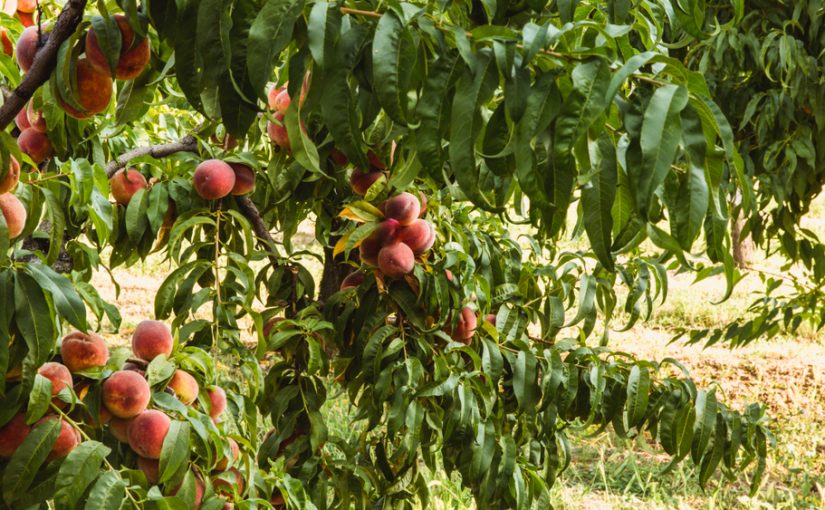
But we have changed that, we’ve planted close to 750 fruit trees. We now have berries, peppers, plums, apricots, peaches, six or seven different types of apples, grapes, blackberries, raspberries, asparagus, edible crops, many medicinal plants. We now have so much crop diversity.
Also, we’re building our cob houses. We have a natural geothermal cooling and heating system. The way the world is today, anything can happen. But the Pueblo can thrive because we are prepared and have the ability to grow food in difficult conditions.
We also have a seed bank that we built 2011 from recycled materials. We used compressed tires in the foundation and straw bales and adobe for the walls. The most important thing is we didn’t hire a construction company. It was built with the hands of the people from the Pueblo, young people from the Pueblo of Tesuque. The spirits blessed us and guided us in building the seed bank. Besides the seed bank, we are using solar panels and have a solar dryer and a solar shower.
My principle focus is preserving the traditional seeds because for thousands of years indigenous people have been selecting the best crops, growing them out and saving the seed. The work and knowledge of Indigenous farmers are the basis of agricultural science.
We are also trying new things like growing vertically strawberries, tomatoes and all the seeds we have in storage in the seed bank to see how they grow in different types of situations and conditions. I don’t want to say that we discovered new things, but we’re taking techniques other people are already practicing to see if we have the same adaptability.
The way we work we try to do most all our activities by hand. We try using machines as little as possible. We use drip irrigation and micro sprinkler systems. Our micro sprinkler system is not very high. Maybe one or two feet high because we want to preserve the water in the dimension where evapotranspiration happens, so the plants don’t dry out from the heat.
The other factor is we are not irrigating in the daytime, only when we plant or in very extreme situations to refresh the plants. The rest of the time we irrigate at night.
We have to respect the spirits. Mother Earth has spirits, the water has spirits, the air has a spirit. Everything has a spirit. That’s why when we have to do something, we ask permission from the spirits.
ARTY: Are you saying that before you make a decision on some of your horticultural practices, you consult the spirits?
Emigdio Ballon hosting the Seed Exchange at the Bioneers Conference
EMIGDIO: Definitely. I have a very long background in science. I have a few publications in magazines, my thesis was published, but the scientific world doesn’t give value to spiritual things or the practice of indigenous people. We have to talk with the spirits, we have to ask permission from the spirits. Yes.
ARTY: That’s a very traditional way of doing things. Are there other traditional practices that you use?
EMIGDIO: There is not a big difference between the practice of the Quechua or the Inca people, and the people here from the Pueblo. For example, before doing anything, we have to ask permission or make an offering. We have to give something to the spirits because the spirits give to us so many different things. Talking this way may sound a little crazy because I can’t prove the benefits and the effect of the spirits.
We have had some damage to the crops, but the damage is not very intense. We don’t use any type of insecticides. We’re organic certified, and we don’t use any type of chemical fertilizer. We spray edible preparations. When we do that, we’re checking and asking the plants if it’s okay or if it’s not okay.
ARTY: Are those preparations biodynamic? Biodynamic agriculture has a spiritual component. Are you blending traditional indigenous practices with biodynamic?
EMIGDIO: Yeah. Biodynamics practices are very interesting because they relate to the spirit of connection because you have to make all these applications at sunrise or sunset. For my people, the Inca people, we have to look at the constellations and we have to look at the moon, also we have to look at the sun. We’re looking at all these elements. When you go to Bolivia to Titicaca Lake you have the Sun Gate or the Door of the Sun. If you look at it exactly when the sun is going to pass during the equinox, it is an indicator calendar for planting or harvesting.
ARTY: You mentioned all the different varieties of fruits, vegetables, perennials and annuals you’re growing. Why is biodiversity on the farm important?
EMIGDIO: When I finished college in my country, I was working with my people in the Altiplano area of Bolivia, and I began to tell farmers what I learned in university. I said, “Guys, we have to begin to separate these tubers – the color and the sizes – and we have to plant things separately.” Then I had a conversation with my uncle, he said to me, “You know what, I’ve been planting potatoes for seven years, and now you’re trying to teach me how to plant potatoes.” It was funny.
Altiplano farmers plant a mix of different potatoes, different colors – purple, red ones, white ones, etc. It’s very interesting. When there’s a frost, some survive, some die. And that’s the importance of the diversity of the crops because some of the crops can tolerate the heat, some crops can tolerate the rain, some tolerate frost and other conditions.
Hopi people and Quechua people have very similar techniques for planting in dry land. When you see the Hopi people, they’re planting not only one color of corn. They’re planting so many different colors of corn. And they practice dry land farming. They put one seed or five seeds or 10 seeds or 20 seeds in one hole. They are practicing what we call natural selection because some survive certain insects, some survive the dry conditions. When you ask me, “Why is diversity important?” my answer is, so that people can have something to eat.
ARTY: Seeds are a big part of your work and a part of your life. What’s your relationship to seeds?
EMIGDIO: My relationship with seeds goes back to when I was growing up. My mother was making business from one location to another location, from one community to another community, moving seeds all the time. I was traveling with her and taking different types of seeds to different Indian places. When I was young, I planted quinoa and potatoes with my grandfather. He put some seeds in my hand to plant, but I kind of ignored the relationship. Before my grandfather passed away, he put a bunch of seeds in my hand, and he said, “This is life.” At the time, I didn’t realize the significance of those words. But seeds have become an important part of my work for almost 34 years. That’s why I am very tied to the seeds.
ARTY: As a result of that, you built the seed bank at Tesuque. What types of seeds are you saving?
EMIGDIO: I mentioned my focus on traditional seeds: seeds for Hopi people, Navajo people, Quechua people, Guaraní people. We have different types of corn from Hopi, beans from Hopi, melons from Hopi.
I have different types of beans from Africa, Peru, Mexico and Bolivia because at some point people may need to grow these crops in this area. We also have different types of tobacco because tobacco is very important for the indigenous tribes, not only in the US, but all over the Americas because they’re using tobacco for ceremonies and medicine.
We also have a diversity of quinoas because thanks to the spirit of the quinoa I came to this country. In 1984 or 85, I was invited by Professor Dwayne Johnson from Colorado State University to do research on new crops in the US – quinoa, amaranth, the small tubers, and other crops.
ARTY: Do you exchange seeds with other folks?
EMIGDIO: Actually, we are open for exchanging or giving. We get some funding from Seeds, Soil and Culture to send seeds to other Indigenous people or other people who want to work with these types of seeds. We are going to send seeds to Taos, to Navajo people and the Hopi people. Hopi people from Second Mesa and Third Mesa get tobacco from us for the smoke in the kiva because the kiva is very sacred and they want tobacco that isn’t grown with chemicals. They need to have sacred tobacco, and sacred tobacco is the tobacco that doesn’t have contaminants.
ARTY: Most of the general public doesn’t think much about seeds, why are seeds important?
EMIGDIO: Those who control seeds, control life. That’s true. If the corporations control the seed production, we have to depend on these corporations. That’s why, for me, it’s so important to maintain the open-pollinated seeds, it’s so important that every single person has their own garden where they can grow their own food and collect their own seeds. For me it’s very, very sacred talking about seeds.
Here in the Pueblo, when we have to do the planting, we pray; when we have to harvest, we pray. You can say, oh man, these people are crazy praying. Prayer will bring nothing. But for us, it’s so important because prayer connects us with the greater spirit. The spirits are with us all the time when you care about them – water, earth, seeds, clouds, all these things. Indigenous People are not taking gold and silver out of the mountains. We’re not digging Mother Earth to take the oil out. We respect those parts of Mother Nature as sacred. It’s sacred because they are part of life. Food, medicine, everything comes from Pachamama.
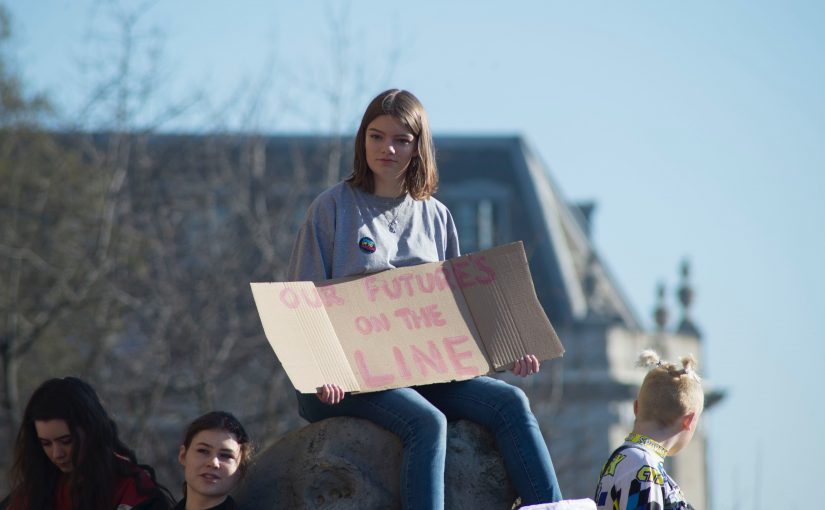
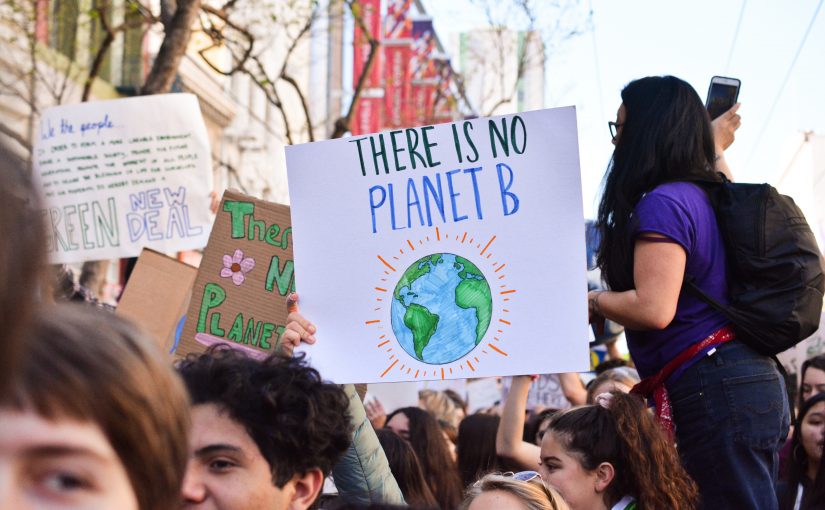
On Sept. 20, millions of people across 132 countries are expected to leave their schools and places of work to take part in the Global Climate Strike. This protest, organized by a coalition of youth climate activists, is meant to send a message to politicians that people want meaningful action on climate change. A massive disruption of the status quo is a deliberate strategy to portray the urgency of the situation, with activists noting that “the climate crisis won’t wait, so neither will we.” The strike is scheduled days before a United Nations climate summit in New York, and will kick off a full week of action and activities.
350.org, an “international movement of ordinary people working to end the age of fossil fuels and build a world of community-led renewable energy for all,” has been an ongoing supporter of youth climate activism, and, most recently, the Global Climate Strike.
“We are supporting young people across the world who are organizing youth-led strikes,” says Thanu Yakupitiyage, Associate Director of U.S. Communications at 350.org. “There was a call from young people across the world for adults to step up and join young people in calling for bold climate action. There’s a real desire to make this an intergenerational moment for transformative action. 350.org is supporting along with many other, I guess you could say, ‘adult groups.’ We are supporting them and making sure we’re backing them all the way. You can check out the U.S. youth demands at strikewithus.org.”
The list of demands for the Global Climate Strike is decentralized, meaning that young people in different locations may have specific, place-based requests. However, the overall purpose of the Strike will be focused on transformation of the economy through ending the era of fossil fuels and supporting a Green New Deal that creates millions of jobs for workers in a sustainable, 100% renewable economy.
The Global Climate Strike is the latest event in an increasingly youth-led environmental movement. In the fight for their future, younger generations are organizing behind leaders like 16-year-olds Greta Thunberg, a Swedish activist who founded Fridays for Future, and Irsa Hirsi, daughter of Rep. Ilhan Omar (D-MN) and executive director of U.S. Youth Climate Strike. The world is currently home to the largest generation of young people in history, and the Union of Concerned Scientists notes that “kindergarteners starting school this month have lived in the five hottest years on record.” Young people will be the ones to deal with a future burdened by the worsening impacts of climate change, which is one reason why they are taking bold action now.
“There’s something really powerful about young people taking the helm,” says Thanu Yakupitiyage, Associate Director of U.S. Communications at 350.org. “In a system of intergenerational learning, what we’re seeing is that not only can young people learn from adults, but adults can learn from young people about what it actually takes to make changes. We’ve seen over the last year, even with the Green New Deal, it really is kids pushing that movement, and we need to get behind that.”
The Global Climate Strike will be huge, but not unprecedented. Earlier this year on March 15, 1.4 million young people worldwide participated in the largest global climate action protest ever as part of Thunberg’s Fridays for Future movement. On May 24, another Fridays for Future strike took place at 2,300 schools worldwide. The fact that these strikes are happening at schools also makes a larger statement about the increasingly dire consequences of climate change.
“The impetus of it is to really disrupt business as usual. A lot of the logic around the strikes and young people leaving school is actually pretty brilliant. It’s like, ‘If you want us to stay in school and prepare for our futures, we’ll do that, but if there is no future for us because of the climate crisis, then why would we stay in school?’” says Yakupitiyage.
The success of the Global Climate Strike is contingent on people showing up and showing solidarity. The easiest way to do so is by signing the pledge to get involved. The pledge page also contains a global map where you can find and RSVP strikes going on near you. If you’re unable to join a strike yourself, you can still take action as an ally. Spread the word with your friends and family, or use this step-by-step organizer’s guide to initiate a strike in your workplace or community.
Coalitions of young people and adults are expected to remain active and follow the growing momentum of this year’s strikes, especially with support from individuals around the world and from other organizations. As one of the main nonprofits helping to organize the Global Climate Strike, 350.org has outlined campaign tactics to help maximize the impact of the strike.
“We’ll be continuing to work to stop the fossil fuel industry, to phase out fossil fuels and to hold candidates accountable going into the 2020 elections,” says Yakupitiyage. “We’ll demand that the fossil fuel industry pays for the damages that have been accrued because of the climate crisis, because Exxon knew, all of these fossil fuel companies knew what would happen with the burning of fossil fuels, and they let it happen for a short-term gain.”
By escalating action, the youth-led environmental movement will continue to “turn up the heat,” so that politicians and big businesses feel the pressure to protect the environment as much as they protect their own profits.
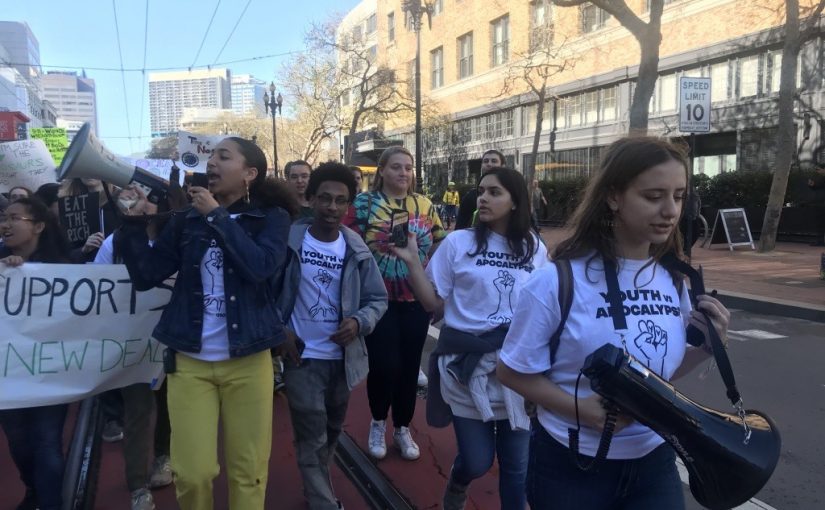
Isha Clarke of Youth vs. Apocalypse discusses how their group is redesigning the climate justice movement to centralize justice and provide a platform for youth of color and indigenous youth. YvA is doing deep work to build local, national and global coalitions with other youth movements and adult allies. Maya Carlson, Manager of the Bioneers Youth Leadership Program, caught up with Isha in between her school work and activism to find out more.
MAYACARLSON: Tell us a little bit about yourself. What identities are you holding right now?
ISHA CLARKE: I am a doer of many things at once. I’m a student. I’m a dancer. I’m an artist. I’m an activist. I’m a human being. I’m a sister, a daughter, a cousin. All that. I feel that I have a voice and a message that’s important, and I don’t think that’s unique to me. I understand things, so I feel it’s my responsibility to express that and to spread the knowledge. I think I’m also a leader.
MAYA: How did you get involved in climate justice organizing?
ISHA: I first got into climate justice in 2017 when I was invited to an action targeting Phil Tagami, a very prominent developer in Oakland. He was trying to build a coal terminal through West Oakland and was suing the city to do so.
The action was going to his office dressed as elves. It was a Christmas in June theme, and we had a long scroll made by a bunch of students from all over Oakland saying that the kids of Oakland don’t want coal for Christmas. We were anticipating just going to his office, but there was an exchange very similar to the exchange with Senator Feinstein. That was the moment when I realized how much I love doing that work and how important climate justice is, specifically because of how central environmental racism is to climate justice, and how intersectional the fight is. I realized that that is where I belonged. This was at the end of my freshman year of high school. A lot of the people who were at that action were the original members of Youth vs. Apocalypse (YvA).
MAYA: Tell me more about Youth vs. Apocalypse. How did it evolve into what it is now?
ISHA: Youth vs. Apocalypse has undergone so much change in the past year. YvA started off as a fellowship with about 10 youth fighting this coal terminal. It’s grown into a coalition of people who are now working on national and global movements. We very quickly transitioned from this small group fighting local fights to organizing strikes that are a part of national and global movements, which is huge.
The purpose of YvA is to reshape the climate justice movement and try to save the world while doing that.
MAYA: You spoke a little bit about environmental racism and the importance of centralizing youth of color and Indigenous youth in climate justice movements. Are you working with other groups to bring that conversation forward? What does that look like for YvA in practice?
ISHA: YvA’s central mission is to do climate justice work in a way that respects what we’re trying to accomplish. When we’re asking for volunteers, we ask folks to think about their identity and their privilege. We are always having the conversation about what a movement that’s truly diverse looks like. There’s a very real difference between saying that you’re trying to empower youth of color versus giving a platform to youth of color. It’s not about giving power to youth of color, because youth of color already have power in them. They already have importance, they already have a presence, they already have ability. It’s about providing the space for them to claim that. That’s something that YvA is also trying to do. “I’m not going to call on you to speak because you’re a person of color. I’m going to give this space for you to feel comfortable to say that this is what you want to do.”
We are constantly having this conversation, and through having this transparency all the time, everyone in our group takes the task on themselves to look at who they are and how they’re privileged, or how the oppression that they experience may impact what they feel comfortable doing or what they feel their role should be in trying to challenge that. We make an effort to orient ourselves in a way that respects what we’re trying to fight for.
MAYA: How does this type of work happen when you collaborate with other people, both youth and adults?
ISHA: One of the reasons YvA wants to reinvent what the climate justice movement looks like is because historically the climate justice movement has not been about justice. It has excluded voices of color, and it hasn’t reflected folks most directly impacted by the climate crisis. This structure still exists in a lot of the ways that people are organizing, and it’s not necessarily intentional. I think it’s more about a lack of understanding, of not having lived the experience of being excluded or shut out. It’s work to make sure that when YvA is collaborating with other people that we’re on the same page about climate justice.
YvA has done workshops for other organizations about what it looks like to be an ally in the fight for climate justice. YvA is trying to do work within the movement and trying to move the movement forward. It’s a loaded task, but if we don’t address the same systems that got us to this climate crisis, we’re not going to be able to reverse it. We can’t actually meet our goal of reversing climate change if we don’t acknowledge the systems of oppression – like racism, white supremacy, and greed – that led us to the climate crisis.
MAYA: How do you see adult allyship working in youth-led movements?
ISHA: Adult allyship is actually very strong at this moment. Adult organizations will reach out to YvA asking, “What do the young people want to do?” Adult organizers are very much trying to follow the youth. There is still work to be done there too, because, yes, the youth need to be leading this movement, and I’m super glad that people are on board with that, but there’s also a point at which we get stuck … where we can’t do everything. There’s a difference between leadership and carrying everything.
It’s also true that a lot of these adults have been organizing for decades; they have a lot of experience. Young people aren’t disregarding the fact that we’re working with people who have a lot of experience. Youth should be envisioning what moving forward looks like, but with the support of people who have been doing this work, and who may know things that we don’t know. There can be more collaboration. Overall though, we have a lot of adult allyship, and that’s something that is relatively new and it’s working out well for us.
MAYA: It’s been neat to sit in on some of the meetings and witness how labor unions are showing up and supporting youth-led movements.
ISHA: I was just saying that that’s one of the most exciting things for me, that we’ve gotten so many labor unions on board. That’s something very new, and I think it’s super powerful. When we’re talking about the Green New Deal, one of the arguments from the other side is always that labor doesn’t agree with it, that it’s not good for them, they don’t want it. This collaboration between YvA and Labor is proving everyone wrong. This coalition building also reinvents what the climate justice movement looks like. Climate justice includes labor unions. Labor unions are fighting for the Green New Deal and for climate justice, and I think that’s super powerful.
MAYA: I want to close out by talking about the Global Climate Strike. How is YvA involved in the September 20th Climate Strike? What’s your role both locally and nationally?
ISHA: YvA is definitely one of the leaders of the Bay Area Strike. We decided that we wanted to have seven demands for the seven days of the strike, each with a direct call to action. We’re also doing a lot of outreach. One channel of outreach is doing a lot of school presentations and talking to teachers. We’ve been super successful at getting teachers to make the climate strike a field trip, getting BART passes and school buses for people who need support in getting to the Strike. Through all of this, we’ve been able to get a lot of Oakland public school students to come to the strike. We’re also working on this in San Francisco. There will be a lot of students at this strike, which is going to be super powerful, because that’s exactly what we want.
We’ve also been coordinating with adult allies who are working with us. YvA’s main thing is the September 20th General Climate Strike. There will be a week of actions following that where other local organizations have their own events, but we’re all in collaboration. With all of us working together, we’ve been able to coordinate a lot.
Ten Strands is a San Francisco-based nonprofit dedicated to bringing environmental literacy to all of California’s 6.2 million K–12 students. They have been instrumental in establishing and implementing breakthrough policies that have trained over 20,000 teachers and implemented environmental literacy curriculum in 40% of the schools in California to date.
Teo Grossman, Senior Director of Programs & Research for Bioneers, sat down with the founders, Karen Cowe and Will Parish, to learn more.
Karen Cowe is CEO of Ten Strands and Project Director of their Environmental Literacy Steering Committee. An education-industry executive with 25+ years’ experience, she was formerly President/CEO at Key Curriculum Press.
Will Parish is the Founder and President of Ten Strands. Will is a credentialed public high school science educator with a 30-year record of innovative accomplishments in the environmental and educational fields. He taught Environmental Science at Gateway High School in San Francisco, and now serves on the board. He served on the California State Board of Education’s Curriculum Commission and then founded Ten Strands as a nonprofit organization to support California’s efforts to achieve statewide penetration of high-quality environment-based education into schools.
TEO GROSSMAN: What does the name of your organization “Ten Strands” mean?
WILL PARISH : The symbol that we have – which is the intertwining, woven wreath – has blue for the sky, green for growth, yellow for sunlight and brown for soil. What does the ten mean? The number one is the beginning and zero is the end of everything. If you put them together, you get ten, which is the symbol of perfection, and of course which Mother Nature is. It’s also the basis of our numeric system, so it feeds right into education.
KAREN COWE: We knew that we wanted to link education, environment, and community, and we were thinking about the kinds of things that strengthen those ties. Our view from the office is over the Golden Gate bridge, and we were thinking about the cable in the bridge and about the John Muir quote, “If you touch something in the universe, it’s connected to everything else.”
TEO:
How did you both come to this work?
WILL: When I was teaching environmental science at Gateway High School, I was asked to start the program, and did so in 2002. A few years into it, I was asked to teach Civics, which I loved, so I did that. One day, I noticed the students weren’t very energetic, so I tried something. I brought a Twinkie into the classroom, and I said, “Where can you buy one of these?” And everybody said, “Well, any corner store has them.” I said, “That’s right. Corner stores are full of junk food, booze, and cigarettes.” I said, “Where can you buy a head of lettuce or a bunch of carrots?” And they said, “Well, across town; can’t do it easily in Excelsior or Bayview Hunters Point.” And I said, “Well, that’s by design to some degree.” They said, “Really, Mr. Parish?”
So we talked about “food deserts” and the systems that keep them in place, and that incensed the kids enough that it was an incentive to learn more about civics and how citizens operate in a democracy. That experience set off a light bulb in my head, and I thought, wow, if that works well in my class, why couldn’t it work well in all subjects in all classes? So I sought a position within the education state policy arena to see if we could influence introducing that teaching style, and I was appointed to the State Board of Education Curriculum Commission, now called the Instructional Quality Commission.
In that
position, I was chair of the science committee just when the Education and the
Environment Initiative Curriculum came up for review. I found that I wasn’t the
only one with this idea. There were over 100 people who had not only thought
about this idea, but had spent seven years preparing the most amazing piece of
curriculum for science and for history/social science that enhanced the
teaching by connecting the students’ to their own environment. That’s really
how I got into it.
TEO: So you were a teacher. Was that
something you went into early in life?
WILL: Yes, yes. Very early. In college,
I was a cross country ski racer, and had been into backpacking and horseback
riding, and very much loved to be in nature.
I think the
seminal moment happened when I was on a trip around the world in my Jeep with
my roommate, and I was exposed to the amount of environmental degradation all
around the planet having to do with resource use, primarily fossil fuels, and
the pollution associated with that. And I committed myself in my mid to early
‘20s to dedicate my life in some way to address that situation.
My first step was to go to law school, get a law degree and develop a means of combatting the electricity production system that relies on fossil fuel. So I built a company that uses the alternative fuel of agricultural crop waste, and for 14 years I built this company to produce electricity for Southern California Edison. That ran its course, and I took another job having to do with educating people from airplanes about the environment below.
By the time
I was 46, I asked myself, what have I really liked in the arc of my career? And
it was education. It coincided with Governor Gray Davis saying, “We need more
teachers. If you go get a job at a school, you don’t have to have a credential,
as long as you sign up for credentials.” So I said great, that’ll be my next
step. That’s the full arc of how I wound up in the classroom.
KAREN: As I think about my career, the
way that I characterize it is about having an interest in place-based
education. Before I even knew what a career was, I was connected to place where
I grew in rural Scotland in a village of 1,200 people. My family’s been in that
village since at least the 1300s.
My village is on a hill, near a tributary of the River Tweed. My mother worked in a paper mill on the tributary, and she actually had lots of jobs. But when I was a teenager, her job was to test the quality of the water in the river and how the mill was impacting it. I learned early from her the importance of the ways in which things connect in any given place, in any given village around the village, to the rest of the world. Right? So if my mother wasn’t going down to the river on a daily basis and collecting water samples and taking them into the lab, and sending that data up to the Scottish Environmental Protection Agency, then all of that would be impacting what was happening downstream. I always understood that it was important for us to be stewards, because that little tributary connected to the Tweed, and that floated in the North Sea and connected to the world’s oceans.
So when I went
to university, and started to think about what I wanted to do professionally. In
the summertime, I started teaching English to young students who came to the UK
from other countries. And I was always struck by the instruction materials that
I was given, because they were never about the place where these kids were.
They were about London, for example, when we were all in York. So I used to
just throw away those materials and rewrite them for that place.
Then when I left college, I lived in Greece for six years. I started working for the first publishing company ever in Greece to write instructional materials about Greece, to teach English to Greek children, because those materials were previously coming from the big publishing houses in London. It was such an obvious idea to me to localize instructional materials.
I moved to the States in 1996, and I started to work for a math publishing company. We did math and science and a little bit of engineering, and we were maniacs about creating authentic experiences for children to explore their own view of mathematics, instead of these pseudo contexts that you make up to help them grasp concepts.
In 2012, the shareholders of the publishing company I was working for decided to sell the business, and I took it through a transaction. Around that time I met Will, and he told me that he wanted to start a nonprofit focused on environmental literacy. The penny dropped for me. I was like, Oh my gosh, that’s exactly the thing I’ve been building towards over all these years!
TEO: Can you talk about the work you’re
doing now?
WILL: Every fourth-grader in California public schools learns about the gold rush. And there was a particular curriculum that went way beyond what you would normally learn about the Gold Rush, such as about the monetary basis of it, San Francisco growing as a financial center, or the incredible work that it took Chinese immigrants to build the tunnels. This curriculum included information about the environmental impact of the Gold Rush, such as the hydrological mining that liquefied the mountains and ruined the streams below, and the use of mercury to leech out the gold, and how that sits in the bottom of the San Francisco Bay, which is the reason that we can’t eat our shellfish.
There are 500 lesson plans in this curriculum interspersed in the subjects of science and history/social science. The idea was to focus on kids that take those two subjects from kindergarten all the way through the 12th grade, with a slow drip irrigation of environmental impact throughout science, throughout history. We got it approved, and about that same time I met Karen, who knew how to push it into the school system.
KAREN: We worked on that first project – the Education and Environment Initiative Curriculum – in partnership with CalRecycle, which is part of the California EPA. Through that partnership, we have trained over 20,000 teachers and brought the curriculum to over 4,000 schools – about 40% of the 10,000 schools schools in California. At last count, there were 7-8 million lessons in circulation. That was a really nice start for us.
That curriculum came about because of 2003 legislation that was authored by Senator Fran Pavley, and it called for two things: the creation of environmental principles and concepts – big statements that articulate the interdependence of natural systems and human social systems. And it called for the creation of a model curriculum that demonstrated how to translate those statements into standard based instruction.
At first, our eyes were only on the curriculum, because it was the thing that existed. We came to learn that there was probably going to be more mileage in the principles and concepts side of the equation rather than the curriculum, because it was just there as a model for how to do it. Environmental principles and concepts were going to really be the vehicle for fully integrating environmental literacy into existing education infrastructure in California.
In terms of this legislative trajectory that we’re on, through that Pavley legislation we learned these environmental principles and concepts could be integrated into some core education documents, like standards and frameworks and assessments. The timing was perfect because there are new science standards, new history/social science frameworks, new health frameworks. If we’d come along at a different time, slightly earlier or slightly later, there would be nothing to jump on this opportunity. But we were there at the right time.
Fast forward,Ten Strands sponsored legislation SB-720 in 2018, authored by Senator Allen and Assembly Member Tony Thurmond. What we were doing with that legislation was to say, we’re going to have a new governor and a new superintendent, and a lot of what we’ve been doing to has been informal. How can we formalize it?
SB-720
basically does four things:
1) It directs the State Board of Education, the State Superintendent of Public Instruction, and district superintendents and their school boards to support environmental literacy;
2) It pulls the core ideas from the Blueprint for Environmental Literacy into education code as the State’s definition of environmental literacy, with these big human-impact, human interdependent statements;
3) It supports teachers through curriculum instruction, professional development and assessment, and helps them build relationships with science-rich community-based organizations;
4) It
articulates a process in the public resources code for revising the
environmental principles and concepts based on current scientific and technical
knowledge, specifically getting climate change in.
TEO: Practically, what does that mean for a
student in the classroom? What changes?
WILL: One of my favorite examples was
how to make economics interesting to a high school senior. Right? You don’t do
it by starting with, “Well, students, today we’re going to learn about—[YAWNS]
excuse me…the theory of economics. We’ll start with Keynesian theory.” Right?
You don’t do that.
What worked so well in the EEI curriculum, is you say, “Hey students, raise your hand if you know anybody in the salmon industry.” Everybody raises their hand because they have a fisher parent or a waiter in a restaurant, or they eat salmon. So my next question might be: “Well, where does salmon come from?” Duh, the ocean. And, “How do you get the salmon out of the ocean?” You use nets. “What happens to the other wildlife in the ocean when you’re using these nets?” So the kids begin to think about the by-catch and if you use bottom-trawling nets, the destruction of seabed ecosystems around the world.
Another
question is: “Well, if they use nets, how many boats can be out there catching
all these fish?” And more conversation. “Well, can anybody come catch? What
about the Chinese, the Japanese, Norwegians?” And of course, yes is the answer.
So we begin to get them really interested in, Oh gee, I can see what’s going to
happen here; there are an awful lot of people who want a limited resource.
Then I talk about, “Well, how many jobs are there?” and “What happens to the resource over the course of a few years if the fishing goes unabated.” And of course it depletes. So now I’ve got ‘em, right? So then we can talk about regulation, and drop into: “So what does all this mean? You’ve got the fish. You can think of a supply. You’ve got the fishermen, women, as the demand, and where’s the optimum level, and how do you achieve that?
I haven’t
even mentioned the word economic theory, and yet we’re diving right into it,
and now the kids are really interested. Yeah. So that was fun.
The lead consultant that we work with who led the EEI development helps us to think about the environmental principles and concepts. If you look at science standards or history/social science standards or health standards, how do you take these big statements of interdependence and connect them to those disciplinary core ideas? So that you’re not just studying the topic absent human impact, human dependence, complexity as a result of governmental decisions and that kind of thing. It’s a way of thinking, and it it is basically systems thinking – grade level appropriate, content specific.
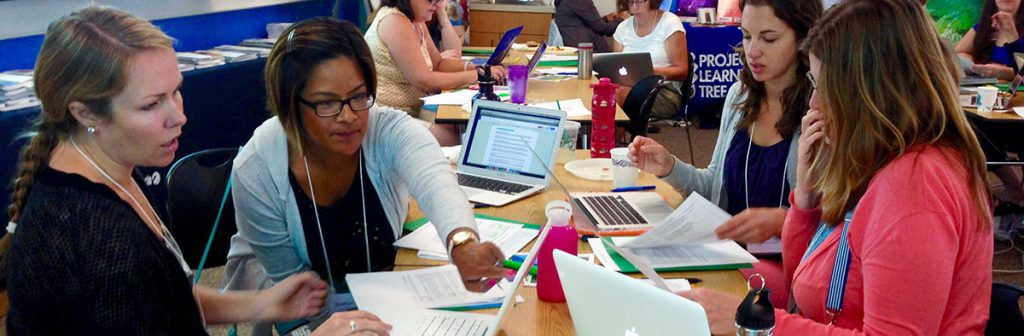
When you’re working with groups of teachers, you help them think about their lesson planning and their unit design by keeping this human impact, humans dependence upon natural systems in mind as they’re doing their planning through the unit against their grade level topic.
TEO: How progressive is this? Where does this legislation being implemented in California rank compared to other states or private institutions?
KAREN: We’ve chosen to work with the State of California rather than, for example, through private schools or through charter management organizations. We’ve chosen to join the California Department of Education, to look at their standards and frameworks, which emphasize a kind of pedagogy that’s interesting to us: inquiry. The Next Generation Science Standards that California adopted in 2013 are very thoughtful, progressive science standards, and so we are just joining that movement.
In terms of environmental literacy, we’re not aware of any other state that’s got anything like that extra layer that California’s got going, which are these Environmental Principles and Concepts. We’ve been told that California is far ahead of most other states. Although many other states have blueprints for environmental literacy, and are implementing the ideas, we don’t think any of them are as funded as well as we’ve been able to fund our effort. Maryland, for example, has an environmental literacy high school graduation requirement. That’s the one other place that we’re aware of that has some education legislation supporting this kind of thing.
WILL: Another state, Oregon, has passed
legislation that gets kids outside, and it’s not exactly part of the education
system, but it is acknowledging that getting kids outside is an important
educational goal.
After No Child Left Behind, there was a federal law dating back to 2001 that some lawmakers attempted to pass. This other bill came forward, which was No Child Left Inside. It never became law, but it proposed federal funding for states that incorporated some sort of environmental education into their education system. 22 or 24 states adopted an environmental literacy plan. And those plans exist in Maryland, Oregon, Hawaii, Kentucky, Colorado are just five of those 20-some states. I think it’s safe to say that they’re looking at California to see what can happen at the legislative level to impact the entire system, because nobody else has gotten that far just yet.
TEO: What’s at stake if the work succeeds? In terms of the number of students going through California public schools, what’s the dream outcome? A generation of students who are environmental literate. Do either of you have a sense of what that practically means?
WILL: Let me just give one quick
example. Each year, 400,000 kids in California graduate high school and they
are all of voting age. So if they would register, and if they have gone through
the California system of environmental literacy, my hope is that legislation
and supporters in Congress and in the Senate, and down the ballot and across
the California state positions of authority would be people who support
legislation that is pro-environment, or that is beneficial to reducing the
human impact on the environment.
KAREN: There are 6.2 million students in California alone. You know? There’s eight Scotlands in California. It’s a big system. Will mentioned No Child Left Behind and that era of accountability where things just got boiled down to math and english. We have an opportunity here where kids again are learning science with very thoughtful standards. We are encouraging kids to do hands-on work and think critically. You can help stimulate different thinking as kids are exposed to some of these subjects for the very first time.
I remember a
friend of mine telling me that when California had a big push for recycling,
the kids were the ones going to the parents and saying, “I just learned this in
school; this is how it’s done.” That helped bring about a behavior change at a
level that you’ve never seen before in California.
So it’s
wonderful that there are nearly half a million voters coming out, but also just
at a level of a second grader and that level of a fourth grader, the way in
which they’re able to think critically about the materials that are being put
in front of them is just also really very empowering for them.
TEO: David Orr, the educator and writer, is famous for saying all education is environmental education. In his landmark book, Earth In Mind, he laid out a set of principles that he suggested no student should be able to graduate college without having a basic understanding of.
It sounds like you’re replicating this approach in K-12, suggesting that no student shall graduate high school without a basic understanding of how the world actually works with regard to natural systems – we depend on them, they depend on us.
KAREN: Exactly right. That’s it.
TEO: Talk about the collaborations Ten Strands is involved in. I know you have a strong focus as an organization, as a network, and as movement on equity as a key component of how this is all going to work.
KAREN: We do not do this alone. The most direct group we work with is called the Environmental Literacy Steering Committee, which we helped form in collaboration with the Superintendent Torlakson. It’s a 30-person committee that organizes around the state’s Blueprint for Environmental Literacy to implement the ideas in there. Will is the co-chair of that committee, and Craig Strang from the Lawrence Hall of Science is the other co-chair. I’m the project director, and the people on the committee are from the formal system, the non-formal system, government agencies.[s2]
When we looked at all the ideas in the Blueprint, we asked, “Where do you start?” One of the things that we decided as a group at the very beginning was that it was really important for us to take this work to scale, and that it needed to be equitable and culturally relevant to the diverse communities that we work with in California. Looking at the whole system, the best way to get it there was to identify school districts as a unit of change. You’ve got these 6.2 million students who are in 10,000 schools, and a thousand school districts, and 58 county Offices of Education. When we looked at all those numbers, we thought that a thousand school districts was something that we could get ours head around as a number.
Also,
because of Governor Brown’s local control policies, the funding for schools
flowed most directly to school districts. So in terms of sustainability around
this work, environmental literacy – alongside science and other core subjects –
would need to be articulated into district goals and priorities. So we have
these three sort of big guiding goals – scale, equity, and cultural relevance –
and school districts as a unit of change.
In terms of
how we’ve organized around that, in addition to the steering committee, we have
18 different partners now working on the different parts of the plan. We’re
working with four different statewide networks that specialize in teacher
in-service professional development: the California Science Project, the
California History/Social Science Project, the Global Education Project, and
the California Science Teachers Association, which is the largest professional
organization for science teachers in the state.
We’ve raised
money and made direct investments in those networks so they can integrate the
environmental principles and concepts, and environmental literacy in the
workshops they do with teachers. So that’s one of the ways in which we’re going
about trying to take the work to scale.
We see school districts as a unit of change and as a strategy to attend to equity, because as we get into planning with school district leaders, like the district superintendent, the district curriculum instruction person, the district professional development person. We’re saying let’s plan together for all schools in your district. So it doesn’t matter really which zip code a school is in.
TEO: Unlike the Las Vegas’s claim to fame, what happens with California often doesn’t stay in California. This has been the case most notably with air quality standards but there are many other ways California serves as a leader, sometimes simply due to the scale of the state. Do you have a sense of the larger national or global potential for the project? Is it the same as the automotive industry, in that curriculum developers figure they might as well use California Standards as the baseline elsewhere, given the production scale?
WILL: There is an international organization called the North American Association of Environmental Educators, and they are focusing more and more on what’s working in California. The hope is that other states will be able to learn from the approach that we’ve taken in California with multiple stakeholders, and working within the system, and finding the key lever points to develop the relationships and move the system toward embracing environmental literacy. Is it exportable to other states? There are a lot of looking at what we’re doing.
There have been two different organizations that have asked for participation from California. I was invited to put on a workshop at UC Berkeley on the College of Natural Resources where each summer they bring 30 environmental leaders from 30 different countries. And because of the success that we’ve experienced in California with environmental literacy, I was asked to give a workshop about what it looks like, what’s the landscape. It was very well received. All of those countries were super interested to take nuggets of what they learned and see if they could apply them back in their home country.
The other organization was the World Future Council, which also asked that California be represented, and that was 15 different countries.
We haven’t
sought an audience internationally. We don’t feel like the work we have to do
in California is complete. This is a huge state, and if we can get it to work
here, it will be more easily exportable.
KAREN: I do feel, though, we’ve been pulled out of California to participate in conversations, like you said, through NAAEE, but also when we participated in the Global Climate Action Summit. There was definitely some international participation there, especially on a cross-sector panel that we ran at the end. So it’s starting to happen, even though we haven’t been looking for it.
TEO:
Where does Ten Strands go from here? You said that your work is by no
means done. Where does California go from here, what’s next on the agenda?
KAREN: One of the
things we’re considering is building out a state network that would offer
regional support to school districts to create environmental literacy plans
tied to district goals and priorities, and using these pilots that we’re using
right now to build tools and resources for the field.
Another
thing that we’ve barely touched on is thinking about future teachers. So if
you’re in the Cal State system or the UC system, and you’re going to teach
science, history/social science or English or mathematics, that as part of your
credential you know how to integrate environmental literacy into your science
instruction. So looking at the teacher pipeline and then building out some kind
of network to help districts to do this kind of planning.
At the end
of the day, it’s about making sure that we’re happy with the work we’re doing
and happy with the partnerships that we’re forming. You know?
TEO: It’s been hard work but it sounds like
through some combination of determination and talent and luck and timing,
things have unfolded in the right way. How are you feeling? You’re a small
organization working a gigantic system.
WILL: The analogy that I like to use is that Ten Strands is the tug boat pushing against the super tanker of the education system. I like the analogy because as the leaders of the tug boat, we have to be in agreement with the leaders of the supertanker where it wants to go. So we’ve been able to have that communication and say, “Hey, a little bit more toward those productive environmental literacy waters. There you go.” And it’s been a collaborative working relationship in that way.
KAREN: It’s just incredible to sit with teachers and their kids, and have the kids share with you what they’re learning as a result of taking this approach. We’ve been so lucky that, as we’ve built these relationships, obviously at the level of the state agencies, but also at the level of like a kindergarten teacher who has taught in the same school for the last 17 years. To go into her classroom and sit with her kids, and watch her teach the kids about structure and function as it relates to birds, and connecting that to litter reduction on the campus. These little kids, they’re little kindergarteners, and her job is to teach them to read. Here they are at the end of the year with her, they know how to read, and they know how to articulate themselves against a very complex topic. This is the thing that really keeps me going, all of the ways in which we meet these fine, fine educators working with these wonderful kids who have so much potential.
Bioneers is pleased to publish this guest post by Emily Jacobi, Executive Director of Digital Democracy, a US-based NGO that supports marginalized communities to use technology to defend their rights. Jacobi and Digital Democracy have long partnered with numerous organizations the wider Bioneers network. We read her #AmazonFires explainer piece and were struck by the depth and balance between researched facts on the ground and a grassroots, indigenous rights and conservation perspective. We trust it will be useful in terms of getting informed and engaged on this key issue.
In the past week, news of fires in the Amazon Basin spread through social media threads & news sites, sparking outrage, debate, resignation, denials and more. Maps and satellite images have been shared, but the take-aways haven’t been universal. Is fire a normal occurrence in the Amazon, this year’s blaze overhyped by the media? Are the fires, like melting Arctic Sea Ice, a tragic result of climate change? What are the socio-political factors at play? What’s really happening, what’s at stake, and what is there to be done about it?
As an organization that partners directly with Amazonian indigenous groups using maps, ground data & satellite images to protect their ancestral forests, these questions hit close to home for the Digital Democracy team & our partners. In this post, we seek to shed light on what’s really happening in the Amazon — both the fires and the political situation that (quite literally) ignited them. Where are the maps and data sources that can help us make sense of the news? What are the actionable steps we can take to be allies to Amazonian Indigenous Peoples who are on the frontlines of protecting the world’s largest rainforest? Why should we pay attention?
First, who are we, and why are we writing this?
Digital Democracy is a technology NGO, focused on supporting grassroots groups to leverage technology to defend their rights. We work at the intersection of human rights & environmental justice. For the past 6 years we’ve primarily worked in the Amazon, with frontline indigenous groups who have invited us to work with them. With partners in Brazil, Columbia, Ecuador, Guyana & Peru, we provide trainings & ongoing support to local groups, and co-create technology to meet their needs. Most of our programs focus on mapping & environmental monitoring, using technology that is accessible (ie cheap & easy to use) & works offline.
Every day, our local partners are putting their bodies on the line to document threats to the Amazon, and our international partners are amplifying these messages with campaigns, maps & satellite imagery. We are heartened by the outpouring of interest in the Amazon at this moment, and seek to illuminate not just the current reality of the fires, but the broader context that makes them so dangerous. The unfolding crisis in the Amazon is about much more than fire, and the planet’s future depends on us understanding what is happening in order to collectively advocate for change.
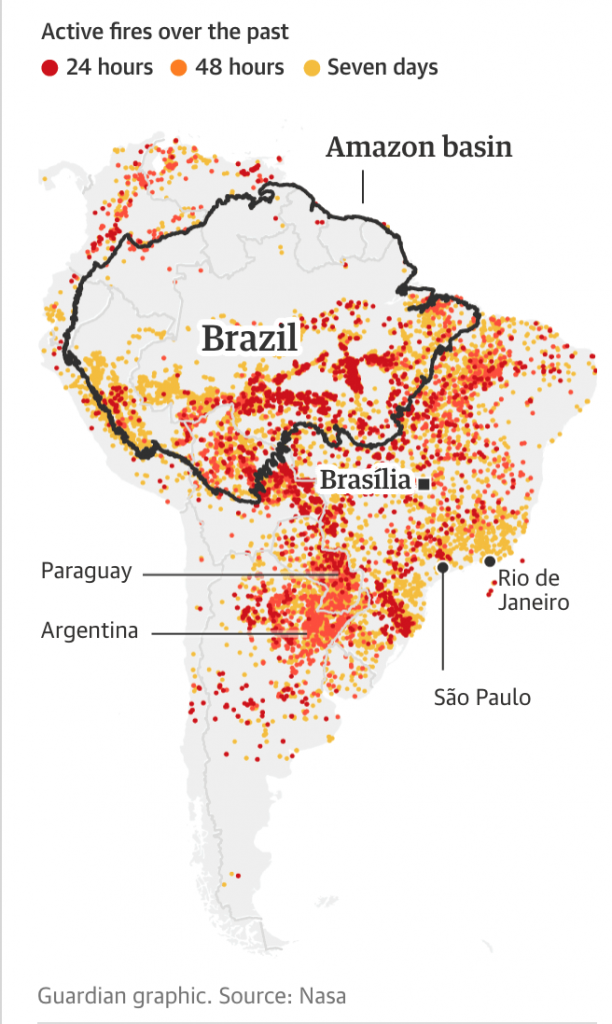
Tens of thousands of fires are raging across the Amazon basin, primarily in Brazil & Bolivia. The New York Times estimates the fires in Brazil to represent a 77% increase from the same period in 2018. Many of these fires are happening in areas that are already being used for agriculture, but what is particularly concerning is the high concentration of fires showing up newly clearcut areas, and where they are spreading into existing, or intact, forests.
As the map shows, fires are not only happening in the Amazon basin — as dry season begins in southern South America, fires are happening across the region. There is reason for concern beyond the rainforest — up to 800,000 hectares of Bolivia’s “dry” Chiquitano forest have been devastated by blazes, and Chile is facing its worst drought in six decades.
The focus of this post is on the fires currently happening in the Amazon basin. What do the fires mean for the human cultures & ecological life sustained by the rainforest? What impact might they have on the critical role that the Amazon plays in filtering oxygen & supporting the planet’s weather systems?
To see fire map data yourself, you can explore the interactive map & fire data on the Global Forest Watch platform, and read their informative blog post on the current fires. The InfoAmazonia portal is also an important aggregator & resource for Amazon-focused maps.
How does a rainforest burn, and what can be done about it? What’s really happening?
As a resident of California, I’ve seen and studied the role of fire as a management tool, and critical part of the ecosystem of the North American West. Trees in savannah areas & northern forests have adapted to fire being a normal part of their cycle.
But not so in the rainforest. The lush, wet conditions inherently prevent against fires, so wildfires are not a natural occurrence in tropical forests. Fires start in areas that have already been deforested, and even then are usually set by humans, not sparked by accident. However, fire itself is not inherently bad — in the Amazon it is a traditional farming tool to release nutrients into the soil. But as farming has gone from small scale to covering huge swaths of former forest, the phenomenon of fires during dry season has rapidly increased. It’s important to note that one of the factors right now is that August is the beginning of fire season — fires will most certainly increase over the next few months, both as areas that have been clearcut are set on fire to burn the undergrowth, and as farmers and ranchers ignite previously cleared areas to renew soy fields & grazing areas. As fires feed on recently clearcut areas, they can grow large enough to burn into intact forests, a cycle that then makes clearcutting easier next year.
What makes this moment particularly concerning is not that fires are happening, but where they are happening, how many are happening, and the political context that explains why the rate has increased so early this dry season, compared to recent years.
Deforestation across the Amazon takes many forms. For example, some of the partners we work with are challenging illegal logging in Peru, illegal mining in Guyana, oil drilling and gold mining in Ecuador. Across the region causes of deforestation include roads, agriculture, palm oil, and land grabbing. The many threats to the forest are rooted in the same thing: Colonization, theft of indigenous territories & resource extraction.
In other words, deforestation is not something that “happens” in the Amazon— it is something that is done, willfully, by humans.
The 1970s saw the first deforestation on an industrial scale in the Amazon, and for the following three decades forest loss rose dramatically. After hitting a high point in 2004, concerted efforts — both within Brazil & internationally — began to decrease the rates of deforestation — to be clear, the forest was still reducing in size, just at a slower rate. However, those numbers began to rise again over the past five years, as politicians in Brazil reduced political protections, and the demand for economic growth pushed for roads to be built in new territories. This is not simply a Brazil problem — global demands for cheap soy & beef encourage ranchers and farmers to claim more and more rainforest for grasslands and fields. This year, that trend towards higher rates of forest loss has spiked dramatically. In July, an area the size of Manhattan was cut down every day.
Why the sharp increase in deforestation this year?
This dramatic attack on the world’s largest rainforest is no accident. It is an attack not only on the forest but specifically on the indigenous people who depend on it.
Brazil’s President Jair Bolsonaro, who took office January 1, is a climate change denier who openly advocates for seizing indigenous held territory for private business. In 2017, while campaigning for president, Bolsonaro vowed:
“If I become President there will not be a centimeter more of indigenous land.” — Jair Bolsonaro
In 2016, speaking to Congress about Raposa Serra do Sol, Indigenous Territory in Roraima, northern Brazil, Bolsonaro declared:
“In 2019 we’re going to rip (it) up. We’re going to give all the ranchers guns”
Not dissimilar to US President Trump, Bolsonaro has staffed his cabinet with agri-business leaders, gutted environmental protections and stopped enforcing protections on indigenous & ecological reserves. These actions have led to predictable — and disastrous — consequences. The Bolsonaro government, hostile to NGOs, has severely undermined indigenous rights and is opening up the Amazon to more deforestation and land grabs than ever before. As Christian Poirier, Program Director of Amazon Watch stated on August 21:
“The unprecedented fires … (are) directly related to President Bolsonaro’s anti-environmental rhetoric, which erroneously frames forest protections and human rights as impediments to Brazil’s economic growth. Farmers and ranchers understand the president’s message as a license to commit arson with wanton impunity, in order to aggressively expand their operations into the rainforest.”
This is not just speculation. Brazilian newspaper Brasil de Fato reported on August 21 that ranchers were deliberately setting fire to forested/protected areas, emboldened by the Bolsonaro administration:
“Cattle ranchers and soy farmers are deliberately setting trees ablaze to cut down forests and create pasture. In Pará state, farmers and ranchers declared a “fire day” (August 10), coordinating a massive burnoff of trees to draw the government’s attention, claiming that “the only way to work is by cutting down trees.”
This context is what makes the next map particularly concerning. Given that some 20% of the Brazilian Amazon is already deforested, it is not surprising to see fires in widely deforested areas, for agricultural purposes. But for so many of our indigenous partners, the edges between forest & so-called “developed” areas are the most dangerous, because this is where they are defending their lands against the dramatic efforts to colonize and clearcut the land.
As the following map from The New York Times demonstrates, many of this month’s fires in Brazil are happening precisely on these edges — in the map, red fire dots show up along the sides of green (existing forest) areas, not so much in the center of yellow, previously deforested areas. This map clearly tells the story of how fire is being used to expand the agricultural frontier, into primary rainforest:
The following map from Amazon Watch has even greater detail, overlaying recent fire data with protected & indigenous territories. A close look at the map shows just how many of the fires abut protected and indigenous areas (yellow). This map also highlights the many fires in the Amazon region happening in Peru & Bolivia:
While the various maps & data visualizations help to show one piece of what’s happening, maps & satellite imagery alone can’t tell the full story. In this moment, we believe it is critical to center & amplify the voices of local people. Our partners Amazon Frontlines are working to get financial support to communities in the direct path of the fires. Here, an indigenous brigade of Xerente peoples in the Brazilian state of Tocantins are cutting firebreaks to control a burn in their ancestral territory:
With deforestation enabled & emboldened by the Bolsonaro administration, Amazonian indigenous peoples are mobilizing. Earlier this month, indigenous women from across Brazil (plus allies from other Amazonian countries) marched in Brasilia:
The fires in the Brazilian Amazon are decimating the landscape and threatening the world’s oxygen supply. The fires are also destroying Indigenous land. pic.twitter.com/O35MUanlvh
What’s at stake is nothing less than their survival. As Rayanne Cristine Máximo França, an indigenous Baré woman from northeastern Brazil told the CBC:
“We are facing a process of genocide with this government, also a process of ecocide. They are killing us every day; they are killing us with the fire that is happening, they are killing us when they displace us from our territories, when they invade our territories.”
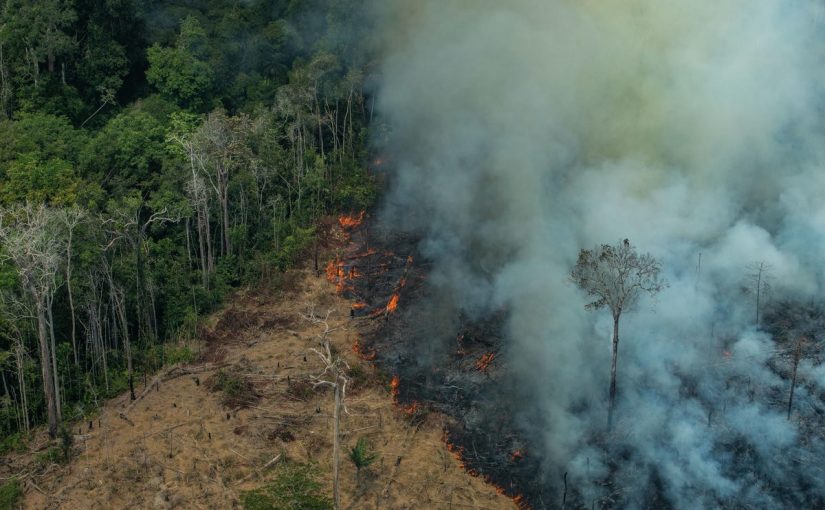
ALTAMIRA, PARÁ, BRAZIL: Aerial image of burning in Altamira, state of Pará, the same state where the “Day of Burning” took place August 10. Photo taken August 23. (Photo: Victor Moriyama/Greenpeace)
On August 23, our partners Greenpeace Brasil conducted a flyover of the heavily impacted states of Pará & Rondonia, where indigenous people like the Karipuna have been hard hit by the attacks. Danicley Aguiar, Amazon Campaigner at Greenpeace Brazil said:
“It’s urgent and necessary to put an end to this vicious cycle while we still have time. During a flyover last Friday (23 August) we could see the consequences of Bolsonaro’s government anti-environmental agenda: extensive deforested areas, surrounded by smoke, showing the advance of industrial agriculture into the forest. Unlike what the Bolsonaro’s government claims, the wave of fire sweeping the Amazon is linked to an increase in deforestation in the region.”
Meanwhile, COAIB (Coordination of Indigenous Organizations of the Brazilian Amazon), has expressed extreme concern about the situation:
“The record rates of deforestation and outbreaks of fire are a consequence of the anti-indigenous and anti-environmental genocidal speeches of this government. Loggers are taking our land and irresponsible landlords are taking advantage of the weakening of environmental surveillance to advance into our homes.”
As terrible as Bolsonaro’s statements, actions and impact may be, he didn’t emerge from a vacuum. His administration simply represents some of the worst aspects of a global economic system dependent on exploitation and extraction. It is this system which must be changed in order to halt deforestation in the Amazon. And anyone reading these words on a telephone, tablet or computer is in some way connected to this global system. There is work for all of us to do in educating ourselves on what’s really happening, and yes, changing some of our individual practices. But most of all we need to apply collective pressure to change laws and policies in order to halt the drivers of deforestation and change the flows of capital that encourage it.
In this sense, the cause — and the effect — of the Brazilian fires is both local and global. The Amazon is called the “lungs of the earth” for its role in carbon storage and oxygen production. It also plays a critical role in global climate and weather regulation, sending rain as far as California and the midwestern United States.
Alarmingly, the Amazon is nearing a deadly tipping point. Currently, at least 17% of the Amazon has been deforested. Scientific estimates vary, but many models demonstrate that somewhere between 20–40% deforestation will trigger a feedback loop called “dieback,” whereby the rain cycles disappear, turning jungle to degraded savannah.
So what really is at stake? Nothing less than the cultures, traditions and worldviews of the millions of Indigenous people of the Amazon, the wildlife & ecosystems of some of the most biodiverse areas of the planet, and the critical role of the rainforest in regulating the global climate, and mitigating the worst effects of climate chaos.
What then, can we do?
There are immediate steps to take, and there is the longer term, movement-building work to support indigenous sovereignty and address climate chaos.
Effectively addressing fires and deforestation in the Amazon means centering the leadership of the Indigenous people who live there, defending their right to sovereignty over their ancestral homelands, and uplifting their voices and efforts. Indigenous people have defended the Amazon against colonization and exploitation. In the context of Brazilian President Bolsonaro rejecting aid foreign aid, recognizing and defending indigenous sovereignty is both the most moral & effective approach. It is true that the fate of the Amazon shouldn’t be decided by outsiders — it should be decided by the people who have co-evolved with it for thousands of years, who protect the forest because they recognize that it is their grocery, their library, their cathedral, the source of life.
Take for example this powerful video from Menkragnoti Indigenous territory in Para, Brazil:
While the world prays for the Amazon … we’ve gathered all Xingu’s indigenous and riverine peoples, and we want to say that we will resist for the forest. For our way of living. For the future of our children and grandchildren. For the health of the planet.
For this we say no to mining on our lands. No to deforestation. No more invasions and disrespect. No more pesticides in our rivers and food. No more criminal fires in the forest. We from Xingu are connected with you. We are on the frontline. And we need your support. Join us in this fight.
2. Give money directly to frontline indigenous groups
Our close partner Amazon Frontlines, along with Land is Life, are raising money to support the indigenous coordinating body of the Brazilian Amazon, COAIB, to get resources directly to frontline groups. In the past few days they have shared stories of how these funds are being used to support local patrols and fire brigades, where indigenous people are working to prevent fires from spreading into their territories. Donate to their Brazil fund, 100% of which will go directly to COAIB.
This weekend, the Earth Alliance announced the Amazon Forest Fund, a commitment to give away at least $5 million to directly affected organizations. Earth Alliance is co-chaired by Leonardo DiCaprio, Laurene Powell Jobs & Brian Sheth. (Note — Digital Democracy is a prior grant recipient from the Leonardo DiCaprio Foundation, which is now part of Earth Alliance.) Earth Alliance is calling on others to donate to the fund, which goes directly to support protecting the Amazon. Initial recipients of support include:
Instituto Associação Floresta Protegida (Kayapo)
Coordination of the Indigenous Organizations of the Brazilian Amazon (COIAB)
Instituto Kabu (Kayapo)
Instituto Raoni (Kayapo)
Instituto Socioambiental (ISA)
3. Support the work of indigenous led patrols, mapping & monitoring programs
Across the Amazon, some of the most effective actions of frontline defenders include mapping efforts to gain legal title over their land, local patrols or “guardias” where indigenous people are defending their territories from exploitation and illegal activity, and ongoing environmental monitoring programs to document when crimes are committed against the forest, as well as the rich biodiversity of local areas. These programs are critical to local communities, and it’s why our partners ask us to support them with the tools and training they need to run these programs effectively.
Indigenous-led mapping & monitoring programs work, and we’ve seen it firsthand with our partners. In Ecuador, the Waorani people won a major victory in court this year, leveraging maps as part of a broader legal strategy to protect 500,000 acres of their territory against oil concessions. In Peru, we’re working with the Ejecutor de Contrato de Administración de la Reserva Comunal Amarakaeri (ECA-RCA), who are the guardians of the Amarakaeri Communal Reserve, the largest reserve of its kind in Peru, which demonstrates the power of indigenous co-management of territory. Organizing village-to-village and using smartphones, drones and satellites, ECA are protecting more than 400,000 hectares of forest while providing alternative livelihoods to their local communities.
Close up of a local monitor testing Mapeo Mobile for documenting illegal mining in the Amarakaeri Reserve, Peru. Taken by Jen Castro for Digital Democracy, June 2019.
Our team has devoted ourselves to co-building tools with our partners like the Waorani & ECA, because we’ve seen firsthand the victories our partners achieve when they are able to manage information on what’s happening in their territories themselves. But for indigenous groups like these to be successful, they need initial investment — money going directly to indigenous-led organizations to support mapping & monitoring initiatives, as well as for gear to go on patrols and document what’s happening. On the tech side, we at Digital Democracy welcome supporters & collaborators to help us further build out our tools so they can fully function for local users without outside support. Investing in infrastructure like Mapeo, our offline mapping & monitoring tool, is a way to ensure that indigenous communities in the Amazon & elsewhere have the tools they need to meet the ongoing challenges they face.
Notably, the work of land patrols & participatory mapping can yield big victories, but it is also extremely dangerous. As Global Witness reports, it is dangerous work to be an environmental defender. Last year an average of 3 per week were killed across the globe for their brave efforts to protect their homes and halt extractive projects. And yet, across the Amazon and indeed the globe, brave individuals and communities are working to protect their lands despite the risks.
"For this forest … I will go on until my last drop of blood."
Meet the Indigenous people at the forefront of protecting the Amazon from raging fires. pic.twitter.com/GFgj8QwivE
4. Recognize original peoples & honor their land rights
At the end of the day, land patrols, mapping & environmental monitoring are all in service of one thing — the land rights that ensure that indigenous people can maintain their way of life and the ecosystems they depend on in their ancestral homelands. If we believe that indigenous people are the key to protecting the biodiversity of the Amazon — and they are — then we must also stand up for indigenous land rights around the globe.
Why should Brazil respect indigenous rights if Europe, the United States and Canada do not? The work of acknowledging whose land we are on, supporting efforts to return land to indigenous peoples, and recognizing indigenous rights to determine what happens on their territory is work that every one of us can do, every single day. And, we can advocate for the legal changes that will better ensure indigenous land rights in the future. Wherever we live, we must support local, native-led efforts to protect sacred ecosystems.
Visit Native-land.Ca to learn whose land you are on. Check out Resource Generation’s toolkit for Land Reparations. Support groups like the Sogorea Te Land Trust in Chochenyo Ohlone territory (now called Oakland, California) where I contribute an annual “voluntary” land tax as an Oakland resident.
5. Keep your eyes on the Amazon & connect the dots
What’s happening is complex, and deserves our attention. I’ve linked to many organizations and indigenous communities in this piece — all of these are worth following. For maps and data, we specifically want to call attention to the Brazil-based InfoAmazonia, as well as Global Forest Watch and Amazon Conservation’s Monitoring of the Andean Amazon Project (MAAP). For advocacy & news from local partners, Amazon Frontlines, Amazon Watch & Greenpeace Brasil are three of many groups sharing critical information.
Connect the dots — how do our consumption patterns contribute to Amazon deforestation? Join movements like Rainforest Action Network and call upon our governments to hold businesses accountable for where they source materials, whether wood or agricultural commodities. We can ask where the ingredients in our food come from, especially palm oil, soy (used for both humans and livestock) and beef. We can also support more sustainable development initiatives, especially those that provide right livelihood for native communities using their lands in traditional ways. Whether we have been aware of it our not, our lives are interconnected with the guardians of the forest.
We can also pressure our governments to take immediate & critical steps towards addressing climate change and the broader system that enables it, the same system which is fueling resource extraction in the Amazon.
September is going to be a crucial time, as world leaders gather in New York for UN Climate Week, with youth, indigenous and other civil society leaders joining to pressure governments to take decisive action. I’m particularly excited for the first-of-its-kind Peoples’ Summit on Climate, Rights and Human Survival, organized by Greenpeace & Amnesty International, because the time is overdue for the human rights & climate movements to recognize that environmental justice & human rights are intrinsically interlinked.
Whatever happens with the current fires in the Amazon, it is clear that the deeper emergency is deforestation and theft of indigenous land. May the fires be a light that shines our collective attention on this ongoing crisis, and may the heat of their flames spur us all to the move our feet out of the fire, and into a more just future.
“The Amazon is the centre of the world. Right now, as our planet experiences climate collapse, there is nowhere more important. If we don’t grasp this, there is no way to meet that challenge.”
Let’s work together to meet that challenge.
About this post: Emily Jacobi is the Executive Director of Digital Democracy, a US-based NGO that supports marginalized communities to use technology to defend their rights. This blog post was inspired by talks within Digital Democracy and with our partners, including research and analysis by Dd’s Technology Director Gregor MacLennan. All of the images, maps, and graphs in this piece are linked to their original source. This post was deeply informed by our partners and colleagues including COAIB (Coordination of Indigenous Organizations of the Brazilian Amazon), Greenpeace Brasil, Global Forest Watch, the All Eyes on the Amazon coalition, Amazon Watch, Alianza Ceibo and Amazon Frontlines.
The Global Climate Strike, Sept. 20-27, is a global movement to draw attention to the climate crisis. On Sept. 20, people are encouraged to walk out of their schools, jobs or wherever they may be to draw attention to the movement. The week of events is inspired by climate strike walkouts at schools across the globe, organized by Fridays For Future.
Throughout the week, activists around the world will be tackling localized climate issues, such as protesting pipeline expansions and highlighting the political influence of the fossil fuel industry. Check out globalclimatestrike.net for more information and for a list of events across the world. Organizers are hoping that this could be the largest global climate demonstration ever.
This walk-out comes on the heels of mounting youth leadership in the climate change movement. The world is currently home to the largest generation of young people in history, and they’re standing up for their future by organizing collective action. The urgency they bring to the debate is targeted at big businesses and politicians, many of which are not only contributing to the problem, but are also hindering the solution.
Greta Thunberg, the 16-year-old Swedish activist who started demanding political action by skipping school and protesting at the Swedish parliament, has been one of the key faces of the sweeping, youth-oriented climate change movement. A demonstration in May spanned 2,300 schools in more than 150 countries. This Global Climate Strike is just the next step for mobilization in a growing movement for change.
When is the Global Climate Strike?
The Global Climate Strike begins Sept. 20 and runs through Sept. 27. The first day of the strike occurs three days before the United Nations meets in New York for an emergency climate summit. The last day lines up with Earth Strike, a general strike to save the planet.
What is the goal of the strike?
The Global Climate Strike is meant to disrupt the status quo, with millions of teachers, students and workers expected to participate. This walk-out will send a clear message that people demand a swift transition away from fossil fuels. A renewed sense of urgency and ambition is necessary to grab the attention of lawmakers who refuse to take action.
Why should I take part in the Global Climate Strike?
July 2019 was the hottest month ever recorded, making apparent that climate change is only getting worse. It also affects every aspect of life, disrupting environments across the globe and, in turn, disrupting supply chains and the global economy. Joining the Global Climate Strike will show world leaders and policymakers that people want action now. Collective pressure will force these leaders to acknowledge the issue and address it.
How effective are general strikes?
General strikes can be highly effective. A general strike involves workers across various industries and citizens in different stations of life. When a general strike is coordinated successfully, it disrupts normal day-to-day functions and economic activity, drawing attention to the intended issue. A general strike on a global scale can have massive ramifications.
Where can I learn more about the Global Climate Strike?
Bill McKibben – an environmental activist, author and Bioneer – writes about why we need the Global Climate Strike now. (EcoWatch)
Greta Thunberg joins New York rally organized to build momentum for the Global Climate Strike later this month. (i-D)
This timeline details how Greta Thunberg’s protests grew from one person to worldwide. (Reuters)
An open letter urging educators worldwide to cancel classes and join the Global Climate Strike was co-signed by 175 teachers. (The Guardian)
This update shows thousands pledging support to the Global Climate Strike and a list of U.S. organizations involved in the Youth Climate Strike Coalition. (350.org)
In Satellites in the High Country, author and Sierra Magazine editor Jason Mark assumes there is no pristine nature anymore. Micro-chipped bears, satellites in the sky and toxic chemicals having reached North Pole may point to our existence in a “post-natural world.” But Mark defines “wild” as uncontrollable and self-willed: a humbling reminder that we exist in relation to all other life. This understanding is essential to leveraging the edges of civilization and living in harmony on Earth.
I looked it up. I went to my two-volume Oxford English Dictionary. I got out the magnifying glass for reading the miniscule text.
The first definition read: “Of an animal: Living in a state of nature; not tame, not domesticated.” The word comes from the Old English wildedéor, or wild deer—the beast in the woods. Go further back into the etymology and the meaning becomes more interesting. In Old Norse, a cousin of Old English, the word was villr. “Whence WILL,” my OED says, meaning that wild shares the same root as willfulness, or the state of being self-willed. A description lower down the page makes the point plain: “Not under, or submitting to, control or restraint; taking, or disposed to take, one’s own way; uncontrolled. . . . Acting or moving freely without restraint.”
Notice that there is nothing about being “unaffected” or “untouched”—words that have more to do with the pristine than with the wild. Rather, the meaning centers on the word “uncontrolled.” To be wild is to be autonomous, with the power to govern oneself. The wild animal and the wild plant both rebel against any efforts at domestication or cultivation. Yes, we might hunt the wildedéor; we might even kill it. But the wildedéor’s last act will have been to run free.
If wild is a quality of being, then wilderness is that place where wildness can express itself most fully. You can think of wilderness as “self-willed land.” Wilderness is any territory not governed by humans, a landscape where the flora, fauna, and water move “freely without restraint.” Wilderness is a place where human desires don’t call the shots.
This is a well-trodden path. An appreciation of the untamed is one of the founding principles of environmental philosophy. The wild—as a place and as a state of mind—is as close as you can get to the triggering ideal of environmentalism. For a century and a half, the wild has served as the bright through-line of efforts to preserve the world in something approximating its pre-civilization condition.
Such thinking began, as you might have guessed, with Henry David Thoreau. In an essay titled “Walking,” Thoreau dives into a meditation about the meaning of the wild and declares that “all good things are wild and free.” Eventually, after a couple thousand words, he works himself up to this now-famous line: “What I have been preparing to say is, that in Wildness is the preservation of the World.”
Author-activist Bill McKibben calls the sentence “one of the great koans of American literature.” Indeed, the line both requires and resists explication—kind of like the wild itself. If anything, the elusiveness of Thoreau’s meaning has only made the call of the wild more irresistible. Inspiration doesn’t necessarily require clarity; we are attracted to wildness precisely because it remains always just beyond our reach.
Since Thoreau, the wild has inspired poets, philosophers, and rebels. Wildness has formed the basis of environmental ethics: “The love of wilderness is . . . an expression of loyalty to the earth,” protomonkey-wrencher Edward Abbey wrote. Wildness has been praised as a psychological tonic, an antidote to the confines of civilization: “The most vital beings . . . hang out at the edge of wildness,” Jack Turner, a philosopher, has written. And wildness has been celebrated as a civic virtue, an essential ingredient of political liberty: “The lessons we learn from the wild become the etiquette of freedom,” poet Gary Snyder writes. Wildness is the heartbeat of a worldview.
There’s no question that this North Star has been dimmed. The official preserves of our American wilderness system can feel awfully tame. At the trailheads, signs from the U.S. Forest Service or National Park Service sometimes warn, in a nervous-aunt tone, that falling trees and rocks can cause injury or death. In most places, the paths are marked by cairns to make sure you don’t get lost. It is illegal—indeed, punishable by a fine—to sleep in the backcountry of our national parks without a permit. The wildlife is also carefully managed. Federal biologists implant wolves and grizzlies with ID microchips and place GPS collars around their necks, equipment sophisticated enough so that a technician hundreds of miles away can tell whether a bear is sleeping or screwing. Even the animals, it seems, are stuck in the matrix.
I’ve only lived in a fallen world, and I take it as a given that every place and every thing has been touched by civilization. In my lifetime, humans have destroyed half of the world’s wildlife as our own numbers have doubled. By the time I was born, satellites had already embellished the firmament, the radioisotopes of nuclear tests were already scattered in the geologic record, toxic chemicals had already drifted to the North Pole. So I assume there is no pristine nature. I accept that we live in what you might call a “post-natural world.”
It is much more useful, then, not to ask what is natural, but to seek out what is wild. Because even in its diminished state, the wild still holds a tremendous power. When we search out the wild, we come to see that there is a world of difference between affecting something and controlling it. And in that difference—which is the difference between accident and intention—resides our best chance of learning how to live with grace on this planet.
In short, what I have been preparing to say is this: it’s time to double down on wildness as a touchstone for our relationship with the rest of life on Earth.
If, in the Anthropocene, nothing remains that is totally natural, then the value of wild animals and wild lands becomes greater, if for no other reason than that those self-willed beings remain Other than us. And we need the Other. As a species we need an Other for some of the same reasons that, as individuals, we have other humans in our lives. They center us. By opposing humans’ instincts for control, wild things put our desires in perspective. Peter Kahn, a pioneer in the field of eco-psychology, writes that wild animals “check our hubris by power of their own volition.” In much the same way, wilderness—or any self-willed land—can remind us that the rest of the world doesn’t exist in relation to us, but that we exist in relationship to other beings.
The idea that every landscape should be a vehicle for our desires is species narcissism on a planetary scale. When all of Earth is our garden, then the world will have become like a hall of mirrors. Each ecosystem will contain some glimpse of our own reflection, and we’ll be everywhere, with nothing to anchor us. We’ll be lost.
A “post-wild” world would put human civilization into a kind of solitary confinement. There would be no Away, no frontier or edge to civilization. There would be no Other, nothing to contest our will. We would be left all alone.
Do you know what happens to people who are placed in solitary confinement? They often go insane.
As societies search for ways to become more sustainable, Fritjof Capra suggests incorporating the same principles on which nature’s ecosystems operate. In his essay, “Speaking Nature’s Language: Principles for Sustainability” from the 2005 book Ecological Literacy, a classic in the field, he leaves a blueprint for building a more resilient world on the foundation of natural concepts, such as interdependence and diversity. This essay advocates a shift in thinking to a more holistic view of living systems: taking into account the collective interactions between the parts of the whole, instead of just the parts themselves.
Following is an excerpt from Ecological Literacyby Fritjof Capra, David Orr, Michael Stone and Zenobia Barlow, including an introduction and Capra’s essay.
If anyone has learned to speak nature’s language, it is Fritjof Capra. A founding director of the Center for Ecoliteracy and currently chair of its board, he has distinguished himself over the past forty years as a scientist, systems theorist, and explorer of the philosophical and social ramifications of contemporary science.
Introducing him to an overflow audience at a Bioneers Conference plenary, Kenny Ausubel said, “One of Fritjof Capra’s greatest gifts is his ability to digest enormous amounts of information from highly complex, wide-ranging fields of inquiry. Not only does he explain them elegantly and clearly, but he distills their essence and sees their implications. Because he’s a credentialed scientist who did his time with particle accelerators all over Europe and the United States, Fritjof never overstates his case or lapses into wishful thinking.”
After receiving his Ph.D. in theoretical physics from the University of Vienna in 1966, Capra did research in particle physics at the University of Paris, the University of California at Santa Cruz, the Stanford Linear Accelerator Center, Imperial College of the University of London, and the Lawrence Berkeley Laboratory at the University of California. He also taught at UC Santa Cruz, UC Berkeley, and San Francisco State University.
He is the author of five international bestsellers: The Tao of Physics (1975), The Turning Point (1982), Uncommon Wisdom (1988), The Web of Life (1996), and The Hidden Connections (2002). He coauthored Green Politics (1984), Belonging to the Universe (1991), and EcoManagement (1993), and coedited Steering Business Toward Sustainability (1995).
He is on the faculty of Schumacher College, an international center for ecological studies in England, frequently gives management seminars for top executives, and lectures widely to lay and professional audiences in Europe, Asia, and North and South America. He is an enormously popular speaker, addressing audiences of thousands, switching easily between German, French, English, Italian, and Spanish. The Center for Ecoliteracy’s single greatest source of inquiries is people from as far away as Brazil and India who find the CEL website by linking from Capra’s.
This essay distills thinking that has inspired the Center for Ecoliteracy and served as its intellectual touchstone for a decade.
AS I DISCUSSED IN THE PREFACE to this book, we can design sustainable societies by modeling them after nature’s ecosystems. To understand ecosystems’ principles of organization, which have evolved over billions of years, we need to learn the basic principles of ecology—the language of nature, if you will. The most useful framework for understanding ecology today is the theory of living systems, which is still emerging and whose roots include organismic biology, gestalt psychology, general system theory, and complexity theory (or nonlinear dynamics). For more discussion of the theory of living systems and its implications, please see my book The Hidden Connections.
What is a living system? When we walk out into nature, living systems are what we see. First, every living organism, from the smallest bacterium to all the varieties of plants and animals, including humans, is a living system. Second, the parts of living systems are themselves living systems. A leaf is a living system. A muscle is a living system. Every cell in our bodies is a living system. Third, communities of organisms, including both ecosystems and human social systems such as families, schools, and other human communities, are living systems.
Thinking in terms of complex systems is now at the very forefront of science. It is also very like the ancient thinking that enabled traditional peoples to sustain themselves for thousands of years. But although the modern version of this intellectual tradition is almost a hundred years old, it has still not taken hold in our mainstream culture. I’ve thought quite a lot about why people find systems thinking so difficult and have concluded that there are two main reasons. One is that living systems are nonlinear—they’re networks—while our whole scientific tradition is based on linear thinking—chains of cause and effect.
In linear thinking, when something works, more of the same will always be better. For instance, a “healthy” economy will show strong, indefinite economic growth. But successful living systems are highly nonlinear. They don’t maximize their variables; they optimize them. When something is good, more of the same will not necessarily be better, because things go in cycles, not along straight lines. The point is not to be efficient, but to be sustainable. Quality, not quantity, counts.
We also find systems thinking difficult because we live in a culture that is materialist in both its values and its fundamental worldview. For example, most biologists will tell you that the essence of life lies in the macromolecules— the DNA, proteins, enzymes, and other material structures in living cells. Systems theory tells us that knowledge of these molecules is, of course, very important, but the essence of life does not lie in the molecules. It lies in the patterns and processes through which those molecules interact. You can’t take a photograph of the web of life because it is nonmaterial—a network of relationships.
Perceptual Shifts
Because living systems are nonlinear and rooted in patterns of relationships, understanding the principles of ecology requires a new way of seeing the world and of thinking—in terms of relationships, connectedness, and context—that goes against the grain of traditional Western science and education. Such “contextual” or “systemic” thinking involves several shifts of perception:
From the parts to the whole. Living systems are integrated wholes whose properties cannot be reduced to those of their smaller parts. Their “systemic” properties are properties of the whole that none of the parts has.
From objects to relationships. An ecosystem is not just a collection of species, but is a community. Communities, whether ecosystems or human systems, are characterized by sets, or networks, of relationships. In the systems view, the “objects” of study are networks of relationships, embedded in larger networks. In practice, organizations designed according to this ecological principle are more likely than other organizations to feature relationship-based processes such as cooperation and decision-making by consensus.
From objective knowledge to contextual knowledge. The shift of focus from the parts to the whole implies a shift from analytical thinking to contextual thinking. The properties of the parts are not intrinsic, but can be understood only within the context of the whole. Since explaining things in terms of their contexts means explaining them in terms of their environments, all systems thinking is environmental thinking.
From quantity to quality. Understanding relationships is not easy, especially for those of us educated within a scientific framework, because Western science has always maintained that only the things that can be measured and quantified can be expressed in scientific models. It’s often been implied that phenomena that can be measured and quantified are more important—and maybe even that what cannot be measured and quantified doesn’t exist at all. Relationships and context, however, cannot be put on a scale or measured with a ruler.
From structure to process. Systems develop and evolve. Thus the understanding of living structures is inextricably linked to understanding renewal, change, and transformation.
From contents to patterns. When we draw maps of relationships, we discover certain configurations of relationships that appear again and again. We call these configurations “patterns.” Instead of focusing on what a living system is made of, we study its patterns.
Here we discover a tension between two approaches to the study of nature that has characterized Western science and philosophy throughout the ages. One approach begins with the question: What is it made of? Traditionally, this has been called the study of matter. The other approach begins with the question: What is the pattern? And this, since Greek times, has been called the study of form.
In the West, most of the time, the study of matter has dominated in science. But late in the twentieth century, the study of form came to the fore again, with the emergence of systems thinking. Chaos and complexity theory are essentially theories of patterns. The so-called strange attractors of chaos theory are visual patterns that represent the dynamics of a certain chaotic system. The fractals of fractal geometry are visual patterns. In fact, the whole new mathematics of complexity is essentially the mathematics of patterns.
Some Implications for Education
Because the study of patterns requires visualizing and mapping, every time that the study of pattern has been in the forefront, artists have contributed significantly to the advancement of science. In Western science the two most famous examples are Leonardo da Vinci, whose whole scientific work during the Renaissance could be seen as a study of patterns, and the eighteenth-century German poet Goethe, who made significant contributions to biology through his study of patterns.
This opens the door for educators’ integrating the arts into the curriculum. Whether we talk about literature and poetry, the visual arts, music, or the performing arts, there’s hardly anything more effective than art for developing and refining a child’s natural ability to recognize and express patterns.
Because all living systems share sets of common properties and principles of organization, systems thinking can be applied to integrate heretofore fragmented academic disciplines. Biologists, psychologists, economists, anthropologists, and other specialists all deal with living systems. Because they share a set of common principles, these disciplines can share a common framework.
We can also apply the shifts to human communities, where these principles could be called principles of community. Of course there are many differences between ecosystems and human communities. Not everything we need to teach can be learned from ecosystems. Ecosystems do not manifest the level of human consciousness and culture that emerged with language among primates and then came to flourish in evolution with the human species.
Sustainability in the Language of Nature
By applying systems thinking to the multiple relationships interlinking the members of the earth household, we can identify core concepts that describe the patterns and processes by which nature sustains life. These concepts, the starting point for designing sustainable communities, may be called principles of ecology, principles of sustainability, principles of community, or even the basic facts of life. We need curricula that teach our children these fundamental facts of life.
These closely related concepts are different aspects of a single fundamental pattern of organization: nature sustains life by creating and nurturing communities. Among the most important of these concepts, recognized from observing hundreds of ecosystems, are “networks,” “nested systems,” “interdependence,” “diversity,” “cycles,” “flows,” “development,” and “dynamic balance.”
Networks
Because members of an ecological community derive their essential properties, and in fact their very existence, from their relationships, sustainability is not an individual property, but a property of an entire network.
At the Center for Ecoliteracy, we understand that solving problems in an enduring way requires bringing the people addressing parts of the problem together in networks of support and conversation. Our watershed restoration work, for example (see “‘It Changed Everything We Thought We Could Do’” in Part III), began with one class of fourth-graders concerned about an endangered species of shrimp, but the work continues today because it evolved into a network that includes students, teachers, parents, funders, ranchers, design and construction professionals, NGOs, and government bodies. Each part of the network makes its own contribution to the project, the efforts of each are enhanced by the work of all, and the network has the resilience to keep the project alive even when individual members leave or move on.
Nested Systems
At all scales of nature, we find living systems nesting within other living systems—networks within networks. Although the same basic principles of organization operate at each scale, the different systems represent levels of differing complexity.
Students working on the Shrimp Project, for example, discovered that the shrimp inhabit pools that are part of a creek within a larger watershed. The creek flows into an estuary that is part of a national marine sanctuary, which is included in a larger bioregion. Events at one level of the system affect the sustainability of the systems embedded in the other levels.
Within social systems such as schools, the individual child’s learning experiences are shaped by what happens in the classroom, which is nested within the school, which is embedded in the school district and then in the surrounding school systems, ecosystems, and political systems. At each level phenomena exhibit properties that do not exist at lower levels. Choosing strategies to affect those systems requires simultaneously addressing the multiple levels and recognizing which strategies are appropriate for different levels. For instance (see “Sustainability—A New Item on the Lunch Menu” in Part IV), the Center recognized that changing schools’ food systems required moving from working with individual schools to working at the district level and then to the larger educational and economic systems in which districts are nested.
Interdependence
The sustainability of individual populations and the sustainability of the entire ecosystem are interdependent. No individual organism can exist in isolation. Animals depend on the photosynthesis of plants for their energy needs; plants depend on the carbon dioxide produced by animals and on the nitrogen fixed by bacteria at their roots. Together, plants, animals, and microorganisms regulate the entire biosphere and maintain the conditions conducive to life.
Sustainability always involves a whole community. This is the profound lesson we need to learn from nature. The exchanges of energy and resources in an ecosystem are sustained by pervasive cooperation. Life did not take over the planet by combat but by cooperation, partnership, and networking. The Center for Ecoliteracy has supported schools such as Mary E. Silveira (see “Leadership and the Learning Community” in Part III) that recognize and celebrate interdependence.
Diversity
The role of diversity is closely connected with systems’ network structures. A diverse ecosystem will be resilient because it contains many species with overlapping ecological functions that can partially replace one another. When a particular species is destroyed by a severe disturbance so that a link in the network is broken, a diverse community will be able to survive and reorganize itself because other links can at least partially fulfill the function of the destroyed species. The more complex the network’s patterns of interconnections are, the more resilient it will be.
On the other hand, in communities lacking diversity, such as monocrop agriculture devoted to a single species of corn or wheat, a pest to which that species is vulnerable can threaten the entire ecosystem.
In human communities ethnic and cultural diversity may play the same role as does biodiversity in an ecosystem. Diversity means many different relationships, many different approaches to the same problem. At the Center for Ecoliteracy, we have discovered that there is no “one-size-fits-all” sustainability curriculum. We encourage and support multiple approaches to any issue, with different people in different places adapting the teaching of principles of ecology to differing and changing situations.
Cycles
Matter cycles continually through the web of life. Water, the oxygen in the air, and all the nutrients are continually recycled. Communities of organisms have evolved over billions of years, using and recycling the same molecules of minerals, water, and air. Mutual dependence is much more existential in ecosystems than in social systems because the members of an ecosystem actually eat one another. Ecologists recognized this from the very beginning of ecology. They focused on feeding relations and discovered the concept of the food chain that we still use today. But then they realized that those are not linear chains but cycles, because the bigger organisms are eaten eventually by the decomposer organisms, the insects and bacteria, and so matter cycles through an ecosystem. An ecosystem generates no waste. One species’ waste becomes another species’ food. As I noted in the preface, one reason for the Center’s enthusiasm for school gardens is the opportunity that gardens afford for even very young children to experience nature’s cycles.
The lesson for human communities is obvious. A conflict between economics and ecology arises because nature is cyclical, while industrial processes are linear. Businesses transform resources into products plus waste, and sell the products to consumers, who discard more waste after consuming the products. The ecological principle “waste equals food” means that— if an industrial system is to be sustainable—all manufactured products and materials, as well as the wastes generated in the manufacturing processes, must eventually provide nourishment for something new. In such a sustainable industrial system, the total outflow of each organization—its products and wastes—would be perceived and treated as resources cycling through the system.
Flows
All living systems, from organisms through ecosystems, are open systems. Solar energy, transformed into chemical energy by the photosynthesis of green plants, drives most ecological cycles, but energy itself does not cycle. As it is converted from one form of energy to another (for instance, as the chemical energy stored in petroleum is converted into mechanical energy to drive the pistons of an automobile), some of it—often much of it—inevitably flows out and is dispersed as heat. We are therefore dependent on a constant inflow of energy.
A sustainable society would use only as much energy as it could capture from the sun—by reducing its energy demands, using energy more efficiently, and capturing the flow of solar energy more effectively through solar heating, photovoltaic electricity, wind, hydropower, biomass, and other forms of energy that are renewable, efficient, and environmentally benign. Among the complex reasons that the Center for Ecoliteracy promotes farm-to-school food programs (see “Rethinking School Lunch” in Part IV) is that buying food grown close by reduces the unrenewable energy that is required to ship tons of food over thousands of miles to supply school lunches.
Development
All living systems develop, and all development invokes learning. During its development, an ecosystem passes through a series of successive stages, from a rapidly growing, changing, and expanding pioneer community to slower ecological cycles and a more stable fully exploited ecosystem. Each stage in this ecological succession represents a distinctive community in its own right.
At the species level, development and learning are manifested as the creative unfolding of life through evolution. In an ecosystem, evolution is not limited to the gradual adaptation of organisms to their environment, because the environment is itself a network of living organisms capable of adaptation and creativity.
Individuals and environment adapt to one another—they coevolve in an ongoing dance. Because development and coevolution are nonlinear, we can never fully predict or control how the processes that we start will turn out. Small changes can have profound effects. For instance, growing their own food in a school garden can open students to the delight of tasting fresh healthy food, which can create an opportunity to change school menus, which can create a systemwide market for fresh food, which can help sustain local family farms.
On the other hand, nonlinear processes can lead to unanticipated disasters, as occurred with DDT and the development of “superorganisms” resistant to antibiotics, and as some scientists fear could happen with genetic modification of organisms. A sustainable society will exercise caution about committing itself to practices with unknown outcomes. In “The Slow School” (in Part I), Maurice Holt describes the unforeseen consequences of schools’ wholesale commitment to standards-measurement techniques derived from manufacturing and industry.
Dynamic Balance
All ecological cycles act as feedback loops, so that the ecological community continually regulates and organizes itself. When one link in an ecological cycle is disturbed, the entire cycle brings the situation back into balance, and since environmental changes and disturbances happen all the time, ecological cycles continually fluctuate.
These ecological fluctuations take place between tolerance limits, so there is always the danger that the whole system will collapse when a fluctuation goes beyond those limits and the system can no longer compensate for it. The same is true of human communities. Lack of flexibility manifests itself as stress. Temporary stress is essential to life, but prolonged stress is harmful and destructive to the system. These considerations lead to the important realization that managing a social system—a company, a city, or an economy—means finding the optimal values for the system’s variables. Trying to maximize any single variable instead of optimizing it will invariably lead to the destruction of the system as a whole.
Every living system also occasionally encounters points of instability (in human terms, points of crisis or of confusion), out of which new structures, forms, and patterns spontaneously emerge. This spontaneous emergence of order is one of life’s hallmarks and is where we see that creativity is inherent in life at all levels.
One of the most valuable skills for utilizing ecological understanding is the ability to recognize when the time is right for the emergence of new forms and patterns. For example, out of frustration with the failure of piecemeal hunger intervention to have much long-term impact, “community food security” programs are emerging across the country. This movement addresses the overall systems—from energy and transportation to government commodities purchasing to the effect of media on children’s food preferences—that permit communities to meet (or prevent them from meeting) their needs for nutritious, safe, acceptable food.
It is no exaggeration to say that the survival of humanity will depend on our ability in the coming decades to understand these principles of ecology and to live accordingly. Nature demonstrates that sustainable systems are possible. The best of modern science is teaching us to recognize the processes by which these systems maintain themselves. It is up to us to learn to apply these principles and to create systems of education through which coming generations can learn the principles and learn to design societies that honor and complement them.
Excerpted fromEcological Literacyby Fritjof Capra, David Orr, Michael Stone and Zenobia Barlow.
Join
us for an evening of immersive art experiences, incredible
performances, live painters, dancing, tarot card readers and psychics,
and a featured performance by OLOX, a Siberian Neo-Shamanic musical duo
that will transport you to another realm, www.olox.life.
Saturday, September 14th 2019 6:00 pm – 10:00 pm PT FB Invite and Eventbrite Tickets World Cultural Center 906 Broadway San Francisco, CA Flyer:Click Here
*This is a fundraiser to bring more art to the annual Bioneers Conference.
Following is an excerpt from The Making of a Democratic Economy by Ted Howard, co-founder of the Democracy Collaborative, and Marjorie Kelly, author of Owning Our Future: The Emerging Ownership Revolution.
When the U.S. Constitution was written, the Industrial Revolution, engineered by the new aristocracy of the railroad barons and kings of capital, had not yet emerged. The word “corporation” appears nowhere in that document. But by 1813 John Adams was writing to Thomas Jefferson, “Aristocracy, like Waterfowl, dives for ages and then rises with brighter plumage.”
We’ve seen that happen throughout American history, from the Gilded Age of the late 19th century to the “new Gilded Age” of the 21st. Today we live in a world in which 26 billionaires own as much wealth as half the planet’s population. The three wealthiest men in the U.S.—Bill Gates, Jeff Bezos, and Warren Buffet—own more wealth than the bottom half of America combined, a total of 160 million people. Meanwhile, an alarming 47 percent of Americans cannot put together even $400 in the face of an emergency, leaving most of us unprepared to face such ordinary mishaps as a flat tire or a child’s twisted ankle.
Our economy is not only failing the vast majority of our people; it is literally destroying our planet. It’s consuming natural resources at more than one-and-a-half times the Earth’s ability to regenerate them. We are razing the only home our civilization has, yet we remain caught inside a system designed to perpetuate that razing, in order to feed wealth to an elite.
The reason is that the system has a capital bias at its core, a favoritism toward finance and wealth-holders that is woven invisibly throughout the system. We might call it an “extractive economy,” for it’s designed to enable a financial elite to extract maximum gain for themselves, everywhere on the globe, heedless of damage created for workers, communities, and the environment.
Capital bias is often advanced by policy—as with lower taxes on capital gains than on labor income, bailouts for big banks but not for ordinary homeowners, or tax breaks given to large corporations that put small locally owned companies out of business. Yet capital bias also lies more deeply in basic economic architectures and norms, in institutions and asset ownership. Speculative investors holding stock shares for minutes enjoy the rights of owners, while employees working at a corporation for decades are dispossessed, lacking a claim on the profits they help to create.
We haven’t fully confronted the fact that corporations believe they have a fiduciary duty to systematically suppress labor and labor income in order to increase profit for wealthy shareholders. But that confrontation is starting, with an eye toward building a more democratic economy. These new approaches—such as chartering corporations to make them accountable to the public and giving equity shares to worker ownership funds, placing public ownership of utilities at the center of a Green New Deal, and creating public banks to finance a new, bottom-up community development paradigm—don’t seek to simply put back what’s being destroyed. They point to how a whole new system is being born now, in the belly of the beast. They herald a potentially profound shift from an extractive economy to a democratic economy.
The problem is that people by and large don’t see this—not even the people who are part of it. The work of employee-owned companies, impact investing, public banking, racial justice in economic development, local purchasing by anchor institutions, and more is being done in siloed activities all over the world.
It’s not that the new system hasn’t been named. It has too many names: “stakeholder capitalism,” the “solidarity economy,” “new economy,” “sharing economy,” “regenerative economy,” the “living economy.”
The struggle for new language is a sign of the times. We stand at a turning point where many share a sense of peril about the possibility of systemic collapse. As the old system fails, we’re losing the conceptual world that has given our lives meaning. We need new vision and new naming.
Socialism isn’t it. Capitalism isn’t it. An economy adequate to today’s challenges just isn’t there in those 19th-century paradigms. The “democratic economy” isn’t yet a term in common use. It’s offered here as a unifying frame for the movement that doesn’t know it’s a movement, aiming to help more of us recognize the potential for system-level transformation.
A democratic economy isn’t a top-down command economy. It isn’t capitalism plus more regulations and social safety nets, nor is it capitalism plus green technologies. Building a democratic economy is about redesigning basic institutions and activities—companies, investments, economic development, employment, purchasing, banking, resource use—so that the core functioning of the economy is designed to serve the common good.
Democracy needs to move inside the economy. Putting such values as sustainability or fairness on the outside of the system through regulation and social safety nets is like attaching barnacles to the side of a whale. These values need to be in the DNA. Anything less than deep redesign will likely fail to see us through the tumultuous era ahead for the earth community.
At the 2018 National Bioneers Conference, visionary leaders of cutting-edge, mission-driven enterprises working in the U.S. and globally shared their strategies for succeeding at spreading ecologically sound agricultural practices while boosting farming families’ incomes and wellbeing.
The panel was moderated by Erin Axelrod, a worker-owner at LIFT Economy. The panelists were Alex Eaton, co-founder of Sistema Biobolsa; Theresa Marquez, Mission Ambassador at Organic Valley; Kyle Garner, CEO of Organic India USA; and Ken Lee, co-founder and co-owner of Lotus Foods. The following is an excerpt from the panel edited for clarity and brevity.
ERIN: I’m honored to be facilitating this conversation around right livelihoods and farmers, because at LIFT Economy, we take a lot of inspiration from the farmers that grow our food in ways that regenerate the ecosystems within which we abide.
I’m excited to introduce you to four leaders speaking on behalf of companies that are representing a different, transformative model of how we can decentralize power and give more voice to the producers who are really where all wealth is stemming from.
First, we’ll hear from Theresa Marquez with Organic Valley.
THERESA: During the 1980s, there was the biggest farm crisis our country has seen. At its peak, there were 2,000 farmers a week going out of business. Since 1960, we’ve lost over four million family farmers. You know what they’re being replaced with, don’t you? The CAFO—confinement and feedlot operations—that are the most horrendous example of agriculture. Everything about them is not good for animals and the planet.
Organic Valley is a $1.2 billion company with 2,300 farmers. One of the pillars our business rests on is pioneering for good. We take it seriously. We very much want to have missions completely embedded in all the other things that we do.
We also have to live in the world of standards. If you know farming, farmers hate standards. But in the case of the 1980s crisis, organic farmers demanded regulations, and we ended up with the Organic Food Production Act of 1990. I’m proud of it, but it’s not enough. The USDA is not accepting additional standards we’ve proposed. We wanted to have some really robust animal welfare standards, and the big poultry industry stopped it with the USDA.
We’ve got to take things into our own hands now.
In response to the USDA’s actions, we started the Organic Plus Trust, and we are now pushing through two new standards. We have to have a standard on what 100% grass is, because there’s a lot of mislabeling out there. We also need a very robust animal welfare standard.
Grass is the solution. We have been studying our grass milk for the last five years. Milk from 100% grass-fed animals has a 147% increase in omega 3s. Grass is magical. It makes food super healthy, and it’s great for animals. You can sink carbon with it. That’s what we have to stand for if we want to make agriculture greened up.
I’m very proud of our solar project in Wisconsin. Our headquarters is going to be 100% renewable by the end of 2019. It’s doable, and it’s something that we all have to do now. We don’t really need fossil fuels.
If you’re going to be a responsible company, you have to give and you have to share. After Hurricane Katrina in New Orleans, we started funding disaster relief. We started this partnership where we give perishable products to the Food Bank and also send it to numerous disasters all over the United States.
Alex Eaton (Sistema Biobolsa), Theresa Marquez (Organic Valley), Ken Lee (Lotus Foods) and Kyle Garner (Organic India USA)
ERIN: Thank you so much for that, Theresa. Now I want to bring Kyle Garner up from Organic India.
KYLE: In five minutes, I’m going to try to do a bit of a 20-year history of how Organic India has worked to green and regenerate agriculture and support small family farmers. But I quickly want to take you on a history lesson going back about 40 years, when the green revolution really started to expand around the world. In India, we were convincing these farmers that had really nothing else in their lives other than a small plot of land and try to teach them that the way they had been farming on that land for hundreds of years, or in some cases thousands of years within their family, wasn’t right anymore, and to do things right, you had to follow this Western model and go big in scale.
As with a lot of these innovations, things look pretty good in the first couple of years, and no one saw this devastating end that was coming.
What happened, not surprisingly, instead of creating this ability to scale agriculture in India, we created a cycle of poverty for these farmers. Previously, they had everything that they needed on their farm, and suddenly they were having to buy seeds and fertilizer, and hire labor. That’s fine if everything is working, but when you have a crop failure, you still owe that money.
In the last 20 years, 300,000 farmers, that’s 40 a day, have killed themselves, largely driven by the cycle of poverty because they just couldn’t handle the loss of pride that they felt.
About 20 years ago, the founders of our company had this idea that there was a better way to not only support these farmers, but do something that was less harmful to the Earth as well. The idea was to teach these farmers to go back to their traditional way of farming in India—Vedic agriculture. It’s very similar to the organic practices we see in the US. Additionally, we wanted to give them a global marketplace to sell the goods. That’s the combination that has to work, because it’s one thing to say, “Grow these crops without pesticides,” but if you’ve got no place to sell them, what’s the point? The magic of this model is we open up to markets like this in the US, where people are willing to pay a premium for organic goods and products that can help them deal with health conditions they’re having. That money can then flow back to these farmers that could maybe sell those same crops locally for pennies on the dollar.
We started the company with the idea of working with these most vulnerable populations. These were farmers that not only didn’t have a lot to begin with, but they were taken advantage of by big companies coming in and trying to change their practices.
We also had a big focus on empowering women from the beginning. Most of those 300,000 farmers who have killed themselves in India are men. That was traditionally the model. If you’re familiar with Indian culture, being a widow in Indian culture is not a great thing. You get ostracized from your community a lot of times. We tried to flip that model on its head and work with those widows to keep their family farm alive. We could have easily bought thousands of acres to grow these crops, but instead we found 2,500 small family farmers. Now we’ve had a lot of these widows who are running a farm for their family to provide the income that they need and to improve the health of the land.
We got them clean seeds and taught them what they probably knew from thousands of years before—how to farm in an ecosystem that had everything that they needed on the land. Paying for them to do organic certification is a big part of the model because it costs a lot of money to get organic certified. Since we sell in the US, everything has to be USDA certified organic.
One thing we’ve done that could be reapplied is embedding people into the villages. We learned that there was a value for them if we added more processing in the village. We’re adding more of the value-add in the supply chain in the local villages, giving them more of a chance to earn income, not just as a farmer, but also maybe a family member could work in a processing facility, or someone can work in transportation getting the herbs into our factory. We do all that work in India. We’re finding ways to push more of the value chain closer to where the farmers are.
We’ve built this sense of community in regions throughout India. We started with five farmers about 20 years ago, now we’ve got about 2,500 farmers. Because these farmers have learned to grow their yields, we’ve been able to build a business from that over time.
ERIN: I want to transition now to a long-time Bioneers supporter, Ken Lee.
KEN: Lotus Foods has been around for about 24 years. We’ve chosen the tagline “Rice is Life” for a big reason. We took a market research trip a long time ago through China, and we discovered really cool varieties of rice. The biodiversity of rice is extensive around the world, but a lot of that stock was going into seedbanks, so we thought we would do something to preserve the biodiversity of rice.
Back in 1995, we started to work with what we call pigmented rice. That was something relatively unknown—black rice and red rice.Tremendous varieties of rice were still not being sold widely. We thought this would be a good point of differentiation for us as a very small company.
Fast forward to 2008, Cornell University had been working with small-holder farmers, introducing them to a new way of growing rice called the system of rice intensification or SRI. That was a lightbulb moment for us when we heard farmers could grow more with less without using any chemical fertilization or special seeds. We marketed this new way of growing rice as more crop per drop.
More than half the world’s population gets more than half of its caloric intake from rice, yet rice is not really traded that much around the world. About 7% of all rice crosses any borders. Mainly it’s eaten within 10 miles of where it’s grown.
It’s common practice to grow rice in flooded fields, but rice is actually not an aquatic plant. It doesn’t need to grow under water. Growing rice under water is the number three man-made cause of methane emissions on the planet, behind cows in fields and fossil fuel extraction. Upwards of 15, some say 20% of man-made methane comes from flooded rice fields.
Additionally, one-third of Earth’s potable water is used to grow rice in flooded fields. That’s where SRI comes in as a solution. Using SRI, rice doesn’t need to be under water all the time. If you actually put rice in an aerobic environment, it can thrive.
We decided that Lotus Foods would move into the future introducing SRI growing methods, more crop per drop, into our various supply chains.
When you produce more rice using less water, less seed, no chemicals, it lowers the cost and increases the yield to the degree that farmers on their small plots of land don’t need to plant rice exclusively. They can plant some added-value vegetables, which they can use to supplement their own diets, or take to the market to sell.
Research has suggested deploying this method of growing rice can reduce 3.13 gigatons of CO2 or the carbon equivalent, and yield $678 billion in net savings at no cost to the farmers.
ERIN: Thank you so much, Ken. Now we will hear from Alex Eaton of Sistema Biobolsa.
ALEX: 80% of the food we consume today is being grown by small farmers. That’s important because small farmers can live very different across the world. Here in the US a small farmer has a different dimension, level of technification, economic status than a small farmer in Mexico or a small farmer in India. What unifies all these small farmers is that they’re locally based, their farms are in the same place that they work, they’re generally family farms, and they’re generally these sort of keystone components of these rural communities, which are suffering from a lot of abandonment, migration both to other countries and to the city.
We started with this love for small farmers, and then identified what we think is kind of an oversimplified but important problem: People aren’t developing technologies or effective outreach capacities for poor farmers. Also, as Kyle mentioned, ethically questionable debt-collection processes were driving people to suicide. That’s really how grave that became.
What we really see is this massive opportunity. There are estimates of between 400 and 500 million small farms worldwide, and 200 million of these, representing about a billion people are earning less than $2 a day. That is extreme poverty by every definition. We have this horrible irony where the people who are really growing the majority of our food don’t have enough food to eat and are the poorest people on Earth. If you’re growing our food you shouldn’t be hungry.
Another important point to address is agriculture accounts for more than a fifth of all of the greenhouse gases on Earth. That figure doesn’t even include a lot of the household energy consumption for a lot of these farmers. A lot of the greenhouse gas production is methane. If we can reduce methane production in a short amount of time, we can make disproportionate gains, because it impacts global warming by about 25 times that of CO2.
What we’re working on—treating waste, providing renewable energy, and providing organic local agricultural inputs—can really take a big chunk of those greenhouse gases out of the system.
Farmers say climate change is a big challenge, but mostly because weather patterns are changing their traditional calendars tracking agricultural cycles. It’s hard for them, though, to structurally think about reducing greenhouse gases as one of their prime motivators, and they really shouldn’t. They’re not responsible for the accumulation of greenhouse gases, but they could be potentially one of the greatest allies. It’s hard to make poor farmers make an investment to make up for these collective emissions, but I think they will become allies.
What we’re trying to do is solve some of their really important waste, energy, and fertilizer input challenges. There are still organizations beating the failed green revolution drum that are recognized as very innovative that still say, “You can just sprinkle a little chemical on it, and all of the poor farmers’ problems go away.”
80% of Mexico’s arable land is sterile. It’s really just a dead piece of dirt where you can put seeds and water and chemicals together and they will grow something that looks like food. In Mexico, one of our promoters asked people, “Who has their natural teeth?” Everyone over 60 had their natural teeth, but if you were between the ages of 35 and 60, you didn’t. It turns out that what happened is that the chemicals used on corn and beans were interfering with the production of calcium. So it was this really weird linkage that you can make by this disconnection of soil, food, and agriculture.
A bucket of waste a day can produce about 1,000 liters of biogas. Those thousand liters of biogas are equivalent to a couple kilos of wood fuel, or about a half a kilo of LP gas. Over the course of a year, that is enough organic fertilizer to fertilize five hectares approximately, so just over 10 acres. Then that scales up from there, up to about two tons of organic waste a day, which can produce a ton of biogas, which can produce renewable electricity.
We’ve really moved into these cool, mechanical energy things, really tinkering with water pumps and grain grinders and forage grinders. We’re really exploring compressed natural gas for helping people get their equipment or their products to market.
I’m most excited about bio-fertilizer and how it can support some of the work that farmers are doing. We’ve been doing a lot of work with rice fields, dairy, organic herbs, all of these things we’re really thinking a lot about. We’re trying to be a platform for other organizations.
Small and organic farmers are hyper local. Small farmers are really incredulous in a lot of ways. You really have to build up local credentials extremely fast. They really only want to listen to other farmers, so they need to hear about our work from people that they respect and work with. We try to be a tool as much as possible for farming organizations that have built that credibility.
ERIN: How do these models replicate in other regions?
ALEX: I think the challenge with small-scale agriculture that’s being done right in a lot of ways is not copy/paste. What we’ve really tried to do is focus on the outreach and the social component of how we train farmers.
We spent the last year dedicated to building a curriculum-based replication model, so that it does come out of the box for other organizations that are reaching farmers.
We’re trying to understand how to get it into people’s hands that don’t want to cut corners. The biggest challenge is not diluting the impact that we have by replicating too fast. It’s easy to talk about scale, but you don’t want to do it wrong.
KYLE: What’s nice about the approaches that a lot of the people up here are taking is most of the winners are the people that can scale the biggest. Success favors scale.
Regenerative agriculture practices favor the smaller farmer in a lot of ways because the things are maybe not tougher to scale, but when you scale them you lose some of the essence that makes them so powerful. By reapplying the education in more places, you can actually create a structure that’s anti-scale that leads to scaling the movement. It’s one of the few things I’ve come across that favors smaller is better. That’s the reason we should be trying to reapply it.
How to do it I think is hard, because it requires education and convincing small farmers to buy in. But I think if we can get enough case studies in enough places, we can actually do it.
KEN: It’s hard to get people to change. SRI started in Madagascar in the ‘80s, but it really wasn’t until the turn of the century that people really started to adopt this way of growing rice, even though it was effective. I think the best way is when there’s an NGO on the ground who has their own test plot in place, and they’re there working with farmers anyway, so they’re befriending them, creating trust, and giving them a testing ground. That way it’s not so risky. They’re not asking them to do it on their land. They get to demonstrate it first.
I think it is a resistance to change, but it’s the way to go. I think it can be scaled up.
People ask me all the time: Are people doing this in the US? It was designed for people with small plots of land who use methods like hand transplantation, but I’m convinced there is a way to set up the machinery, so they could still fly the seeds into the ground and then drain the field, and then go through with their tractors to dig up all the stuff and just plant them in rows. It’s just a matter of time given the issue of water shortages. It’s hard for people with legacy systems in place to change, but they will have to.
THERESA: We started with produce in the Coulee region of Wisconsin, and we didn’t even want to go out of Wisconsin. People came from Minnesota and said they wanted to do what we’re doing, so we showed them our co-op model.
That happened over and over again. People tried to start their own co-ops, but then decided to partner with us since we already had the infrastructure. That’s how we grew. We’re in 36 states, and each state is broken into regions with their own representatives, so we have a representative democracy called the executive committee. They meet with the CEO every month, talk about their issues, have regional meetings and so on. When we make big changes about the pay price or about new standards, we bring this group together. We even have a group of farmers who came to us from the United Kingdom to join our co-op.
As far as trying to figure out how to get more farmers to be organic, which is one of our missions as well in a cooperative model, we have 25 field staff who are not only just going to the executive committee members, they’re also visiting the neighbors who are conventional farmers. They have to learn how to talk to people who might not have very good feelings about organic farmers, and we do have people who are actually good at convincing those farmers of the merits of organic farming.
Most conventional farmers are in dire straits. They look at the sale price of organic products and think, “This is going to save my family,” so they try it and then their organic farming neighbors help them.
Farmer to farmer is a great way to grow the movement. It always is. When they get together, conventional and organic farmers, they’re not that different. You’ve got to have an infrastructure, and that infrastructure can be very expensive to put together. That’s why a cooperative ownership model is social democracy.
ALEX: I just want to quickly plug the work that these three are doing, because we have a really unique challenge in agriculture today—it’s still run by market forces, and besides a lot of commodities, distortion and other things, you really have this kind of cart-and-horse issue around a market being ready for farmers. Because food is perishable in broad strokes, you really have to get that right in terms of timing and demand, so organic food is a win-win. It’s better, it’s healthier, and farmers can make more money doing it. Organic can really compete with other conventional foods.
I think to make organic even more viable, we need new policies and infrastructure to catalyze a shift in consumer choices. We’re trying to be the infrastructure for it, but I don’t know how the financing and other forces come into line, honestly.
ERIN: What are you all doing to shorten the distance between growers and market?
KEN: We’re not working on that. I get the local thing. I support local. But the biodiversity of rice doesn’t exist here. Most rice, as I mentioned before, is grown all through Asia and Africa.
It’s grown in huge quantities. Like I said, more than half the world’s population gets more than half of its calories in consumption of rice. We could bring it closer, but we have to focus on reducing methane emissions put out in flooded rice fields. That needs to be corrected first. We need to do everything we can to avert disaster on the planet. So I’m all for people growing rice in America using SRI, but right now, all of the rice is really grown elsewhere. So that’s what we’re focused on.
KYLE: I agree with Ken. We don’t see an opportunity to grow most of the herbs that we grow just from a climate standpoint in the US now. We’ve kind of taken the opposite approach, which is maybe we can find a way to create a market in India, so we used the evolution of the business in the US as a way to fund the investment in India. We’re opening retail stores in India to sell the products, because there’s not a market, natural foods store, network, or co-op network, or even a Whole Foods. Those things just don’t exist in India. So we’ve had to create that, and that’s kind of how we’ve gotten growers closer to the market. But in our case in the US, it’s more about limiting the impact of getting it here, finding more efficient ways of getting it here, but the opportunity to grow most of those herbs just doesn’t exist in the current climate.
ALEX: I read not that long ago that transportation of food is close to about 7% of the total environmental impact. That was surprising to me because we believe in local for a lot of other reasons, but I think Ken’s point of view is that we need to feed the planet and to think of doing that in the most efficient way.
I think that closer could be in terms of linkages. How those buyers direct and get rid of middle men could be more impactful than just thinking about distance.
KYLE: Yeah, the data I’ve seen is 6-10% is in that same range. By most metrics, it’s way worse to buy from a farm next door that’s tilling up the soil than it is to buy that same crop from India grown organically. The transportation impact is so small in the grand scheme of things. So local is great, but local that’s damaging the planet is worse than sourcing high quality stuff from other parts of the world.
THERESA: We have milk in 36 states, and we try to keep our milk close. For example, we have California farmers right here in Petaluma, and we co-pack with 90 plants. We piggyback onto conventional dairies that are close to our farmers, because it’s liquid, so we have to think a little bit.
That being said, I really have thought a lot about this local too, as well, and I think it’s really important to know where your food comes from and make choices as you go. In my company, we have to keep our product as local as possible, but when I look at other products, I want to support our global village. I think it’s important for us to all know where our food comes from. That’s really important.
KEN: Yeah, it is important to know where our food comes from, but it’s also important to know how it’s grown. A lot of people have this misunderstanding about arsenic and rice. When there’s arsenic in rice, it’s because there’s either some mining operation near the field, or there’s over-industrialization. It’s also in the world we live in in general. It’s in the water and the air we breathe. But it’s the inorganic arsenic for rice, that you want to be concerned about.
The other great thing about SRI practices is you don’t have that water acting as a conduit to suck the arsenic out of the ground into the rice. So that’s an important thing to keep in mind too.
ERIN: Thanks to all the panelists. These questions are broadening our perspective and our vision of how we actually leverage all aspects of our lives to advance sustainable practices.
Top photo: Chocolate beans grown in Latin America are processed in Belgium into large blocks that are sent to Canada to be melted, tempered and have ingredients added by Denman Island Chocolate
Denman Island Chocolate, started in 1998, was the first organic chocolate company in Canada. It is located in a beautiful non-commercial spot on a wooded ridge on Denman Island, British Columbia, with views of the Strait of Georgia. Co-founder Daniel Terry placed a conservation covenant on the property when he bought it to restrict logging and other activities that would degrade the ecosystem. The company produces 10 flavored products – with ingredients like ginger, hazelnut, orange, raspberries, espresso, even the Mexican spice chipotle – to ship across Canada. All ingredients are organic, and the chocolate and coffee are also Fair Trade.
Arty Mangan, Bioneers Restorative Food Systems Director, visited the custom home combination chocolate factory and spoke with Daniel about his business and how he uses it to support environmental causes.
Arty: This is not your typical factory setting.
Daniel: We were mindful of the fact that we are right in the natural interface and wanted to build something that would be beautiful and honor this place. There is no distance between us and the natural world here.
With our aesthetic, we needed a beautiful building to make a beautiful product in. I feel that’s so important. We’ve got happy employees. We’re experiencing beauty and goodness all day. Of course, that’s going to go into your chocolate.
Arty: What went into your thinking when you decided to use organic and Fair Trade ingredients?
Denman Island Chocolate factory
Daniel: In the tropics, where chocolate is grown, the classic way of farming is to burn everything and then plant a couple of generations of crops. Then, when you’ve depleted the soil you move on to different land. You can’t do that with organic agriculture. It’s not permitted. They make sure that the local ecosystem remains as intact as possible.
Fair Trade is a little more complicated. With organic ,Canada and the U.S. have organic standards. There are different certifiers that work to those standards. There’s not one blanket standard for Fair Trade. There’s Trans Fair and FLO (Fair Trade Labelers Organizations International) and they all do different things. A lot of brands have in-house certification that they do themselves, which may or may not be trustworthy.
The problem with Fair Trade as a certification is that it’s extremely top heavy in terms of where the money goes. Yes, there’s a guaranteed amount that growers get. That’s really important. But bureaucracy consumes a huge amount of the money. We use all licensed Fair Trade products, but we don’t put the logo on our product because we haven’t licensed ourselves with them. There is an additional cost to put that sticker on. But we are still benefitting the growers because we’re buying ingredients at Fair Trade prices.
Arty: What about labor issues?
Daniel: Child slavery is an issue in some places. I visited organic plantations in the Dominican Republic and Brazil that are Fair Trade. In the Dominican Republic, there were kids working there, but they were the kids of the farmers. They’re going to school. They’ve got everything they need. But If we are talking about trying to create economic equity, I ask the question, as a Canadian, would I be happy with that standard of living. That really hasn’t been looked at. But Fair trade does try to help people earn a decent living in relation to the economic standards of their country.
Chocolate was originally part of a triangular trade between Africa, the New World, and Europe. Slaves went to the New World, cacao went to Europe, guns went to Africa. So, we’re kind of making some redress in terms of that historical crime, but there’s still the North/South division.
Organic is the thing that drives me even more than Fair Trade because I know that growers receive a premium right off the bat from organic. And they’re not poisoning themselves or their kids or their employees walking by the side of the field with herbicide sprayers. I think that’s so important.
Daniel Terry demonstrates the aroma of an essential oil ingredient
Arty: Environmental issues are important considerations in the design and implementation of your business. Why is that important to you? How does that fit into your vision of the business?
Daniel: It fits into my vision of business period. Any business should have a social mandate. Of course, that doesn’t always happen, particularly when you’ve got a company that’s publicly traded where their responsibility is to make money for the shareholders.
We donate at least 1% every year of our gross. It’s selfish, really. It’s a way for me to feel good about running this business and making positive change. We focus on conservation and environment groups.
One of the early campaigns we supported was a Dogwood Initiative. That was back in the day when the Enbridge pipeline [a proposed pipeline from the Alberta tar sands through the Great Bear Rainforest in BC, one of the most pristine temperate rainforests in the world] first raised its ugly head. And it seemed like it was going to happen. Dogwood had a campaign: Tankers are Loony [loonie is the name used for the Canadian one dollar coin that has an image of a loon]. They made decals, the idea was that you put one on a Loonie and it looked like the loon has been oiled in a slick. We made a significant donation to that campaign and they sent us 10,000 of those stickers. We put them in 10,000 Simply Dark bars and sent them across the country. That was really interesting because some people said, “I will never buy your chocolate again.”
Arty: Why, because they didn’t agree with the campaign?
Daniel: It wasn’t even about not agreeing with the campaign. It was the notion that a business would promote something that’s outside of its purview. But I feel it’s my responsibility.
I remember a radio interview I did when we were involved with the Pull Together campaign. I was asked if I thought I had a right as a business person to be involved in these campaigns.
Inside the Denman Island Chocolate factory
My feeling is, if you don’t agree with the business owner, you’re free not to buy their product. Right? I admire people for putting themselves out there and saying, “This is important to me.” Because what it means is you’re not just trying to make money. It’s much more of a holistic way of doing business. For us, again from a selfish point of view, we’ve made these tremendous connections with people from Dogwood, people from Sierra Club B.C., Raincoast and currently with Georgia Strait Alliance.
With Pacific Wild, we donated to them and we were their guests on a 10-day trip on a boat in the Great Bear Rainforest. We did a similar thing with Raincoast. That was a way for me of cementing the importance of those campaigns in my mind, because down here it’s possible to just kind of see things through a screen, if you like, and to not really understand the importance of all those issues.
I want to behave as if my efforts are going to make a difference, as if that difference is going to be enough to push things in the right direction. Even to have this conversation about these sorts of things is important, individually and with my customers. The one thing we have as human beings is the ability to make a choice. We may not make the right choice, but if our choice is just to ignore all the shit that’s going down, we’ve lost. As human beings, we’re useless. So, it’s important to try.
Arty: How have these campaigns affected your customers?
Daniel: We did a campaign with Raincoast and made a product called the Grizzly Bar. We donated and sponsored a prize that was a week on the Raincoast vessel, the Achiever, up in the Great Bear Rainforest. An unbelievable trip.
Matt, the guy who won, couldn’t go that year. The following year he booked the entire boat for him and a bunch of friends. Since then he’s done a bunch of fundraising efforts in Ottawa. So, there’s that fractal thing that happens, which I love.
All photos by Jan Mangan
Keep Your Finger on the Pulse
Our bi-weekly newsletter provides insights into the people, projects, and organizations creating lasting change in the world.