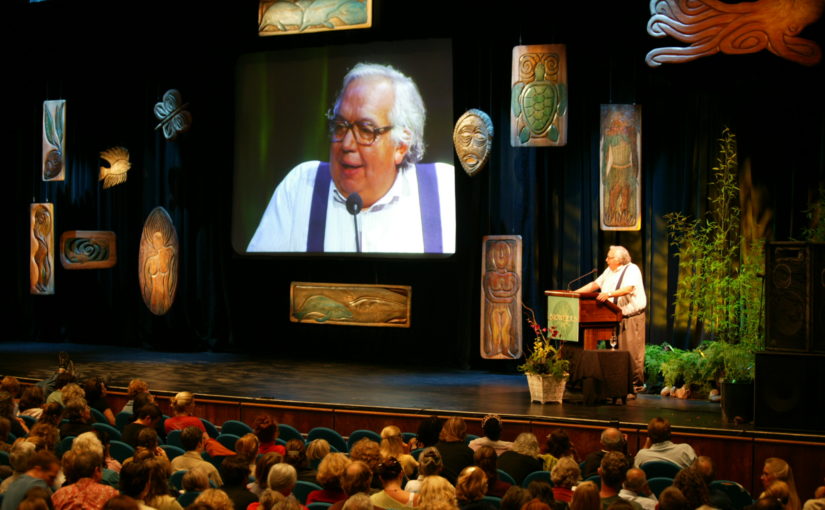
With the illustrious anthropologist Francis Huxley of the renowned Huxley clan; a leading figure in Native American and American Studies, the late, beloved professor John Mohawk; and groundbreaking anthropological thinker and author Jeremy Narby. Practices by different Indigenous people around the world were labeled “shamanism” by anthropologists and dismissed as irrational superstition, but in the 20th century cultural observers began to see shamans in a new light, as creators of meaning. Are science and shamanism compatible? Is Indigenous knowledge safe for a modern, secular world?

Plants And Humans – Who Is Domesticating Whom?
The brilliant, award-winning contributor to the New York Times Magazine, Journalism professor and best-selling writer Michael Pollan, author most recently (May 2018) of How to Change Your Mind: What the New Science of Psychedelics Teaches Us About Consciousness, Dying, Addiction, Depression, and Transcendence, had a fascinating conversation back in 2001 with renowned anthropologist and ethnobotanist Wade Davis on the co-evolution of people and plants. Michael explained the importance of gardening to human evolution and Wade shared his insights into the centrality of plants in cultures from the jungles of Borneo to the secret “zombifying” herbal mixtures of Haiti. (2001)
Explore our Visionary Plant Consciousness & Psychedelics media collection >>

The Equal Rights Amendment Still Hasn’t Passed: Jessica Neuwirth On Why That’s a Big Deal
Jessica Neuwirth has spent her career fighting for human rights. She’s worked for Amnesty International and the United Nations Office of Legal Affairs, and taught international human rights at Harvard. She’s also the founder and co-president of the ERA Coalition and a founder of Equality Now, both of which are working toward the Constitutional guarantee that a woman’s rights and protections under the U.S. Constitution are equal to those of a man.

Bioneers spoke to Neuwirth about the history of the Equal Rights Amendment and why pushing toward ratification is still important today.
What is the Equal Rights Amendment? Aren’t all Americans guaranteed equal rights under the law already?
The ERA Coalition commissioned a poll in 2015, and we found what previous polls over decades found: 80% of Americans think that we have equal rights in the Constitution. The first challenge is to close that information gap, because people think we already have it, and we actually don’t. I graduated college in 1982, the year the final deadline for the ERA expired. Anybody a little older than me usually remembers it, and people younger than me have no idea what it is.
As most people know, women got the vote in 1920, and the Constitution was amended. Right after that, a number of the suffragists developed the Equal Rights Amendment because they wanted women to have equal rights in all aspects of life, not just the vote, and felt the Constitution should be amended to reflect that. The ERA was first introduced in Congress in 1923, but it took a long time to build up momentum for it. In 1972, it passed two-thirds of the House, two-thirds of the Senate and was sent to the states for ratification. By 1982, 35 states had ratified the Equal Rights Amendment.
But you need three quarters, or 38 states to ratify, so we were just three states short. By many accounts of activists who worked so hard on this, it literally was just a handful of votes in a few states that made that difference. But the deadline expired, and the Amendment did not get into the Constitution.
Since 1982, it has been introduced in every single session of Congress. But most people don’t even know what it is because it’s never really been publicized. It doesn’t get a lot of visibility. Many congressional representatives sign on as co-sponsors, but it never moves. There’s never been a hearing. There’s never been a vote. It just sits there.
It’s been treated as symbolic and unnecessary, and that’s what we want to change — to make it real and to really try to get it out of Congress and into the Constitution. That’s our goal. In 2017 Nevada voted to ratify the ERA, and in 2018 Illinois followed suit with ratification of the ERA, bringing the number of ratified states to 37, just one state short of the 38 needed. In 2019 Virginia came very close to being this 38th state, failing by just one vote to get the bill passed. Other states including North Carolina, Arizona, Florida and Georgia are all racing to be the 38th state to ratify. These state actions have sparked new momentum in the campaign, and there is a bill in Congress to remove the 1982 deadline. ERA-related developments have been further fueled by the energy of the #MeToo movement, and constitutional equality now seems within our reach.
What does the proposed Equal Rights Amendment actually say?
A very simple sentence constitutes the ERA: “Equality of rights under the law shall not be denied or abridged by the United States or by any state on account of sex.” Very hard to disagree with that. It’s simple, straightforward, and I think pretty non-controversial. It was a very bipartisan campaign.
Why do we need it? Well, here are a number of remedies that are not available to women who suffer from various forms of discrimination as a direct result of not having that Constitutional protection.
Many cases have been thrown out by the Supreme Court for failure to have a basis in the Constitution – violence against women cases, other forms of discrimination. As a matter of practical remedy, we really need it.
But I think we also need it as a matter of principle. I think all Americans — and by “all” I mean all women and all men — should want, and most do want, to see the Constitution really embody the human rights basic principles that we all believe in, and the first one is equality. That wasn’t the case when the Constitution was written. We all know that women were intentionally excluded, and that African Americans were intentionally excluded. Fights for those rights have made some progress over time, but they really need to be enshrined in the bedrock of our legal framework. That’s the idea.
Can you share an example of a story that might have had a different outcome if the Equal Rights Amendment been ratified in 1982 or before? Beyond the principle of equality, what would practically change?
There are lots of really tragic stories, but one that is especially timely for us is a story of campus sexual assault from 1994. A young woman named Christy Brzonkala’s story reads like any story that you could read today. As a freshman, she was gang raped by several varsity football players. She went to the school, she went to the state, but she couldn’t get justice.
Right around that time, Senator Joe Biden helped to pass the Violence Against Women Act, which included a provision that allowed access to federal courts for gender-based violence cases. She used that new provision to bring her case against the rapists and against the university. The case went all the way up to the Supreme Court, but it was thrown out. It wasn’t thrown out because it wasn’t gender-based violence. The judges said it fit within the scope of the Violence Against Women Act. The problem, they said, was the Act had no jurisdictional basis in the Constitution. They struck down that part of the Act, which then denied all other women subject to that form of gender-based violence access the federal court system for remedy.
That was in 1994, and I always wonder what would have happened if Christy Brzonkala had been able to prosecute her case and won, and the university had been held responsible. Who knows if that might have started a pattern of cases and a pattern of responsibility that would have helped us avoid what we have now, which is as a total epidemic of campus sexual violence. Because there wouldn’t be this culture of impunity if people could have gone to court and held universities accountable for failing to take action and failing to take these allegations seriously.
Here’s another example. The Supreme Court uses a lower standard to judge sex discrimination than it does for race and religious discrimination. The highest standard of review for race discrimination and religious discrimination cases is called “strict scrutiny,” but when a sex discrimination comes to the Supreme Court they use a lower standard called “intermediate scrutiny.” Why? That’s discrimination in judging discrimination! These layers of discrimination sound legalistic and obscure, but they actually affect the outcome of cases, which affect policies and practices and women’s lives.
Look at the Wal-Mart case, where a class action suit went up to the Supreme Court and was thrown out. The Supreme Court basically said even if workplace discrimination has been proven (by showing that in every single one of the thousands of Wal-Mart stores across the country, women were paid less and promoted more slowly) that evidence wouldn’t be even the tip of the iceberg of what would be needed to prove to make this case work. Why wouldn’t that be enough? If there is a statistical finding of discrimination in every single store for women being promoted more slowly and getting paid less? Why wouldn’t that be even the tip of the iceberg of what is needed? But that’s the way the Supreme Court has looked at these issues.
I have to be honest, when I wrote the book Equal Means Equal, even I was not that aware of the really horrendous things the Supreme Court has said about discrimination against women — and I’m a lawyer. If we put the ERA in the constitution, it covers so many different areas that are each associated with entire movements, like pregnancy discrimination, women in the workplace, gender-based violence, etc. They all come together, because they’re all manifestations of inequality.
When you think about how the law works in conjunction with social change, it’s a synergistic process. A case might push a social agenda forward, or a social revolution might push the law forward. They work hand in hand. I think people don’t see the potential for legal reform to help change things like closing the pay gap or ending gender-based violence. But if you can’t get a legal remedy, then it’s very hard to promote change.
The courts have been closed to many women who have suffered severe forms of discrimination and violence, and that is something that the Equal Rights Amendment would definitely change. It doesn’t mean that the day we have the ERA is the day we get equality, it just means that we’ve established the principle at the highest level of the law, and that has many ramifications. It has practical impact in terms of giving women remedies.
What are the arguments levied against ratifying the Equal Rights Amendment?
I don’t hear any opposition now. What I hear is: “What is the ERA?” People really don’t know what it is, and don’t really know why we need it.
That’s why I wrote the book, just go through some of these cases and show people why the ERA would make a difference. I think what happened is that the women’s movement moved on after 1982 and started to use whatever they could, other litigation tactics short of Constitutional reform, to bring about sex equality. Many laws have been put in place and the 14th Amendment has been stretched to try to incorporate some of the concerns of women.
The first time the 14th Amendment was ever used for discrimination against women was in the 1970s. The Amendment often makes people think we have equal rights. “Oh, equal protection under the law,” but it really has not been very helpful to women. Most of the legal protections women have don’t fall under the 14th Amendment, they fall elsewhere.
Lawyers who have tried to use the 14th Amendment have had some success. There has been progress on the legislative front and through litigation, but we still need the ERA. We want to take this moment of opportunity to kick it across the finish line because there’s no substitute for a Constitutional amendment. Whatever great legislation we have is riddled with loopholes, has been gutted by court interpretation, and can be rolled back any time a new Congress comes into office. We want something more permanent, and a Constitutional amendment would be that.
How does the situation in the United States compare to the situation for equal rights for women in other countries?
Most of my work prior to founding the ERA Coalition has been in the international women’s rights field, and a few years ago I started Donor Direct Action, a project of the Sisterhood is Global Institute working to strengthen front line women’s groups in countries such as Afghanistan, the Congo and Somalia. We’re very lucky to have Robin Morgan, its founder, and Gloria Steinem on our board and to have their vision of feminist solidarity — a global vision, really.
People often think we’re in much better shape from the point of view of gender equality than a lot of other countries, yet so many have elected women heads of state, and a long time ago. Countries like Rwanda have 50% women in Parliament, while we’re only at about 25%, which is the highest it’s ever been.
From the ERA point of view, many countries have equality provisions in their Constitution. It’s very, very common. In fact, U.S. foreign policy has strong-armed countries such as Iraq and Afghanistan into putting the exact same ERA provision in their constitutions. We diplomatically support countries that put quotas in for 33%, and we can’t even do 20% here. It’s very hypocritical. Women in other countries are often very surprised to find out that we don’t have these protections.
We are behind in many ways. Of course, not all ways, but I think most women and men would acknowledge we don’t have equality in this country. So many statistics tell us women make 79 cents on the dollar for every man makes, and less for Black and Hispanic women, 64 and 54 cents on the dollar, respectively. That’s not equality. Everybody knows we don’t have equal pay. Everybody knows we suffer from gender-based violence. There’s a lot of pregnancy discrimination. There are so many different forms of discrimination, so I think people know we don’t have equality.
For some further perspective, CEDAW is the Convention on the Elimination of all Forms of Discrimination Against Women or (in more user-friendly terminology) the International Bill of Rights for Women. It’s a United Nations treaty, and every country in the world has signed and ratified it except for Sudan, South Sudan, Somalia, Iran, Tonga, Palau and the United States. Those of us who have worked in the international women’s right movement are ashamed that our country has not signed on to this treaty that everybody else in the world accepts.
The treaty has quite a lot of provisions in it, and most of them are really very straightforward. One that has drawn some attention is the requirement to give women paid maternity leave. Every country in the world gives women paid maternity leave except four: Swaziland, Lesotho, Papua New Guinea and the United States of America
I can’t really defend that in any way, but that’s the status of it.
What can people do, today, to help push this along?
Anyone can go on our website, ERACoalition.org, and click on “advocacy”, find a map of the country, put in their zip code or click on their state, and see exactly who in Congress supports the ERA and who doesn’t. With one other click, they can write to that Congressperson.
That really, really helps, because our biggest problem is that none of these representatives have been hearing about the ERA. The moment they do hear about it, they sign onto it because they really have no reason not to. It’s just not something they’ve thought about or think is important to their constituents.
This what we want to change, and we’re using our website as an advocacy tool to really try and build the pressure we need to finally pass the ERA.
Learn more about the Equal Rights Amendment and the issues surrounding in a recent episode of Bioneers Radio with Jessica Neuwirth, Joan Blades and Kimberle Crenshaw.
Charlie Jiang On Making the American Dream Attainable Again
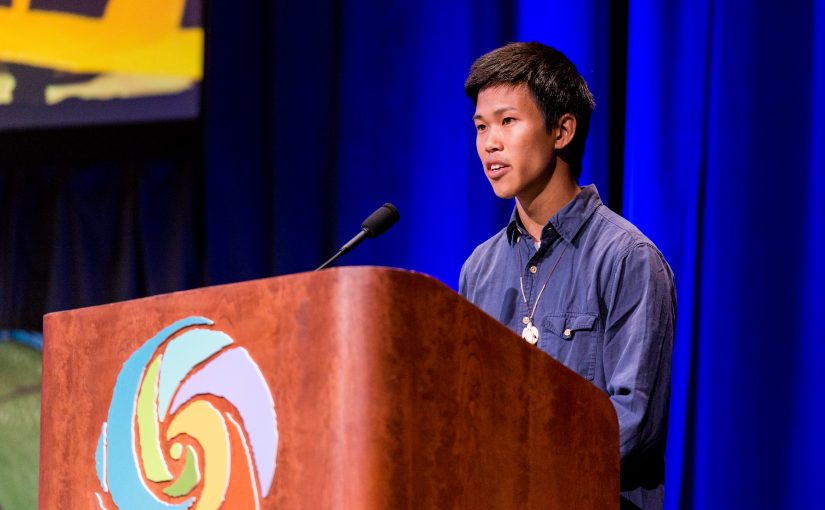
A U.S. policy analyst at the Environmental Defense Fund, Charlie Jiang advocates for just climate solutions at the state and federal level. He was a key SustainUS youth delegate to the 2017 U.N. climate negotiations, organizes for climate justice in Washington, DC with 350 DC, and received a 2017 Brower Youth Award for co-leading a #NoDAPL divestment campaign in DC.
Jiang’s own history has been a massive influence on his life thus far. The son of Chinese immigrants, Jiang is familiar with the struggles involved with attaining the American Dream, and through his work he’s realized that our country’s promise falls short for too many—or is simply impossible. He wants to change that.
In his Bioneers 2018 keynote address, Jiang talks about his own experiences growing up in the US, the environmental and humanitarian crises we are currently facing, and what needs to be done to make the American Dream attainable for all.
Watch Charlie Jiang’s keynote address in full here.
View more keynotes, transcripts, and more from the 2018 Bioneers Conference.
CHARLIE JIANG:
My mom carried $300 in her pocket, and barely spoke a word of English when she immigrated to the US from China in search of the American Dream. She and my father believed that if they worked hard enough they could create a better life in America for themselves and for their kids.
But today that dream seems unattainable for too many, and as I have learned and witnessed, it always has been in a country founded on the injustices of slavery, genocide, patriarchy, and white supremacy. I’ve seen that for people in my generation the promise of the American Dream seems laughable in the face of police brutality, gun violence, deportations, unlivable wages, threats to water and Indigenous sovereignty, and climate change.
When I was little it seemed like we had all the time in the world, but in this era, time is running out. Today we face a choice. We can go down a path of denial rooted in a politics of fear, or we can choose to confront our legacy of racism and injustice, and forge a new vision for our nation, a new kind of dream in which everyone can lead their lives with dignity and grace, where all of us—whether a queer black woman from Baltimore or a working class family from the California’s Central Valley or a Chinese American kid from the South Side of Chicago—has a chance to thrive in communities that are healthy, safe, and just, with access to good healthcare, education, housing, and jobs, where the air is clean and the water is safe to drink, where women are believed and respected, and privileged men are held accountable, where communities can self-determine their own futures, and where pipelines and pollution are a thing of the past. This is the future we are called to create.
It’s not an easy path, not when our political system is held captive by billionaires and corporations who profit off of violence to workers and communities of color, not when there are still resource inequities in our own movements. But I believe we must try.
We face a crisis on a global scale. We need action for global climate justice, and we need concerted federal efforts to mobilize trillions, for a Green New Deal to stop climate change and create opportunities for millions of Americans in a new economy.
But it starts with our communities. It starts with you. And it starts with me, a son of Chinese immigrants, who grew up wanting to be a scientist, who became an organizer because I saw that I have a voice to give to a struggle for a new ideal for this nation.
So what can we do? First we must do what we need to do to process the trauma and grief in ourselves and our communities from the pain and damage that has already been inflicted. We are called in this time to be vulnerable and strong so we can hold space for the deep relationships, trust, and love that we need in ourselves and each other.
Second we have to vote. If our elected officials won’t prioritize the needs of millions of people over those of the wealthy few, then we must replace them with leaders who will. Knock on doors, make phone calls, help your neighbors get to the polls, and go vote.
Third, we have to organize to build solutions in our own communities, and in doing so ensure that communities of color, Indigenous People, young people, leaders on the frontlines of the crises we face, who know what need to be done, have the resources, access, and power to lead the way. It’s already happening.
In Washington, DC, we’re building a diverse movement to divest from Wells Fargo and create a public bank that will promote a just economy for the district, not pipelines and private prisons. In Chicago, a statewide coalition secured funding for a solar job training program for formerly incarcerated individuals and youth in the foster system. In California, youth and frontline communities are demanding the governor phase out fossil fuels for good, a movement led in part by dear friends of mine from the organization SustainUS.
Support us.
My parents came to this country and dreamed they could build a better life. It’s a dream I grew up believing in, and it’s up to us, to all of you and to me, to get to work to make that dream fully possible.
The Promise of Women and Girls
Learn more about the Bioneers Everywoman’s Leadership Program.
For 30 years, Bioneers has been amplifying the voices of brilliant women—women who are leading movements, conducting groundbreaking research, creating inspirational art and harnessing their inner power. We showcase successful models and practical solutions through the inspiring narratives of women leaders.
As humanity faces extraordinary challenges on local and global levels, women and girls are rising up to lead, innovate and create a new paradigm through which voices from diverse backgrounds are honored and recognized on our collective path to a more promising future.
This video is part of a series called “Seeding the Field: 30 Years of Transformative Solutions,” which celebrates some of the best moments of the Bioneers Conference through the last 30 years.
Directed and Edited by: Theo Badashi
Sound Mix: Stephanie Welch
Produced by: Theo Badashi and Maximilian DeArmon for Cosmogenesis Media Group
The Reluctant Psychonaut: How Psychedelics Changed Michael Pollan’s Mind
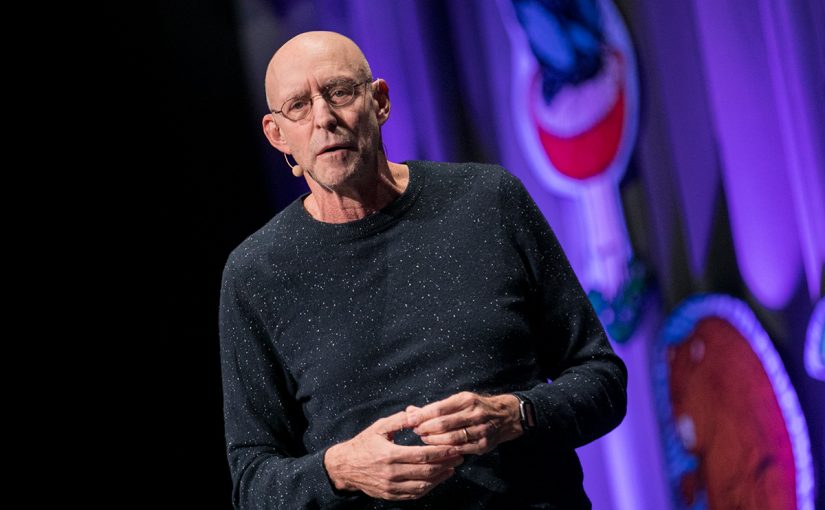
A quiet renaissance of serious medical research has once again arisen to study the therapeutic benefits of LSD and other psychedelics, including overcoming addiction and depression, and easing the existential terror of terminal illness. In this program, acclaimed journalist Michael Pollan shares a travelogue of his reportorial and personal journey with psychedelics. He slips through the rabbit hole into the mystery of consciousness itself, into the indivisible oneness of people and nature, and asks: could the transformational healing that psychedelics can bring on the personal ego level translate into cultural healing that could address the greatest issues of our time?
Tattooing the River: People, Place and the Art of Diversity
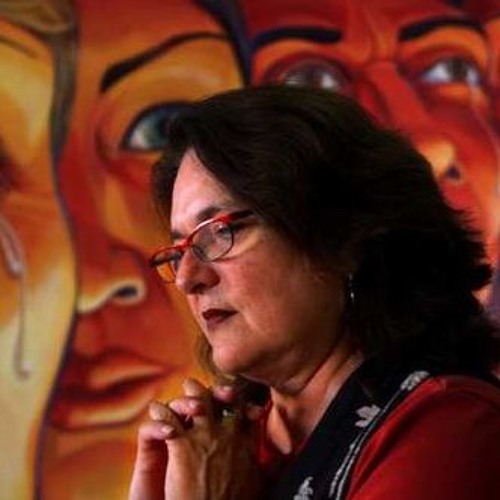
Award-winning painter Judy Baca describes how art can reconnect people to place, revive disappearing history, and repair cultural root systems. While working with at-risk youth to create The Great Wall of Los Angeles, the world’s longest mural, Baca realized that restoring a disappeared river also meant restoring disappeared cultures.
J.L. Chestnut: Bringing Justice to African-American Farmers
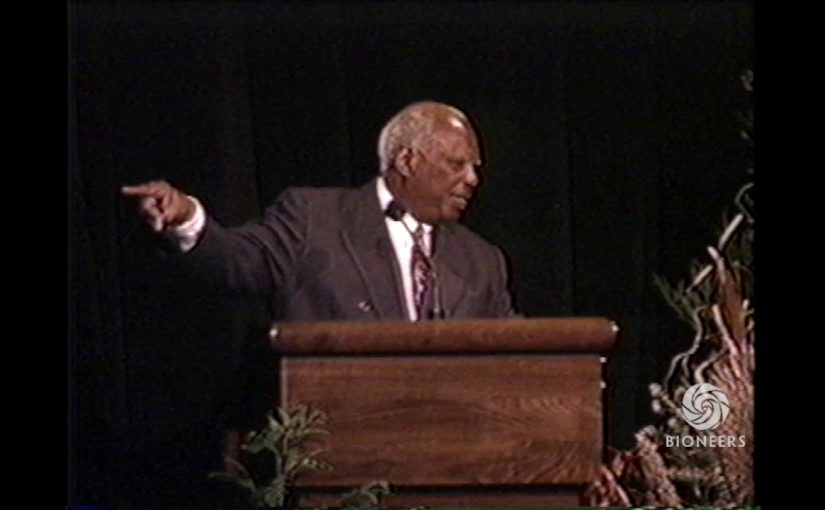
J.L. Chestnut, the first and only African-American lawyer in Selma, Alabama in 1958, was very active in the Civil Rights Movement and, as a partner in Chestnut, Sanders, Sanders, Pettaway and Campbell, is widely recognized as one of the leading civil rights attorneys in the country. Chestnut was a central legal figure in the successful historic litigation against the USDA on behalf of black farmers.
This speech was given at the 2000 National Bioneers Conference.
Learn more about J.L. Chestnut and his relationship with Bioneers.

Jacqueline Martinez Garcel Is Building Up the Latino Community with Love and Opportunity
Jacqueline Martinez Garcel and the Latino Community Foundation are on a mission to unleash the power of Latinos. Martinez Garcel is the CEO of LCF, where she has helped create one of the largest networks of civically engaged Latino philanthropists in the country: The Latino Giving Circle Network is now a movement of 500 members and 15 Giving Circles statewide. She also co-chairs the National Latino Funds Alliance, and has led highly effective Latino voter engagement campaigns and collaborated with Google to launch the first Latino Non-Profit Accelerator, a groundbreaking incubator that unleashes the power and impact of grassroots nonprofits.
Martinez Garcel is committed to and passionate about her work in not only providing Latino-led nonprofits with the resources they need to achieve social justice, but also improving health and care for vulnerable populations. Though LCF, she helped organized the first televised gubernatorial forum focused on issues that matter most to Latinos, reaching an incredible 8 million voters.
In her Bioneers 2018 keynote address, Martinez Garcel delves into the work she and her team at LCF do to support Latino-led organizations committed to providing opportunity, and why it’s important to lead and create change through a basis of love.
Watch her full keynote address here.
View more keynotes, transcripts, and more from the 2018 Bioneers Conference.
JACQUELINE MARTINEZ:
Today in California, there are 15 million Latinos. We make up 39% of the population. But right now, we’re living in a reality that’s too painful for all of us. On June 14, The New York Times had this picture (below) in their front cover. It’s a picture that pierced not only our hearts and our minds, but also penetrated the soul of this nation, and demanded that we ask ourselves: Who will we become? Will we actually live up to the ideals that were set forth 242 years ago? It’s a democracy that’s still in its experimental stages.

I just came back from Costa Rica, meeting with students from Nicaragua who are leading a revolution in their country, trying to take back their democracy. And I dare to say to them, we are experiencing the same thing in our country right now.
But these images and the numbers are painful. They are painful because they are happening in a state that claims to have strong progressive values for our future. And yet if you look at the central part of our state, there are raids going on, there are hate crimes going on against our elderly, against our children, families being separated. I know all of you are very well aware of that reality right now. But that is the context in which I want to ground this talk in.
We also face the fact that the institutions that were supposedly set up to protect and defend are killing our fathers, our brothers, our sons, and yes, even our daughters. 41% of police shootings are of black and Latino men and women, and more than half of those shootings have been of people who are unarmed. And if we’re not dying in the streets because of a bullet, we’re being put behind bars in numbers that are just too far gone for a country that’s supposed to be democratic, industrialized country. And we’re locking up our men in prison? Leaving our children fatherless in our communities?
All of this, by the way, has taken place in the last 12 months. In September, October, and November – and I’m bringing this up because we just commemorated Hurricane Maria with a group of Puerto Rican leaders here in California. It’s a painful time, because in less than 18 days between September 20 and October 7, 4,000 people lost their lives between Hurricane Maria, the earthquake in Mexico, and the North California wildfires. Over 70,000 people were displaced who have yet to find a home.
It is in this context that we’re also experiencing a breakdown of the institutions that were set up to protect our democracy. Corporate dollars have penetrated our voting, and our voices seem like they matter less and less. Yet, the Latino Community Foundation is convicted—and I am convinced that the only way out is if we stick to love and to hope. It is the only thing that will not only undo what we’re experiencing as a country, as a world right now, but it will also propel us forward to build institutions that matter to the people who are hurting most.
Revolution Through Love
I have to share with you some truth and principles by which I wake up every morning and I ground myself in. And it’s this one: 1 John 4:8, “God is love.” It’s a truth that I learned at a really young age. In family dinners we talked about this. And it’s a truth I held onto when I saw cousins of mine lose their lives to a crack epidemic in Washington Heights. It’s a truth that I held onto when I saw cousins of mine suffer from HIV/AIDS in hospitals. It’s a truth that I held onto when I saw my family being separated because of immigration laws that were unjust. And this truth is founded on a movement 2,000 years ago that believes that the creator of the universe sent his only begotten son, was motivated for love for a broken and decaying world, to bring about salvation only because of love.
These words are still core to the Christian faith, and I understand there are a lot of imperfect, evil people who claim this title, as in many movements, many have lost their way. But I want to repeat these words from 1 Corinthians: “If I speak in the tongues of men or of angels but do not have love, I am only a resounding gong or a clanging cymbal. If I have the gift of prophecy and can fathom all mysteries and all knowledge, and if I have faith that can move mountains, but I do not have love, I am nothing. If I give all that I have to the poor and give over my body to hardship that I may boast, but do not have love, I gain nothing. And now these three remain: faith, hope, and love. But the greatest of these is love.”
It’s a verse that’s been repeated in weddings, sometimes really meant, sometimes just repeated because it sounds good. But these are the founding principles by which we are trying to build a revolution in California with Latinos on the hedge, leading from a place of love and power.
It is a truth that has guided four of my heroes in the Civil Rights movement. Martin Luther King says, “I believe that unarmed truth and unconditional love will have the final word in reality. This is why right temporarily defeated is stronger than evil triumphant.” Cesar Chavez reminded us that if there is enough love and goodwill in our movement to keep giving energy to our struggle and still have plenty left over to break down and change the climate of hate and fear around us. My favorite poet, Maya Angelou: “Love recognizes no barriers; it jumps hurdles, leaps fences, penetrates walls to arrive at its destination full of hope.” Grace Lee Boggs, when speaking about her husband, reminded us that revolutions are made out of love for people and for place. He often talked about loving America enough to change it. “I love this country,” he used to say, “not only because my ancestors’ blood is in the soil, but because of what I believe it can become.” If we don’t hold on to that love of country for what it can become, we will lose our way and become what we are critical of our enemy has already become.
We have built the largest network of Latino philanthropists. I am proud of that. But what I am most proud of is that these women and these men and these youth are building this movement out of a place of love, and building up their power out of that inner strength that they have found in their moments of pain, and found purpose in that pain to build out their love.
Building a Movement
I’m not looking to build a movement of people who are writing checks and feeling good about themselves. I am done with charity. We should all be done with charity. This country has too often lifted up philanthropy as this thing that the wealthy are giving to the poor and therefore should feel good about themselves. I want to remind everyone that when philanthropy was started with Kellogg, Ford, Rockefeller, what drove them to start foundations was the fact that they were trying to not pay certain taxes when FDR settled taxes in 1936. Ford put aside $25,000. It is now one of the largest foundations in the world. Also keep in mind that 72 percent of board members in philanthropy are white.
What we’re trying to change is the face of philanthropy, the purpose of philanthropy, and the heart of philanthropy. Latinos are, yes, the future workforce. We are also the future philanthropists, and we can build something different.
Philanthropy for far too long has benefited from capitalism, and created some of the conditions by which we’re now trying to solve. What we’re trying to do at the Latino Community Foundation is unleash capital for social movement by everyday people. This is something new and different.
Giving circles are not new to this country. In fact, I have learned from some incredible Jewish women in New York, who have established these giving circles, and this is not about holding money, collecting interest, and growing funds. It is not about writing a check once a year to say, “Wow, I gave to this organization, I should feel so good about myself.” This is about liberating the capital that belongs to the people to begin with, that needs to undo the systems that have oppressed and robbed people of their fullest potential. That’s why when we go up and down the state—whether it’s Latinos in the technology sector, banking sector, nonprofit sector—we’re saying to them, “You have the power to change this, and it comes with your time, your talent, and your treasures.” We don’t want you to just come once a year and fill out a check. We want you to sit on the boards, to work with these community partners, to open up doors of opportunity. Because if you’re working at Google, you’re sitting in a place of privilege, and they know that. And they come from homes where their parents have taught them to pay it forward. Let’s harness that power for this country, for the good of our communities.
Then the question is: Well, who do we invest in? And who decides who do we invest in? Well, the Latino Community Foundation has made a commitment to invest in Latino-led organization, because we believe that those closest to the pain have the best solutions, that will last the longest, and actually transform the lives of a whole generation.
It Starts With Deeper Healing
Sammy Nuñez was expelled from school when he was 15 years old. At 18 he was shot in the chest but survived. Nine months later, he retaliates. He ends up in prison for nine years. During those nine years, Sammy dedicates himself to education, to ground himself in prison in a movement called La Cultura Cura, which means I will tap into my ancestral power to heal this pain, understanding that hurt people hurt more people, and I want to heal that hurt before I go back out into my community.
Today, Sammy leads one of the most important organizations in Stockton, CA: Fathers & Families of San Joaquin. Stockton Mayor Michael Tubbs knows that it’s because of the leadership of people like Sammy Nuñez who has worked in this community, who has healed his own pain and are looking to heal the pain of others who’ve been through the same systems and the same oppression that they’ve experienced. They want to lift them up, and not just put them through a GED program or into a job, but to remind people that success without significance doesn’t mean anything; that we don’t need just jobs, we need jobs with dignity.
They are working to build up the advocates that are spending time in DC fighting for these changes for Stockton. Now everyone is paying attention. Sammy, for the last 30 years, has built this movement rooted in understanding that healed people heal people, and a healed community heals a nation.
Today this organization runs a trauma center. The state finally opened its eyes and said, “Wow, there’s something happening here.” When we started working with Sammy, the organization was mostly volunteers— men coming out of the criminal justice system. But there’s really no justice in that system. However, these men have come out looking for a place where they can turn their pain into purpose and use love to heal. Now the state is funding this healing and this trauma center on these cultural values.
Jacob Martinez is the son of a Mexican immigrant. His dad joined the military, fought in Vietnam. When he came back he was uprooted and they moved from South LA to Texas. Somewhere along the way, Jacob understood that a door had been opened for him, and now he wants to open it for others. He comes back to Watsonville, California—that’s where our strawberries come from—and established an organization called Digital Nest. It’s a nest for the sons and daughters of our farm workers to find a place where they can dream bigger and ground themselves deeper in the roots of this land that they have cultivated and their ancestors have cultivated to find a greater place for themselves.
Digital Nest is not about training the next workers for Google or Pandora or Apple. Those companies are great and we’re grateful for the doors that are opening, but what we are really grateful for is that these young people are working with the small businesses in Watsonville to lend their expertise in digital marketing, in analyticals with their web technology, to use what they’re learning and replanting it back into Watsonville and now Salinas. They’re staying there and grounding themselves there.
We are funding organizations like Community Coalition, which lifted up Edna Chavez after she witnessed her brother being murdered in South LA when they were walking home from school. In her pain, she found the strength to find purpose, and now has become a leader in March For Our Lives. She is holding onto love and to hope, understanding that the loss of her brother’s life cannot be in vain, that South LA has to be viewed differently and lifted up differently. And that’s why we invest in these leaders and in these organizations.
In North Cal, we selected three organizations whose sole purpose right now is not just to rebuild Sonoma and Napa, but to reimagine it as a just and inclusive place where our vineyard workers and our hospitality workers actually have a place that they can call home, where their wages will afford their children an opportunity to go to school.
I know many of you know who have grown up in poor neighborhoods know that money is not enough. Poverty is not just solved by money. Poverty is not just a lack of money, it is a lack of opportunity. And the nonprofit accelerator that we’ve established is about taking these organizations that I’ve just mentioned to you and giving them a home where their leadership can be unleashed, where the doors of opportunity can be opened wide for them. One of those organizations, La Luz, finally convinced Tipping Point to give them $3 million to do a micro-lending program for women who have worked the fields and have bigger dreams. They just need a little bit of opportunity and money to actually make them happen.
Standing with these organizations, their ideas, and their visions is what’s going to take us to the California that we all hope for. It’s just not what we do but how we do it. Every celebration, our giving circles meetings, we have our wine, we have our dinner, we have our music, we bring in our culture, we celebrate. And people want to be part of that celebration, even now when our hearts are hurting.
The power of all of this is that if we harness this and unleash this, the state of California can look really different 10 or 15 years from now. When we think about our civic and political power, every 30 seconds a Latino turns 18 and becomes eligible to vote. Latino millennials make up 40 percent of the millennial vote. Imagine if we actually invested in them and in the infrastructure of these organizations that will harness their political power, and have Edna Chavez not just vote, but become the next city councilor, the next school board member, to have Latinos sit at the table of water boards and decide how water will be used in their community.
There are days that we go home and we cry really hard because the political climate that we are living in hurts. But we are committed to this mission because we know that it can change the future.
One of the great problems of history is that the concepts of love and power have usually been contrasted as polar opposites, so that love is identified with a resignation of power, and power with a denial of love. Now we’ve got to get this thing right. What is needed is a realization that power without love is reckless and abusive, and that love without power is sentimental and anemic. Power at its best is love—implementing the demands of justice. And justice at its best is love correcting everything that stands against love.
5 Empowering Videos for Climate Justice Champions
Right now, climate action is at the forefront of newsworthy conversations surrounding everything from economic growth and politics to social justice and responsible investing. On the heals of jarring reports detailing the necessity for urgent climate action, there’s no doubt that the time for climate leadership is now.
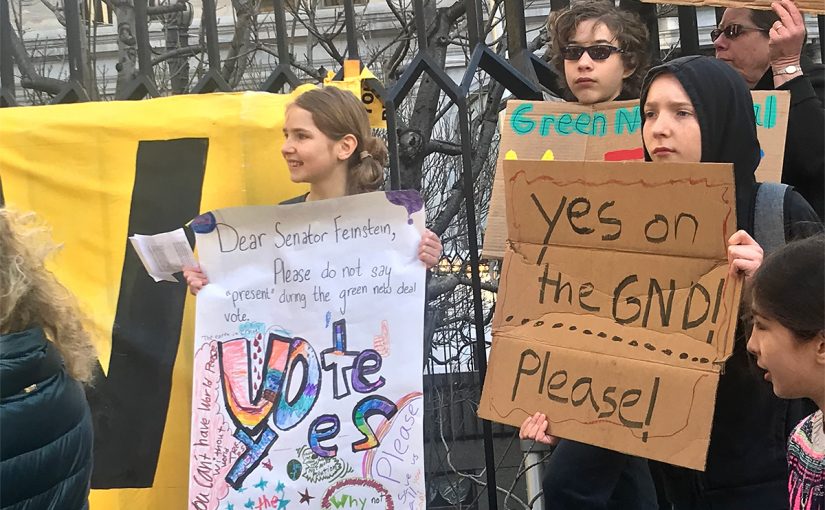
To be certain, tackling such an enormous challenge requires leadership from the top: Politicians, movement champions and industry leaders have a critical role to play in shifting our trajectory toward a cleaner, more sustainable future. But citizens everywhere are using their voices to challenge systems that brought us to this dangerous place. People throughout the U.S. and the world are taking powerful action, especially young people, for whom the stakes couldn’t be higher. The Green New Deal proposal and recent grassroots organizing provides solid evidence that citizen voices can make waves. (Find tons of background on the Green New Deal here.)
Here are five inspirational talks from leaders with dramatically different backgrounds and skillsets. They’re raising their voices to accelerate solutions that mitigate climate change. Are you ready to join them?
May Boeve: Climate Change is Changing the World – Now We Too Must Change
As Executive Director of 350.org, the groundbreaking grassroots international climate change campaign whose innovative organizing and mass mobilizations have helped generate a mass global sense of urgency and action, May Boeve shares her eagle’s-eye perspectives on the current state of the climate struggle. She illustrates 350.org’s learnings and strategies moving forward, including ways of learning about and incorporating justice and equity. She illuminates pathways our species must take to keep 80% of known fossil fuel reserves in the ground and radically accelerate the shift to 100% clean energy.
Charlie Jiang – Climate Change Activism and a New American Dream
Climate change, racism, and rising inequality threaten our communities. Charlie Jiang, a son of immigrants and a leading SustainUS youth delegate to the 2017 United Nations climate negotiations, will offer a vision of active hope, arguing that out of the compounding crises we face, we have a singular opportunity to mend the wounds of our past and usher in a brighter future.
Vien Truong: Creating an Equitable Environmental Movement
Vien Truong, National Director of Green For All, has worked tirelessly to bring equity, social justice and climate justice to the frontlines of the environmental movement and public policy. She has been a central force in putting environmental justice at the center of California’s groundbreaking climate policy, legislation and cap-and-trade funding. Vien shares her wise perspectives on how to build a new clean-energy economy that brings prosperity and justice to low-income communities and communities of color.
Indigenous Rising – Solutions to the Climate Crisis
Visionary Indigenous leaders highlight the need for mainstream understanding of the benefits of protecting human rights as they apply to resource extraction and Mother Earth.
Justin Winters – One Earth, an Ambitious Plan to Slow Global Climate Change
With contributions from scientists and partners around the world, One Earth, an initiative of the Leonardo DiCaprio Foundation (LDF), has developed a bold, new plan to avert a climate crisis and protect our biosphere. Justin Winters, LDF’s Executive Director, explains the three goals humanity needs to achieve by 2050.
We Need More Emotion and More Urgency in the Fight for the Future
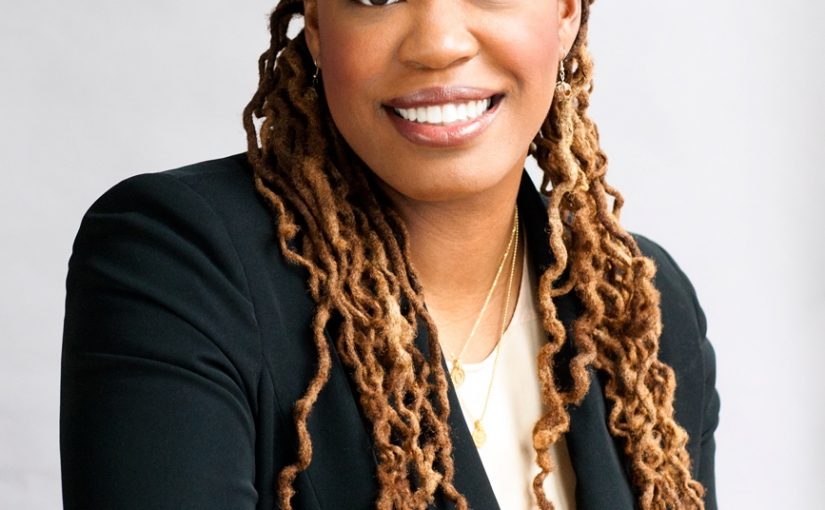
By Heather McGhee, Distinguished Senior Fellow at Demos
When my infant son was just one month old, in October of last year, I read the UN climate report that said that we have 12 years to act in order to prevent climate change’s worst effects: pandemics, mass extinctions, mass food shortages and millions of refugees coming from lands that are no longer arable. What we thought we had decades to do — a better Administration, a better Senate map — we in fact have to start now. For all Americans who are not buying the fossil fuel-funded climate denialism, it is difficult to go about your day to day activities and really hold the truth of what is barreling towards us. I fear for my son’s future, and for all our children.
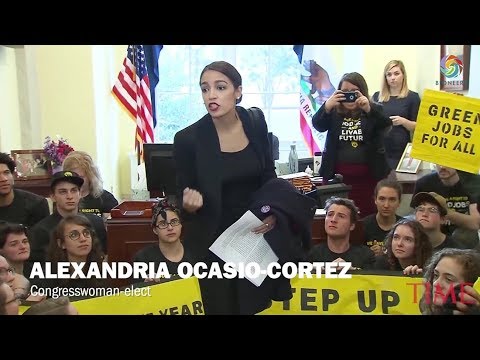
Then the hopeful youth of the Sunrise Movement brought us a game-changer. Politicians are usually only as courageous as social movements make room for them to be, and by demonstrating in soon-to-be Speaker Pelosi’s office and organizing members of Congress around the vision of a Green New Deal, the generation with everything to lose made us see that we can address inequality and climate change — both crises brought to us by a broken democracy — now.
Yesterday [2/25/19], I was on NBC’s “Meet the Press” and, with minutes left in the program, the topic turned to the recorded meeting between Senator Dianne Feinstein and some of her young constituents who have become active with Sunrise. The youth were asking their Senator to support a Senate version of the House Green New Deal Resolution instead of her own, watered-down version. The awkward and disappointing meeting catalyzed a debate among Democrats over the weekend that fell largely along generational lines. Older Washington veterans defended Feinstein on the merits, arguing that she was being realistic because a more modest climate change resolution would have a better chance of passing.
On live television, a journalist I respect enormously, Andrea Mitchell, gave voice to that defense. I pushed back — disagreeing without being disagreeable, not questioning her intentions but her prescription. I named what was dividing us as “a difference of urgency”. I went on to say, “for anyone who has children…” and that’s where I got choked up. It has never happened to me before on television, but I thought of my son’s face in that moment, and the tears threatened to fall. What wouldn’t I do to protect him, to leave him a world worth living in?
I went on to say, “There is no higher responsibility of anyone with any kind of political power right now than to try to stop a global catastrophe that’s not happening in three generations. It’s happening now.” Mitchell agreed with me and the “hopes” embodied in the Green New Deal, but defended Feinstein’s approach. I responded, “It’s not a question of hopes. It’s a question of, is there going to be a reality for our children and their children’s children. We can’t say it’s too aspirational, it’s the planet.”
It was, I believe, an important debate to have, even though some are reluctant to show anything but unity on the Left today. And it’s true that the worst culprit in our country’s shocking dereliction of duty is the right wing, with their climate denial amounting to planetary sabotage. (It’s economic sabotage, too, as the costs of climate change mount, though these effects will only become catastrophic after most of the older Republican party leaders are gone.) Of course the right wing is the problem — and as I mentioned, Kentucky youth were protesting at Mitch McConnell’s office over the weekend, too. But the October UN Report made it clear that the mainstream Democratic position (gradual emissions reductions and a price on carbon low enough not to disrupt the current economic system) is now a problem, as well. Everything should have changed with that report. If we’d had President Hillary Clinton in office, I imagine that she would have called a Joint Session of Congress and addressed the nation to put us on long-overdue war footing. But instead, the country reacted to President Trump’s tweets.
Many Democrats who have been in office for years like Feinstein have shared the values of people who want action. What they don’t share is our sense of urgency, the need to articulate and demand what’s necessary, not just what seems politically possible today.
I am far from naive. I know that it is difficult to pass big legislation and enact meaningful structural change. I know that Democrats like Feinstein are sitting in a Capitol where very little has been passed in the public interest since the Republicans took over in 2010. But I also know that movements make momentum, and you don’t spark a movement by advocating for a small-bore solution that will fall short and also not address the other pressing crisis of our time: record inequality. That’s why a big solution, one that is worth fighting for — the Green New Deal — is immensely popular with majorities in both parties. It’s going to be a fight no matter what; why not fight for what’s right?
As has so often been the case, there’s a grassroots movement that is being led by young people mobilizing to force that change. It is offering Democrats the political cover to do what’s necessary. But Democrats must seize the moment, stand united in support of the Green New Deal even if they have also sponsored legislation that would do less, and recognize that these shifts in what is possible move swiftly.
It bears repeating that the Green New Deal is popular with 80% of Americans, majorities of Republicans and Democrats. Of course, the fossil fuel funded, right-wing infrastructure that includes Fox News commentators are hard at work defining this popular vision as out of step with American values. But this is all about American values. For better or worse, I was raised to believe that America is Superman; that my country defeated fascism and brought light to the world with its ingenuity, from the light bulb to the internet. But now there’s a meteor hurtling towards the planet, and America is not suiting up. (Who would blame many Americans for concluding that there must not really be a crisis, if the greatest country in the world is shrugging its shoulders as it barrels down?)
A safe-seat Democratic Senator like Dianne Feinstein should be the superhero our children deserve. She can join the energy in her party, recognize the urgency of the moment and add her voice to combat the lies about the Green New Deal.
Now more than ever, we need heroes to show us that the America that did great things is not gone. The sad part is, a plurality of Republicans in our generation actually agree that climate change is real; the problem is, they’ve grown up in the post-Reagan era of government do-nothingness and so they don’t believe that the government can find solutions that will work. That kind of cynicism will be the death of us.
What You Can Do
This week, the Green New Deal resolution is in the Senate. Please, call your Senators and tell them to vote yes. It’s time for Democrats to set their sights higher and for Republicans to remember the ingenuity and can-do spirit that once made America great.
The resolution is not legislation, as Andrea was accurate to point out. It’s a vision that the American people are rallying around, an idea, like Social Security, that sparks a sense of possibility. It’s for policymakers to fill in the details with the dozens of good ideas that already exist, and some new ones, too. Rep. Alexandra Ocasio-Cortez and the bill sponsors sought a House select committee of Congress members who would forswear donations from polluters and get to work building out the legislation. When you call, say you want to see a Senate select committee on the Green New Deal, as well.
We can take action closer to home, as well. In New York State, my organization Demos has been working with a grassroots multi-racial coalition including labor union members and environmentalists, on a bill that shares the “equity + climate” vision of the Green New Deal. The Climate and Community Protection Act will set New York on a path to reach 100% renewable energy economy-wide on the fastest timeline of any state plan so far. It also sets targeted investments for the communities most vulnerable to climate change and creates strong labor standards for creating middle-class jobs in the transition to a renewable energy economy. The bill is on a path to passing and, as one of the boldest climate policies on the table that also addresses equity, could serve as a model for other states as well as inspiration for necessary elements of a national Green New Deal.
You don’t have to have a newborn, like I do, to feel a mounting sense of urgency about what’s happening. Now the case is as clear as it’s ever been that massive societal change is coming for us either way; we can choose whether it comes to us as cascading catastrophes or as a new industrial era of innovation. Even with a Green New Deal, there will be costs. But there’s no greater cost than inaction. I can’t look into my son’s eyes in a decade and tell him that when we could have prevented the worst of it, even our champions told us, “no, we can’t”.
Learn more about Heather McGhee and her work at Demos by visiting www.demos.org.
Watch Heather McGhee’s Bioneers Conference Keynote, A New “We The People” For a Sustainable Future.
How to Help the Planet by Helping Small Farmers
Alex Eaton grew up on a farm—and that’s impacted his entire life. Especially now that Eaton is the co-founder and the CEO of Sistema.bio, a patented biogas system that takes animal, human, and agricultural waste and converts it into energy and into fertilizer. The project began in Mexico and Central America, and then it spread rapidly into Africa and Asia with major positive impacts for rural livelihoods. It’s both visionary and extremely practical, and it wouldn’t be what it is today without Eaton’s unique perspective and background.
A staggering—and somewhat surprising—80 percent of the world’s food is still grown by subsistence farmers around the world. That means there is nothing that is more important in terms of ecological health, social stability, and reducing poverty than helping small subsistence farmers be more sustainable. In his Bioneers 2018 keynote address, Eaton discusses why supporting and advancing small farmers is crucial for climate mitigation and human health at every level, and how Sistema.bio is helping to do just that.
Watch Eaton’s full Bioneers 2018 keynote address here.
View more keynotes, transcripts, and more from the 2018 Bioneers Conference.
ALEX EATON:
Small farmers for Sistema.bio are farmers that are family based, they’re locally based, they’re community based, they’re intimately working a small piece of land, but together that patchwork of small farmers is actually managing the majority of arable land on Earth. What we do is actually quite simple: We help small farmers transform all of their waste into clean, renewable energy and organic fertilizer.
I started this work about 10 years ago as an exploration of how biogas digesters could work for small farmers and move out of a homemade realm of bricks and mortar and move into something that could be scalable, replicable, and could actually hit the hundreds of millions of small farms around the world.
We were doing a very small demo project in Central Mexico, and this young man Enrique came up to me and said, “I don’t want my mom to be sick anymore. She cooks six, eight hours a day over an open fire, and she has to go to the hospital all the time because her lungs are filled with smoke.” This is what we had really thought about—how do we convert waste to energy so people don’t have to cook over wood fuel? But then he said, “I also haven’t seen my dad in five years. He migrated to the United States to work when our farm wasn’t making enough money, and I really want to make enough money so that he can come home. If I don’t, I’m probably going to have to migrate too.” So that challenge basically a callout for us.
We installed this system with Enrique. We gave him a 10-month loan to pay that system off. Within a month his mom was able to remove wood fuel from their kitchen. She not only was cooking for the family, but they also make this delicious yogurt that they sold locally. The organic fertilizer was used in his fields that he basically had to abandon because they couldn’t afford chemical fertilizer. He increased his yield. That fodder went to the cows. They were able to increase their milk production. They reactivated the small orchard that they had of small indigenous fruits in Central Mexico, which they added to the yogurt. And they started selling more yogurt, producing more food.
The next season, he paid off the loans a couple of months early. The next season they planted twice as much crop as the year before, and Enrique’s father was there to help them harvest, back at the family farm.
What I learned in that time is that the object, the technology, the literal intervention had very little to do with this broader spectrum of how small farmers are integrated, both in our larger economic and social structure. So over the years, that really helped influence us and the people we work with.
Now, I can say that we’ve done that 30,000 times around the world. There are a lot of amazing, unique stories, because small farmers inherently are so different. I could also tell you about a woman in Colombia, a man in Kenya, running a new milk cooperative to empower small farmers, a woman-run dairy in India. They have all these different stories. But they all sort of fall around a couple of central themes.
We have enough data points to say that this technology, this approach, could lift two billion people out of poverty. And the externalities of that would be reducing greenhouse gases, it would be essentially converting waste to energy, and it would be building a deep, beautiful soil for these farmers to continue to work.
Why Small Farms Matter
Two and a half billion people live on small farms—one in three people. That was a surprising fact for me, because I actually grew up on a small farm and it was a little weird to be the stinky kid that had to work harder than his friends. There weren’t a lot of small farmers in our community, but the small farmers that we did work with were some of the closest friends to our family, because we shared this ethic around environmental sustainability, how we were connected to the Earth.
When I later became a journalist and was traveling around the world thinking about this cross section of social justice and environmental sustainability, I realized that small farmers were at the heart of a lot of these stories, and that was really exciting for me because these were my people, these are the people that I had grown up with. I shared a lot more with a Kenyan farmer or a Mexican farmer than I did with a lot of the people that I had grown up with, just because of that shared ethic.
The next thing I learned was that small-holder farmers were growing 80 percent of the food that is consumed on Earth, yet if you listen to sort of industrial agriculture and the propaganda around the food system, you’d make it sound like small farmers really just need to get out of the way because you have to go big or go home. So that was an amazing realization.
This is a really important group of people. However, they’re the group of people most likely to go to bed hungry. And that irony was something that really started to bother me early on. A billion of the world’s poorest people are farmers. But the reality is that we define poverty in a whole different way than I think we should.
Small farmers are managing more than half of the world’s arable lands, and it crucially–in an economy that really recognizes the value of information, they’re holding so much cultural knowledge, they’re holding so much deep indigenous heritage. And in Mexico they’ve been farming for four and 5,000 years. So it’s really humbling to try to come in introduce new techniques to these farmers. But the reality is that we’re not talking about uninterrupted indigenous knowledge. If we were, I think we’d be in a very, very different situation. The reality is neo-liberal economics, colonialism, in some cases genocide, these things have interrupted that ancestral knowledge. There’s been a lot of money spent to sort of undermine the value of that knowledge.
But these are the farmers that are working very closely with the land. They have a special bond to their local environment, and that is worth a lot. I believe they’re not poor, but they have a lot of challenges.
If you’re big or small, really concentrated agricultural waste is what’s creating dead zones in the ocean, choking out our lakes and rivers. Most small farmers are still cooking over an open fire, and they’re spending a lot of money and time to collect that wood, and that’s impacting their health, like it did for Enrique’s mom.
Today, with all of our creativity, the only answer that the international community has for small farmers around the world to improve their yield is add chemical fertilizer and pesticides. Today, still, the green revolution is the only answer that’s being proposed for small farmers.
These challenges for us are extremely important, and what we realized is that farmers don’t have technology, training, capacity building, or financing – really, these very basic things that industrial farmers have access to.
How Sistema.bio Works
Our work is fundamentally a very simple but beautiful alchemy. We’re transforming something they already have—something that’s considered gross, disgusting waste—into something beautiful. In this case, a beautiful blue flame. This is renewable energy. And what we’re doing is essentially making farmers more productive by creating value from waste. This is important because a lot of our work is to challenge the concept of waste.
In natural ecosystems, there is no waste. There are just products for other systems, for other processes. And we really need to start thinking like that as a society, but also, particularly, as farms.
What we try to do with a very simple model is use a simple piece of technology that allows farmers to do that on their farm. We create these extensions of a cow’s stomach, essentially these micro-ecosystems that allow bacteria to break down organic waste. The byproduct of that waste is methane gas, natural gas, that we capture in the top of this big bladder. And that gets captured, and then we can pipe that for cooking fuels, running small engines, chilling, pumping water, doing all the things that small farmers don’t have access to.
Then these organic chains are being broken down. The nutrients that are in that waste are being put in a plant-available form and then can be easily recycled back into the soil to help create deeper soils.
What that looks like is this: A woman that would normally be sitting in a smoky kitchen now has an on-demand beautiful flame, and a woman that would normally not have access to electricity is able to run a small dairy. People that would normally be spending an enormous amount of time cutting up fodder, milking animals, carrying water, now have access to mechanical energy for all of these simple things, and that’s a massive time saver.
We’ve also got this plant available form that instead of having to move tons and tons of waste, we can pump this beautiful liquid fertilizer back into the ground, and for larger extensions, we can actually run tractors with this compressed natural gas. We can add a lot of capacity to the farmers so that we can actually, viably put a ton of land under organic management.
We pair that with a huge amount of outreach. So we’re all around the world. We have 150 dedicated promoters that in 15 different languages today are promoting the technology. They’re local leaders. They’re empowering people to understand the technology. It’s not actually super logical that shit turns into money, so we have to sort of explain that to people in a way that they can understand, and with people that trust us.
And then what we learned early on is just make sure it works, provide world-class service to ensure that these farmers get the promise of the technology, and it works for them every single time. We’re able to do that because we use a little bit of technology. All of our farmers are recorded with GPS on a cloud-based database that allows us to see exactly where they are in the world, allows us to create connectivity between farmers, and ensure that they get the system and the adoption programming that they need.
Now we realized that we can’t try to change the world by putting ourselves into the same financial framework that farmers have been exposed to this whole entire time. When we started in Mexico, the average interest rate for a loan for a small farmer was over 100 percent annual. Can you imagine what that does to the small margins that they have on their work?
So we built a crowd-based funding platform that allowed us to extend zero percent interest loans to farmers. We made sure that they didn’t have to pay. I wish I had access to zero interest loans too, but this, in this case, is really to make sure that they don’t have to pay when they’re buying seeds, they don’t have to pay when they’re buying school uniforms. We really tried to dive into farmers’ lives and extend the payment program so that they could actually be paying only with the savings that they had. We actually tried to make sure that they’re cash flow positive right from the very beginning. And then when they pay off the equipment, that means that all of those savings can be reinvested back in the farm.
We’ve tripled in size over the last two years. We started in Mexico, now we’re serving all of Latin America, through Central America, and in the Andean region. We have a hub in East Africa that’s allowing us to work in Tanzania, Uganda, and Kenya, and we’ve just opened an office in India that has been really humbling and amazing. These are all cultures that have been farming for millennia, and to really be able to add something to that conversation, to really help empower those people has been an incredible honor.
A Vision for the Future
So we’ve learned a few things, including that the future of farming is female. And that’s a very important fact. We really tried to lean into that early on. Most of our promoters are female. A huge chunk of our technicians are females. That connection, that empowerment of women impacts way outside of just energy, climate change or agriculture. It’s really the single most important thing, I think, that we can do. Having that be a cross section of everything that we do, thinking how women are leaders in this, really ensures that these benefits come back to the communities.
Another thing we’ve learned is that farmers deserve high quality technology and world-class service. There’s a whole school of thought within development, which is let’s just let the markets take care of it, and neo-liberal economics basically will let you know that small farmers and the poorest people will be given really cheap stuff—something that is inexpensive but breaks really easy. Growing up on a farm, that’s not what we valued. We valued things that lasted a really long time, things that you could repair yourselves, and that’s really what farmers and really the poor in general need access to.
The most important thing we’ve learned is that you really need to connect with people’s hearts. You need to connect with culture. And you need to do that by being really open to integrate your work and see how it fits into other people’s cosmo vision, other people’s worldviews, and into their culture.
What we’re really trying to do is do what we’re doing today but 100 and million times larger. We really want to figure out how this can reach many, many more farmers. We’re also seeing that our platform can process invasive aquatic plants. We can actually take human waste, we can take food waste from markets. There’s a number of other ways this platform, this technology can actually start impacting farmers and agriculture.
We see this as part of a circular economy. How can farmers disconnect themselves from this neo-liberal trap of having to buy their inputs, being sort of stuck with these intermediaries that are buying their products for lower prices, being marginalized because most of the money they make has to leave their economy. How can they sell organic fertilizer to their neighbors? How can they be processing the agricultural products locally?
What we really have our eyes on is a million farmers as soon as we possibly can. Imagine six million people cooking on clean energy, having access to organic fertilizer. Imagine saving hundreds of millions of trees and reducing tens of millions of greenhouse gases, and putting an area the size of California’s vegetable gardens under organic management. It’s something we’re working for as fast as we can.