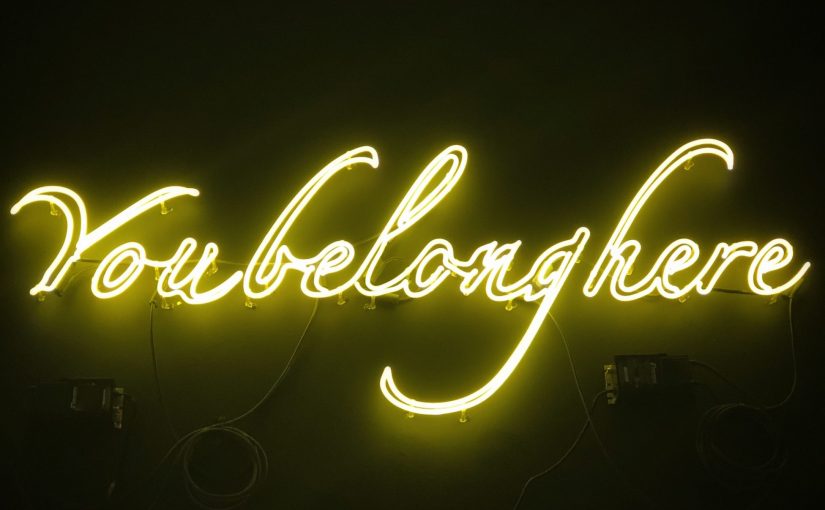
Healing Across Divides: Building Bridges to Challenge Systemic Injustice

In recent years, political polarization and a sense of “othering” has been immensely apparent, both in ideology and physical manifestations, such as the border wall. It’s time for collective healing. But this will take more than proclaiming individual stances against systems of oppression. The current moment demands we unite and actively work to dismantle those systems — not merely disapprove of them.

john a. powell is the Director of the Othering and Belonging Institute and Professor of Law, African American, and Ethnic Studies at UC Berkeley. In his keynote address at the Bioneers 2020 Conference, powell challenges us to think beyond individualized practices of bridging across differences, which ignore the structural injustices we live in.

This transcript has been edited for length and clarity.

john a. powell

I live in Northern California where breathing can’t be taken for granted these days. In the last few years, we have experienced days when wildfires made it too difficult to breathe. The COVID-19 virus robs those of us of the ability to breathe. And of course George Floyd and Eric Garner became famous because they were not allowed to breathe. You might ask: “What does that have to do with me, and what does it have to do with Bioneers?” In my mind, one thing that Bioneers represents is the coming together of different communities that share a grounding in the Earth and in nature. It’s a bridge that affords the possibility for everyone in all expressions of life to belong. 

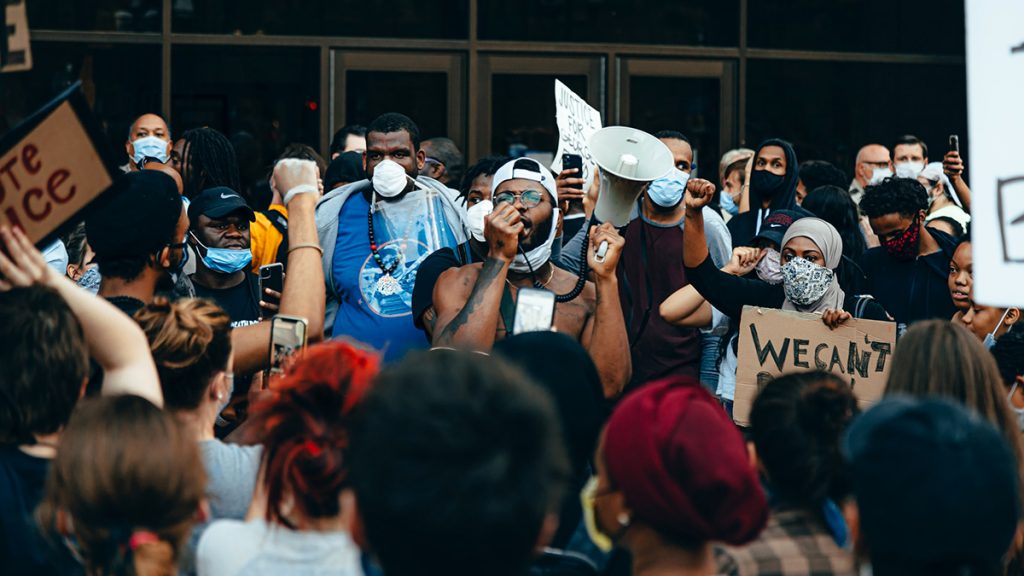
But why aren’t bridges in our society working better now? Instead of building bridges, we’ve been building walls, and we’ve been fracturing. We’re seeing demonstrations in the streets. After the election, many of us were celebrating, but half the country is still mourning. So how do we actually heal? It seems to me that bridging is the key to healing. At the Othering and Belonging Institute, we are very concerned about that process of healing, and the good news is that we’re not the only ones. A lot of people want the country and the world to heal. A recent survey found that 70 percent of Americans—Democrats, Republicans, Independents, people who are not political at all—want the country to heal. They want to stop the polarization. But how do we do that? We may feel that we’re too small as individuals to control anything except our own lives, but I want to challenge us on that.

Bridging is basically a process in which we recognize another person’s humanity. In South Africa there’s a Zulu word, sawubona, which means “I see you,” and a Bantu term, ubuntu, which means: “I am because you are.” In other words, “We recognize our deep interrelationship.” And there’s a lot of research suggesting that when people are seen, they start to heal. Just being seen, just being recognized is a deeply loving and healing event. And all over the country we’re seeing people engaging in this process of bridging that calls on us to see each other, to recognize each other. This has a political, cultural and certainly a spiritual dimension.

My assumption is that many in the Bioneers community are already leaning into some practice involving mindfulness, be it meditating, mindful eating, dancing, connecting to the Earth, etc. And I think those types of activities are critical in order to heal ourselves and heal each other, but I also want to push us to go beyond that, because what we found at the Institute is that while people gravitate towards bridging and belonging, they tend to do it in such a way that it becomes a very individualized practice. In these contexts, you often hear people say that in order to do something on the outside, you must first fix the inside. It suggests that bringing people together so that they can see each other is enough, but while it is critical, it’s not enough. 

Let me offer you two examples to illustrate this. One is from a classic that isn’t widely read anymore called Native Son by Richard Wright, published in 1940. The main protagonist in Native Son is someone named Bigger Thomas, a very poor young African American in Chicago who gets a job with a white family as, among other things, a chauffeur, driving the family around. When the family’s daughter returns from college, because she’s very liberal and about the same age as Bigger Thomas, she and her boyfriend basically say “We want to recognize your humanity, Bigger. We don’t believe in all this hierarchy, that you’re the chauffeur and we’re the passengers. We’ll sit up front with you; we’re not going to sit in the back.” What they don’t realize is how uncomfortable this makes Bigger; that Bigger is extremely discombobulated by having these two rich white people sit up in the front of the car with him. Even though they’re trying to exercise a sense of goodwill, they’re not acknowledging the cultural and structural impediments that make it very hard for Bigger to really connect with them.

Later in the book, they’re driving around and the white couple are getting hungry, so Bigger asks “Would you like me to take you some place to eat?” And their response is yes. And Bigger says, “Where?” And they say, “Take us to your favorite place.” This mortifies Bigger. He says, “No, I can’t do that,” but they say they want to see where he eats and to eat what he eats. Eventually Bigger agrees, and, of course, not only are they the only white people in this place, they’re the only rich people, and the whole place is abuzz. They’re doing it with good intentions. They’re trying to connect, to recognize Bigger. They’re trying to bridge, but they fail to recognize that the social structure and culture make it hard. Without addressing culture, social structures and power imbalances, bridging is very, very hard.

Let me give you a more recent illustration, from a 2019 movie I recommend called Knives Out. In this movie, the action centers around a very rich family, and there’s a caretaker from Latin America who takes care of the head of the family who has become a fixture in their midst. And at one point, there’s a conversation among the family members about undocumented immigrants, and she’s very uncomfortable because not only is she an immigrant, but her mother, who lives with her, is undocumented. And she needs this job. She can’t afford to live without this job, and at a certain point in the conversation, the family members turn to her and ask “Marta, what do you think? What’s your feeling about undocumented immigrants?” And she’s mortified. What should she say? She needs her job. She loves her mother. One of the family members recognizes that this is putting her in a totally awkward situation because of the power imbalance, because of the culture. She cannot have an authentic conversation with them unless they begin to address these deep structural issues.

And this gets replicated over and over again in our lives. It’s not enough to just say “I’m a good person. I don’t see hierarchy. I don’t see differences.” Those differences are real. They’re not biological, but they’re nonetheless real, and we can’t just engage in internal work to fix these problems. These problems are inside and outside. We live in stories and stories live in us. We live in structures and structures live in us. And we have to actually be attentive to how those structures make bridging, make the ability to see each other difficult. 

But there’s another, opposite, perspective that is taken by some people who are engaged in social justice practice. They would agree with the critique I just made, and they would say: “Yes, before we can do anything, we have to fix the structures. First of all, you have to get rid of capitalism; you have to get rid of white supremacy.” I think this is leaning too far in the other direction. If we have hundreds of preconditions before we can actually come together authentically, before we can bridge; if all of those power imbalances, all of those structures, all of those cultural impediments have to be removed first, that will never happen, so we will never come together.

So here’s the dilemma: if we come together while all the oppressive structures are in place, things won’t go smoothly, but if we wait until all those structures are addressed, we never come together. What we advocate at the Institute is that we begin with short bridges but at the same time that we pay attention to structure and culture. We engage in practices that center our bodies, minds and hearts, but we also recognize that we’re a part of the world. It’s an iterative process. It’s not one before the other. We have to do both at the same time and to reject the duality between the inside and the outside, and we’ll make mistakes and conditions will change, and that’s part of the process. 

I think the Bioneers community is very well situated to begin that process, and I challenge you all to be ambassadors to help the world heal, to help us bridge. Some people are leery of bridging because they think that, first of all, if there’s any bridging to be done, it needs to be done by those who are in power, and that’s not entirely wrong. If you have more power, you have more responsibility, but all of us have some power, some agency. It’s not symmetrical, but all of us can potentially engage in bridging. We have to start where we are, recognizing that things are not perfect and they never will be, but that we can begin to do the work.

There’s also an understandable reluctance to bridge with, say, a member of the KKK or an ardent Trump supporter or someone who hates black people, who’s xenophobic, etc., but again I say start with short bridges; start with things that are easier; start with things that are closer to home. Don’t start with the most difficult. And bridging doesn’t mean we agree with someone. It’s not predicated on the notion that I’m going to convince you or you’re going to convince me. It’s predicated on seeing each other, on being present, on listening, and on compassion, which means to suffer together. And research shows that when we can do this, when we can be fully present with someone else, it not only transforms them, it transforms us, so even though we’re not doing it for the purpose of changing a person, it can actually be a very effective change agent.

Bridging is one of the most effective tools for us to heal the world and create a world in which we all belong, but belonging requires that we co-create, and co-creation requires agency, power, love and responsibility. We are all responsible. Responsibility is different than guilt or blame, so we don’t dwell on guilt or blame, we dwell on responsibility. All of us are responsible for creating and co-creating a world and a future where everyone belongs, and we all belong to the Earth. And that is the challenge I want to leave with you, Bioneers: be ambassadors for bridging and creating a world where we all belong. Thank you.

LEARN MORE

john a. powell, Director of the Othering and Belonging Institute and Professor of Law, African American, and Ethnic Studies at UC Berkeley; previously Executive Director at the Kirwan Institute for the Study of Race and Ethnicity at Ohio State, and prior to that, founder/Director of the Institute for Race and Poverty at the University of Minnesota, has also taught at numerous law schools, including Harvard and Columbia. A former National Legal Director of the ACLU, he co-founded the Poverty & Race Research Action Council and serves on the boards of several national and international organizations. His latest book is: Racing to Justice: Transforming our Concepts of Self and Other to Build an Inclusive Society.

To learn more about john a. powell, read his full bio at the Othering and Belonging Institute.

Co-Creating Alternative Spaces to Heal

In this 2017 Bioneers keynote address, john a. powell explores how we can better understand the spaces we currently inhabit and strategize to co-create alternative spaces where real healing can truly begin.

In Pursuit of Happiness: Becoming Beloved Community

In this Bioneers podcast we ask: Can humanity overcome divisions such as race, class, nation, religion, and gender roles to come together to solve the planetary emergency that threatens our common home? Civil liberties and legal scholar john a. powell and social justice advocate Grace Bauer show how Dr. Martin Luther King Jr.’s vision of “beloved community” can overcome conflict, separation and the burdens of history to transcend our fear of the “Other” and work together to heal our societies and the Earth.

Racing to Justice: Transforming our Concepts of Self and Other to Build an Inclusive Society

Culled from a decade of writing about social justice and spirituality, john a. powell’s meditations on race, identity, and social policy provide an outline for laying claim to our shared humanity and a way toward healing ourselves and securing our future. Racing to Justice challenges us to replace attitudes and institutions that promote and perpetuate social suffering with those that foster relationships and a way of being that transcends disconnection and separation.

THE SEEKERS: John Densmore Explores the Origins of Creativity in His New Memoir

As the iconic drummer of The Doors, John Densmore is used to releasing hits — but nothing quite like his new memoir, THE SEEKERS: Meetings with Remarkable Musicians (and Other Artists).

THE SEEKERS is a collection of interviews with famous artists and musicians, threaded together by personal anecdotes and insights about the origins of creativity itself. By unraveling the transformative experiences that have shaped his worldview for more than 50 years, John Densmore shares extraordinary insight around the power of embracing our own imaginations.

The following is an excerpt from THE SEEKERS: Meetings with Remarkable Musicians (and Other Artists) by John Densmore. Copyright © 2020. Available from Hachette Books, an imprint of Hachette Book Group, Inc.


Okay, Joseph Campbell isn’t a musician per se, but if, as I’ve said before, a sentence reads like a musical question, Campbell’s writing is a symphony.

I didn’t know him well enough to call him “Joe,” unlike my friend Phil Cousineau, who edited the companion book to The Hero’s Journey, a documentary film on Campbell’s life. My first encounter with the man who inspired George Lucas to write Star Wars was at the Jung Institute in West Los Angeles, where Campbell was giving a lecture with slides. Although I’d read Hero with a Thousand Faces, I was new to the world of mythology. What I didn’t know was that I was meeting a teacher who would feed my spirituality big-time.

What I took away from Campbell’s talk was that many similarities exist between the world’s religions. This was in the old days before there was the internet to connect the global village. So how did these connections come about? Well, Mr. Campbell hinted, perhaps all the world’s mythologies have so much in common because they are true. Maybe mythologies point to threads that link us all. After all, such connections exist in the biological world. At a Bioneers Conference, I heard the mycologist Paul Stamets speak about the underground network of bacteria worldwide. We’re walking on a fungi internet! As the slogan for that conference put it: “It’s all alive, it’s all connected, it’s all intelligent, it’s all relatives.”

When I was a kid, I asked my parents, if there is only one God, why are there so many religions? My mom, who went to mass every Sunday, said that there were many wonderful religions, but that not all of them got you into heaven. I was young then, and she later rescinded that idea. Still, that kind of early experience may partly explain why a lot of my friends are Jewish: I was developing a preference for outsiders, and Jews were “the chosen few.” There’s wisdom on the edge. “Joe” could name all the world’s faiths and tell you how the religious deities arose. Even with his sense of the parallels between religions, Mr. Campbell, like my mom, was a devout Catholic. Another expert in comparative religions, Huston Smith, also thought that you needed an old school tradition to anchor your psyche. Even though the esteemed Mr. Smith imbibed lysergic acid with the likes of Ram Dass and Aldous Huxley, he still clung to his Christian faith.

I have found that after my own direct experience with the quantum world through psychedelics, organized religions seem dated. Still, I’m actually a little jealous of the security that my mom and Joseph Campbell and Huston Smith got from being wrapped in the arms of Jesus. I just can’t accept it myself. As a musician, I know Jesus is definitely the lead singer, but clearly Buddha is on drums. And Allah is probably the lead guitarist, milking those strings for all he’s got.

I’m not making light of these visionaries here; I really do borrow from all the world’s great religions, and get fed various ingredients. It’s similar to my love of world music, which feeds me sounds from all the various cultures. Even if I don’t understand the language being sung, I still get the essence of the culture. In religion, Hinduism’s multi-limbed gods of jealousy, wrath, sex, and so on, have helped me feel like I’m not crazy for having those feelings myself. I find the likenesses between belief systems reassuring, but in the end I prefer a patchwork cosmology.

I had heard that Campbell was taken to a Grateful Dead concert and saw some magic there, even though he had said that rock music never appealed to him. “They hit a level of humanity,” he noted, “that makes everybody at one with each other.” I don’t know if Mr. Campbell knew the quantity of drugs being taken at these concerts, but I agree that “this awakening the common humanity is a quite different rhythm system from that of marching to the bugle of ‘Onward Christian Soldiers’!”

The Hero’s Journey premiered at the Directors Guild in Hollywood and Iwas invited to be on a panel after the screening. My anticipation doubled when I realized that the chair with my name on it was right next to the chair for “The Man.” I knew the maverick scholar was in his eighties, but didn’t know that this would be his next-to-last public appearance.

It was a very warm discussion, mainly full of accolades about the mythologist. I commented that “I didn’t know I was performing at a Dionysian festival rite when playing drums with The Doors until I read this guy.”

“This religious system has to do with the awakening of your nature, and that’s the one that your art,” he retorted, pointing at me, “is operating on.”

That felt good to hear. Later he complimented my clan again: “I think that the Grateful Dead are the best answer today to the atom bomb.”


Excerpted from THE SEEKERS: Meetings with Remarkable Musicians (and Other Artists) by John Densmore. Copyright © 2020. Available from Hachette Books, an imprint of Hachette Book Group, Inc.

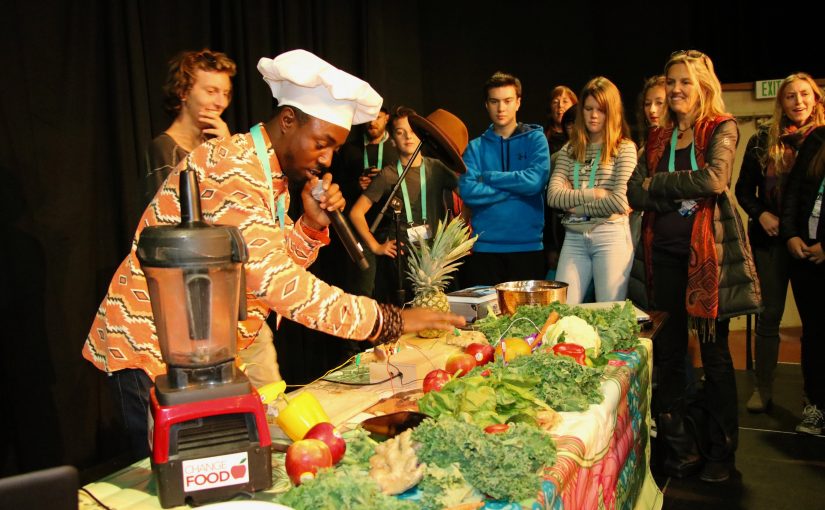
Eco-Hip Hop Pioneer Promotes Healthy Living and Urban Farming

Ietef Vita, also known as DJ Cavem, is a pioneering hip hop artist using his craft as a platform to make social change and encourage healthy living. Influenced by his grandfather’s experiences as a Black Panther in the 1960s, his mother’s dedication to healthy food, and the Rastafarian concept of living off the land, he’s developed a record label and created his own seed company that supplies urban farmers. Vita coined the popular term “eco-hip hop” in 2007 to describe the interdependence of spoken word and progressive activism, and it’s sprouted into a global movement.

In this interview with Arty Mangan, Bioneers Restorative Food Systems Program Director, Ietef Vita discusses his journey toward healing — both collectively and personally — through artistic expression and food justice activism.


Ietef Vita

ARTY: What have you learned from your grandfather about his experiences as a Black Panther?

IETEF: My grandfather was born on a plantation in Arkansas. At age 17, he was a part of the Great Migration. He became an artist and lived in Harlem up the block from Miles Davis and was good friends with Dizzy Gillespie. That influenced me to be more out of the box.

He was involved with the Panthers and the culture that was happening around and during the birth of my mother in 1968. My mother was born when Dr. King was assassinated. In Oakland, California there was the rise of the Black Panther Party. They were adopting ideas about food, clothing, shelter, cooperative economics and having protection for your family. The Black Panther Party was running a breakfast program. I completely understand all that. That ingrained in me the importance of community development. It’s important to feed the community, which is why my record label, while not completely influenced by the Black Panthers, respectfully reveres where they come from and their efforts to create the community engagement around the nation that was so powerful.

ARTY: When you were younger, you went to Africa with your mother. How did that experience shape you?

IETEF: I first went to Africa when I was a teenager. I went to Senegal. At that age, I didn’t really understand the difference between living in America with racism and having to deal with fascism on the other side of the world. Like straight up, there it’s not about skin color; it’s about how much money you have. Walking through Gorey Island kind of transformed me. Going through the House of Slaves immediately struck me hard. I don’t think I cried like that since I was a kid. I was kind of a tough teenager, but that had a great impact on me. It was so impactful that I gave up gang-banging on the spot. So, experiencing Africa helped me understand what I needed to do when I came back to the States.

I also went to Uganda and studied indigenous agriculture and agronomy and taught at three different primary schools in Kampala, Uganda. The impact of hip hop brought me to the Motherland to teach waste diversion, composting, and how we can give back through art and culture. 

Traveling was an educational project for me. It wasn’t like most people when they go to the other side of the world to try to enjoy life and take pictures. For me, it was really hard walking through the slums. I ran out of money by the time I entered the slum because I had given it to the first kid who asked. It transformed my idea of what a ghetto is and how fortunate I was living in America instead of living there.

I’ve been to Africa multiple times since my youth, and I definitely will continue to go back to my Motherland in the west part of the continent as a deep repatriation.

ARTY: How has racism impacted your life?

IETEF: Growing up in the inner city of Denver — the wild, wild West — I’ve been bumped a couple of times as a teenage high school kid just trying to make it through to adulthood. Most of the time, the police would mess with me. I didn’t grow up being chased by Ku Klux Klan like my grandfather did; my grandfather on my mother’s side had a cross burned on his property. 

But when I think about living in Colorado, there’s a lot of cellular memory that I have to heal and do some past-life regression. I understand the deeper part of my personal anger has to deal with fighting for freedom. At the same time, I realize that there’s a mental perspective. You can be free in your mind at any time. That’s why I’ve been working so much on internal healing by doing yoga and gardening for my mental issues of dealing with racism because it’s not going to stop. You’ve just got to learn to heal yourself from within. 

Black, brown and Indigenous people in America have to live within the chaos of this country. It’s not holding our tongue; it’s healing ourselves after battle and dealing with toxicity. 

Have I been indulging in metaphysical healing because of racism? Yes, I have. I feel like the best way to battle it is on an internal level because you can’t just sit and live with the concept. Just look up the word black in the dictionary; do you want to live with that? So yeah, man, I’m going to leave it at that.

ARTY: You coined the word eco-hip hop. How did that come about and where has it taken you? 

IETEF: Environmental hip hop was a concept that was birthed from conversations that were happening in hip hop but weren’t consistent. For example, there was a song called Green Eggs and Ham by A Tribe Called Quest; there was Be Healthy by Dead Prez. But when it came down to consistently talking about food justice and environmental justice, I didn’t feel like there was a platform or a genre for me to categorize myself. 

I was not only thinking about how to utilize hip hop to support the community to create waste diversion programs and green and black cooperative economics, but also how to utilize hip hop to redefine wealth. The way I’ve been doing that is working with friends and family in the culture for the past 15 years developing a record label that distributes seeds as albums. We’re the first certified USDA organic hip hop record label. Plant Based Records is the home of environmental hip hop. Our goal is to show people how to grow food and also to be a part of nature. So, the music reflects that conversation, that lifestyle. We try to keep our music videos as ethically and environmentally responsible as possible.

Eco-hip hop stands for higher inner peace helping other people. It’s about how to stop gang violence and create art for social change. Of course, hip hop is being utilized to market sex, drugs and violence, but we can easily utilize it to promote beets, kale and arugula. 

ARTY: What does food justice mean to you?

IETEF: Food justice is a dream. We’re still trying to get that. We’re working on food sovereignty. Justice hasn’t happened yet. What food justice looks like, what it feels like to me is a grow-oasis where people have a traceable source to their food, where we have fresh water to harvest, where there is community trade to supply resources, and we need to re-invigorate saving seeds in our community not only through art, but also from a perspective of how it really impacts life. 

I’m plant-based. I think there needs to be a conversation about appropriation and neo-colonial veganism needs to step out of the way. 

ARTY: What do you mean by neo-colonial veganism?

IETEF: I’ve been a vegan for 20 years. I feel like there is a style of what that is. Like, I was introduced to a plant-based lifestyle through Ital and the concept of the Rastafari’s eating off the land. I didn’t even know the word vegan. I was just going to the farmers’ market and the Asian market trying to find tempeh and produce.

I understand that there is a difference between eating a plant-based diet and eating high-processed, chemical, GMOs. Let’s go ahead and separate the two. There’s plant-based and there’s vegan. You know what I’m saying? 

 Association with the word vegan is no different than the way that urban culture associates with sustainability. It doesn’t really look like a thing people of color can really assimilate or make economic value off of. I think there is an aspect of veganism that no one is down to address yet, which is there’s some elitism in the vegan world. 

People in the hood want solar panels. Can they get them? Not all the time. That doesn’t mean that they don’t want to support the industry? You’ve just got to think about readily available access; you’ve got to think about the concept of economic development, and why that plays a big factor into redlining communities. 

Gentrification sometimes impacts a community in a way that doesn’t really show that community renewed in the way that it should be. You get farmers’ markets and yoga parlors, and the liquor store turns into a wine cellar. Everything changes when a community is gentrified. Urban communities that have historical references, lose their tone, touch, feel and look overnight to developers. 

That’s no different from what happens in the food industry when white bread is pushed regardless of it’s nutrient qualities. I think it’s really important to address how to decolonize our kitchen, and remember the indigeneity of how to stay in biomimicry with the Earth. I’m taking this to the hood, because ain’t nobody got time to play gentrify, especially when the inner city’s trying to garden. 

ARTY: What is the Culinary Climate Action Initiative? 

IETEF: Culinary Climate Action is the concept at the forefront of Recipes for Resistance, which is a workshop that started in Oakland, California with my brother, Bryant Terry. I’ve been producing workshops nationally to show people how to go to the farmers’ market, make yourself some food, and store it and potentially propagate it. I showcase how you can use the alkalinity and the electricity of plugging copper wires into fruits and vegetables and making beets and then performing lyrics on top of that. That is a concept that was pretty much put together with my brother Detour Thomas Evans. It was the beginning of Plant Based Records. It started off by making beats out of beets. And from there, we were like, “Yo, we need to drop seeds and drop albums.” And here we are.

Recipes for Resistance is a project that brings the music into the schools and puts it in the hands of the people who I feel are in decline. It’s about making fruits and vegetables more available to our brothers and sisters. At Inner city corner stores, all you can find is processed food. It sucks, but we see it all the time. So, it’s about creating farmers and normalizing the idea of eating locally grown food, which is weird and sad that we even have to do so.

I think that the best way to tackle it is to sequester carbon in urban atmospheres by growing food and harvesting the nutrients. The soil in cities is not being turned all the time like the plowed field that gets turned like 25 times a year for growing corn and soy or whatever. 

I think it’s important to show the patience of growing food. That’s what we’re trying to do with the young people. And they’re really vibing with that. 

The next thing that’s really happening is my wife and I just started a non-profit organization called Vita Earth Foundation. Our goal is to seed urban farmers. We’ve been working to seed BIPOC communities with organic seeds.

 It’s been so weird, Bro. This COVID-19 thing was such a weird thing. We were expecting to go on tour. Started our first show out on tour with Xiuhtezcatl. We played the Mercury Lounge, played in Montreal, played Montana, and then rocked Berkeley, California. Got out of town right on time before they shut us down. We played at the Cornerstone and got out. 

I thought I was going to be on tour giving out seeds from the previous album, Biomimicz, which is the album dedicated to biomimicry. Our goal was to go on tour and hit up the nation and just seed the whole city. Well, not only did we have the pandemic, but then we had civil unrest. I sat down and watched through the screen people burning down their grocery stores. I’m like, “Yo, how are they going to get food?” 

Luckily, months before the pandemic, we shipped seeds to Minneapolis to some urban farmers. They had kale in the ground in spring and were able to start feeding the community in mid-June during the George Floyd riots. I’m talking about the impact of the record label being able to feed the community and supplying food to the co-ops during times like that. The conversation gave birth to our foundation’s first campaign, which was to Seed Urban Farms. So far, we’ve given out around ten thousand packets from Chicago to Cincinnati to Minneapolis, all the way down to Virginia. We’re a black-owned seed company/record label. It’s kind of a weird collage, but people get it. 

Kenny Ausubel – The Upside of the Downside

The incredibly challenging crises we are currently engulfed in (the pandemic, unemployment and food insecurity for millions, persistent structural racism, political instability, plutocratic consolidation, and of course climate change) have an upside: they are stripping away illusions to starkly reveal the profound flaws in our societal systems and current paradigms. Kenny Ausubel, CEO and Co-Founder of Bioneers, suggests that the vast global movements offering the most positive responses to these threats are pointing the way toward the new equitable and life-affirming civilization we must now collectively give birth to.

Read a written version of this talk here.

Planetary Health: Protecting Nature to Protect Ourselves

As humans, we are not separate from the world around us. Our health is directly tied to the environment of which we’re a part, and we’re already seeing the consequences of continuing to degrade our climate through industrialization and the continued pursuit of wealth.

Planetary health is an emerging field that addresses these concerns, and doctors, scientists and activists are starting to pay attention. The new book Planetary Health: Protecting Nature to Protect Ourselves provides an overview of this approach — which considers threats to our ecosystems as threats to our own wellbeing, with an emphasis on solutions — and serves as a guide on how to respond.

The following is an excerpt from Chapter 1 of Planetary Health, edited by Samuel Myers and Howard Frumkin. Dr. Frumkin will appear as part of the 2020 Bioneers Conference. Copyright © 2020 by the authors. Reproduced by permission of Island Press, Washington, D.C.


“It was the best of times, it was the worst of times, it was the age of wisdom, it was the age of foolishness, …it was the season of Light, it was the season of Darkness, it was the spring of hope, it was the winter of despair.” —Charles Dickens, A Tale of Two Cities

By many metrics, there has never been a better time to be a human being. Indeed, the past 70 years have seen almost unimaginable improvements in global human wellbeing. Between 1940 and 2015 the percentage of adults around the world who could read and write doubled, from 42% to 86%.1 In 1950, there were 1.6 billion people living in extreme poverty and 924 million people not in extreme poverty. By 2015, there were 733 million people living in extreme poverty and 6.6 billion people not living in extreme poverty.2

In other words, in 65 years the percentage of the world’s people living in extreme poverty dropped from 63% to 10% despite a near tripling of the global population. In 1950, global life expectancy was 46 years.  Sixty-five years later, it was 72.3 And during that same period, child mortality dropped from 225 per 1,000 to 45 per 1,000 (Figure 1.1).4 These are unprecedented achievements in human history.

But there may never have been a worse time for the rest of the biosphere, at least since human beings began walking the planet. On March 17, 2019, a male Cuvier’s beaked whale washed up in the Philippines dead. It was still immature, and, wondering what could have killed such a magnificent creature capable of diving to depths of nearly 3,000 meters and normally living up to 60 years, scientists performed a necropsy. Inside the whale’s stomach and intestines, they found 88 pounds of plastic garbage. As of 2015, the inhabitants of 192 coastal countries are responsible for dumping roughly 8 million metric tons of plastic waste into the world’s oceans every year.5

The same extraordinary scientific and technological developments that have pulled humanity out of poverty, increased our life expectancies, and driven unprecedented gains in human development in less than a lifetime are also fueling an extraordinary ballooning of humanity’s ecological footprint. The combination of rapid human population growth with even steeper increases in per capita consumption are driving nearly exponential growth in human production and consumption of everything from motor vehicles to synthetic fertilizers, paper, and plastic to water and energy use (Figure 1.2).

As a consequence of this explosion in human consumption, measures of our  impacts across  the  planet’s natural systems—loss of biodiversity, exploitation of fisheries, rising carbon dioxide in  the  atmosphere, acidification of  oceans, or  loss  of  tropical forests— show similarly steep accelerations since  the  1950s and 1960s (Figure 1.3).

The impacts of people on our planet’s natural systems are now immense. To feed ourselves, we have turned 40% of Earth’s land surface into croplands and pasture.6 We use about half the accessible fresh  water on the planet, mostly to irrigate our crops,7 and we exploit 90% of monitored fisheries at or beyond maximum sustainable limits.8 We have cut down roughly half the world’s temperate and tropical forests and dammed more than 60% of the world’s rivers.9 And we are crowding out the rest of life on  our  planet. In May 2019, 145 authors from fifty countries released the Global Assessment of the Intergovernmental Panel on Biodiversity and Ecosystem Services. After reviewing 15,000 articles over 3 years, they concluded that roughly one million species are facing extinction, many within decades.10 Already, we  have reduced the numbers of  birds, mammals, reptiles, amphibians, and fishes  who share the planet with us by more than 50% since 1970.11

These are, indeed, the best of times and the worst of times. But at the heart of the field of planetary health is recognition that the wellbeing of humanity and the degradation of the rest of the biosphere cannot remain disconnected for much longer. The scale of the human enterprise now surpasses our planet’s capacity to absorb our wastes or provide the resources we are using. Human activities are driving fundamental biophysical change at rates that are much steeper than have existed in the history of our species (see Figure 1.3). These biophysical changes are taking place across at least six dimensions: disruption of the global climate system; widespread pollution of air, water, and soils; rapid biodiversity loss; reconfiguration of biogeochemical cycles, including for carbon, nitrogen, and phosphorus; pervasive changes in land use and land cover; and depletion of resources including of fresh water and arable land. Each of these dimensions interacts with the others in complex ways, altering core conditions for human health: the quality of the air we breathe, the water we drink, and the food we can produce. Rapidly changing environmental conditions also alter our exposures to infectious diseases and natural hazards such as heat waves, droughts, floods, fires, and tropical storms. These changes in the conditions of our lives ultimately affect every dimension of our health and wellbeing, as illustrated in Figure 1.4. Planetary health focuses on understanding and quantifying the human health impacts of these global environmental disruptions and on developing solutions that will allow humanity and the natural systems we depend on to thrive now and in the future.


From Planetary Health, edited by Samuel Myers and Howard Frumkin. Copyright © 2020 by the authors. Reproduced by permission of Island Press, Washington, D.C.

The Planetary Dance: Using Somatic-Centered Art to Heal Communities and the Earth

An Interview with Daria Halprin, somatic/expressive arts therapist, author, teacher, dancer, actress, and co-founding Director of Tamalpa Institute; conducted by Bioneers Arts Coordinator, Polina Smith.

POLINA SMITH: Daria, could you tell us a bit about the history of Planetary Dance?

DARIA HALPRIN: It is a story that has evolved over time. Here are the highlights:

From 1979 to 1981 six women were murdered on Mt Tamalpais in Marin County, California.  These tragedies threatened the sense of safety in our entire community.  Mt. Tamalpais is a beloved part of our landscape, a place where for generations families have hiked, picnicked, celebrated holidays and held special ceremonies together. The mountain is considered sacred by Indigenous peoples in this region and beyond. The park service finally had to close down the trails because people could no longer safely hike on the mountain.

My father, the environmental designer Lawrence Halprin, and my mother, the dancer Anna Halprin, often collaborated on various projects combining art, the environment and community activism.  During the time of the murders, they were collaborating on a series of workshops and performance rituals called A Search for Living Myths. They decided to include a participatory ritual to enact the reclaiming of the mountain. The ritual performance was carried out over several days, culminating in a community walk, and prayer offerings on the trails of the mountain.

 What was important about the ritual was that it was created in response to a collectively experienced trauma. It took feelings of helplessness and rage and brought the community together in an act of courage and resilience to collectively confront the tragedy and reaffirm life.

POLINA: So how did it evolve after that?

DARIAAnna and her work were well known and a magnet for artists, students and healers – people from around the world with diverse interests and backgrounds. Word of the Mt. Tamalpais ritual spread, and the renowned Huichol teacher, Don José Matsuwa, [it was said he was 109 years old} came to visit Anna at our family home and dance studio. He told Anna that her ritual had been successful, and that she needed to repeat it for five years.

Anna committed herself to holding the event yearly for five years, but she made some artistic changes to the original piece as she developed a more expansive vision. Those changes evolved into the Planetary Dance. She named the new ritual Circle the Earth, with a vision to expand beyond Mt. Tamalpais and Marin County, creating a peace dance that would travel to communities around the world. There would always be the underlying, universal theme of dancing for peace, but there would also be a particular theme that each group in each locale would choose, depending on what was happening in that community. It was designed to be a form of engaged art activism.

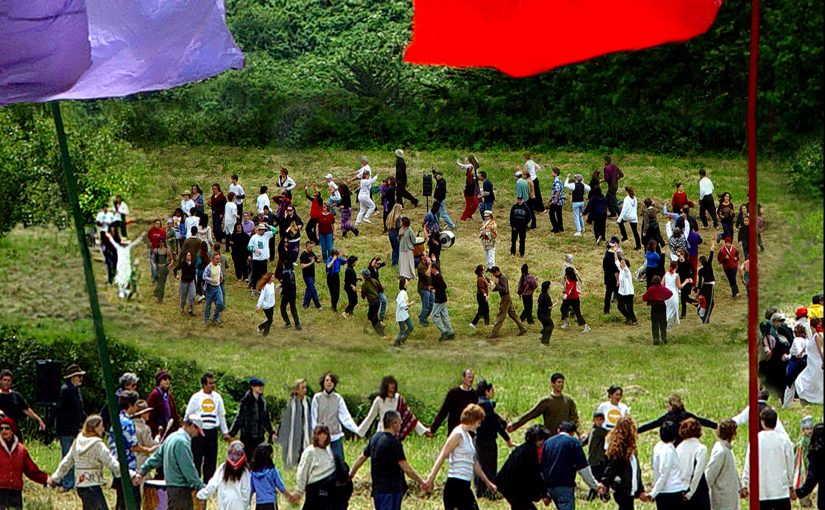
 The centerpiece of the dance is the Earth Run. It draws from Indigenous dance and ritual traditions. There are three concentric circles that move clockwise and counterclockwise around a group of drummers. The outer circles are the faster runners. The inner circle surrounds the drummers and is for slow walkers, elders and those with physical limitations. Drummers hold the center and drum for the entire run.

The ritual begins with words of welcome, reflections on the theme and the community challenge. There are artistic offerings in the form of song, poetry, and blessings. Participants each declare an intention with a shout, arms and hands shooting into the air. They each dedicate the run to a person or an issue that matters to them, for  example: I run for my granddaughter and for the equal rights of all women and girls.

As the ritual draws to a close, participants kneel to the ground to symbolically plant their dedications into the earth. They then sit back to back in silence and share their experiences. A group procession out of the space marks the conclusion of the ritual, and then the community celebrates and socializes.

The Planetary Dance has taken place in over forty countries every year since 1985. It has become one of the traditions of Tamalpa Institute and its student body. We celebrated our 40th Planetary Dance this year. This is also the year Anna turned 100 years old, and many Planetary Dances were performed in her honor.

With the onset of the pandemic, we were not able to hold our annual Planetary Dance in person on the mountain. I decided to take it online. With my son, Jahan Khalighi, and supported by Tamalpa Institute and the Planetary Dance committee, I facilitated our first online presentation of the ritual in July on Anna’s birthday in acknowledgement of Black Lives Matter.

POLINA: How did that work logistically?

DARIA: It was difficult to imagine how we would capture a sense of ritual and a genuine feeling of embodied community connection in a virtual format. I called in a group of Planetary Dance artists to film their offerings which transmitted the soul and spirit of the dance. In addition to extensive pre-production planning and technical maneuvering, what made the project possible was the shared passion and desire to be together in community around a global challenge that we all cared about deeply.

Close to one thousand people participated online. They did the ritual in pods, in families, and in partnerships. They did it solo in their backyards, in their bedrooms, and in their living rooms. We had a nursery school teacher participate with her class of little ones running around outdoors. It was a remarkable experience. I felt how blessed we are to have this extraordinary resource to connect to each other virtually through time and space. Everyone brought a sense of gratitude to the ritual – gratitude to have a way to be and to act together in the creative spirit of community during the COVID pandemic, and to run in solidarity with the Black Lives Matter Movement.

POLINA: With your online workshops and trainings, and with the Planetary Dances, are you able to get people from different places, people who normally wouldn’t be able to attend?

DARIA: Yes, and that is exciting. Initially I was deeply concerned for the work of Tamalpa Institute and how we would sustain it. It seemed like an insurmountable loss not to be able to be in person in our studio, near to nature at the base of Mt Tamalpais. I could not begin to imagine how to engage in embodied movement work and expressive art therapy without the pivotal element of in person exchange and group interaction. I really wondered how we would find the depth, the mystery and magic that we experience when we move, when we make art and process together in our studio. The learning community and group life is central to our work. I worried that the life changing challenges, insights and resources we encounter when working together would be missing.

The change from in person to online hasn’t been easy and it certainly is a significant change, but it has yielded unexpected gifts. Accessibility and diversity have increased. People who had not been able to participate before because of time, distance, finances, etc. are now able to participate at different levels of engagement. We are reaching many more people in our workshops and training programs than previously, and we are learning how to translate and deliver our work in a new kind of studio space. I am surprised and touched witnessing how committed, focused, and expressive people are in our online offerings. It’s as if a wave of determination and commitment has brought us closer together with greater appreciation. I can see that our practice in somatic expressive arts makes us resilient. It’s a new kind of magic.

POLINA: Can you tell us a little bit about your upbringing, growing up in this extraordinary family with all this visionary work around you?

DARIA: My life was infused with an immense amount of creativity, art and cultural engagement. My father, Lawrence Halprin, was a landscape and environmental designer. His environmental philosophy, his thinking on culture, nature and social systems, his innovative workshop model and approach to collective creativity were profound influences on his field, and on my world view and my work. I was trained in integrative dance and performance by my mother, Anna Halprin. Both my parents worked internationally. Throughout my childhood I toured as a performance artist, and traveled with my father on his working trips in Europe and the Middle East. Raised in the creative work of both my parents, I was shaped and educated by their collaborations connecting environment, dance, performance and community workshopping. This legacy has informed my work as an artist, teacher and therapist. I have felt a great responsibility to carry it forward, and also to shape an approach and body of work that forges pathways bridging the expressive arts, education, somatic psychology and community healing. My interests and calling drew me to psychology, to research how we embody personal, cultural and family narratives. I wanted to explore and develop an approach using creative arts and group process as a form of individual, group and community therapy.

POLINA: You have had such a deep history in socially engaged arts. What role do you think art can play in social justice movements today, and how can it best do that?

DARIA: When we started in the 1960’s we were outliers. Today the work of healing artists is blossoming and I see that the impact and value of art as a healing force is much more widely appreciated, accepted and has joined many like minded fields.

When we’re in trouble as individuals and communities we lose connection with soul. Expressive art reconnects us to our soul and to the soul of the world.  Dance and the expressive arts are a universal language that crosses boundaries  and bridges differences. It inspires and teaches us how to express ourselves honestly and communicate nonviolently. In art we are able to symbolically and metaphorically dance with the shadow and the difficulty of being human. Art shines light on the darkness.

Since the beginning of time and in all cultures art, has been used for healing, to affirm community, and to navigate the great mysteries of nature and the universe. It has that power in our lives today. We need to find ways to translate that power to meet the challenges, the realities and the existential threats of the modern world and modern people.

I believe that art as a community participatory experience is a way for us to learn about what it means to be a human being in relation with other human beings, in relation to our environment.

POLINA: What does it mean to be a human being?

DARIA: Wow, well that is the perennial question. To lean into an artist’s perspective, I am reminded of the Leonard Cohen quote, “Don’t try to make the perfect offering, there are cracks in everything. That’s how the light gets in.” I think of being human in that way. We are cracked, and when we are able to dance artfully with our experience, we become more human. We need embodied ways to live with the cracks and in the cracks. Art can help us do that. This being human is painful and joyful. The expressive arts can provide us with a way to explore that question. It provides us with a healthy way, and a healing medicine that permits us to be with the full spectrum of what it means to be a human being.

POLINA: What is your perspective on what it means to be an ally and how we can do that well?

DARIA: I am asking myself that question, more than feeling that I have answers to it.  I’m learning to listen more carefully, to examine my own privilege, my concepts around helping and my implicit biases. I am learning more about the issues I need to understand, and what kind of meaningful ally-ship I can offer through the Tamalpa Institute.  As I searched for a way to create allyship,  I felt compelled to do something to reach out further beyond the walls of the Tamalpa studio and bring the work we had developed into more  diverse community settings and underserved populations.  I wanted to create an initiative that would actively engage and support students of our work in service around the globe.

I initiated a branch of the Institute called the Tamalpa Art Corps. The ArtCorps program supports scholarships for people of color and community activists to train at the Institute, and provides supervision mentorship to develop and implement fieldwork projects around a specific social issue. For example, we sponsor students from our training programs to take our work in dance and expressive arts therapy to India every year to work with child survivors of the sex trafficking industry.

I feel committed and excited about passing the torch of the work that Anna and I have developed to a next generation of socially engaged somatic educators and healing artists.

POLINA: What is your vision for the future of the Institute?

DARIA: I believe that it is important for the work at Tamalpa to continue to evolve and change with the times. While it is rich in legacy and has held a unique and pioneering place in the field of dance and expressive arts therapy, I would like to see it forge new paths, and build new bridges into diverse communities. I hope the next generation of leaders will use our work to ask relevant questions, and create embodied participatory rituals and art works that meet the challenges ahead.

POLINA: On an ending note, Daria, I’m wondering if you have any advice to young artists during this time?

DARIA:  Be careful of burnout. Very often in the process of being a working artist, we don’t carve out enough time for ourselves to do our own art and to keep growing as artists. Immerse yourself fully in your own art. What helps me find ways to be present with myself and to be present for others is to use my art for my own soul searching and healing. I encourage artists to practice their own soul searching art. That will teach them how to be with other people and serve in an authentic embodied way.

Collaborate. Find your community so that you’re not alone with the weighty responsibility of being a socially engaged artist. As elders, many of us are aware from our own life experiences that turning the kind of work you believe in and love into right livelihood is a challenge. Young artists need to figure out how to sustain themselves. There is strength and support in numbers. Find your colleagues in the mission.

POLINA: Thank you so much, Daria. Is there anything else you would like to share?

DARIA: Well, I would like to share a taste of the artistic offerings of our online Planetary Dance.  I want to keep expanding the community  circle and invite people to visit the Tamalpa Institute website, to see what our work is and what offerings we have.  Now that we are online, it is very easy to join and participate. 

Thank you Polina for inviting me to lead Planetary Dance at Bioneers last year, and to join again this year in this way.  Its an honor to join the Bioneers community.

POLINA: It was such a gift to be able to participate in the Planetary Dance last year at Bioneers.

DARIA: I’m glad. I look forward to the day when we will do it again in person.

LEARN MORE ABOUT THE PLANETARY DANCE AND TAMALPA INSTITUTE:

VIDEO: We Should Dance by Jahan Khalighi 

www.tamalpa.org

www.dancesforanna.org  {Planetary Dance 2020}

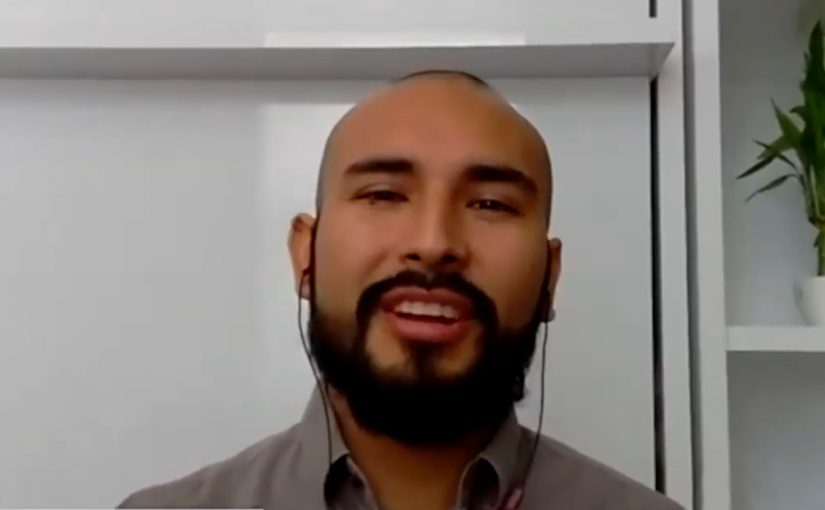
The Undocumented Community is Not a Resource to Extract: A Performance by Alejandro Fuentes-Mena of Motus Theater

“Paying an undocumented person half the value of their work, extracting all you can get from them to take care of your homes and families, and then deporting them is an American math story gone wrong.” -Alejandro Fuentes-Mena

In this moving performance from the 2020 Bioneers Conference, Alejandro Fuentes-Mena, Motus Theater’s Undocumented Autobiographical Monologist, offers a reflection on true value.

Motus Theater‘s mission is to create original theater to facilitate dialogue on the critical issues of our time. By telling “moving stories that move us forward,” Motus Theater uses the power of art to build alliances across diverse segments of our community. Its most recent work is: UndocuAmerica, an autobiographical storytelling project that aims to interrupt dehumanizing portrayals of immigrants by sharing the personal stories of undocumented leaders. The UndocuAmerica Monologues were created in a 17-week collaborative process between Motus Theater’s Artistic Director, Kirsten Wilson, and undocumented community leaders with D.A.C.A. (Deferred Action for Childhood Arrivals).


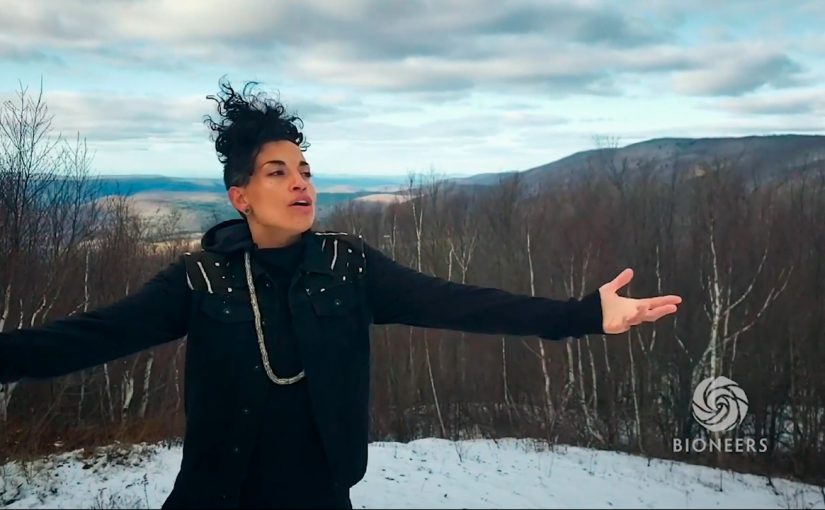
Performance of “Beyond the Great Unraveling” by Naima Penniman

In this special performance for the 2020 Bioneers Conference, Naima Penniman offered her interpretation of the conference theme, “Beyond the Great Unraveling.”

Naima Penniman, an artist, activist, healer, grower and educator committed to planetary health and community resilience, is the co-founder of WILDSEED Community Farm and Healing Village, a Black and Brown-led intentional community focused on ecological collaboration, transformative justice, and intergenerational responsibility. She is also: Program Director at Soul Fire Farm, dedicated to supporting the next generation of B.I.P.O.C. (Black/Indigenous/people of color) farmers; the co-founder/co-artistic director of Climbing PoeTree, an internationally-acclaimed performance duo; a Thai Yoga Massage practitioner; and a member of Harriet’s Apothecary, a collective of Black women-identified healers.

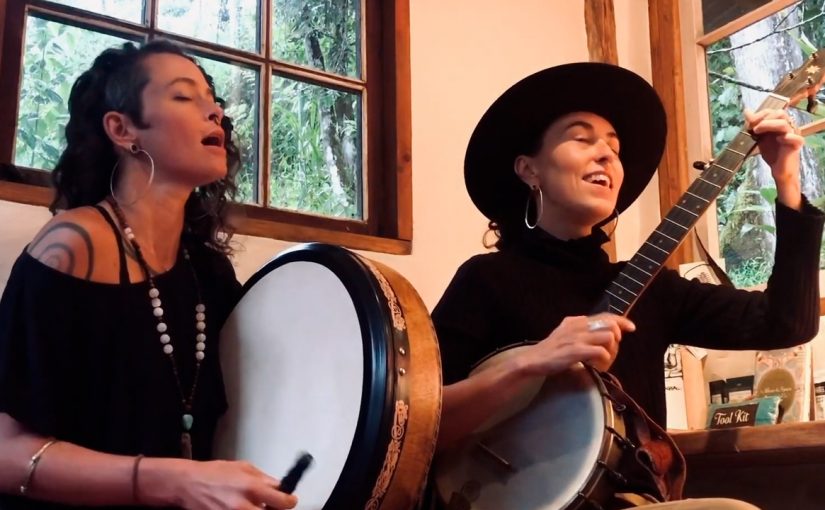
Performance of “Resilient” by Rising Appalachia

Leah Song and Chloe Smith of Rising Appalachia perform their song “Resilient” at the 2020 Bioneers Conference.

Rising Appalachia, a renowned musical ensemble founded by Leah Song and Chloe Smith in 2006, and now grown to include David Brown on upright bass and baritone guitar, Biko Casini on world percussion, Arouna Diarra on ngoni and balafon, and Duncan Wickel on fiddle and cello, is rooted in various folk traditions, storytelling, and passionate grassroots activism. The band routinely provides a platform for local causes wherever it plays and frequently incites its fans to gather with it in converting vacant or underused lots into verdant urban orchards and gardens.

In a time of social unraveling, Rising Appalachia’s unique interweaving of music and social mission and old traditions with new interpretations exudes contagious hope and deep integrity.

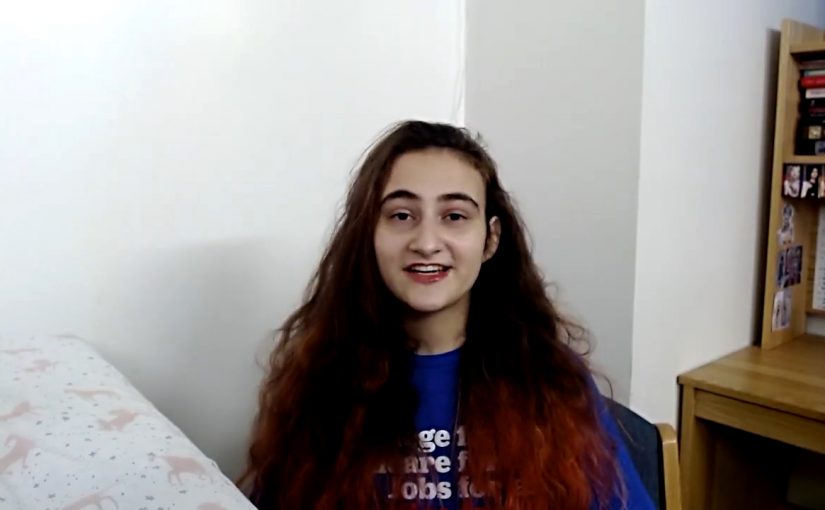
Jamie Margolin – Burnout and Balance: Finding an Identity Outside Of Your Activism

Jamie Margolin, the 18-year old co-founder of one of the most dynamic and effective international youth climate justice organizations, Zero Hour, describes how coming of age in a climate catastrophe marked her so profoundly that she became solely defined by her climate justice work. Yet ultimately she succumbed to overwhelm and exhaustion—burnout. Only recently did she come to the realization that she had to be more than just a vessel for climate action; she had to start genuinely taking care of herself and pursuing passions outside her political work. By prioritizing her mental health, happiness, social life, and a variety of passions, she was able to approach her activism in a far healthier and more balanced way.

Jamie Margolin delivered this talk at the 2020 Bioneers Conference, introduced by Nina Simons.

LEARN MORE

Jamie Margolin, an 18-year-old Colombian-American organizer, author and public speaker, is one of the most effective and dynamic youth climate activists of our time. She co-founded the highly effective and dynamic international youth climate justice movement, Zero Hour, which has over 200+ chapters worldwide, has penned many op-ed pieces for a range of publications, and is the author of: Youth To Power: Your Voice and How To Use It.

Zero Hour is a youth-led movement creating entry points, training, and resources for new young activists and organizers (and adults who support our vision) wanting to take concrete action around climate change. Learn more.

In Youth to Power, Jamie Margolin presents the essential guide to changemaking, with advice on writing and pitching op-eds, organizing successful events and peaceful protests, time management as a student activist, utilizing social and traditional media to spread a message, and sustaining long-term action. She features interviews with prominent young activists including Tokata Iron Eyes of the #NoDAPL movement and Nupol Kiazolu of the #BlackLivesMatter movement, who give guidance on handling backlash, keeping your mental health a priority, and how to avoid getting taken advantage of.

Read Youth to Power‘s forward by Greta Thunberg.

Bakari Kitwana – Racial Justice and Democracy

Through the lens of the new book, Democracy Unchained: How We Rebuild Government For the People, co-editor Bakari Kitwana reflects on the question: What is the future for Black Americans in U.S. Democracy? In the last six months, we’ve witnessed: the coronavirus pandemic that has taken hundreds of thousands of lives and disproportionately affected Black Americans; ongoing police killings of Blacks around the country deemed “justifiable”; record unemployment filings also disproportionately affecting Blacks; open calls for violence against protesters; and dog whistles to white supremacists by a sitting president. On the flip side, one of the variables that distinguished the protests in over 2,000 US cities following the police killing George Floyd was that many of the protests demanding racial justice were multiracial and included significant numbers of white Americans. Likewise, the overwhelming unsolicited donations and support for racial justice organizations across the U.S., during and following the protests, also point towards a new day. Reflecting on these and other examples, as well as visionary aspects of the book, Bakari discusses sites of traction, hope and new possibilities. This presentation leans into the questions: How do we make democracy more inclusive? How do we build liberated Black communities? And what do they look like?

Bakari delivered this talk at the 2020 Bioneers Conference, introduced by Kenny Ausubel.

LEARN MORE

Bakari Kitwana, an internationally known cultural critic, journalist, activist, and thought leader in the area of hip-hop and Black youth political engagement, is Executive Director of Rap Sessions, which conducts town hall meetings around the nation on difficult dialogues facing millennials. A Fellow at the Hutchins Center for African and African American Research at Harvard, Kitwana co-founded the 2004 National Hip-Hop Political Convention and is co-editor of the new book Democracy Unchained: How to Rebuild Government For the People. To learn more about Bakari Kitwana, visit his website.

Democracy Unchained: How to Rebuild Government for the People

A stellar group of America’s leading political thinkers explore how to reboot our democracy

Democracy Unchained is about making American democracy work to solve problems that have long impaired our system of governance. The book is the collective work of thirty of the most perceptive writers, practitioners, scientists, educators, and journalists writing today, who are committed to moving the political conversation from the present anger and angst to the positive and constructive change necessary to achieve the full promise of a durable democracy that works for everyone and protects our common future.

Democracy Unchained: A Conversation Series

From the State of American Democracy Project

Watch “The Moral Foundations of Democracy,” episode one of a ten-part conversation series, where political thought leaders explore the moral foundations of democracy as the most certain way of defending the dignity of all citizens.

Dismantling Systemic Racism

Bioneers Media Collection

Explore videos, essays, audio and more, providing clarity and guidance from voices in our community.

Ayana Elizabeth Johnson – The Feminist Climate Renaissance: Truth, Courage, and Solutions for the Climate Crisis

A Feminist Climate Renaissance is emerging in the movement for climate justice as women––specifically women of color––are transforming how we approach a life-giving future for all. Rebalancing decision-making and recentering community to understand climate change’s multifaceted nature is necessary to mobilize a mass movement for climate justice.

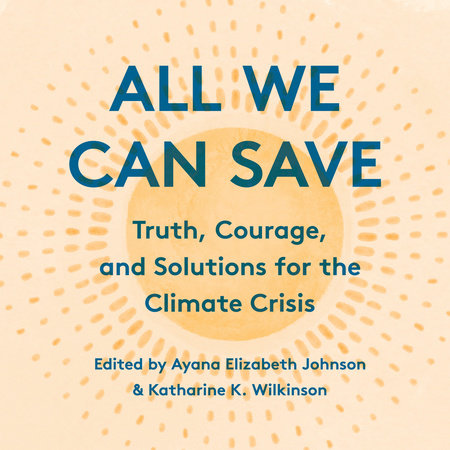
In this keynote address, Ayana Elizabeth Johnson talks about the emerging Feminist Climate Renaissance and draws on wisdom from a brand new anthology by women climate leaders she co-edited with Katharine Wilkinson, All We Can Save: Truth, Courage, and Solutions for the Climate Crisis. Ayana is one of the nation’s most innovative thought leaders in ocean and coastal conservation and recent co-creator of the Blue New Deal, a roadmap for including the ocean in climate policy. 

This is an edited transcript of a keynote address delivered at the Bioneers 2020 conference.


Hello, Bioneers. It is truly an honor to be with you. I wanted to start by sharing just a bit of my background.

I grew up in Brooklyn, New York, and the first time I had the chance to visit the ocean, I fell utterly in love and decided I was going to become a marine biologist. It is a pretty standard dream job for a 5-year-old, but I stuck with it that I realized that learning about ocean science was an opportunity to contribute to human welfare and the future of life on this planet.

I’m lucky that I’ve been able to develop a career deeply grounded in science, working on policy, and deeply passionate about the justice issues surrounding the ocean and climate. I refused to choose a narrow career, and I’ve fought to be a generalist and help build teams of profound expertise needed to do this work.

In my work, the people I’ve been inspired by the most have been women and women of color, but not enough other people follow their lead. As a result, the work I’ve undertaken in the past few years has been uplifting the voices of leaders that I think should have the resources to ensure their work’s impact. One of the forms that I have taken is All We Can Save: Truth, Courage, and Solutions for the Climate Crisis, this anthology that I’ve had the honor of co-curating, co-editing with Dr. Katharine Wilkinson. This book is an anthology of 41 essays, 17 poems, and original illustrations.

All We Can Save symbolized the loss we’ve already experienced and the endurance to not give up on what is left. We must have the courage to face the truth of what science is saying we should expect to come to move forward. This book calls for and identifies what we call a “Feminist Climate Renaissance,” referring to the leadership that women are exhibiting in the climate space.

First, focus on making change rather than being in charge to move beyond ego, competition, and control. Second, commit to responding in ways that heal systemic injustices instead of deepening them. Third, learn to appreciate heart-centered leadership and not just head-centered leadership. Fourth, and most importantly, building community is a requisite foundation for building a better world. We see women and girls engaging in deeply relational, collaborative, and supportive ways, taking the necessary time to invest in the weft and weave between us.

In the book, we describe the climate crisis as a leadership crisis. To transform society, we need feminist climate leadership open to people of any gender. The possibility of moving toward a life-giving future for all depends on this new approach to leadership. This is not about women having all the answers or men getting out of the way. It’s about rebalancing decision-making. We need everybody, so we must figure out how to welcome the leadership of half of the planet who identifies as women. Leaving women out of the leadership will help determine our success in addressing the climate crisis. 

We divide the book into eight sections, starting with Root, these foundational principles of climate justice, biomimicry, Indigenous wisdom, atmospheric science, emergent strategy and community, and how we got into this mess.

We want this book to welcome everyone into climate work and show different ways people can contribute, regardless of professional or geographic background.

If this book does the most significant thing that it can do, it will change the gender balance in decision-making regarding climate justice; it will center the community to deepen the understanding of the many different aspects of the climate crisis. Fundamentally, the climate crisis is about the way we live on this planet and interact with each other, which either heals ecosystems and gives us a chance to thrive or continues to tear them apart. It feels ridiculous to say such grandiose things about one book. However, I think this is a moment going into a new decade in which we know how little time we have left, and we desperately need a shift in perspective about how we approach the problems we’re facing and then whom we look to guide us.

LEARN MORE

Ayana Elizabeth Johnson, a marine biologist, policy expert, and Brooklyn, NY-based community-building activist, is one of the nation’s most innovative thought leaders in ocean and coastal conservation. She is founder and CEO of Ocean Collectiv, a consultancy dedicated to conservation solutions grounded in social justice; of Urban Ocean Lab, a think-tank for the future of coastal cities; and recent co-creator of the Blue New Deal, a roadmap for including the ocean in climate policy. She is also a passionate advocate for women’s leadership and is the co-editor of a groundbreaking new anthology of wisdom from a range of women climate leaders: All We Can Save: Truth, Courage, and Solutions for the Climate Crisis. To learn more about Ayana Elizabeth Johnson, visit her website.

Ocean Collectiv designs, builds, and implements creative and practical solutions for a healthy ocean. Check out Ocean Collectiv’s resources to get informed and contribute to a healthy ocean for all.

All We Can Save

Provocative and illuminating essays from women at the forefront of the climate movement who are harnessing truth, courage, and solutions to lead humanity forward. Visit allwecansave.earth to purchase the book, join a reading circle, and learn about the All We Can Save Project, which aims to accelerate the success of the climate movement by providing focused support and community building for women climate leaders.