We the People: Cooperative Ownership for the 21st Century

Money is the fuel that’s running our country, but for many low-wage workers, it’s simply running them into the ground. Big business often exploits the people who build the very profits that sustain it, so as our nation’s wealth concentrates more and more at the top, leaders seeking to reform capitalism are looking at cooperative ownership as a way to empower employees, improve business resiliency, and invest in long-term success. In this panel, five experts discuss their experiences with co-ops, and how their initiatives are helping kickstart the transition to a worker-owned economy.

Featuring Theresa Marquez, a longtime food and farming activist; Camille Canon, a partner at the organization Purpose, which helps businesses transition toward steward ownership; Hilary Abell, co-founder of Project Equity, which amplifies the impact of worker-owned cooperatives for low- and middle-wage workers in the US; Frank Mason, a founding member of Arizmendi Bakery in San Rafael, a bakery business that has expanded as a co-op building program; and Keith Taylor, a professor at UC Davis who specializes in community economic development and cooperatives.

THERESA MARQUEZ: I’ve been a 40-year activist in food and farming and also a marketing sales executive for what’s now a billion-dollar company, and at one point I had an “Aha!” moment. I realized that until we change capitalism, all my decades of activism are not really getting anywhere. I feel like I’ve made five, 10 steps forward, but then the last election took us 15 steps back, so until we can change the deep nature of capitalism, we can’t succeed.

Theresa Marquez

The food activist Raj Patel explains in his book, The History of the World’s Seven Cheap Things that capitalism values cheapness above all else, and that it’s very resilient. He also says it can’t last forever, and I have to believe that and hope that he’s right.

In 2009, the World Social Forum in Brazil produced a manifesto called Reclaim the Commons, which stated: “Humankind is suffering from an unprecedented campaign of privatization and commodification of the most basic elements of life. A compulsive quest for short-term financial gain is sacrificing the prosperity of all and of the Earth itself.”

In 2014 two Harvard professors administered an international survey in 40 countries to over 55,000 people, asking what the respondents thought the pay gap was between the lowest paid and highest paid in an enterprise. Mondragon, the most successful worker cooperative complex in the world, in Spain’s Basque region, actually held a vote on this topic, and I think their members came up with an 8:1 ratio as the desired ratio. In just about every country there was a discrepancy between what the average person thought it was and what the reality is on the ground, but the U.S. took the cake. Americans on average thought that in 2012 the ratio of a CEO’s pay compared to a line worker’s was around 30 to 1, when in fact it was 354 to 1. More than in any other country, Americans drastically underestimated the gap in actual incomes between CEOs and unskilled workers.

Our panelists today represent various forms of cooperatives and we also have a representative of a new kind of a “trust” ownership model. My big hope is that we can have a renaissance of cooperative ownership in this country and that’s what we’re here to discuss today. Marjorie Kelly in her book, Owning Our Future, says that it’s in fact already happening quietly. I hope she’s right. Let’s see what our four speakers have to say about it. Let’s start with Camille Canon.

CAMILLE CANON: I’m with an organization called Purpose based in Western Europe, Latin America, and the U.S. Our mission is to help businesses transition to what we call “steward ownership.” Steward ownership is a term we coined that we came up with it after a year of research looking into models around the world of businesses that had managed to stay independent and committed to their purpose for the long term through economic recessions and political upheavals. Why were some businesses able to survive? What made them resilient? We came up with two core principles that these companies had. First, they were self-governing, i.e. control over the business was held by people inside the organization or closely related to its mission. That might be employees and stakeholders, consumers, people in the community, or people connected to the mission, but not absentee shareholders sitting on the other side of the country completely disconnected from the day-to-day operations. The second principle was that profits served the enterprise’s core purpose, so that after paying back people who invested in the business and sharing profits with stakeholders, the majority of the profits were reinvested in the business to make sure the company stayed financially resilient and could pursue its mission.

Camille Canon

These structures de-commodify businesses so they are no longer for sale, and what we found, and there’s a fair amount of research on this, is that that enables businesses to take the long-term perspective: they invest more in technology, they pay their employees better, they provide better benefits. There’s a lot of documentation that these structures, whether it be trusts or cooperative or foundation-owned businesses, are more sociable organizations. 

There are lots of these sorts of companies in Europe. Bosch, the German appliance company, is structured in this way. Zeiss, the optical lens company, is structured this way. Half of the Danish stock market is structured this way. These are very, very common structures that haven’t been widely adopted in the U.S. mostly because we have weird nonprofit laws that prevent foundations from owning more than a certain percent of a for-profit business.

What’s unique about these structures is that they redefine the fiduciary obligation of the business. So when we talk about throwing away capitalism, I think it’s important to unpack which elements of capitalism we want to push off the cliff. One of the core problems in our current business models is that in the United States companies are mandated to maximize profit for the benefit of their shareholders. Unless we redefine that, it’s very hard to make businesses more sociable. In fact the mandate to maximize profit results in a bunch of sociopathic corporations running around. We need to change the underlying system and redefine fiduciary obligation from being profit maximization to being purpose maximization. The purpose can be to change food systems, to benefit employees and workers. Purpose can be defined in a lot of different ways.

At Purpose, we help businesses transition to these structures, and we do it in a couple of different ways. We’re part nonprofit, and so in that capacity we do a lot of research and awareness building about this stewardship trust model. We also work one-on-one with businesses to help them transition into these structures, and we are also investors in some of those companies making the transition.

HILARY ABELL: I’m the co-founder of an organization called Project Equity. I am kind of a co-op geek. I got turned onto cooperatives about 30 years ago when I was a young organizer fighting human rights abuses in Central America and bad things that the US government was doing in the region. We’re in fact seeing the ramifications of some of those U.S. policies today with the migrant crisis, which has roots in the civil wars the US government did a lot to fuel back in the 1980s. But I went from doing that work to happening to become a worker-owner of a cooperative business called Equal Exchange. I had the privilege of being I think the eighth person hired there, and then leaving when there were maybe 12 or 15. Today they have about 200 employees. They were the leader in bringing fair trade coffee into the United States, and really having from the beginning a business ownership model that reflected the values that they were promoting in the world, and their business ownership model was a worker cooperative.

Hilary Abell

My experience there as a young 20-something gave me an opportunity to learn about how business can change the world, which I had no idea about and had had no interest in before that, but working at Equal Exchange, I discovered that business can be a powerful force for good. My job was to run around New York City with a box of coffee paraphernalia on the subway to try to get people to care about gourmet coffee first, and then also to be interested in Fair Trade, and this was before either one of those things was very well known.

I also got elected to the board of directors of a cutting-edge, rapidly growing company, Stonyfield Farm that was an independent, socially responsible company. One of their senior executives was on the board of Equal Exchange, and I learned a lot from him as well as a Dominican nun, who was one of the first impact investors. Long before the term “impact investing” existed, a lot of nuns were investing their retirement funds, the only thing they had to retire on, in progressive initiatives like Equal Exchange. That was a great learning experience for me.

During that time I got to know farmer cooperatives in several countries in Latin America, where very, very small farmers banded together in pretty substantially sized cooperatives. Through that cooperative structure, they could export directly, for example, to a fair trade buyer in the U.S. or Europe and earn a lot more money, which was really important for their families, but also for the schools and the neighborhoods and the health clinics, and also for the businesses that they co-owned so they could build infrastructure like coffee-processing plants and get more control over the profitable parts of their industry. Seeing that really turned me on to fair trade and to cooperatives.

A number of years later, I became the executive director of an organization that was starting up cooperative businesses here in the San Francisco Bay Area. I was there for eight years and learned to help businesses start and grow, as well as how to develop cooperative businesses to have a really viable democracy governance and how to pair that with management and member participation, but what was most powerful to me during that time was getting to know some women who were mostly monolingual Spanish speakers who had had some pretty crappy jobs in their past and were learning to be professional “green” cleaners a little bit before eco-conscious, non-toxic cleaning became a real thing in the economy. They were trying to protect their health and co-own these new types of businesses, and it was working. They had health insurance for the first time and their incomes were doubling and tripling. They were working full time but also having a little bit more control over their schedule, not needing second jobs and having more time to be with their kids.

When I left that job, I was very interested in finding ways that that kind of impact could be made possible for more low- and middle-wage workers throughout the United States, and that’s what I’ve been working on since, and that’s what we do at Project Equity. My definition of cooperatives is that they are businesses that are owned and controlled by the people who benefit from them, and who come together for a common purpose. I’ve mostly personally been involved with worker-owned cooperatives, and to some degree also with ESOPS, Employee Stock Ownership Plan Companies, which can be also made democratic and have some of the elements that cooperatives have. At Project Equity, we work with both, as well as with trusts. Co-ops are common throughout our economy actually, but they’re still not widely understood by the mainstream business world in this country.

There’s a demographic trend called the silver tsunami—many baby boomers are retiring or turning 65, roughly 10,000 a day. There’s a lot of talk about the impact that will have on our healthcare system and on the solvency of Social Security, but an impact that people aren’t talking about is that baby boomers own a lot of businesses. They own 2.34 million businesses across the country, and those businesses employ 25 million people, 1 in 6 workers in this economy. And 80% of business owners do not have a succession plan for the future of their business, and it’s estimated that only between 10 and 30% of small businesses that are listed for sale actually sell. So what’s happening all around us is that a lot of really good small and medium sized businesses are actually closing, and it’s a huge loss.

So what Project Equity is doing about that, and there are others across the country focused on this as well, is educating business owners, the general public and folks who provide professional services to business owners about the importance of business succession planning and specifically the fact that employee ownership, including worker cooperatives, is a great option for a lot of businesses. It’s one that most business owners don’t think about. Their lawyer or their CPA or the small businesses development center they stop into pretty definitely won’t mention it, and if they were to ask a question about it, they’ll probably get told: “No, I don’t think that’ll work; that’s kind of weird; it’s for hippies; go sell your business.”

But, around the world, there are many cooperative businesses of all sizes that are really good businesses. When you engage people and give them opportunities to influence strategy, policy, and management, they step up more, and when they actually have ownership, they step up even more. There’s a lot of talk in the corporate world about employee engagement these days, and it is really important. There’s a lot of evidence that it improves business performance, not to mention employee satisfaction, but imagine when you add actual ownership to the feeling of ownership!

So what we do at Project Equity is educate business owners, and if they want to know more, we do free consultations with them and walk them through the process of assessing and figuring out whether it’s a good fit for them. Then, if they want to proceed, it’s about a nine to 12-month process we walk them through. We’re converting five companies this year, four in the Bay Area and one in the Twin Cities to become worker cooperatives. And then we help them thrive as employee owned enterprises and learn democratic governance and integrate financial education and community building into their businesses as well.

We also partner with city governments and with different types of business connectors to spread the word. In the past 40 years productivity has increased dramatically in U.S. businesses, but wages have stayed stagnant. So the amount of the value and profits that businesses generate is going to shareholders and to senior management, but it’s not going to the rest of everyone else who busts their butt to make those businesses work. But this demographic shift presents an opportunity in which a lot of wealth is changing hands and will continue to for the next 10 to 15 years. It’s an opportunity to democratize wealth, and if we don’t, it’s going to get consolidated at the top, because in addition to closing, many of these businesses are being gobbled up or merged or acquired by bigger companies, and not going the direction that our economy needs to go.

FRANK MASON: I’m one of the founding members of the Arizmendi Bakery in San Rafael. I’d always been in high tech or finance, and just as I was closing down one of the financial companies, my 14-year-old son said, “Why don’t you do something you actually enjoy, Father?”

And he’s a smart kid, so I started looking for a new line of work and a new way of life, and I found Arizmendi. The cooperative structure felt amazing. I didn’t have to be the only one worrying about a problem. I was one of the many owners. I go to work, and I’m one of the owners there that day, but when I leave, there are other owners there, and they don’t call me. They own the business. That makes such a difference in life, in terms of free time and peace of mind.

And Arizmendi is far more than a bakery business with five shops; it’s a co-op building program. It has spun out a CPA group, a landscaping group, and house building and low-income housing initiatives. It has really changed the way I look at the world. In the corporate world, I was giving up on hope because I was really unsure if what we were doing was right.

Now I want to be clear: it isn’t easy in the beginning. When I started at Arizmendi in San Rafael, we weren’t profitable. We were just starting out, so not being profitable right away is a natural thing in a small business, but in the co-op world you don’t fire workers to cut costs; you find ways to invest in yourselves because you’re all in it together, and that really boosts your energy and your commitment. My love is sourdough. I work the 4 AM to noon shift. My favorite thing is to roll all the sourdough for the day. When people come into our system, they’re just in awe, because they get paid the same as every other individual right off the bat. We have a simple rule: one vote, one wage. There’s only one wage. There’s only one vote. When people have ownership of something, they grow.

But the co-op model can pose special problems: it can take longer to make decisions. In San Rafael, we were having a tough time, and we ultimately decided we had to be more of a café and to offer sandwiches and do different things that none of the other Arizmendi bakeries do, so we wouldn’t lose customers. In most businesses, the owner or manager, one person, would make such a decision, but it took us almost a year and a half to get a full consensus, and some people will say “wow, that’s a little slow,” but when we finally did it, everybody was on board and put all their energy into it, and it’s made us profitable beyond our wildest dreams and made it possible to increase our wages by a high percentage.

So I’m here to preach the benefits of the co-op model. It’s really a gorgeous thing when people actually care about each other and work together with joy. When you’re becoming a member, a candidate, we train you in how to be a co-op person. We teach you history, we teach you finance, we teach you what you’re getting into, because when you have, say 12 members, it’s a marriage of 12. And given how complex a marriage with one person is, a marriage of 12 teaches you things that you cannot imagine, including how to be caring of others and to be there for them. And when it’s done right, it’s a solid body, and it’s an amazing thing to see. So I just love co-ops, and I hope you all can figure out a way to make the world all a co-op, because I was in the corporate world for a long time prior to this, and I can honestly say it had completely disillusioned me to where I thought there was no hope, but there is hope. Thank you.

KEITH TAYLOR: I’m a professor at UC Davis where I study community economic development and cooperatives. I recently wrote a book on electric cooperatives, Governing the Wind Energy Commons. One thing about large-scale cooperatives, such as utilities in the energy sector, is that they’re not small businesses with a handful of co-owners working together. Even though they’re cooperatives, they’re big enterprises, and if you’re not serving on their boards, you don’t really have any influence on their policies. Obviously we need to fix democracy, and co-ops are political economic systems, and we have to treat them as electoral systems and run for offices within them to actually change things.

Keith Taylor

Many people get turned off from running for higher office, and I don’t blame them, but you can run for office in your local electric co-op, your local credit union, your local food co-op, and you can work through the system and achieve sufficient scale that your local enterprise can have a national voice. Large-scale co-ops can be a force multiplier for democratic governance and economic empowerment, and they can provide a corrective to “disaster capitalism.”

Globally there are over a billion people who are members of co-ops in 150 countries, and co-ops account for 100 million jobs. That’s a lot of economic activity. I’m trying to get policymakers to pay attention to cooperatives, but they often assume co-ops are small-time fringe phenomena. They’re not. In the United States there are 65,000 cooperatives, and a lot of our agriculture comes through this system. In fact the CEO of Land O’Lakes, one of the big ag co-ops has been making the news lately. She’s one of the first female CEOs in an ag co-op, doing some really interesting things. But it’s not just in agriculture: 42 million Americans own their electric co-op utility, and there are over 5500 credit unions in the U.S., more than 10% of the consumer finance market. But we need to find ways to leverage these larger co-ops for broader economic development so they start coordinating more and help develop more support systems such as municipal economic developments for the larger society. That needs to happen for this system to become a viable alternative model of ownership and management.

I’m from the rural Midwest, from Mattoon, Illinois. It’s a community in decline. For as long as I can remember, everyone was saying, if you just work hard, you can get a union job, you can work for the government, or you can go in the military, but the union jobs have gone away, and we’ve had decades of government austerity, so we have to find ways to do things differently. One of the big economic development projects under discussion in my region was FutureGen, a carbon capture project that was going to be in my hometown. A lot of economic development dollars went into trying to attract it, and it never happened. Imagine if we would have put all that money into building local energy co-ops.

I worked for a member of Congress for a couple of years and then got involved in politics back in Illinois, but I got pretty disillusioned. For one thing our governors tend to go to jail a lot, but I worked at Walmart right out of high school, and that politicized me for life. After four years, I went to the manager and said, “Hey, I’m currently making $6.15, can I get 7 bucks an hour?” After three months, he raised it to $6.97. And I could see all these Walmarts destroying the small downtown areas of the Midwest, and now we’re incentivizing the next wave of devastation with Amazon. In fact these days Walmart accuses Amazon of killing small businesses…

I ended up going to the University of Illinois to get a Ph.D. in human and community development. I was interested in finding ways to do community development that didn’t just involve the government or big businesses, and fortunately I met a chairman of an electric co-op who got me interested in studying that whole world. I was really surprised by what I found. The National Rural Electric Co-op Association represents 56% of the American landmass, and the users themselves own all those utilities. There are 850 electric co-ops that 42 million Americans own, and $42 billion a year goes through this system. If we want to boost solar and wind, one of the best ways is to get rural America to see solar and wind energy development as community economic development, and these electric co-ops are the ideal vehicles to accomplish that.

I did my post-doctoral studies at Indiana University under Elinor Ostrom, the first woman to win the Nobel Prize in economics. What Elinor talked about was that to make desirable change we have to look at the diversity of institutions that’s available to us. What’s in our toolbox? And right now you see here in California when it comes to housing and energy, we’re not reaching into that toolbox to use co-ops or alternative institutions. That’s what inspired me to write my book, Governing the Wind Energy Commons. Here in California there’s been a lot of talk during the recent droughts about water justice, but you have 800 Municipal Water Districts under local control, so why aren’t we using them?

And when it comes to broadband, there’s no discussion of broadband cooperatives. I’ll go to these meetings and there’s a Verizon person, a Comcast person, an AT&T person, and all they’re in there to do is to shut down the people who are complaining they’re not doing enough for their communities. But we should demand municipal broadband deployment and ownership, and there is an association of broadband cooperatives, but we haven’t been maximizing or coordinating these institutions to maximize our leverage.

And California has three electric cooperatives and what are called consumer choice aggregators that we can tap into. Right now, PG&E is in a weakened state, so this is a good time to push for more electric cooperatives. I’m affiliated with the Energy and Efficiency Institute at UC Davis, and we’re trying to make people aware about the benefits of electric co-ops for rural communities. They provide some of the highest paying jobs in rural communities. They have full pensions. They are very well run systems. Unlike PG&E, Plumas-Sierra Electric Co-op and Anza Electric Co-op did not have wildfire issues. Electric cooperatives are an amazingly successful example of public entrepreneurship.

In a recent study, we looked at the South Carolina Rural Electric Co-op Association and how they dealt with a recent hurricane. All the state’s electric co-ops got together a week in advance and planned a course of action. They have within their system a supply chain co-op that warehouses all the repair material they might need. As soon as a hurricane passes, the supply co-op goes out, delivers all the material to get the electricity back up in their networks within three days, while Duke Energy takes about three weeks.

To conclude, we all know we need a vision of where we could take this economy to a much more sustainable and fairer place, and I’m here to tell you that co-ops could be a major force multiplier to advancing such a vision.
How Jackson, Mississippi, Imagines a Cooperative Future

Cooperation Jackson is “building a solidarity economy in Jackson, Mississippi, anchored by a network of cooperatives and worker-owned, democratically self-managed enterprises.” The group’s progressive initiatives help workers in Jackson take ownership of their work and the success of their communities.

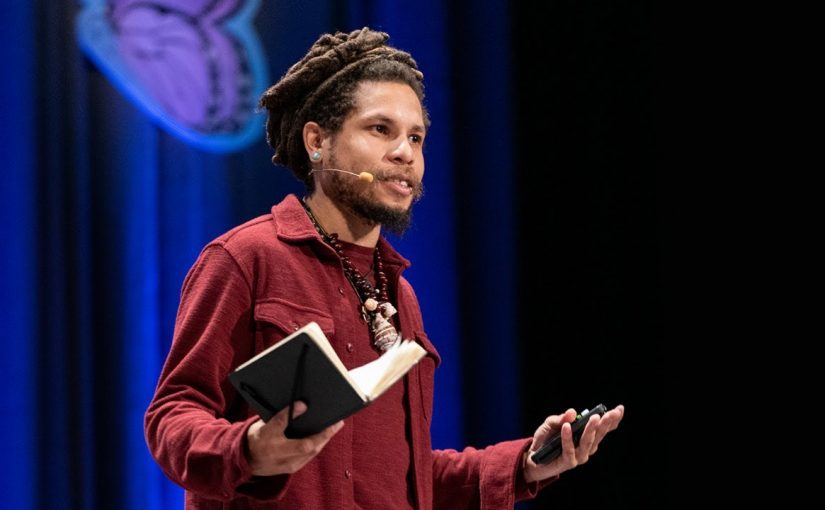
brandon king moved to Jackson, Mississippi, in January 2014 to assist in the growing movement for economic justice, human rights and social and cultural transformation happening there. As a founding member of Cooperation Jackson, brandon serves on its Coordinating Committee, is its Organizing Coordinator, a co-coordinator of Emerging Freedom Farms Urban Farming Cooperative, and Cooperation Jackson’s representative to the Climate Justice Alliance.

Bioneers spoke with brandon king about Cooperation Jackson’s model for success and its plans to scale.

BIONEERS: What would you say to people who say there’s nothing progressive happening in the country outside of the East and West coasts?

brandon king: I think that there’s an issue with visibility. The stories from the South don’t get as much play as East or West coast stories. People can be doing really phenomenal work, but it’s really hard to get the word out to people about what’s happening. 

BIONEERS: What’s one thing you’re doing in Jackson that you could see being a model for other cities and towns?

Brandon King

brandon: We’re creating a model in which people can engage in a process of learning how to be democratic with each other. They can learn how to own their labor, share it and work with other people instead of working for people. I think that that’s one of the biggest things. 

Our co-ops are geared toward sustaining life. We have a farming cooperative. We have a catering and a café cooperative. We have a landscape and composting cooperative, and we have a community production cooperative. All of the co-ops are interrelated and interdependent. We want the food that we grow to service whatever sort of catering events that we do in the neighborhood. We turn our food waste into compost. When our landscaping picks up leaves, those become input for the farm. We’re creating a regenerative system in which the co-ops are interdependent and interrelated, but also engaged in sustainable, regenerative practices. 

One of our goals is to build those systems to scale so that more people can have access to co-op jobs. 

My family and community have operated within systems like this, although they may not have described it in the same way or used the same language. We’re just looking to formalize those systems so they’re not just based upon familial connections.

BIONEERS: What are some of the challenges you face in your work?

brandon: I think that when people don’t engage in democratic processes and instead have a clear chain of command, decisions can be streamlined and things may move more quickly. When you’re engaged in more horizontal decision making, like we are, it can take longer to come to a consensus. 

A challenge we face that we shouldn’t be discouraged by is that many people have been told about the democratic process, but they don’t really know it. We need to develop the muscles to be able to engage and struggle with each other and to work together to figure out the best way forward. We have to work on not being frustrated with the process, and we need to build the stamina to engage with each other to make the best decisions.

BIONEERS: Do you think capitalism encourages people not to engage with each other to make decisions?

brandon: I think many of our current systems are designed so a few can maintain control over people and resources. When people start to think for themselves and with each other, corporations lose some of that control. Our project is working to build systems that are life-affirming, and it’s working to de-link us from the systems that are harming us. 

We see capitalism, imperialism and white supremacy as systems that are harming us, and we’re seeking ways to have control over our own value chains. We’re hoping to build new systems to scale, so that we don’t have to engage in extractive, exploitative systems. That’s a long and hard process.

I’m inspired by the fact that we’ve already started to engage in a process of creating our own means of production through using our community production center and co-op. We’re learning about digital fabrication, 3D printing, laser cutting and milling. Our folks are learning how to make the tools that can make the tools. They’re learning so that we can engage in building our own housing, systems for farming, furniture, and any and all other things we need.

It’s about us taking more control over our lives and our destiny.

BIONEERS: How much does white supremacy affect your work and people in your community?

brandon: For me, it seems like Mississippi has had no qualms about being white supremacist and racist. Right now, the rest of the country is tasting what we’ve been facing in Mississippi for years. 

I feel like Mississippi is more honest than many other places. The lines are drawn clearly in terms of who’s on your side and who isn’t. I’m clear on where I need to move and where I need to go. In New York, I found a sort of liberal racism. People may shake my hand and smile at me, but they still won’t give me a loan. My community will still be redlined. The same sorts of things that happen in Mississippi happen in places like New York or Chicago, it’s just less transparent.

Jackson is a majority black city that became majority black after black folks started voting in black people to the local government. That led to white flight, and now wealthy white people live in the surrounding counties. There’s been this process of surrounding areas trying to take our resources and revenue away along with our control.

BIONEERS: Do you see enough momentum locally to maintain the power you have there?

brandon: There’s momentum in both directions. And sometimes it’s complicated. 

In Jackson, we face threats of gentrification that will push out much of the black community. There’s discussion of a new medical corridor, but I think about the history of the medical industrial complex, and professionals aren’t coming down to actually heal anyone. They’re coming because they see it’s quite lucrative to make money off of sick people.

For us, it’s a question of democracy. What do the people want? Will these things being provided for the city benefit people locally? We are creating spaces where people can address those things and actively engage in building something that is viable for our existence and survival. 

We’ve got to engage in creating a world that we want to see. Climate change is real, and it requires us to think deeply about our impact, our own carbon footprint, as well as making sure the things we do honor Mother Earth. It’s important for us to check in and be in alignment with how she moves and how she wants us to be. Us not listening is what has gotten us to this place.

BIONEERS: Is Cooperation Jackson organizing around the Green New Deal?

brandon: Yes. We’re members of an alliance called the Climate Justice Alliance. We think it’s important for environmental racism to be included in the Green New Deal.

We’re also asking questions about how we could create a Green New Deal that’s anti-capitalist, which is a big hurdle to jump over. Capitalism has been the system of infinite growth on a finite planet, and that’s what has put us in this situation. I think the system has to go in order for us to reduce our carbon footprint. 

We want to engage in these conversations but also push them further. 

BIONEERS: Tell us about your vision of an economic future based on your principles and values.

brandon: A big part of it is non-extractive production, and figuring out distribution in a way that reduces our carbon footprint. How do we make sure that we’re able to produce things locally? When we have to get things from other places, how are we making sure that process is ethical? We need to have those conversations and come up with mechanisms for testing and implementation. 

We’ve got to experiment. We’ve got to try new things. We have to fail, because failing is learning.

We’ve been taught, as human beings, to be like zombies and consumers since we were born. Buy, buy, buy. Don’t think for yourself. We’ve been pulled away from many aspects of our lives that actually make us more human. When we engage in our own production and our own value chains as human beings relating to one another, that makes us more human. When we forfeit that right, we become crippled.

BIONEERS: What is it about cooperatives themselves that helps manifest those ideas?

brandon: Cooperatives allow us to be in control of our labor as much as possible within a capitalist framework. You and your co-workers make decisions collectively. You have a choice and a say about what happens when you lose or make money. We have control of our lives. 

I think that’s really inspiring. A lot of people have become comfortable with going to work, doing a job, getting a paycheck and going home. When you have ownership of your business, there’s a lot more to do before you go home. There’s a lot more decision-making involved, and I think that’s a challenge for people. We have to have a desire to take on that work. It’s a question of if you want to be self-determined or you want people to control you. For us, we’re working on building those skills and those muscles to become self-determined and engaged in a democratic process.

BIONEERS: Is there an intergenerational component that you’re cultivating?

brandon: Young people work with the farm, and elders work with us as well. Young people are really engaged through culture and art and music. I think developing an arts and culture co-op could help engage more people in co-ops. I’m inspired by the young people participating. You see a spark when they see a plant smiling back at them after watering. 

It can be difficult to dream in a place like Jackson because there aren’t a lot of positive places. We have liquor stores, abandoned buildings, vacant lots, potholes everywhere. Sometimes that’s all you see. So when young people are engaged in a life-affirming project, they can see something outside of what they normally see every day.

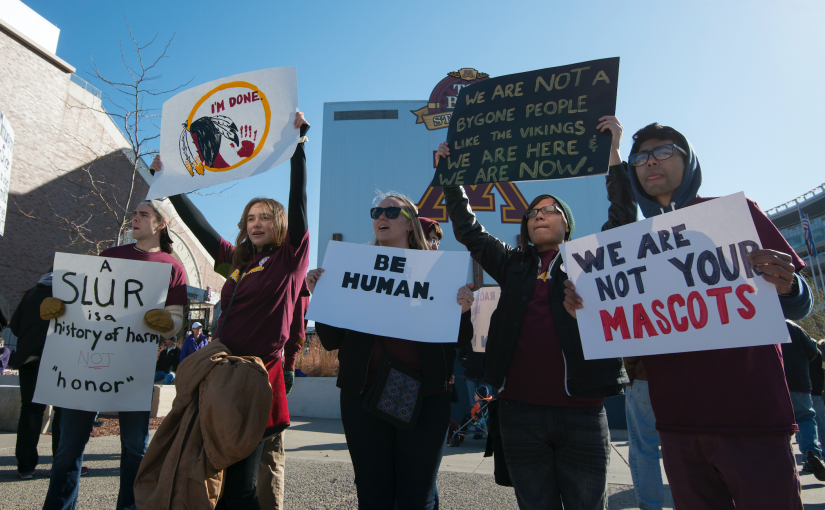
We Are Not A Mascot: A Big Win in the Fight Against Anti-Native Racism

Suzan Shown Harjo

Suzan Shown Harjo (Cheyenne & Hodulgee Muscogee) is a leading advocate for American Indian rights. As a writer, lecturer and policy advocate, she has raised awareness of issues that affect Indigenous communities — including racist mascots.

Suzan and other activists have long been working against sports teams and universities whose mascots depict derogatory imagery toward Indigenous Peoples. Abandoning these mascots is a step toward abandoning the harmful caricatures and stereotypes they portray, helping to end the marginalization of Indigenous communities and to promote a more equitable culture.

This “no-mascot movement” achieved a big win earlier this month, when the Washington NFL team decided to change its name and mascot. In this Facebook post, reposted with permission, Suzan celebrates the decision and reflects on the long road to get here.

Lead photo: Fibonacci Blue/Flickr.


Poor Daniel Snyder, owner of the Washington R*dsk*ns, has nothing left to do but this slow strip tease. He had to satisfy: First, his FedEx and other managerial and promotion partners. Second his merch partners. Third, the franchise’s 40% owners.

This day is brought about by Native Peoples and our BIPOC partners moving the country toward racial and social justice. And by the longevity and persistence of our no-mascot movement, which began in earnest for me when Clyde Warrior (great Ponca fancy dancer and Oklahoma youth organizer) visited my senior high school class in OKC in 1962, and informed and energized us about “Little Red” at the University of Oklahoma and the “worst one of all, right there in the nation’s Capitol,” R*dsk*ns. Clyde lived to co-found the National Indian Youth Council (1963-4) and to forge coalitions with other students of color and women at OU, but he didn’t live long enough to see OU retire “Little Red,” which became the first “Indian” reference to be eliminated (in 1970) from the entire landscape of American sports (Stanford 1972, Dartmouth 1974, and Syracuse 1979).

This day of the retirement of the R*dsk*ns slur and stereotypical logo belongs to all those Native families (including mine and that of Amanda Blackhorse, my sister target number one), who bore the brunt of and carry the scars from the epithets, beatings, death threats and other emotional and physical brutalities resulting from all the “Native” sports names and images that cause harm and injury to actual Native Peoples (both persons and nations). It does not belong to a change of heart by the team or to those who are bandwagoning and in line to cash in on our hard-fought and hard-won success. We’ve ended more than two-thirds of these obscenities and now have only 900 or so left to go, but the fall of this king of the mountain of trash will help others to give up their ghosts of racism even faster, so, Aho, Mr. Snyder and thank you, Mvto, Mr. Fred Smith. Now, back to work for the rest of the fewer than 900 left to go.

Great good thanks to those courageous people who said yes when I asked them to be co-plaintiffs in the landmark lawsuit, Harjo et al v. Pro Football, Inc. We filed on September 10, 1992, and won the unprecedented decision to cancel the R*dsk*ns’ trademarks in a unanimous three-judge, 145-page ruling by the Trademark Trial and Appeal Board on April 2, 1999. A federal district court judge reversed the decision of the three trademark expert judges, and the appellate court upheld her ruling against us on laches (a unique interpretation of the defense that we plaintiffs each waited too long after turning 18 to file our suit). The Appeals Court stated that they were ruling solely on laches (and not on the merits), and the Supreme Court did not grant our request for review, which ended our case at the end of 2009, after 17 years of litigation.

In 2005, while waiting for the trial judge to answer the appeals court question if laches ran against Mateo Romero, too (he had been a toddler when the franchise obtained its first trademark in 1967 — it took the trail judge three years before finally answering), I identified, interviewed and recruited young Native people between 18 and 24, who would not have the laches issue identified by the trail judge. They filed the identical suit to ours, Blackhorse et al v. Pro Football, Inc.

Thank you to those who agreed to be part of that case, which they filed in 2006, but the Patent & Trademark Office said their case would be held in abeyance until the conclusion of our case. The second case became active in 2010, they won a second cancellation decision from two of three TTAB judges, won the first federal district court decision (in a different district) on summary judgment in 2014, and the Rs appealed it to the 4th Circuit Court of Appeals, where it was rendered moot in 2017, when the cause of action was declared unconstitutional in a totally separate case. The Supreme Court ruling also rendered moot Harjo et al Letters of Protest, which were filed with and accepted by the PTO in 2010 and put on hold until the end of the Blackhorse case. The Protests were not cancellation cases; rather, they opposed the requests for new trademarks for the same vile names and stereotypical logo that had stacked up over the course of the first case.

Great appreciation to all who represented and assisted and guided and supported us. While we in the two cases and protests were in litigation for a combined quarter-century, it must have felt longer for the Washington NFL franchise, which has not returned to a Super Bowl since we filed suit in 1992, nearly 30 years ago. Now that’s karma! I hope the players, whose spirit is unleashed by their owner, will be able to play better, now that this burden of racism has been lifted from their uniforms, helmets and backs.

(Photo: Mike Simons/Getty Images)

I’ve gone into some detail about our cases and about my work, because I’ve noticed in many reports over the past week that a number of reporters, editors and fact-checkers must have been in a big hurry to have gotten so many simple, factual matters so wrong. Thank you to all who called Friday and Monday, to touch base and for interviews. I decided to reserve interviews and long backgrounder talks with Native media, The New York Times, with Courtland Milloy of the Washington Post, Coach Butch McAdams and others with WOL, in honor of the great Ms. Cathy Hughes, who long ago banned the R-word from her radio station. Aho and Mvto to all who have joined forces this past week in our final push and for all those who were with us in spirit and by the quick emails, calls, PMs and FB messages.

It’s been a long road for me and us since 1962 to 2020, with lots of decades and influences and hard work and dead mascots in between.


Suzan Shown Harjo (Cheyenne & Hodulgee Muscogee) is Tsistsistas, a Cheyenne citizen of the Cheyenne & Arapaho Tribes, and Hodulgee Mvskoke of the Nuyaka Ceremonial Ground. A recipient of the Presidential Medal of Freedom, the United States highest civilian honor (2014), she is a writer, curator and policy advocate, who has helped Native Peoples protect sacred places and recover more than one million acres of land. She has been an award-winning Columnist for Indian Country Today in all its incarnations. President of The Morning Star Institute, she was Lead Plaintiff and organizer, Harjo et al v. Pro Football, Inc. (1992-2009), and organizer and expert witness of the identical lawsuit brought by Native young people, Blackhorse et al v. Pro Football, Inc. (filed 2006, active 2020-2017). A Founder (1967-1989) and Founding Trustee (1990-1996) of the National Museum of the American Indian, Smithsonian Institution, she is Guest Curator and Editor of its exhibition and book of the same title, “Nation to Nation: Treaties Between the United States and American Indian Nations” (NMAI Museum on the Mall, 2014-2021; Smithsonian/NMAI Press, 2014), and was Host of NMAI’s first three seasons of the Native Writers Series and Director of the NMAI/ANA Native Language Repository Project. A Carter-Mondale Administration political appointee, she was Legislative Liaison for both the Native American Rights Fund and the Fried, Frank, Harris, Shriver, Kampelman law firm; and was Executive Director of the National Congress of American Indians (1984-1989), which she still serves as Co-Chair of its Human, Religious & Cultural Concerns Subcommittee, and was awarded NCAI’s 2015 Native Leadership Award. She received the Institute of American Indian Arts’ 2011 Honorary Doctorate of Humanities and the first Montgomery Fellowship given to a Native woman (1992); was awarded unprecedented back-to-back residencies as the 2004 Poetry Fellow and Summer Scholar of the School of Advanced Research in Santa Fe; was the first Vine Deloria, Jr. Indigenous Scholar and wrote the new introduction to his reprinted book, “We Talk, You Listen” (Bison, University of Nebraska, 2007); and was elected with the Class of 2020 to the American Academy of Arts and Sciences.

The Legal Battle Against Roundup and Other Biocides

In a recent historic legal settlement Bayer has agreed to pay $10 billion to settle thousands of claims that their herbicide Roundup causes cancer. Andrew Kimbrell is a public attorney, author, and founder of the Center for Food Safety (CFS). CFS has made successful legal challenges against some of the world’s most flagrant polluter’s like Monsanto and Dow Chemical, as well as their enabler the EPA while advocating for an organic, regenerative food system. Andrew Kimbrell was interviewed by Arty Mangan, Bioneers Restorative Food Systems Director.

ARTY: Carey Gillam described Roundup in her book Whitewash: The Story of a Weed Killer, Cancer, and the Corruption of Science, by saying, “It’s the pesticide on our dinner plates, a chemical so pervasive it’s in the air we breathe, our water, our soil, and even increasingly found in our own bodies.” 

ANDY: Rachel Carson in Silent Spring reminds us that pesticide is a misnomer. We really shouldn’t use that term because it infers that these toxic chemicals just kill pests. But in fact, they are biocides; they kill everything. They may kill weeds, but they also kill birds and beneficial species, and they can kill people. Whether it is glyphosate [the active ingredient in Roundup] or Dicamba or every other insecticide, fungicide, and herbicide, they are all biocides. It should never be a surprise that something intended to kill weeds causes non-Hodgkin’s lymphoma (NHL). It should never be a surprise that an insecticide doesn’t just kill the target corn borer, but kills bees, pollinators and birds and causes cancer. They are biocides and it is impossible to limit them to specific living organisms. They will always go to other living organisms and if they’re neurotoxins, they will cause neurological damage; if they’re carcinogenic, they’ll cause cancer. It is Neanderthal biology to assume that you can use biocides massively and not affect other living organisms, not just the one you’ve targeted it for. 

Ironically, and this is true of some insecticides like neonicotinoids, they are actually very ineffective in killing the target insects, but very effective in killing bees and other off-target organisms. Of course, Carey Gilliam is right. But the context we should be aware of, as Rachel Carson wrote in 1962, is that pesticides are biocides capable of killing many other living organisms.  

ARTY: In 2018 Dewayne Johnson, a school groundskeeper, was awarded $289 million after a jury said that glyphosate caused his terminal cancer. In that trial, the Monsanto Papers revealed that Monsanto knew for decades that Roundup is carcinogenic.

Andrew Kimbrell

ANDY: There have been two state cases and one federal court case. In the Dewayne Johnson case, the jury originally awarded $289 million. There was the federal case in which Edwin Hardeman, who was just using Roundup in his garden, got $80 million. And the Pilliod couple were originally awarded $2 billion. There were three trials and Monsanto lost all three of them, and in two of them there were specific science hearings by the jury. Monsanto/Bayer has about 125,000 cases coming. Because of these cases Bayer’s stock plummeted. They had to make a move, which was the recent $9.6 billion settlement, the largest out-of-court product liability settlement in legal history. 

ARTY: But Bayer, who bought Monsanto in 2018, continues to sell Roundup, doesn’t have to add warning labels about its safety, and has not admitted any liability or wrongdoing. Is this a fair settlement?

ANDY: I see the settlement not only as unfair but also illegal. $9.6 billion – it may be as low as $8.8 billion – for settling about three-quarters or more of those cases is about $100,000 on average per case. Given the massive jury awards, that does not seem just.

There’s a piece of that settlement that I believe is grossly illegal. It hasn’t really been publicized as much as it should be. You still have, depending on the source, 20,000-30,000 cases that did not sign onto this. Bayer/Monsanto seems confident that those people are going to somehow come around, but they haven’t. There’s no reason to think thousands of them will. 

But there is one really pernicious element of this settlement, and that’s the $1.1 billion. They were worried about all future litigation. What if another 125,000 or 200,000 people, who have been using Roundup, discover, in the next year or two, that they have non-Hodgkin’s lymphoma and file lawsuits? Then this settlement does them no good. 

The agreement says that any future litigant, who hasn’t yet filed a case or hired an attorney, has to become part of a couple of sub-classes. They have to await the decision of a five-member expert panel that will be appointed by the defendants and the plaintiffs’ attorneys, who will review all the old material, but not new material, and try and come to a conclusion about whether glyphosate is likely to cause cancer, and if so, at what dosage. It is anticipated that it could take at least four years. 

I’ve read the actual agreement. Under it all future litigants don’t get to file right away. They have to file within this agreement. So, if you’ve just discovered you’ve got NHL and you’re ready to file suit, you become part of the sub-class. And you have to wait at least four years while the science panel decides whether glyphosate is a probable carcinogenic. The science panel can request an extension so this could mean a delay of 6 or 8 years or more. If they ultimately say it’s not carcinogenic, you’re done — no case, no liability.  If they decide it is, then you can proceed with your case, but you’ve pre-agreed not to pursue punitive damages.

Think of the potentially tens of thousands of farmworkers and others who are just learning from these other trials of the connection between Roundup and their cancer, or will be getting cancer within the next year or two or three. This part of the agreement denies them due process. They have a right to a trial.  But not under this agreement. They have to wait indefinitely and have to give up their right for punitive damages. I think it’s illegal; I think it’s a scandal.

There is some good news however, the settlement has to be approved by federal District Court Judge Vince Chhabria. He has recently told Bayer/Monsanto’s attorneys that he is not in favor of this part of the agreement. More specifically he noted that juries and judges should determine future cases not a science panel. This has Bayer/Monsanto going back to the drawing board hoping to come up with some new way to limit their liability from a flood of future cases, and one that the judge will approve. Hopefully Chhabria will hold the line, not go with some revised science panel idea, and will not accept anything less than timely judge and jury trials for all future litigants. Given their past losses this is exactly what the corporation does not want, but what those they have so grievously harmed deserve.  

The World Health Organization had the greatest cancer experts in the world say that glyphosate is a probable carcinogen. Why in the world would you have a five-expert panel appointed by some defense and plaintiff attorneys and Bayer come to a better conclusion? Why shouldn’t everyone who has non-Hodgkin’s lymphoma have the right to go to a jury just like Hardeman, Johnson and the Pilliods did and have their day in court? To be denied that because this chosen panel of five people come to a different conclusion than the WHO, I’ve never seen anything like it, and as I said, I think it’s not only grossly unfair, I think it’s illegal.

ARTY: As you mentioned, the International Agency of Research of Cancer (IARC), an agency of the World Health Organization has declared glyphosate as a probable carcinogen. The EPA says it is not a likely carcinogen. What is the relationship between FDA and EPA and companies like Monsanto/Bayer? Who do those regulatory agencies serve and how do they come up with their conclusions?

ANDY: Let’s talk about some specifics. The herbicide Dicamba was to be used in herbicide resistant crops to take the place of Roundup, which is increasingly ineffective due to weed resistance. In June, the Center for Food Safety won a case in which the Ninth Circuit Court of Appeals determined that in approving Dicamba, the EPA had not done its homework, had not looked at the relevant risks, and had not looked at the field studies research. Therefore, the court declared that biocide illegal. So, we don’t need to figure out whose side EPA is on. It took us several years of litigation to finally get this in front of a court with the EPA dodging and adding new elements to its various directions as to how you can spray it, when you can spray it, etc. Finally we nailed them down, and when a court looked at it, they said that the EPA has done nothing but listen to Monsanto studies and did not look at what’s actually going on in the fields – the millions of acres being destroyed by Dicamba drift. The ruling is shockingly stark. It says the EPA’s approval of Dicamba is illegal. 

EPA has been carrying Monsanto’s water for years. Unfortunately, many of our regulatory agencies are captured by the corporations. There are no real restrictions against regulators cycling back into the industry. There’s a revolving door where members of these companies often get high positions in the agencies and then cycle out. It’s been an open scandal for the 30 plus years that I’ve been practicing as an attorney. Much of our work is necessary because of the corruption at the agencies. We have to take them to court to have the courts be the referee to make sure we actually get real regulation. We can undo the work of FDA, EPA and USDA when they are simply doing the bidding of the major corporations. 

When an international agency like IARC, which bases decisions on international researchers from around the world including leading cancer research at the National Institutes of Health, come to the conclusion that glyphosate is a possible carcinogen, that has much more credibility than EPA and those who have, over and over, been shown to be biased. They look out for the interests of the corporations and not the public. That is what they’ve been doing for a very long time. They have really been sacrificing our health, the health of our communities, and our environment for the bottom line of corporations. 

That’s what EPA has been doing under Democratic as well as Republican leadership. Dicamba-resistant crops were approved under Obama; 2-4D-resistant crops were approved under Obama. The neonicotinoid bee-killing pesticides were approved under the Obama administration. To blame it on any single administration would be inaccurate. We’ve sued Trump, but we’ve also sued  the Obama administration because of the corruption within these regulatory agencies. 

The Environment Protection Agency, in its name, is supposed to protect the environment. It’s supposed to protect endangered species. The Food and Drug Administration is supposed to be there to protect our health. When they care more for the bottom line of these corporations than who they are supposed to protect, it’s an ongoing scandal, and the remedy is more often than not judicial review, going to court. It’s the only way to stop them. Hopefully we can stop them at the ballot box and get enlightened legislators and an enlightened president who will hold them to the standards that they should uphold, but in lieu of that hope, the way we do it is go to court.

ARTY: The Center for Food Safety is battling the use of Roundup. 

ANDY: Biocides are supposed to be registered every few years. Roundup was about 10 years overdue because the EPA kept delaying. Finally, they couldn’t keep delaying it so they approved and re-registered glyphosate despite all of the evidence about its risks. We litigated that, just like we litigated Dicamba, and we are also litigating Corteva’s product Enlist Duo, which is the combination of 2-4D and glyphosate. 

Roundup, at least in terms of GMO use, is becoming obsolete. About 150 million acres of cropland has Roundup resistant weeds. Surveys show that about 75 percent of farmers are reporting Roundup Ready weed problems. Originally Monsanto said there would be no resistance in weeds. But about four years after the GMO revolution in the early 2000s, we began to see resistance and now it’s massive.

Roundup is the last broad spectrum, and by their terms, relatively non-toxic biocide. There has been no new herbicide-killing chemical developed since 1984. We are at peak herbicide. That’s why they went backwards to 2-4D and backwards to Dicamba. These chemicals had been put aside because of Roundup. But with the obsolescence of Roundup because of the super-weed problems, the next two generations were either going to be a 2-4D combination with Roundup, which has the same problems as Roundup, or Dicamba, which was the solution that Bayer/Monsanto came up with. Now that Dicamba has been knocked out by our litigation, Corteva is going to try to take over the market with their product Enlist Duo, a combination of 2-4D and glyphosate. But we filed a lawsuit against EPA’s approval of Enlist Duo and we’re waiting for a decision. This is really the beginning of the end of GMOs because well over 90 percent of all GMOs have been designed to resist these biocides.

But there is a larger issue. The industrial system is based on several delusions. One is the delusion of extraction that thinks we can extract elements of nature – whether it be water, soil, or fish – faster than they can be regenerated, and that somehow that isn’t going to be a prescription for extinction and death. The pathology is the delusion that somehow the market system of supply and demand is better than nature’s system of regeneration. That’s a profound pathology. The economics of extraction is an economics of death and extinction.

 The second pathology is that we can eradicate things that don’t fit the system. We can eradicate weeds; we can eradicate insects and successfully have an industrial monoculture. Well, no you can’t. Nature bats last. The weeds will adapt. The insects will adapt. The fungi will adapt. We’re at peak fungicides too, which is almost as serious. Antibiotic resistance is a result of the same kind of thinking. It’s the same paradigm that says you can eradicate Indigenous Peoples because of what Vandana Shiva calls the monoculture of the mind. This delusion of eradication is coming to a very hard landing. That entire enterprise is what I call a dead paradigm walking; it’s really a zombie paradigm, but it still is so damaging to the Earth and so damaging to our health. Corporations profiting from it will continue to push it to the very last pesticide dollar. They’re going to push it to the very end of their profit margin. The faster we can hasten the demise of these biocides, the better because with this paradigm there is no future.

Agroecology and organic are the future. The future has to be regenerative economics, not market driven economics, if we’re going to survive and have a mutually enhancing relationship with nature. Nature doesn’t deal with money; nature deals in diversity. We’ve got to shift the metric for assessing human progress away from industrial production towards promoting biodiversity.

Food production needs to be in accord with the regenerative patterns and capacity of the Earth. We have to use agroecological methods to promote biodiversity as our strength in agriculture instead of eradicating biodiversity for industrial profit and industrial growth, which has been and will continue to be catastrophic. 

There are so many great thinkers and people working on it. I’m enthusiastic about the progress that the organic and the regenerative agriculture movements are making leading the paradigmatic change towards regeneration, which needs to apply to all human activity.  

Personhood, Not Property: Granting Ecosystems Legal Rights

This article contains the content from the 7/16/2020 Bioneers Pulse newsletter. Sign up here to get the newsletter straight to your inbox!


Indigenous Peoples have historically considered nature a living, breathing entity, deserving of gratitude and respect. Modern law is finally starting to catch up. The rights of nature movement is spreading across the world, mobilizing tribes, communities and nations to grant legal personhood and protections to nature — from the rainforests of Ecuador, to the Whanganui River in New Zealand, to the Tree That Owns Itself in Athens, Georgia.

By endowing the world around us with a social and political cachet, this approach allows for critical conservation of the biosphere in the face of climate change, while honoring the fundamental principle that we’re all connected.

This week, we illuminate the achievements of organizations driving this movement forward, and discuss the long road ahead toward protecting Earth’s essential ecosystems.


Rights of Nature – Codifying Indigenous Worldviews into Law to Protect Biodiversity

In deep contrast to the “human vs. nature” dichotomy underpinning much Western thought, Indigenous Peoples share a worldview that humans are a part of nature’s interconnected systems. It’s not surprising that Indigenous Peoples are at the forefront of a growing movement to acknowledge the legal “Rights of Nature.”

This is a panel conversation featuring world-renowned Indigenous environmental leaders, who share their approaches to this game-changing strategy for protecting Mother Earth and Indigenous rights.

Read more here.


Casey Camp-Horinek: Aligning Human Law with Natural Law

According to Casey Camp-Horinek, a respected elder and leader of the Ponca Tribe of Oklahoma, for as long as Mother Earth and Father Sky have blessed all life on Earth with sustenance, there has been a Sacred System honored by all species. Only humans have strayed wildly from these original instructions to live in harmony with all and to recognize our place in the Great Mystery.

Now, she says, in this crucial moment, we must find our way back to Balance if we are to avoid the unraveling of the web of life.

Read more and watch her Bioneers keynote presentation here.


Advancing the Legal Rights of Nature in a Time of Environmental Crisis

Indigenous people, communities, countries, and courts have continued the struggle to secure the highest legal protections for nature. Learn how you can become part of this growing movement in this conversation with Mari Margil, Executive Director of the Center for Democratic and Environmental Rights and a leading figure in the global movement to enshrine Rights of Nature in jurisprudence; and Bill Twist, co-founder and CEO of the Pachamama Alliance.

Read more here.


Brand New: Bioneers Rights of Nature Media Collection

Rights of Nature legal frameworks could hold important keys to shifting the system and transforming the law from treating nature as property to a rights-bearing entity on whose behalf people have legal standing as trustees. Hear from some of the world’s foremost experts on Rights of Nature in our new media collection.

Read more here.


Dan Wildcat on Rights of Nature | Bioneers Indigenous Knowledge

Dan Wildcat, Ph.D., discusses what we need to do to save Mother Earth, beginning with changing our view of our place on the Earth. This speech was part of the Indigenous Forum at the 2012 Bioneers Annual Conference.

Watch more here.


About the Bioneers Rights of Nature Project

Rights of Nature legal frameworks could hold important keys to shifting the system and transforming the law from treating nature as property to a rights-bearing entity on whose behalf people have legal standing as trustees.

Through a generous grant, Bioneers is partnering with the Center for Democratic and Environmental Rights CEDR to offer Rights of Nature workshops and trainings to Indigenous communities in the US over the next two years. Part of Bioneers’ role is to help support intertribal trainings and to explore with our Native allies these alternative legal strategies to “occupy the law.”

Learn more here.


The Latest from Bioneers.org:

  • Architects: Stop Building Prisons! Fighting Human Rights Abuses Within One’s Own Profession” | Raphael Sperry, architect and president of Architects/Designers/Planners for Social Responsibility, leads national campaigns to ban the design of spaces that violate human rights. In this Bioneers talk, he discusses how engaged scientific, technological and design professionals can make social justice, public health and environmental impacts the cornerstone of decisions made in their work.
  • Why Outdoor Education May Be the Key to Reopening Schools Safely” | As administrators plan the post-pandemic return to school, outdoor learning is emerging as an opportunity to pair social distancing with the benefits of giving students access to nature. We interviewed Sharon Danks of Green Schoolyards America and Craig Strang of the Lawrence Hall of Science about how they’re helping to lead the movement for K-12 outdoor education.
  • The Apology: Love Means Having to Say You’re Sorry” | This Bioneers podcast episode features V — the author, artist and playwright formerly known as Eve Ensler. She explores the process of resolving her problems with her abusive late father by writing her recent book, The Apology.
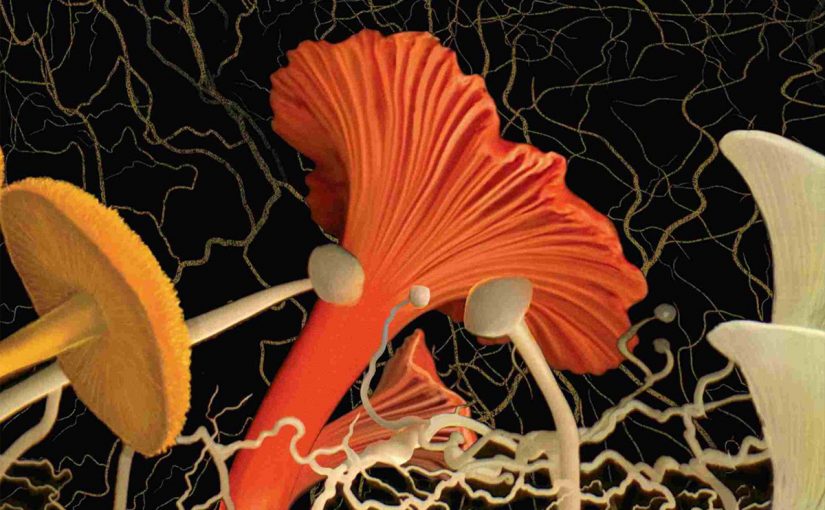
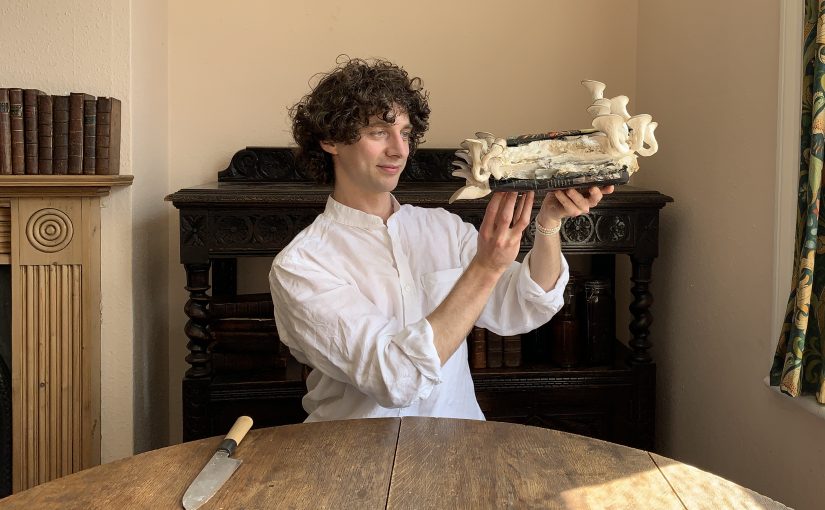
  • Entangled Life: Fungi, the Great Biosphere Builders” | In his new book, “Entangled Life: How Fungi Make Our Worlds, Change Our Minds, and Shape Our Futures,” biologist Merlin Sheldrake shares the wisdom he’s learned from studying fungi — a diverse kingdom of organisms essential to how our world and minds work.

Support Our Work

By supporting Bioneers, you’re supporting an entire community of diverse leadership who are realizing breakthrough solutions.

Donate to Bioneers here.


This article contains the content from the 7/16/2020 Bioneers Pulse newsletter. Sign up here to get the newsletter straight to your inbox!

Co-Ops, Capital and Inclusivity: The Blueprint for Building an Economy for All

Democracy isn’t just for politics — it’s for the workplace, too. And it’s desperately needed in an economy that exploits the wellbeing of workers and the environment just to maximize profits, where we all end up footing the bill. That’s why Ted Howard, co-founder and President of the Democracy Collaborative, is leading a national conversation on developing a more inclusive, just and equitable economy.

In this interview with Bioneers Senior Producer Stephanie Welch, Howard discusses the power of worker cooperatives, examples of what a new economy could look like, and how society can make these practices stick.

STEPHANIE WELCH: Could you describe your work at the Democracy Collaborative?

TED HOWARD: At the Democracy Collaborative, we think of ourselves as a laboratory for the birth of a new economy in America, beyond state socialism and beyond the kind of hyper-casino capitalism we have. We’re an action-oriented think tank, so we conduct policy research, publish reports, and do a lot of work on the ground. At any one time, we’re working with 25 cities around the country.

We’re living through a time when there’s a lot of pain in our communities. At another time in our history, the Great Depression, we also went through an economic crisis and then, as now, that pain generated a number of economic experiments. Historians talk about that period when Hoover was president from the crash in October 1929 until March of 1933, before Roosevelt came in. Nothing was being done by the national government because of the ideology of the Republicans at the time, which was to let the market take care of things. So communities began experimenting because they had to. In California and Alaska, people started pooling their money to take care of seniors, because there was no safety net. 

When Roosevelt came in and the politics changed, there was a new opening for new solutions. They looked at those experiments in Alaska, California and elsewhere, and they scaled it up and turned it into the Social Security system. The Tennessee Valley Authority (TVA) ame out of efforts for rural electrification. There were many other local experiments that became part of the fabric of the country at the highest level.

STEPHANIE: What are some examples of the initiatives that you and other groups have created in Cleveland?

Ted Howard

TED: The Cleveland Foundation, the oldest community foundation in the country, came to us and said, We know you’re not from Ohio, but we like your ideas about the basis of a new economy that’s more equitable, more inclusive, more place-focused, more sustainable environmentally. Would you come here to Cleveland and help us create a strategy? They gave us a grant, and I headed up a team that worked for about six months to devise a new form of economic development strategy for Cleveland. 

Most economic development in cities is a partnership between local businesses, mostly large businesses, and the city government. Usually business is the priority and the relationships tend to be based on subsidies and tax benefits as incentives to attract them from another city. The problem is that companies aren’t very loyal. When those tax breaks go away in six or seven years, they get up and move somewhere else. So economic development tends to be a zero sum game. 

We at the Democracy Collaborative suggested that instead of trying to attract businesses to leave other cities and throw their people out of work, let’s leverage the resources we already have that are underutilized. Many cities have a legacy of a strong manufacturing base and what are called anchor institutions that persist over time – large hospitals, universities, cultural centers – what economists call “sticky capital.” They’re rooted in the community, while most businesses come and go. 

They spend a lot of money – $3 billion in goods and services in just three of these institutions. Let’s work with them to drive contracts locally, put the money in the community and put people to work, create businesses that are linked to those contracts, and so forth. That became the basis of the Evergreen Cooperative Network. 

STEPHANIE: What role does democracy play in the cooperative and these other initiatives?

TED: The idea of democracy in the workplace is very, very important to the future of the country. The problem is that no one’s born knowing how to be a democratic actor. We have to learn the arts of democracy. I remember when we actually taught civics in school, but that’s no longer the case and is a detriment of the country. But there are a lot of other places you can learn about democracy, or the lack of it. One of those is in the workplace. 

In most companies, we tend to hang our democratic rights at the door when we punch in. We’re there for eight or nine hours and we’re working for someone else. It’s a very top-down, hierarchical system. We don’t have a stake in the company, we work for someone else and we don’t really have democratic participatory rights. 

A worker cooperative is a very different kind of company. Every person who works in the company has an equal share of the company. In Cleveland, Ohio we’ve created two very large scale industrial laundries that provide goods and services to the hospitals. Every person who works in there either has one share of the company or is on a trajectory to be voted into the company and become a shareholder. This means the workers who work in the company can elect members of the board of directors. They determine who gets accepted into the company. They have access to the open-book financial management so they can see how their company is doing. They can vote themselves profit shares over time. 

Another benefit is that it addresses the problem with companies leaving the city. If 50 or 100 people own the company they work in, it’s very unlikely they will get together and say, let’s send our jobs to Phoenix and cash out. 

Another reason cooperatives work well is that is a good way to provide jobs for people who’ve been left out of the economy. For many people, it’s very difficult to be part of the economy – people who have been unemployed for years, or who are on public benefits, or who’ve dropped out of school in eighth grade, or a single mom, or someone who’s come out of prison – it’s very difficult for them to get into the economy, and if they can, they usually get a very minimal wage. 

When we created Evergreen, our mantra was a job alone is not enough. If you’re hiring someone from a really asset-poor background, you need to not only pay them a living wage, you need to find a way to supplement their income so they can start to build their own household wealth. In a worker co-operative, outside investors aren’t siphoning off profit. The profits stay in the company and workers get bonuses. For example, the laundry workers in the Evergreen Cooperative who’ve been there the longest received a bonus this year of $5,000. In a community where the median household income is $18,500, that can be a life-changing amount of money.

STEPHANIE: How does the Evergreen Cooperative recruit their fellow employees to ensure they are reaching out to the people who can benefit most from the structure? 

TED: There’s such a desperate need for work in our community. When we opened the laundry a number of years ago, we didn’t advertise, we just opened the facility. But this was one of the only new businesses that had come into the community in years. Within one month of opening, we had 500 people apply for work. They now work with a group called Towards Employment, which is a community nonprofit. Their tag line is “From Poverty to Paycheck.” It trains workers from the local neighborhoods to be ready for this experience, and we’ve had a very, very good experience with them.

STEPHANIE: What would you want people to most understand about cooperatives?

TED: One thing people often assume is, “well, these worker co-ops are kind of nice, almost cute. But they can never really get to scale.” So one thing I’d want people to know is that cooperative forms can really move to substantial scale. 

The best example is the Mondragon Cooperative in Spain, in the Basque country. They built their first co-op in the 1950s with five people in it. Today, they are a network of over 100 worker cooperative businesses producing over 20 billion euros in yearly revenue, employing about 75,000 worker owners and members of the co-op. They’re the seventh largest corporation of Spain, with the third largest bank that they own. So it’s really moved to scale. 

In the United States, we’re not as big in this sector as many other countries. The largest co-op in the country is Cooperative Home Care Associates in the Bronx. They’re 30 years old and they have about 2500 workers, so it’s a substantial company.

The other thing I’d want people to know is the principle is very important: In a country like the United States, the primary thing that drives our decision-making in our form of capitalism is the rights of capital. By capital I mean the money that investors own in a company. Labor’s in second place, and is simply considered a cost on the balance sheet. 

When our economy gets into trouble, like a recession, or an individual company gets in trouble, we cut labor costs because the value and priority is to maximize the profits for shareholders. Get rid of as much labor as possible to preserve this kind of “divine right” of capital. 

In a worker cooperative, labor is in first place over capital. It’s not that the capital’s not important, but the rights of labor and keeping people employed are what drive decision-making. So in Mondragon, when they have a problem in a company and need to close it, they don’t just let everybody go, they absorb the workers into more successful cooperatives in the network. The point is to keep people employed, not maximize the value to investors. So it’s a very, very different principle. 

That’s one of the principles we talk about in the Democracy Collaborative, we talk about a “democratic economy”. Labor is in first place in our decision-making over the rights of capital, and broadening ownership is inherently more democratic and stabilizing. 

We’ve been sold this mythology about business: large corporations are more efficient; if people work in co-operatives, they’ll lose their incentive; what really makes the economy run is entrepreneurship; if we just grow the economy, the benefits will trickle down to those who are most in need. 

In fact, the data show over and over again that alternative forms of businesses, more democratic enterprises, are actually more stable, more productive, fail at a much lesser rate than the other kinds of companies. If you look at the continuum of what we call “community wealth building institutions and mechanisms”, we have co-ops, employee stock ownership plans, land trusts.

One example is the subprime mortgage crisis. Cleveland was one of the cities that was targeted. There are still 15,000 abandoned houses that need to be taken down because people were sold these bogus mortgages and they went under. During the crisis, the default rate in community land trusts where the land is owned by a public-benefitting corporation was less than 1/10th what it was for traditional bank finance mortgages. 

In terms of employee ownership, there’s a great deal of academic study of co-ops, especially employee stock ownership plans. During the recession, employee-owned companies shed labor at far less than 1/10th of what the corporate sector did because of their commitment to keep people working. The buildup of retirement accounts in an employee-owned company compared to a similar company in the same sector but traditionally owned is—for the workers is more than 2-and-a-half to one, the workers’ retirement accounts are that much bigger. Of course, there’s more satisfaction, there’s more productivity.

STEPHANIE: What is the Healthcare Anchor Network?

TED: Well, we don’t have a national health service in this country. What we have is a system that consumes close to 20% of our gross domestic product, and costs continue to escalate, but there’s a very interesting development that my organization’s been highly involved in. 

It wasn’t long ago when hospitals and health systems all over the country didn’t take their local communities into account at all. Their business model was to passively receive sick people and try to make them better, but it’s much more advantageous all the way around if they create healthier populations that don’t need to use their services all the time. This is called intervening in the social determinants of health. 

It’s often said that your zip code has a greater impact on your health than your genetic code. Only about 20% of what makes up the health of a community in our country is related to the quality and access of healthcare. The rest is the social determinants of health: income levels, housing, the local environment. In Cleveland, Glenville is a neighborhood I lived in until recently. It is an African-American neighborhood, mostly low-income, and the average life expectancy for a man there is 68 years. Eight miles due east in a white suburb, the average life expectancy for a man there is in the mid-80s. That’s a very significant difference in life expectancy.

We realized a few years ago that a number of health systems started to get serious about this and wanted to change their business model to benefit their community. We created something called the Healthcare Anchor Network. It has 45 of the largest health systems in the country involved in it. Together they have about 1.2 million employees, $50 billion of annual purchasing, $150 billion of endowments and so forth. We work with them to localize all that economic activity to create healthier communities so that people are healthier. They’re creating local jobs like in Evergreen where the hospitals are customers of the cooperative businesses, investing in housing in their communities, creating low-interest loan funds for local businesses owned by women and minorities so they can expand and hire more people, so it’s really a way to take these anchor institution assets and deploy them for the benefit of the community.

This whole idea is growing very rapidly and is playing out in communities all over the country. We have 45 systems in the Healthcare Anchor Network, and they represent more than 1/10th of all the hospitals in the country. There are about 5,000 hospitals in total nationally, and they represent 600 of them. Similarly, we have a network of urban-based universities that are doing the same kind of thing.

Ultimately we will need something beyond these individual systems doing the right thing. We actually need a national system in which they can participate, but it is night and day from what they were doing just five or six years ago.

STEPHANIE: The Democracy Collaborative was asked to participate in an experiment in Preston, England. How is that going? 

TED: Preston is one of the most interesting “next system” community wealth strategies that I’ve seen and participated in. It’s a city that was poorer than Cleveland when I first visited in 2013. It was called the suicide capital of England because of the level of despair, the lack of jobs, alcoholism, and so forth. 

Now, they’re leveraging all of the different assets that they have at their command – the city council, the University of Central Lancashire, the housing authorities, and so forth – and they’re moving all their contracts back into the city to bring money to the economy. So far, about $100 million of money that used to leave their system is coming back in. 

They also created an incubator for new cooperative businesses that the university is helping to jumpstart so they’ll have a cooperative economy. They’re building a public bank that will be capitalized by the reserves of the city and the County of Lancashire. They’ve taken a hundred million pounds of public employee pension funds that used to go to things like hedge funds and invested it locally in Preston. So they’re building layer after layer. The end result is that in just six years, Preston was listed by PricewaterhouseCoopers as the most improved city in England in 2019.

STEPHANIE: The mythology around our hyper-capitalist economy is so strong, what will it take for these sorts of projects to get a foothold in our system in the U.S.? 

TED: We need to understand that we’ve got a systemic crisis on our hands, and it requires a systemic approach. We live within a system, a political economy. In our country it’s called capitalism or some people say it’s casino capitalism or hyper capitalism, or the neo-liberal economic order. In order to bring about the kind of world we want, we need to stop thinking that it’s simply a question of who gets elected. It’s very important that we vote, and I vote every time I can, but it’s not simply a question of better policy. If we don’t start to deal with things right at the heart of the system, and change that, then we’re never going to get to where we want.

The biggest impediment we have is not the power of the large corporations that will fight to hold onto what they have. That is a problem, and there needs to be a political movement to challenge that power, but ultimately the problem is our own lack of imagination. The problems look so big, the challenges so huge, a lot of us just give into despair. Somebody said our problems are way too big to allow us to be pessimists. We’ve got to get our ambition up that a new system, a new order is possible. 

On the back of the dollar bill, the founding fathers put a phrase novus ordo seclorum, which is the new order of the ages now begins. That’s what they thought America was at that time. We need to get our ambition up to something like that.

STEPH: What are the next big, bold steps that you believe could get us where we need to be?

TED: First of all, on the ground level we need to start to deploy not just cooperatives, but also land trusts, social enterprises, public banking, a whole range of initiatives that can contribute to the rebuilding of our communities. 

We also need to get ready for the next big financial crisis and collapse. Economists on the right and left are all saying it’s coming. Banks are over-leveraged and bigger than ever. The last time this happened with the 2008 crisis, the Federal Reserve Bank stepped in and used quantitative easing to create three trillion dollars to bail out the banks, along with AIG, the insurance company, General Motors, and others. At that point, the American public owned these entities because they were socialized by the U.S. government. The problem is that once those companies recovered, our government gave them right back to their original owners. 

What do we do the next time the banking crisis happens? Are we just going to do the same thing? Or are we going to step in and maybe take these banks into public ownership? 

At the Democracy Collaborative our paper The Crisis Next Time discusses a new approach to deal with financial crises. We need to work at the grassroots level as well as the national policy level.

STEPHANIE: These are big changes that need to happen and I think it’s difficult for people to see how these massive changes can come to fruition.

TED: This is what Dr. King said about bending the arc of history toward justice. What we’re talking about is bringing the principles of democracy to the economy. We’re talking about fundamental change to our political economy and transformation in terms of who owns this economy in the largest empire, if you will, in the history of the planet. These things don’t happen fast. We’re talking about 20, 30 years of evolutionary change. Some immediate changes can be made, but we need to stay in this for the long haul. 

We’ve been educated to think that there are only two choices: You either like centralized state socialism like they used to have in communist countries, or you like this hyper-capitalism dominated by giant corporations like we have. What we’re arguing is, no, no, no, there are many different ways of approaching this. Rapid changes can be made, as the case of Preston shows, like some of the things we’ve done in Cleveland show. 

It will ultimately require the kind of experiments we’ve been talking about; it will require forming a new political base of power that can challenge the large concentrated corporate interests. The labor unions are down to 6% of workers, so we need a new base of collective power. We need really new, innovative outside-the-box proposals, that’s why the Green New Deal is so interesting. We need a fundamental reorientation. 

So it’s a very exciting time. There are certain times when ideas really matter in the grand mix of things, and I think this is one of those times. 

Interview with Merlin Sheldrake, Author of Entangled Life

Merlin Sheldrake is a biologist and a writer with a background in plant sciences, microbiology, ecology, and the history and philosophy of science. He received a Ph.D. in tropical ecology from Cambridge University for his work on underground fungal networks in tropical forests in Panama, where he was a pre-doctoral research fellow of the Smithsonian Tropical Research Institute. Merlin’s research ranges from fungal biology, to the history of Amazonian ethnobotany, to the relationship between sound and form in resonant systems. A keen brewer and fermenter, he is fascinated by the relationships that arise between humans and more-than-human organisms. He is also a musician who performs on the piano and accordion.

On July 7th 2020, Bioneers Senior Producer, J.P. Harpignies, interviewed Merlin about his new, highly acclaimed first book, Entangled Life. Watch the video here or read an excerpt from the book here.

J.P. HARPIGNIES: One of the most extraordinary things about your book, at least for me, was your explanation of how important fungal species were to creating the biosphere as we know it, making it possible for plants to come onto dry land. And to this day, you say that 90% of plant species depend in some way on a relationship with fungal species to survive or to function. So my first question to you is: How is it, given how fundamental these fungi are to life on Earth, that so little is known about them in so many domains; that there are still so many mysteries about them; that there are so few people studying them; and that so little money and research is being done compared to fields such as neuroscience or physics? Because if we literally don’t understand the ground beneath our feet, shouldn’t we be studying this domain more intensely? Why do you think we’re not?

MERLIN SHELDRAKE: It’s a good question, and a really important one for us to reckon with, because our neglect of this kingdom of life is causing us to do harm to the biosphere, and ultimately to ourselves. I think there are a few reasons for this neglect. One of them is that most of fungal life is lived hidden from our view. We see mushrooms that pop up above the ground, but fungal life is lived either as single-celled yeasts which are invisible, to our eyes at least, and otherwise as mycelial networks, which live their lives entombed in their food source and out of our sight. It is only relatively recently that we have developed technologies that allow us to study fungal diversity and behavior. For example, DNA sequencing allows us to profile microbial communities in the soil and in animal and plant tissues, and has played a big part in the current revolution in our understanding of microbes.

And then there are disciplinary issues. Fungi weren’t considered to be their own kingdom of life until the ‘60s. Viewed as a type of plant, they were lumped in with the plant sciences. There are departments of animal sciences, departments of plant sciences, but no departments of fungal science. This taxonomic wrinkle has led to an entrenched disciplinary bias: mycologists have long existed in dusty corners of plant sciences departments which has restricted their access to funding and students.

And there are other reasons. There’s a cultural suspicion of fungi in many parts of the world. You don’t find it so much in East Asian countries – China and Japan, for example, which are historically mycophilic…

JP: Ah yes, Wasson’s famous distinction ofmycophobic and mycophilic cultures.

MERLIN: Absolutely. I don’t think this is a distinction we should use to govern our lives in a major way, but you definitely see cultural aversion to fungi and you see cultural attraction to fungi in some parts of the world.

JP: And Anglo Saxons have historically been somewhat mycophobic, so because so much science is done in English these days, that could be another reason, right?

MERLIN: Exactly. So there are these various reasons, but thankfully it’s starting to change, and hopefully we’re going to see a much bigger investment in the fungal sciences, with more young people getting excited about fungi and deciding to go into do research on fungal subjects.

JP: The next thing I wanted to discuss with you is the fact that lichens became a sort of gateway to symbiosis as a concept in Western science. It’s really the first organism that forced science to reckon with the fact that there existed something that wasn’t actually a discreet organism, but a symbiont. And then in recent years, very recent years, we discovered that it’s actually a more complex symbiont than we even thought. So could you talk a little bit about symbiosis and lichens?

MERLIN: Of course: lichens are iconic organisms because of this, I think, and they’ve been  gateway organisms for our understanding of reciprocal and mutually beneficial interaction in the natural world. Before the realization that lichens were symbiotic organisms, within the modern European sciences at least, if a microbe lived in close contact with another organism it was thought of as a germ or a parasitic agent of disease. So when the botanist Simon Schwendener came up with the “dual hypothesis” of lichens, as he called it, he was laughed out of the house because it seemed preposterous that organisms could share bodily space in a mutually beneficial way. A few years later, Albert Frank, another biologist, coined the word symbiosis to describe the living together of fungus and of algae – the photosynthetic component in lichens. Frank intended the term symbiosis to describe the living together of different organisms in a way that didn’t presume the relationship to be either parasitic or mutually beneficial: symbiosis could mean parasitism and it could mean pathogen, but it could also mean something more than that. This opened up new biological possibilities, and soon afterwards, new symbiotic discoveries were made: the symbiotic nature of corals and other sea organisms, and of plants and mycorrhizal fungi, for example. It’s a good example of the way that words do conceptual work for us.

JP: Yeah. New words can open up the possibility of seeing things we couldn’t see before. I wanted to explore metaphors a bit with you. You talk a lot about this sort of battle of metaphors in this realm. We went from a kind of very primitive Social Darwinism that thought everything in nature had to be a fierce competition. It was all “red in tooth and claw,” and then this idea that symbiosis in nature was possible emerged. We already see that in someone like Alexander von Humboldt in the early 19th century, and then with Kropotkin, with Mutual Aid: A Factor of Evolution in 1902, and then more recently even some New Agey, sort of cuddly, friendly views of nature.

With some contemporary forest ecologists such as Suzanne Simard who study the relationships of trees with mycorrhizal networks, we get some family metaphors. They discuss “communities of trees,” “mother trees” that share nutrients with offspring, and so on. So there’s this whole battle of metaphors, and it seems really important. We can’t live without metaphors, but at the same time they can lock us into constrained ways of seeing the world, whether we are rabid Social Darwinists locked into this idea of social competition, or we can go too far the other way and think everything is warm and fuzzy in nature. You have some really fascinating parts in the book about metaphors, so I’d be curious to hear you share your thoughts on that.

MERLIN: I think it’s most helpful to think of collaboration as always an alloy of cooperation and competition. Think of families, think of jazz bands – all kinds of collaborations. There’s always a bit of cooperation, a bit of competition. These dynamics are basic facts of our social lives. If we think of collaboration as always being some sort of blend of cooperation or competition, then we can enter a bigger room, and don’t have to remain locked into a dualistic framework, squabbling about whether nature is fundamentally competitive or fundamentally cooperative. In any case, it can be helpful to think about competition in new ways: the word comes from the Latin “to strive together,” for instance.

Metaphors are a non-negotiable feature of our lives, whether we’re scientists or not. We have to use metaphors to understand and process and discuss ideas. Certainly, in the sciences they’re essential given that most of science has to do with phenomena which are out of the reach of our immediate senses. We are always striving to understand, striving to describe, striving to come up with images for things we aren’t able to detect directly. We may as well make peace with the fact that we will always need metaphors, and then work out how we can use metaphors to our best advantage. For me, the main thing is to remember that our metaphors are metaphors, to remember that we’re telling a story, and to remember that there are different stories we can tell. Ideally, it strikes me, we want a plurality of stories about various phenomena.

JP: It’s what the Buddhists call “not mistaking the finger pointing at the moon for the moon itself.” Right?

MERLIN: Yes. The philosopher Alfred North Whitehead called it “the fallacy of misplaced concreteness,” which happens when we mistake our maps for reality. All these metaphors help us to see in different ways. As long as we remember that they are metaphors – and that there are a variety of metaphors on offer – we can do our best to ensure that we have a balanced narrative diet.

JP: Well that’s the hard part because both the rigid scientific establishment forgets that at times, and then the counter-culture or the “radical mycology” wing, which we’ll get into in a little bit, also forgets that, so sometimes people can get trapped in their own maps, I think. But certainly a lot of interesting metaphors come up in the mycelial world: the “wood wide web” is one. Paul Stamets actually calls it “the mycelial Internet,” I think. And then there are also metaphors borrowed from neuroscience, e.g. that mycelia are like neural connections. They’re all useful, but some people do go overboard and identify with the metaphor so much that it becomes limiting, in my view.

MERLIN: As we all do. I think it is actually helpful to use fungal networks themselves as metaphors to understand other phenomena. If we flip these roles, we can see mycelial networks as metaphorical feedstock for other discussions.

JP: That’s a very good launching place for my next question. Mycelial networks are a great gateway, again to use that term, to understand that nature can no longer be understood as a competition between discreet species with precise boundaries. It’s so clear from your book that there are these incredibly complex networks in which it becomes impossible to differentiate species with absolute clarity. Everything is part of an active, functioning whole system that’s ever shifting in its boundaries.

It reminded me a bit of the Buddhist idea that there’s no “Self” as we normally think of it. Whenever we think of our self, we think of our body, but we’re actually breathing in other species all the time. And now with the discovery of our internal microbiome, we know that we co-exist with all these colonies of bacteria and viruses, without which we couldn’t function. Or we think of our minds and our ideas as our own, but obviously they came from elsewhere, from our education, families, communities, etc.

So it seemed to be very similar, this idea that once you really look at the fungal world, it’s impossible to think of it as anything but this incredibly complex, shifting system in which it’s very hard to differentiate a particular species. I guess that all of Ecology teaches us that more and more, but the fungal world seems to be really the poster child for that fact. And it’s amazing how little we understand about it, getting back to the first point we discussed. What are your thoughts about that?

MERLIN: One of the fascinating things about fungi is that they form literal connections between organisms. Ecology deals with interactions between organisms, and the ways that all organisms are open systems in constant interplay with their surroundings, whether they be other organisms or bio-geochemical cycles or physical features of the world. Fungi form actual physical connections between organisms, for instance in the case of the ‘wood wide web’, making literal this fundamental feature of ecology. They make it very obvious and easy for us to understand the interconnectedness of the natural world. So I think fungal networks are a great reminder, a kind of mnemonic, of this basic feature of life and of the physical universe.

JP: I wanted to jump into another fascinating aspect of your book. You have one foot in each of two different worlds, one very firmly planted in rigorous science and academia. You have a doctorate in tropical ecology and your academic and scientific credentials are tip-top, and your book has an almost 50-page bibliography and as many pages of detailed notes, so you’re obviously an extremely serious and rigorous scientist, but you have also had, from your childhood, a unique exposure to the counterculture. You describe in your book the scientific work that’s being done in the academy, but also this very fascinating, very dynamic movement of sorts of “radical mycology,” which includes people like our good friend Paul Stamets, and Peter McCoy. I was wondering if there’s any tension there for you, because these are two very different worlds and an enormous amount of great interest is happening in that radical mycology world, but often with a type of enthusiasm and linguistic exuberance that academics tend to frown upon. How do you reconcile that tension?

MERLIN: It’s an interesting question. We often think of academia as an inward-looking community of scholars who talk with each other and not so much to the outer world, but the development of the natural sciences over the course of the last few hundred years has been driven by amateurs, or passionate enthusiasts. The word amateur comes from the Latin “to love” – I don’t like to use the word amateur in a derogatory way. Much of human inquiry into the natural world has been conducted by amateurs because for much of the history of science there have been no other ways to do it: there haven’t always been university departments where you could go and make this kind of investigation. Darwin is a great example. He performed experiments with earthworms in his garden and raised pigeons, and regularly corresponded with pigeon breeders and pigeon fanciers. He grew different varieties of apples in his garden, and he competed with his cousin every year to see who could grow the biggest pear, which became a source of much family entertainment. In the fungal sciences, amateurs have played essential roles because mycology hasn’t had a formal disciplinary home for that long. The American Mycological Society was only founded in the ‘70s, for example. This is very recent.

I use the concept of radical mycology, which is Peter McCoy’s term, to describe people who are trying to use fungi to produce radical solutions to many of our big problems. You can see them as part of a larger dynamic within the natural sciences, people who are doing their own investigations outside the purview of formal university departments. So I don’t really see so much of a tension. I just see them contributing different types of knowledge and expertise. In many cases, radical mycologists can be more wild and free in their experimentation.

JP: They’re also very result oriented. They want to use their work for mycological bioremediation of toxins, to create non-toxic packaging and materials, in the case of Ecovative. And of course to perfect ways of getting high…which we’ll get into in a minute. It’s certainly a fascinating world. I loved a quote in your book in which you cite some academic mycologist complaining about his students, saying, “We don’t know what to do; we want to study yeasts, but these young people want to save the world.”

MERLIN: Yeah, that was a professor talking to Paul Stamets, actually. And he said, “Paul, what do we do?” I think that really sums it up. It’s exactly what you describe, but it’s funny because there would be few academic mycologists who would argue with the fact that their student recruitment numbers have gone up hugely because of the work of Paul and others, these myco-evangelists, you might call them, who have spread a passion and enthusiasm for fungi.

JP: It’s probably one of the few fields of study in which that peaceful coexistence is possible, perhaps because it was so marked by its historical foundation by inspired amateurs, as you described. This is an aside, but your writing really has the quality of those great 19th century naturalist-generalists. A part of it might be your family background steeped in an excellent British erudition and broad intellectual vision. I admire that in your writing, its elegance, rich with literary and philosophical references. There is a quality of your writing that is in the best possible sense, reminiscent of the 19th century Von Humboldt type of naturalist, except you’re obviously equipped with much better microscopes and DNA analysis, so it’s the best of both worlds in that sense.

Anyway, another thing I want to get into, because I think people will be very interested in it, is a little bit of your personal story and how it relates to the whole psychedelic aspect of this. I love the anecdote you tell of being 7 years old visiting Terence McKenna in Hawaii with your father. You had a bad cold, and you were in bed, and Terence McKenna came in the room, and you thought as he started mixing up herbs that he was preparing something to help you heal, but of course Terence, completely obsessed as he was with psychedelics, was actually mixing up a bunch of Salvia divinorum. I thought that was so typically Terence. I love that story.

So you have this unique back-story of having been introduced to many of these radical mycological figures in the psychedelic domain from a very young age, yet you describe your entry point into psychedelics, at least in the book, with an LSD experience in which you were trying to find some creative way into a particular research project you were doing. Had you not had a bunch of experience with psilocybin before that? Or, were you, because of some of the people you had known, reticent to get too deeply immersed in that world? To the extent you’re comfortable discussing it, what is your psychedelic trajectory?

MERLIN: Good question. Terence was a big figure in my life and had an amazing ability to tell stories. As a very charismatic and powerful teller of tales, he left a big impression on me. So, yes, I’m definitely interested in these subjects. When I was a teenager, there was a big magic mushroom boom in England and Holland, because a loophole in the law made it possible to sell magic mushrooms openly, so long as they were fresh. This boom lasted about two years, then the government closed it down. But in this period of time, I did experiment with them because you could just walk down the High Street and there were vendors selling them in crates, perfectly legally. People were writing about them in ways they hadn’t been able to write about them before, and there was a period of psychedelic experimentation on a national scale. So I participated in that, and it ignited an interest in these topics and in these subjects and substances, and their power to change the way that we think, feel, and imagine.

JP: I knew Terence also, and Terence was one of the great storytellers, as you say. Perhaps he had the greatest gift of gab of just about any human being, but many of his ideas, in my view, especially some of his more ambitious philosophical ideas, like the “stoned monkey theory” of evolution, were on shaky ground. You seem to take a very friendly and open-minded but skeptical view of some of those ideas, and you point out, interestingly, that psilocybin mushrooms developed psilocybin millions of years before there were hominids walking around.

That raises a whole issue, because I think that the psychedelic world has a tendency, perhaps because of the nature of psychedelic substances themselves, and perhaps because of the nature of that particular subculture, to be very passionate, enthusiastic and exuberant linguistically. One example is that quite a few people have experiences in which they feel that they’re relating to an alien intelligence, to “plant intelligence” in their journeys. It’s a very powerful, subjective feeling for many people, but that’s hard to reconcile with a more dispassionate look at the natural world. Do you have that problem, trying to reconcile your subjective experiences with your more cold-headed observations of the natural world?

MERLIN: I think the dynamic you describe reflects a bigger dynamic within the natural sciences which struggles to reconcile the existence of consciousness and subjective experience at all with the materialist, unconscious, purposeless universe, which we’re told is the basic fact of existence. Within the natural sciences at large, this tension is sometimes called the “hard problem of consciousness.” How can subjective experience exist at all, given that matter is feeling-less, purposeless, meaningless, and supposedly lacks every kind of quality that characterize conscious experience? The existence of consciousness is a great puzzle. You can experience consciousness from the inside only, by definition. So these subjective experiences in a psychedelic setting are remarkable and puzzling, but so are subjective experiences in any setting, and that helps me ground my thinking about psychedelics because it makes it all seem a bit less peculiar. I mean, it makes the psychedelic states of consciousness seem less peculiar relative to non-psychedelic states of consciousness, but it makes consciousness overall seem more peculiar.

JP: Do you have any sympathy for pan-psychic philosophies that feel that consciousness is embedded in the universe at every level? There’s a long tradition of that in the West in very many different forms.

MERLIN: I do. I find it very hard to imagine how we could go from meaningless, purposeless, quality-less, feeling-less, experience-less matter into rich, subjective lived experience, unless some of those qualities were a fundamental feature of the matter and energy that make us up. So I do have time for it. I think it’s a fascinating field of inquiry, and one that’s really starting to help us to contend with some bigger questions about the natural world and our place in it.

JP: Another great passion of yours, which there are some great stories about in the book, is your love of fermenting. You’re a great fermenter. I especially love that story about stealing Newton’s apples to make hard cider. You also tell a great anecdote about being very young and your father explaining decomposition to you when you wondered where the fallen leaves in your yard went to, and how that was foundational in your interest in the natural world. But where did that passion for yeast and fermentation come from, and has it gotten you in trouble at all?

MERLIN: I think an interest in decomposition – Why do things change? Why do things transform? How does a log turn into soil? When I found out about decomposition, it was just huge news. We live in a space that decomposition leaves behind. And so the organisms that decompose the world are fundamental to everything we know and everything we can do, but we see it most of all by what is left behind, the empty space that is left behind, the negative space that is left behind. So it’s sometimes hard for us to notice. Learning about decomposition was a big moment for me, and it continues to drive my interest in microbes and fungi and these other organisms that decompose and rearrange the world. That’s partly why I like fermentation. It’s a fascinating process because you are essentially domesticating decomposition. You’re taking a bio-geochemical process and housing it in a jar in your kitchen in a way that you can not only see, not only smell, but taste. It’s easier to taste that than to taste soil or to taste a rotting log. We’re encouraged not to do that as children. So I see fermentation is a way to notice, to know with as many senses as possible, this transformational power of microbes and microorganisms. I think that this underlies my fascination with fermentation, aside from the amazing flavors and the health benefits. Another reason is it connects us with our history because fermentation has been a big part of human life for as long as we can know, because before fridges, how do you preserve food? Almost all those preservation techniques were fermentative ones.

JP: But it hasn’t gotten you in trouble? You haven’t found yourself inebriated occasionally or caught stealing fruit from famous people’s gardens?

MERLIN: Well, it depends. After the Newton cider, I made another one with my brother, Cosmo, and my father. We wanted to make a cider out of Darwin’s apples. We’d call this one “Evolution,” so we had to go and get some of Darwin’s apples.

JP: But not his pears?

MERLIN: No, not the pears. There are apples growing in the grounds of his garden, and so we had to go there and get the apples, and that involved a little bit of—My father had to stay by the gateway to the orchard and stand watch and distract any possible witnesses.

JP: You were committing historic scientific crimes, stealing from Newton and Darwin!

MERLIN: I know. We were scrumping. It used to be a bigger crime because cider had value, but now most of the time these apples just fall onto the ground and rot, so I don’t feel like I’m in a terrible moral quandary. But, yes, you’ve got to be a bit careful about whose apples they are.

JP: Even though in Newton’s case, the story of the apple falling from the tree inspiring the discovery of gravity appears to be nonsense…

I’ve been very impressed with how favorably your book has been received, because sometimes it’s very difficult. My friend Jeremy Narby’s book Intelligence in Nature, which I think made some really fascinating points that dovetail with much that is in your book and was quite rigorous, did not get taken seriously by the gatekeepers when it came out, and I know your father back in the day was sometimes not treated well by the scientific establishment, quite unfairly in my view. But perhaps the times have changed. I’m impressed that the world is so open to your take on things. You are a great ambassador. You have really found a way of being very delicate and very diplomatic, while still being fully immersed in all the aspects of the topic. Have you been surprised by how well it’s done and how great the reviews have been? Or were you expecting it all along?

MERLIN: No, I definitely wasn’t expecting it. I had no idea what to expect, and so I was very encouraged to find this friendly and warm reception. It’s encouraging to me because it’s a subject I’m so interested in, and it’s nice when people can share your interests, which is one of the reasons I wanted to write the book. So on a very homely level I’m happy that people also could get keen about this subject.

But I think it’s a lot about the time we’re in. We’re in a time of great crisis. Of course, we’ve been in crisis for a while, but something is shifting in people’s awareness of the many social and environmental injustices that we are perpetrating and being harmed by. So I think there’s an openness to revisiting and re-examining some of the concepts that we use to structure our understanding of the world we live in, and I think fungi can provide a helpful way into this revisioning. Fungi can change the way that we think, feel, and imagine, and help us enrich the concepts we use to organize the world.           

On another level, it’s a very fungal moment for us. ‘Network’ has become a master concept, and partly because of the rise of the Internet and the World Wide Web and the way our lives have become continuous with these digital network systems, network science is being used to make sense of almost everything you can imagine. And fungi are ancient living networks, at least a billion years old, and they oversee all these astonishing phenomena, and illustrate the foundational nature of networks, and the network nature of the universe. Perhaps this is another reason why people are interested in fungi at this moment.

Of course, there have been many people talking very passionately about fungal lives for much longer than me. Paul Stamets is a good example. Peter McCoy is another. But there are many, and so I feel like I’m just adding to the conversation that was already going on.

JP: I think that’s right, but I think because they’re so passionately in the trenches, there’s something about your book that provides a sort of an overview of the whole topic from many different angles that’s very useful and hadn’t been done before. Of course we love Paul and his genius and all his immense contributions. How can one not love Paul?

MERLIN: Absolutely. He’s been a big inspiration.

There’s that great line from the naturalist and conservationist John Muir, “When we try to pick out anything by itself, we find it hitched to everything else in the Universe.” When you study fungi, because they live their lives wrapped around other organisms and embedded within features of the natural world, it’s really like that. You can’t think about fungi without thinking about other organisms. Grow a fungal network in one situation and another situation, and they’ll be different, so you have to think about context; you have to think about interactions; you have to think about symbiosis; you have to think about the interconnections between things when you think about fungi. So for me, fungi were gateway organisms, a gateway life form, a way into thinking about life and ecosystems in general. What was fun for me in writing the book was following these threads and finding myself in a completely different place than where I started. That’s part of why I think fungi make such good explanatory aids and such good model organisms for us to learn to understand and re-imagine.

JP: Maybe they’ll be the gateway to the triumph of whole systems thinking. Maybe it will be via fungi that humanity will have no choice but to accept a more complex ecological view of the world.

The Great American Sci-Fi: Utopia or Dystopia?

As a science fiction author, Kim Stanley Robinson is an expert in imagining new ways the world could work. These possibilities are more important now than ever as global society reaches the brink of collapse, but we’ve reached a crossroads on our path toward dystopia.

In this speech, Robinson discusses the urgency to take collective action. By using our technical capacity, social skills and knowledge, we have the ability to create a sustainable and just civilization for all life. We have the inherent power to address poverty and injustice. So why hasn’t this happened yet? Robinson says we’ve yet to rethink the multi-generational Ponzi scheme on which the world economy operates, which borrows from future generations at an unforgivable cost: the planet itself.


The sustainable and just civilization that we all hope to create cannot be built using a capitalist economy. That’s good news and bad news. It’s a little terrifying, because capitalism is not just the law of the land but the global order, and we’re in it: it’s massively entrenched and backed by laws and armies. So, if you agree with what I’ve said, then it’s right to be a little terrified.

Economics as a study of the capitalist system, which is mainly what it is, is very proud of our economy’s supposed “cumulative equilibrium,” which is basically the grand total of all the supply-and-demand questions being made in the market and decided by the market. But if you examine it more closely it’s a deal between buyers and sellers in which everything is always underpriced. The buyers are in a bind because they are generally poor and need to pay the least they can to get what they need. The sellers are in a bind because they are competing with all the other sellers and need to hit the lowest price. So they price things as low as they can so that they don’t go out of business, and in the end, they price things lower than the things actually cost to make.

This looks like a recipe for bankruptcy, and many businesses do go bankrupt, but they get away with it by ignoring some of the costs that they’ve incurred, and by shoving other costs onto the future. So, because labor, which really means people, can also be bought at the cheapest amount available in the world market, the result is that sellers are selling things for less than it costs to make them, buyers are buying them for less than they cost to make, and in a sense there’s a collusion between buyers and sellers to make sure the hidden costs, the deferred costs, the denied costs, the “externalities,” will be shoved onto future generations.

Normally what that would be called is a Ponzi scheme, and it’s a little bit funny to think that the world economy would be illegal if it was run this year in the state of California, but it’s not that funny because we’re in it and it’s the law everywhere. So we are stealing from the future by way of a multi-generational Ponzi scheme, and every year we overuse the natural resources of the planet in terms of what can be replenished by the biosphere’s natural actions, by about August of every year. As that goes on, the whole biosphere gets degraded, and yet there is no cost associated with that in the marketplace. People who are fooled by a Ponzi scheme do not get their money back, and the people who are fooled by this Ponzi scheme, many of whom are not even born yet, are not going to get their planet back.

Kim Stanley Robinson

So, this is serious because it’s not just a loss of our finances, it’s a loss of our bio-infrastructure. If everybody on the planet were to live at Western levels of consumption, which many are aspiring to do, we would need two or three planets to support it, so we’re already in a crash, and it’s taking the form of a mass extinction event. There’s violent climate change and ocean acidification that could kill the life in the oceans, and sea level could rise very rapidly. The last time we were in these climatic conditions in the Eocene, sea level rose some 15 feet in a single century, and it isn’t quite clear why that happened, but it’s pretty obvious that melting ice masses in Antarctica and Greenland were involved.

We can burn about 500 more gigatons of carbon before we have in essence cooked the planet and tipped it over into such a degraded state that it will be very difficult for human communities to live. And yet we have already located and identified 2,500 gigatons of fossil carbon that’s in the ground of the world. Now, fossil fuel companies have listed all 2500 gigatons of that carbon as assets, and nations have listed them as national resources, offshore or onshore, so there will be corporate leaders and political leaders who will be trying to burn that carbon before the unburned carbon becomes what they would call in economic terms “stranded assets.” And the monetary value of the 2,000 gigatons of carbon that we can’t burn, I recently calculated to be at current prices about $160 trillion. This is of course a completely artificial number, because it’s like trying to calculate the monetary value of a poison. I mean, you do have to pay money to buy a poison if you need it, but as the poison is administered to the patient and it begins to die, naturally the monetary value of the substance will change over time.

But $160 trillion is a lot of money. And there are going to be people, well-meaning people, who, out of fiduciary responsibility (if they’re executives) or out of some sense of duty to their constituents (if they’re politicians), are going to be trying to burn their trillion or two of that carbon and then hope that other people can cope with the problems that are created later on as a result. So, there are going to be well-meaning people trying to burn all that carbon for the entirety of this century, and what that implies is an absolutely huge and ongoing political battle. We will be fighting for control of governments, in hope that by controlling governments we can escape the oncoming disaster.

Now, having described this rather terrifying situation, I think it’s very important to point out that we also have the technical capacity, the social skills and the knowledge to create a sustainable and just civilization for all eight billion people on the planet, and all the rest of the biosphere’s living creatures, including the large mammals that are most endangered. It’s not fantasy to say that; it’s an extrapolation of already existing things that we know. The technology is not the hard part. It’s already invented, but we have to pay ourselves to install it fast. So, again, that’s an economic question, and it doesn’t work in capitalism. We have the means right now to arrange for everybody alive today to have adequate food, water, shelter, clothing, education, and healthcare, within the biosphere’s carrying capacity. One of the oldest maxims in the English language is “enough is as good as a feast.” In fact enough is even better than a feast, because feasting makes you sick.  We can create enough for every living creature.

Even within the context of our existing capitalist system, the UN has done an incredible job with its Millennium Development Goals in raising the well-being of many of the poorest people on the planet. About a billion of them have gotten to at least the next step up in the last 10 or 15 years, but this was not a capitalist accomplishment. This was in fact charity. It was using the surplus and doing work that is not paid for in the usual profit system. But what’s interesting is that this success is a proof of concept that it could be done.

So, again, it’s an economic problem, meaning it’s above all a political problem. For example, many people worry that there are too many people on the planet, and this is an open question, but one thing’s for sure, wherever women have their full set of legal rights and equal opportunities, the population growth rate immediately stabilizes, flattens and sometimes even drops below the replacement rate. Social justice is in fact good environmental policy, it is a kind of technology, in that it is a political software, critical to human survival. And the hyper-consumption of the rich and the deep poverty of the poor are among the worst environmental impacts of any human activities, so solving inequality is not just the right thing to do; it’s the optimally survivable thing to do.

Next spring, E.O. Wilson will publish a book in which he suggests that we humans should occupy only half of the Earth’s surface. It’s called Half Earth. Rapid urbanization is already collecting people into rather tight knots around the planet, so in a sense the process has already begun. If half of the land surface of the Earth was given back to wilderness or parks, or at least unoccupied or non-human spaces, habitat corridors could be built and the rest of the mammals and living things on the planet could prosper. Life is robust, and if we were to create this sort of system in an orderly fashion as quickly as possible, it could be part of the solution. This plan of Wilson’s could make a sustainable world for all living creatures. This is a utopian vision, and I’m very happy to think of E.O. Wilson becoming a utopian science fiction writer. He has often dismissed science fiction in his writings, but now he’s writing it himself, and I’m happy to welcome him. It’s a very good crowd that he’s joining.

So we can describe a utopian vision that addresses poverty and biodiversity and injustice which is realistic given our technology, our social skills, and the physical resources of the whole biological community of Earth. But we’re also at a very peculiar moment in history in which a disastrous future, a dystopia, is also quite possible, and we’re in many ways on a course toward that bad future. If we continue to do what we’re doing now, we’re headed that way. The possibility for utopia is still here: we are powerful thinkers, and we can think our way out of this crisis by using such technologies as language, the rule of law, the scientific method, and justice.  Because technologies don’t just involve machinery. Technology is the full spectrum of ways we organize our relationship to the physical world. We’ve been technological since before we were even human. Pre-humans were using stones and fire to get along in this world, and probably clothing. So there’s no problem with technology as such, as long as it’s used as a force for good. The concept of technology has to be expanded to include all our systems for coping in the world.

But what do we do with a vision of a distant utopia when we see the situation that we’re in right now? What can we do right now to bridge that vision with our current reality? What steps can we take in the present that get us to this positive future we can imagine? Well, first we have to keep in mind that the solution is going to take decades, generations, and we can’t let that discourage us. We have to take the steps that are necessary now. It’s a scaffolding theory, like a coral reef. You build the scaffold you can in this current situation, and then hope the next generations can keep building on that scaffold and raising the level of discourse and activity to achieve a higher level of interaction with the planet.

So what do we do right now? First we have to fight austerity policies. Austerity measures merely increase the power of the oligarchy on this planet to continue their destructive ways. Actively opposing austerity has to take place within the battleground where we’re fighting over these ideas—in government, and democratic control of government. We have to reclaim government as a representative of the people rather than the oligarchs. Ever since the 2008 crash, it has been revealed that the neoliberal privatization of everything that was the rage since the 1980s was a disaster. So a first step is just a return to a Keynesian understanding that government needs to regulate business, rather than the opposite, and as governments create money, to create and spend money appropriately to meet human needs. 

What that would mean now, among other things, is a carbon tax, of course, one that rises over time on a regular rate. It’s obvious and necessary. Secondly, there should be a high-frequency trading tax so that every time there are a million trades per second, if a small percentage of that is going into the public coffers, then even though there is a basic stupidity to finance, at least it would be funding the public good. A living wage for all could be financed by (those sorts of taxes), and a living wage for all would help create sustainability and wellbeing, so this is another obvious idea. The full employment that will result from a governmental job guarantee is the best way to distribute a living wage for all; there’s lots of good work to be done. And then lastly, and I think very powerfully, not only should we return to the type of progressive taxation that was enacted by the New Deal into the Post-War period, but as (the French economist) Thomas Piketty advocates, we should tax capital assets as well. Taxing capital assets intelligently would be one of the greatest “horizontalizations” of wealth, and as positive for the public good as FDR’s GI bill, and it might be even more transformative than that, because what all these things together would lead to is in effect a kind of social democracy, such as what we see in Scandinavia, but ideally even more equitable and sustainable than the currently existing Scandinavian model.

Fortunately, since 2008 the window of acceptable discourse, meaning what people can talk about in America without being immediately disregarded as, say, a science fiction writer from Mars, has shifted markedly to the left. We even have a socialist running for president and polling quite well. So, if we could pull all these strands I’ve described together into a new form of social democracy, we could move on to something we could call “post-capitalism.” A market of some sort may always exist, because we need to trade, but it could be so sharply regulated that it could exist on what economists call the margin, suitable for the toys, but not for the necessities of life, which should all be public utilities and part of a job guarantee and a living wage. A market would still be there for people who want to play that game, like playing rugby or tackle football or anything testosterone-fueled and exciting for those who like that sort of thing. That’s what capitalism should be in a post-capitalist world: a marginal thrill.

It’s also important to point out that this new system needs to be global. We shouldn’t be fighting the concept of government, because government should really be the people’s company; and we shouldn’t be fighting the concept of globalization, because unless this whole better system is global and enforced by international treaty, then bad actors can simply move their capital assets elsewhere. And although America is still by far the largest agglomeration of capital on this planet, and if things happen in the United States it will lead the way, just the way that California tends to lead the United States, there would still be tax havens and flags of convenience that capital could flee to; so if we only made these reforms at the national level, they wouldn’t succeed. A global system is good if the rules are good, and a global system is bad if the rules are bad. Right now the rules are bad, but they can be changed, because they are based on laws and treaties, and laws and treaties can be changed, and are changed all the time.

It’s true that it’s easier to fight to change laws on the local and national levels, because that’s where we the people have at least some leverage over laws and politicians, and it’s really at the international level where the Davos-style stateless elite technocrats have taken over; but they too are ultimately responsive to people power. And so we can work on it at all three levels, but we should never demonize the global level as such, because post-capitalism needs to be a world system.

So this is above all a political fight that will last the entirety of this century. All of us alive here are going to be involved in this fight for the entirety of our lives, so we have to pace ourselves for the long haul. We have to have a lot of faith that young people will come in and devote mega hours to the battle. We have to wage wave attacks: wave after wave has to go out there and sacrifice countless hours to things like stupid small meetings in order to make change, because that’s how change happens.

The greatest American utopian science fiction story is this one: That government of the people, by the people and for the people shall not perish from this Earth. That story contains a future tense, and an imperative. It’s a science fiction story. It’s a utopian story. What Lincoln was saying to us was an injunction, and even a command. Democracy only exists when people go out and make it happen, especially when there are very powerful forces with a lot of money trying to buy up that very same government that we call democratic.

So, in this battle, we have to settle in for the long haul, do what can be done in the day to day, while also keeping in sight the long-term vision of a planet where we actually are in balance with the natural forces and can work with them to everyone’s benefit. Since it’s possible, then we need to do it. It’s a matter of responsibility to the children and the people not yet born.

Rights of Nature – Codifying Indigenous Worldviews into Law to Protect Biodiversity

In deep contrast to the “human vs. nature” dichotomy underpinning much Western thought, Indigenous Peoples share a worldview that humans are a part of nature’s interconnected systems. It’s not surprising that Indigenous Peoples are at the forefront of a growing movement to acknowledge the legal “Rights of Nature.”

Below is a conversation from the 2017 Bioneers Conference in San Rafael, CA featuring world-renowned Indigenous environmental leaders, who share their approaches to this game-changing strategy for protecting Mother Earth and Indigenous rights.

Hosted by Kandi Mossett, (Mandan/Hidatsa/Arikara), Native Energy and Climate Change Organizer, Indigenous Environmental Network. With: Maui Solomon (Moriori), attorney, Chairman and CEO, Hokotehi Moriori Trust; Kealoha (Hawaiian), Hawaii’s Poet Laureate; Tony Skrelunas (Diné), Native America Program Director, Grand Canyon Trust; Tom Goldtooth (Diné/Dakota), Executive Director, Indigenous Environmental Network; Leila Salazar-Lopez (Chicana/Aztec), Executive Director, Amazon Watch. Introduction by Alexis Bunten, Bioneers Indigeneity Program Co-Director.


Alexis Bunten

ALEXIS: The idea that nature is a living being is nothing new to Indigenous and other traditional Peoples around the world. While the Western philosophical system is underpinned by the idea that humans are separate from nature and in dominion over it, indigenous philosophical systems tend to conceive of humans as a part of nature and in relationship with nature. So as such, it’s our job to help maintain that balance. And perhaps no one else better understands that the current legal system is designed from the bottom up to exploit nature than Indigenous Peoples, because we grow up with it and we live with it every day.

So for me, I grew up with the Alaska Native Claims Settlement Act, which was enacted in 1971. It established native corporations to manage $963 million, in trade for giving up our original aboriginal customary title to the land. We’re doing the best we can with the settlement, but I think it was a pact with the devil, because we played into the Western system of law that considers nature as property, and it totally goes against our native worldviews.

Rights of Nature is a growing movement, though, to create a new system of legal policies that recognize nature’s right to exist as it is. Communities, tribes and nations are enacting it right now, and it’s being tested in court, and we’re seeing more and more victories.

In the U.S., more than three dozen communities have now enacted Rights of Nature laws, with communities now joining together in several states to drive rights through state constitutional amendments. The Ho Chunk Nation, who is working with the Community Environmental Legal Defense Fund, is the first tribe in North America to adopt rights of nature into its tribal constitution. This is a starting point. An intertribal effort can be part of a larger strategy to engage hundreds of communities into a long-term struggle over land use, community economic green development, and self-determination.

Until we’re able to shift mainstream perceptions of nature from something to be exploited to something to be protected for the benefit of generations to come, this strategy could at least buy us time to protect parts of the planet from immediate threats.

Today we’re going to hear from tribal leaders and experts from six different Indigenous Nations about how the Rights of Nature fits into indigenous worldviews.

We’re going to hear about some of the legal pathways that tribes have taken to incorporate indigenous customary or traditional law and philosophy into the law, the potential and the pitfalls for it to be implemented, and what’s actually been done inside and outside of the U.S. so far.

I’ll turn it over to Kandi, who will be moderating this discussion.


Kandi Mossett

KANDI: Thank you. There are some really amazing things that have happened in this past year when it comes to the rights of nature.

I am going to turn to Tom and Kealoha first: What does the rights of nature mean to you, and specifically from an indigenous perspective?

Tom Goldtooth

TOM: I’m the director of the Indigenous Environmental Network, and we were given a mandate by youth and elders in 1990, and ’91, and ’92, and ’93. Those were the formative years in the development of a new entity to defend the sacredness of our Mother Earth, our Father Sky, and all other parts of our creative principles. Creation and the creative principles of life itself.

In those early years, our task was to put together a structure that links to what we now call frontline communities, and to address the issues of how racism in this country does not protect our homeland and our people. It’s been a long struggle leading to something that has become very popularized at Standing Rock: concepts of Mni Wiconi and water as life.

Why is it that, after all these years, we’re still fighting for not only our rights, and for the consciousness of Mother Earth as a conscious, living, intelligent entity? The dominant society doesn’t understand this.

I often hear tribal grassroots people, traditional leaders, women and our youth saying, “I’m here to speak about the water; I’m here to speak about the trees. They don’t have a voice that dominant society can hear, so I’m here to speak for them.” That’s helped me to understand the concept.

The Indigenous Environmental Network is a member of the Global Alliance on Rights of Nature, which is predominantly a non-indigenous entity forming. But how does this movement fit with our indigenous articulation? I consulted with our different elders and people who are knowledgeable: Is this something we take part in?

I feel that we need to be involved with a global initiative because we don’t have political power. Corporations have more legal standing than Indigenous Peoples do. If the non-native people are starting to understand and come full circle to understanding their place in the cosmos, their understanding of their worldview that embraces something that Indigenous Peoples relate to, then that is a tool for us to take part in. This is a way to lift up and have a new legal paradigm, a new legal system that moves away from a property rights regime.

Kealoha

KEALOHA: Aloha. I’d like to start off with a quick poem to just sort of frame my vision for the rights of nature. It goes:

Listen to the wind.
You can hear the world breathing if you just listen.
These breezes whisper melodies of different lands,
Transcribed through time.
They are like wind chimes.
Swirling energy carrying seeds of wisdom,
You can hear them as they blow through leaves of ancient trees,
These breezes,
Breathing and exhaling,
Telling the stories of this world for an eternity.

Listen to the sea.
It is the lifeblood of this planet,
Pumping and pulsing through every crevice,
Connecting the nations of this world through its embrace-tracing patterns,
And the sands of our birth lands,
Crashing on shores,
Expanding past horizon,
Reaching deep into the depths of our imaginations.

Listen to the land.
It is the Earth’s belly,
Rumbling and turning as tectonic plates shift.
We sift through its soils,
Break into primates giving birth to life,
Giving birth to us.
We are grateful.

For every gift Mother Earth gives, we live.
Because the life of this land is perpetuated in righteousness.
We are blessed to see her beauty,
Taste her elegance,
Smell her power,
Touch her essence.

This world becomes a miracle when you take time
To just listen.

Earth has been around for about 4.5 billion years. We as homo sapiens have been around for a couple hundred thousand years. We’re just a little blip on the Earth, and in the grand scale, if you zoom out, she doesn’t care about us. She’ll shake us off like fleas if she chooses. She’s seen meteors, comets and asteroids bombarding her, lava pools scattered throughout the world, hot temperatures, cold temperature, the extinction of 90% of the species on Earth. She’s seen a lot.

And as much devastation as we think we are doing, it pales in comparison to what she’s capable of. If you took us off this planet, the Earth would regenerate itself and look as if we weren’t here in what, 100 years? A thousand years?

In my mind, when we talk about rights of nature, I feel like it’s a great mechanism to address the real issue, that it’s not about just the Earth, it’s about our relationship to the Earth. And it’s about trying to create a circumstance where we can figure out how to survive on this blue dot for as long as we can. We’ve got a limited amount of time here, and that’s the game, to figure out the right relationship with which we can interface.

Considering nature as a living, breathing entity is nothing foreign to Indigenous Peoples from all around the world. We’ve figured out how to adapt and change our ways to establish our indigenous niches throughout the world, and it just took a bunch of time.

And when I look at these relationships, if we’re considering nature as a living, breathing thing, which it is, then when we start to look at different species and how they interact, there are two ends of the spectrum.

On one side you’ve got parasitism. Like mosquitoes on us, or like fleas on dogs. Where the parasite consumes the host and negatively alters it. I feel like the way that we live our lives today, a lot of us, we’re a little bit more on that side of things.

And on the other end is commensalism. This is when an organism benefits from another organism, but that organism that it’s benefitting from is not affected. For example, birds building their nests in trees. They don’t really affect the tree in a negative or positive way, but the bird is provided with structure for its house.

And I feel like from an indigenous perspective, us Indigenous folks found a way to be more on the spectrum of commensalism. We were able to interface with nature, gather what we needed to survive, but didn’t affect it in a major, significant way.

So when we talk about rights of nature, in my brain it’s about shifting our perspective to skew more toward commensalism. That way, we can learn how to create a relationship where we are able to survive, but aren’t affecting our nature in a negative way, because if we do, the consequences are we perish.

KANDI: Thank you for that, Kealoha. That was really interesting. And then Tom, of course, thank you. I’ve been working with IEN for 10 years, and it’s nice to hear it from this fresh perspective as we continue to talk about the rights of nature.

One of the questions that I often have too, which I want to pose to you, Maui: How can the rights of nature help us to assert our rights as Indigenous Peoples?

Maui Solomon

MAUI: Warm greetings to you all. I’m from the Moriori tribe, and my island is Rekohu, known today as the Chatham Islands, about 500 miles east of New Zealand.

That’s where my ancestors—Rekohu was one of the last inhabitable islands in the Pacific to be settled 1,000 years ago. So it’s the terminus of Polynesian navigation and settlement.

Rekohu. Image credit: wikimedia commons

I want to talk today not so much about human rights or birth rights, I want to talk about birth responsibilities and human responsibilities. There’s too much focus on rights. We need to think about what our responsibilities are.

As a Moriori person, we’re born with a responsibility to look after Pāpātuanuku, Mother Earth. The name of the placenta that connects a newborn baby to its mother is called whenua. Whenua is also the name of land. So our placenta has the same meaning as land.

When that placenta comes out of the mother, you take it and bury it back on the land. And so for all time you are connected to the land. I’ve done that with my children.

So when I’m born, whether I know it or not, I have a responsibility to look after that land. And I also have a responsibility because in my personal genealogy, I see Ranganui, the sky father, and Pāpātuanuku, the Earth mother. Then there’s Tane, the god of the forest, and Tangaroa, the god of the sea. They’re all of my ancestors. I’m born with a responsibility to look after those things.

I was 23 when I started on this road. It’s been a long journey, and for me I got involved in this struggle because my people were considered for 70 years to be extinct. We’d lost our lives, our land, our liberty, and our language. And we were extinct. Or that’s what was taught in New Zealand schools, and generations of New Zealanders still believe that. But here I am.

So the message is: Never give up hope. You can always make a change, even if you’re considered not to exist. You can always come back.

Now I want to say to the young people: sometimes these things can be so, like, “Oh, these things are too big; what can I possibly do?” What you can do, young people, is plant a tree. Find a little bit of ground and plant a tree and water that tree. It’s the most satisfying and most important thing you can do in your lifetime. Because you get to see that tree grow, your children will get to see that tree survive, and their children and their children. So it’s important to plant trees.

I’ve been asked to talk about legal systems. New Zealand has recently acknowledged the Wanganui River as a legal personality. Well, it’s always had a life to the people of the Whanganui River, but now it’s recognized in law.

On Rekohu, we’ve gone from being a people who are “extinct,” to soon being the single largest landowner again, back in our tribal territory after 30 years. So from having no land, we’re now going to be soon the biggest landowner. And we’re recognized by the government, by all tribes, and by the international community. We’ve used direct negotiation and direct action to show that it’s not impossible for these things to happen.

I’ve been an attorney at law for 30 years, so I’ve fought some hard battles in the courts and tribunals, including internationally. We’re in the process right now of settling claims through the Treaty of Waitangi. We’re going to get a whole lot of our sacred lands back as government reserves, so we will become the guardians and the owners in a Western sense, but we’re reconnected to our whenua, reconnected to our land. And it’s our obligation as traditional guardians of that land to restore its cloak.

So through taking action, you might not get the outcome that you’re seeking, but you will influence policy and change.

KANDI: Thank you for that, Maui. And I think what you were describing really is the process of decolonization. And people hear that word and think, “Oh, that’s too big, that’s too scary. I don’t know what it means.” I could literally break it down to: It’s planting a tree. You know? As a step in the right direction. It’s just really amazing to bring it back full circle to what it all means.
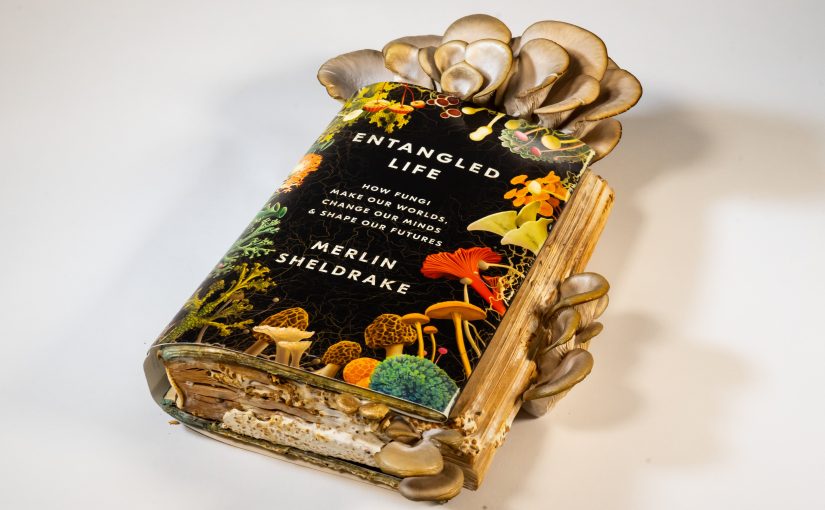
And I do want to pose a question to Tony here, specifically on next steps in our communities that we can take for responsibly using rights of nature in our communities.

Tony Skrelunas

TONY: The question is: How do we go about it? I want to approach it from three angles. In 2009, I sat down with my assistant Deon and our program manager, and we said we have to help tribes develop efforts to protect the environment, to preserve their lands, their sacred areas, and to work with them. But we didn’t want to do it the Western way, by going to the tribal chairman and to the tribal attorneys. We wanted to follow a traditional process, and I think that’s something to really think about here: When you look at the rights of nature, what is the vehicle that you’re going to use?

Grand Canyon

In our thinking, we said we can’t use a Western system of government. The Diné government was formed in 1923 when the federal government really needed somebody to sign off on exploration of oil and coal. Also at that time, the whole United States policy was acculturating the Indian. So that’s when our government was formed, and still to this day, you talk to our tribal government officials and a lot of our bread and butter is still coal mining, power plants, oil and gas. So we have to get out of that framework, and we have to think about something that is a more tribal process.

So what we looked at was, well, how are these natural Indigenous laws made? How were those teachings actually created throughout our society, the thousands and thousands of years that we’ve existed?

We studied a lot of that. You don’t have to depend on government to do this stuff. You have to think back to even a hundred years ago. Our tribal peoples would come together over a problem, observe it and talk it through with some elders and highly responsible people, come up with a solution, then share that solution with the greater population through stories, poetry, songs, dance.

So if we go back to that as tribal people in our discussions about rights of nature, how then do we select the representatives that are going to come together?

And in our effort, we found people that were the master planters, the people that are teaching the kids about traditional dances, the traditional cultivation techniques, the master hunters. Those are the people that we brought together, not government people. And a lot of fantastic work has resulted from that.

There’s a lot of ways we can incorporate the rights of nature into the future of our communities, economy and conservation. We look a lot of time from the Western perspective, but when we look at our tribal perspective, our peoples migrated. In our traditional lens, we didn’t own land. So those are some of the things that I just would like to add to the discussion today.

KANDI: Thank you for that, Tony. I think there’s about 568 federally recognized tribes in the U.S., and many more that aren’t federally recognized. So we’re all different.

Now I want to go to Leila. Could you talk to us about all the amazing work that you’ve been doing, and share with us the experiences that you’ve had in implementing the rights of nature?

Leila Salazar-Lopez

LEILA: Thank you. So much has already been said but I really want to share what is happening with the rights of nature in Ecuador. I come here in a humble way to share the work that we’re doing at Amazon Watch, which is to protect and stop the destruction of the Amazon, and we can’t do any of that without Indigenous People.

The only way to really save the Amazon is to stand with Indigenous People. They have been defending the Amazon for thousands of years, and that’s the way it will be protected.

And for those of you who don’t know, the rights of nature is actually in the constitution of Ecuador. If any of you have ever seen what’s written in the constitution of 2008 in Ecuador, it’s pretty amazing and inspiring, and forward-thinking. I just want to read a couple of the articles in the constitution, and share with you a little bit about some victories, but also some threats, and the long way that we have to go so that this can actually be implemented.

The Rights of Nature in Article 71 says nature or Pachamama, “Mother Earth, where life is reproduced and exists, has a right to exist, persist, maintain and regenerate its vital cycles, structure, functions, and processes in evolution.” Article 72 says nature has a right to restoration. I think this is really important because a lot of times we hear corporations say that land is degraded, so let’s plant palm oil plantations. That land is degraded, so let’s build homes over there. That land is burnt. I’m thinking about our fires right now, like what are you going to build there next? Let’s think about that.

Not just in Ecuador but around the world, many laws sound beautiful, like the UN Declaration on the Rights of Indigenous Peoples. That’s a beautiful document, which took 30 years of struggle from initial little meetings and working groups. I’m sure some of our elders here were a part of those meetings, and worked very hard to get almost 200 countries to sign onto this. There was a lot of resistance, a lot of struggle to get this in place.

But is it being implemented? Not really. That’s the same thing with the Rights of Nature in the Constitution of Ecuador.

There are auctions for the last remaining resources in Ecuador. I’m talking about major giveaways to the oil and mining industries. There was an oil auction a couple of years ago, where literally 21 oil blocks overlapped with protected areas and Indigenous People’s territories, without the prior informed consent of the people.

And because they have been resisting these threats for over 525 years, the Indigenous People in the Amazon basically said no. We will not allow the oil companies and the government to come onto our land and take the oil.

The Ecuadorian government says that might be your territory, but the sub-surface mineral rights are ours. And they have signed the UN Declaration, but they were still violating the rights of Indigenous Peoples, the rights of communities, the rights of nature.

Luckily, people resist. There was a lot of on-the-ground resistance. There were international campaigns to stop the eleventh round. And I’m happy to say that because of this unified effort from the international community, everywhere the Ecuadorian government went to auction to basically sell off their remaining resources — from Quito to Texas to Canada — we were there.

And I’m not just saying Amazon Watch. I’m saying the Indigenous People of the Amazon were there. We were there supporting and accompanying them to make sure that their voices were heard, so they could speak for themselves. And I’m happy to say that that eleventh round oil auction was a flop.

So we’re constantly reminded that we are the best protectors of Mother Earth, best defenders of Mother Earth, and we have to listen. We can protect natural sacred areas, and win.

James Nestor: How Breathing Exercises Can Change Your Life

Breathing is an essential function for our health and wellbeing, an exercise so basic to sustaining life that we do it without even thinking. But it’s also a lost art. Humans have forgotten how to breathe correctly, so the journalist James Nestor traveled the world to find out where we went wrong.

In his new book, Breath: The New Science of a Lost Art, Nestor tells the tale of exploring ancient burial sites, secret Soviet facilities, the smoggy streets of São Paulo and beyond — all to learn the hidden science behind ancient breathing exercises. Nestor expounds on conventional wisdom and years of research to draw new, revolutionary conclusions about the healing power of breath.

Following is an excerpt from Breath, reposted with permission.


I’d like you do something. Please take a breath. As you breathe in, I’d like you to consider that the air now passing down your throat into your lungs and bloodstream contains more molecules of air than all the grains of sand on all the world’s beaches. We each inhale and exhale some thirty pounds of these molecules every day—far more than we eat or drink. And the ways in which we take in that air and exhale it is as important as what we eat, how much we exercise, or whatever genes we’ve inherited.

James Nestor

This sounds nuts, I realize. But this is exactly what neurologists, rhinologists, and pulmonologists working at some of the most prestigious research institutions are now showing there. Honing this air, these zillions of molecules we take in and push out can help us live longer and healthier lives.

The ancients have been onto this for thousands of years. From the Greeks to the Buddhists, Hindus to Native Americans—they all considered proper breathing as essential to health. As far back as 400 BC, Chinese scholars wrote several books on breath, believing it was both a medicine, or poison, depending on how we used it. They named their restorative breathing practice qigong: qi, meaning “breath,” and gong, meaning “work.” Put together, breathwork. “Therefore, the scholar who nourishes his life refines the form and nourishes his breath,” says a Tao text. “Isn’t this evident?”

This message hasn’t seemed to have made it to the modern world. Up to 80 percent of us today are breathing inadequately. Twenty-five percent of us suffer from serious overbreathing. Fifty percent snore on occasion and about a quarter suffer from the chronic nighttime asphyxia known as sleep apnea. Up to a half of us habitually take in breath from our mouths. The consequences of this poor breathing are wreaking havoc on our health. Hypertension to neurological disorders, asthma to metabolic diseases can all be either exacerbated or sometimes even caused by poor breathing habits.

But improving breathing habits can have a significant impact on our well-being. In some cases, simply changing the way we breathe can blunt the symptoms of so many modern chronic diseases. New York psychiatrists and authors, Dr. Richard Brown and Patrician Gerbarg, found patients who practiced these slow-and-low breaths could blunt the symptoms of anxiety and depression. It even helped 9-11 survivors restore lung damage caused by debris, a horrendous condition called ground-glass lungs. Where all other therapies failed, breath offered significant improvement.

If we keep building healthy breathing habits we can help reverse that list of modern day maladies that now affects the majority of the population: all that asthma, those allergies, and even autoimmune diseases like type 1 diabetes and psoriasis.

Take, for instance, Carl Stough, a New Jersey choral conductor who in the 1950s and 60s developed a deep, diaphragmatic breathing method to help singers improve the resonance of their voices. Using the same practice, Stough treated emphysemics at the largest VA hospitals on the east coast. Several of these patients had been bedridden for years, giving a steady diet of antibiotics and oxygen, but to no avail. Many were close to death. Stough rehabilitated the patients by teaching them how to breathe properly. He showed them how to develop their shirking lungs and atrophied diaphragms, which at the time, was supposed to have been medically impossible. X-rays proved it, and patients who had been left for dead walked out of the hospital.

Anyone could benefit from improving breathing, to extending those inhales and exhales a little longer and to take in less air more slowly. Stough proved it when he went to train the U.S. men’s track and field team in preparation for the Mexico City Olympics in 1968. Within a few sessions, the runners were breaking records. Under this tutelage the team went on to win a total of 12 medals, most gold, and set five world records in the greatest track performance of an Olympics. The Americans were the only runners to not use oxygen before or after a race, which was unheard of at the time. They didn’t need to. Stough had taught them the art of breathing.

Then there was Katherina Schroth, a teenager living in Dresden, Germany, in the early 1900s who’d been diagnosed with scoliosis and left to live the rest of her life in bed or rolling around in a wheelchair. Over five years Schroth developed and used a technique called “orthopedic breathing.” She too did the “impossible”; she stretched and breathed her spine straight, then went on to teach hundreds of others to do the same. After decades of derision by the German medical establishment, Schroth was awarded a medal for her contributions to medicine. This teenager left to live a short life bound to a wheelchair died just three days shy of her 91st birthday.

There were dozens of others: a French hairdresser who recovered from lung disease and went on to run 150 miles in the Sahara Desert at the age of 68; an anarchist opera singer who (according to her notes) hiked alone through the Himalayas for 19 hours at a time without food or water, using only her breath to keep her warm and nourished; a Ukrainian cardiologist who found a way to inhale and exhale in ways to reduce or effectively “cure” patients of chronic asthma. Their discoveries were equaling amazing, and there were piles of research—videos, X-rays, data sheets—proving their claims.

So, why haven’t we heard of these people and why aren’t we all using their practices? For some reason, in some way, Stough, Schroth, and almost every other breathing researcher I’d come across was largely ignored during their lives. Several were censured. When these people died, whatever ancient secrets they’d unearthed were scattered and forgotten. This went on for decades.

The researchers I worked with over years who studied breathing have come to believe that at least some of the resistance had to do with the medicine itself: air. Many scientists of the past have pooh-poohed the idea that we might affect the structure of our bodies, bones, and tissues right down to the cellular level by just changing how we inhale and exhale. Even today, even with reams of literature now proving its efficacy, healthy breathing isn’t taught in medical school. Few doctors have even heard of it, and the dozens I talked to over so many years were increasingly bitter about it. They wanted to help their patients. Recently, many have begun to come back to breathing.

If there’s anything good to have come out of his foul Covid pandemic, it’s that it’s made us more acutely aware of our breathing. Hospitals are now using breathing techniques to help patients better overcome the symptoms of viral pneumonia. Even more recently, hospital staff have stopped laying patients on their backs—which makes it more difficult to breathe—and started laying patients on their sides or stomachs.

These practices, like all the other breath practices used by Stough, Schroth, and all the other respiratory researchers over the 20th century, are nothing new. They’ve been with us for hundreds, even thousands of years. They’ve been inscribed within the statues of the Indus Valley since at least 2000 BC. They’ve been refined by Chinese doctors centuries later. They’ve been codified and organized in the Yoga Sutras of Patanjali after that and practiced by tens of millions of Buddhists, yogis, and monks for the past two millennia.

It’s a technology that modern scientists at Harvard, Stanford, and other esteemed institutions are just now rediscovering and proving to be profoundly beneficial to our health, happiness, and longevity. And to think, it’s all been just under our noses the whole time.


More from James Nestor on Bioneers.org:


More on breathing from James Nestor:

https://www.instagram.com/p/B-S3Zm7A2b9/
Breathing scoliotic spines straight
https://www.instagram.com/p/B-fef13gnyR/
Why we have crooked teeth and how that affects our breathing
https://www.instagram.com/p/B_xiHEJgOCx/
French hairdresser heals himself then heats himself with breath

Entangled Life: Fungi, the Great Biosphere Builders

Merlin Sheldrake

Merlin Sheldrake is a young biologist and author of the new book, Entangled Life: How Fungi Make Our Worlds, Change Our Minds, and Shape Our Futures. In Entangled Life, Sheldrake shares the wisdom he’s learned from studying fungi — a diverse kingdom of organisms essential to how our world and minds work. Fungi plays many crucial roles in our ecosystems, as food and medicine and decomposers and recyclers. Sheldrake takes us on a worldwide exploration of these applications, challenging our very notions of interconnectedness and the intelligence of nature.

Visit the Bioneers Intelligence in Nature Media Collection to see an interview with Sheldrake by Bioneers Senior Producer J.P. Harpignies, or read a transcript of the interview.

The following is an excerpt from Engangled Life, reposted with permission.


Many of the most dramatic events on Earth have been—and continue to be—a result of fungal activity. Plants only made it out of the water around five hundred million years ago because of their collaboration with fungi, which served as their root systems for tens of million years until plants could evolve their own. Today, more than ninety percent of plants depend on mycorrhizal fungi—from the Greek words for fungus (mykes) and root (rhiza)—which can link trees in shared networks sometimes referred to as the “wood wide web.” This ancient association gave rise to all recognizable life on land, the future of which depends on the continued ability of plants and fungi to form healthy relationships.

To this day, new ecosystems on land are founded by fungi. When volcanic islands are made or glaciers retreat to reveal bare rock, lichens (pronounced LY ken)—a union of fungi and algae or bacteria–are the first organisms to establish themselves and to make the soil in which plants subsequently take root. In well-developed ecosystems soil would be rapidly sluiced off by rain were it not for the dense mesh of fungal tissue that holds it together. There are few pockets of the globe where fungi can’t be found; from deep sediments on the seafloor, to the surface of deserts, to frozen valleys in Antarctica, to our guts and orifices. Tens to hundreds of species can exist in the leaves and stems of a single plant. These fungi weave themselves through the gaps between plant cells in an intimate brocade and help to defend plants against disease. No plant grown under natural conditions has been found without these fungi; they are as much a part of planthood as leaves or roots.

The ability of fungi to prosper in such a variety of habitats depends on their diverse metabolic abilities. Metabolism is the art of chemical transformation. Fungi are metabolic wizards and can explore, scavenge, and salvage ingeniously, their abilities rivaled only by bacteria. Using cocktails of potent enzymes and acids, fungi can break down some of the most stubborn substances on the planet, from lignin, wood’s toughest component, to rock; crude oil; polyurethane plastics; and the explosive TNT. Few environments are too extreme. A species isolated from mining waste is one of the most radiation-resistant organisms ever discovered and may help to clean up nuclear waste sites. The blasted nuclear reactor at Chernobyl is home to a large population of such fungi. A number of these radiotolerant species even grow toward radioactive “hot” particles, and appear to be able to harness radiation as a source of energy, as plants use the energy in sunlight.

We all live and breathe fungi, thanks to the prolific abilities of fungal fruiting bodies to disperse spores. Some species discharge spores explosively, which accelerate ten thousand times faster than a space shuttle directly after launch, reaching speeds of up to a hundred kilometers per hour—some of the quickest movements achieved by any living organism. Other species of fungi create their own microclimates: Spores are carried upward by a current of wind generated by mushrooms as water evaporates from their gills. Fungi produce around fifty megatons of spores each year—equivalent to the weight of five hundred thousand blue whales—making them the largest source of living particles in the air. Spores are found in clouds and influence the weather by triggering the formation of the water droplets that form rain and the ice crystals that form snow, sleet, and hail.

Some fungi, like the yeasts that ferment sugar into alcohol and cause bread to rise, consist of single cells that multiply by budding into two. However, most fungi form networks of many cells known as hyphae: fine tubular structures that branch, fuse, and tangle into the anarchic filigree of mycelium. Mycelium describes the most common of fungal habits, better thought of not as a thing but as a process: an exploratory, irregular tendency. Water and nutrients flow through ecosystems within mycelial networks. The mycelium of some fungal species is electrically excitable and conducts waves of electrical activity along hyphae, analogous to the electrical impulses in animal nerve cells.

Hyphae make mycelium, but they also make more specialized structures. Fruiting bodies, such as mushrooms, arise from the felting together of hyphal strands. These organs can perform many feats besides expelling spores. Some, like truffles, produce aromas that have made them among the most expensive foods in the world. Others, like shaggy ink cap mushrooms (Coprinus comatus), can push their way through asphalt and lift heavy paving stones, although they are not themselves a tough material. Pick an ink cap and you can fry it up and eat it. Leave it in a jar, and its bright white flesh will deliquesce into a pitch-black ink over the course of a few days (the illustrations in this book were drawn with Coprinus ink).

Radical fungal technologies can help us respond to some of the many problems that arise from ongoing environmental devastation. Antiviral compounds produced by fungal mycelium reduce colony collapse disorder in honeybees. Voracious fungal appetites can be deployed to break down pollutants, such as crude oil from oil spills, in a process known as mycoremediation. In mycofiltration, contaminated water is passed through mats of mycelium, which filter out heavy metals and break down toxins. In mycofabrication, building materials and textiles are grown out of mycelium and replace plastics and leather in many applications. Fungal melanins, the pigments produced by radio-tolerant fungi, are a promising new source of radiation-resistant biomaterials.

Human societies have always pivoted around prodigious fungal metabolisms. A full litany of the chemical accomplishments of fungi would take months to recite. Yet despite their promise, and central role in many ancient human fascinations, fungi have received a tiny fraction of the attention given to animals and plants. The best estimate suggests that there are between 2.2 and 3.8 million species of fungi in the world—six to ten times the estimated number of plant species—meaning that a mere six percent of all fungal species have been described. We are only just beginning to understand the intricacies and sophistications of fungal lives.


Copyright © 2020 by Merlin Sheldrake. This excerpt originally appeared in Entangled Life: How Fungi Make Our Worlds, Change Our Minds, and Shape Our Futures, published by Penguin Random House and reprinted here with permission.

Merlin Sheldrake, Author of Entangled Life speaks with J.P. Harpignies

Merlin Sheldrake is a biologist and a writer with a background in plant sciences, microbiology, ecology, and the history and philosophy of science.

He received a Ph.D. in tropical ecology from Cambridge University for his work on underground fungal networks in tropical forests in Panama, where he was a pre-doctoral research fellow of the Smithsonian Tropical Research Institute. Merlin’s research ranges from fungal biology, to the history of Amazonian ethnobotany, to the relationship between sound and form in resonant systems. A keen brewer and fermenter, he is fascinated by the relationships that arise between humans and more-than-human organisms. He is also a musician who performs on the piano and accordion.

On July 7th 2020, Bioneers Senior Producer, J.P. Harpignies, interviewed Merlin about his new, highly acclaimed first book, Entangled Life. Read an excerpt from the book here.

Visit the Bioneers Intelligence in Nature Media Collection to see an edited transcript of this interview, as well as an excerpt of Entangled Life.