Initiation by Fire: Life During and After a Major California Wildfire

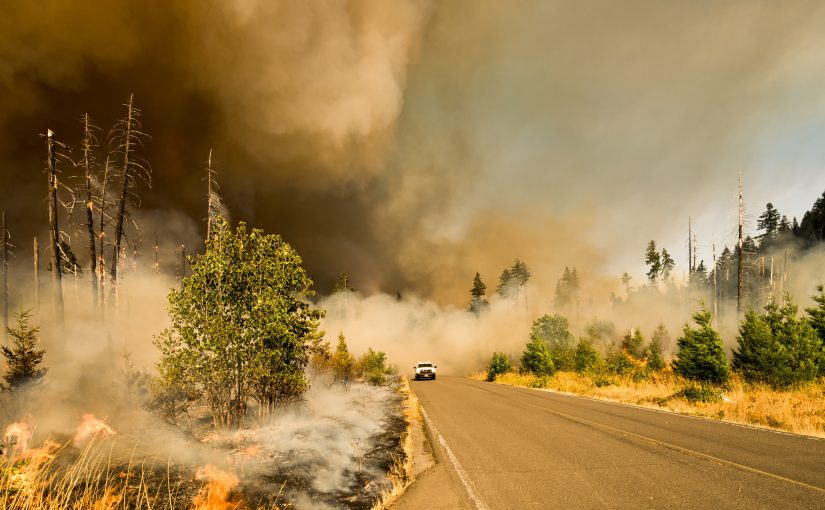
The Ojai Foundation in Ojai, California, is a 42-year-old retreat center whose mission is to “foster practices that awaken connection with self, others, and the natural world.” The new co-directors, Sharon Shay Sloan and her husband Brendan Clarke, were invited to lead a transformation of the Foundation. But disaster hit just weeks after they arrived. The Thomas Fire — one of the worst in California’s history — blazed through the education center’s 37 acres and destroyed 80% of its buildings.

Arty Mangan, Director of the Bioneers Restorative Food Systems program, interviewed Sharon about the aftermath of the fire and how she’s leading the effort to rebuild Ojai from the ashes. This story holds deep lessons on being resilient in times of disaster. Shay will be facilitating Prayer and Action Talking Circles at the upcoming Bioneers Conference.


ARTY MANGAN:  Shortly after you left Sonoma County in 2017 – right after the Tubbs Fire had devastated Santa Rosa – and moved to Ojai to co-direct The Ojai Foundation, you experienced one of the largest wildfires in California history. How did you get through that?

Sharon Shay Sloan

SHAY SLOAN: We got a call within the first hour or two of the fire starting. At that point, it was a small neighborhood fire. It didn’t have a name yet. A dear friend and colleague got word from a neighbor, and he let us know. We went up to a ridge and as far in the distance as we could see, there was the fire. It was a freezing cold night with 80 mile-an-hour wind gusts. So, it was already very extreme. Even though the fire was very far away, we immediately felt a sense of the power of the moment.

It’s an east-west valley.  On the southern half of the horizon, a red puff of smoke completely covered the hills and the sky, and the northern half of the valley was a crystal clear, star-filled, full-moon, bright night. It was gorgeous, the world as it was made. And on the southern side, the world that the humans made and how that interacts with natural forces. There was this visual visceral imprint that came through watching the fire move through the landscape.

I take that much time to describe the moment because in large part that was what sustained us. We had literally seen the coming of something, the arrival of something, the energy and the strength, the potential, and amidst that, the backdrop of what was happening on the CB radio and the news.

There was little coherence in the wider social fabric, immediate overwhelm, and a sense of near-panic already in the air that was apparent from the first moment of the fire.

Sharon Shay Sloan inspects The Ojai Foundation land after the fire | Photo from The Ojai Foundation Archives

So many people have pointed toward this time, toward the coming changes whether it’s climate change or social uprisings, whether it’s through prophecy or science. I would say that I have been preparing for these times and have been privileged to hear the stories and learn from many people who motivated me to prepare, to the best of my ability, both in relationships and in practices.

There was the seeing and perception through direct experience, and then there was the being held by relationships by people who were not in the same immediate crisis, but who were aware of and caring about our experience, on a personal level and for The Ojai Foundation itself, as well as the wider community.

Then there are the practices. What do you do day-to-day when there’s so much stress running through your body?  The people around you are moving in and out of panic. The emergency services, the county, the state, were completely in over their heads. So, we rely on the inner, the relational, and the spiritual.

ARTY: That was really beautiful and powerful and devastating to hear. Once the fire had gone through and done damage and changed lives, did you experience post-traumatic stress syndrome?

SHAY: Honestly, I felt, for the most part, that we were able to keep pace with the changes in a way that we weren’t accumulating trauma. We were watching and studying all the maps. We had to get around the police barricade. We lived through the intensity of the experience. We were the first ones on-site to walk the full land and take in what had been burned and what hadn’t burned. We were still putting out fires while we were there. We were very much on the frontline of that experience.

The Ojai Foundation’s Sage House before the fire | Photo from The Ojai Foundation Archives

We did accumulate stress from the administrative challenges of life. When you lose almost everything that you have, there’s so much to deal with. We suffered that loss on a personal level. And The Ojai Foundation lost 80 percent of all structures; all of the residents and all of the staff lost homes. We couldn’t operate the business. We lost all of our tools. It was a complete devastation, and yet there was something about the resting into what I named previously that I feel really gave us a minimal accumulation of traumatic residue.

Sage House after the fire | Photo from The Ojai Foundation Archives

 But the way that I am able to recognize that we did have some trauma is that even to this day, we will barely buy anything. There’s a feeling that it could all go. Knowing impermanence is part of it, and not wanting to hold onto anything because it could be lost again. But there’s another part, which is we also felt what it was like to not have stuff. I left with a suitcase and a duffel bag. There was a lightness to being that was very freeing. There wasn’t only loss, there were gifts. I think so much of the story that gets told is about the devastation, the trauma, loss, and the horror, and all of that is true. I can say yes, I lived all of those things, and I don’t carry around so many things with me anymore. Many of them, I didn’t actually need.

So, there’s a lot of mixed experience. And I feel we’ve been able to have both the gift and the losses of that time.

ARTY: How did that experience change the way you understand or embody emotional and spiritual resilience?

SHAY: Resilience is often talked about on an individual level. Do we have the capacity to regenerate and continue to harness our energy and bring our gifts to the world through challenging times? I rest my weight in that, but I also rest weight much more deeply in community resilience, not just local community but also interwoven communities. The experience that we had of people from literally all over the world writing, sending letters, sending funds to The Ojai Foundation, sending gifts of clothes to me and Brendan. There was so much outpouring of support that made our resilience possible.

We extend our wellness and resilience to each other in times of need, and that allows for the buoyancy, for the uplifting of one another through a time when otherwise we could buckle under the pressures of our own circumstance.

The need of relationship, not only for networking on a superficial level, but developing networks of committed relationships, is what gave rise to the Fire Fellowship. This is one of the programs that we have launched at The Ojai Foundation since the Thomas Fire, and so far have been able to continue it through the time of the pandemic. Part of our intention is to support the Fellows to develop a network of resilience and support, as well as to gift the practices that helped us to go through that process, combined with other practices that the fellows themselves are carrying.

Ruins of the kitchen | Photo from The Ojai Foundation Archives

ARTY: In our previous conversation, you said: “What do I need and what can I offer? How did that guide you and how did it express itself?

SHAY: There’s a saying from Christina Baldwin: “Ask for what you need, offer what you can.” That has definitely been helpful guidance, both since the fire, as well as in life in general. I find this is increasingly important the stronger our need becomes, whether it’s a need for love, or need for shelter, or need for money, or friendship. Needs come on so many different levels. The more that we focus solely on the need, the more we create the conditions where that need cannot be fulfilled. If someone is feeling a poverty of the spirit, if they focus on what they have to offer, what are their gifts – no matter if it’s a penny, an hour of time, an ability to grow food or whatever the gifts are – there’s a way where we restart the cycle of reciprocity in our own hearts and minds again. Through that reciprocity, I find both resilience as well as strength and stronger relationships.

It’s never just I need something from you, but I have a need and here’s what I have to offer. It’s become a bit of a mantra for my life. It saved my butt time and again in my marriage. If I get really into that indignant position of: I need this thing; I need it. That other person can become so resistant to that kind of demand, but if I can center on what do I have to give, what do I have to offer, and I have a need you can help with, it’s received so much better.

ARTY: That’s really impressive and uplifting. But I also want to ask you: In your darkest moments, what do you fear?

SHAY: Years ago, when I was contemplating if I wanted to be a mother? Is that part of my path? I found myself in a very, very deep conundrum, and I wasn’t able to put words to what I was feeling. At a certain point, I found some of the feelings that were underneath, and I cried and I cried and I cried. What I realized was that I will not be able to protect a child. There’s only so much I can do to protect them from the conditions, from the society, from the violence, from the fires, from all of those kinds of things. I am coping with the limit of my ability to protect that which I love –  my child, a wilderness area that shaped me, peoples who live on the front lines. There are so many aspects of my life where I have come to understand the helplessness that I feel when faced with the scale of what we can actually protect. So, the deeper fear underneath is no, we can’t.

We’ve seen that time and time again. We couldn’t stop the fire from taking our home or The Ojai Foundation. There are many things that have been lost and destroyed from species to people who we love who have been lost to disease or suicide. It’s the reckoning with that. It’s not so much a fear, but a reckoning with reality or potential reality.

ARTY: What do you want to instill in your 18-month-old son about how to face a future that in all likelihood will be more unstable and dangerous than even the world we live in today?

SHAY: I take refuge in believing that he’s made for these times. The young people today are coming into a time of such deep initiation through transformation of the culture and transformation of the environment that for him and other people it is the fabric that they’re growing up in. It’s not like life was something and then it becomes something else. This is his life from day one.

Burnt out landscape at The Ojai Foundation | Photo from The Ojai Foundation Archives

The more that I can lean into seeing the world through his eyes and understand the innate capacities that he and other young people are coming in with, the more I can and learn from them and nurture those strengths.

I can show him how to lean into networks of support, resources and practices. My husband is mixed race, and so my son is mixed race. I feel we have a very deep responsibility for his education on anti-racism. They say that by age 2 or 3, babies start to internalize racist ideas and beliefs and start to sort the world through what they’re seeing and experiencing in the culture, in the books, in the media, etc. So how do we maintain and create an anti-racist education for him from day one so that by the time he is 2 or 3, which is coming for him in the next 6 months to a year and a half, he is already internalizing an anti-racist view and way of life.

It’s a job I take very seriously. I’m very grateful for the people and practices, and all of the work that has been done already in these ways. For young people who are awakened and good people who are here to support the youth in building those intergenerational relationships, I take refuge in all of those things, certainly on a more personal level and in a different way than I did before I was a mother.

ARTY: After the rebuilding from the fire, what are some of the aspirations and challenges for The Ojai Foundation?

SHAY: It’s been a long road. We did an extended period we called the Recover and Reimagine phase. Many people asked, “When are you going to rebuild and put it back the way it was?” But it was very clear to us that there was no going back, that things had changed at a scale and in such a way that we could only go forward. So, we put our daily attention toward recovering basic infrastructure and basic safety on the land. Whether it was from tree work or repairing electrical or water damage, or damage to buildings or simply moving debris. We also turned our attention toward reimagining how to be with the landscape, how to be with the organization, and with the community and the work.

In going through that process, a wonderful man, Andy Lipkis, founder of Tree People, who’s a long-time friend and colleague, came and walked the land, and he said, “Everything must teach. Everything you do through this recover process has to teach what’s possible.” That really resonated for us, and it’s part of why we knew there was no going back. We weren’t going to put buildings back on the periphery of the ridge in a place where we knew fire would come and ravage them again in a similar way. We had lived through climate disaster and we learned the lessons of what that means in that landscape.

There was a very strong lesson around the relationship of earth and fire. So, we have only rebuilt two things, a round, earthen meeting building that’s 80 percent done and an earthen tool wall to store all of our garden tools. Other than that, we’ve just restored the land and the infrastructure.

Our approach to the land itself is to model climate resilient design and stewardship of the land. That will be a slow process of continuing along the lines that I’ve named and moving at a pace good for the land. The land is still in deep recovery. If you dig down anywhere on the land, you still find ash. That ash is like medicine containing minerals and other gifts to regenerate the soil. So, it’s a slow build. And we’ve prepared the land for camping and day use, but we will not be building back the larger structures quickly.

Post fire view from The Ojai Foundation | Photo from The Ojai Foundation Archives

On the level of reimagining programs and the organization, The Ojai Foundation is 45 years old, and there are so many teachers and people who have come through. The practices and ways of being and doing have gifted thousands and thousands of people. I don’t really know the numbers, but I would guess over a hundred thousand people have had direct and transformational experience on that land or with our practices. We’re now in 2020, so if we were going to start with something new, would we start with what was happening in the 1970s or anything in the past? No. Because we’re in different times. This time has given us very, very deep pause to ask how do we go forward? What does the leadership look like? Do we carry on the same practices? How do we continue to evolve?

First Spring after the fire | Photo from The Ojai Foundation Archives

We are pausing many of the programs and asking for an evolution. We were planning to reopen in March, and literally the week before that reopening, the global Coronavirus pandemic erupted. So, our closure has been extended because of the pandemic.

We find ourselves again in a perpetual closure of the land base, certainly through 2020. We don’t know what will happen going forward. The combination of these things got us into a very deep contemplation of potentially closing the land base, potentially closing the organization, looking at how to go forward and asking if it might it be time for a complete change of form.

Sharon Shay Sloan and her son Kian after the fire | Photo from The Ojai Foundation Archives

After a three-month listening period in which we considered whether it’s time for a complete change of form or not, the comments from the board will be sent out to 270 of The Ojai Foundation’s closest allies. It basically says that while we thought we were turning toward a rapid change of form and potentially leaving the land base, what we have learned from this time of deep listening and meeting with the community and stakeholders is that there is still important work to do in the name of The Ojai Foundation and in the land sanctuary that we steward. That work has to do with increasing multi-cultural leadership in the organization and a much further evolution of the practices. It has to do with looking squarely at issues of power, equity and access, both within The Foundation and in the broader community connected to it. Now is a time to ask what gifts have been received and given through the work of The Ojai Foundation? From where have they been received, and to whom have they been given? What harm has been caused alongside the gifts? Who has been missing or excluded from the conversations, practices, and leadership? As we honor what has been, we also recognize that for our organization to remain visionary, we must continue to evolve our forms, our practices, our conversations and our relationships.

That’s what is immediately ahead for us, and we’ll see how it continues to unfold. It’s been a big three months; to be honest, I think in some ways it’s been harder than the fire because for this process we have to choose everything.  With the fire, we were responding to what happened, but this requires another kind of decision, one that means walking consciously toward transformation. That is a whole other human capacity, and one that we all carry. If every organization, nation, business, marriage, and individual contemplated completely changing the form and deeply engaged that potential, I am curious what new possibilities would arise in the wake of the old. What world would start to become possible?
Wilder Than Wild: Fire, Forests and the Future -Panel Discussion

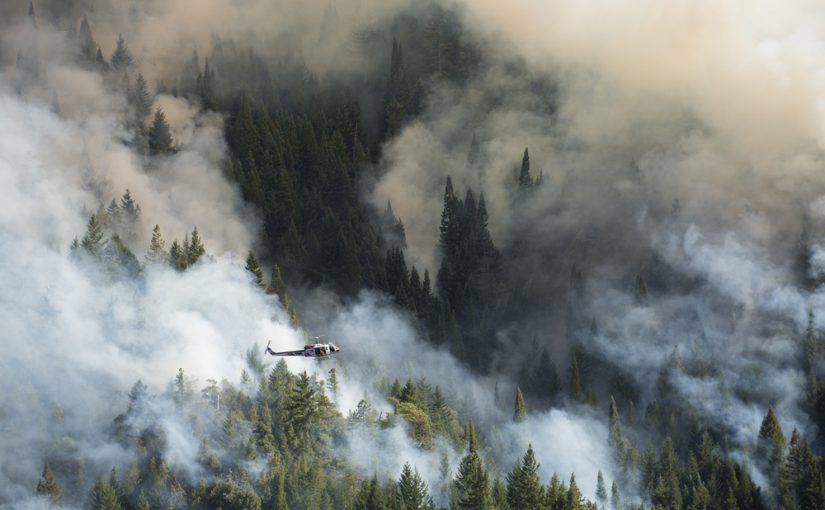
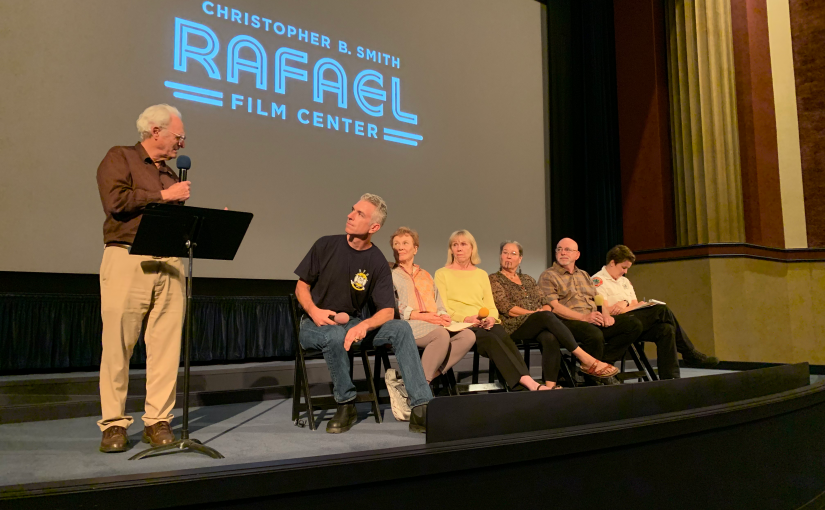
Bioneers hosted a screening of Wilder than Wild: Fire, Forests, and the Future in September 2019 at the Smith Rafael Center in San Rafael, CA. This compelling one-hour documentary reveals how fire suppression and climate change have exposed our forests and wildland-urban landscapes to large, high intensity wildfires – and explores strategies to mitigate the impact of these fires. In 2020, as multiple wildfires torch large areas of California, once again forcing tens of thousands to evacuate their homes and millions to breathe air thick with smoke, Wilder than Wild offers an invaluable overview. In addition to being broadcast on PBS stations across the country, the film can be purchased for educational and community screenings and will soon be online for video on demand. See the film’s website for details.

The screening was followed by a panel with the following guests: 

Elizabeth Azzuz is a member of the Yurok Tribe, the largest in California. She gathers traditional foods, medicines, and basketry materials. Elizabeth is on the Yurok Cultural Fire Management Council, and she is a communications and logistics trainer during prescribed fire training exchanges when Klamath River tribes and non-Indian communities work with the Nature Conservancy’s fire learning network. 

Quinn Gardner is the Emergency Manager for the City of San Rafael. He is in charge of the city’s emergency preparedness and disaster response

Tamra Peters is Executive Director of Resilient Neighborhoods. She has worked with the Nature Conservancy, the Natural Resources Defense Council, and other conservation organizations. A board member of Sustainable Marin for seven years, Tamara has worked with hundreds of Marin families who are reducing their carbon footprints and building more sustainable communities.

Mike Shuken, firefighter and paramedic for the City of Berkeley Fire Department, was a first responder to the Tubbs fire in Santa Rosa in 2017. In the film we witness his experience of the wine country wildfires via footage he shot through the windows of his fire engine.

Kay White is the originator and coordinator of Pacheco Valle FireWise community in Novato. She and her neighbors work together on community improvements as well as on fire prevention. Their work provides a model for similar initiatives elsewhere in Marin County.

The film’s director Kevin White also attended, along with writer/producer Stephen Most, who moderated the panel. 


KEVIN WHITE: When Stephen and I started this film, we had no idea that we would be sitting here in the middle of 2019 with this legacy of catastrophic fire behind us, and probably arguably in front of us. One of the things that really struck me as we made this film was that the fires and the wildland urban interfaces (WUI) were getting bigger. In fact we had a rough cut on October 8th, and then on October 9th we woke up and smelled smoke. We rushed up to the wine country to film. Fortunately, we connected with Mike Shuken and were able to get some of the footage that he amazingly captured while he was fighting the fires. It was clear that something fundamental has changed, and we witnessed it in the last five to six years.

Since then we’ve had more than 250 community screenings. We have really seen how wildfire has impacted communities up front and personal. It is really clear that the solution lives in communities working together. 

Kevin White, Director of Wilder Than Wild

The Rim fire devastated communities and really undermined so much of the ecological surrounding areas. We saw an environmentalist and a logger come together to create consensus, which is a great lesson. It’s really inspiring to see the amazing work of the Yurok tribe, Elizabeth and Margo and everyone. It’s clear that community is key.

STEPHEN MOST: Mike Shuken, you say in the film that we learn something from every fire and you talk about how fire departments adapt. You point out that for urban fire departments, it’s not just someone dropping a cigarette in a home or the wiring going bad, but that it’s important to address how fires come from the outside and consume entire neighborhoods. How does that affect an urban fire department like your own?

MIKE SHUKEN: In the early 1990s we had a fire in the Oakland/Berkeley hills, and we lost about 3,000 structures. In that particular fire, a number of fire departments came in to help us fight it. But they couldn’t connect their firehoses to our fire hydrants because all fire departments select their own hoses and have different threads. That presented a big challenge. So in 1994, a law was passed that standardized hose fittings. 

Fast forward to the Tubbs fire in Santa Rosa. With very few exceptions, hundreds of fire agencies from around California and the Western United States had matching hose couplings. In that fire, about 6,000 structures burned down with a loss of 22 lives. This was tragic, but it was a smaller number than we were anticipating. That fire was early in the morning, and there’s a large senior citizen population there. So for us as firefighters, that was pretty remarkable. 

Mike Shuken, firefighter and paramedic for the City of Berkeley Fire Department

Early on in that fire, the decision was made by the fire department to try to not defend any of the structures that were burning, but to focus purely on evacuating the citizens of the community. They worked in conjunction with the sheriff’s department to do that. 

But when we actually looked at what saved the lives of most people who lived there, it was their neighbors. It was the fact that the people came out of their house, saw their community was burning, and immediately alerted their neighbors’. They helped disabled people, senior citizens, families with children. So we need to recognize that everyone basically becomes a first responder in that kind of situation.

So as an urban fire department, one of the things we focused on is giving the community the tools to be able to respond. 

STEPHEN MOST: That’s a great point, Mike. Often those of us who live in cities might not know our neighbors at all. But when we realize that a fire can sweep in from the hills outside our neighborhoods and affect all of us, all of a sudden people are not strangers. We have a shared fate. Understanding our neighbors’ situations, knowing who is handicapped, who’s a senior, who can’t get out in time becomes a very vital thing for us to do for all of our sakes. 

Elizabeth Azzuz, many people see fire in negative terms. But your colleague, Margo Robbins, says in the film that your community saw fire as the number one important thing to have. What are the benefits of fire for your community, and what is the traditional ecological knowledge of the Klamath River tribes on how to use cultural fire safely and productively?

ELIZABETH AZZUZ: Our community is extremely rural. The sign says there are 250 people, which is incorrect, because it’s said that since I was a child. However, we’re a very culturally oriented people. We spend a lot of time hunting, gathering, fishing, and a lot of time on the land. We gather our foods, our medicines. We spend time in nature. We pay attention to our environment, the times of the day that the wind travels. How our environment interacts with us, we need to interact with it. 

For our community to come together and say that fire was the most important thing, you have to realize our aunties run our communities. When our basketweavers don’t have hazel sticks, the younger generation jumps because they say so. We have been able to go from not having hazel for our weavers – and some of our women are some of the best weavers, I believe, in the world – to now having young women and girls as young as 5 years-old making baby baskets, food baskets and medicinal baskets, and being able to gather in large groups rather than hiding your family’s gathering spot because it’s the only one around. 

It’s very important for us to be able to stand out in the forest and look as far as we can see in either direction. We’ve seen animals come back that people haven’t seen in their lifetime. The hunters are extremely happy. The weavers are extremely happy. And those of us who gather medicinal medicines are very happy also. 

Elizabeth Azzuz, Yurok Tribe Cultural Fire Management Councilmember

It’s really, really important for me to know that communities get together and communicate with one another. Take care of your neighbors. Take care of your environment, because when we’re clearing our land, when we’re burning, it helps the water, our environment, the fish, it helps all of the things that we live with.

I’m speaking to an audience that probably doesn’t even know what most of this means because you see buildings for miles. All I see in my home are trees. I live directly above the confluence of the Klamath and Trinity River, so I’m a little jealous that you have all of these wonderful things at your hands, but on the other hand, I’m really happy to be where I’m at in the woods. 

STEPHEN MOST: Tamra Peters, would you tell us about Resilient Neighborhoods? I understand you’re focused on climate change and improving the carbon footprint of the neighborhoods you work with, but how do you view wildfires in this context of climate change?

TAMRA PETERS: Let me start answering your question with a quote that I really like from President Obama. He said we’re the first generation to feel the effects of climate change, and we’re the last generation that can do something about it. So that’s what led me to create Resilient Neighborhoods nine years ago. I wanted it to be a community-based organization that would help people reduce their family’s carbon footprint, their own carbon footprint, but also do something about the effects that climate change was going to bring our way, the adaptation that we were going to need. I had no idea nine years ago that we would be living it right now, and wildfires is a big part of that.

We have about eight to 10 families who get together to form a climate action team. They calculate their household carbon footprint from the beginning, where they are right now as a baseline, and then we have actions that they can take to reduce that. We also have a section on emergency preparedness and adaptation: what can you do for your family? Do you have a household emergency plan? Do you have supplies? Do you have adequate insurance? Then it goes to what you can do in your neighborhood. Do you know your neighbors? Can you exchange a key and look out for one person on your street and build it that way? Could you create a neighborhood response group, and a fire safe Marin community?

Tamra Peters, Executive Director of Resilient Neighborhoods

So we are building a climate movement in Marin, and a climate movement of safety. What we’re going to need is to connect with our neighbors and start it from there. Also, as we have heard, we need to get back to understanding that we are a part of nature and nature’s systems. I love that about the film. 

We’ve had over 1300 people go through the program and reduce 7.5 million pounds of carbon here in Marin. It’s really exciting to connect with their neighbors, and we’re working with everybody here to build a more resilient future. 

STEPHEN MOST: Kay White, what can individuals do to protect themselves from possible wildfires in the wildland urban interface – the WUI – where we live?

KAY WHITE: How many people here live in Marin? About 80 percent of you or maybe 100 percent of you live in a wildland urban interface. This was not clear to me until 2015, when I saw the community wildfire prevention plan through our Novato Fire District. They showed a wonderful presentation mapping the 16 high-risk WUI neighborhoods in Novato. That’s just one little community up in the north end of the county. What I saw there was my valley, Pacheco Valley, my road and my house and all of the wonderful combinations for a WUI fireplace. I thought, we need to do something about this. I asked the Novato fire chief to come to our neighborhood and show the rest of our neighbors, a little over 1,000 people. We are a development, but we are in an area that’s beautiful. 

When we first moved there, I thought, this is like walking in the valley of Yosemite. I mean, we have lots of oak trees, bay trees, and grassy woodlands, and lots of underbrush, and we’re surrounded by the county open space district. And guess what? There’s a lot of understory fuel load there. 

Our biggest neighbor is the county open space district. We got together with the help of the Novato fire district, and the chief informed what’s called a FireWise community. That’s a pretty easy process, and we work one-on-one, neighbor to neighbor, looking at how our houses are constructed, what’s growing around them, and working on that one on one. It’s very slow, let me tell you. It’s beyond my patience at times. But thanks to a film like this, I think it brings it back again.

Kay White, originator and coordinator of Pacheco Valley FireWise community

I would recommend if you are not yet familiar with FireWise, please look online at FireSafeMarin.org. It’s not a hard process. It’s a long process, and it’s a good process, because it’s building community to reduce the potential of fire in your neighborhood. You have to collaborate with all sorts of people, not just your neighbor, but with the Marin County district, with the cities, with the water district, you name it. You get to know them all. So I would highly recommend it. 

STEPHEN MOST: Quinn Gardner, we’d all like to believe that it won’t happen here, but I don’t think we can afford that illusion anymore. Let’s assume that a catastrophic wildfire strikes the WUI near San Rafael. What transportation and communications infrastructures are in place for such an event? Please advise us on how best to respond, for our own safety, but also how to protect our families and community members.

QUINN GARDNER: Yes, I’ll touch on some other things. Registering for emergency alerts is one way. We know that communication systems might not work, especially if we look at power outages and widespread usage, and that’s why that neighbor-to-neighbor piece like we’ve seen with these other fires is so essential. But getting signed up for emergency alerts through AlertMarin.org, and Nixle, which is as simple as texting your zip code to 888777. 

We have a lot of infrastructure in place and a lot of mutual aid agreements. Just yesterday, we had a fire right in Novato, but because of the systems that are in place, our communication systems, our mutual aid agreements, our relationships amongst our fire departments, we were able to get that under control quickly. 

In terms of transportation, there are cameras that you can access that have 24/7 monitoring, so there’s live monitoring happening of all of our higher risk fire areas all the time. Different communities are using different types of alerting tools. Mill Valley just tested their long-range acoustic device system (LRAD). But fundamentally, Marin is a peninsula, and when you take away our bridges and you take away one highway, we become an island very quickly. 

Quinn Gardner, Emergency Manager for the City of San Rafael

Again, so much of it becomes neighbor helping neighbor, knowing your evacuation routes. One of the things that struck me with the film was when they were doing some of the aerials over the North Bay fires. You could see the parking lots, and within those parking lots, those trees weren’t burned. Those could be safe areas if you can’t get anywhere else. Right? You have places near you, whether it’s large ball fields, places that are void of fuel, where there is a lot of work we need to be doing in terms of fuel management, but there are places that already exist that might be safe, at least in that short term as we move through more of an evacuation process and everything else.

What you can be doing in addition to knowing your neighbors, becoming a FireWise community, reducing your carbon footprint to limit impacts overall? There are really three things I always talk about: the alerting; having your plan and knowing your evacuation routes, knowing where you’re going to meet, knowing who to talk to; and then supplies, having your go backpack ready, having long sleeves, masks, water and food are a big one. I can spend hours talking about this stuff, but the big three – alerts, plans, and have some supplies ready so you can be ready to keep you and your family safe.

KEVIN WHITE: Quinn, what would you like to see in terms of fuel reduction, and what is the plan for that? 

QUINN GARDNER: Just yesterday I attended a seminar called Living with Fire. One of the big things is taking responsibility on your own property, and really that 0 to 5, and then when you get into that 30-foot zone. What you can do there is scientifically what we’re seeing can make the most impact because of the way those embers are flying and landing. The question you need to ask yourself when you look at your own home is that if an ember landed here, at the driest, windiest, worst fire weather day we had, what would happen to that ember? If the answer is: it would catch this bush, which would catch my house, then you probably need to adjust. If the answer is: I’ve done my fuel mitigation and I’ve spread things out, or maybe it’s just your cardboard boxes by your recycling bin. Are they in your bin with the lid closed where an ember could land on the plastic and be fine? Or is your lid open and you’ve got a huge fuel source right there?

In terms of the overall efforts, one of the biggest things we’re seeing with fuel mitigation work – and this is certainly because of the heavy urban area we’re in – we don’t necessarily have the same type of ability to do the burning that can really benefit and work well in other areas. We have to look more toward manual fuel reduction, which has high costs and its own carbon issues. 

One thing the film really covers is the benefit of burning to reduce the understory. We might not have that ability to burn here in Marin and San Rafael, but we do have the ability to clear the understories. A lot of people think vegetation management means removing everything, and it’s not about that. It’s about reducing latter fuels, it’s about reducing density, and in most cases, we want to see our mature trees survive and thrive. We’re not talking about removing those mature trees. It’s really reducing those understories for the same benefits you’re seeing with burning, we just have to do it in a much more intense, manual process. 

TAMRA PETERS: Kay White, what motivated you to volunteer to do this for your neighborhood? And did you do it alone? How did you get other people to start working with you?

KAY WHITE: Really the story presented itself by seeing the wildfire plan for Marin County and for Novato in particular. We have a valley, one way out, and it’s very clear that there’s a lot of fire risk in our neighborhood. It’s self-interest, fright, property interest, and environmental interest. We love where we live. It’s a beautiful neighborhood, so it was a natural confluence of interests among our neighbors. 

The way it worked in Pacheco Valley is I got together people who I knew were in some way leaders of different interests. We had the former mayor living in our area, and she knew a lot of people, which helped. We have six different homeowners associations, so I made sure we got someone from each of those associations, and it just bonded. It’s a collaboration, not just among our residents, it’s with all of the other jurisdictions that influence our environment in Pacheco Valley.

It’s surprising how many people there are, how many different organizations we have to work across, but that’s okay.

QUINN GARDNER: There are areas like that across Marin where it’s one road in, one road out, and there tends to be a mindset that evacuation means get to Highway 101. Evacuation means to get somewhere safe. Those places are probably a lot closer than most people think. And it is scary. It is intense. 

One of the other things to take away from the film and the visuals is you saw all these firefighters very close to extreme flames. I’m not saying I want you to be in that situation, but that is something that is survivable. So the goal when you’re talking about a really mass evacuation like we saw in North Bay is not necessarily to get to Highway 101, to San Francisco or over a bridge, it’s to get to somewhere you can survive that immediate threat.

The other thing to keep in mind is that, generally speaking, once something has burned, the fuel is gone. When we think about evacuation – and again I can’t speak to every situation – don’t go uphill, stay in your vehicle, and stay on pavement as much as absolutely possible. In the campfire in Butte County last year, we saw the visuals of the cars burned out on the side of the road. Nobody died in their car on the pavement. Those cars burnt out after the fact. People did die leaving their car, going into wooded areas and into brush. 

The intensity of wildfire that we’re seeing means citizens need to think like firefighters. It’s not about putting people into the middle of the forest to fight fires, but they have a safety plan. They have somewhere they can evacuate to be safe should that fire come in their direction or escalate. So we’re really trying to figure out how to get that message out where people can feel comfortable taking on that mindset.

KAY WHITE: Another thing I learned is that blackened soil is safer than unburned soil. So go back into the place that’s been burned rather than go forward and try to get out of it, which is counterintuitive. In our neighborhood, some of our neighbors have said, well, I’m just going to get out and hike up the trail, because we’re in the valley and they’re going to get up on the ridge. No, please, don’t do that! The fire moves uphill. There may be a fire truck barreling down the fire road. Stay on the pavement.

Most of all, prevent it. Get those leaves out of there. Get the fire prone vegetation out. You don’t have to wait for your city council to vote for it. You can do it on your own right now. I understand it’s a long, expensive process for most homeowners. It is for me. I’ve been working on things for three years and I’ve got 10 more years to go on my house.

KEVIN WHITE: Ask a really important question, which is: How did it start? And certainly that plays a role. What I always want to ask is: How did it spread? The starting in the Rim Fire, for example, was a hunter who was hunting out of season. We all know these conditions: Barometric pressure, low humidity, high heat, a lot of wind. We all know now up here, certainly in Northern California when we have those conditions. If you don’t know it, you should learn about it, because that’s critical, that’s when you need to be alert. 

One of the challenges is  you can have five homes, four people do a great job of defensible space, one house doesn’t. What do we do?

TAMRA PETERS: I think that question is coming up before some town councils, because people are saying—How can we be safe? We’re all doing this, and yet this person’s inaction could be threatening the whole neighborhood. Is that about personal rights? Where does it negate the responsibility to look out for the rest of the community? That’s an issue that’s being debated in councils in Marin right now.

QUINN GARDNER: Certainly. There are a lot of discussions going on about what codes can be put in place to help with that. But there’s really three ways fires spread: 1) direct flame contact; 2) radiant heat, you’re close enough to something that’s hot long enough, you start to get burned, that eventually will start a fire; 3) and embers. 

When you’re looking at your property, there are things you could be doing to defend against all of those. Certainly in some situations, your properties are so close that if your neighbor’s house catches on fire, even as a structure fire, that radiant heat has the potential to ignite yours. But there are a lot of fire-resistant materials. And, again, things we learn from every fire, all of these structures being rebuilt in Sonoma are being rebuilt to a very different standard than many of them were to begin with to prevent things like that. If you’ve done everything right, and there’s a reasonable amount of space between you and your neighbor, that hopefully is going to be enough. Now, there are conditions that no matter what it’s tough to fight.

Both of those alerting tools that I mentioned – Nixle and Alert Marin – are both opt-in systems, which means you need to register in order to receive those emergency alerts. Alert Marin is a tool that gets used in other jurisdictions, but the software used to run that also has the capability to do some other messaging that generally people equate more with Amber alerts, which is not an opt-in. You get Amber alerts whether you want them or not. The challenge with that is as we move up the pyramid of ability to force people to receive a message, we lose geographic control and it gets shorter. 

One of the things that we are really excited about in the county and in Northern California is a pretty recent headway we’ve made with NOAA, the National Oceanic Atmospheric Administration, basically the weather service. There are what they call “NOAA weather radios”, which have been used in the Midwest, South, and East Coast for decades. Basically they’re on all the time and they’re silent unless there’s an emergency weather alert, like a flash flood, a tornado, or some other severe type of take-action-now. They will also do that with wildfire, which is a great redundancy to have and something we can use, especially for folks that don’t sleep with their phones by their beds; I turn it off at night; it wouldn’t wake me up when I take out my hearing aid, whatever the case may be. 

So we have the ability to message through NOAA weather radios. The problem is people have to get them. You can get them in the $20-40 range online, depending on which version you want, and certainly we’re going to be socializing that concept more, because it adds an additional redundancy to the Alert Marin, and it’s not cell phone tower based, it’s radio waves which helps as well.

But, again, like we’ve seen with so many of these things, it comes down to neighbors. One of the things with FireWise communities and neighborhood response groups and Resilient Neighbors is that knowing your neighbors and the people around you, you can have agreements. It can be as simple as: If you hear me blaring the horn in the middle of the night, I’m not just like having a party. I’m committing that if I get an emergency alert, I’m going to lay on my horn on the way out; or I’m going to walk over and pound on your door until you answer, and then you do the same thing one house down. As you build those relationships, you can have those conversations to help everybody communicate.

The other big piece of this alerting system is staying aware, and self-aware. If you smell smoke and something feels wrong, tuning into whatever makes sense, whether it’s the emergency alerting, whether it’s social media, the news of course, which picks up basically every Tweet that goes out from an official entity as it relates to something like a wildfire. So you can be informed and you can make those decisions. When in doubt, leave early, whether that’s a mobility issue, young kids, older folks, you’ve got a bunch of pets to wrangle. I use this joke all the time, but if the only time you ever put your cat in the carrier is to go to the vet, if there’s a fire or something crazy happening, you’re not going to find your cat. Right? And so find them when you can, put them in the carrier, worst case they’re mad at you at the end of the night because they just spent a couple of hours cooped up, but it’s what we can do to move before to evacuate as soon as we can so if or when we get that warning, that we can be ready.

TAMRA PETERS: Another thing we do in Resilient Neighborhoods is to get our participants to fill out a household emergency plan that asks questions like: What would you do if you have five minutes to leave? What would you take with you? Where’s your gas shut-off valve? It’s the things we don’t know when we’re panicked. They will cost time. We forget them. Put a little sign in your go bag that says don’t forget your pills and glasses. It’s the really practical things that are so important. 

MIKE SHUKEN: How many people remember the drills for the Soviet missiles that were supposed to come in? [LAUGHTER] So we do have a tradition for practicing for disaster in our communities, but we realized that we really hadn’t done any of these things we’re talking about as a drill.

So last month in Berkeley, we actually ran three drills where we did everything from activating the Nixle system to having volunteers take our evacuation paths. The police department has a trailer they tow around with a loud speaker that penetrates through walls and broadcasts evacuation plans. We actually didn’t know if it worked or not. So for three days we did these drills that were announced to the community, and they took place at 10:00 in the morning on Sunday with no wind, with really nice weather.

It’s important to help organize and arrange these sorts of drills in your communities. We certainly found a lot of flaws in ours in Berkeley when we did it that we’re working on. 

QUINN GARDNER: Yes, there are evacuation drills that happen around the county. And do your own drills, right? Set your microwave timer for 10 minutes, and see how much you can get out of your house. If you don’t have a grab-and-go list, start making one. There are drills you can do at home with your family to help create muscle memory and identify challenges.

KAY WHITE: We have wonderful National Weather Service information through the NOAA. Pay attention, especially in September, October, November, for red flag days. Those are the times you can get all your gear together, get your pet together. You may be ready to leave before any kind of evacuation is ordered. 

ELIZABETH AZZUZ: I would say that reaching out to all of the agencies – NOAA, CalFire, Forest Service, any of the fire departments, any local agencies that deal with this are going to have all the information you need to be able to survive anything that’s coming.

Another piece that none of us have talked about is children. We work very closely with our Head Start and our elementary students to teach these things. So they go home and nag their parents and grandparents about why their stuff isn’t ready. Where’s their go bag? How am I going to survive this? So it’s not just the adults. It’s not just the pets. It’s the children, and if you get them involved, they’ll keep you active in everything you need to know to survive.

Reach out to your legislators. We’re very, very rural. There is one way into the reservation where I live and one way out. We had a severe few years of arson. At one point, there were 80 arsons in this corridor. And after doing our prescribed burning and working with all these different agencies, we brought them down to I think one last year. So it’s definitely about communication. We actually created a Facebook page that’s called the Weitchpec/Down River Community. That’s for all of us that live off-grid – because I live totally off-grid. I can get in my window, turn my generator on, and send a message, or they’ll be messages going: Elizabeth, where’s the fire? Who needs to be evacuated? Who needs what? It is communication. Reach out to the people in charge and nag them if you have to. Just don’t let up. Keep working.

For more information and to get involved in making your community safer from fire, visit the California Safe Fire Council and FireWise USA.

Fire and Water: Land and Watershed Management in the Age of Climate Change

California is a biodiversity hotspot, but its complex ecosystems are some of the first to model the consequences of a warming atmosphere. Wildfires are currently raging throughout California, burning through hundreds of thousands of acres and spreading rapidly. Climate change is fueling these wildfires — a problem that will only continue to escalate as the environment becomes drier and hotter.

Fire ecology experts are leading the search for solutions, as they seek to restore the healthy and natural role of fire in ecosystems, while combating the poor land and watershed management practices that have led us to this crisis. In this panel discussion from the 2016 Bioneers Conference, four leading fire ecologists discuss one burning question: How can modern society renew our relationship with the land to stop the wildfire crisis?

Featuring Jason Mark, editor-in-chief of Sierra magazine; Frank Lake, a forest ecologist working with the U.S. Forest Service, who is also a deeply knowledgeable holder of Indigenous traditional ecological knowledge practices; Brock Dolman, co-founder of the Occidental Arts and Ecology Center, a long-time leader in the permaculture community; and Chad Hanson, a leading fire ecologist who works in the San Bernardino National Forest.


Jason Mark

JASON MARK: My name is Jason Mark. I’m the editor-in-chief of Sierra magazine, the national magazine of the Sierra Club, and I do a lot of writing on environmental issues but, these days, a lot about climate adaptation. As we all know, even if we stopped burning all fossil fuels today, we’re locked into serious climate change dislocations in the century to come. Even in the unlikely event countries were to faithfully follow the Paris Accord Agreement signed last year, we’re still going to blow pretty far past 2 degrees centigrade temperature rise, certainly in the lifetime of my 1-year-old daughter. That’s going to have obvious consequences globally — for biodiversity, for ecosystems, for all the natural systems on which human civilization depends.

And it’s obviously going to have big impacts here in California. It’s going to dramatically affect the water and fire cycles and all our natural systems. Those changes might have been easier to manage if we were living more lightly on the land, but with soon to be 40 plus million people here in this construct called California, it’s going to be very tough to adjust. What’s that going to look like? How are we going to do it? Well, that’s what we’re here to discuss with some leading experts on land management issues here in the Golden State.

We’ll start with Brock, and I’ll ask a question that has to be on a lot of people’s minds here: Is California likely to keep getting drier?

Brock Dolman

BROCK DOLMAN: California is likely the most hydrologically deranged place on the planet, and folks have been taking a whack at the integrity of watershed function from ridgeline to river mouth for quite a while now. Mark Twain said “whiskey’s for drinking and water’s for fighting over” when he was commenting on California water politics in the 1870s, so we’ve been at this for a while. 

California contains many climates: if you go from the extremes of the wet Klamath Siskiyou system to the bone dry Mojave, with all kinds of regions somewhere along that scale, the rain totals can go from an inch or two yearly average in the deserts to some places that have nearly 100 inches. And we know there is far greater population density in the south and way more water availability in the north, and lots of big canals and dams disrupting water flows all over the place. The “dam age” has produced a lot of damage in this state. To heal it we will have to figure out how to “think like a watershed,” and how to craft the lifeboats called watersheds in the face of global weirding towards a resilient retrofit. That’s going to require modeling our behavior on the ecologically literate Indigenous knowledge of the first peoples of this region, and I’m really looking forward to Frank’s ideas on that. We will also have to examine how we think about earth, air, fire and water, and how we can learn to respect these fundamental forces so we can create conditions conducive to life for the long haul in this beautiful but dynamically changing state.

JASON: Brock mentioned earth, air, fire and water. Chad, what do we know about the history of fire in the state of California and what do you think we’re going to see regarding fire here as climate change intensifies?

Chad Hanson

CHAD HANSON: There’s actually been a lot of research on how much fire we have now versus how much we had before the era of fire suppression. Interestingly, we actually had a lot more fire historically, and that’s well known among ecologists, though it’s not as well known among the general public or policy makers. But in forests, we actually have a significant deficit of fire in the forests of California, and that’s broadly true across nearly every forested region of the West. It’s not true in every vegetation type. There are certain vegetation types where we actually have more fire now than we had historically, such as chaparral systems in Southern California and some other parts of the state, especially low elevation chaparral that’s in close contact with some large population centers. In those places you get an enormous number of unplanned human ignitions. So in those areas we have more fire, but in forests broadly we have significantly less fire; in many cases half as much, one-fourth as much, in some places one-tenth as much as we did historically, and generally it’s a deficit of fire of all intensities.

And the reason that matters is that there are many wildlife species that depend on post-fire habitat, so it has biodiversity consequences. As to where we’re going in the future, that’s harder to predict because climate modelers are not in agreement at all on what we’re going to see with regard to fire. There’s broad consensus that temperatures are going up and that they’ll continue to go up. What that means for fire is a much more subtle question. There are a number of studies that say we’re going to have more fire by the end of the century in forests, but likely not as much by the end of the century as we had historically before fire suppression. That’s one group, and that generally is based upon assumptions of hot or drier conditions in the future. 

Another group of scientists say, well, actually, under hotter, drier conditions, from a climate perspective, you would expect more fire, and we may see that temporarily, but ultimately by the middle or end of the century, we’re going to see less fire, and less intense fire because of vegetation shifts in the understory in a hotter, drier future, in other words, sparser understories and not as much to carry flames. And still other groups of scientists predict a warmer but wetter future with less fire. Many of them predict more fire in some places and less in others. Basically there are three different scenarios: moderate increase in fire relative to historical norms; a mixed bag with some increases and some decreases; and broader decreases in fire. For me as a fire ecologist especially focused on biodiversity, the question I’m most interested in is how do we keep fire roughly within the natural range of variability, not too high or too low, and the concern that I have right now is that in our forests we have fire way on the low end of the scale.

Frank Lake

FRANK LAKE: I want to add some context to this. I’m not only a research ecologist for the forest service; I’m also a tribal descendant well trained in the cultural beliefs and ecological practices of the traditional people along the Klamath River, and I work a lot with many California tribes. When we think about variability versus change, if we think about where we’re at climatically, we’re coming out of the “Little Ice Age,” one of California’s cooler, moister periods that extended back from 150 to probably 500 to 700 years ago, and a lot of the forests and ecosystems we have now developed in that cooler, moister period. 

What most people don’t realize is that, besides natural fires started by lightning, there were historically also a lot of intentional Indigenous ignitions throughout the state from the coastal headlands all the way to alpine meadows, through many different chaparral, other grassland, oak, and other forest types all the way up to mixed conifer, even true fir forests. They used fire extensively as a land management tool with techniques they had refined for many centuries. 

Tribal people saw water as a sacred element and still do, but they also saw fire as one of the most energetic ways to manage vegetation to maintain consistent water supply and rich biodiversity, the kind of diversity that underlies a strong social and cultural community and enhances resilience. So we need to think not only about the components of the natural fire regime but also about what we can learn from the systems aboriginal people here used to manage fire for biodiversity and for water management. 

JASON: That ecosystem and climate variability makes our work as stewards really tricky because how do you plan for change when the change could be all of a sudden really chaotic and manifest itself in such a wide range of variability. Brock?

BROCK: I think it’s helpful in thinking about fire behavior and water behavior, hydrologic behavior performance, if you will, to think of those as verbs and less as nouns. Some key factors are intensity and frequency: the intensity and frequency of storms or fires, but the impacts of those disturbances depend a lot on the condition of the land’s surface, and our current land management regimes in, say, the logging industry or in agricultural but urbanizing watersheds exacerbate negative impacts. Impermeable surfaces and road networks tend to increase runoff volumes and decrease water quality with sediment and pollutants. And our over-aggressive fire suppression ultimately leads to really big fires instead of more frequent but low-intensity, cool burns. 

So how do we work to manage vegetation within watersheds to be resilient when those big “pineapple expresses,” these immense atmospheric rivers from the Pacific bring huge bursts of water but distribute it totally unevenly? Just a week ago in one of these sorts of storms we got three inches of rain in Occidental where I live, but Santa Cruz got 11 inches and southern Humboldt got 14 inches. So some folks get hosed down and others just get a squirt on the side. 

We have to learn to pattern landscapes to be resilient in a situation in which occasionally and unpredictably you’ll get a bucketful on your watershed, but for long periods of time you won’t get much if any water. So I don’t think we live in a water-scarce of fire scarce area; we live in a water storage scarce area that we’ve failed to make sufficiently fire resilient. The question is: “How can we, hydrologically and pyrologically, literally sculpt the performance of landscapes to interface optimally with the increasing uncertainty that global weirding is bringing forward?”

JASON: So how do we? 

BROCK: As one of my great mentors when it comes to roads, the earth scientist Danny Hagans, says: “Nothing in nature mimics a road.” How we design our road networks, parking lots, roofs, farm fields, vineyards, forests, rangelands, etc., can either decrease or increase water runoff quantity (aka the runoff coefficient) and improve or degrade water quality. We have to rethink roads so they are no longer drainage networks but “retainage” networks. In general the optimal land use is one that slows, spreads and lets water gently sink into the water table. And as part of that we have to manage animal systems so they create regenerative disturbance regimes that increase the complexity of the vegetation and increase water infiltration and reduce runoff. So, in a nutshell, we have to design our interface with the natural world so that we slow, spread, sink, store and share the water.

When it comes to fire, to echo what Frank was saying, I think we have to honor and emulate that which is still applicable of the traditional ecological knowledge-based practices of the first peoples of this region who observed and worked with these ecosystems for 600+ generations, some 10 to 12,000 years of being people of place and witnessing the fluctuations of the land. We have to study their caretaking methods with deep respect and humility.

JASON: It does seem to me that as hard as water issues are, fire is a lot tougher. And the pre-colonization cultures that were shaping the landscape had a much smaller population density than we do today. How much of that traditional ecological knowledge is applicable now that there are a lot more people living here?

FRANK: Well, I think first of all I kind of wanted to dispel the myth that California was sparsely populated before European colonization. Obviously it wasn’t as populated as today, but it actually had one of the highest population densities in North America, second only to the Mexico Valley. And most of the Indigenous people in California were fire dependent and fire adapted cultures. Fire management played a key role in the production of their foods, medicines, building materials, and water supply. They learned over the centuries to use fire adaptively by adjusting their practices when climatic conditions became warmer, hotter and drier or colder and wetter. And they used a wide range of intentional burns, from lower to higher intensity depending on the conditions and their specific resource objectives. 

Of course the landscape is radically different now: some areas that had higher population densities for centuries are now national parks or wilderness areas, and other places now have massive urban infrastructure and development beyond what will ever be compatible with traditional Indigenous land management, but we can still be guided by their overall approach to watersheds, to optimizing permeability, and to conscious management of the fire regime.

JASON: Frank, could you discuss some of the research you’ve done on how to take that traditional ecological knowledge and have it inform land management practices today?

FRANK: Let me cite an example of a traditional food staple. Acorns were a very important food source for many California peoples. Many communities used fire in very specific ways in their oak forests, usually in the fall, in 5 to 7 or 7 to 15-year cycles depending on the specific place and local conditions, in order to reduce understory and competition from other tree species to promote larger crowns in the oaks. This boosted acorn production but it also benefitted a wide range of animal species from insects to birds to deer, antelope and elk that consume acorns and/or thrive in oak ecosystems, and that was understood as a benefit by those traditional cultures. The idea of helping the abundance of other species was understood to be part of the human mission.

Unfortunately many contemporary fire scientists I have to work with aren’t knowledgeable about this traditional knowledge. These first peoples wanted highly productive oak woodlands and a good acorn crop for people but also for the whole food web, so they sought to manage fire at just the right frequency and seasonality to achieve that goal, and because they had been at it in the same place for a very long time, they got very good at it. 

And they used the same approach to using controlled burns to enhance the variety, quality and quantity of basket making materials. They would burn in different ways with precise spacing in time and in different seasons to get either small shoots of plants such as California hazel for certain types of baskets, or firmer longer shoots for more rugged pack and cooking baskets. So they applied fire at precise times, for very specific purposes to get a desired outcome, and they took a lot of factors into account: soil types, the contours of the land, whether it was a riparian area, a certain forest type, or chaparral, or high meadows, etc. And I think that basic approach is something we can learn from—how to develop a cultural perspective that permits us to think more holistically about how to manage fire wisely and precisely to get desirable environmental and social outcomes.

JASON: Chad, do you think the land managers at state and federal agencies who work on fire ecology are of aware of these traditions Frank described? 

CHAD: There’s a broad understanding that historical fire patterns were always a mix of lightning strikes and intentional Native American ignitions, but I think that beyond that broad understanding, the particulars are not well understood by those folks. One of the biggest challenges is getting land managers to understand that a wide mix of fire intensities from lightning strikes and Native American ignitions shaped these forests. That’s the system in which the native biodiversity evolved, developed, was sustained and nurtured, and in fact, you know, we now know that there are many plant and wildlife species that have evolved over many millennia to depend upon particular types of burn intensity in fires. Some need more low-intensity burn areas; some like moderately burned landscapes; and some thrive in scorched zones. 

What I think is most misunderstood is that we do need some high intensity fires in some landscapes sometimes. They actually create a very, very rich habitat some species depend upon. For me the biggest challenge is getting land managers to understand the ecological value of mixed intensity fire regimes and encouraging them to allow more mixed intensity fire to occur in the forest, especially away from vulnerable human communities of course. 

We have to get away from this sort of 19th to mid-20th century notion that we have to suppress high intensity, super hot fires, and that those types of fires destroy the land. Actually that post hot fire land can produce some of the most biodiverse habitat, comparable to old growth forest.

FRANK: To add to that, by integrating contemporary fire science with traditional knowledge, we can study the changes between fires in an ecosystem with more clarity and understand the benefits of each stage. The first year the soil is black and seemingly lifeless, but animals are going to come in there, roll around in ash, eat the charcoal and get rid of parasites that way. After a while, the mycorrhizal community, which forms an indispensable nexus between the trees, the shrubs and the soil, will start to recover. The next three to five years are going to see a flush of wildflowers, which bring in pollinators, including hummingbirds, and then you’re going to have an abundant insect community, which is going to attract other birds, some of which for traditional people were their regalia species whose feathers are used for ceremonies, some, such as grouse or quail, were food species. Each stage of recovery offers different advantages to people and to a range of species in a complex cycle between fire events. So that traditional knowledge and land use pattern enriches my understanding as a scientist of the ecological value of a post fire landscape over time. 

JASON: And today we’ve got this patchwork of habitats, a mosaic pattern of wild lands, pastoral lands and peri-urban lands. We will really need better migration corridors so flora and fauna can move upslope or north, due to rising temperatures and changing weather patterns.

FRANK: That’s another thing Indigenous groups paid close attention to: the connection between geographic and ecological zones. They built trail networks along critical ridge systems, along watershed boundaries, and sub-trails to significant patches of land with specific characteristics, so they could link the various parts of the landscape and manage fire and water flows most effectively, and protect zones of high biodiversity, high ecological integrity, and high human and wildlife compatibility, which were also often sacred sites.

JASON: Have any of you done any controlled managed burns?

BROCK: Private landowners can burn, but you have to take on the liability if something happens with that burn. And so we up at OAEC have done some very targeted, prescribed fires where we had very specific goals in a unique spot on a grassland because we had some biodiversity goals or some thatch removal goals. We had just gotten a couple of inches of rain, so very early in the morning we said some prayers and engaged in some pyro-intensive horticulture. It was a quarter acre here and a half-acre there, and it was really targeted. It was a gorgeous morning and it felt calm and spiritual, like painting with fire. The Troglodyte in me had a firegasm going off. It felt deeply humbling. You have to be really cautious and totally present. It’s an amazing process.

FRANK: I did a burn in an oak orchard on my land I’m restoring working with the Nature Conservancy, who work on projects in my area with the Karuk tribe, the mid-Klamath Watershed Council, and other community-based groups. We did a burn on my property, but it took working with the fire safety council and getting my neighbors on board to all come together to agree that we were using traditional fire in a contemporary context, to achieve multiple resource objectives. And for me it was great to have my 4 year-old son hanging out with the burn boss and beginning to feel responsible to his acorn trees that he will inherit along with the cultural responsibility for stewardship. And we burned. 

We also used the opportunity to do some acorn research on the bugs with my UC Berkeley students, and we improved the egress route between my neighbors and my property. And I helped to restore the oaks. Today when I see my acorn crop and listen to the woodpeckers, the jays, the squirrels, and see the bear and deer signs, everything’s telling me that it was a good fire. So if you do it right, you can achieve multiple objectives—community safety, resource enhancement, enhanced food security, intergenerational learning, and those best practices can then be emulated and spread through a community.

JASON: But do you feel that the big land management agencies at the federal and state levels are also starting to think about fire this way? 

FRANK: There’s still a long way to go, but I’m hopeful. I’m seeing in my work on traditional ecological knowledge and tribal fire management, working with the Bureau of Indian Affairs and the Department of the Interior, that there’s starting to be a positive change and more cooperation between government and tribal foresters and groups such as the Nature Conservancy, but there will need to be a bigger social movement around fire education.

JASON: Brock, we were talking earlier about all the habitat value that’s created when you allow forests to regenerate naturally without going in there and logging right after a fire, and you were talking about fire as a partner. Could you could talk a little bit, switching back to the water theme, about animals as partners, wildlife as partners, and some of the work you’ve done there at the Water Institute.

BROCK: As a wildlife biologist, I have been fascinated with how nutrients cycle in ecosystems. To cite one example, anadromous fish such as salmon, and we are in the southern end of “Salmon Nation” here, hatch in streams in our regions and then spend a lifetime at sea and come back to spawn at the end of their lifecycles, and when they die, they not only feed people, eagles, otters and bears, but the nitrogen, phosphorus, potassium, calcium and slews of other minerals and nutrients they bring back into the watershed re-invigorate the land. You can find isotopes of those minerals directly traceable back to those salmon in the needles of coniferous trees far from streams, so the hydrological cycle forms relationships of nutrient exchange and return between different ecosystems. If the whole landscape is tended well, with respect and a deep appreciation of these cycles, as many Indigenous groups did, you create conditions conducive to the wellbeing of many species and of entire watersheds. 

And then there is one very special critter in the riparian part of our watersheds, and that’s our beaver. Right now many of our watersheds have been damaged in all sorts of ways, including by being overharvested and eroded by roads and off-road vehicles. We’ve reduced the complexity of those systems and their capacity to support diverse life, especially aquatic life, but really all life that depends on water. But beavers are forest farmers. They slow, spread and sink water, and they increase the wetted width of their habitats to grow the food that they eat because they’re herbivores. They eat bark and cambium and cattail roots and grasses.  They need to slow water down to grow riparian forests and wetlands, which happen to be then sequestering carbon and creating other habitat. They are great hydrological engineers, and we should hire as many of them as possible.

Right now in California we have a decreasing snow pack in many of our high elevation systems, but runoff volumes are increasing in mountain meadows and systems lower down. Our natural water storage capacity and distribution system is out of balance. If we can we work with beavers as a keystone species, they can interface with these processes and play an important role in re-establishing a healthy hydrologic cycle. And there’s some good science on beaver habitat mitigating the intensity of fire by creating fuel breaks in the bottom ends of these systems. Beavers rehydrate the valley bottoms and increase the wetted width of these linear corridors that then act as natural firebreak systems. So bring back the beaver in California! 

JASON: Frank, kind of on that same tip around collaborating with another critter like the beaver, what would traditional ecological knowledge, as you’ve studied it, have to instruct us about striking collaborative relationships with other animals, trying to get away from having our relationships with many animal species be so conflictive, as they so often are, in our industrial society?

FRANK: So I come from a line of storytellers, and I think traditional storytelling is a way to embed deep-time knowledge about ecological prescriptions for how to live in a specific place. Many of our stories involve animal personifications that convey traditional teachings about certain keystone species. Certain regalia species whose feathers are used in ceremonies are seen as highly valued, spiritual beings, and of course some animals provided crucial food and materials, but the stories about them indicate that they are indicators, that their presence is an expression of wealth and of the ecological integrity of the land. So Indigenous folks harvested some of them of course, but only in very specific places where it was allowed, because they knew that if they could no longer hear, say, woodpeckers, then they knew something was wrong with the land. And woodpeckers, and bluebirds, another sacred species, need fire in the landscape to thrive, so how well you manage the fire cycle determines whether you have a healthy population of the animals that are sacred and useful to you.

For a water quality indicator, many of the tribal traditional accounts mention various physical trees, insects, animals and reptiles as being physical manifestations of that water spirit. One of my teachings is that the Pacific giant salamander (this is primarily among the Karuk and Yurok and the Hoopa) is that spirit being who physically purifies and watches over the water. If you go to that spring on the hillside or you go to that creek, and you see that Pacific giant salamander, you thank them for guarding and protecting and purifying the water. If you’re going to that spring and there are no salamanders or just deformed or unhealthy or dead ones, it’s an indicator that something’s wrong in the system.

The Sacred Forest: una exhibición de arte en línea y una entrevista con la fundadora de AWA Gallery, Patsy Craig

Patsy Craig es curadora/productora, autora/artista y defensora de los derechos indígenas. Durante más de 16 años ha generado y cultivado una amplia gama de colaboraciones interculturales en los campos del arte, la música, la arquitectura y el urbanismo. Esta producción ha incluido publicaciones, exhibiciones y eventos, incluyendo conferencias, conciertos, simposios, talleres, etc.

Hace cuatro años, Craig centró su atención en los problemas ambientales e indígenas y pasó un tiempo en Standing Rock para apoyar el movimiento de protección del agua allí resistiendo el infame Dakota Access Pipeline. Desde entonces, ha continuado su activismo y busca proporcionar plataformas que contribuyan a amplificar las cosmovisiones indígenas y el conocimiento ancestral. Recientemente abrió AWA Galería en Cusco, Perú para mostrar el trabajo contemporáneo y tradicional de artistas indígenas.

Patsy Craig, photo by Kelly Campbell

POLINA SMITH: ¿Patsy, Podrías contarnos sobre tus propios antecedentes como curadora, artista y autora y cómo llegó a abrir una galería en Perú?

PATSY CRAIG:  Crecí en Nueva York y desde los 12 años mi familia vivió en diferentes países de América del Sur debido al trabajo de mi padre. Recibí mi licenciatura en bellas artes del Rhode Island School of Design (USA) Y mi maestría en Estudios Culturales del Birkbeck College de London University (UK). Unos años después de graduarme de la escuela de arte, me mudé a Inglaterra, donde he vivido durante los últimos 24 años. Mi madre era peruana y mi padre estadounidense. En ambos lados tengo ascendencia indígena, pero mi educación fue muy occidental y desafortunadamente muy poco relacionada con estas raíces. Pero siempre he sentido la atracción de mis ancestros, que es lo que creo que me llevó a Standing Rock en 2016, y eso se convirtió en un verdadero punto de inflexión para mí. Me da vergüenza decir que no había estado involucrada en el activismo ambiental hasta entonces, pero me conmovió mucho todo lo que estaba sucediendo allí y cambió todo para mí. Después de mi tiempo en Standing Rock, decidí que quería centrar mis esfuerzos en la indigeneidad y el ambientalismo, desde ese tiempo he tratado de educarme lo más posible sobre las culturas indígenas con las que tengo conexiones. Desde 2016, pasé la mayor parte de mi tiempo en los Estados Unidos y en Perú investigando varios aspectos del conocimiento ambiental tradicional y comencé a centrarme en lo que podría contribuir a difundir una mayor comprensión de las cosmovisiones indígenas.  Teniendo en cuenta mis antecedentes, proporcionar una plataforma para el trabajo artístico  indígena tenía mucho sentido y parecía imprescindible.

POLINA:  ¿Qué te inspiró ir a Standing Rock en primer lugar?

PATSY:  Recuerdo claramente el momento: fue en septiembre de 2016, estaba en Berlín, Alemania y estaba viendo “Democracy Now”, que fue uno de los primeros programas noticieras en cubrir el movimiento de protejer el agua en Standing Rock. Me indignó lo que estaba viendo, pero también me inspiró mucho este movimiento dirigido por indígenas. Creo que fue la llamada de los ancestros ​​lo que provocó una luz brillante en mi mente y corazón y decidí en ese momento que necesitaba apoyarlo. Así que contacté a mi prima que vive en San Francisco Bay Area y que ha tenido una hermosa conexión con la cultura nativa la mayor parte de su vida adulta, ella y Winona La Duke fueron amigas y vivieron juntas en Harvard durante algunos años, y decidimos hacer el viaje y estar allí para Thanksgiving, para dar un nuevo significado a la celebración. Fue increíble, nos quedamos en una yurta con Cheryl Angel y otras personas en el Sacred Stone Camp. Aprendí mucho y he estado aprendiendo desde entonces. Y no fui solo yo.  Había algo increíblemente especial en ese momento y lugar, por lo que hay bastantes personas que se conmovieron por su experiencia en Standing Rock y ahora están haciendo cosas significativamente relevantes en el mundo. Más allá de estar físicamente presente allí, creo que resonó en todo el mundo y atrajo mucha atención a la crisis climática y a los movimientos ambientales liderados por los indígenas que generaron un impulso muy necesario a este respecto.

POLINA:  Entonces, ¿puedes compartir un poco más sobre tu trayectoria desde Europa hasta Standing Rock para abrir recientemente tu galería en Cusco?

PATSY:  Después de mudarme al Reino Unido en 1996 estuve muy involucrada en el mundo del arte allí, pero finalmente me desilusioné. Sentí que todo se trataba de dinero y que había perdido mucho de lo que originalmente me atrajo, así que no me sentía bien. Después de publicar mi libro “Making Art Work” (Trolley 2003) sobre cómo las ideas se traducen en forma física, comencé a trabajar con música, con jazz. La música se sintió menos impulsada por el ego, más alegre y alegremente colaborativa. Y entonces me moví en esa dirección, pero siempre fue con una conciencia social y no solo una búsqueda puramente estética. Invité a muchas luminarias de jazz americanos a tocar en Londres y, al hacerlo, aprendí mucho sobre el jazz en esos años tanto como una forma de arte como como una cultura, lo cual fue hermoso. Los orígenes del jazz son sobre la resistencia y, por supuesto, esta música está asociada con la lucha social y los derechos civiles, y eso siempre resuena en mí. Entonces, aunque mi experiencia en Standing Rock fue reformador, de esta manera no fue un gran salto, sino más bien un reenfoque, y me inició en un camino de conexión con mis propias raíces. También me trajo de vuelta a las artes visuales, que en gran medida había dejado atrás. Finalmente, siento que mi camino, mi trayectoria, se resuelve con mis espíritus guardianes, mis ancestros.

Como resultado de mis investigaciónes en Perú, a principios del año pasado decidí llevar una exposición de arte contemporáneo amazónico a Londres para coincidir con un proyecto en el que estaba trabajando con UCL para proporcionar plataformas desde las cuales amplificar las cosmovisiones indígenas en el Reino Unido. Así, el junio pasado, la exposición llamada “El Bosque Invisible” se presentó en la Galería 46 en Whitechapel. La presentación de esta hermosa selección de obras fue única en el contexto de Londres. En el corazón del Imperio, mi intención era visibilizar una comprensión de la selva amazónica que era invisible para la mayoría y organicé conversatorios con nuestro artista en residencia, un amazónico nativo, con un publico de mundos diferentes- de antropología, arte, y el ambientalismo mayormente. En un momento, mientras estaba en la galería, estaba conversando por Skype con Alexis (es decir, Alexis Bunten, codirector del Programa de Indigeneidad de Bioneers) y le estaba mostrando la exhibición, y me vino a la mente, le dije: “¿Por qué no mostramos estos trabajos en Bioneers?” Ella estuvo de acuerdo y me puso en contacto contigo, y con la ayuda del Consulado peruano del Bay Area logramos traerlo de Londres para la Conferencia de Bioneers 2019, y fue genial.

Después de eso decidí vivir en Perú para generar algo que irónicamente no existe aquí. A pesar de que la cultura indígena es tan prominente aquí en los Andes y en todas las diferentes regiones geográficas del Perú, no hay una galería como la mía, una que eleve la cultura indígena contemporánea dándole a estas formas de arte el estatus que merecen en este sistema capitalista dominante, que por supuesto está muy divorciado de los contextos originarios… Es complejo, el turismo diluye la cultura local y las tradiciones se convierten en un espectáculo aquí a menudo muy alejado de sus orígenes. Además, las escuelas de arte en Perú están muy inmersas en la tradición del arte occidental, lo que parece una locura dada la rica historia cultural de estas tierras. Esta eliminación es uno de los legados del colonialismo, obviamente. Entonces para mí este es mi proceso personal de descolonización y un retorno a mis raíces. Cusco es un centro de cultura indígena en las Américas, el ombligo del mundo antiguo dicen algunos. Tengo la bendición de estar aquí, tengo mucho trabajo por hacer y se siente bien.

POLINA:  ¿Cómo ha sido para ti durante la pandemia en Cusco?

PATSY: Bueno, acabo de abrir la galería en enero pero la galería no está físicamente abierta en este momento. Estoy tratando de encontrar formas de hacer que funcione adaptándome a estas circunstancias y encontraré una manera de hacerlo relevante porque siento profundamente que COVID es un maestro. Y estoy segura de que este virus se ha manifestado en el mundo en un momento en que realmente necesitamos prestar atención a lo que tiene para enseñarnos, por esto no lo veo como una experiencia totalmente negativa a pesar de que se muy bien que mucha gente está sufriendo. Acabamos de salir de una de las cuarentenas más largas del mundo, que para mí fue un tiempo espiritual.

POLINA: ¿Me podrías compartir un poco sobre los artistas que se exhiben en la galería?

PATSY:  Ahora hay una gran energía en Perú alrededor de artistas indígenas amazónicos contemporáneos, así que me sentí atraído por esa escena y comencé a conocer gente en Lima, la capital, que era parte de esa escena. Cuando comencé a cavar más profundo, fui a la selva y conocí a varios artistas en sus aldeas y en sus hogares y estudios, etc. La exposición que traje a Inglaterra, “El Bosque Invisible”, fue el resultado de esa investigación. Esta segunda exposición, “El Bosque Sagrado”, también se trata sobre la selva pero se trata sobre una mirada más profunda, se trata de entrar a los aspectos sagrados del bosque, las plantas, el conocimiento que proviene de trabajar con las plantas y entender algo sobre  sus energías curativas.

POLINA:  ¿Cómo encuentras a tus artistas? PATSY:  ¡Sigo mi nariz!  Algunos de ellos son conocidos en Perú, y otros son menos conocidos.  Tiendo a cavar profundamente cuando hago cosas, investigo, uso mi ojo y voy a los lugares donde vive la gente;  cuando buscas, encuentras… El artista principal de “El Bosque Sagrado”, Dimas Paredes, comenzó a pintar bastante tarde en su vida.  Estudió con un artista de renombre internacional de Ucayali, Pablo Amaringo, quien comenzó la Escuela Usko-Ayar en Pucallpa, donde a los estudiantes se les enseñaba a recrear a través de la pintura sus experiencias personales relacionadas con la biodiversidad, la cosmología y la mitología del bosque influenciado por las visiones de Ayahuasca. En este contexto, Dimas desarrolló su propio estilo personal. En Pucallpa descubrí que bastantes estudiantes de Amaringo copian al maestro y no desarrollaron su propia voz personal auténtica, pero Dimas definitivamente lo hizo. Y el padre de Dimas era un conocido maestro curandero en esa región, así que puedes ver en su trabajo que tiene un profundo conocimiento de las propiedades mágicas de cada planta representada en sus pinturas. Es un artista “moderno” porque pinta sobre lienzo, que no es un formato tradicional, pero su iconografía está impregnada en una antigua tradición y forma de conocimiento.

POLINA:  ¿Dadas las pinturas inspiradas en visiónes de ayahuasca en esta hermosa exhibición que has curado, me preguntaba si las plantas medicinales han sido parte de tu propio camino?

PATSY: En realidad no, no he tomado ayahuasca ni otras plantas medicinales. Puede ser sorprendente para algunos porque soy peruana y he estado viniendo a Perú toda mi vida para visitar a mi abuela y a otros miembros de mi familia, así que he estado al tanto de estas tradiciones nativas de curación que incluyen el uso de plantas medicinales, pero yo no quiero participar en la apropiación occidental de la ayahuasca que ha sido tan prevalente en los últimos años. Tengo dudas sobre muchos aspectos de esa escena porque quiero ser cuidadosa y respetuosa de las culturas que originaron el uso de ayahuasca y otras plantas sagradas. Tengo un gran respeto por estas tradiciones y quiero aprender todo lo que pueda sobre ellas y apoyar a los artistas indígenas que trabajan con estas enseñanzas, pero el uso de plantas sagradas no ha sido hasta ahora parte de mi experiencia personal.

POLINA: Cada vez más occidentales vienen a Perú para tomar ayahuasca. Algunos de los artistas con los que trabaja crean arte inspirado en la medicina;  ¿Cuáles son tus y sus pensamientos sobre esto?

PATSY: Creo que el dinero es una gran parte de éste ambiente, es una industria turística completa acá ahora, y creo que esto tiene el potencial de diluir la cultura de maneras que están teniendo un impacto negativo, por lo que soy bastante crítica al respecto. Y siento que tal vez debería haber algún tipo de regulación sobre cómo se maneja. No estoy muy seguro de quién sería el organismo regulador, así que tal vez eso no sea realista, pero cuando la autenticidad y la conexión cultural real no están allí, pierde su propósito y su poder y su intención, así que siento que debe ser  bien hecho, y debe hacerse menos. Siento que la gente que se involucra en esta practica necesita tener más respeto por todo lo que se trata y esta actitud no se ve mucho, mas que nada se ve una cultura de consumismo.

La verdad es que la cultura occidental es una cultura de adicción en muchos sentidos, y siento que eso se traduce en esto. Es un problema, pero no estoy muy seguro de cuál es la solución. Y muchos occidentales tienen un entendimiento muy incompleto de cómo se usan estas plantas en las prácticas curativas tradicionales. A menudo es solo el sanador quien ingiere ayahuasca, por ejemplo, como una herramienta para ayudar a ver o “diagnosticar” la condición del “paciente”, y luego prescribe las plantas apropiadas u otras técnicas de curación. Por lo tanto, es mucho más complejo que el consumismo tan predominante ahora. Nunca he tomado ayahuasca y siento que podría hacerlo “bien”, pero no lo he tomado porque no quiero participar en este consumismo, quiero ser reflexiva y participar solo de manera respetuosa con sus orígenes y sus mejores intenciones. Si llega el momento adecuado, participaré porque me interesa su verdadero valor, y no solo de la ayahuasca, sino también de muchas otras plantas curativas. Creo que los artistas con los que trabajo entienden las tradiciónes y sus propósitos.

POLINA: ¿Podrias compartir un poco más de información sobre la galería?

PATSY: Bueno, he realizado estas dos exhibiciones que presentan arte amazónico. El primero salió fuera de Perú, y este está aquí en Cusco, aunque me encantaría que viajara también al extranjero, así que si alguien tiene sugerencias o interés en alojarlo en otro país, ¡me encantaría saber de ellos! Pero mi intención no es solo enfocarme en el Amazonas. Mi intención en última instancia con la galería es representar también a artistas indígenas en toda América del Sur, Central y del Norte. Y de esta manera también espero ser un puente que conecte estas diversas culturas, para alentar las alianzas y el activismo ambiental siempre con la esperanza de que estas alianzas puedan ser una fuerza protectora y poderosa. En este contexto, también pretendo crear conciencia y alentar al sistema de educación artística en Perú al menos a ser mucho más inclusivo y abierto a la evolución de sus propias tradiciones artísticas antiguas tan ricas. En sus propios términos descolonizados.

POLINA: Si tus sueños pudieran hacerse realidad con esta galería, ¿cuáles serían?

PATSY: El arte es un medio a través del cual entrar en las cosmovisiones indígenas, algo que siento es crucial en estos tiempos. La cultura dominante está claramente desequilibrada, por lo que estamos en un punto crítico en tanto a la preservación de la vida en este planeta y creo que la mayoría de las personas no conectan estos puntos, que en última instancia se trata de aprender a vivir de manera sostenible con la naturaleza de las culturas que lo han hecho por miles de años. Todos tenemos mucho que aprender de esta sabiduría ancestral que respeta la interconexión de todo lo que está vivo, así que para mí se trata de valorar a las culturas indígenas, muchos de los cuales están en peligro de perderse. Se trata de darles espacio físico, espiritual y político para que puedan no solo existir si no también prosperar. Creo que esto dará como resultado un florecimiento mutuo. Esperemos que se logre bien.

También espero ser un puente que conecte a las personas indígenas en todo el continente americano. Por ejemplo, Lyla June es alguien con quien estoy en contacto y me encantaría traducir el gran trabajo que ella presenta en línea al quechua y al español, para que pueda ser accesible a las comunidades indígenas aquí en Perú. He comenzado a hacer eso con su trabajo, pero necesito fondos para continuar. Y me encantaría compartir las voces de otros, como la madre de Lyla, Pat Mcabe y Casey Camp-Horinek, a quien invité a Londres, ¡ambas mujeres increíbles! Y Tom Goldtooth, a quien conocí a través de Bioneers, y Wendsler Nosie Sr, a quien conocí mientras apoyaba el movimiento de salvar a Oak Flats en Arizona, y Cheryl Angel, quien era mi maestra en Standing Rock, etc. Y así sucesivamente. Me encantaría conectarlos a todos con originarios aquí para facilitar un diálogo de poder de interconexión y alianza…pero necesito apoyo para hacer el trabajo de traducir contenido en español, quechua e inglés para presentar en la radio e Internet.

Sabes, durante mucho tiempo la lucha ambiental liderado por los indígenas en gran parte de América Latina ha sido considerado por los que están en poder una forma de terrorismo, incluso más que en los Estados Unidos, pero me encantaría poder ayudar a abrir  estos diálogos para cambiar esa perspectiva y esas políticas mal informadas y destructivas, para desestigmatizar los esfuerzos de los protectores de estas hermosas tradiciones y abrir sus profundas enseñanzas a un público más amplio.

Restoring Public Health and the Climate through a Green New Deal with Sunrise Bay Radio

Sunrise Movement Bay Area has released a podcast discussing the ways in which climate change intersects with different aspects of our society, “broadcasting the decade of the Green New Deal from the occupied territory of the Ohlone people.” The podcast hosts, Maritte O’Gallagher and Richard, along with other local correspondents, meet with other activists and leading experts to share climate solutions and stories of real people impacted by climate change. The podcast also offers ways for each of us to get involved in the collective fight for a more livable future.

In the debute episode, Sunrise explores how both climate change and the coronavirus pandemic are undermining public health and exacerbating health inequality.  

Sunrise correspondent, Adam, speaks with Dr. Linda Rudolph, the Director of Climate Change & Health at the Public Health Institute, about the ways in which climate change and the COVID-19 pandemic threaten health justice. In their conversation, Dr. Rudolph emphasizes that many of the same structural inequities and living conditions that make people more vulnerable to climate change are also making people more vulnerable to Covid-19.

“We need to address our energy, transportation, food and agriculture, building and land-use systems if we want to make our communities more resilient in the face of climate change but then also have greater resilience in the face of other health threats.”

Dr. Linda Rudolph

Dr Rudolph also speaks to how our evolving global changing climate leads to more drought, which in turn leads to higher food insecurity and poor nutrition. She gives the case study of the most recent droughts in California where people in low income, rural, predominantly Latinx farmworker communities lost access to clean drinking water. She poses the question of “What would the implications of drought be under the conditions of a pandemic when the most important thing you can do to stop the spread is washing your hands?”

They go on to discuss how the Green New Deal can proactively address public health and make sure that the well-being of frontline communities is the primary focus of policy change around the climate crisis. To support this work at the intersection of health justice and climate justice, check out this call to action on climate health and equity!

In the latter half of the episode, Sunrise correspondent, Mukta Kelkar, meets with the founders of Climate Health Now, Dr. Ashley McClure and Sarah Schear, about how medical professionals play a crucial role in organizing to stop climate change and protect the wellbeing of their patients. They discuss how around the world we have seen an upswelling of intergenerational solidarity to protect our elders as Covid-19 most severely impacts older members of our society. Climate Health Now advocates that we have to do the same and take action around climate change to protect our children and future generations. They emphasize the need for “robust humane public health measures that are really aimed at supporting every person” as outlined in the Green New Deal.

Listen to the podcast on Spotify or Anchor to find out about how these leading experts envision a Green New Deal that could bolster public health for ALL Americans.

For more information about this episode please contact us at bayarea@sunrisemovement.org

A Conversation on Creativity, Leadership, and Teachings from the Garden with Andrew Vega Garcia of Attitudinal Healing Connection

Andrew Vega Garcia is a youth working with Attitudinal Healing Connection (AHC), a West Oakland-based organization that empowers youth through deepened self-awareness, art, creative expression and tending to land. Andrew spoke with Maya Carlson of Bioneers about the work of AHC and the lessons he’s learned from working with plants and being involved in collaborative creative projects for justice.


MAYA: Tell me about yourself, Andrew.

ANDREW: My name is Andrew, and I’m 17. I grew up in Santa Rosa and I moved to Oakland when I was in fifth grade, and I’ve been raised here through my teenage years. I get lit up by art, drawing, and creating things. At Attitudinal Healing Connection we do a lot of that. Today at our Summer Camp we made our own paint colors out of natural dyes with the help of our art specialist Keena Romano. We used turmeric, beets, cabbage, and other natural colors. 

MAYA: What other activities are you doing at the week long summer camp?

ANDREW: AHC hosted a “COVID-Safe Summer Camp” due to the concern of parents and staff about youth’s increased time indoors and in front of screens. We spent the week at City Slicker Farms where we completely revamped a large plot by amending soil, re-mulching paths, weeding overgrown beds, and putting in new plants like chamomile, eggplant, basil and more! We also made herbal tea bags from herbs grown on the farm and a healing oil infused with calendula flower and comfrey leaf: great herbs for the regeneration of skin cells. All in all it was a fantastic week that helped students get outdoors to reconnect with their peers and the land. 

MAYA: What’s your role with AHC right now?

ANDREW: I used to be an ambassador, which meant that I lead more through talking to the kids and facilitating circles. It was pretty fun! Most of the kids are great to work with. Kids are really cool. I like bonding with somebody who has the same type of problem in our communities or family. As a leader you get to know the kids on a deeper level.

AHC Youth at Bioneers Conference 2019

MAYA: What does being a leader mean to you?

ANDREW: Being a leader is not about pushing people to do things, but teaching them about themselves or about plants or other skills that they didn’t know. A leader is somebody you look up to. Ms. Neeka is a good leader. She has a lot of energy and she’s very patient. She has this happiness that makes you want to wake up and do things and move on with your day. When the students don’t want to do an activity or are on their phones, she brings happiness and energetic pace to get them going. 

MAYA: I love that! Ms. Neeka is a dear friend so it’s really sweet to hear you talk about her that way, because she definitely has that quality. I like the way you framed leadership as not telling people what to do but rather it’s the act of guiding, and lifting people up. It’s great that you’re stepping into that role for yourself. Each person has their own strengths that they bring to supporting other people.

MAYA: What about the creative process in these projects lights you up? 

ANDREW: The creative process gets me excited because I can voice my opinion. I really felt that with the AHC Virtual Art Exhibit. Every year, AHC has an art exhibition where youth have the opportunity to showcase our work. Due to COVID-19, AHC had to get creative about their approach to the exhibition. With a lot of teamwork, we were able to put up a virtual art exhibition, which takes viewers through a 3D gallery space. This exhibit features the work of so many of our students and includes the rough draft Superhero Characters that youth created for the mural that will go up in the coming year. 

We were given scripts to memorize, but we also had the opportunity to make changes to share how issues affect us, our community and people around us. It was a good opportunity to improve my speaking skills. I was able to express my opinions about how we should think about art and how art is a big part of the environment we live in. We can share so many messages with art. People have different styles of expressing themselves and teaching people things through art. 

The virtual art exhibit was a collaboration between AHC and other organizations that partner with AHC. All the artists are children voicing their opinions on gun violence, community violence, or environmental problems such as oil fracking. This exhibit was based on gun violence, giving voice to all the people who have been really affected by that in Oakland. Gun violence has really impacted Oakland. If you live in some parts of Oakland, you hear at least a couple of gunshots like fireworks every single night.

MAYA: Being part of a project with so many voices sounds like a really powerful experience. Did you also participate in the Self As Superhero Project? 

ANDREW: Self As Superhero is a project that a group of students participate in together. Each person picks out an issue they feel strongly about and create a superhero that is supposed to stop the issue or create peace. Self As Superhero is also a book written by Amana Harris, the Director of AHC. The curriculum helps youth transform themselves into life-sized heroes whose powers address issues the students care about the most. 

MAYA: What was your superhero?

ANDREW: My superhero was a representation of Mother Earth, a woman that dances and makes music to create a purple-bluish aura around her to protect her community. The issue I focused on was violence in communities in the Bay Area. My hero’s backstory was that this woman grew up in a village surrounded by pollution, violence, and all of the unnecessary things we have in our lives. Police are supposed to play a big part in creating justice in the United States, but a lot of times that doesn’t happen, so I thought it would be a good idea to have somebody from the community to bring hope, peace and love. Her story is that she gets robbed, but that incident of harm summons her powers and she puts the peaceful auras around her small community to help create peace.

MAYA: I love that! I’ve been learning a lot about community accountability, transformative justice, and different models for addressing harm that don’t require calling the police. I think it’s really cool that your superhero was someone from the community who was able to extend an orb of peace to stop harm. What was your process of coming up with that story?

ANDREW: It was a mix of things. At AHC we learn a lot about different types of people, including indigenous people such as the Ohlone here in the Bay. We learned about how settlers have built on sacred land. We learned about social workers and political activists, things to get me and the other kids thinking about how we can impact not only West Oakland, but also the world in general.

MAYA: I’d love to learn more about the gardening work you do with the AHC West Oakland Legacy Project, and how you got into gardening in the first place. 

Margarita Carreno, Andrew’s Grandmother

ANDREW: My grandma, Margarita Carreno, is a big part of my connection to plants. She’s always had a big garden and she’s always complaining about how humans trash our Mother Earth. Oakland has a bunch of trash, so any time she sees that, she gets mad. Ever since I was a little kid, she’s always had plants around her, making me help her put plants in the ground or weed out the garden. My grandma has been around plants most of her life. In Mexico, she didn’t really have work. She would go to the campo and to the field to take care of plants. Plants are definitely a big part of who she is. 

I joined AHC in October of 2019. Every Thursday we went to the farm park at City Slicker Farms. That’s where I started liking plants even more and wanted to grow them myself. AHC taught me a lot. When we started at City Slicker, we learned about what nitrogen and proteins go into the soil, and how to add hay so the soil doesn’t dry up. AHC definitely has been a big part of my journey. They’re super supportive and motivating. They’re like a second family. 

Youth at AHC Summer Camp, 2020

MAYA: When did you start having your own garden?

ANDREW: My grandma moved in with my mom, my sister and me at the beginning of Covid, and she was always tired. She wanted to go to work, so we got some plants so she could get her hands dirty. We dug the soil, we made little plots and we planted! But she ended up moving away, so it’s been my responsibility to take care of the plants. I really enjoy it because it’s peaceful, and it makes me feel down-to-earth. I don’t know if you talk to your plants, but I definitely talk to mine as I watch them grow and try to help them. Right now in the beginning of July my tomato plants are drying out, they’re going on their last cycle of producing flowers so I have to break off a couple of branches to regenerate this little life that it has. 

 MAYA: Did you already harvest tomatoes?

ANDREW: I did! They came in two or three months ago. It was pretty quick. I had three tomato plants, and I have some cucumbers, some zucchini, mint, jalapeños, strawberries, and some herbs.

MAYA: Do you have any favorite plants?

ANDREW: I like my strawberries. They’re definitely sweeter and have a more earthy taste than what you get at the grocery store.

MAYA: Definitely, especially when they’re hot from the middle of the day. What’s a lesson you learned from working with land?

ANDREW: I’ve learned patience and how to look for what care plants need. I’ve learned to notice when a plant is wilting or needs more water. I can tell the differences between plants, how to nurture them and take care of them.

Youth at AHC Summer Camp, 2020

MAYA: That makes me think about how we can look at different people and learn what kind of nurturing they need overtime too. What are you hopeful for right now?

ANDREW: On a personal note, I just graduated and I’m going to go to college for chiropractors. It’s been really motivating to think about how I can keep bettering myself. I’m looking forward to school and continuing to work with AHC.

I also really hope that this country doesn’t have any race wars. Trump has been encouraging white supremacists to go out and show themselves to people of color. Hopefully nobody else gets hurt or killed. I also hope that police departments have stricter rules. I’ve seen a lot of videos of police officers getting out of hand. I get that they’re scared for their lives, but they’re supposed to be calm and keep peace. They need to step up their game and be for the people instead of causing more harm based on race. 

MAYA: Has COVID or shelter in place shifted your understanding of what’s important? Has it impacted your life in that way, like self-resilience or community resilience?

ANDREW: It has shifted my understanding of community resilience. COVID stopped me from going out to see people, so it made me think about who my friends are, who’s going to reach out to me, who’s going to keep in touch. At AHC we have weekly meetings, so that’s been a big part of my community and who I talk to. 

When I started working for AHC, I didn’t really think about the impacts of littering or how car smog affects people. I was kind of just living. Taking care of the planet wasn’t really something I thought about. I didn’t think about picking up trash, signing petitions or doing activist work. But working with AHC has taught me that my voice is important. AHC wants us to think of a bigger picture – how we live, how we keep peace and love nature. AHC opened my mind and made me think about how we treat our Earth, how sacred it is, and how plants can give you certain benefits. When I get my hands dirty, rubbing the soil between my hands when I’m planting, I feel connected.

New from Bioneers! Ancient Wisdom & New Research on the Lost Art of Breathing

This article contains the content from the 8/13/2020 Bioneers Pulse newsletter. Sign up here to get the newsletter straight to your inbox!


Civilization has reached a crossroads between destruction and rebirth. Society must reconcile the complex problems that have disrupted our relationship with the Earth and each other. But where does that process start?

The Bioneers community is a vibrant, creative hub of people uplifting each other’s solutions for a better world. The landscape of social and environmental issues is vast and always fertile for new ideas, and Bioneers are sowing the seeds.

This week, we offer a diverse collection of our newest stories, featuring innovative perspectives on ecological medicine, engaged arts, education and more.


Hitting Pause on ‘the Violent Act of Looking Away’

Rupa Marya, MD, an Associate Professor of Medicine at UCSF, is an internal medicine specialist whose focus is the care of seriously ill patients. She has done extensive research on social factors in illness and is Faculty Director of the Do No Harm Coalition, a group of more than 450 UCSF health workers and students dedicated to ending racism and state violence.

Rupa, a Bioneers alumna, conducted this interview with the remarkable activist, Tiny Garcia (aka Lisa Gray-Garcia), a formerly un-housed, formerly incarcerated “poverty scholar,” revolutionary journalist, lecturer, poet, visionary, teacher and co–founder of a unique publication: POOR Magazine/Prensa POBRE/PoorNewsNetwork. Here is an edited version of their conversation.

Read more here.


Making the Revolution Irresistible

Sarah Crowell has a decorated background as a touring dancer, performer, choreographer and educator. As the Artistic Director Emeritus at Destiny Arts Center, she’s spent 27 years leading the Destiny Arts Youth Performance Company — a troupe for teens to co-create original movement/theater productions based on their own experiences. Destiny’s youth company has performed at the Bioneers Conference annually for many years and is always one of the event’s artistic and energetic high points.

In this interview, Crowell reflects on her experiences leading Destiny’s youth company, how the pandemic has affected their work, and what comes next.

Read more here.


Intercultural Conversations: Empowering Youth with Community and Connection

This article provides the first public glimpse into the Bioneers Intercultural Conversations program. This immersive experience connects youth participants through virtual discussions and in-person meetings at a Navajo Reservation cultural exchange and the Bioneers Conference. Students walk away from this transformative journey with deeper personal development, cross-cultural understanding, and a profound expansion of their worldview.

Not only has this initiative developed scalable discussion guides and curricula for Native American Studies, but it also lays the framework for maximizing the impact of these materials by engaging students through a personal lens. This could revolutionize diversity, equity and inclusion in education everywhere.

Read more here.


James Nestor: How Breathing Exercises Can Change Your Life

This is an excerpt from journalist James Nestor’s recently released, New York Times bestselling book, Breath: The New Science of a Lost Art.

Humans have forgotten how to breathe correctly, so Nestor traveled the world to find out where we went wrong — exploring ancient burial sites, secret Soviet facilities, the smoggy streets of São Paulo and beyond, to learn the hidden science behind ancient breathing exercises. In Breath, Nestor expounds on conventional wisdom and years of research to draw new, revolutionary conclusions about the healing power of breath.

Read more here.


The Legal Battle Against Roundup and Other Biocides

In a recent historic legal settlement, Bayer has agreed to pay $10 billion to settle thousands of claims that their herbicide Roundup causes cancer.

Andrew Kimbrell is a public attorney, author, and founder of the Center for Food Safety (CFS). In this interview with Kimbrell, he explores how CFS has made successful legal challenges against some of the world’s most flagrant polluters — such as Monsanto and Dow Chemical — as well as their enabler, the Environmental Protection Agency. While CFS is working against the problem, they’re also uplifting the solution: an organic, regenerative food system.

Read more here.


We Are Not A Mascot: A Big Win in the Fight Against Anti-Native Racism

Suzan Shown Harjo (Cheyenne & Hodulgee Muscogee) is a leading advocate for American Indian rights. As a writer, lecturer and policy advocate, she has worked with other activists to raise awareness of issues that affect Indigenous communities — including racist mascots.

This “no-mascot movement” achieved a big win earlier this month, when the Washington NFL team decided to change its name and mascot. In this Facebook post, shared with permission, Suzan celebrates the decision and reflects on the long road to get here.

Read more here.


Interview with Merlin Sheldrake, Author of Entangled Life

Merlin Sheldrake is a young biologist and author of Entangled Life: How Fungi Make Our Worlds, Change Our Minds, and Shape Our Futures. In this interview, he shares the wisdom he’s learned from studying fungi, a diverse kingdom of organisms that serve as the cosmic connectors of our world.

Plus, check out the story for a video of Merlin literally eating his words, as he harvests and eats oyster mushrooms sprouting from a copy of his book!

Read more here.


This article contains the content from the 8/13/2020 Bioneers Pulse newsletter. Sign up here to get the newsletter straight to your inbox!

Hitting Pause on ‘the Violent Act of Looking Away’

Rupa Marya, MD, an Associate Professor of Medicine at UCSF, is an internal medicine specialist whose focus is the care of seriously ill patients. She has done extensive research on social factors in illness and is Faculty Director of the Do No Harm Coalition, a group of more than 450 UCSF health workers and students dedicated to ending racism and state violence.

Rupa, a Bioneers alumna, asked us if we would publish an interview with a remarkable, one-of-a-kind activist she has great admiration for and had long wanted to talk to in depth, Tiny Garcia (aka Lisa Gray-Garcia), a formerly un-housed, formerly incarcerated “poverty scholar,” revolutionary journalist, lecturer, poet, visionary, teacher and co–founder of a unique publication: POOR Magazine/Prensa POBRE/PoorNewsNetwork. She has authored over 200 stories and blogs on poverty, racism, incarceration and displacement.

Tiny has also previously presented at Bioneers, so of course we were wildly enthusiastic about the idea. See Tiny and Rupa’s full bios and links at the end of the post. This is an edited version of their recent conversation:

Rupa Marya, MD

RUPA MARYA: I have long been wanting to have a conversation with someone I admire very dearly, someone who has taught me a lot about how to be a human in this territory and about what we will need to do to get through the challenges of this particular moment, so it is a great joy to be able to introduce Tiny Garcia. Can you tell us a little about yourself, Tiny?

TINY GARCIA: I call myself a “poverty scholar.” I’m that houseless mama, that houseless daughter, one of all those people you never wanna see, you never wanna be, that you look away from. I’m a poverty scholar. I brought my jailhouse attire because my poor mama and me both did jail-time, just trying to stay alive in this occupied indigenous territory. I’m a poverty scholar, a welfare queen, and I’m honored to be here with sister Rupa who’s definitely infiltrating to liberate and has dedicated her life to walking in a different way.

RUPA: Thank you, Tiny. I want to talk to you about this situation with COVID-19 right now. What are your experiences with COVID in the work that you’re doing and in your personal life: can you tell us about that?

TINY: Sure, and even before we get started I want us to remember to honor the land that we’re both standing because both of us are always walking humbly on Mamma Earth. 

RUPA: Yeah, this is Pomo territory, beautiful, beautiful land that we’re in. I’m very grateful to all the ancestors here who have stewarded this land so that it still retains its beauty, even in its current, colonized state. And I’m very inspired by the land liberation movements that I see happening, and I feel very grateful to our friends Cooper and Lea who’ve given us shelter in this home while they’re away. I’m very grateful for all this.

TINY: I want to say thank you to all the ancestors, not only those who were first here but those who have died every day in these occupied streets in poverty and in this new pandemic. When I was 11, I was with my disabled, mixed-race mama who was always one paycheck away from homeless, who was actually unable to continue in the capitalist survival wheel, and we ended up on the street. That didn’t end overnight, and I was incarcerated for 3 months for the act of being houseless, so it’s very important when we have any conversations about COVID to also talk about the other pandemics—the pandemics of poverty, PoLice Terror and the ongoing terror of colonization. And those intersect in never ending ways. I was incarcerated for the sole act of being houseless because on this occupied land, there are certain colonial laws that make it illegal for someone to not have a roof. 

So just straight up, people need to understand and “overstand” that, whoever might be listening to this or reading this, even conscious and good and beautiful hearted people who want to walk a different way, might not really know or fully get what it’s like to be poor. Our bodies are criminalized for the sole act of not having access to a roof, for being black and brown, for standing on a street corner together because that’s the only place we can. The poor and black and brown and Indigenous are continuously predated on for profit: there’s money to be made in those incarceration nations.

After the incarceration, my mama and me weren’t able to even do whatever we needed to survive, and everything shut down. I talk about poverty, but I don’t glamorize it; it almost killed us multiple times. Poor families are criminalized and what happened to us multiple times was like a murder of the soul. Most people avoid looking at you. I call it the violent act of looking away. People think: “It’s too much, I don’t wanna look at it, let me keep it moving.” They disengage because they don’t want to think it has anything to do with them, but we as humans have everything to do with it, because we enable it; we live within the criminal injustice system and all of these systems of oppression that you and so many others are looking to untangle and dismantle.

My mom could be resourceful though. Poor people have to be. She found a revolutionary lawyer. She was going to get me out of jail by any means necessary. And that lawyer with race and class privilege lifted me up and got me out of jail and saved my life. Ocean Newman is his name. He comes from privilege but dedicated his life to a different way. I had to do 3000 hours of community service, but I was able to transform it into “Revolutionary Love Work” by becoming a writer and doing positive work. It literally not only saved my life, but it made me understand that my voice was important. I had an opinion; I had a voice, and I had solutions. I told a lot of that story in my first book, Criminal Poverty: Growing Up Homeless in America

RUPA: How old were you at that time?

Tiny Garcia

TINY: 18, essentially the minute I became of age, that was when the system could incarcerate me, and they did. They would do sweeps of the camps we were in. But I was sent to an adult prison for adult offenses. When I got out, a whole trajectory of things started to happen. In an act of Revolutionary Redistribution of Resources, which was that a landlord, who I usually call scam lords ‘cause I don’t believe in the lie of being allowed to buy and sell mama earth as a commodity, but this one actually happened to be a real human, donated a space to some of us poor families.

And at that time, for the first time in my life, I was able to think. Just think. When you’re struggling to get one dollar, believe me, you can’t think straight or plan ahead. It’s what we call “organizational privilege,” something a lot of poor folks don’t have: the time to think, dream, conceive, things that aren’t seen as privileges, but they are. My mama and me started to have a vision of something we called “homefulness,” a way of living, a community solution to homelessness, and we started to organize it. We were able to get some property. Even though I don’t believe land should be a commodity to be bought and sold, we had to get funds together and get involved in the “realsnake” market to “unsell” it and start building houses for houseless families.

Then in 2011 we started the Sliding Scale Cafe, making sure that families in poverty struggling with gentrification and displacement got supported with things they need and were shown love every week. We were able to raise funds by what I call “community reparations and radical redistribution,” which is folks who have more privileges kicking in dollars and resources to give back to the community. Among other things we started a PeopleSkool and a Poor Mammas Diaper Fund. And now since COVID hit, we give masks and diapers and wipes and cleaning supplies to over 400 people. Folks line up at 6:00am. I don’t think it’s something to celebrate; I think it’s something to mourn—that that’s where people are at with this pandemic called poverty, with the way our economic system is set up. We know “crapitalism” is not a human system, and it never was, not before COVID, and not now.

RUPA: I’m so inspired by and so deeply honor your work and the work of all the Homefulness people that I’ve met. I’m impressed by how you’ve all been in community, educating each other and exploring ways of liberating yourselves from capitalism, from the privatization of property, the selling of Mamma Earth, mass incarceration, the terrorism waged against poor communities, the degradation of women and women’s work. Has the COVID crisis put all these issues into even more hyper-focus for you? And what do you think people with privilege from different backgrounds here in occupied and stolen land can contribute to the evolution of our society right now?

TINY: I think COVID provides us with a pause. A lot of us folks were always running around trying to do too much with too little, or too much with too much in some cases, but we never stopped for a moment to look around and pray and ask ourselves: “What is it that I’m actually doing? What is it that I’m actually engaged in?” So, for some people, it has helped them stop doing that “violent act of looking away” I talked about before. The murders of George Floyd and Breonna Taylor (and so many others for so many generations…) were really seen. A lot of people didn’t look away. Some of them joined the fight against organized terror. This global pause, this pivot moment, has helped people look at stuff that’s long been absolutely wrong, from the hero worship of statues of racist rapists, to a system built on terror, weaponry and brutalization. So, yeah, in a way, this time of COVID has in a way helped people see more clearly.

RUPA: I also feel in my heart that this is a great pause, a very important pause. I’ve been researching my heart out and talking and interviewing people like you, these amazing revolutionary, mostly women, on the front lines of our imagination right now. I have been asking what this portal is opening through COVID. It’s definitely causing us to pause, to not continue the violent act of looking away. We cannot look away. We’re all stuck at home, and we see the murders, we see the violence of the cops and the federal response of militarized secret police now coming into our communities on all sorts of bodies now, including on white bodies, on allies who are standing there in Portland. And so, as the portal is open and this grotesque ugliness that has always been there and has always been terrorizing communities of color, indigenous communities, now it’s out in the middle of Portland. So now we’re seeing it, we’re all witnessing it and understanding its contours, understanding the whole narrative. 

At the same time, this portal is also opening a possibility of a new world, a new way of relating. By looking at that violence, people with moral compasses are now in this moment of asking themselves: “What do we do? What is the vision for the way of being together, here? Recognizing we’re all on stolen land, recognizing that we’re part of this system that perpetuates the degradation of women, of the earth, of all things that are sacred that our lives are dependent upon, what is the way forward?”

So, Tiny, what is your vision of a decolonized world? What would that world look like? How do we do that healing? What is that world that’s just waiting to be born, and is this just the painful labor that we must go through as we midwife the birth of this new world? 

TINY: I want to lift up the elders and the ancestors here, for without them there would be no us. Besides decolonizing we also have to do some “de-gentrifying” because in poor communities we’ve been suffering violent acts of terror and displacement and removal that are killing us for a long, long time. I think this is actually a moment when our ancestors and liberators can be heard, and so my teaching is the same as it was before COVID, but I’m excited that now more people are listening. It’s why we do the “de-gentrification” and decolonization seminar of which you were a beautiful student. 

The vision for the world I’d like to see is to un-sell Mamma Earth. She shouldn’t be under the control of wealth hoarders, but everyone in this crapitalist system has been lied to about what success is, and about how the accumulation of dollars and resources is what life is about. So, before I’ve taught you, I don’t judge you for being a resource hoarder. I know that we have all engaged in this sick system in ways that we’re not even clear on. It’s been pounded into our heads that the way you make it is through hoarding and accumulating, stealing and removing. This is what is taught. 

And that system causes the torture of Mamma Earth. At the same time as we deal with the torture of poor, struggling and incarcerated human mamas, we are dealing with the torture and the eroding of Mamma Earth, and they are most definitely interlinked. And so we must not continue this ravaging, predating, buying and selling of Mamma Earth and the attacks on its best defenders, Indigenous peoples. Mayan elders teach that this pause is happening for a reason, it’s intentional so that we can actually embrace a different way of walking. But to be clear, COVID is not a wonderful thing at all; it’s a terrifying reality: I almost died from this illness, so I’m not at all pretending it’s not a real problem or that I’m happy about it because it provides us with this pause. It’s a horror…but so are poverty, hunger, land theft and colonization.

RUPA: I think about the wealth hoarder syndrome you discussed. It’s definitely affected me as a child of immigrants. My parents came to this country with $7 in their pockets, and my dad eventually accumulated wealth, but he died at the age of 52 because he worked so hard. And he worked in the system in Silicon Valley, and I see a lot of my son’s brilliance coming from my dad. He loved electrical engineering. He helped build the architecture of Silicon Valley, because he was captivated by what we could do with electronics and technology. And I remember one day before he died, he stood in our home in Los Altos, and he said, “Look at this! I didn’t mean to acquire all this wealth. I came here with this dream and this idea.” But when I was younger, there was a constant fear of being homeless. When we were little children we survived on dahl and ground beef and rice, and so he hoarded, and I was taught that I had to always make sure I wasn’t going to be out on my ass. 

And now I’m in this position as a doctor, and I make a good living for my family. I’m married to a farmer who makes delicious food that is grown on healthy soil. And so I have this abundance, but what do I do with it? I still feel in myself that terror of needing to hoard, which I had inherited from my family. So this problem you speak of is a global problem. We all feel it. How do we heal from this sickness? How do we understand the real wealth that we possess: our love for our community, our friends, for the people who won’t let us fail; our connection to the earth; the power we have to give life. 

So I want to thank you, Tiny, and acknowledge how you have been a real teacher to me in this realm, helping me see what I have to do and helping me understand how I can do this work at this time, and it’s never felt more important to me as I witness what COVID is exposing in our society. So, I would ask you how you think those of us who come from wealth hoarding backgrounds can find creative ways to help not just those in need, but also to help heal that sickness in ourselves? 

TINY: Those are big beautiful questions, so thank you, and thank you for your story. First of all, I want to go back and thank your father. To thank him, and to thank you for being a good daughter and for doing your best to unpack the ways that these systems are violent. The way you just described how he literally worked himself to death should be a lesson for all of us. You hear people say: “I worked for my money.” Well not all rich people did, but for those who really did I’m really sorry if that took a violent toll on your physical body, which it often does. This system is violent all around, not just for the poor. The whole system is based on different types of violence at all levels. 

I wish I could just give you a really beatific, healing, visionary answer, but I can’t. The violence is so real on folks like myself. We’re on the street, and there are literally almost hundreds of migrant families who are barely holding on in this pandemic, and whose scam-lords are threatening them with 3-day notices. This is an emergency, which has already been on and has now gotten much worse. We’re talking about almost 50,000 people just in this area who are getting evicted. How does a situation like that happen? It happens because of the same things we’ve been talking about. Half the scam lords are people who worked hard for their money, who desperately got that money out of all kinds of labor and then bought these “ugly houses” and then flipped them. Those people are oppressed too, but those are acts of violence, and if we talk about deconstructing colonization, we have to root ourselves in reality.

But we always have to ground everything we do in love, and hopefully we can start moving in different directions. I hope folks who might be seeing this reach out to me, reach out to you and recognize that they can learn a different way to be. They can come to the next session of PeopleSkool on August 29th. They can start to shift their consciousness and understand and over-stand the emergency that we’re in.

RUPA: So how can someone who is listening or reading this and wants to get in touch with the Bank of Community Reparations, do that?

TINY: Go to poormagazine.org, or google “Bank of Community Reparations.” You can also just email. 

RUPA: When someone donates money, what do you do with those funds?

TINY: A lot of folk don’t understand that it’s not an actual bank. We’re using the word bank as a container, but what happens when folk give reparations is that we have 4 different funds: Poor Mammas Emergency Fund, which goes directly to families; the Tech Reparations Fund, set up so folks in tech whose industries, not necessarily by design, have contributed to the displacement of folks, can help build black and brown equity; and the Homefulness Fund, a model to unsell Mamma Earth and provide housing.

RUPA: When I look at COVID as a doctor, it’s really shocking the way it is disproportionately hurting black and brown people. It’s really driving home the deep inequities in our society in a blatantly obvious way. So, I hope that all of you listening to this or reading it can use your voices in whatever ways you can in your spheres of influence. If you’re a lawyer, you can get in the face of your public officials; if you’re a doctor, go get in the face of your hospitals. The fact is that we should have no one having to live the streets, ever, but especially now unhoused people are 2-4 times more likely to contract COVID, and they’re 2-4 times more likely to die if they get it. Being unhoused should not be a death sentence, and if they continue to suffer, it will also contribute to keeping the virus in circulation and affect all of us. So, even from a purely selfish perspective, making sure everyone has healthcare is the safest thing for all of us.

I feel passionately as a doctor that everyone has to have complete healthcare coverage, which means the abolition of the private healthcare industry, the abolition of healthcare for profit, which is another act of violence. I’m tired of the financial abuse of my patients and seeing people in the hospital break down because even as they watch their loved ones die, they are worried sick about the bills they’re gonna have to pay. That’s the reality in America, that’s the reality in this toxic structure that we live in, and we have to change it. 

Tiny (aka Lisa Gray-Garcia) is a formerly unhoused, incarcerated poverty scholar, revolutionary journalist, lecturer, poet, visionary, teacher and single mama of Tiburcio, daughter of a houseless, disabled, indigenous mama Dee, and the co–founder of POOR Magazine/Prensa POBRE/PoorNewsNetwork. She has authored over 200 stories and blogs on poverty, racism, incarceration and displacement. With her Mama Dee, she co-founded Escuela de la gente/PeopleSkool– a poor and indigenous people-led skool, as well as several cultural projects such as the Po Poets Project / Poetas POBREs Proyecto, welfareQUEENs, the Theatre of the POOR/Teatro de los pobres, Hotel Voices (to name a few). She is also the author of Criminal of Poverty: Growing Up Homeless in America, co-editor of A Decolonizers Guide to A Humble Revolution, and Born & Raised in Frisco. Her second book, Poverty ScholarShip: Poor People Theory, Arts, words and Tears Across Mama Earth A PeoplesTeXt was released in 2019In 2011, she co-launched The Homefulness Project – a landless peoples, self-determined land liberation movement in the Ohlone/Lisjan/Huchuin territory known as Deep East Oakland, and co-founded a liberation school for children, Deecolonize Academy. She has taught Poverty Scholarship theory and practice in Universities, street corners and encampments from Columbia to Skid Row. In the Covid19 Pandemic, she and other poverty skola leaders at POOR Magazine have galvanized folks with race and class privilege and solidarity community so POOR Magazine could increase their already existent street love-work, education, service and support to supply food, masks, gloves, healing and sanitation to over 700 unhoused and no-income housed communities per week across the Bay Area as part of healing, surviving this Corona crisis. She has dubbed it “interdependence” and Radical Redistribution. She also launched a web-based media series called “From Katrina to Corona: Poor People Solutions versus Government solutions” and is visionary and co-editor of an anthology/resource guide called “Po Peoples survival Guide Thru Covid19 and the Crisis of Poverty” which is available at a sliding scale. Visit her website and follow her on Twitter @povertyskola. Find her books at PoorPress.net

Rupa Marya, MD, an Associate Professor of Medicine at UCSF, is an internal medicine specialist whose focus is the care of seriously ill patients. She has done extensive research on social factors in illness and is Faculty Director of the Do No Harm Coalition, a group of more than 450 UCSF health workers and students dedicated to ending racism and state violence. Currently working with health leaders of Lakota and Dakota tribes to create a space for the practice of decolonized medicine at the Mni Wiconi Clinic and Farm at Standing Rock, where she serves on the board of directors, she is also a co-investigator on the Justice Study, a national research effort to understand the link between police violence and health outcomes in black, brown and indigenous communities. A passionate, award-winning health and justice activist, Rupa has also worked with the Open My Heart Foundation, which seeks to end disparities in outcomes for black women with cardiovascular conditions; serves on the board of Seeding Sovereignty, an international entity promoting indigenous autonomy in the context of climate change; mentors undocumented college students who want to pursue careers in medicine; is the composer and front-woman for the international touring band Rupa & the April Fishes; and was also lead plaintiff in the lawsuit that liberated “Happy Birthday to You” back to the public domain.

Profit AND Purpose: Leaders Making the Shift to a New Economy

This article contains the content from the 7/30/2020 Bioneers Pulse newsletter. Sign up here to get the newsletter straight to your inbox!


Given the massive global economic crisis we are in the midst of, Bioneers has gathered a combination of previously unreleased material from recent Bioneers Conferences along with more recent content from our partners. This collection offers some of the most penetrating analyses of the deep structural flaws in our current economic system, laid bare all the more by the COVID-19 pandemic and the ensuing economic turmoil.

The perspectives offered here are inspiring approaches to achieving a far more equitable, sustainable, regenerative, and life-affirming economy. These types of solutions, long in the works, are profoundly relevant to the predicaments we are facing today.


The Great American Sci-Fi: Utopia or Dystopia?

In this piece, science fiction author Kim Stanley Robinson examines the possible outcomes of our current economic system, and offers avenues toward a utopian future.

“I think it’s very important to point out that we have the technical capacity, the social skills and the knowledge to create a sustainable and just civilization for all 8 billion people on the planet, and all the rest of the biosphere’s living creatures, including the large mammals that are most endangered. It’s not fantasy to say that; it’s an extrapolation of already existing things that we know. The technology is not the hard part. It’s already invented, but we have to pay ourselves to install it fast. That’s an economic question, and it doesn’t work in capitalism. We have the means right now to arrange for everybody alive today to have adequate food, water, shelter, clothing, education, and healthcare, within the biosphere’s carrying capacity. One of the oldest maxims in the English language is ‘enough is as good as a feast.’ In fact enough is even better than a feast, because feasting makes you sick. We can create enough for every living creature.”

Read more here.


New! The Latest Bioneers Reader: Our Economic Future

Record-setting income inequality. Stagnating wages for the middle class. A non-existent focus on work-life balance. Businesses built on resource depletion. 

The U.S. economy is standing on shaky ground, built by exhausted, underpaid workers on stolen land. It’s time to create solutions that shift our economic ideals away from profit at any cost and toward prosperity for all.

Our brand new Bioneers reader is a premium collection of wisdom from leading figures in progressive economic thought and action, beautifully packaged for easy on-the-go reading.

Get your free copy now!


Owning Our Future After COVID-19: A 5-Point Plan for U.S. National Economic Reconstruction and Community Transformation

COVID-19 poses a dual challenge: a terrifying public health emergency, and the unprecedented economic shutdown. At the same time the pandemic is once again making obvious the racialized nature of our political economy. It is no coincidence that Indigenous, Black, and Latinx peoples are bearing the brunt of the disaster, in general suffering much higher morbidity rates and health and economic pain than white communities. This underscores a truth that long preceded COVID-19: the real virus is our undemocratic, inequitable and ultimately destructive economic system that attacks the vital organs our lives depend on: our communities, how we relate to each other, meaningful work, how wealth is produced and enjoyed, and even nature’s capacity to sustain life.

The Democracy Collaborative and The Next System Project have outlined a 5-point plan to lead us toward a better economic future.

Read more here.


brandon king: Making the Transition from Extraction to Regeneration

Given the existential threats of climate change, economic inequality and ever escalating political instability, we need concrete, integrated solutions to our shared problems. An inspiring model of what such an integrated approach could look like is Jackson, Mississippi’s Cooperation Jackson, an emerging network of worker cooperatives and solidarity economy institutions working to institute a Just Transition Plan to develop a regenerative economy and participatory democracy in that city. brandon king, Founding Member of Cooperation Jackson, shares his experiences helping conceive and build these extraordinarily promising strategies and social structures that reveal that we can put our shoulders to the wheel and build a truly just and sustainable future.  

Watch his keynote presentation here.


Join A Livestream Screening Event of “The Wild” August 6!

Aug. 6 at 8 p.m. EST/5 p.m. PST

This online gathering serves as an urgent call-to-action to tell the U.S. Army Corps of Engineers to pause the permitting of a Canadian mining company to excavate North America’s largest open-pit copper mine in Bristol Bay, Alaska—home to the last fully intact salmon run in the world.

This livestream of THE WILD is not just a screening, but an experience, and will include live conversations with luminaries from the film, calls-to-action for participants and more. 25% of ticket sales go toward the work to save Bristol Bay.

Get your tickets here.


The Latest from Bioneers.org:


Support Our Work

By supporting Bioneers, you’re supporting an entire community of diverse leadership who are realizing breakthrough solutions.

Donate to Bioneers here.


This article contains the content from the 7/30/2020 Bioneers Pulse newsletter. Sign up here to get the newsletter straight to your inbox!

Intercultural Conversations: Empowering Youth with Community and Connection

“If I could describe the experience into words it would be ‘loving,’ ‘family,’ ‘kindness,’ ‘hope,’ and a ‘new way of looking at life,’” said Jade Lewis, a Navajo youth from Fort Defiance, Arizona.

This student was part of the 2019 Bioneers Intercultural Conversations (IC) program: a transformative journey toward personal development and cross-cultural understanding.

This annual educational exchange pairs 20 Native youth and 20 non-Native youth from across the country to address critical issues facing Indigenous and all peoples. By providing a platform for discussion and in-person connection, the Intercultural Conversations program enriches students’ personal contexts for mediating cross-cultural tension, understanding complex issues, and speaking up for justice and inclusion.

Intercultural Conversations has a uniquely immersive curriculum unparalleled by any other program in the United States. Developed by Native American faculty, with the deep support of a visionary foundation, it employs a transformative approach that enables students to approach concepts, issues and events from multiple perspectives.

Youth participants had several touchpoints from which to start building relationships before meeting in-person. From February to May, they engaged in monthly virtual discussions about topics presented in Bioneers Indigeneity media. These discussions, formatted as “talking circles,” exposed students to new perspectives and critical thinking exercises as they delved into issues affecting Indigenous communities. Topics ranged from racism in school, to Mní Wičhóni (Water is Life), to intercultural allyship. These discussions were an integral part of the full curriculum, in addition to the lesson plans that facilitators provided between meetings.

“Youth who reach beyond their comfort zone to connect across cultural boundaries grow up to become more empathetic adults, more able to draw connections between ongoing environmental threats and systematic structures of oppression,” says Alexis Bunten, co-director of the Bioneers Indigeneity Program.

Bioneers is focused on uplifting solutions for restoring people and planet, but in order to build a more sustainable world, that change must be regenerative. As society navigates a civilizational crossroads between destruction and rebirth, it’s critical to prepare young people to step into their role as the next generation of visionary change makers. That’s why the skills students practice throughout Intercultural Conversations are nothing short of revolutionary in a world burdened by division and misunderstanding.

A New Group of Life-Long Friends

IC participants greet each other and elders on the second day together on the Navajo Reservation (Photo credit: Alexis Bunten)

Thirty-seven students participated in the 2019 Intercultural Conversations program. Bioneers selected youth interested in social and environmental issues from four schools across the country: 

  • Bishop O’Dowd High School in Oakland, California
  • American Indian Child Resource Center in Oakland
  • The New School in Atlanta, Georgia
  • Rez Refuge in Fort Defiance, Arizona

Despite coming  from diverse ethnic, cultural, religious and socio-economic backgrounds, the youth participants were united in their passion for social and environmental issues. This representation laid the framework for one of the main goals of Intercultural Conversations: for students to better understand and empathize with the unique, intersectional experiences of their peers.

“There’s not much diversity [at the New School] so being able to become friends with kids that come from different backgrounds and cultures was really refreshing and eye opening,” says Jane Elizabeth, a participant from the New School.

20 of the 2019 youth participants reported their race as Native American, eight as White, eight as Black, and five as Hispanic.

The 20 Native American participants represented 16 tribal backgrounds, but predominantly Navajo. Three of the four urban Native youth from Oakland that identified as Navajo had never set foot on their ancestral homeland before the Navajo Reservation cultural exchange. These urban Native youth also expressed more affiliation with multiple tribes — the roots of their family trees having been tangled in federal policy.

“Many of these youth were 3rd or 4th generation urbanites, as a result of the 1956 Indian Relocation Act during the Termination era,” said Bunten. “Many of their parents and grandparents married and/or had children with other relocated Native Americans from other tribes and parts of the country. As a result, many of the urban Indian youth have three to four tribal backgrounds.” 

Architecting a Life-Changing Experience

After months of exchanging dialogue and building friendships, participants got to join hands at the Navajo Reservation cultural exchange in June and again at the annual Bioneers Conference in October.

Rez Refuge hosted students at the Diné College on the Navajo Reservation. While the college dorms were the “home base” for participants during the cultural exchange, they spent much of their time outdoors, engaging in talking circles, eating meals together, playing games, and interacting with elders and culture bearers who joined them at the college.

“As soon as we stepped out onto the Diné College campus, I immediately felt the openness and love of everyone present and this feeling carried itself throughout the entire duration of the program,” said Chisom Nlemigbo, a Bishop O’Dowd student. “This has affected how I view my own relationships in life and the value of having a family and community that will always support you.”

The range of group activities helped participants weave together Indigenous wisdom and a profound respect for humanity’s interconnectedness. These activities served as learning experiences for all participants, Native and non-Native alike.

“Some of the Navajo student hosts experienced aspects of their traditional culture that some did not have access to previously, due to colonization, and family members embracing the non-Native way of life,” says Bunten.

That’s why the curriculum was designed with a strong service learning component. Participants got hands-on experience with activities that elucidated the struggles many Indigenous people face today — ripple effects lingering from the legacy of colonization.

Youth learned about land management and water issues in the area, like how peach orchards have dried up in Canyon de Chelly — the heart of the reservation — because mining projects subverted their underground water reserves. They also worked together with the Hopi people to clear an illegal dumpsite: one of about 1,000 on the Navajo Nation’s land. These makeshift landfills are often used out of necessity. Anti-Native racism has deterred sufficient infrastructure from being built, and poverty caused by historic relocations often prevent community members from being able to afford transfer station fees.

IC volunteers picking up trash at an illegal dumping site on Second Mesa, Hopi Reservation. (Photo credit: Alexis Bunten)

“Seeing how everyone on the Rez all worked together, not for personal gain, but rather for the common wellbeing of their community, definitely defies a common attitude among many current youth my age,” said Sofia Gonzalez, a student from Bishop O’Dowd.

The participants found deep meaning in the cultural immersion activities, especially slaughtering a lamb for a mutton stew dinner. This was an opportunity for Navajo elders to teach them to honor the lives of animals and understand humans’ interdependence with them. The students bonded not only while preparing the food, but also while eating it together.

“The trip was really fun and interesting. I learned that people help the earth any time they can. It was really cool how people from elsewhere are fascinated in what Native Americans do, like the day people butchered the sheep,” said Kody Yellowhair, a student from Rez Refuge.

IC participants cut lamb meat for stew and BBQ (Photo credit: Alexis Bunten)

As the week went on and the bonds became stronger between the youth participants, they began to reflect on the deeper themes and meaning of this experience. The essence of the Intercultural Conversations trip became readily apparent during the post-dinner bonfire on the fourth day. While sitting under stars that they had never seen so clearly, the youth from Oakland and Atlanta watched embers smolder as they discussed humanity’s role on this planet and what the future might look like.

These profound self-discoveries continued when the group reunited at the Bioneers Conference in San Rafael, California, months later. Their trips were sponsored by an anonymous foundation, led by visionaries who deeply care about building youth leadership through intercultural learning, and traditional ecological knowledge-based educational content. This one-of-a-kind experience empowered participants with lessons that they will be able to apply immediately and in the future, based on a strong foundation of empathetic leadership.

“Native youth enhanced and developed leadership skills through increased self-confidence resulting from being placed in the role of ‘expert’ based on their personal experience ‘walking in two worlds.’ The process empowered Native students to take pride and ownership in their culture,” says Bunten. “Non-Native youth learned how to be good allies, and accomplices to Indigenous issues. They learned how to navigate the complexities around how to support Indigenous and intersectional environmental and social justice issues, without abusing societally-imposed power differentials.”

The Roots Grow Deeper

“I fell in love with dusty desert trails, respectful culture, and most of all; the community we created. I felt intrinsically valued, and it allowed me to foster a love of learning outside the classroom,” said Joe Sweeney, a student from Bishop O’Dowd.

In order to change the world, students must understand its history. That’s why Intercultural Conversations is helping to break harmful stereotypes against this nation’s First Peoples by challenging the long-misinterpreted and one-sided narrative of their history. According to the Smithsonian, “87 percent of content taught about Native Americans includes only pre-1900 context. And 27 states did not name an individual Native American in their history standards.”

Not only has this initiative developed scalable discussion guides and curricula for Native American Studies, but it also lays the framework for maximizing the impact of these materials by engaging students through a personal lens. These lessons are imperative to highlight after having been white-washed out of formal education, especially in the process of decolonizing society and healing divisions rifted by systemic injustice.

Beyond the value of its curricula, IC provides an opportunity for young people to radically transform their worldview, cultivate a community with their peers and foster a deeper sense of purpose. This is especially important in empowering Native youth and strengthening their pride in their tribal identities. The Navajo participants experienced a transformation in their mindset about life on the reservation, after hearing the admirational feedback from others about their culture and homeland.

“I made a lot of friends with common interests that I never really thought people would like, and hearing of how people like me, wanting to learn about the Indigenous tribes, cultures, and traditions,” said Salote’ Willie, a student with Rez Refuge.

This opportunity to connect with like-minded peers unleashed feelings of belonging. At its core, IC exemplifies the interconnectedness of humanity — a truth taught best to the younger generation, as they’re passed the torch to lead a more united and compassionate world.

“From that one emotional and vulnerable talking circle we shared, to the conference, to the workshops, to the dance, to even my time alone…I didn’t stop feeling like I connected with those around me and with my own self,” said Imani Alsobrook, a student from the New School. “I’ll never forget how much fun I had and the wonderful new things that I’ve learned, not only about myself, but about the world and the different people that live in it.”

Making the Revolution Irresistible: an interview with Sarah Crowell of Destiny Arts

Sarah Crowell is the Artistic Director Emeritus at Destiny Arts Center, which Sarah co-founded and where she has held a variety of leadership roles for the past 30 years. With an extensive, award- winning background as a touring dancer/performer, producer, choreographer and educator, Sarah co-founded Destiny Arts Youth Performance Company (a troupe for teens to co-create original movement/theater productions based on their own experiences, which performs for up to 20,000 audience members a year at conferences, festivals and community events), and co-directed it for 27 years.

Sarah made the transition to Artistic Director Emeritus in June (2020). Her new role will be to advise and support the organization’s program team and performing arts leaders, as well as to serve on its board. Destiny’s youth company has performed at the Bioneers Conference annually for many years and is always one of the event’s artistic and energetic high points. It has been the subject of two documentary films and was awarded the National Arts and Humanities Youth Program Award in 2017, the nation’s highest award of its kind.


Sarah Crowell

POLINA SMITH: How has the pandemic affected your work?

SARAH CROWELL: Well, the biggest performance we do each year is our spring production that we produce over two weekends at a local theatre, and of course that all got canceled. This year we got the biggest project we’ve had in my entire career at Destiny in terms of funding and the number of collaborators and all of that, but we’ve had to make adjustments. We are making a film instead of doing live productions, for example. This has also been a big transition time for me, as I was supposed to leave Destiny after 30 years, but I’m going to stay involved in an active “emeritus” role.

POLINA: Can you tell us a little bit about the history of Destiny Arts?

SARAH: Destiny Arts started 32 years ago in a small storefront on San Pablo Avenue in North Oakland. It was originally actually a youth program of a very radical self-defense group called Hand to Hand Kajukenbo Self-Defense Center run by an amazing group of adult women martial artists at the time. It eventually became co-ed, but originally it was all women, and their program produced these incredible black belts who were not only skilled in martial arts but were also politically radical, mostly lesbians who were marching in gay pride parades and being involved in different radical political activism all over the Bay Area. They viewed it as a radical act to give women ways of protecting themselves, which of course it was and still is.

Two years after the center opened, one of the black belts from that school, Kate Hobbs, invited Anthony Daniels, also a black belt martial artist who been a part of the sparring community at Hand to Hand, to join her in work they started doing with kids at a local elementary school, including a lot of the so called “problem” kids who had been getting into fights. The name of that program was Project Destiny. Destiny stands for “De-Escalation, Skills Training, Inspiring Non-Violence in Youth.” I was brought in two years after they started their youth programs because I was dancing with a company called Dance Brigade in San Francisco, and I came over to Oakland sometimes to choreograph and to work with kids in dance classes. Kate Hobbs saw that I was good with kids, and she said she wanted me to teach dance at their school and to incorporate hip hop because she wanted to give kids skills and community to make them feel safe, and not all the kids wanted to train in martial arts, but many of the kids were starting to get into hip hop.

So I started teaching hip hop and modern dance classes after getting an artist in residency grant from the California Arts Council. After a couple of years Kate and I started the Destiny Arts Youth Performance Company and the performing arts programs really started to grow. Soon after that we decided to create our own nonprofit, which we called Destiny Arts Center.

We started mixing a lot of different martial arts and dance styles. Some of these early teachers there were world-class martial artists. Professor Coleen Gragen (who passed away in 2002), was internationally known, one of the top-ranked female martial artists in the world. Sifu Anthony Daniels was a gold medal-winning judoka, and Sigung Kate Hobbs now has a ninth-degree black belt. These world-class martial artists were willing to be in the hood, in our storefront to teach these kids, and soon some great dancers and performers came on board as well.

It became this conversation between the martial arts, the performing arts and violence prevention. We thought originally we needed dance to be like a hook to get the kids in so that they could then learn self-defense skills and be safe, but I thought dance was also violence prevention in itself. Just being empowered in the body, no matter how you do it, is powerfully healing. And then we started adding theatre, an extra layer of dance and political expression. That was kind of the seed.

The performance company started to grow and we went through a few spaces. We had to get more sophisticated about our finances, and it took a long time, but we eventually bought our own building around the corner from our original space in 2013. I like to say that the Destiny story is a stew rather than a stir-fry. We had to do the slow steady work of starting from the ground up. Queer folks and black folks were the founders—Kate, a white queer woman; me, a black queer woman; and Anthony, a straight African American man. We were a scrappy bunch of three educators, artists and activists who started it from the ground up. People ask me sometimes: “How did you diversify?” But we didn’t have to diversify; we were diverse from the jump.

One of the most important foundations of our work is keeping the movement in movements for social justice. I always felt that too much intellectual information could be paralyzing if we don’t also stay powerfully connected to the body.

Skip forward to 2007. After 5 years of being Executive Director I was tired of doing all that management of a growing organization, and I was also the Destiny Arts Youth Performance Director at the same time, and I love working with teenagers, so that became my sweet spot. I said let someone else be Executive Director, I wanted to be Artistic Director and the board said ok. So I became the Artistic Director at that time and continued to nurture one of the most important foundations of our work – keeping the movement in movements for social justice. I always felt that too much intellectual information could be paralyzing if we don’t also stay powerfully connected to the body.

POLINA: How are you doing your rehearsals now?

SARAH: We’ve been doing them on Zoom for the last 3 months, and this year we are making a film instead of doing a live production. We were waiting for the right time to start filming and we had to rethink our usual type of script to make it a screenplay, and we have to deal with people’s different comfort levels about physical proximity and availability. And then of course the protests started, and people were in the streets, and it was irresistible. And two of the youth company members in the production got really busy organizing protests, which is great.

The performance piece this year is called The Black (W)hole and it is really reflecting what’s happening right now. It’s about 6 young Black people in the Bay Area who lost their lives before the age of 32—it’s about celebrating and honoring these young ancestors, and collectively grieving their lives lost too soon. It uses the metaphor of the astronomical phenomenon of the black hole to highlight the intense suffering and deaths of Black people. There’s also material about the city of Oakland’s gentrification, so it ranges from a very big, cosmic overview to really specific aspects of our lives. The goal is for this film to analyze and reflect on what’s happening right now, to honor Black lives, and to hold people, cities and governments accountable. In a way the film is basically making itself, because it’s about the current moment in our world where the streets are resounding with the mantra, Black Lives Matter.

POLINA: What is the process like, of co-creating the work with the youth?

SARAH: It’s very organic and also very well planned and facilitated. It’s organic in that it grew by trial and error and experimentation over the past 27 years.

I wrote a curriculum guide a bunch of years back about the process of creating with teenagers and professional artists. How to create collaborative work with teenagers is super specific, right? There are a lot of people in the country and around the world who are doing that type of work, and teenagers all around the world have similar issues. The biggest issue for them is developing an identity. It can take a million different forms, but it’s all about identity.

Every process starts with auditions, and then we build community by playing ice-breaker games, teaching choreography and getting them familiar with each other and excited to be around each other. We do an annual retreat in a natural setting at which we do a central exercise called “If you really knew me, you would know…” and we do rounds of that just to develop relationships, which is also a big part of being a teenager.

So identity and relationships are key elements, but fairness is also a really important piece. Adolescents are really focused on things being fair, and there’s a lot of energy there, so you can channel that into creating art, and you can also turn the “that’s not fair” into a passion for social justice, but there’s a skill to channeling that energy. They want things to make sense and they want things to be fair, so if you blow up their picture and make it bigger, it makes sense to them to talk about social justice issues, and I feel like they are hungry for that. They just need somebody to channel that for them. “What do you care about?” is often the first thing we talk about with them when we begin creating a script. We rarely have an agenda about what it is we want in terms of a story; we just want to know what they care about, and then we start throwing ideas around about storyline and characters etc.

I probably had more ideas in the early years, and then I got more and more confident about being a facilitator. I realized I could do less of the front-end work and more inquiry, so I got better at asking questions, framing ideas, working with collaborators, getting them to choreograph pieces that made sense to a narrative and to a show. And I always have some core questions I keep going back to as the show develops: Is this really important to the narrative of this show that we’re creating? Are the artistic intent and the expression in sync? Is this material moving the kids forward in their development? Is it building their confidence as human beings in bodies in relationships with others?

I think dynamic collaboration between young people and adults and now elders, (because there are elders in the show now who are part of Destiny’s Elders Project directed by Risa Jaroslow), is really crucial. For instance, there is one monologue called “It Happened,” based on the experience of a girl in the company. After she came to one of the company retreats and did the “If you really knew me” exercise, she became aware of sexual abuse that had happened to her six years before that she had buried and that surfaced right then. This actually led to a whole process involving the parents and the legal system, and they may eventually charge the guy with sexual molestation, but the next year she had written a piece about it, a monologue that she wanted to perform in the show. I heard it, and I thought it was amazing and really courageous. We all cried. Then I sat down with her and we edited it together, and imagined how to stage it.

So I’m not just turning over and letting the kids do whatever they want, but I’m also not being an asshole and trying to dictate how things will be. I’m saying: “let’s be colleagues.” Let’s work together to generate ideas, but if I’m directing it, every piece of the show has to make sense and has to work together. It has to be compact enough for the audience to really be 100% present. If it rambles on, you lose them. We want a show that’s so fine on every level that no one will look away, one that affects you and transforms both the performers and the audience. Everything about the production has to be compelling: the lighting, the sounds, the dancing…

POLINA: What are you feelings about the crazy times we’re living in at the moment, as an educator, an artist, and an activist?

SARAH: One thing that I already mentioned is that my students got really mobilized and just had to be in the streets. In a way it was a perfect storm. Between COVID, so many people feeling stuck inside, many people becoming unemployed in our communities, and schools closed and kids having to try to learn virtually, when the images of George Floyd being murdered hit, it all came together and created this vortex of energy. Because many elders are understandably scared to be in the streets with massive amounts of people, it gave young people a unique platform, and they became really sophisticated with their activism. It’s an amazing confluence of factors.

I’ve watched some of my students being involved in some form of activism for years, but this is on another level: they just got catapulted into the streets. It’s stunning. As a 55-year old woman who’s been an activist for decades, I’m watching them have this sort of seamless ability to speak eloquently and move about and organize effectively around these issues in a way that I’ve never witnessed. It’s amazing.

We know we will never be the same after this moment because everybody is saying that Black Lives Matter. And if it had to be the black people who are the ones that matter right now, may it spill into immigrant rights and Indigenous rights and women’s rights, and queer and disability rights—all of those impulses for freedom and liberation that have been pushing, pushing up against this hard surface. Right now the hard surface has softened. I have to hope this will finally be the moment for furious, massive changes.

We have to decolonize our bodies, minds and spirits. We have to repair our history and our future by sending healing backwards and forwards in time. We need to use the arts to heal both our ancestors and those who are yet to come.

One remarkable young activist in the company, Isha Clarke, who is now pretty well known and has spoken at Bioneers, confronted Senator Dianne Feinstein at one point about the Green New Deal, and Dianne got irritated and asked Isha how old she was. Isha said: “I’m 16.” “Well you can’t vote for me anyway…” Feinstein replied, and Isha said: “You’re right. I can’t vote for you now, but in 2 years I will be voting.” She did not miss a beat; she stayed right on Diane Feinstein, she wasn’t intimidated at all. She went for it without throwing any shade back in Dianne’s direction. There are kids that graduated from Destiny and became organizers, but Isha became an organizer while she was at Destiny. She was just incredibly smart and fearless and a great organizer from a young age. She has a sophisticated understanding of the intersectionality of environment and race and can win arguments with adults, but she can also explain issues to kids in a way they can understand. The kids out there today are not separating the issues anymore. They totally get that it’s all connected.

POLINA: What would your advice be to young artists right now?

SARAH: I love Toni Cade Bambara’s quote: “The role of the artist is to make the revolution irresistible.” That is our job. The luxury of creating art for art’s sake is over. Art needs to be a piece of the shift that has to happen on this planet. Do it big, do it bold, be radical about it, don’t shy away from loving the body that you’re in, don’t try to fit into a Eurocentric ideal. If you’re a dancer, don’t try to fit into somebody else’s ideal of what you should look like. Dance in the body you live in, and love it. That’s also a revolutionary act: to love the body that you’re in, the skin that you’re in. And connect across differences in order to shift and change the narrative of the colonized mind. That’s our job as artists right now. We have to decolonize our bodies, minds and spirits. We have to repair our history and our future by sending healing backwards and forwards in time. We need to use the arts to heal both our ancestors and those who are yet to come.

When Truth Is Dangerous: The Power of Independent Media

Today, there’s a renaissance of independent journalism dedicated to holding power accountable. Political pressures are mounting to break up media monopolies and provide access to more voices. Independent and investigative media outlets are proliferating, often as nonprofits funded from the bottom up.

In this program, we hear from two veteran journalists who lead two of the most courageous and successful independent media outlets in the United States: Monika Bauerlein, the CEO of Mother Jones magazine, and Amy Goodman, host and executive producer of Democracy Now!

Featuring

  • Monika Bauerlein is the groundbreaking CEO and former Co-Editor of Mother Jones, which since 1976 has stood among the world’s premier progressive investigative journalism news organizations.
  • Amy Goodman, host and Executive Producer of Democracy Now!, has won countless prestigious awards, including an I.F. Stone Medal for Journalistic Independence Lifetime Achievement Award and the Right Livelihood Award. She has co-authored six bestsellers, including Democracy Now!: Twenty Years Covering the Movements Changing America

Credits

  • Executive Producer: Kenny Ausubel
  • Written by: Monica Lopez and Kenny Ausubel
  • Senior Producer and Station Relations: Stephanie Welch
  • Host and Consulting Producer: Neil Harvey
  • Producer: Teo Grossman
  • Program Engineer and Music Supervisor: Emily Harris

Music

Our theme music is co-written by the Baka Forest People of Cameroon and Baka Beyond, from the album East to West.  Find out more at globalmusicexchange.org.

Additional music was made available by:

This is an episode of the Bioneers: Revolution from the Heart of Nature series. Visit the radio and podcast homepage to find out how to hear the program on your local station and how to subscribe to the podcast.

Subscribe to the Bioneers: Revolution from The Heart of Nature podcast


Transcript

NEIL HARVEY, HOST: In the midst of World War II, George Orwell, the author of 1984, wrote scathingly about the British Press for failing to print anything that could offend the governing class. As he observed, “Circus dogs jump when the trainer cracks the whip. But the really well-trained dog is the one that turns somersaults when there is no whip. ”

In other words, outright censorship isn’t required when it’s crystal clear to editors and reporters that their newspaper or media outlet represents the interests of the governing class – including its owners. 

Eighty years later, the concentration of monopoly power in media has combined with the unprecedented power of digital technologies to project a reality distortion field. 

News has largely devolved into headlines, sound bites and clickbait. Serious journalism is easily drowned out in a cacophony of distractions, spin and ads. 

At the same time, the for-profit business model has gutted the economics of real journalism. When free speech becomes prohibitively expensive, it’s much harder to speak truth to power. 

In the face of this juggernaut, there’s a renaissance of independent journalism dedicated to holding power accountable. Political pressures are mounting to break up media monopolies and provide access to more voices. Like rain in the desert, independent and investigative media outlets are proliferating, often as nonprofits funded from the bottom up. 

In this program, we hear from two veteran journalists who lead two of the most courageous and successful independent media outlets in the United States: Monika Bauerlein, the CEO of Mother Jones magazine, and Amy Goodman, host and executive producer of Democracy Now!

This is “When Truth is Dangerous: The Power of Independent Media”.

I’m Neil Harvey. I’ll be your host. Welcome to The Bioneers: Revolution from the Heart of Nature

MONIKA BAUERLEIN: So I’ve been a journalist all my life, and when I started out, I was living in Germany where I was born, and we spent a lot of time in Italy as well. And in those countries at that time, the memory of fascism and genocide and war was alive. And that gave me a real appreciation of how fragile democracy can be, and how dangerous it is to not fight for it at every step.

The Nazis, when they took power, one of the very first things, like all these other autocrats, they went after the press, and they melted down printing presses. And you know what they did to books. So this all seemed nonetheless really distant and sort of important but not present living history when I came to this country, and ended up in an incredibly vibrant, strong press landscape.

HOST: Monika Bauerlein is the CEO of Mother Jones magazine. Since 1976, the publication has endured as a premiere progressive investigative journalism news organization.

The founders of Mother Jones decided to publish the magazine as a non-profit, because they knew that real investigative journalism meant operating outside the profit-driven interests of corporations and the wealthy and powerful.

During the early 1970’s, Mother Jones was part of a much richer, diverse field of journalism outlets. Monika Bauerlein spoke at a Bioneers conference.

MB: In the Twin Cities, Minneapolis/St. Paul, where I spent a lot of my early years as a journalist, they had two daily newspapers, you know, two alternative weeklies, African American newspapers, Native American newspapers, Hmong newspapers, dozens and dozens of neighborhood newspapers. Those are just the papers. And there were, you know, television and radio outlets, and all of them with complements of journalists and sometimes investigative teams. So a huge amount of journalistic firepower directed at sometimes the powerful.

And I want to pause there to say that this was not the golden age of journalism that some people in my profession sometimes sort of wax nostalgic about, that there were a lot of blindspots. There were a lot of stories that were not being told. There were a lot of communities being ignored. The elite news organizations in particular were very bought into the status quo, and they were very white and very male.

So that was already a problem, and it became more of a problem because of the way that these news organizations were owned. Because ownership, and then, you know, follow the money is what we say in my profession. The way we’ve paid for journalism in this country historically is by bundling up eyeballs, so all of you, gathering you up and tying you into little bundles and selling that attention of one minute or 10 minutes or two seconds to advertisers. And that was profitable for a really long time, and like any profitable activity, the people who were doing it, and particularly the people who owned the profit-making wanted to do more of it, and so there was an incredible amount of kind of corporatization and consolidation in the business.

HOST: A handful of mammoth media monopolies now dominate the mindscape, with familiar names such as AT&T, Comcast, Viacom CBS, and Disney. Not only does this media concentration stifle freedom of speech – it also throttles a diversity of countervailing viewpoints.

One prominent and fiercely independent countervailing news organization is Democracy Now!, founded by the award-winning reporter and broadcaster Amy Goodman.

AMY GOODMAN: I think having non-corporate sponsored media is absolutely critical. And this idea of viewer/listener/reader supported media, that, you know, is not brought to you by the fossil fuel companies like CNN, FOX, MSNBC – every seven minutes, you know, brought to you by the American Petroleum Institute – or the Sunday morning shows, after eight minutes, you know, where you have a general and a colonel on, redefining general news, rarely bringing you a kernel of truth. [LAUGHTER] Where they- by the way there are a number of generals and colonels who are deeply concerned about peace. You will actually not hear them very much in the corporate media.

And again, when it comes to issues about censorship, we don’t have a kind of censorship in this country where the corporation will call the anchor, because you’ll be asked this. You’ll often hear them in a panel, these media personalities, when asked: Are you being told what to say? They’ll say, No one calls me and tells me what to say. It doesn’t quite work like that. You just get a sense in your company of what will get you ahead and what will get you in trouble.

So, how critical independent media is when it comes to issues of climate change, that’s not brought to you by the fossil fuel industry, issues of war and peace that’s not brought to you by the weapons manufacturers, covering healthcare that’s not brought to you by the insurance industry and big pharma, the drug companies. It’s absolutely critical.

HOST: The Internet and its regulation have played an increasingly crucial role in efforts to make media access more democratic and diverse.

The rise of the Internet in the early 90s brought the promise of free and open horizontal communication – an end run around the handful of network broadcasters and gatekeepers who controlled major newspapers.

Ever since, that battle for democratic access to information has raged around the issue of “net neutrality”- a policy guaranteeing that all data flow freely over the internet, with equal access to small and big alike. In 2017, under intense lobbying by media monopolies, the Federal Communications Commission overturned net neutrality. Although the Internet was created and paid for by US public tax dollars, it’s now controlled by giant corporations. The information highway will start to act more like a toll bridge.

Amy Goodman and her team began broadcasting in 1996 as the only daily election show airing on public television and planned to wrap it up after the election was over. Instead, it was a free and open internet that allowed Democracy Now! to flourish. 

AG: But there was more demand for the show after than before. I mean, it was a way of getting grassroots, global voices out there. And the next year the network in Pennsylvania dropped us because we dared to simply air the voice of Mumia Abu-Jamal. And they felt it was inappropriate. And, of course, we said, well, our job is to go to where the silence is; we’re not there to win a popularity contest. When we talk about criminal justice, we have to hear from people on both sides of the bars. When we talk about death row, where he was for more than two decades, we need to go behind the bars, behind the bars to hear those voices.

But then, after September 11th, we went on one TV station in New York that week on emergency broadcasting. It was a public access station, a Manhattan neighborhood network, and the show just took off. And it grew into what we’re doing now, which is on over 1400 public television and radio stations around the country and around the world. [APPLAUSE] And that is because very much of the Internet.

And we have to keep it open and free. I mean, it is the way we can globalize around the world. The corporations have been doing it for a long time. But the way—at the grassroots level, we can keep a conversation going. We have to ensure that this global resource, developed with public funds, remains public. It is critical to preserving this public town square.

HOST: The early Internet mantra that “information wants to be free” gave way to web and social media platforms that are now some of the biggest corporate monopolies in history, such as Google and Facebook. The public town square is not in their business model, and they have siphoned away the majority of advertising money that funded traditional journalism. Nor do they pay to use the news gathered and produced by media outlets. 

Major court battles are now underway in Europe and Australia for what amounts to information highway robbery. In an effort to avoid regulation in the US, Facebook has reversed its position and begun to pay news outlets.

These digital media platforms are also largely unregulated, and not subject to standards of journalism. In reality, their main profit center is your data, which are now the most valuable commodity in the world
For all these reasons, political pressures are mounting to break up media monopolies and rein in surveillance capitalism. Monika Bauerlein has witnessed first-hand the anti-democratic consequences of censorship by algorithm.

MB: It’s algorithms that are programmed by humans, and you know in Facebook’s case, for instance, the algorithms are programmed in such a way as to maximize profit for Facebook. That’s what they’re there for. So the way Facebook makes a profit is the more people spend more time on the platform and share and like and engage, the more money they make by them being the people who do the bundling of eyeballs and selling them to advertisers.

HOST: Mother Jones first saw a dramatic growth in its web site traffic and subscriber engagement, only to see it plummet when Facebook changed the algorithm.

MB: And it’s not falling off a cliff because people stopped being interested in news. In fact, there are more people now who follow Mother Jones on Facebook than there were then, but because Facebook tweaked the robots and the algorithms in such a way that you see less news in your feed even when you have told Facebook that you want to follow news.

HOST: Beginning in the early 1990s, the onset of 24-hour cable news and subsequent round-the-clock internet news feeds radically disrupted the journalism playing field. It led to a never-ending election cycle with a massively profitable relationship between big media and politicians. Monika Bauerlein spoke with us at a Bioneers Conference.

MB: Political journalism has become dominated to such a large extent by the sort of cable news style of conversation—and particularly now that cable news conversation also has this kind of soap opera quality that people can’t take—or Nascar quality that people can’t tear themselves away from. It really does color how we think about politics.

I’d say as a counterpoint, we actually forget, especially those of us who follow this stuff closely, we forget that a lot of people really do not follow it closely. Like the audiences for cable news are actually tiny. Even the audience for FOX News is not that large. And so just like there are many, many more voters who are not necessarily motivated to vote in a normal election year, and where you really have to think about what might engage them and what might have turned them off in the first place, so too there are a lot of people who are not news junkies, and who we need to go to and engage, and find ways of telling them news stories about politics and other things that mean something to them, and that don’t feel to them like the same kind of talking heads over and over again.

HOST: A lucrative media ecology has coalesced around the business of politics and the politics of business. Although FOX news has a relatively small primary audience, its message is amplified on social media like echoes ricocheting in a box canyon. 

Nor are all the media circus dogs jumping through the hoops by their own volition. After the large conservative outlet Sinclair Broadcasting company acquired local TV stations across the United States, it forced a monoculture of daily ideological talking points on formerly autonomous local anchors and stations.

To make matters worse, says Monika Bauerlein, governments and corporations are increasingly targeting journalists and whistleblowers who expose corruption.

MB: And one of the first things that these leaders do inevitably is they go after the press. This is in Turkey, which is incidentally the worst jailer of journalists in the world. In India, in Denmark, in Hungary, in all these places, sometimes the journalists are murdered, sometimes they are put in prison, sometimes the oligarch gets their cronies to buy up the news organization and get rid of the troublemakers, sometimes it’s just a constant war of attrition and attacks on credibility and cries of fake news.

In fact, you know, the United States has fallen every year now in the last three years in the press freedom index that Reporters Without Borders puts together, because this is now a country where journalists are under attack all the time.

And why do these autocrats do this? Why are they so obsessed with getting control of the press? It’s because the truth is really, really dangerous to them. It is one of their worst enemies. And they can’t have it, which is also why the people who wrote the Constitution, with all their flaws and all their blind spots, but they were trying to prevent anti-democratic governance. And so in the fight against tyranny, they saw journalism and a free press as a really essential ingredient.

And so, too, the kind of rise in civic energy that we’ve seen in this country in the last few years has been among other things a rallying to journalism and to the role of truth in empowering an engaged community.

I am convinced after everything that I’ve seen in this story of what has happened to news in this country and around the world, that the only way we are going to have journalism that serves the public, that serves the democracy that it’s a part of is for the public to take ownership of it.

HOST: Indeed, the truth can be dangerous to the powerful. A healthy democracy requires a robust free press, and innovative models are beginning to emerge at the same time that political pressures are mounting against the corporate media monopolies that are hacking democracy. 

When we return, the models behind non-profit media enterprises such as Mother Jones, Democracy Now! and other grassroots media, are signaling new ways to free the press and restore democracy.

I’m Neil Harvey. You’re listening to The Bioneers: Revolution from the Heart of Nature.

The Founders of the United States considered the free press – the Fourth Estate – so fundamental to democracy that they enshrined it in the First Amendment to the Constitution. After rebelling against a monarchy, they knew all about circus dogs.

A revival of grassroots journalism with a multiplicity of viewpoints can create a virtuous cycle that strengthens democracy. It can help compensate for the loss of traditional political beats and laid-off reporters. It can inform communities and re-engage citizens at local and state levels where people have more access to actually influence politicians, policies and decisions. Monika Bauerlein says that public funding is key to supporting journalism that’s produced in the public interest.

MB: We were started 43 years ago as basically a crowd-funded nonprofit magazine, and today we are much larger than we were, but 68% of our revenue, comes from our readers in the form of a subscription or a donation. And that gives us a totally different set of incentives, and a totally different group of people that we are accountable to, because it is not shareholders, it’s not Rupert Murdoch, it’s not even a well-meaning billionaire like a Jeff Bezos, it’s you.

And that gives you, gives us, a newsroom that serves you, that can go and do things like send a reporter to work inside of a private prison and find out what’s really going on in these for-profit jails and prisons and detention centers that a lot of people, especially black and brown people, are locked up in.

And when you do that kind of journalism, it—again, because it is so threatening to the powerful, it’s threatening because it has impact.

HOST: Monika Bauerlein says public funding is crucial, and in fact other nations are doing exactly that. At the same time, solutions need to be holistic.

MB: You know, in some countries there is public financing of media in some form or another. We do very little of that in America via the Corporation for Public Broadcasting. There are problems with that, as we see you know, every time when they want to cut the CPB funding and they have to trot out Big Bird and bring it over to Capitol Hill. But that is something that, for instance, in Canada has been used successfully to compensate for the withering of daily newspapers.

If the monopoly digital platforms were no longer monopolies, there might be ways for news organizations to have sponsorship revenue because advertisers don’t necessarily rely entirely on those digital platforms. I think it’s going to have to be a mix. It can’t just be like everybody hitting you up for another subscription. That’s not going to do it.

HOST: The Coronavirus pandemic has grimly shown that accurate information is literally a life-and-death matter. It has also underscored how vitally necessary good local news is so that you can know the truth of what’s happening in your community. The renaissance and proliferation of more localized news outlets not driven by corporate balance sheets could hardly come at a more critical time.

MB: There are now more than 200 nonprofit news organizations all over the country. I’m sure there’s one where you live. There are ones focusing on particular issues, there are ones focusing on particular communities, there are ones that have two journalists, there are ones that have 20. There are in total 2,000 people now working in nonprofit newsrooms all over America, and this movement is [APPLAUSE]—Thank you.

You can find them if you want at the Institute for Nonprofit News, INN.org, and you can look at what they’re doing, whether there’s one in your town. They all do fundraising at the end of the year, so there are ways to get involved at any level that you want. But the great news is this is a movement that’s spreading. It’s actually spreading around the world.

And you can easily see, you know, from 2,000 to 20,000 is only a factor of 10x. That’s something that could happen over a period of five or 10 years, and then we would have replaced a lot of the capacity that we lost, but we would replace it with something much more democratic, accountable, transparent, and diverse, and we would have replaced it with something that serves you.

HOST: For Amy Goodman, building a community-supported media landscape is a vital antidote to the anti-democratic forces that are on the rise. The history of reactionary attacks on the Pacifica Radio Network that airs Democracy Now! is a reminder of how critical independent media are to democracy – and how dangerous they are to authoritarian terror.

AG: Pacifica, five stations, KPFT in Houston, was blown up twice by Ku Klux Klan, only station in the country. I can’t remember if it was the grand dragon or the exalted cyclops. [LAUGHTER] I often confuse their titles. [LAUGHTER] But he said it was his proudest act because he understood how dangerous independent media can be. Dangerous because it allows people to speak for themselves.

And whether it’s a Palestinian child or an Israeli grandmother, a Native elder from Standing Rock Sioux, or an uncle in Afghanistan or Somalia or Niger, when you hear someone speaking from their own experience, it breaks down the barriers, the caricatures, the stereotypes that fuel the hate groups. I’m not saying you’ll agree with what you hear. How often do we even agree with our family members? But you begin to understand where they’re coming from. It makes it much less likely that you will want to destroy someone. I think that understanding is the beginning of peace. [MUSIC UP] I think the media can be the greatest force for peace on Earth. Instead all too often it’s wielded as a weapon of war, which is why we have to take the media back. We will not be silent, Democracy Now! [CHEERS]