How to Start Composting to Reduce Food Waste

Deborah Eden Tull has 18 years of experience as a sustainability coach and meditation teacher, and she’s also the founder of Mindful Living Revolution. Her approach to sustainable living is a unique combination of peace and environmentalism that emphasizes the interconnection between personal and planetary well-being. Deborah was also a guest speaker at the 2017 Bioneers Conference.

In The Natural Kitchen (Process Media, 2010), Deborah Eden Tull lends her expertise as an organic farmer and chef to the Process Self-Reliance Series by offering simple, life-changing ways for urban dwellers to create a more mindful relationship with their food and the environment. The following excerpt, of Chapter 3, covers how to begin reducing food waste in your kitchen and putting any scraps to use with composting.

I once worked at a school in Massachusetts where the students were being raised with an inspiring degree of eco-awareness. Some of the kids came up with the idea of posting signs on all of the school’s trash cans that said “THERE IS NO SUCH THING AS AWAY.” Consider the impact such signs could have in your own house! What might you do differently in your kitchen and home with this daily reminder? How would we relate differently to the food we cook and consume with this daily reminder?

The key elements in bringing the practice of zero waste in cooking are:

• Shopping responsibly.
• Making it a habit to cook with the whole vegetable.
• Preparing vegetables and fruit mindfully, using techniques that create less waste.
• Turning all the food waste we do create into useful nutrients (as in stock or compost).

Shopping Responsibly

Reduce food waste by shopping responsibly. Always check out dates on what you purchase, store food by placing the newest food at the back of your pantry and the oldest at the front, store food appropriately regarding temperature and sun/ shade needs and clean out your pantry and refrigerator weekly.

Here are more tips for how to reduce food waste in your kitchen, starting with your shopping trip:

• Buy food for just one week at a time.
• Follow conscious menu planning and the recycling of leftovers into meals as discussed in Chapter Six.
• Choose to eat what needs to be eaten over “what I want to eat right now,” if reducing waste is truly a priority.
• Pay attention and keep an eye on your inventory.
• Instead of putting produce scraps into the compost, consider making stock when you have time.
• For families, consider the value of teaching your kids this attitude of mind to train them to be stewards of sustainability

Using the Whole Vegetable

Years ago, I spent time in a macrobiotic community where I was taught to appreciate and use the whole of every vegetable I consumed. In the practice of macrobiotics, it is acknowledged that different parts of a vegetable—for example, the turnip root and the turnip stem—offer different nutrients and forms of energy.

This awareness is honored by cooking with every part of every vegetable—rather than using just the florets of broccoli, for instance—and tossing the rest. This practice ultimately provides the base for creating zero waste in cooking.
Using the whole vegetable requires creativity and might include using carrot tops for stock or decorative garnish, using broccoli stalks to peel and steam with your dinner, or saving lemon and orange peel to use as zest for salad dressings and baking (orange and lemon peel bring a special zing to so many recipes).

Consider that if you currently tend to buy bagged, pre-prepped vegetables, such as broccoli florets, it may be time to give up this habit. What happens to the stalk from the broccoli that gets pre-prepped and bagged? If we are serious about sustainability, it is a necessity to address this waste.

Follow these suggestions for preparing vegetables:

BROCCOLI—Peel the stalks carefully with a peeler, slice or chop the stalk and serve it raw, steamed, or in a soup. Chop the leaves and sauté them just like chard or kale. Prepare the florets for steaming or serving raw. Odd-shaped pieces of broccoli can be set aside for a blended soup or to chop up into a salad. You might also cook all parts of the broccoli into a creamy blended soup.

CAULIFLOWER—Follow the idea for broccoli and cook both the leaves and head.

CHARD or other greens—Prepare the leaves by washing and chopping them, then separately, finely chop the stems and steam or sauté them either with the greens or separately. The greens can even be served surrounded by the edible and colorful garnish of the stems.

BEETS (roots and greens)—Wash and prepare the roots and greens separately. Either gently peel the roots or scrub them well and leave the skin on. You can also boil the root, with the skin on, to soften it and peel it off by hand. The stems and greens can be finely chopped and steamed or sautéed. Consider serving the beet roots on a bed of greens.

TURNIPS—Follow the suggestion for beets and prepare both roots and greens. There is no need to peel turnips if you scrub them well.

CARROTS—Wash and prepare the roots and tops separately and either add the carrot tops to soup or stew or serve them as a garnish. Consider, for the dish you are preparing, is it necessary to peel the carrots?
After you have prepared your vegetables, there are also many reuses for food scraps before they get composted. These range from making stock to creating garden amendments to making homemade paper. Here are some ideas to get you started:

Creative Uses for Food Scraps

• Egg shells and coffee grounds are great in the garden to deter pests.
• Orange and lemon peels are good for deodorizing your countertops and cutting boards.
• Lemon, lime and orange strips can be used as decorations in drinks (or grated and used for cooking and baking).
• Potato and avocado peelings can be used to reduce eye puffiness.
• Beet ends make amazing ink stamps for kids (and adults) to use for art projects.
• Daikon root can be prepared for dinner, while their tops are used to turn your bathtub into a natural cleansing spa. (This is one of my favorite things. Visit Mina Dobic’s website to learn how to do this.)

To Make Stock:

I like to keep a bag of scraps for stock in my fridge, where the scraps will stay fresh (just a few days at a time) until I can make stock. I include garlic/onion peels, veggie scraps and seeds from squash/pumpkins I have cooked (seeds make a delicious nutty-flavored stock!). I leave anything that is particularly dirty or aging for the compost. Wash all of the scraps, place them in a large pot and fill it with purified water until the scraps are covered, cover the brew with a lid and bring it to a boil. After it boils, simply turn it down to simmer, gently lift the lid a bit and let the stock cook for the next hour. When finished, let it cool a bit, strain it, compost the scraps and use the stock to make soups, cook rice, veggies, stews, etc. You can store the stock in glass jars in the fridge for up to four days.

Mashed Vegetable Medley

I like to collect scraps such as broccoli stalks, the leaves of cauliflower and other vegetable scraps I need a use for, then cook them up in a little water and simmer for about 10 minutes with garlic and herbs. After, they should sit covered for a few extra minutes. Sometimes I add one chopped potato or root vegetable for a more creamy consistency and I then blend the mixture up into a soft colorful mashed potato alternative, adding a little sea salt and olive oil, coconut oil, or butter if desired. This is a delightful, nourishing and nurturing treat and an easy way to use all of the vegetable. It has the softness and savor of mashed potatoes, with even more flavor and more vitamins.

The Final Stage: Composting

Once we have used the whole vegetable, brought attention to how we prepared the vegetable and brought awareness to creative uses for scraps, we can take the final step and compost our food waste. As a fourth grader discovered at a composting workshop the other day, “Wow! We can turn our trash into something useful! I want to do that!” Yes and beyond that, we can turn our waste into something beautiful, practical and nourishing.

Why Compost?

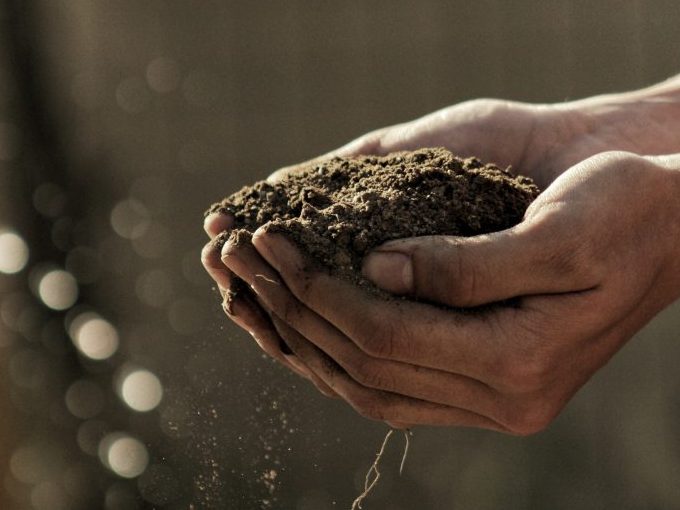
Composting is a fundamental part of radical recycling and the ultimate “giving back.” Composting is easy, free and the reward is phenomenal… a reduction in your trash output by 50–75% and beautiful, rich, organic matter for your soil and plants. Compost feeds the soil vital nutrients, aids in water retention and encourages earthworms in your soil.

How Does the Compost Ecosystem Work?

Composting creates a mixed balance of nitrogen, carbon, air and water, which forms a decomposition process that feeds new life. How wonderful that we can take our old food and waste scraps and use them to feed new food! All we need to do as the composter is to follow simple steps to keep these elements of nitrogen, carbon, air and water in balance and to monitor the decomposition process. Here is an in-depth explanation of how to compost:

What Can I Put in My Compost?

If you set up a conventional compost system (either an outdoor hot pile, an underground pile, or an actual compost bin), you can put in everything from vegetable and fruit scraps, grains, dairy and pretty much all foods except for meats and heavy oils. If you have a worm bin, you can put in fruit and vegetable scraps (except for a few kinds I will mention later) and if you use the bokashi system, which I describe below, you can actually compost meat scraps as well.

What Makes a Good Compost Bin?

A good compost bin has proper aeration, is well-protected, is easy to turn and easy to harvest from. I personally like the Garden Gourmet for an urban/suburban household first-time compost bin, because it is easy to put together, easy to use, and is made of recycled materials. At the time of this book’s writing, the city of Los Angeles offers a compost bin for half the price (about $20) but I tend to choose products made of recycled material whenever it is an option.

Other designs you can consider are a barrel composter, which has a bar that turns the compost, rather than having to use a pitchfork to stir things up. You might also build your own compost bin. My favorite is a three-tiered bin with one section for throwing in scraps for the first part of composting, a second section for transferring the partially composted material when the first bin is full, and a third section to transfer it into again, with a special sifter to perfect the final product. This kind of bin is ideal if you have a larger amount of food scrap to compost.

How Do I Get Started?

First, decide what kind of system is best for you. For a four-person family that cooks regularly, I recommend a simple standing bin, along with a worm bin, or perhaps a hand-made three-tiered bin if you have a large backyard. The most important features for a standing bin to have are sufficient air flow, a sturdy cover to protect the bin from animals, and an easy design for attending to the compost process, aerating and collecting the finished product.

For someone living in a small apartment alone, I recommend a worm bin that can fit in your kitchen or on your balcony. For anyone who eats meat, I recommend a Happy Farmer. The Happy Farmer is a system similar to composting that can be used indoors and can process all food scraps—meat included—through an anaerobic fermentation process, which is different than the conventional composting process. This system is called bokashi, which is a Japanese term meaning “fermented organic matter.”

If you are a meat eater who cooks a lot, you may need to also have a hot pile or bin that sits in your backyard. I also recommend a Happy Farmer if you are the “neat and tidy” type who finds the idea of composting repelling.

If you have a large backyard or a plot of land, then you can compost the old-fashioned way and build a hot pile and simply build more piles as needed for the amount of food waste you have. A hot pile is an intentional heap of compostable materials created outdoors in such a manner that generates all of the heat required for the process of composting. There is an appropriate composting system for every situation and new designs make it easy for everyone to compost today, whether you live in a tiny apartment or on a large homestead.

Composting As a Daily Practice

For me, composting is a daily practice of compassionate self-discipline. I’ve been composting for almost 20 years and, even though I love the composting process, still, every now and then, when I’m in a hurry, I hear a voice say, “but I don’t want to take that extra step… I have no time.” I hear that voice and use it as a flag to check in with myself. Am I really about to choose laziness (face it, that’s all it is) over making a conscious choice to take care of the world in which I live? Becoming aware always energizes me. Rather than letting laziness control me, I remember that I have another choice, and that is to remain true to my commitment to be an earth steward. And, the reality is, it only takes a second!

What Do I Need To Begin?

• A compost bin!
• A sunny spot for a conventional bin or a shady spot for a worm bin
• A pitchfork
• A starter, such as already-made compost (from another batch of compost you have made or that you buy at the store) or Compost Inoculant (i.e. Dr. Earth compost starter). Manure, such as chicken droppings or bat guano, as well as green comfrey leaves, also serve as compost starter. Note that while starter is not a necessity, I have found that it improves the process and is especially helpful for the first month of the composting process.
• A scissors or pair of shears
• A closed container to store kitchen scraps in before delivering them to the compost, which can be placed on your kitchen counter, in a drawer, or in the fridge
• A source of “greens” or nitrogen and a source of “browns” or carbon. (It is smart to have a space set aside next to your bin for collecting carbonaceous materials.)

“Greens” or Nitrogen includes:

• Veggies, fruit, grains, dairy, all food scraps other than heavy oils and meat… so adding a little oil is OK but if you are a heavy fryer, don’t dump huge amounts of oil into your compost. Leftover lasagna, soup, salad, bread, all of it can go into your compost.
• Coffee grounds (include the filter if you use unbleached)
• Tea bags (without the tag unless it’s eco-friendly)
• Grass clippings
“Browns” or Carbon includes:
• Napkins and paper towels that are unbleached and not dyed
• Leaves (disease-free only)
• Branches
• Stems
• Shredded newspaper
• Weeds (but watch for seeds)
• Wood chips (use sparingly, high carbon)
• Sawdust (use sparingly, high carbon)

Neutral

Things which go into your compost and can be added to your food bucket, but are neither “greens” nor “browns.”

• Eggshells
• Laundry lint

What Else Can I Add?

• Dr. Earth Compost Inoculant
• Bat guano, rabbit droppings, chicken manure
• Manure
• Ready-made compost
• Seaweed

More on Coffee Grounds:

Coffee grounds can be an excellent addition to a compost pile. The grounds are relatively rich in nitrogen, providing bacteria the energy they need to turn organic matter into compost. Used coffee grounds, approximately 2% nitrogen by volume, can be a safe substitute for nitrogen-rich manure in the compost pile.

What Cannot Go In:

• Anything that takes longer to decompose, e.g., coconuts. Put these in your green bin.
• Large seeds like avocado seeds. How about planting them instead?
• Any kind of meat
• Dog or cat droppings
• Food peels containing pesticides

For a Worm Bin, What Do I Need?

• All fruits and vegetables (including citrus and other high-acid foods)
• Vegetable and fruit peels and ends
• Coffee grounds and filters
• Tea bags (even those with high tannin levels)
• Grains such as bread, crackers and cereal (including moldy and stale)
• Eggshells (rinsed off )
• Leaves and grass clippings (not sprayed with pesticides)

All You Need to Do:

All you need to do is to lay a few inches of carbonaceous bedding, such as dried leaves, at the bottom of your compost bin. Then each time you dump your “greens” or food scraps in the bin, you add a sprinkle of inoculant or ready-made compost, you cover the greens with an equal amount of browns, so they are well protected, you turn your compost with your pitchfork to aerate it, and you monitor. Every now and then check your compost to to see if it needs moisture. It should ideally feel slightly damp like a wrung-out sponge.

The Ideal Balance:

The ideal balance that creates fertile, sweet-smelling compost has a C:N ratio somewhere around 25 to 30 parts carbon to 1 part nitrogen, or 25–30:1. If the C:N ratio is too high (excess carbon), decomposition slows down and you might notice your pile drying up or “just sitting.” If the C:N ratio is too low (excess nitrogen) you can end up with a stinky pile.

Different ingredients we put into the compost bin have different C:N ratios. Our job is to pay attention and adjust what we are adding to keep things in balance. For example, adding manure or grass clippings may lower high C:N ratios. Adding wood chips, dry leaves, or paper may raise Low C:N ratios.

Below are the average C:N ratios for some common organic materials found in the compost bin. For our purposes, the materials containing high amounts of carbon are considered “browns,” and materials containing high amounts of nitrogen are considered “greens.”

Estimated Carbon-to-Nitrogen Ratios

Browns = High Carbon C:N

Ashes, wood* 25:1
Cardboard, shredded 350:1
Corn stalks 75:1
Fruit waste 35:1
Leaves 60:1
Newspaper, shredded 175:1
Peanut shells 35:1
Pine needles 80:1
Sawdust 325:1
Straw 75:1
Wood chips 400:1

Greens = High Nitrogen C:N

Alfalfa 12:1
Clover 23:1
Coffee grounds 20:1
Food waste 20:1
Garden waste 30:1
Grass clippings 20:1
Hay 25:1
Manures 15:1
Seaweed 19:1
Vegetable scraps 25:1
Weeds 30:1

*Please note that ash is not helpful for acidic soil, so be aware of the pH of the soil you are working with before applying this to your compost in large amounts.

How Long Will My Compost Pile Take?

While the amount of time it takes to make compost varies, depending on the balance (of nitrogen, carbon, air and water) in your pile, in my experience regular composting can take from 3–6 months to produce a finished product. A worm bin may take 1–2 months to fill and then 3–5 months to fully compost. The bokashi fermentation system takes two weeks for the initial breakdown and then at least two more weeks to be compost.

Do I Need to Add Water?

Ideally your compost will have an equal mix of nitrogen additions which provide moisture and carbon materials that are dry, so that it will be a nice crumbly consistency. If it’s not, you can add water as needed. An easy way to do this is to use the leftover water from rinsing out your food scrap bucket.

What’s the problem if my compost smells?

Too much nitrogen and not enough air will make the compost too acidic and this results in a foul smell. In this case, just add carbon and aerate your compost.

What Do I Need to Know to Create a Healthy Worm Bin?

To get started, you will need about 500 g. of worms or 2000 worms. They can be purchased online or through an organic gardening source and typically cost from $40–$50. Worms like a diet of veggies and fruit, plus 30% carbon (shredded newspaper, paper towels, envelopes, etc.) Worms don’t like bread, onions, garlic, meat, dairy, or large amounts of grass or leaves. If you take on worm composting, it is your job to take care of the vermiculture ecosystem in order for the worms to thrive. I have suggested books and websites on vermiculture on the Resource List, and I recommend that you read up for more information.

Here is some advice from my own experience: If you notice fruit flies forming around your worm bin, add a nice sprinkling of lime and wait a day or two. Additional carbon (shredded newspaper, paper towels, envelopes, etc.) can be helpful too. A handful of lime of gypsum once a month also assists the decomposition process.

Worm tea is so potent that it can actually be harmful if not diluted. Dilute it about 1:10. Worm castings don’t have to be diluted. They can be mixed with potting soil or applied directly to soil and plants as you would apply regular compost.

But I Don’t Have a Garden. What Will I Do With My Compost?

Feed it to your indoor plants. Feed it to your trees. Give it to your neighbors. There is never a shortage of uses for good compost. As we will discuss in Chapter Four, our soil is desperate for nutrition. Creating compost out of food scraps is one way of giving back to the soil, reducing trash and creating more of a closed system on the land you live on.

This excerpt has been reprinted with permission from The Natural Kitchen by Deborah Eden Tull, published by Process Media, 2010.


A Karmic Moment: Why Men Must Step Up Now to End Rape Culture

In October 2016, before Trump was elected, Eve Ensler gave a visionary call at the Bioneers conference for men to put ending rape culture front and center in their lives and work.

Candidate Trump, said Eve, is a phenomenon – something larger than the person – because he’s channeling the unprocessed darkness in the environment and swirling it into ever-greater darkness. He’s carrying our collective karma, and we can change that.

Since then, serial scandals have continued to escalate until the dam burst with the Weinstein wake-up-call and the cultural tsunami of the #metoo movement. It’s a watershed moment, but little will actually change, says Eve, unless and until men step up to dismantle the patriarchy, transforming themselves in the process of ending this vicious system that destroys men’s souls as well.

The gender wound may be the deepest social wound of all. At this epic moment of seismic cultural change, what we do now will determine the future for decades to come. This is the moment to begin healing the gender wound once and for all. Please let us know what Eve’s words mean to you.

-Kenny Ausubel, Bioneers co-founder

Below: Eve Ensler speaks on rape culture. Listen to the audio or read her remarks below.

Eve Ensler:

I have actually had contempt for Donald Trump for at least 30 years, like it’s been a long-term passionate contemptuous relationship. And Trump is a phenomena. Phenomenas sweep and swirl in spiral darkness; they collect the darkness that has not been processed in the environment, and they swirl it into more darkness.

It feels like it’s almost mythical on the level of the patriarchal father, this kind of idea of this abuser, charming to some people – not to me – charismatic to some people – not to me. This dominating, billionaire, fantasy, TV figure who is carrying in, really, our karma. He’s carrying in our karma.

It’s manifested years of metastasized racism in this country. It’s manifested sexual violence, which is rampant – 1 out of 3 women and girls will be beaten and raped in her lifetime. It’s manifesting a complete disregard for Mother Earth and its environment, and an understanding that climate change is the most pressing concern of our time. And yet we’re still dealing with it on this very prosaic, barbaric, he-said/she-said, right? As opposed to going to what is underlying what is happening in this country right now.

Having been somebody who’s worked to stop violence against women now for the last 20 years, I have to say this: It’s not that I don’t think we’ve had victories, it’s not that I don’t think we’ve had our voices and we’ve broken the silence and many more people are speaking up, and that we’ve kept rape — you know, shelters open and hotlines — but really, have we changed the core of rape culture? Absolutely not.

Trump is not just Trump. Trump is the manifestation of rape culture. And for me, rape culture is this kind of bubble that we are contained within. It has to do with normalizing sexual violence, it has to do with how we treat the Earth and the occupation and the domination and objectification of it, not seeing it as a living, breathing life force. It’s an understanding that some people don’t matter and some people do, and when they don’t matter, you can absolutely do whatever you want, that you don’t ask permission, that you don’t listen to somebody wanting to invite you in or not inviting you in. I mean, I think everything about our world is this dynamic and projection and trajectory of a rape culture.

I have struggled with this for many years. I know it has to do with how we bring up boys from the beginning. I know it has to do with sexuality and the fact that we don’t teach people how to have good sex and what good sex is, and what intimacy is, and what beautiful touch is, and what sensuality is. And everyone’s so messed up sexually from the get-go, and it just gets worse and worse as they go along. So I think that’s deeply connected.

But I also know until men make this issue theirs, and make it as important as football, for example, make it as important as anything in their lives, I don’t know how we get out of this. Honestly.

What can men do to catalyze this and encourage this so that men awaken? Look, it’s not that there are not plenty of good men. There are plenty of good men. Look at all the great men who came out over the last weeks…the sports guys and fathers. But here’s the problem: They don’t make this a centerpiece of their life. They don’t understand that they’re not just doing this for their daughters and their mothers and their sisters, they’re doing this for themselves. To live in a rape culture denigrates your soul day after day after day. To resist it means you want to live in a beautiful soul. You’re not doing it to protect your mother or protect your daughters. I hear this so often. No. You’re doing this because it feels bad to rape women; it feels bad to degrade women; it feels bad to denigrate women; it feels bad to harass women. And I don’t understand what goes on in men. I tried. I have tried and tried. I don’t get it.

So I am putting out this call to the beautiful, caring, loving men who are many: What will catalyze you? What will ignite you to fight for this as much as you fight for the land, as much as you fight for everything that you fight for?

I think what’s happening right now is amazing, because I have never heard discourse on sexual violence on every single news station in the country. I’ve never heard so many women breaking their silence and coming out and saying, “This happened to me, this happened to me, this happened to me.” I’ve never heard this many people linking racism and sexual violence. And I’ve never heard so many people talking about how we treat the Earth and how we treat women’s bodies as a single wrapped issue.

I actually am feeling strangely optimistic. I think we are at a point where the window has been opened and now we have got to rise up, every single one of us, in our strongest, boldest, angriest, most visionary selves, and make sure that this window never closes again. Because I think we have that potential at this moment.

Capitalism: The Elephant in the Room

By Thomas Linzey

This piece was originally published on the Community Environmental Legal Defense Fund (CELDF) website. The CELDF is building a movement for Community Rights and the Rights of Nature to advance democratic, economic, social, and environmental rights – building upward from the grassroots to the state, federal, and international level.

While I shouldn’t be surprised anymore when someone at a conference asks why CELDF’s community organizing doesn’t take on capitalism directly, the question still startles me. The intimation is that our work nibbles around the edges, rather than being focused on directly changing the underlying economic system that rewards community-destroying behavior. Therefore, the question suggests, CELDF’s work is destined to fail.

Not only does the question reflect a misunderstanding of our work, it also buys into the myth of how systems change.

Critiquing Capitalism

For decades now, liberal academics and activists have decried the way our economic system works. They’ve picked our system apart piece by piece, while doing various post-mortems on the ways that capitalism has responded to everything from the Great Depression to environmentalism. They’ve written enough books to fill a library, given enough speeches for everyone to have grown tired of hearing them, and taken up enough of the public space so that the contours of the elephant in the room have now been fully dissected ad nauseum.

From one vantage point, they’ve done yeoman’s work: Fashioning a comprehensive critique of capitalism has not been an easy task. This is particularly true in the face of the rabid “free market” functionaries who march in lockstep across every television and newspaper. But from another vantage point, that critique has birthed a litmus test for activism that is impossible to achieve. It says that unless you’re proposing a wholly packaged system of replacement, and the means for that wholesale replacement, then the work you’re doing doesn’t have a prayer of changing anything.

Is wholesale replacement necessary? Perhaps, but the economic models drawn up in lecture halls likely aren’t the substitutes. Those are generally mired in the “old left” way of thinking – placing trust in government rather than in private market actors. One could argue, however, that both systems have equally tortured Earth on the rack, the only difference being whether private corporations or governments are at the wheel.

Back to Basics

So, we need to start with the fundamentals. As historian Richard Grossman once declared, the bedrock functioning of all current economic systems requires control over Earth’s resources, and the labor necessary to extract them. For that purpose, those economic systems create centralized authorities that either control natural resources and labor themselves, or create the conditions for private entities to do so.

In the United States, our federal and state legal systems fall into the latter category – serving to protect, insulate, and enhance the authority of private entities to run the show.

This is why ecosystems and nature are considered “property” in the eyes of the law. It’s why the owner of those ecosystems has the legal authority to destroy them. It’s why workers lack constitutional rights in the workplace against their employers, why oil and gas can be legally taken from landowners without their permission under “forced pooling” laws, and why people within their own cities, towns, villages, and countries are prohibited from banning corporate factory farms, genetically modified organisms, oil and gas extraction, and a litany of other harmful corporate projects.

Prerequisite to Change

Those wishing to change that system must come to grips with the fact that people do not embrace wholesale change immediately. First, a corporate hog farm sites next door to them, or pesticide spraying threatens their organic garden. Logically, their focus is on stopping those activities that are threatening to harm them.

When they learn that the current system of law forces them to endure those harms, they begin to understand that what is happening in their community is not an isolated example. Instead, their problem is structural, and not easily fixed. Without the community’s firsthand experience, and the guidance of those who have seen it before, a critique of the system at the outset simply finds no purchase.

Changing the System by Seizing It

CELDF’s work offers a frame through which to understand that world. It works with those people on the receiving end of the system, to become the ones who change it.

They begin changing it by seizing their municipal governments to free themselves from the controlling legal doctrines of the past: corporate constitutional “rights,” which guarantee that corporate decisions override community decision-making; the authority of state government and the federal government to protect business entities by preempting the community from adopting laws that interfere with corporate proposals; and the legal doctrines that require the state government’s pre-approval for lawmaking by the community.

By forcing a recognition of their own right to govern themselves, and using that right to stop that which is harming them, they seek to put capitalism in a box. It is a box in which projects that violate the rights of communities and nature are prohibited. Those projects that do not violate rights, are not prohibited.

The work seeks nothing less than to remove centralized control over nature and people by building a bulwark of rights for human and natural communities. With those forced changes to the system, is it still capitalism? Would anyone care if it was?

Through those exigencies of the moment, it is time to create a new economic and political system piece by piece – one that has, perhaps, never been seen before. The newness of the moment, far from giving us pause, should instead validate our belief that it’s the only work worth doing.

This piece was originally published on the Community Environmental Legal Defense Fund (CELDF) website. The CELDF is building a movement for Community Rights and the Rights of Nature to advance democratic, economic, social, and environmental rights – building upward from the grassroots to the state, federal, and international level.

2017 Bioneers Conference: Uprising! | Bioneers

The Bioneers conference is a kaleidoscope of diverse experts, speakers, and activists working together to exchange knowledge, amplify stories, and gather together to share and spread practical solutions to our most pressing social and environmental challenges. This mini-documentary brings to life the Bioneers 2017 gathering.

Produced by Bioneers
Shot and Edited by the Understory

Agroecology: Restoring Ecosystems and Local Economies

“I have an 11-year-old son, and I tell him to hold his breath when we drive past banana plantations in Central America,” explained Florence Reed to the Bioneers audience.

“The smell of the pesticides that hangs in the air around the banana plantations, just smells like death to me. I worry for my son. I worry more for all of the workers who are on those plantations and exposed to those poisons every day, and I worry for the broader environment and the impact this has on all of us…I’ve met farmers who have lost their friends who have died from exposure to these chemicals, whose children have been born with birth defects.”

As dreadful as the impacts of industrial agriculture are, it’s not the only farming system that causes harm–200 to 500 million mostly poor farmers worldwide practice slash-and-burn agriculture, which has been used for thousands of years and is associated with greenhouse gas emissions, air pollution, soil fertility exhaustion and deforestation.

Agroecology offers a healthier and effective alternative to those degenerative systems. The UN Food and Agriculture Organization (FAO) says that an agroecosystem should mimic the functioning of local ecosystems by cycling nutrients, having a highly-biodiverse complex-structure within a network of cooperative exchange of energy and resources, and is powered predominately by solar energy (photosynthesis) with the goal of creating an agricultural ecosystem that is flexible, resilient and dynamic. These principles are adapted to local ecological and social systems.

“Agroecology is farming with nature as opposed to against it,” says Steve Brescia of Groundswell. “It focuses on strengthening farmer knowledge and innovation to lead that process, and using nature’s biological processes as opposed to chemical and external inputs.” Groundswell supports farmer-led learning and innovations working with thousands of small farmers in Africa, Latin America and South Asia to improve farming practices, and help spread local strategies.

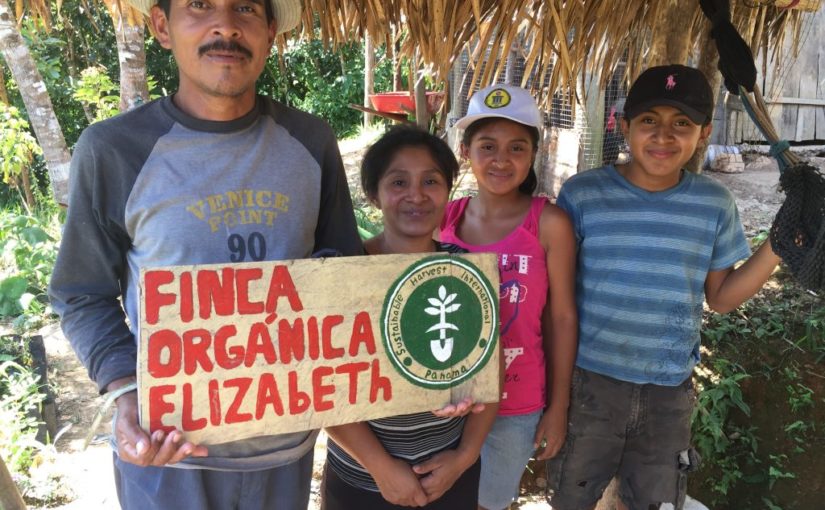
After serving in the Peace Corps in Panama where she witnessed environmental degradation of tropical forests that were slashed and burned, Florence Reed founded Sustainable Harvest International (SHI), which works with 3000 farmers, to address poverty, ecosystem destruction and food security in Central America.

SHI works to transition struggling farmers who work for $6 per day under terrible conditions to agroecology practices like composting, cover crops, erosion control, and a variety of other practices that build organic matter and store carbon in the soil.

Reed shared the story of Santos Lorenzo and Maria Hernandez, one of the families in Panama that SHI works with. “When Santos was growing up, his family grew only two or three crops, now they’re growing 20 or 30 different crops, a variety of fruit trees, pineapples, yams, and other vegetables. They used to grow rice on burnt hillsides, now they grow it in a paddy incorporating organic material and are producing eight times more rice by using practices that are better for the environment. By adopting agroecological methods, they produce more than enough to feed their family well. They’re not suffering from malnutrition anymore. They grow more than they need and sell the extra for income. Their kids, who originally wanted to leave the impoverished and toxic conditions of the farm, now are studying agriculture so they can continue the family farming tradition.”


Santos Lorenzo, Maria Hernandez and Family

Miguel Alteri, renowned agroecology expert from UC Berkley, says, “industrial agriculture occupies about 80% of the 1.5 billion hectares [of global cropland], using homogenous monocultures and very high-input technology that is having a huge ecological footprint on the planet from contamination of water, biodiversity loss, human health impacts, soil losses, and air emissions. The conventional food system, which is very vulnerable to climate change, produces about 40% of the greenhouse gases that are causing climate change.

“We could be feeding ourselves with about 250 different plant species, but actually only three crops provide more than 50% of the human food that we’re eating globally, those are rice, corn, and wheat. It’s not because we all love rice and wheat and corn. It’s because there’s a corporate system that is promoting these crops in a large scale.”

“Six decades of enormous waves of agricultural science and innovation did not solve the problems of hunger or world poverty. We need to abandon the models that are incapable of ensuring respect for the poor and the environment.

“The agriculture of the future has to de-couple from fossil fuel dependence. Agricultural systems have to be low-environmental impact, nature-friendly, and resilient to climate change. They have to be multi-functional by not only producing food, but also by producing ecological services, social services, and maintaining cultural traditions; they have to provide the foundation of the local food systems. That is a very important step that, first, people have to be food secure, and then they can get involved in the market.”

According to Miguel, small peasant farmers around the world are stewarding almost 2 million crop varieties compared to roughly 7,000 varieties created by the Green Revolution, the industrial system of high-yielding hybrid and GE crops that are dependent on toxic chemical inputs and cause environmental destruction and undermine food sovereignty.

“Agroecology is a science that promotes traditional wisdom and local knowledge in conjunction with some of the science of the West: ecology, agronomy, sociology, biological control, etc.

“Social movements now have taken agroecology as an important flag in their promotion of food sovereignty.Via Campesina have very strong political power. They see agroecology as a key form of resistance to an economic system that puts profits before life.”

Globally about 200 billion people are hungry or malnourished. A majority of the world’s population that suffers from hunger are small farmers in the Global South. Agroecology offers a solution to the economic plight of small farmers and the environmental devastation of industrial agriculture and slash and burn practices.

Organizations like Groundswell and Sustainable Harvest International are empowering rural people to become good stewards of working landscapes while helping them rise above poverty.

A Karmic Moment: Why Men Must Step Up Now to End Rape Culture | Eve Ensler

In October 2016, before Trump was elected, Eve Ensler gave a visionary call at the Bioneers conference for men to put ending rape culture front and center in their lives and work.

Candidate Trump, said Eve, is a phenomenon – something larger than the person – because he’s channeling the unprocessed darkness in the environment and swirling it into ever-greater darkness. He’s carrying our collective karma, and we can change that.

Since then, serial scandals have continued to escalate until the dam burst with the Weinstein wake-up-call and the cultural tsunami of the #metoo movement. It’s a watershed moment, but little will actually change, says Eve, unless and until men step up to dismantle the patriarchy, transforming themselves in the process of ending this vicious system that destroys men’s souls as well.

The gender wound may be the deepest social wound of all. At this epic moment of seismic cultural change, what we do now will determine the future for decades to come. This is the moment to begin healing the gender wound once and for all. Please let us know what Eve’s words mean to you.

– Kenny Ausubel, Bioneers Co-Founder

Social Justice Artists Find a Home in Bioneers

Together, artists and cultural architects Alixa Garcia and Naima Penniman make up the creative duo Climbing PoeTree, whose award-winning multimedia theater, dual-voice spoken word, visual art and community organizing are dedicated to challenging injustice, bringing diverse peoples together, rebuilding communities, and winning the struggle for universal liberation.

True independents, Garcia and Penniman have organized more than 30 national and international tours, crossing the U.S. in a vegetable oil-powered bus and taking their messages of hope and human expression around the world, from South Africa and Cuba to the U.K. and Mexico. They create curricula and facilitate workshops designed to tap into people’s lived experiences and self-expression, raise consciousness and create real possibilities for re-inventing the world. And for the past several years, they’ve been speakers, performers and presenters at the annual National Bioneers Conference.

Nourishing Connections

Considering their shared goals of re-inventing the world in ways that honor nature and people, it makes sense that the universe connected Bioneers and Climbing PoeTree. As workshop leaders in 2014, Penniman and Garcia first experienced the Bioneers community, which they describe as a space that “pulses with vital connections between people and ideas, and illuminates pathways toward the unpromised livable future.” In their keynote address at the close of the 2016 National Bioneers Conference, Garcia and Penniman shared their art—and the conviction that creativity is the antidote to destruction—with an awed Bioneers crowd.

Tapping into the energy and connections of the Bioneers community has helped deepen the already-expansive root system that feeds Climbing PoeTree’s art and work. Through Bioneers, “we have been able to make new and invaluable connections to people, as well as deepen our understanding of the world around us,” write Penniman and Garcia. “It has been incredible to share the stage with solutionaries like Danny Glover, Paul Hawken and Naomi Klein, who later came to speak to us…and made us present to a mutual admiration and shared responsibility that mirrors the majority of our connections at Bioneers. We also had the incredible opportunity to meet and deeply connect with Eve Ensler, and through that relationship have become connected to One Billion Rising, as well as other significant social movements. We’ve garnered incredible support from the rippling effects of presenting at Bioneers throughout the years in myriad ways. There is a profound rootedness that one feels when walking through three days of exploration, innovation and elucidated discovery, for Bioneers is that place where the wielding of solutions and the conjuring of magic collide.”

Rippling Effects

Those rippling effects of the Bioneers community are what cofounders Nina Simons and Kenny Ausubel strive to maintain. For more than three decades, the couple has led Bioneers, now well-known for its propensity to provide platforms from which some of the world’s most inspirational minds and change agents are able to speak and connect. “Nina and Kenny’s tireless and heart-driven commitment to bringing renewed vision, intelligence and imagination to our most pressing planetary crisis has created waves of meaningful change that ripple out in all directions,” Penniman and Garcia write. “We have witnessed them fully embrace their sacred assignment with humility and conviction, as they strive to call more and more voices to the table—voices that carry the wisdom and experience necessary for deepening the conversations that implicate us all.”

Stay up-to-date on what world-changing Bioneers like Climbing PoeTree are accomplishing by signing up for our newsletter.

Trump: Climate Change Not A National Security Threat. Wrong Again.

As summarized in this Huffington Post article, the Trump Administration today managed to dispense with decades of evidence and analysis about the dangers of a changing climate coming from within the Defense Department – not necessarily a paragon of liberal policy analysis. The current administration’s position couldn’t be further from the truth. As Bioneers speakers have outlined for many years, Climate Change ought to be seen as an existential threat to society in general and, as a logical and specific result, a threat to the national security of most nations, the United States included.

To be sure, there’s much to disagree with as far as the Defense Department and US National Security policies and actions are concerned, presently and historically. But on climate change, they really have been out in front in many ways. As we’ve mentioned before on this blog, “The military has to be reality-based—it’s charged with operationalizing the security of the country. And it’s way out in front of the rest of the nation on clean energy, zero waste, getting off oil, and spawning tomorrow’s clean technologies and industries.

Learn about the connections between national security and climate change by listening to “Security by Design”, an episode from the Bioneers Radio series featuring global energy strategist Amory Lovins and Oberlin College Professor David Orr outlining the strategic imperative and foundation for a new national security narrative.

For more background on this topic, it’s worth re-reading the 2015 Rolling Stone article, The Pentagon & Climate Change: How Deniers Put National Security at Risk. The only good news to come out of the recent announcement is the reality that it may not matter. From the HuffPo article above, “David W. Titley, a retired rear admiral in the Navy, said there is “nothing in this document that precludes the Department of Defense from continuing to do what it’s doing. “I really don’t see this document as some sort of declaration of war on climate or anything like that,” Titley, now a meteorology professor at Pennsylvania State University, told HuffPost by phone. “In that sense, I’m actually kind of happy. It could have been much worse.” That’s what passes as good news these days, but, for the moment, we’ll take it.

Forked: Saru Jayaraman’s Advice for a Broken American Restaurant Industry

Speaking about the slavery-based history of the American restaurant industry and its resultant pay structure, activist and organizer Saru Jayaraman draws connections between the popularity of dining out in the U.S. and national racial tensions, gender injustices, and economic disparity. Speaking at a Bioneers Conference, Jayaraman concluded her impassioned keynote address by explaining why, in her eyes, people should care about this when there are currently so many global crises to thwart.

“Ultimately, we can’t survive—there will be no organic products or sustainable products of any kind—if people can’t consume,” said Jayaraman, discussing rampant low wages within America’s second-largest sector. “And fundamentally, these people are not just consumers, they are humans, and so are you, and I know you care not just about the Earth, but about equity. Fundamentally, you want us not just to survive through climate catastrophe, but thrive, live.”

In 2016, Jayaraman put these ideas (and many more) to paper in Forked (Oxford University Press). The following is excerpted from the book’s introduction.

People know me as the co-founder and co-director of the Restaurant Opportunities Centers (ROC) United, a national social-movement organization dedicated to raising wages and working conditions in the nation’s restaurant industry. I have dedicated my life to serving as an organizer, advocate, and spokesperson for raising standards for restaurant workers.

What almost no one knows about me is that I don’t come from a line of restaurant workers; I come from a family of restaurant owners. And the family restaurant did not pay its workers well.

In the early 1900s, my great-great grandfather, a policeman named Sundara, opened a large restaurant in the tiny town of Karur, India. Motivated in part by his disdain for working for others (a sentiment shared today by his descendant), Sundara decided to open his own place, and call it Sundara Villas. Since the proprietor was an Indian Brahmin, Sundara Villas was forbidden by caste from serving meat. The cuisine was South Indian vegetarian, served communal-style on washed banana leaves to guests seated at long marble tables.

In those days, the general rule—and preference—was to eat at home, specifically a meal cooked by a wife or mother. Men only ate in restaurants if they were traveling, or a bachelor, or if their wives were sick or traveling. Gender norms forbade women from eating out or mixing with men in such public spaces, and thus the restaurant was almost an entirely male affair, with the exception of the proprietor’s daughters and granddaughters, who would run around playing in the restaurant.

Sundara brought his sons to work in the restaurant, but also hired young men from Karur and the neighboring villages. These workers were paid meager monthly wages, and many slept in the restaurant itself.

My great-grandfather, Venkataramanaswamy (try that ten times!), took over the restaurant when Sundara died. He also brought his sons to work in the restaurant. At this point there were young men who had worked at the restaurant for a lifetime, literally. And although wages were meager, there was most definitely a sense of family. Workers who fell ill were neither asked to work nor docked pay. Servers and cooks became lifelong family members. The longest-lasting server, a man named Sundaram, volunteered to cook at my parents’ wedding and attended every family wedding and function after that; my great-grandfather paid for Sundaram’s son’s coming-of-age ceremony. Another cook worked both in the restaurant and in the house, washing the children’s clothes.

There is no way I could call my great-grandfather a “high road” employer, which is the label we at ROC give to employers who provide their employees with livable wages and working conditions. The sense of family that my parents used to describe the restaurant is the same word almost every restaurateur in America uses to describe their employees—generally without cause and as a justification for paying low wages. We at ROC always respond by saying that being a family, although wonderful, is not enough; a family that keeps some of its relatives in poverty is a family that can do better, both for the sake of the workers and ultimately for the benefit of employers and consumers.

My restaurant-owning grandfathers were small business owners who followed the norms, customs, and culture of their day; today, these surrounding factors have changed and evolved. One hundred years later, their granddaughter is leading a movement to improve wages and working conditions for the workers they employed.

I love and respect my great-grandfather. He was a kind and extremely generous man who took care of his large family, his brothers’ families, and even the families of his employees. Certainly, through his eyes, I can understand the plight of the small restaurateurs in America struggling to understand how they would go against the norm of low pay and poor benefits in this industry and still succeed. However, the employers profiled in this book show that norms and standards can evolve in ways that help workers, employers, and consumers to thrive collectively. Times are changing, and the industry—and society—certainly can do better.

How We Are Forked

Right now, more than eleven million Americans work in restaurants. Unfortunately, the people who prepare, cook, and serve our food are also twice as likely as other Americans to be on food stamps. The restaurant industry—the industry that feeds us!—is also starving its workforce, both economically and as a civil society that values its citizens. However, this book sets out to describe a different path, which some employers are already on, to resolve these challenges.

Workers, consumers, and even employers have been gouged—“forked”—by low standards for employee treatment that have been set by the largest companies in this industry. But in another sense, the industry is also at a fork in the road: much of the industry is following the “low road” to profitability that has been modeled by a majority of large corporate restaurant chains, whereas a small but growing group of employers have shown that taking the “high road” to profitability results in better payoffs in the long run. In fact, a 2014 study conducted by Cornell University researchers in partnership with ROC shows that employers can cut costly employee turnover almost in half by providing higher wages and better working conditions, a tremendous gift to an industry that suffers from one of the highest employee turnover rates of any sector. This book will profile people and companies taking both paths, and show how we can get where we need to go by taking the “high road” at the fork in the road.

This book is a guide for anyone who eats out and anyone who wants to eat out better and more ethically. It is a tool to help us understand how restaurants fare on issues of worker wages, benefits, and promotions. Most importantly, this book (along with ROC’s smart phone application—more on this later) gives consumers the tools they need to communicate their values every time they eat out.

This book includes both ratings of well-known restaurant companies and more in-depth profiles of companies that rate well and others that do not. This book is not intended to condemn any companies, organizations, or individuals; on the contrary, the book is meant to show both the challenges at hand and that change is possible anywhere and everywhere, and that change is completely within our power as consumers to effect within our lifetimes.

Why This Book?

In 2013, I wrote a book called Behind the Kitchen Door, about working conditions in the restaurant industry, then proceeded to take my seven-month-old daughter with me on an insane book tour across the country. We stopped in big and small cities, and I spoke in churches, libraries, bookstores, restaurants, and anyplace that would have us. Sometimes I’d take my daughter with me up to the podium, and other times she’d be crawling around in the back of the audience while I pounded the podium with my fist and described the poverty-level wages and abysmal working conditions faced by the millions of restaurant workers in this country. I would talk about the work of ROC, the national movement that I co-founded and co-direct, and our work over the last twelve years to bring workers, responsible employers, and consumers together to change the industry.

In too many instances, women would approach me at the end of the book talk and share horrific stories of sexual harassment and assault while working as servers in restaurants. These stories dramatically changed the course of ROC’s work, as I’ll describe later.

Either way, everywhere I spoke, anytime I spoke, people would always ask, “So what can we do?” “Where can we eat?” And someone, almost every single time, would come up with the idea that everyone felt they had discovered for the first time—the idea of a diners’ guide, something tangible to tell eaters which restaurants fare well on issues of wages and working conditions for restaurant workers. And I would always say, “Yes, we have an app for that.”

The first ROC Diners’ Guide to Ethical Eating was created for New York City in 2007, and it was a simple booklet to highlight restaurant owners who were providing livable wages and working conditions to their employees. We grew into a national organization that same year, and in 2012, published our first national version of the guide online and as a smartphone app. The guide and app rated the 100 most popular restaurant chains and also provided awards to approximately 75 of our responsible restaurant employer partners.

We never created the guide to tell people where to eat and where not to eat. If every ethical eater in America only frequented the 100 or so restaurants around the country that have been given awards for responsible employment in our app, we would eat in restaurants much less. Instead, we sought to provide a tool for consumers to speak up wherever and whenever they ate out—to say to managers and owners, “I loved the food, loved the service, and I’d love to keep coming back here. I just wanted to let you know that how a restaurant fares in this app on worker wages, benefits, and promotions practices are important to me as a consumer.”

This book represents the next step in that process. The book includes the same ratings of employers’ wages, benefits, and promotions practices, but it also includes profiles of restaurants that rate highly and others that rate poorly in specific food and labor categories. It especially tells the stories of outstanding restaurant employers—we call them “high-road” employers because they take the high road to profitability—who are growing and profitable because they pay and treat their workers well, not din of their above-average wages and working conditions. In particular, we focus on how these employers have managed to excel in the categories listed in this book.

We also profile employers who currently take the “low road” to profitability, but all of them have great potential to move over to the high road with some encouragement and pressure from all of us. In creating the Diners’ Guide, we sought to find a way to create simple, straightforward categories with which to rate restaurants, and realized that we needed to prioritize the key issues that restaurant workers have told us were their most important challenges during the last decade.

What Are the Key Issues This Book Rates?

This book is not an exhaustive examination of all the merits or demerits of various restaurant companies’ employment practices. Instead, it is a tool for consumers to begin to think about what to look for in a restaurant with regard to how it treats its workers. The key issues that workers have prioritized—and thus the ones we discuss in this book—are the same key policies that the Cornell researchers found are key to reducing employee turnover and thus increasing retention, productivity, and customer satisfaction: wages, benefits, and internal mobility, regardless of workers’ race or gender.

1. Wages

With almost eleven million workers, the restaurant industry is currently the second-largest and one of the fastest-growing employer sectors in the United States. Nearly one in twelve working Americans works in the restaurant industry right now. The restaurant industry is one of the only sectors to grow amid the economic crisis of the last decade. We have continued to eat out as a nation in ever-increasing numbers, even when we are unemployed.

Unfortunately, while it is one of the largest and fastest-growing segments of the United States economy, it is also the absolute lowest-paying employer in the United States. Every year the U.S. Department of Labor releases a list of all occupations in the United States, including their hourly wages, and every year the restaurant industry wins the prize for having the lowest-paying occupations in the United States. Every year at least six to seven of the ten lowest-paying occupations are restaurant occupations, with only one or two of those occupations being fast-food jobs. Currently, restaurant workers occupy seven of the ten lowest-paid occupations reported by the Bureau of Labor Statistics; at least four of these are in full-service restaurants.

So how is it that one of the largest and fastest-growing sectors of the U.S. economy—clearly a successful sector—is proliferating the nation’s lowest-paying jobs? Our analysis is that much of this persisting, extraordinary imbalance can be traced to the power of a trade lobbying group called the National Restaurant Association, which we at ROC call the Other NRA. The Other NRA, led by the nation’s Fortune 500 restaurant chains, has been named among Congress’s most powerful lobbying groups by Fortune Magazine. The NRA has lobbied extensively to keep the minimum wage as low as possible; not surprisingly, the restaurant industry is the largest employer of minimum-wage workers in the United States. As a result, the median hourly wage for all restaurant workers in the United States is a paltry $9.20.

Many people assume that low wages in the restaurant industry are concentrated in the fast-food segment of the industry. Unfortunately, this is not the case. Workers in all segments of the industry, in all positions and of all racial and gender backgrounds work and live in poverty in the restaurant industry. Wages for kitchen workers are abysmal, and, unbeknownst to many, income for workers serving customers on the dining floor—workers who earn tips—is no better.

In Chapter 2 of this book, I describe a brief history of tipping and the minimum wage for tipped workers over the last 150 years, and how the current system of allowing the restaurant industry to exempt itself from paying its own workers because they earn tips is a legacy of slavery. Over the last century, the restaurant industry has continuously lobbied for tipping to be entrenched in American restaurant culture and for resultant exemptions from minimum wage laws for restaurant employers. This history climaxed in 1996, when the CEO of the NRA was Herman Cain, a former business analyst for Pillsbury who made his name working for brands such as Burger King and Godfather’s Pizza. (Cain would later pursue the 2012 Republican presidential nomination and a 2004 Georgia senatorial nomination, losing in the primaries for both.) In his time at the NRA Cain struck a deal with Congress: the NRA would not oppose a modest increase in the overall minimum wage as long as the minimum wage for tipped workers would in turn stay frozen forever. The argument of the NRA was that since these workers earned tips, they should never actually receive a wage increase. The federal minimum wage for tipped workers has thus remained frozen at $2.13 an hour for almost 25 years. The Other NRA thus succeeded in convincing Congress and the American people that it should be the only industry on earth to win an extraordinary exemption for itself, saying that they should not have to pay their own workers’ wages but, instead, customers should.

Similar deals have been struck countless times over the last decade in at least forty-four states across the country. Seven states—California, Oregon, Washington, Montana, Alaska, Nevada, and Minnesota—have had the same wages for tipped and non-tipped workers for decades. Although the NRA argues that paying tipped and non-tipped workers the same minimum wage would put them out of business, eliminate server positions, or reduce customer tipping, none of these predictions has been borne out in the seven states with no mandated lower wage for tipped workers. These seven states actually have faster restaurant-industry job-growth rates, higher job-growth rates (specifically in server occupations), and higher restaurant sales per capita than the forty-three states with lower wages for tipped workers. Tipping averages are the same in these states, and, in fact, Alaska has the highest tipping average of any state in the United States—and is a state with the same wage for tipped and non-tipped workers.

So, then, how and why has the Other NRA gotten away with this extraordinary exemption? They’ve gotten away with it by painting the picture of a young man who works at a fine dining restaurant, earning $18 an hour in tips and living the high life. In reality, two-thirds of tipped workers in America are women, and they largely work at casual restaurants like the Olive Garden, Applebee’s, IHOP, and Denny’s. Their median wage, including tips, is $8.77 per hour in states with a tipped minimum wage. These women suffer three times the poverty rate of the rest of the United States workforce and use food stamps at double the rate.

As a result of the same deal having been struck between the NRA and state legislators in states across the country, wages for tipped workers in America range between $2.13 and about $5 in forty-one states nationwide. When you are a tipped worker who receives between $2.13 and $5 an hour, you don’t actually receive a wage; your wage is so small it goes entirely to taxes, and you get a paystub with $0 that says, “THIS IS NOT A PAYCHECK.” As a result, the vast majority of tipped workers in America live completely off their tips, which creates extraordinary economic instability. These workers never know how much they are going to earn from week to week, day to day, or month to month. Although their bills and rent do not fluctuate, their income does.

During my 2013 book tour, women approached me at the end of book talks and shared stories that illustrated how our nation’s system of requiring certain workers to live off tips is not simply a matter of economic instability; it’s a matter of human indecency. Women related stories of having to objectify themselves to earn enough tips to survive—and since the customer was paying their wages, rather than their employer, the customer was always right. This meant that these women had to tolerate whatever a customer might do to them—however they might touch, treat, or talk to them—because, again, the customer was always right.

This dynamic was eloquently summarized by a restaurant server member of ROC, Amber, who spoke at a Senate press conference in Washington, DC, in 2013. She testified, “Senators, imagine if your income depended on the happiness of the people you serve. Because my income depends on the happiness of the people I serve, I have to put up with a guy groping my butt every day to feed my four-year-old son at night.”

Forcing women to live off tips also means that these women have to objectify themselves to get their tips. I’ve heard countless stories of women being told by their supervisors to “go home and dress more sexy, show more cleavage!” in order to sell more food and make more money in tips. This practice exposes women to sexual harassment not only from customers but also from co-workers and managers. In fact, the restaurant industry is the single largest source of sexual-harassment complaints to the EEOC of any industry in the United States. Seven percent of American women work in restaurants, but 37 percent of all sexual harassment complaints to the EEOC come from the restaurant industry.

One woman, speaking from the audience at a talk I was giving, related a horrific story of having worked as a server as a young woman. Her manager had taken her into a walk-in freezer, held her at knifepoint, and raped her brutally. She felt she had no choice but to comply, and was forced to finish out her shift afterward.

One of the most personally saddening parts of the stories women were sharing with me was that many had moved on to other professions, but their experiences in the restaurant industry impacted their careers. Multiple women repeated more or less the same story: I’m a corporate lawyer/ executive/ professional. I’ve been sexually harassed recently on the job, but never did anything about it because it was never as bad as it was when I was a young woman working in restaurants. These stories led us to understand that besides the six million women who must put up with this system daily as restaurant workers, there are millions more women who work in the restaurant industry as their first job in high school, college, or graduate school. In fact, restaurants pride themselves on offering first jobs for most young people. For young women, however, most of them working as tipped workers, having their first jobs in the restaurant industry means that they are introduced into the world of work in a situation in which they are encouraged to sell themselves and their bodies to earn their income. It is the industry through which they learn what is tolerable and acceptable in the workplace—an industry in which they must tolerate the most extremely inappropriate behavior from customers, co-workers, and managers—in order to be able to feed their families.

For all these reasons, over the last few years, ROC has led a campaign to eliminate the lower wage for tipped workers, called One Fair Wage. To be clear, our campaign is to eliminate the lower wage for tipped workers, not tipping altogether; unless and until employers can provide a professional, livable income to their workers, tips are absolutely necessary on top of a full base wage to get workers closer to a wage that will allow them to support their families. Some restaurants have chosen to eliminate tipping altogether; we applaud them if they do so in a transparent manner and ultimately pay their workers a full base wage that is equivalent to what they would have earned through tips.

In this book, we give a restaurant a point if it provides non-tipped workers with at least $10 as a starting wage, and another point if it provides tipped workers with more than their state’s tipped minimum wage. We also especially commend restaurants moving toward One Fair Wage—eliminating the lower wage for tipped workers altogether.

2. Paid Sick Days

Ninety percent of restaurant workers nationwide report not having paid sick days, and two-thirds report cooking, preparing, and serving our food when they are sick—with everything from H1N1 to Hepatitis A. Restaurant workers not having paid sick days means that they are forced to come to work while sick or risk losing their job. Workers report that they are told that they will be fired if they do not come to work, even if they are sick. Even among those workers who are not told they will be fired, without receiving pay when they are sick, the vast majority of workers prefer to work when sick rather than cutting into an already too-paltry income. As mentioned earlier, too many of these workers live completely off tips, which can only be obtained by physically coming to work.

Of course, the issue is also a public health concern. Sick restaurant workers infect co-workers and, of course, customers. The Centers for Disease Control (CDC) reports that 50– 90 percent of all norovirus (stomach flu) outbreaks can be traced back to sick restaurant workers.

Recent efforts across a broad coalition of organizations have pushed paid sick days legislation in states and cities across the country, with tremendous success: seventeen cities, including Washington, DC, and the states of Connecticut, Massachusetts, and California have passed paid sick-days laws. Of course, these victories have not been achieved without intense opposition from the Other NRA, which argues that restaurants will be forced to close, shed jobs, or not grow as quickly if they must provide paid sick days. In fact, in 2013 the Other NRA joined forces with Darden, the world’s largest full-service restaurant company and owner of the Olive Garden, Capital Grille Steakhouse, and Long Horn Steakhouse, among other brands. Darden helped write the preemption legislation in Florida, and the Other NRA, where Darden plays a leading role, pushed preemption bills around the country prohibiting any localities in those states from passing local paid-sick-days ordinances. Such preemptive legislation was passed in eight of the fourteen states in which it was introduced, undermining citizens’ ability to pass local paid-sick-days legislation even if it was democratically approved by a majority or even a unanimity of voters in a particular locality. The current count of preemption states is eleven, with eight having been passed in the last two years.

Nonetheless, the fight to expand paid-sick-days legislation to more cities and states—and thus protect the public health—continues. Many restaurant employer partners and others around the country have implemented paid sick days and found the policy to have enormous benefits in terms of worker productivity and retention. Several are profiled in this book. In this book, we denote restaurants that provide even a single sick day with a thermometer icon.

3. Internal Mobility

Two-thirds of restaurant workers surveyed nationally reported never receiving a promotion to a higher-paying position, and even fewer reported ever being offered training necessary to move up the ladder to higher-level positions. Although there is a myth of mobility in the industry—the idea that a dishwasher could one day open her own restaurant—the reality is that the vast majority of workers see very little advancement in their careers.

Such lack of advancement has serious racial implications, because the restaurant industry is highly racially segregated. Workers of color are segregated into lower-level segments—fast-food and casual restaurants as opposed to fine dining—and even lower-level positions—kitchen and busser positions rather than server and bartending positions—especially in fine dining restaurants. This results in workers of color earning $4 less per hour than white workers in the U.S. restaurant industry overall.

ROC research shows that although 80 percent of restaurant worker occupations provide poverty-level wages, up to 20 percent of the jobs in the industry can provide a livable wage. These are largely server and bartender positions in fine dining restaurants. As mentioned earlier, the majority of servers in America do not work in fine dining restaurants and suffer from three times the poverty rate of the rest of the U.S. workforce. However, servers and bartenders in fine dining restaurants can earn a livable wage; unfortunately, these jobs are held in vast majority by white men. Workers of color face significant barriers in attempting to advance either from lower-level positions in fine dining restaurants or from fast-food or casual restaurants into fine dining.

With so little mobility in the industry, most servers in fine dining restaurants are hired from outside the restaurant, and most are white. In 2014, ROC released a series of matched-pairs audit-testing studies, having sent into fine dining restaurants hundreds of pairs of white and people of color applicants with identical resumes, personalities, and size and height characteristics to see who would be hired as servers. We found that white applicants had twice the chance of a person of color of getting hired as a fine dining server.

In the alternative scenario, several responsible restaurant employers—including several profiled in this book—have chosen to invest in their own workforce by training and promoting workers from within the company to the highest-paying positions in the company. Zingerman’s, an Ann Arbor mainstay featured in the “sandwich” chapter of this book, even goes so far as to train and promote workers all the way up to the ownership level.

In this book, we provide a notation for any restaurant that has provided a raise or a promotion to a higher-paying position to at least 50 percent of its current staff within the last year. This is a decent measure of mobility, but not a complete measure of racial discrimination and segregation, which requires ongoing study and investigation. Consumers can be a part of observing, documenting, and changing patterns of racial segregation in the restaurant industry using ROC’s smartphone application, as described in greater detail in this book’s conclusion.

Local Versus National

As mentioned earlier, this book rates restaurants in various food categories—casual and family-style restaurants, fine dining restaurants, Mexican fast-food restaurants, coffee shops, sandwich restaurants, burgers, and diners. Each chapter of this book focuses on a different food category, and in each chapter we provide an in-depth story of a restaurant company that receives a high rating in the category, and another that receives a low rating.

It will not be surprising to some that most of the restaurants receiving high marks in this book are not national chains, and that all the restaurants receiving low marks are national chains. (In-N-Out Burger and Chipotle provide the exception.) Foodies might be relieved to not see their favorite fine dining restaurant receive a negative rating in this book; it might be easier for some to condemn chain restaurants.

However, poverty wages, lack of benefits such as paid sick days, and a lack of upward mobility are certainly not unique to national restaurant chains. Unfortunately, these conditions are vastly pervasive throughout the industry, regardless of geography, ownership structure, or size. We still need to talk to and encourage most of our favorite local restaurants, because statistics show they are likely following the same low-road standards set by the chains. Nevertheless, all the restaurants receiving low marks in this book are restaurant chains for two reasons. First, it would have been impossible to rate all restaurants in America, and thus we chose to focus on the most popular restaurants in each category, in addition to those willing to provide the information requested. Non-chain restaurants willing to provide the information tended to be responsible restaurant owner partners of ROC. Second, and perhaps more important, America’s largest chain restaurants lead the National Restaurant Association and lobby to set minimum wage and paid sick days standards in this country. They also set standards with regard to training and mobility. As the restaurant companies that set standards for the industry, they bear the responsibility of additional scrutiny. After all, they could just as well set a higher employment standard for the industry—a standard that most other restaurants in America could follow. It is our hope that they soon will.

Of course, this dichotomy might lead some to question the comparisons. If most of the higher-rated companies are small and local, and most of the lower-rated companies are large and national, couldn’t the lower employment standards be related to size and geography? Perhaps, some might say, it is impossible for larger companies to provide higher wages and benefits as they grow. Even if it is not impossible, how can smaller companies provide lessons on doing things differently to larger companies; in other words, can the high employment standards of the smaller companies featured in this book be taken to scale?

I offer a few key responses to these questions. First, In-N-Out Burger and Chipotle rule out the notion that it is impossible to take higher employment standards to scale. Second, smaller companies have fewer advantages than larger companies, not greater. Larger companies have larger profit margins, more liquid cash, and countless economies of scale that would allow them to increase standards more easily than a smaller company with smaller profit margins. If the small companies featured in this book were able to implement higher wage and benefit standards and still survive, even thrive, then, so too, should large national companies be able to follow.

But what about the local versus national question? Several of the high-road employers profiled in this book—Vimala of Vimala’s Curryblossom Café in North Carolina, Zingerman’s Community of Businesses, and Andy Shallal, owner of Busboys and Poets and Eatonville—argue that there is an inherent advantage to remaining a local company. All argue that local companies are invested in and integral to local communities and local economies in ways that national companies are not. Fortunately, although the companies that lead the National Restaurant Association in setting industry-wide standards are all national chains, the majority of restaurant companies in America are still smaller local companies that have the potential to be rooted in local communities. This would suggest that our fight must be to ensure that wages and working conditions improve across all different types of restaurants and that local restaurants continue to grow and thrive in spite of the growth of national restaurant chains. It would also suggest that local restaurant owners share something with restaurant workers nationwide, in all kinds of restaurants—namely, the need to move the restaurant chains that lead the National Restaurant Association to set different standards for the industry, respecting both workers and their neighbors in local communities.

How You Can Use This Book

1. Download and share the ROC Diners’ Guide app. Download our smartphone app here (rocunited.org/dinersguide) and share it with your friends to help them eat ethically as well. This nifty app uses geo locators to map out ROC Diners Guide awarded restaurants around the country. You can also let employers know that you care about how they treat their workers—it’s quick and easy on Twitter and Yelp, and you will help to shift industry standards on things like the racial makeup of people in the highest paid positions.

2. Talk to restaurateurs about your values. Use this book and the ROC Diners’ Guide app to start a conversation about your values when you eat out, especially with restaurants that rank poorly in the Guide or aren’t included yet. I like to say to owners at the end of my meal, “I loved the food. I loved the service. I’d love to keep coming here, but I want you to know that the criteria in this app are important to me. It’s important to me to know that your workers are paid a living wage, provided paid sick days, and provided lots of opportunities to move up the ladder, regardless of their race or gender.”

3. Eat ethically at a high-road restaurant! Whenever possible, support the award-winning restaurants in this book. Let them know you support them for their great employment practices. And if you know of a restaurant not listed in the guide that you think might be committed to the high road, let them know about ROC’s high-road employer association RAISE (raisewithroc.org), which offers a place for restaurateurs to support one another on that path.

4. Let your elected officials know that we need to eliminate the two-tiered system of a separate, lower wage for tipped workers in favor of One Fair Wage. You can visit www.rocunited.org to send a letter to your representatives letting them know we also need paid sick days for all workers in America so we won’t have to worry about our cooks or servers working when they are sick.

5. Hold low-road employers accountable. You can help by supporting workers pursuing claims against restaurant employers who have been charged with violating the law. When you know that workers have complained, as in the case of the Darden Restaurant Group, which owns the Olive Garden and Capital Grille Steakhouse, you can call the company to let them know that you won’t support such questionable practices.

6. Join ROC! We have created an ethical diners’ association called Diners United, mobilizing restaurant-goers in support of livable wages and working conditions for the nation’s eleven million restaurant workers. Join the growing network of people who care about the food they eat and the people behind it. Visit dinersunited.com, and join us!

This excerpt has been reprinted with permission from Forked by Saru Jayaraman, published by Oxford University Press, 2016.

We’re All In For Food Justice – Join Us

Food is a basic human right. A number of countries take food security seriously enough to have enshrined the right to food in their constitutions. The UN Food and Agriculture Organization (FAO) states that “food is a fundamental human right” and that “hunger is both a violation of human dignity and an obstacle to social, political and economic progress.”

Food security is an important aspect of food justice, a more comprehensive concept that claims the right of local communities to grow and sell food that is fresh, nutritious, affordable, culturally-appropriate, and produced with environmentally friendly practices while promoting the well-being of the land, workers and animals.

The monopolized industrial food system has other priorities that have little to do with health or justice. But the good news is the increasing availability of organic and local food and nutritional information to help make healthy choices, if one has the financial resources.

Unfortunately, not everyone does. Often inner cities, as well as some rural areas, are barren of healthy food choices, and have been designated by the USDA as food deserts. These food deserts are typically in low income areas and lack supermarkets, but are loaded with fast food joints and convenience stores.

With that in mind, about ten years ago, I organized Just Us for Food Justice (JU4FJ), a Bioneers initiative that brings together youth who are involved in food and farming projects in their communities, many of which are food deserts, to bolster the human right of access to healthy food. JU4FJ, day-long intensive workshops, helps develop an understanding of the food system, how it works, who it works for and how people can participate to take back control of their source of nourishment.

The program introduces young activists from Bay Area organizations to each other, and helps raise awareness of their role in the global food justice movement. We work with groups from Sebastopol to Salinas to build a network to share local food system knowledge.

Often the program involves making a meal together as we did at The Ceres Project, a youth empowerment program that makes healthy meals for people with serious illness. Permaculturist Pandora Thomas facilitated the morning session on Social Permaculture to help raise social intelligence and put an ecological perspective on how to design community projects and make positive changes in one’s personal life.

We also work with Gerardo Marin of Rooted in Community. Gera is a gifted cultural educator who teaches youth skills to strengthen their spiritual and emotional resilience and cultivate a deeper understanding and a grounded approach to food justice work. Verenice Farias Portela, also of Rooted in Community, brings an artistic connection to the work by integrating music and the arts with food justice themes using rap poetry and hip hop dance as relevant methods to ignite youth activism to build a local food system that is equitable, healthy and transparent. Verenice shares what food justice means to her in this short video.

JUFJ honors young activists who contribute to the social good in their communities. The program weaves together the elements of self-love, mindfulness, food sovereignty, culture and skill-building activities.

The work that the youth are doing in their communities, under very challenging circumstances, is critically important and inspiring. Bioneers wants to support and elevate their efforts as much as possible by expanding the JU4FJ program. Please stand up for the fundamental human right of access to healthy food and help us foster food justice where it is needed most.

Sincerely,

Arty Mangan
Director – Restorative Food Systems

The World Is Upside Down

In The Culture of Possibility (Waterlight Press, 2013), Arlene Goldbard — writer, speaker, consultant and cultural activist whose focus is the intersection of culture, politics and spirituality — uses first-person stories, drawing on both history and headlines, embracing new knowledge from education, medicine, cognitive science, spirituality, politics, and other realms to show why, how, and where art and artists can build a bridge to a sustainable future.

Most nice afternoons when I’m not on the road, I walk along a stretch of the San Francisco Bay Trail near my apartment in Richmond. I enjoy the changing cast of birds and beasts, the play of light on water, the warm sun on my shoulders, the breeze tickling my ears. If I’m alone, I almost always listen to an audiobook or to my most recent music playlist. Often, on another channel in my mind, I turn over a question or re-examine an experience that earlier captured my attention. My walk makes a refreshing break in a long day at the computer. Almost always, I return home feeling better than when I left.

I usually smile at the people strolling or speeding by on their bicycles, and many of them smile back. “How ya doin’?” “Enjoy your walk!” African American and Southeast Asian men fish from the harbor steps or the beach as their children play nearby. More men each month: unemployment, I assume. Most are young and able-bodied: how else do they have so many hours to fish on a weekday afternoon? They can’t all be working the night-shift. As they hold up their catch, I hope they’ve read the boldface signs posted along the way: bright-colored pictures of fish are labeled “Eat This: Less Chemicals” or “Don’t Eat This: More Chemicals.” (The California Water Quality Monitoring Council lists the following “contaminants of concern” in local fish: mercury, PCBs, dieldrin, DDT, chlordane, and dioxin.)

The route I take most often loops around the inner harbor, then down the coast, returning via a meandering path along a creek. At certain times of year, a Great Blue Heron hangs out where the creek makes a turn. I think it’s the same bird depicted in the series of photos I’ve taken with my phone, but I suppose they could be siblings or just lookalikes. On the harbor across from my place, Night Herons stand motionless for hours. They resemble overstuffed bluebirds; I always want to reach out and stroke their downy backs.

My neighborhood is built on land that used to be part of the Kaiser Shipyards where Liberty Ships were made during World War II. A big piece of this land is still unfit for building on account of industrial waste buried far beneath the surface. Nowadays, with the factories gone, the surface is landscaped and lovely. There are rocky slopes leading down to the bay. Wallflowers, Clarkia, poppies, and other blooms line the walk. Once I counted a flock of more than 90 pelicans flying past. I love the slow way they flap their dinosaur wings, the big plop! when they drop into the water.

There are small monuments and signposts every so often, bearing photographs and testimonies from the mostly African American and Latino workers whose northward migration to work in the shipyards and factories changed Richmond from white and rural to highly diverse and urban. The newcomers were invited here to be part of the wartime workforce, but many of their testimonies speak of Jim Crow practices encountered in local businesses and housing, taking the shine off a promised welcome.

A special focus is “Rosie The Riveter,” paying homage to the women whose first good jobs—for some of them, their last good jobs—were in the war industry. Back in those days, Richmond had a thriving downtown, with shops, clubs, and restaurants. Now it often seems immune to economic development, enduring successive failed schemes to incubate local business in the central-city ghost town. When new acquaintances hear that I live in Richmond, they always ask if it is safe. One central neighborhood has the region’s highest murder rate. There’s a changing population of new immigrants in the surrounding streets: mostly Central American and Southeast Asian now, rubbing up against longtime African American streets, generating the friction that marks every place where the dispossessed and displaced are tumbled together. The higher up into the hills you go, the larger the houses and gardens, the whiter the neighborhood.

On most of my walks I see a pale red-haired woman who appears to be in her eighties pushing an ancient little dog in a pram. When the weather is cool, the dog is tucked up under blankets. Other dog-walkers stop to visit with her: a tall African American woman in her thirties with an even taller hairdo and a tiny Yorkshire Terrier; a Japanese-American couple with two Scotties; an Indian man who never smiles and his Golden Retriever, who seems friendly enough; a middle-aged white guy whose hair matches one of his otherwise identical dogs, Standard Poodles in white and chocolate brown.

Almost all the houses and apartments in this neighborhood were built at the same time: developers were given permission to build in return for remediating the coastline, so it all looks fairly uniform and oddly suburban for the context. It is diverse (more than 40 percent of residents speak something other than English at home) in part because in a region where housing values tend to be sky-high, Richmond is relatively cheap, so people can settle here who might not be able to afford nearby Berkeley. The big family groups I see while walking are mostly Latino, many from the very different neighborhood on the other side of the freeway, full of single-family houses with small yards, but without parks and playgrounds. They come on summer Sunday evenings to picnic on a little stretch of beach; and many times each month to play soccer on a large flat lawn which seems to be the only workable soccer-field in the vicinity.

Families low on the slope toward upward mobility surely recognize that Richmond’s public schools and other amenities are perceived to be substandard. It appears that most of those seeking a place to live around here accept as given that there are good and bad public schools, and you must purchase the privilege of sending your children to the good ones. They understand that homebuyers expect to pay a premium to be near good schools, and if they can’t afford the premium, they live with the second-rate.

This is a defining question for the future of life in the United States: how to build a bridge from the mesmerizing comfort and diversion still possible in private life to facing overwhelming collective challenges? In the personal space of so many lives (including mine), there is scope for pleasure, for beauty and delight, for connection and freedom. Yet right beneath the surface, the evidence of distress simmers and bubbles. It is hard to encompass both realities in a single awareness, but if there is any hope of a livable future, it is necessary.

How can it be done? My answer is that the matrix in which both private and public reality are suspended is culture; the way we comprehend and link both realms is through culture; and the arena for our interventions is culture.

Not everyone knows this yet. I meet people all the time who have lost their way to the bridge between realities, who find themselves perpetually circling one domain like planes that can’t land. I met a man whose life is focused on bees, a profession that brings him into constant contact with environmental threats created and exacerbated by human beings: climate change, the rapid spread of viruses and parasites to a population weakened by pollution. Any conversation-opener—“Seen any good movies lately?”—will cycle back to the same despairing question: we are destroying the life of this planet, and why does no one do anything about it? In some sense, the pleasure of living has been foreclosed: his field of vision is fully occupied by reasons to despair, and without really wanting to, he is filtering out a great deal that might lift him out of melancholy into joy. What he sees is true, but not the whole truth.

I met a woman for whom the little world of friends and family is everything: she ferries her children to lessons and play-dates; shops, cooks, and cleans; relaxes in front of the TV; has Sunday dinner with her siblings and their children, midweek lunch with friends, and most of the time left over is for things like eating and sleeping. When I asked whether the summer’s extreme weather had affected her garden, she said, “Do we have to talk about politics all the time?” The small, happy world of her family begins to feel unbearably fragile as soon as she is asked to see it in a larger context. True citizenship has been foreclosed by the narrow privatization of experience; her refusal to face what lurks beneath the glossy surface of private life makes her an island rather than a citizen. What she sees is true, but not the whole truth.

Pioneering sociologist (and sixties activist) C. Wright Mills wrote of the American proclivity to treat public issues as private troubles. Shame attaches to unemployment or illness, easing our slide into the groove of self-blame. “What did I do to deserve this?” easily turns into blaming others: “What did they do to deserve this?” Meanwhile the larger truth—that fates and deserts are seldom linked by controllable causes—is ignored. The workers who migrated from the deep South to Richmond for jobs building Liberty Ships owed their livelihood to the suffering of war, to industrial expansion, and to the social ferment of the 1930s that produced the North’s somewhat greater willingness to receive people of color. None of their individual shortcomings caused the jobs to go away. But the pain when work disappeared was borne by individuals and their families, and very often regarded as evidence of personal failure. Collectively, Americans seem remarkably committed to the primacy of private life, to keeping a tight enough focus on the little world that many of the ways the big world impinges are blurred into peripheral invisibility.

The brokenness to be read between the lines of my beloved afternoon walk doesn’t lessen its beauty, nor does it obliterate the pleasure my neighbors and I take in the experience. But it points to a common cause, which is the consistent privileging of profit over other values—individual and community well-being, a flourishing ecosystem, access to social goods such as education, decent livelihood, and so on—and a pervasive acceptance that this is just the way things are.

This excerpt has been reprinted with permission from The Culture of Possibility by Arlene Goldbard, published by Waterlight Press, 2013.

Why Food Waste Can Only Remedy—Not Solve—America’s Hunger Problem

By Lisa Elaine Held


This piece was originally published on the
Food Tank website. Food Tank is a nonprofit organization focused on building a global community for safe, healthy, nourished eaters.

Critiquing charity work is a tricky business, especially when said charities are feeding hungry families.

But in his new book, Big Hunger: The Unholy Alliance Between Corporate America and Anti-Hunger Groups, food security expert Andrew Fisher argues that it’s time to take a deeper look at what the anti-hunger movement is really achieving in the U.S.

While American food banks were originally envisioned as way to provide relief during emergency situations (like during severe economic downturns and natural disasters), they’ve become massive operations over the last few decades.

Funded by corporate donors like Walmart and Target, most organizations (with some exceptions) pull at potential donors’ heart strings using stories of “hunger,” while largely ignoring the underlying conditions that cause food insecurity in America, like low wages and lack of adequate health benefits. Many of those conditions are created by the same companies that are making large donations to anti-hunger groups, which masks the fact that their own employees are the ones struggling to put food on the table and prevents charities from delving into those issues, lest they lose funding. Hence, the existence of what Fisher calls the “hunger industrial complex.”

“By not coupling short-term hunger relief with structural reform, anti-hunger leaders have reinforced the false notion that hunger can be solved through charity, while diminishing our collective ability to make the deeper reforms,” Fisher writes.

And food waste is an integral part of the bigger picture Fisher paints in his critique. While giving out food waste to the poor has long been used as a solution to food insecurity, Fisher says the moral imperative around reducing waste has also contributed to the never-ending nature of the problem.

“The charitable food system exists at the intersection of waste and want,” he explains. “Driven by inefficiencies in the supply chain, it was invented as a morally preferable alternative to throwing away ‘perfectly good food.’”

We caught up with him to talk more about the complicated connection between food waste and anti-hunger efforts.

Food Tank (FT): How important is the food waste issue to your overall argument about the problems with the current anti-hunger movement?

Andrew Fisher (AF): To me, it’s an indicator of the degree to which food banks are adapting to the industrial food system. That’s the importance and significance of it really, and it’s also an in indignity issue. It’s an indicator of the way we think about and deal with hunger in this country. If we’re going to give people food waste in whatever form it might be, healthy or not, I do think it’s not the most dignified of solutions, and it points to the way we think about the hunger problem in a very downstream kind of way.

FT: I’d imagine people argue that worrying about dignity is not as important as getting food to hungry people.

AF: Yes, we have this concept of hunger in this country, and I run into this idea all the time: “Well, if they’re hungry, they should eat anything.” It’s not that people are starving in America; it’s not that people are dying of famine. That’s not the issue. The issue is chronic food insecurity, a chronic lack of enough money to buy healthy food. The issue is that people run out of food at the end of the month. Obviously there are gradations and there are people in more severe conditions than others, but you know, by and large, it’s not Ethiopia in the 1970s. It’s not a one-time thing. For many people, it’s a chronic in-and-out situation. They flow in and out depending on their employment situation.

FT: How do you think the concept of hunger needs to change?

AF: One thing is that nearly every country in the world except the U.S. has ratified the International Covenant on Economic, Social, and Cultural Rights (ICESR) that says food is a human right. If food is a human right, that means that people deserve it. They deserve to get it and acquire it in a dignified way. Charity is inherently undignified and inherently unsustainable. If we want food to be a human right, people can’t be getting it through charity. They have to be getting it through entitlements, through the money that they acquire through work, or government programs, or other kinds of transfers. The charity piece is anathema to a human rights framework.

FT: Speaking of frameworks, it struck me that the food waste movement tends to focus on “rescuing” food, and your argument seems to speak to the fact that we need to stop thinking about ending hunger as a rescue mission. Do you see a parallel in that the same mentality points away from more systemic solutions in both realms?

AF: The rescuing people from hunger is a very top-down approach that isn’t about building people’s political power. It isn’t about helping people achieve goals themselves. It’s about what we can do for people, not with people. Rescuing food is just a bizarre concept. To me, ultimately it’s an environmental argument; it’s about food going into the landfill. That’s what you’re rescuing it from, the garbage. The value of doing that is that you’re saving it from rotting in the landfill and giving it a higher purpose. That higher purpose allegedly is giving it to people. And certainly, giving food to people is better than it going in the garbage. It’s a hard thing to argue. But I think the question is: How is that food being used? What’s the best use of that rescued food? Could it be used for economic development? To use recovered food in that context [for economic development] makes more sense to me, for other social goods and other purposes that may still be going towards poor people, yes, but it’s also creating social value other than just giving it to people in a box.

FT: In the book, you lay out a vision for dismantling the hunger industrial complex. Are there recommendations you give for getting at the hunger problem in a more systemic way that overlap with reducing food waste?

AF: Food banks need to fundamentally transform the way they do business so that in a certain amount of time—20 years is what I said—they’re no longer just distributing food in a transactional way. It’s no longer just boxes and boxes and boxes of food to people. The aid goes to social service agencies and it goes to homeless shelters, etc., and that food is distributed for natural disasters, like Harvey, when it’s truly needed.

And you know, part of what’s driven the emergency food system, to date, has been waste in the system. The fact that there’s wasted food drives the moral imperative to distribute it. So, in some ways, you think, well, maybe the way to fundamentally transform food banks is to eliminate that waste.


This piece was originally published on the Food Tank website. Food Tank is a nonprofit organization focused on building a global community for safe, healthy, nourished eaters.