Brain Drain At the EPA


By Lisa Friedman, The New York Times, and Marina Affo and Derek Kravitz, ProPublica

This article is a collaboration with The New York Times.

More than 700 people have left the Environmental Protection Agency since President Donald Trump took office, a wave of departures that puts the administration nearly a quarter of the way toward its goal of shrinking the agency to levels last seen during the Reagan administration.

Of the employees who have quit, retired or taken a buyout package since the beginning of the year, more than 200 are scientists. An additional 96 are environmental protection specialists, a broad category that includes scientists as well as others experienced in investigating and analyzing pollution levels. Nine department directors have departed the agency as well as dozens of attorneys and program managers. Most of the employees who have left are not being replaced.

The departures reflect poor morale and a sense of grievance at the agency, which has been criticized by Trump and top Republicans in Congress as bloated and guilty of regulatory overreach. That unease is likely to deepen following revelations that Republican campaign operatives were using the Freedom of Information Act to request copies of emails from EPA officials suspected of opposing Trump and his agenda.

The cuts deepen a downward trend at the agency that began under the Obama administration in response to Republican-led budget constraints that left the agency with about 15,000 employees at the end of his term. The reductions have accelerated under Trump, who campaigned on a promise to dramatically scale back the EPA, leaving only what he called “little tidbits” in place. Current and former employees say unlike during the Obama years, the agency has no plans to replace workers, and they expect deeper cuts to come.

“The reason EPA went down to 15,000 employees under Obama is because of pressure from Republicans. This is the effort of the Republicans under the Obama administration on steroids,” said John O’Grady, president of American Federation of Government Employees Council 238, a union representing EPA employees.

ProPublica and The New York Times analyzed the comings and goings from the EPA through the end of September, the latest data that has been compiled, obtained under the Freedom of Information Act. The figures and interviews with current and former EPA officials show the administration is well on its way to achieving its goal of cutting 3,200 positions from the EPA, about 20 percent of the agency’s work force.

Jahan Wilcox, a spokesman for the EPA, said the agency was running more efficiently. “With only 10 months on the job, Administrator Pruitt is unequivocally doing more with less to hold polluters accountable and to protect our environment,” he said.

Within the agency, science in particular is taking a hard hit. More than 27 percent of those who left this year were scientists, including 34 biologists and microbiologists; 19 chemists; 81 environmental engineers and environmental scientists; and more than a dozen toxicologists, life scientists and geologists. Employees say the exodus has left the agency depleted of decades of knowledge about protecting the nation’s air and water. Many also said they saw the departures as part of a more worrisome trend of muting government scientists, cutting research budgets and making it more difficult for academic scientists to serve on advisory boards.

“Research has been on a starvation budget for years,” said Robert Kavlock, who served as acting assistant administrator for the Office of Research and Development before retiring in November. Under earlier buyouts, Kavlock said, the agency later hired nearly 100 postdoctoral candidates to help continue critical agency work.

“There wasn’t a reinvestment this time around,” he said. “There’s a hard freeze.”

Hardest Hit Departments

These EPA departments had the highest departure-to-hire ratios from January to September 2017. (Lucas Waldron/ProPublica)
Scientists, for the most part, are also not being replaced. Of the 129 people hired this year at the EPA, just seven are scientists. Another 15 are student trainee scientists. Political appointees, however, are on the rise. The office of Scott Pruitt, the agency administrator, is the only unit that saw more hires than departures this year.

In addition to losing scientists themselves, the offices at the EPA that deal most directly with science were drained of other workers this year. The Office of Research and Development — which has three national laboratories and four national centers with expertise on science and technology issues — lost 69 people, while hiring three. At the Office of Chemical Safety and Pollution Prevention, responsible for regulating toxic chemicals and pesticides, 54 people left and seven were hired. And in the office that ensures safe drinking water, one person was hired, while 26 departed.

By contrast, Pruitt’s office hired 73 people to replace the 53 who left.

“I think it’s important to focus on what the agency is all about, and what it means to lose expertise, particularly on the science and public health side,” said Thomas Burke, who served as the agency’s science adviser under Obama. “The mission of the agency is the protection of public health. Clearly there’s been a departure in the mission.”

Wilcox disputed that assessment and said the agency remained an attractive workplace for scientists. “People from across EPA were eligible to retire early with full benefits,” he said in an emailed statement. “We currently have over 1,600 scientists at EPA and less than 200 chose to retire with full benefits.”

The impact of losing so many scientists may not be felt for months or years. But science permeates every part of the agency’s work, from assessing the health risks of chemical explosions like the one in Houston during Hurricane Harvey to determining when groundwater is safe to drink after a spill. Several employees said they feared the departures with few replacements in sight would put critical duties like responding to disasters and testing water for toxic chemicals in jeopardy.

As of Dec. 6, there were 14,188 full-time employees at the EPA By comparison, there were 17,558 workers at the end of the first year of the George W. Bush administration and 17,049 by the end of the first year of President Obama’s term. The EPA offered two major buyouts during the Obama administration, losing 900 employees in 2013 and an additional 465 the following year. Hundreds of other workers left through attrition and were not replaced.

Pruitt’s office has described the current buyout process as a continuation of Obama administration efforts to ensure that payroll expenses do not overtake funding for environmental programs.

Agency staff said they believed the Trump administration was purposely draining the EPA of expertise and morale.

Ronnie Levin spent 37 years at the EPA researching policies to address lead exposure from paint, gasoline and drinking water, most recently working as a lead inspector at the agency’s regional office overseeing New England. She retired in November after what she described as months of low morale at the agency. And with the lead enforcement office targeted for elimination as part of Trump’s proposed budget, she said, “It was hard to get your enthusiasm up” for the job.

“This is exactly what they wanted, which is my biggest misgiving about leaving,” Levin said. “They want the people there to be more docile and nervous and less invested in the agency.”

Lynda Deschambault, a chemist and physical scientist who left the EPA at the end of August after 26 years, said her office in Region 9, based in San Francisco, had been hollowed out. The office saw 21 departures this year and no hires. “The office was a morgue,” she said.

Conservatives who helped lead the Trump administration’s transition and prepared for eliminating vast parts of the agency said scientists’ worries were misplaced.

“To me it’s not necessarily a sign of catastrophe,” said David Kreutzer, a senior researcher at the Heritage Foundation who advised Trump on the EPA during the transition. He said the agency under President Obama was engaged in “phenomenal overreach” and that the Trump administration’s efforts were aimed at correcting that.

In proposing this year to slash the EPA’s budget by 31 percent, Mick Mulvaney, director of the White House Office of Management and Budget, called the effort part of Trump’s plan to eliminate entrenched government workers. “You can’t drain the swamp and leave all the people in it,” Mulvaney said. “So, I guess the first place that comes to mind will be the Environmental Protection Agency.”

Jan Nation, who works in EPA’s Region 3, based in Philadelphia, where 46 people either retired or took a buyout this year, lamented the administration’s approach to federal workers. “We are not the swamp. The swamp are all the people who don’t have a specific function to make our government work,” Nation said. “If you have a swamp to drain, I know people in the Army Corps of Engineers who can do it.”

Talia Buford and Lisa Song contributed reporting to this article.

How Bioneers and the Iroquois White Corn Project Brought Native Crops to New Markets

In 2006, John Mohawk — Seneca author, historian, and professor — spoke on a Bioneers panel about traditional Indian knowledge and nutrition. Before Columbus, said Mohawk, Indian nations made choices about their food crops not based on profit potential, but on sustainability and nutrition. Often inhabiting the same locations for hundreds of years, these Indigenous Peoples became experts in the medicinal qualities and nutritional potential of native plants. Among the most important of these was corn.

The corn that Indian nations ate pre-1492 wasn’t the same as the corn we buy at grocery stores today. Because it was intended to be as nutritionally fulfilling as possible — rather than as easy to propagate as possible — the corn grown by Mohawk’s ancestors was dense in nutrients, protein, and fiber. Moreover, the corn was slow to digest, making it particularly filling, and it was a low-glycemic index food, making it a smart staple food for preventing diabetes. In practically every way, the corn grown and consumed by Indigenous Peoples was superior to most modern, widely consumed varieties found in stores and restaurants today.

“When you look at Indigenous foods, the food value in heritage foods is far greater than the food value in commercial food,” said Mohawk. “The food value in commercial food is weighed in dollars, and the food value in heritage foods is weighed in something we might call life force. Subsequently, you could live on heritage foods and thrive on heritage foods, actually eating quite a bit less vegetable matter than you needed to have the same life if you’re going to have on the commercial foods.”

Colonization and Declining Nutrition

Among the many terrible effects of the European colonization of North America was the gradual degradation of Native agricultural practices. Vast stretches of Native farming lands were destroyed by white colonists, who were threatened by the potential market competition of Indigenous corn. Seeds and stores of corn were destroyed, too, making any future farming — and, in fact, living — extremely challenging for the people who once owned and inhabited North America.

The European colonization slowly but dramatically changed the way Indigenous Peoples interacted with food. Unable to grow their own crops, their relationship with and understanding of the plants they once cultivated began to dwindle. European farming practices optimized agriculture for financial gain, prioritizing yields over nutrition. The type of high-quality crops once prevalent in North America became hard to find.

The development of processed convenience foods in the 20th century took an additional toll on Native communities. Diabetes rates sky-rocketed. Government agents convinced Indigenous people that traditional farming practices and native crops that sustained them for centuries were inferior, and that they could trust industrially produced food.

Though Native diets and environments had changed, Mohawk was determined not to give up on tradition. “People left stories, and they left records about how they did things, what they did, what they ate, how they prepared their food and where they got their food from,” he said. “How they used medicine and everything, it’s available to us. It’s not lost, it’s just not used.”

The Creation of the Iroquois White Corn Project

In 1997, Mohawk sowed the seeds of what would become known as the Iroquois White Corn Project in the Cattaraugus Reservation in Irving, New York. Mohawk, along with his wife, Yvonne Dion-Buffalo, began cultivating and harvesting the Iroquois White Corn his ancestors grew and processing it using traditional techniques.

Bioneers’ Arty Mangan, Director of the organization’s Restorative Food Systems program, began working closely with Mohawk and Dion-Buffalo to make large-scale cultivation of the crop possible. Together, they turned Mohawk’s parents’ cabin into a processing facility, producing cornmeal, roasted cornmeal and hominy.

Mangan headed up the task of creating a large market for the White Corn. By connecting Mohawk with well-known names in the restaurant industry, Mangan helped Iroquois White Corn reach new, discerning customers. Eventually, Mohawk’s corn was being served at Chicago’s Charlie Trotter’s, a two-star Michelin restaurant; Bobby Flay’s Mesa Grill in New York; Judy Wick’s White Dog Café in Philadelphia; and even once at the Environmental Media Awards celebration. The project itself received significant press, and after Gourmet Magazine described “the rich, toasty flavor” of Iroquois White Corn flour, more than 100 readers called to order 10-pound bags for the holidays.

Both Mohawk and Dion-Buffalo passed away more than ten years ago, but their work with the Iroquois White Corn Project lives on. The Project no longer focuses on selling crops to high-end customers. Instead, White Corn products are produced for sale locally and online. Bioneers raised the funds needed to work with Mohawk to streamline the Iroquois White Corn Project in such a way that it could be easily turned over to Native employees.

The Iroquois White Corn, sometimes referred to as “Tuscarora White,” grown by Mohawk and his ancestors has been added to Slow Food USA’s Ark of Taste, “a living catalog of delicious and distinctive foods facing extinction,” which aims to keep endangered, historical foods in production.

Watch a video of John Mohawk speaking at Bioneers 2006 below:

Trump and the Humane Treatment of Animals

Behind the daily distractions of Trump’s fitful presidency, his administration is wielding power and making radical changes and it is nowhere more evident than in the regulatory agencies: FDA, EPA, Department of Energy, USDA, etc. It should be said that even before Trump, these agencies had many deficiencies in their often-weak efforts to fulfill their mission of protecting the public’s interest, but now any ability to serve that mission is under full frontal assault.

Even organic agriculture is not safe from the administration’s destructive overreach. The USDA wants to withdraw the Organic Livestock and Poultry Practices rule (OLPP), which was unanimously approved by the National Organic Standards Board (NOSB), widely supported by the organic industry and gained the approval of over 99% of the 47,000 responses from the public.

The rule is meant to distinguish organic animal husbandry practices from the gross inhumane way that livestock are treated in conventional concentrated animal feeding operations (CAFOs) where thousands of animals are crammed into confined space, living in their own waste, and eating an unnatural diet.

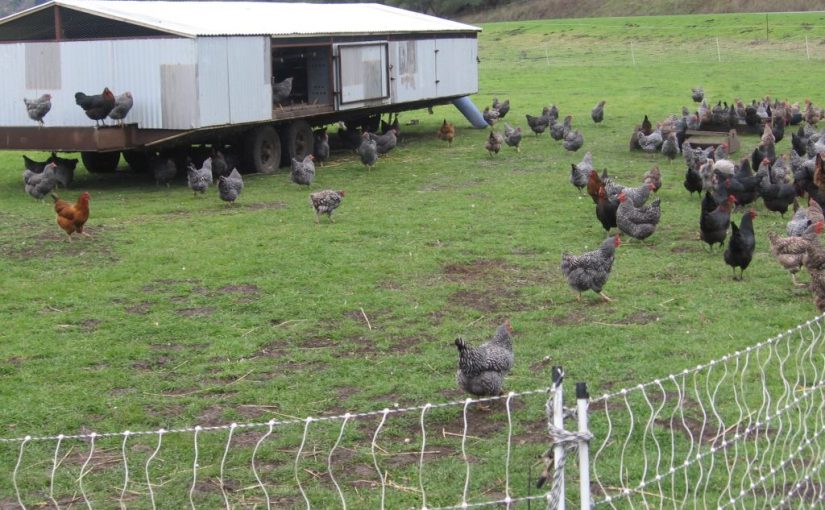
The innovative Virginia farmer Joel Salatin, who has pioneered the gold standard of animal welfare on Polyface Farm, said that a chicken has a right to express its “chickeness.” In other words, animals produced for food still have a right to express their instinctual habits and fulfill their biological destiny. Cows graze in pastures, chickens should have room to peck, scratch and roam in the sunshine, and when allowed to express their indigenous behavior in a proper environment free from industrial distress, animals grow to be vigorous, content, fulfilled beings that provide healthier food and also perform ecosystem services like enhancing soil fertility.

But as the OLPP tries to codify some life-promoting practices, the USDA prefers to favor the degenerative inhumane practices of the worst players who regard living sentient animals as nothing more than machines while economically disadvantaging producers who treat their animals with respect and compassion.

Mark Lipson, Senior Policy and Program Specialist for the Organic Farming Research Foundation was the Sustainable and Organic Agriculture Policy Advisor at the USDA under the Obama administration. According to Lipson, there are a few very large and influential organic egg producers who are taking advantage of some of the vague aspects of the organic standards on animal welfare by running huge animal confinement operations; they do not want to operate under a stronger more humane rule. Ironically, these entities are joined in their opposition by some non-organic producers who oppose any constraint on the CAFO system; so, the arguments against the new rule are based, in part, by companies that aren’t even organic.

Lipson said, “The withdrawal of the rule is probably illegal and an abuse of power by USDA and the Secretary of Agriculture. It’s not the end of organic, but it is problematic in terms of the efforts of the organic industry’s consensus to raise the bar on animal care and welfare. The Organic Trade Association (OTA) is suing the USDA. The court case will be crucial and people should be grateful that OTA has the resources and the commitment to take this to court. The comment period goes for a week from today, there should be a massive public response to say no to the withdrawal of what is one of the most strenuously worked on rules in the history of organic. It’s probably not perfect, but it does codify the best practices that many producers are using now, whether it’s the rule or not.”

Don’t let the Trump administration ignore the public’s interest and compromise organic standards. The organic industry has worked hard to create a healthy alternative to industrial practices that disregard the earth, people’s health and the welfare of animals. Make your voice heard, protect organic standards. The deadline is Jan 16.

Business That Works for Everyone: A Declaration of Interdependence

Paul Phillips, an employee of B Corp Rhino Foods, improved his life’s finances through the company’s income-advance program. Photo by Ned Castle.

By Jay Coen Gilbert

This article was published in B the Change, which exists to inform and inspire people who have a passion for using business as a force for good in the world.

A version of this article was originally published on Forbes.com.

Ten years ago, a small group of business leaders stood together to make a “declaration of interdependence.” They declared the simple truth that business should work for everyone.

They weren’t leaders of big businesses. Few, if any, of these businesses were — or are — household names. They were leaders of the kinds of small businesses that make up the vast majority of businesses in the world.

What these business leaders declared wasn’t especially controversial. They declared that they cared about the people who worked for them, the communities in which they did business, and the environment they would leave for their grandkids. They declared they wanted their businesses, and business as a whole, to work for more than just themselves and their shareholders — they declared that business should work for everyone.

While what these business leaders declared wasn’t anything special, what these business leaders did, however, was — they backed up their talk with action. They were the Founding B Corporations.

Here are just a few examples of what it looks like when business works for everyone:

A business that works for everyone looks like Rhino Foods, whose income-advance program helps employees like Paul Phillips who live paycheck to paycheck manage unexpected expenses. Did you know that 63 percent of Americans don’t have enough savings to cover a $500 emergency? Ted Castle from Rhino Foods knows, and that is why he is working to help other businesses across the country replicate Rhino’s income-advance program.

A business the works for everyone looks like Greyston Bakery, whose open-hiring program gives returning citizens like Dion Drew and other hard-to-employ workers a chance to build their futures with a quality job that offers them dignity, respect and a pathway to a securer life. Did you know that 70 million Americans — that’s one in three adults in the United States — have criminal records? Mike Brady from Greyston Bakery knows, and that is why he has offered to teach other leaders how to build an open-hiring model into their business.

A business that works for everyone looks like My Strong Home, whose innovative financing and construction business helps families from New Orleans to Alabama to South Carolina afford the basic roofing upgrades that can prevent storms from displacing and devastating families. It also saves them money on their insurance premiums. Did you know that more than 10 million Americans living in coastal communities are threatened by increasingly frequent and powerful storms like those we’ve seen recently in Houston, Florida, and Puerto Rico? Margot Brandenburg* from My Strong Home knows, and she knows that prevention is less costly for communities and taxpayers. That is why My Strong Home is working to secure growth capital so their needed services can reach more families before they are in desperate need.

It may surprise you that there already more than 2,000 B Corporations across 130 industries and 50 countries. It may surprise you even more that there are already another 20,000 businesses are following their lead to conduct business as if people mattered. These businesses are using free tools like the B Impact Assessment to manage their positive impact on workers, communities, and the environment with as much rigor as their profits. These leaders are redefining success in business by competing not only to be best in the world, but to be best for the world.

It doesn’t surprise me.

It doesn’t surprise me because a growing number of people recognize the simple truth that if business doesn’t work for everyone, eventually it’s bad for business. And, not incidentally and more importantly, it’s bad for society. It’s not just B Corps, Harvard professors and foundation presidents who agree; increasingly, we’re hearing the same from global economists and some of the biggest investors in the world.

B Corp Declaration of Interdependence

We envision a global economy that uses business as a force for good.

This economy comprises a new type of corporation — the B Corporation — which is purpose-driven and creates benefit for all stakeholders, not just shareholders.

As B Corporations and leaders of this emerging economy, we believe:

That we must be the change we seek in the world.

That all business ought to be conducted as if people and place mattered.

That, through their products, practices, and profits, businesses should aspire to do no harm and benefit all.

To do so requires that we act with the understanding that we are each dependent upon another and thus responsible for each other and future generations.

More than 200 years ago, a Declaration of Independence was made to declare the simple truth that all humans are created equal. Living into that simple truth catalyzed the spread of freedom as never before. Ten years ago, a Declaration of Interdependence was made to declare the simple truth that all humans are connected. Living into that simple truth will catalyze the spread of prosperity and security as never before.

As business leaders, it’s time to roll up our sleeves and get to work. Earlier this year, in the face of rising insecurity, fear, hate speech and violence, and in the absence of trust in our economic and political systems, the B Corp community issued a call to all business leaders to join us in building a more inclusive economy that will create a more shared and durable prosperity for all.

To lead by example, the B Corp community launched an Inclusive Economy Challenge that resulted in nearly 300 concrete, measurable actions being taken to move us 300 steps closer towards an inclusive economy. Some businesses replicated Rhino’s income-advance program; some businesses increased the diversity of their teams, management and boards; some businesses created more inclusive supply chains; some businesses created worker-ownership opportunities.

In early October 2017, the B Corp community gathered in Toronto for their annual gathering under the banner of Interdependence and redoubled their efforts for Year 2 of the Inclusive Economy Challenge. And they’ve created all kinds of resources for any business who shares their vision of an inclusive economy to join them.

A shared and durable prosperity for all is the unfulfilled promise of capitalism, but the current economic system isn’t yet delivering on that promise. Only by recognizing the fundamental truth of our interdependence — and taking concrete, measurable action to build an inclusive economy — can we put out the fires of populism that threaten our political and economic systems.

It’s simple really. We need business that works for everyone.

Let’s get to work.

#TIMESUP at the Golden Globes

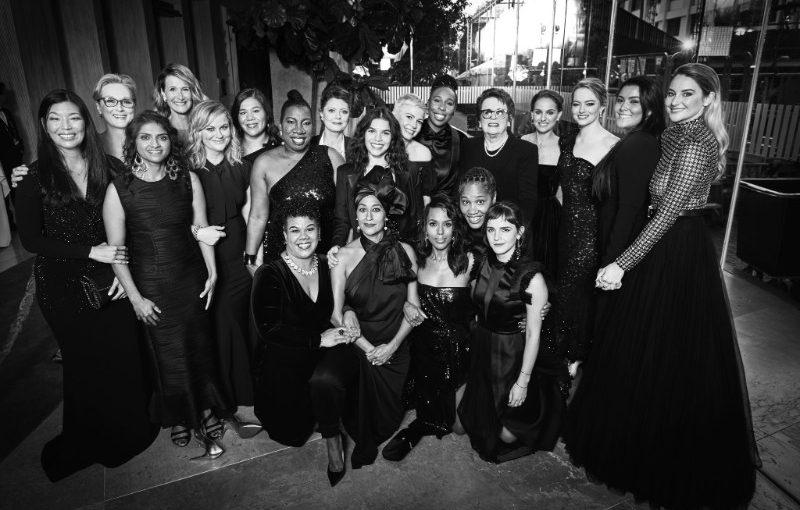
Photo by Art Streiber

If you caught the Golden Globes last night, you may have seen that there were a few Bioneers faculty in the audience. On Sunday Meryl Streep and Amy Poehler took, as their plus-ones, Bioneers speakers Ai-Jen Poo and Saru Jayaraman.

Along with Poehler and Streep, several other actresses including Emma Watson, Laura Dern, Susan Sarandon and Emma Stone were accompanied by female activists at the awards show. The activists included Tarana Burke, the founder of the “me too” movement and

Marai Larasi, the executive director of Imkaan, a Black-feminist organization. This coordinated effort was to draw attention to the #TIMESUP campaign whose goal is to draw attention to violence against women and girls and to fight against sexual harassment and abuse.

This is a watershed moment, a golden opportunity to help leverage increased visibility into movement for change.

Help amplify the issues and campaigns that Saru Jayaraman and Ai-Jen Poo are engaged in; movements for workers rights, equal pay and against sexual harassment by sharing their work widely with your network and taking action. Links to their campaigns, along with their Bioneers talks, podcasts and articles are below. Make Meryl Streep and Amy Poehler’s actions matter by getting engaged today.

Saru Jayaraman was a keynote speaker at this year’s Bioneers gathering, touching on wage equality, the history of tips, and fighting harassment in the service industry. Her work with ROC United is to ensure all people who work in restaurants can achieve financial independence and improve their quality of life by engaging people who work in the industry, employers and consumers. You too can take action through their #1FairWage campaign. Saru has also been featured on Bioneers radio:

Raced and Classed: The Journey From Diversity to Equity
http://bit.ly/2pesjQY

A new generation of visionary change-makers is reframing the race conversation, and designing new tools to transform our unconscious biases and create justice. With: Racial justice pathfinders Rinku Sen, Saru Jarayaman and Malkia Cyril.


Ai-Jen Poo is the director of The Domestic Worker’s Alliance and was a keynote speaker at the Bioneers 2012 Conference. Her organization works on developing policy and networks to protect and empower domestic workers. You can help the DWA’s efforts on the #TIMESUP campaign by adding your name to their statement.

Speaking with the Women’s Leadership Panel
https://youtu.be/x3VJh8fce3I

Ai-Jen Poo offers a view into the ways in which we are all increasingly connected at Bioneers Women’s Leadership and Economics, which was hosted by the Bioneers Everywoman’s Leadership program as a supplement to the Bioneers 2012 Annual Conference.

Please be sure to help amplify the work of these inspiring women through your network by joining their campaigns and sharing the videos and pieces that resonate with you.

A New Hampshire Resident & Legislator Exchange Words on Community Rights

This piece was originally published on the Community Environmental Legal Defense Fund (CELDF) website. The CELDF is building a movement for Community Rights and the Rights of Nature to advance democratic, economic, social, and environmental rights – building upward from the grassroots to the state, federal, and international level.


Recently, New Hampshire Representative Ellen Read sponsored CACR19, a state constitutional amendment that guarantees local communities the right to make the decisions affecting the places where they live – including recognizing Community Rights over corporate claimed “rights.” The New Hampshire Community Rights Network (NHCRN) and local residents drafted the measure with support from CELDF. Several co-sponsors have signed on, creating a bi-partisan coalition.

It sounds simple enough: the right to local community self-government. But it has many New Hampshire legislators in a tizzy. One of them says that the people do not, and should not, govern themselves. Check out one resident’s powerful exchange with a legislator here, in response to a Letter-to-the-Editor supporting the amendment.

From Representative Brian Stone:

NOV 14 • The concept of ‘home rule’ isn’t synonymous with the liberty we all enjoy in New Hampshire. Home rule permits municipalities to make as many ordinances and laws that apply to their municipalities as they see fit. More laws, regulations, ordinances… Does this sound like freedom to anyone? The State of NH protects our freedoms by setting out what municipalities are permitted to do in regards to these realms. If you think home rule is so wonderful, all you have to do is visit Massachusetts. I’ll let you be the judge of which state has more freedom. Revolutionaries didn’t fight to live in a state where the law changes from town to town, and their freedoms could be highly restricted merely because of the municipal boundaries they live in.

Furthermore, the freedoms in the NH Constitution are the law of the land, and are enforced.

The people that seem to push ‘home rule’ in NH that I have seen in my House Cmte. that regularly sees these types of bills are usually from extremely liberal towns that want to restrict the freedom of their citizens, but can’t because we live in a state without ‘home rule’, so they have to ask the Legislature.

I’ll continue to stand against ‘home rule’ and ensure that NH citizens have liberties anywhere in NH they go knowing that when they cross borders between towns they aren’t subjecting themselves to more regulations, ordinances, and laws…

On another important note, towns frequently want to do something that is not in the best interest of the State and its citizens as a whole. Home rule would permit a town to have veto power on any important plans such as infrastructure projects that benefit the rest of the State.

I also just wanted to add the following on what the NH Constitution talks about:

It grants no direct power to towns or cities. The only constitutional power that is granted is Part I, art. 39, which prohibits the legislature from changing the form of government of a town or city without the approval of the voters. Other than that single instance, the New Hampshire Constitution grants power to the legislature, which in turn may grant power to municipalities if it wishes to through statutes. The legislature may also take those powers back again by changing or repealing the laws. This concept has been firmly stated by the New Hampshire Supreme Court: “…towns are but subdivisions of the State and have only the powers the State grants to them.” Piper v. Meredith, 110 N.H. 291 (1970). Further, “[u]nder our State Constitution ‘(t)he supreme legislative power…(is) vested in the senate and house of representatives ….’ N.H. Const. pt. II, art. 2. See also N.H. Const., pt. I, art. 29. For these reasons, we have held that the towns only have ‘such powers as are expressly granted to them by the legislature and such as are necessarily implied or incidental thereto.’” Girard v. Allenstown, 121 N.H. 268, 270‐71 (1981).

From Monica Christofili:

NOV 16 • Representative Stone, your comments show thoughtful mindfulness of our NH Constitution and your constituents’ freedoms. However, the proposed State Amendment is not about home rule. (The editors used “home rule” in the title, not the letter writers.) Instead, the amendment is about recognizing, securing, & protecting NH citizens’ right to self-government. In other words, it’s about community rights affirmed in our Declaration of Independence & NH’s Constitution. Namely, Part 1, Art. 1 of NH’s Constitution declares that government of right originates from the people and is founded in consent. Art. 2 declares we have natural, essential, and inherent rights.

This said, you’re correct. NH state law determines what happens in our communities. Yet this often means the state denies communities the authority to protect themselves. Therein, Art. 10 of NH’s Constitution declares that when government no longer protects its people, the people have a right and a duty to reform the old or establish new government: “The doctrine of nonresistance against arbitrary power, and oppression, is absurd, slavish, and destructive of the good and happiness of mankind.”

In other words, the amendment is about inalienable rights, about town residents determining whether projects benefitting the state “over-all” will affect the health, safety, & welfare of themselves and nature. How do we figure this “over-all” sum to begin with? Consider an energy project that brings jobs but also threatens residents and ecosystem. The project is no longer benefiting the state over-all because it creates a sacrifice zone of a town’s residents and ecosystems. Is this town worth less than the state as a whole? How do we justify that viewpoint to town inhabitants when they cannot say no to a project hurting them? You mention that community rights supporters who want to say no to such projects are usually from liberal towns that want to limit rights of citizens. You might be interested in this study about the community rights movement transcending political party, age, and gender: https://carsey.unh.edu/publication/water-concerns.

You also state, “More laws, regulations, ordinances. Does this sound like freedom to anyone?” But does it sound like freedom when we can’t say no to corporate projects depleting our aquifers, drilling through our estuaries, poisoning our water? It doesn’t to me, my husband, or to our 5 year old son, who asks us if his friends who were poisoned with contaminated water at Pease AFB are going to die and if the contamination is in our water supply. We don’t know how to answer him since Pease contamination has reached the Great Bay Estuary, right next to our water supply. We’d like to be able to say to our son that if a project ever comes near us that the state is allowing even though it is going to poison our water, we’ll be able to exercise our freedom to say no to the project and yes to his inalienable right to clean water.

This piece was originally published on the Community Environmental Legal Defense Fund (CELDF) website. The CELDF is building a movement for Community Rights and the Rights of Nature to advance democratic, economic, social, and environmental rights – building upward from the grassroots to the state, federal, and international level.

Food Policy Action’s 2017 Congressional Scorecard Shows Lack of Action

By Michael Peñuelas

This piece was originally published on the Food Tank website. Food Tank is a nonprofit organization focused on building a global community for safe, healthy, nourished eaters.

Food Policy Action (FPA) has released its 2017 National Food Policy Scorecard to help the public track actions taken by lawmakers in the United States (U.S.) Congress.

FPA reports that the scores are down significantly this year because neither the House nor the Senate spent much time on food issues, leaving FPA with little to grade. Senators were graded on 1 vote and their co-sponsorship of 10 bills, while Representatives were graded on 5 votes and 11 bills.

Any U.S. citizen can view the grades assigned to their Senators and Congresspeople by FPA via an online scorecard tool.

Ken Cook, a co-founder of FPA and the President of the Environmental Working Group, explains that the scorecard highlights a “frustrating lack of bipartisanship on food policy votes.” According to Cook, “food policy is not a partisan issue. Congress should prioritize a more balanced, healthy and sustainable food system. With this year’s report showing great room for improvement…voters need a clearer sense of where their legislators stand.”

FPA designs the scorecard to capture the full spectrum of policies impacting the food system in an attempt to demonstrate the connections between them. “We believe this annual overall snapshot will help break down silos in the food movement so that the members themselves, and the public, recognize the multiplicity of issues impacting food, they write.

This year, while 220 members of Congress received perfect scores of 100 percent,130 members were given scores of 0 percent, the lowest possible.

“We deserve better,” said Tom Colicchio, another co-founder of FPA. “Congress has allowed the political dysfunction of a new Administration to not only prevent positive food bills from moving forward but to roll back basic critical protections that keep our food system safe. FPA will continue to hold members of Congress accountable for the votes they cast – or I should say lack of votes this year – that impact food and our food system,” said Colicchio.

The scorecard did grade a handful of bills and votes positively. “We applaud those in Congress who broke through the noise to raise their voice for the good food movement,” said FPA Executive Director Monica Mills. “Their efforts did not go unnoticed.”

Positively-rated efforts included bills proposed by Senators Mike Lee (R-UT) and Dianne Feinstein (D-CA), as well as by representatives Susan Davis (D-CA-53), Alma Adams (D-NC-12), John Faso (R- NY-19), Jared Huffman (D-CA-02), and Elizabeth Esty (D-CT- 05).

Mills also suggested that the scorecard should have a direct bearing on the 2018 midterm elections. It will assist FPA and other organizations working in the food movement to determine their strategy moving into 2018 and help voters decide which lawmakers’ food policy records should earn their votes. According to a poll published by FPA, food issues are highly persuasive among likely swing voters.

“While this year’s Scorecard shows a weak Congressional agenda on food policy, this is only a midterm score,” said Mills. “Congress has a huge opportunity to show leadership on these issues as we move into discussions ahead of the 2018 Farm Bill. It is our job to hold them accountable during the next election cycle.”

This piece was originally published on the Food Tank website. Food Tank is a nonprofit organization focused on building a global community for safe, healthy, nourished eaters.

The Far-Reaching Environmental Impacts of Oil Spills

Carl Safina is an ecologist and award-winning author who writes about oceans, animals, and the human relationship with the natural world. A long-time advocate for ocean preservation, Safina was the inaugural holder of the Chair for Nature and Humanity at Stony Brook, and President of The Safina Center. He recently shared his experience with nature’s intelligence with Bioneers, and he was a keynote speaker at the National Bioneers Conference 2017.

In A Sea in Flames (Crown Publishers, 2011), Safina shares his account of a months-long, manmade disaster that shook the U.S. As he travels across the Gulf, Safina attempts to deconstruct a series of misjudgments that led to the now-infamous Deepwater Horizon explosion. The excerpt that follows, a selection from “Part Two: A Season of Anguish,” explores the broader impacts that oil spills have on the environment and its inhabitants.

“My name’s Dicky Toups,” says the pilot before he starts the engine of the seaplane I’m climbing into. “But they call me Captain Coon-ass.”

We overfly the emerald maze of the vast Mississippi Delta. Captain Coon-ass points, saying, “There’s a big ole gator.”

To the far points of view, America’s greatest marshes lie dissected, bisected, and trisected, diced by long, straight artificial channels and man-angled meanders, all aids to access and shipping. For the vast multimillion-acre emerald marshes, they are death by a thousand cuts.

The sign had said, “Welcome to Louisiana—America’s Wetland.” Pride and prejudice. People here depend on nature or the control of nature—or both. Keep an eye on nature; it can kill you here. But people can kill the place itself.

Since the 1930s, oil and gas companies have dug about 10,000 miles of canals through the oak and cypress forests, black mangrove swamps, and green marshes. Lined up, they could go straight through Earth with a couple thousand miles to spare. The salt water they brought killed coastal forests and subjected our greatest wetlands to steady erosion. Upstream, dams and levees hold back the sediment that could have helped heal some of that erosion. Starved on one end, eaten at the other. How to kill America’s wetlands. Long after this oil crisis is over, this chronic disease will continue doing far more damage than the oil.

All these Delta-slicing channels cause banks to dissolve, swapping wetlands for open water. Those channels also roll out red carpets for hurricanes. Incredibly, this has all cost Louisiana’s coast about 2,300 square miles of wetlands. Marshland continues to disintegrate at a rate of about 25 square miles a year. The rise in sea level due to global warming is also helping drown watery borderlands. Oil leak or no leak, these things, all ongoing, constitute the most devastating human-made disaster that’s ever hit the Gulf. Bar none.

Only slowly does the muddy Mississippi lose itself to the oceanic blue of the open Gulf, a melting of identities, a meeting of watery minds. And also the drain for sediments, agricultural fertilizers, and deadzone-generating pollutants from the entire Midwest and most of the plains. Even before the oil blowout, this was a troubled place—a troubled place whose troubles have now escalated to a whole new level.

Two boats are tending booms around an island densely dotted with nesting pelicans. As I’ve noticed from the ground—but it’s even more striking from up here, at 3,500 feet—most of the coast is bare of booms and undefended. Where booms have been placed along the outer beach, many have already washed up onshore, already useless.

The sea-surface breeze pattern is interrupted by a marbling of slicks. Often such a pattern is perfectly natural, so I look carefully. It’s brown.

“Oil,” says Captain Coon-ass.

One of those slicks has nuzzled against the shore. There’s a boat there and some people are walking along the beach, inspecting a long boom that the wind has washed ashore.

The nearshore waters and beyond are dotted with drilling rigs for oil and gas, some abandoned. Like bringing coals to Newcastle, many of the rigs stand surrounded by floating oil.

Offshore, longer slicks ribbon their way out across the blue Gulf. As we follow them, the light slicks thicken with dark streaks that look from the air like wind-driven orange fingers, then like chocolate pudding. An ocean streaked with chocolate pudding.

A few miles out, the streaks grow darker still. Yet there remains far more open water than oil slick.

That changes. Blue water turned shiny purple. A bruise from a battering. The sea swollen with oil.

As the water darkens and the slicks widen, Captain Coon-ass points to a small plane below us, saying it’s on a scouting run for the C-130s that will follow to spray dispersants. More chemicals on a sea of chemicals.

Yet plenty of the oil—and I mean plenty—is not dissolved. Blue water turned brown.

“This is some pretty thick stuff right here,” Captain Coon-ass says. The crude is now drifting in broad bands that stretch to the horizon. “We’re lookin’ at twenty miles of oil right here.”

We’re directly over the source of the blowout. Below, two ships are drilling the relief wells that we’ve been told will take months. A dozen ships drift nearby, most with helicopter landing pads on them. What they’re all doing, heaven knows.

A fresh breeze puts whitecaps on the nonoiled patches of the black-and-blue sea. As the C-130 comes out, we turn northeast.

We’re headed toward the Chandeleurs, the line of sandy islands that have been much in the news for their at-risk bird rookeries. Soon we’re over Breton Sound, where a couple of days ago, from a boat, I saw no oil.

But now there is plenty of oil, moving in between the main coast and the islands.

Out to intercept the oil is a fleet of shrimp boats towing booms from the outriggers that would normally tow their nets. The idea appears to be that they will catch the oil at the surface, the way they catch shrimp at the seafloor.

Dozens of boats tow booms through the oil, but as they do, water and oil simply flow over them. Far from corralling it, they’re barely stirring it. As they pass, the oil—seemingly all of it—remains.

Louisiana lives by oil and by seafood. But oil rules. Fishing has nothing like the cash, the lobbyists, the destructive sophistication of the pusher to whose junk we’re all addicted. But Florida lives largely by the whiteness of its sand. It has long eschewed oil. And the difference in what politicians will and won’t say about oil is stark.

Florida’s Governor Charlie Crist returns from a little airtime over the Gulf. His message: “It’s the last thing in the world I would want to see happen in our beautiful state.” He adds, “Until you actually see it, I don’t know how you can comprehend and appreciate the sheer magnitude of that thing. It’s frightening. . . . It’s everywhere. It’s absolutely unbelievable.” Where oil money rules, governors are not at liberty to disclose such impressions. They’re probably not at liberty even to think them.

“The president is frustrated with everything, the president is frustrated with everybody, in the sense that we still have an oil leak,” says a White House spokesman.

But we’ve only just begun.

When Obama announced that he was opening up large new areas for offshore drilling, he said, “Oil rigs today generally don’t cause spills. They are technologically very advanced.” That’s exactly right. Leaks, spills, and blowouts are never expected. Yet we know they happen. That should make us thorough in preparedness. But the human mind lets down its guard if big danger seems rare and remote.

And so we did. In 2009, the Interior Department exempted BP’s Gulf of Mexico drilling operations from a detailed environmental impact analysis after three reviews concluded that a massive oil spill was “unlikely.” Oil rig operators usually must submit a plan for how they’ll cope with a blowout. But in 2008, the Bush administration relaxed the rules. In 2009, the Obama administration said BP didn’t need to file a plan for how it would handle a blowout at the Deepwater Horizon. Now a BP spokesman insists, “We have a plan that has sufficient detail in it to deal with a blowout.”

Obviously, they don’t. Obviously, they aren’t.

“I’m of the opinion that boosterism breeds complacency and complacency breeds disaster,” says Congressman Edward Markey, a Democrat from Massachusetts. “That, in my opinion, is what happened.” Bush and Cheney’s ties to big oil and their destruction of Interior oversight are infamous. But Obama’s Interior secretary’s ties to big energy also make environmentalists uneasy. As a senator from Colorado, Ken Salazar accepted some of BP’s ubiquitous campaign contributions. In 2005, Senator Salazar voted against increasing fuel-efficiency standards for cars and trucks, and voted against an amendment to repeal tax breaks for ExxonMobil and other major petroleum companies. In 2006, he voted to expand Gulf of Mexico drilling. And then as Interior secretary, he pushed for more offshore drilling. The Interior secretary now says there have been well more than 30,000 wells drilled into the Gulf of Mexico, “and so this is a very, very rare event.” The oil from those offshore rigs accounts for 30 percent of the nation’s domestic oil production, he notes, adding. “And so for us to turn off those spigots would have a very, very huge impact on America’s economy right now.”

Probability, however, tells us that the spill’s a very, very inevitable event. Especially with 30,000 wells drilled and roughly 4,000 wells currently producing oil in the region. In 2007, the federal Minerals Management Service examined 39 rig blowouts that occurred in the Gulf of Mexico between 1992 and 2006. So, a blowout every four and a half months. I guess most are quickly controlled. Why aren’t we ready for one that isn’t? A car accident is a rare event, but we use our seat belts and we like to know we have air bags.

Rather than plan for the worst, Big Petroleum has indulged in—and been indulged by—a policy of waving away risks. In a 2009 exploration plan, BP strongly discounted the possibility of a catastrophic accident. A Shell analysis for drilling off Alaska asserts that a “large liquid hydrocarbon spill [hydrocarbon meaning oil and gas] . . . is regarded as too remote and speculative to be considered a reasonably foreseeable impacting event.”

Foresee this: if you think it’s difficult to clean up oil in the warm, calm Gulf of Mexico, imagine trying to do it in Arctic waters with icebergs, frozen seas, and twenty hours of darkness.

Speaking of the cold and the dark, “Drill, baby, drill” queen Sarah Palin just has to say something about all this. So she says we shouldn’t trust “foreign” oil companies such as BP. She says, “Don’t naively trust—verify.” Verified: her husband worked for BP for eighteen years. Palin blames “extreme environmentalists” (c’mon, Sarah, is there any other kind?) for causing this blowout because they’ve lobbied hard to prevent new drilling in Alaska. If you follow what she has in place of logic, it could seem she’d rather that this had happened in her home state.

In and out of the comedy of horrors strides BP CEO and court jester Tony Hayward. “I think I have said all along that the company will be judged not on the basis of an accident that, you know, frankly was not our accident.” That’s what he actually says. Highlighting the failed blowout preventer, Hayward says, “That is a piece of equipment owned and operated by Transocean, maintained by Transocean; they are absolutely accountable for its safety and reliability.”

Transocean’s president and CEO says drilling projects “begin and end with the operator: in this case, BP.”

Take that.

He says that Transocean finished drilling three days before the explosion. And he says there’s “no reason to believe” that the blowout preventor’s mechanics failed. That’s what he actually says.

Halliburton’s spokesman says his company followed BP’s drilling plan, federal regulations, and standard industry practices.

In sum, BP has blamed drilling contractor Transocean, which owned the rig. Transocean says BP was responsible for the well’s design and pretty much everything else, and that oil-field services contractor Halliburton was responsible for cementing the well shut. Halliburton says its workers were just following BP’s orders, but that Transocean was responsible for maintaining the rig’s blowout preventer. And the Baby Bear said, “Somebody’s been lying in my bed.”

By the end of the first week of May, a heavy smell of oil coming ashore along parts of Louisiana’s coast begins prompting dozens of complaints about headaches, burning eyes, and nausea.

Meanwhile, I hear on the radio that in an effort to do something, “People from around the world have been giving the hair off their heads, the fur off their pets’ backs, and the tights off their legs to make booms and mats to mop up the oily mess spewing out of the seabed of the Gulf of Mexico.” Whether any of this stuff was ever actually used, I can’t say. I never saw any; that I can say.

By May’s second week, heavy machinery, civilian and military dump trucks, Army jeeps, front-end loaders, backhoes, and National Guard helicopters are pushing up and dropping down sand to keep an impending invasion of oil from reaching the marshes in and around Grand Isle, at the tip of Louisiana. Much of the mobilization falls to the Marine Spill Response Corporation, formed in 1990 after the Exxon Valdez disaster and maintained largely by fees from the biggest oil firms. Its vice president of marine spill response says that most of its equipment, including booms and skimmers, was bought in 1990. She says, “The technology hasn’t changed that much since then.”

“This is the largest, most comprehensive spill response mounted in the history of the United States and the oil and gas industry,” crows BP’s CEO Tony Hayward, sounding proud when he ought to be aghast and horrified by the scale of the mess and the upheaval.

Workers farther inland are diverting fresh water from the Mississippi River into the marshlands, hoping the added flow will help push back any oily water that comes knocking. “We’re trying to save thousands of acres of marsh here, where the shrimp grow, where the fin-fish lay their eggs, where the crabs come in and out,” says the director of the Greater Lafourche Port Commission. Enough Mississippi River water to fill the Empire State Building is now rushing into southeastern Louisiana wetlands every half hour. “We have opened every diversion structure we control on the state and parish level to try to limit the oil approaching our coasts,” says the assistant director of the Office of Coastal Protection and Restoration, “nearly 165,000 gallons every second.”

“It can’t hurt,” says a wetlands ecology professor at Ohio State University and an authority on the Mississippi’s interaction with the Gulf of Mexico. Oh, but it can.

***

New fear factor: hurricane season. The image: hurricanes that could “churn up towering black waves and blast beaches and crowded cities with oil-soaked gusts.” The news stories carry attributions such as “experts warned.” And precise-sounding imprecision like: “As hurricane season officially starts Tuesday . . .” and “Last month, forecasters who issue a closely watched Colorado State University seasonal forecast said there was a 44 percent chance a hurricane would enter the Gulf of Mexico in the next few months, far greater than the 30 percent historic average.”

To the ambiguity and imprecision, add unnecessary intonations of worrisome complexity: “The high winds may distribute oil over a wide area,” says a National Hurricane Center meteorologist, adding, “It’s a complex problem that really needs to be looked at in great detail to try to understand what the oceanic response is when you have an oil layer at the sea surface.”

To most normal people faced with the real event of an out-of-control mess, especially people who’ve survived hurricanes, that kind of noninformation stokes anxiety, provokes fear—and gives no one a clear clue about what to do. Does one make decisions based on the difference between 30 and 44 percent? News you can use, it isn’t. It’s news that can help ruin your health.

Insult to injury: “Safety first,” says a BP spokesman. “We build in hurricane preparedness, and that requires us to take the necessary precautions.”

By mid-May, something like 10,000 people are Being Paid for cleanup eff orts around the Gulf. BP has little choice. Anything less, there’d be riots. Most are fishermen riding around looking for oil, dragging booms that don’t collect much oil, or putting out booms that can work only on oil that hasn’t been dissolved by dispersants. About a million and a half feet—roughly 300 miles—of boom is already out along the coast. Other people are out picking oil off beaches with shovels.

How much oil are we dealing with? This gets good: Purdue professor Steve Wereley performs computer analyses on the video of the leaking oil to see how far and how fast particles are moving (a technique called particle image velocimetry). His conclusion: the well is leaking between 56,000 and 84,000 barrels daily. His other conclusion: “It’s definitely not 5,000 barrels a day.”

Just a few days ago, during congressional testimony, officials from BP, Transocean, and Halliburton estimated a “worst-case” scenario maximum flow of 60,000 barrels a day. Yet a BP spokesman says the company stands by its estimate of 5,000 barrels per day. There’s “no way to calculate a definite amount,” he says, adding coyly, “We are focused on stopping the leak and not measuring it.”

That’s Bull Poop. As the director of the Texas A&M University’s geochemical and environmental research group points out: “If you don’t know the flow, it is awfully hard to design the thing that is going to work.”

Killing the well is proving difficult. Killing public confidence is easier. The fact that the real flow will turn out to be sixty times what BP was first saying, and twelve times the Coast Guard’s most oft-repeated estimate, does the trick handily.

This excerpt has been reprinted with permission from A Sea in Flames: The Deepwater Horizon Oil Blowout by Carl Safina, published by Crown Publishers, 2011.

Bioneers in the News: November/December 2017

Searching for the perfect news round-up? Look no further! We’ll keep you savvy with all the Bioneers creativity and inspiration you need in your life. Follow the Bioneers Blog for our bi-weekly news roundup:

“Over the last five years, intersectionality has become a buzzword and an accountability standard for social change organizations and leaders…Two patterns especially trouble me – conflating the word ‘intersectional’ with the word ‘identity,’ and applying intersectional analysis inconsistently. There are lots of great examples of intersectional organizing for us to learn from, and the pay off can be profound when we get it right.” Rinku Sen writes on Intersectionality (a term created by Kimberlé Crenshaw)

Malkia A. Cyril and Dallas Goldtooth are on Full Color Future’s #FullColor50, “showcasing leaders — in tech, media, commerce, and advocacy — who are building a new narrative through their work.”

“Coal doesn’t make financial sense and New Energy Economy has prevailed at the Commission level in proving our case.” Mariel Nanasi celebrates the power of the people in this latest victory from New Mexico

“DRM law has the power to do untold harm. Because it affords corporations the power to control the use of their products after sale, the power to decide who can compete with them and under what circumstances, and even who gets to warn people about defective products, DRM laws represent a powerful temptation.” Cory Doctorow for his Electronic Frontier Foundation (EFF) »

Eriel Deranger’s Indigenous Climate Action rejects award to move Aviva to “step up and show real leadership to adopt policies that result in substantive change. This moment could move Aviva, and the divestment conversation, forward to recognize Indigenous rights and cease all underwriting of tar sands corporations and full divestment from fossil fuels.”

Ai-Jen Poo joins Pop Culture Collab’s #WONDERLAND podcast to chat pop culture and social change.

“It poses a risk to the Indigenous rights of tribal nations all along the route and it’s a complete disregard for free prior and informed consent as guaranteed on the UN Declaration on the Rights of Indigenous Peoples.” Dallas Goldtooth speaks to CBC News on campaigns fighting against the Keystone pipeline’s construction.

Tara Houska sets the “Thanksgiving” record straight for Mic in this viral video.

The regulations are “not just about sharing tips with the back-of-the-house staff — that part would be okay — but employers would have the right to decide what to do with the tips.” Saru Jayaraman in the Washington Post and in Business Insider

Talking about climate change with friends and family can be intimidating. #BioneersYouth Alliance for Climate Education can help!

“There is now a broad consensus among forest scientists that we have considerably less fire in our forests today compared to the natural levels that occurred prior to fire-suppression policies.” Chad Hanson for Sierra Magazine »

Is LA’s infrastructure prepared to cope with our new normal of extreme weather and the droughts, wildfires and mud slides that come with it? Andy Lipkis speaks to KPCC’s Take Two on the city’s resilience

“Working within communities to make them stronger, healthier, and better—nothing the Sierra Club does today is more important. We, too, are in construction: It’s a cleaner, better future we’re building.” Michael Brune for Sierra Magazine

Van Jones tells Vulture his 10 favorite books – we see some fellow Bioneers on the list!

“Now a financial advisor for RBC Wealth Management where he advises on more than $2 billion in environmentally sustainable investments, Thomas Van Dyck shared insights that were also drawn from more than four years of work with the Divest/Invest movement. The organization urges investors to ‘join the global investor movement accelerating the sustainable energy transition’ by divesting their fossil fuel assets.” HuffPost covers Tom Van Dyck at #Bioneers2017

Joan Blades talks Living Room Conversations on the TEDWomen stage:

“Net Neutrality isn’t hard to understand, except when someone makes it so, because muddying issues is often a profitable endeavour – expensively-sown confusion is a mainstay of climate denial and a tactic that goes all the way back to the tobacco industry’s work to obscure the link between smoking and cancer.” Cory Doctorow for the New Internationalist

“If you give it a chance, nature will be much kinder than we deserve.” David Suzuki speaks to the youth, hope, and nature’s brilliance in this CBC piece.

Jeremy Kagan’s film, SHOT, is now available on iTunes and Amazon.

“With sexual harassment and assault revealed to be prevalent in public workplaces, imagine what is happening to workers who labor behind closed doors in homes around the country.” Ai-Jen Poo in the Washington Post

Billy Parish (Mosaic) and Bren Smith (GreenWave) have been named in Rolling Stone’s “25 People Shaping the Future”

Joel Solomon is featured on Caroline Casey’s KPFA Radio show, The Visionary Activist this week.

Rinku Sen responds to a reader who asks what to do when people close to her say racist things at social events. The perfect guide to navigate the holiday season!

“Early next year, this slip of land, a little more than half an acre in all, will become the first physical piece of the Sogorea Te Land Trust, a project they’ve been working on since 2014 to return indigenous land — specifically Chochenyo and Karkin Ohlone land — to indigenous stewardship.” Corrina Gould speaks truth in the San Francisco Chronicle

Inspired by John Wick of the Marin Carbon Project, The Perennial in San Francisco celebrates #WorldSoilDay every day. Diana Donlon of the Center for Food Safety interviewed co-owners Karen Leibowitz and Anthony Myint for Civil Eats.

Naomi Klein at the 2014 Bioneers Conference“What gives me more hope than ever is the increased energy people are putting into solutions. People are increasingly becoming clear that they have to be the leaders that they have been waiting for — and stepping into that role of leadership.” Vien Truong offers reason to be hopeful in 2018

From the TED Archives, a previously unpublished piece by Janine Benyus on the bio-industrial revolution.

“It is always assumed that people will be able to return to their place of origin’ once the disaster passes. That’s a distinctly unrealistic assumption in our age of drowning island nations and vanishing coastlines.” Naomi Klein on the U.S.’s Temporary Protected Status program for the The Intercept

Board Member and #BioneersYouth Xiuhtezcatl Martinez profiled in Upworthy

“Perhaps no outsider—no visiting expert, no dispassionate observer, certainly no outside investor—will notice the inherent weakness and cruelty of a one-product economy in a region or a country. But the adverse effects will certainly be visible and acutely feelable to the resident insiders.” Wendell Berry’s new work, The Art of Loading Brush, in Sierra Magazine

“Nobody has ever explored these deep waters, and no one on the team knows what we’ll find.” James Nestor for bioGraphic »

“The Center for Media Justice will join dozens of other digital rights champions to take Ajit Pai’s FCC to court to win back our digital voice. We’ll take action in the street if we have to, and do whatever is necessary to preserve the right of communication for communities of color, and all those with voices at the margins who, now more than ever, need to be heard.” Malkia A. Cyril on the #NetNeutrality repeal

Paul Hawken, Wendell Berry, and other brilliant folks of our time covered in Civil Eats Food and Farming Books of the Year.

Two brilliant #Bioneers2017 keynote speakers, Heather McGhee and Amy Goodman, united on Democracy Now! to discuss patriarchy and the abuses of power in media and government.

“What the storm also did is show that we can’t wait for the government to address social and environmental problems. We can’t just sit here.” Jason Mark reports from Puerto Rico for Sierra Magazine

Tom Goldtooth speaks to Amy Goodman and Democracy Now! at #COP23 on the #KXL oil spill and the Indigenous Environmental Network’s new report on Carbon Pricing and Community Resistance.

“But something big is starting to shift. After years of effort from activists, there are signs that the world’s financial community is finally rousing itself in the fight against global warming.” The latest from Bill Mckibben in The New York Times

The evolution of Biomimicry from an idea to practice? Janine Benyus in L’Oréal-UNESCO For Women in Science

“For me, Jones’ story helped bring into focus how our systems of social dominance—capitalism, racism, and patriarchy—require winners and losers. We’re all steeped in these systems. The win-lose paradigm plays out daily in the subtle and not-so-subtle details of our lives, at work, in the kitchen, in our bank accounts. And the one system with the potential to equalize us—democracy—is kept caged by the winners who want to stay on top.” Executive Director of YES! Magazine, Christine Hanna on Van Jones

Citizen Science featured in the The Economist! Shannon Dosemagen and the groundbreaking work of Public Laboratory for Open Technology and Science highlighted in this beautiful piece

Ai-Jen Poo (National Domestic Workers Alliance, Caring Across Generations) talks the insurance market and universal long-term care in the The New York Times »

“Jayaraman said it is sad to see the restaurant race-wage gap so high in the #BayArea, a place that is hailed as a center for progressive thought and ideals. She said that, like income inequality and housing affordability, the restaurant race-wage gap is one more example of the gulf between those in the Bay Area with privilege and those without.” Saru Jayaraman for KQED News »

Mary Anne Hitt of the Sierra Club’s Beyond Coal Campaign debriefs #COP23 in her latest piece for the HuffPost.

Follow us on Facebook and Twitter to stay up to date on the latest Bioneers news in real time.

Why America Fails at Gathering Hate Crime Statistics

By Ken Schwencke

This story was originally published by ProPublica.

In the early hours of June 5, 2015, Gary Bravo was leaving Sammy T’s in downtown Huntsville, Alabama. The club was hosting a gay night because the last of the city’s few gay bars had closed and some downtown bars were picking up the slack.

As Bravo walked out with two co-workers, they encountered a group of young men. One grabbed Bravo’s friend, and Bravo intervened. The next thing he remembers, someone spun him around, and he was on the ground being punched and kicked while his attackers shouted homophobic slurs. Faggot. Cocksucker.

“A couple more hits and I would have ended up being brain dead,” he recalled.

Bravo suffered extensive injuries from the attack. His right eye was bloodied and swollen, and he couldn’t see from it for weeks. His eye socket had to be reconstructed.

Despite his attackers’ words during the beating, police did not investigate it as a hate crime, or report it to state or federal authorities as one.

Bravo’s case is just one of thousands lost each year to a deeply flawed system for collecting hate crime data, one that has left the U.S. with unreliable, incomplete official counts and little handle on the true scope of bias-motivated violence.

Under a federal law passed in 1990, the FBI is required to track and tabulate crimes in which there was “manifest evidence of prejudice” against a host of protected groups, including homosexuals, regardless of differences in how state laws define who’s protected. The FBI, in turn, relies on local law enforcement agencies to collect and submit this data, but can’t compel them to do so.

The evidence suggests that many police agencies across the country are not working very hard to count hate crimes. Thousands of them opt not to participate in the FBI’s hate crime program at all. Among the 15,000 that do, some 88 percent reported they had no hate crimes. According to federal records, the Huntsville Police Department has never reported a hate crime.

Local law enforcement agencies reported a total of 6,121 hate crimes in 2016 to the FBI, but estimates from the National Crime Victimization Survey, conducted by the federal government, pin the number of potential hate crimes at almost 250,000 a year — one indication of the inadequacy of the FBI’s data.

“The current statistics are a complete and utter joke,” said Roy Austin, former deputy assistant attorney general in the Department of Justice’s civil rights division. Austin also worked at the White House on data and civil rights and helped develop an open data plan for police data.

It’s true that many hate crime cases fall away before they start because about half the victims never report them to authorities.

But to understand why so many cases that are reported to authorities still fall through the cracks, ProPublica requested incident reports or aggregate data from more than 350 law enforcement agencies in 48 states, including the 50 largest agencies nationwide, on the bias-motivated crimes they had investigated since 2010.

More than 280 agencies responded, but in many cases only to say they hadn’t investigated any such incidents, or had no records, or that their records were bad. When we followed up with agency public information officers, they acknowledged that investigators frequently did not mark down incidents as motivated by bias, even if there was evidence suggesting this was so — a spray-painted swastika, for example, might be classified simply as vandalism and not also as a hate crime.

The FBI and some larger agencies champion a two-tiered process in which incidents classified by the first responding officer as potentially bias-motivated are re-evaluated by a second investigator, who determines if the incident should be counted officially as a hate crime. Few of the agencies that responded to our records request appeared to follow this procedure.

In most states, local law enforcement agencies send their hate crime data to the state, which is then supposed to submit it to the FBI, but we found several instances in which this chain broke down. The Orlando Police Department, for example, told us it had reported five hate crimes for 2015 to the Florida Department of Law Enforcement, but the FBI data shows no hate crimes investigated by Orlando that year. Orlando police say FDLE acknowledged the city’s data hadn’t been sent to the FBI “due to a system error,” but an FDLE spokesperson told ProPublica the Orlando police hadn’t submitted the information on time.

Variations in how states define hate crimes also cause confusion that contributes to the undercount. That appears to be one factor in what happened with the Huntsville case.

Alabama has a hate-crime statute, but it only applies to acts of bias based arising from “race, color, religion, national origin, ethnicity, or physical or mental disability,” not sexual orientation. A prosecutor on Bravo’s case acknowledged Bravo’s sexual orientation clearly played a role in his attack, but a spokesman for the Huntsville police said the assault couldn’t be reported as a hate crime because gay people aren’t protected under the state’s law.

The 1990 federal law, however, includes crimes against gay people among those it tracks and asks agencies to report such cases even if no hate crime charge was prosecuted.

Jack McDevitt, a longtime hate crimes researcher and the director of Northeastern’s Institute on Race and Justice, has reviewed police incident reports to check if investigators missed indicators that assaults or vandalism were actually hate crimes.

“We’ve found quite a bit of misclassification or missed cases that could have been investigated,” he said. “You’ve got police officers who aren’t trained to ask the right questions.”

It might not seem like being left out of the official hate crime count would rank high among Bravo’s concerns, but he said it did. Not being counted made him feel as though he and victims like him are being erased — and that there’s no accountability for the bias that motivates their attackers.

“If it happens to someone else, they’re going to be treated the same exact way, and it’s going to be unfair,” he said.


When we asked local law enforcement agencies across the country for their hate-crime reports and data, it quickly became clear that this was an area of substantial uncertainty and discomfort for many of them.

In Omaha, Nebraska, Deputy City Attorney Bernard J. in den Bosch said he couldn’t release older hate crime records in response to ProPublica’s request because the police department suspected that former employees had classified such crimes incorrectly in reporting them to the FBI.

“The Omaha Police Department does not feel comfortable providing the numbers since they are concerned about their accuracy,” in den Bosch said, adding that it was difficult to identify hate crimes properly and that the employees entrusted to do so had done a job the department was now “leery of.”

A spokesman for the Madison, Wisconsin, police department acknowledged its officers weren’t trained in identifying bias-motivated incidents and had not been submitting reports properly as a result.

For one thing, officers weren’t sure if an incident had to be prosecuted as a hate crime to be counted (it doesn’t). After receiving ProPublica’s information request, department officials said they altered their policies on reporting such crimes to the FBI and reclassified dozens of incidents.

In several cases, the information agencies sent ProPublica about hate crime investigations since 2010 was at odds with what they had submitted to the federal government.

According to FBI data, the Anne Arundel County Police in Maryland, which polices half a million people between Baltimore and Washington, D.C., reported no hate crimes between 2012 and 2015. But the department sent us 68 pages of reports for the past 5 years, showing that county police responded to well over 100 incidents, including many in which there was evidence of crimes motivated by bias.

In one case, a woman brought her new boyfriend, a black man, to the home of her ex-boyfriend. He allegedly swung a hammer at the visitor, saying “I don’t want any niggers in my house, get this nigger out of my house.” According to another report, someone scratched the same word into the side of a black man’s car and stole from it.

Officials with the Maryland State Police said many of these cases weren’t reported to the FBI because the Anne Arundel County Police — unsure if they were hate crimes — had flagged them as “inconclusive” in paperwork. Lt. Ryan Frashure, a spokesman for the county police, said the agency has started marking more of its reports as conclusive if they have the appearance of a bias motivation. Indeed, in the 2016 FBI hate crime report, the most recent available, the Anne Arundel County Police reported 16 hate crimes.

Officials at some police departments acknowledged that their officers were simply not in the habit of classifying incidents as possible hate crimes, even when there was evidence that this was the case.

The Miami-Dade Police Department, Florida’s largest law enforcement agency, reported just two hate crimes to the state since 2010. Records officials told us they could not find any reports from that period in which investigating officers noted that a crime had a bias motivation.

“I was on the road for 9 years, but when I wrote a report, I don’t ever remember titling it a hate crime,” said Detective Argemis Colome, a spokesman for the department. “If they would have done graffiti on a wall, it would have been titled a vandalism.”

After speaking with ProPublica, the department’s director ordered an audit to see whether the department had failed to identify hate crimes properly and, thus, to report them to the state and the FBI.

In general, police departments nationwide have embraced data in the last 20 years, using an ever-more sophisticated array of it to track where crimes are happening, to allocate resources, and to hold commanders accountable for results. The New York Police Department’s CompStat initiative is among the most prominent of such efforts and has been credited with playing a role in broad, lasting reductions in violent crime in what was once considered an ungovernable city.

Yet, for many law enforcement agencies, collecting and using data on hate crimes has remained a stubborn exception. According to Brian Levin, a former New York City police officer who studies hate crimes, some law enforcement agencies lack a commitment from the top to properly investigate such incidents and collect data on them.

“You have to have a combination of training, executive leadership, and some kind of infrastructure that is sustained and continuing,” Levin said.

Myesha Braden, a former civil rights prosecutor in the Department of Justice, said police departments often miss opportunities early on to communicate to officers that hate crimes are a priority. “If an officer knows coming into the police academy that hate crime is one of the important crimes they’ll be investigating, at least the seed is planted,” she said.

A recent ProPublica review of training academy standards found that only 12 states have laws requiring police to learn how to identify and investigate hate crimes at that stage; few agencies provide such training once officers leave the academy.

Officers at several police departments told ProPublica they thought it was up to prosecutors to decide if an incident was a hate crime, or that they needed a suspect in custody to categorize an offense as a hate crime in their reports.

Such misconceptions stop officers from classifying hate crimes as they should, said Michael Lieberman, the Anti-Defamation League’s counsel in Washington, D.C.

“To say that there’s not enough to prosecute it, that’s not the question. The question is what happened at the scene of the crime,” he said. It wouldn’t take much to encourage better reporting, he added — for starters, more police departments could add a field to incident report forms allowing officers to mark that a crime had a bias motivation.

“What’s on the form is what’s important,” Lieberman said. “You have to have a dropdown box that says ‘hate crime.’”

The Boston Police Department is frequently held up as a model because it has a dedicated civil rights unit that handles hate-crime investigations. Officers in the unit train BPD recruits to identify bias motivations when they fill out crime reports, and the unit serves as secondary investigators on every potential hate crime, Sgt. Det. Carmen Curry, a supervisor in the unit, said in an email. On top of that, officers in the civil rights unit search through police reports daily for terms like “gay,” so that potential hate crimes don’t get missed.

BPD has reported 996 hate crimes to the FBI since 2010, averaging about 142 a year. “It’s a very difficult thing to maintain trust in law enforcement right now,” Curry said. “The fact that the BPD goes out front and has a unit to respond to these types of incidents sends an important message.”


Momentum to pass a federal law to count hate crimes started to build in the late-1980s, spurred in part by a notorious case in New York.

In 1986, Michael Griffith, a 23-year-old black man, was killed by a car in Howard Beach, Queens, while running in terror from four white men who hurled epithets as they chased him from their neighborhood. Ed Koch, then the mayor of New York, called it a “modern-day lynching.”

When the House debated a bill in 1989, Democratic Rep. Barbara Kennelly called Griffith’s death an example of why crimes motivated by bias needed to be distinguished from other crimes, tracked and counted separately.

“These crimes of prejudice must be recorded as such if we are to come up with informed ways to prevent them in the future,” she said. “The basic idea behind hate crime legislation is simple: The more we know about these crimes of hate, the better chance we have to prevent them. Accurate data on when, where and how often these crimes occur will help.”

Legislation to collect hate crime statistics encountered stiff resistance from the Justice Department, which said requiring police to divine criminals’ intentions would “discredit” the agency’s overall data efforts, and from the White House, which said it would “impose unnecessary burdens” on police. There were also those who opposed including crimes against gay people in the count.

“In my opinion, our society should not enshrine homosexuality on a pedestal alongside race and religion as the primary focus of our civil rights laws,” Rep. William Dannemeyer, R-Calif., said before a debate on the bill. “Do not let the sexual revolutionaries hijack the freedom train.”

Ultimately, the Hate Crime Statistics Act that passed in 1990 directed the attorney general to keep track of crimes motivated not only by race, color, religion or national origin — the groups protected by the federal hate crime statute at the time — but also those based on sexual orientation.

The Justice Department assigned the task to the FBI, which asked local law enforcement agencies to submit detailed information — including the bias motivation, offender’s race, type of offense and date of each possible hate crime — as an addendum to the information they submitted to the Uniform Crime Reporting Program on a variety of crimes, from burglary to homicide.

To help police understand what to do, the FBI organized training sessions and put together two large gray books packed with information on investigating hate crimes. By 1996, the FBI had held 61 regional conferences, training more than 3,600 law enforcement officers from nearly 1,200 agencies. The conferences covered “investigation, identification, reporting and appropriate handling” of hate crimes, according to congressional records from that period.

The first hate crime data released by the FBI in 1991 had information from 2,771 law enforcement agencies in 32 states. By the next year, that jumped to 6,181 agencies in 41 states and the District of Columbia. By 1999, the number had nearly doubled to 12,122 agencies. In the latest release, 2016, the FBI reported that 15,254 agencies participated. Still, participation just means agencies submitted information of any kind — even if it’s only the form that says they had no hate crimes. The percentage of agencies reporting zero hate crimes has grown from 73 percent in 1991 to 88 percent in 2016.

Today, the government does little to help local law enforcement to collect accurate and complete hate crime statistics.

The Federal Law Enforcement Training Centers, a branch of the Department of Homeland Security, once sent hate crimes specialists around the country to work with state and local cops, but no longer does so.

While the FBI still does technical training on how to send data to the UCR program, “the UCR trainers do not provide training regarding the investigation of hate crimes,” according to Stephen Fischer, a spokesperson for the division that used to run hate-crime-specific training. Fischer said the agency is working with local police to modernize their computer systems, which is designed to facilitate all reporting.

Cynthia Deitle, the chief of the FBI’s Civil Rights Unit from 2008 to 2011, is now program director for the Matthew Shepard Foundation, which has sponsored a handful of hate crime conferences for police similar to those she used to organize at the FBI. In October, she held one at the National Civil Rights Museum in Memphis that was attended by about 50 people, some in law enforcement, others from community groups like OUTMemphis, a local LGBT group.

Six officers came from the Shelby County Sheriff’s Office, in part because the state noticed the agency’s hate crime statistics were wrong. According to Chief Deputy Floyd Bonner, the sheriff’s office had wrongly classified several incidents as hate crimes, but further review revealed they were not. For example, he said, when two African-American kids got into a fight at school, the reporting officer checked off the box for a hate crime “for some reason.” Those incorrectly categorized crimes amounted to more than half of the hate crimes the agency reported for the year, a problem Bonner attributed to a lack of training.

“Time and time again reporting issues come up. So it’s about teaching officers what to recognize,” he said. “We all think that hate crime is on the rise because of the news. But it’s still very important because we should know exactly.”

Dennis and Judy Shepard gave the keynote address at the conference, telling attendees about their son, Matthew, who died in 1998 after being beaten and tortured by two men because he was gay, and how they had worked for a decade to push for legislation that expanded the federal hate crime law to cover crimes motivated by a person’s sexual orientation or gender identity. The Shepard/Byrd Act passed in 2009.

After their speech, they spoke with me about their frustration that attacks like the one that took their son’s life continue not to be reported as, or labeled, hate crimes, even since the new law took effect. When communities don’t know the full toll that bigotry exacts, they have no way to defend themselves, they said. They said the 1990 hate crime statistics statute should have made it mandatory for law enforcement agencies to report to the FBI, not voluntary.

“The one real flaw of the law is not requiring reporting,” Dennis Shepard said. “If they don’t mark it, then they can’t prosecute it.”


Four months after Gary Bravo’s June 2015 assault, the Huntsville Police Department quietly made a single arrest in the case, charging a southern Alabama man with second-degree assault. They said their investigation had led to only one assailant. Since the man was 18 at the time of the attack and had no prior felonies, he cut a plea deal under Alabama’s youthful offender statute, receiving up to three years of probation. His criminal record remains sealed.

Publicly, the outcome of the case drew almost no attention. The police and prosecutors had not labeled it a hate crime and dispensed with it as they would any routine street fight.

The incident did prompt Marianne Landers to open Deja Vieux, a new gay bar — and now the oldest operating one in the city — in a cavernous, windowless space just across a highway from the Huntsville Police Department. Landers said she felt compelled to open a place for gay people after she read about Bravo’s beating and filed paperwork to form a company just 24 days after the attack. She said she thought of her nephew, who doesn’t live in Huntsville, but is also gay.

Still, the bar’s operator, Cecil Gordon, insisted Bravo’s attack couldn’t have been a hate crime. He said local law enforcement agencies were always good to leaders of the gay community and surely would have given Bravo’s case more attention and been tougher on the perpetrators if they knew Bravo was attacked because he was gay.

“You can’t fall back on the gay card,” Gordon said of Bravo’s story.

On an October visit to Deja Vieux, the talk turned to the attack on Bravo. Several of the men who had come for drinks said they did not know if Bravo had been the victim of a hate crime or agreed with Gordon that he wasn’t.

This is what happens when bias crimes aren’t counted and publicly called out as acts of hate, said James Robinson, the CEO of Free2Be, a statewide LGBT advocacy group that does counseling in Huntsville.

Robinson tried to publicize the attack on Bravo and helped raise funds for his recovery. He understood the assault couldn’t be prosecuted as a hate crime under Alabama law, but nonetheless thought the police should acknowledge that anti-gay bias had motivated the attack. Otherwise, how would anyone know the violence was aimed not only at Bravo, but at the larger community to which he belonged?

“Words have power in two kinds of ways: They have power when you speak them and power when you don’t,” Robinson said. “The words need to be said. This community needs to be recognized.”

MuckRock a nonprofit public records tracking tool and news site, assisted with public-records requests for this report.
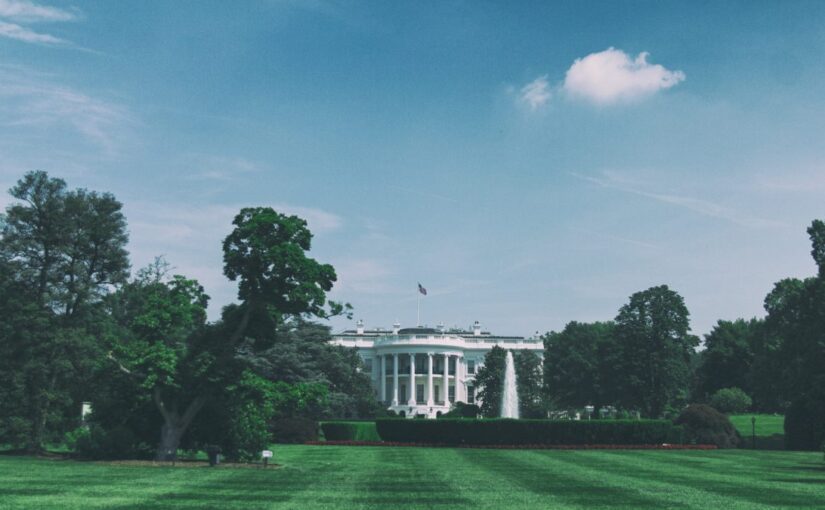
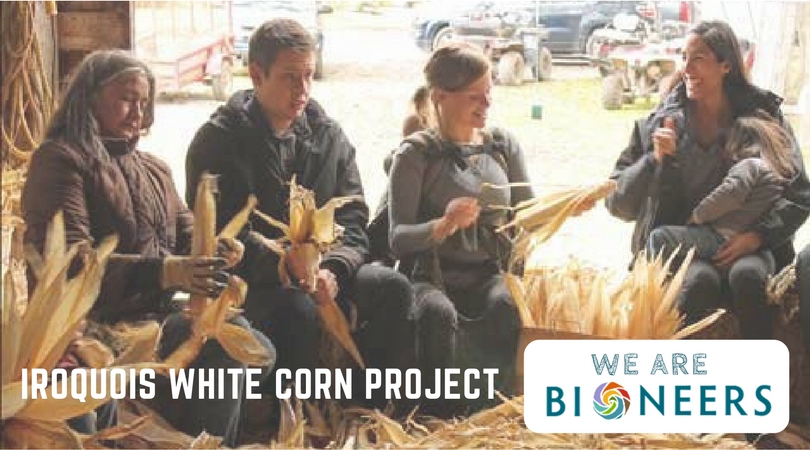
We All Rely on Soil — But We Treat It Like Dirt

By Sara Newmark, Vice President of Social Impact for Foodstate

This article was originally published in B the Change, which exists to inform and inspire people who have a passion for using business as a force for good in the world.


You’ve likely seen the bumper-sticker and t-shirt slogan, “No farms, no food.” In truth, it only tells part of the story. A more accurate bumper-sticker slogan would be less catchy. It would reflect the interdependence of all of us with the soil, water, climate and farmers we depend upon for the nourishment for life.

The business community, especially those directly profiting from farmer’s labors and selling food products, has a responsibility to support our farmers, who provide us the nourishment for life, in a way that creates shared value. And because our food system depends upon the health of our environment and will be greatly impacted by the effects of climate change, the business community has a responsibility to protect the environment on which it relies.

Frankly, we’re not sharing well now. The current structure of business disproportionately favors packaged-food companies and disfavors those who engage in the surprisingly risky business of growing healthy food. Many, if not most, packaged-food companies are far removed from the men and women who grow food for them. This distance makes it easier to undervalue their work and it makes it harder for consumers to know whether farmers are well-compensated and following best practices. And it makes it nearly impossible for all of us who eat to recognize the relationship between farming and climate change.

I recently joined Foodstate (makers of MegaFood and Innate Response) as their new Vice President of Social Impact. While I was drawn to the company’s deserved reputation for high-quality vitamins and whole-food supplements, what really attracted me was Foodstate’s commitment to nourishing people by sourcing directly from small, independent family farms.

Part of my new work is to help people see the connection between farmers and health and to do it in a way to make sure we all prosper. Foodstate has a mission to cure nutritional poverty. A key part of that is helping solve the root cause of nutrient deficiency. A recent study published in ACRES magazine found 27 vegetables had an average 47 percent decline of their calcium levels from 1940 to 1991. While this decline is linked to many potential causes, declining soil health is among the top likely suspects.

No Healthy Soil, No Food

Around the planet, we have lost between 30 and 70 percent of all topsoil. At the same time, several hundred billion tons of soil CO2 have been transferred from topsoils to the atmosphere or the oceans because of the global destruction of soil organic matter. In other words, 25 to 40 percent of the current excess of CO2 in the atmosphere resulted from the destruction of soils and their organic matter.

As a consequence, the United Nations estimates that the world has 60 global harvests left. That’s 60 more times the world, if it stays on it current trajectory, will be able to grow and harvest food.

How did we get to this point? We killed and tilled. The model of conventional agriculture — using high levels of synthetic nitrogen, herbicides, GMOs, monoculture plantings and deep, regular tilling — has devastated soils and damaged ecosystems worldwide. Instead of drawing down carbon via photosynthesis, as ecologically sound methods of food production have always done, this highly industrialized and destructive growing method actually pumps carbon into the atmosphere, where it drives climate change.

But can we grow more food; enjoy greater resilience in the face of drought and climate extremes; and, at the same time, grow food that is more plentiful, nutritious, and inexpensive?

Believe it or not, the answer to all the above is a resounding “Yes!” But it’s all based on healthy soil.

A Regenerative, Interdependent Solution

“Regenerative agriculture” is defined by The Carbon Underground and Cal State/Chico “as farming and grazing practices that, among other benefits, reverse climate change by rebuilding soil organic matter and restoring degraded soil biodiversity — resulting in both carbon drawdown and improved water cycle.”

Specifically, regenerative agriculture is a holistic land-management practice that leverages the power of photosynthesis in plants to close the carbon cycle and build soil health, crop resilience and nutrient density. It is an agricultural model that recognizes, respects and contributes to the interdependence between all human life, business, food and the soil and climate on which they depend.

By increasing water-holding capacity and sequestering carbon at greater depths, regenerative agriculture increasing biodiversity of soil-building organisms and the plants grown in that soil. And it draws down climate-damaging levels of atmospheric CO2 and improves soil structure to reverse civilization-threatening soil loss. Regenerative agriculture reverses our current trajectory to build for the future.

Farmers can’t be expected to reverse the damage all by themselves. We are all interconnected and we share the responsibility to change this destructive system.

We need to act quickly and deliberately. Remember, we only have 60 harvests left. Let’s act in a way that lifts all of us up and leaves no one behind.

Here’s how.

If you are a business that relies on agriculture, investigate your supply chain. Peel back the layers and get to know the farmers who support you. Think about creative ways to encourage and co-share economic rewards, such as long-term contracts, incentive programs, in-setting or other ways to protect and uplift everyone in your supply network.

If you are a farmer, learn more about the tools, standards and programs that are being worked on (even as you read this article) to support you in this mission. We need your expertise and input to make sure we are all on the same page.

If you are a consumer who eats food, wears clothes or drinks clean water (all of us!), demand this from all companies from which you purchase goods.

Everyone reading this, I want you to take a hard look around you. We face an almost certain collapse of the planetary ecology we require for our continued existence. And we have a “shovel-ready” answer that rebuilds livelihoods, builds community, increases profits, fosters business resiliency and turns the carbon arrow back, healing the planet.

And it can start happening immediately. We all have a role to play in this.

Who’s in?


Foodstate is part of the community of Certified B Corporations. Read more stories of people using business as a force for good in B the Change, or sign up to receive the B the Change Weekly newsletter for more stories like the one above, delivered straight to your inbox.

Heather McGhee: A New ‘We the People’ for a Sustainable Future

“I don’t know about you, but I need to find a way to love this country.”

In her 2017 keynote, Heather McGhee touched on a sentiment that resonated with many if not most of the Bioneers audience members. In our current U.S. political, economic and social environment, how do we find ways to come together and to believe in a better future?

As the president of Demos — “a public policy organization working for an America where we all have an equal say in our democracy and an equal chance in our economy” — McGhee is an award-winning thought leader on the national stage whose writing and research appear in numerous outlets, including The New York Times and The Nation. In 2009, she helped shape key provisions of the Dodd-Frank Wall Street Reform and Consumer Protection Act and currently serves on several boards and councils, including for the Center for Working Families and Consumer Reports.

Following is Heather McGhee’s keynote (video and transcription below), titled “A New ‘We the People’ for a Sustainable Future.”

Heather McGhee:

Demos is the Greek word for the people of a nation, and it’s the root word of democracy. Demos’ mission, as Nina said, is to work for an equal say and an equal chance for all. We address the intersection of political, social, and economic inequality because we know that the inequality of voice in setting the rules drives the inequality in economic outcomes, and we know that inequality has always been built on a scaffolding of racial and gender hierarchy. When we began advancing climate change solutions at Demos a few years ago, we wanted to do it with that understanding in mind. Climate change is the result of social, economic and political inequality.

We experience every day the one-two punch of climate change, where our extractive predatory economy has stripped wealth and resources from communities of color and poor communities around the world, and is now leading to climate change impacts that disproportionately impact those same communities. The mere fact that a crisis of this magnitude is being allowed to mount in full view for over a generation is as clear a sign as any that we do not have a functioning democracy where the public interest can prevail. Only in a broken democracy can big fossil fuel companies continue to put their next quarter’s profits ahead of the survival of the next generation.

At Demos, we are hopeful, though, that just as these interlinked inequalities have driven us to this place, if we abandon the dynamics of power that plague us, progress against one form of inequality will yield progress on others. That’s why we see an opportunity out of the crisis of climate change to use the economic transformation that we know is necessary, not just to reduce emissions but to reduce inequality, not just to increase energy efficiency, but to increase wealth in families and communities of color where households have less than a dime in wealth today for every dollar held by white households because of explicitly racist policies that prevented families of color from owning property throughout our history.

We at Demos are starting in our own backyard in New York. Demos is proud to be on the steering committee of New York Renews, a climate-equity campaign with a goal of eliminating 100% of human-caused carbon pollution by 2050 and 50% by 2030. That’s right. And most importantly, a goal of directing at least 40% of all the revenue from carbon pricing and other measures to the lowest wealth and most polluted communities in the state.

It’s upending the normal power structure in the state by bringing together a broad-based coalition of civil and human rights, environmental justice, small business, labor and democracy reform organizations, partners like the New York City Environmental Justice Alliance, UPROSE, Working Families Party, Environmental Advocates of New York, the Service Employees International Union, 32BJ, and many others in a coalition of 120 groups that is guided by a vision. We see similar examples across the country, such as Massachusetts, Oregon, Washington state, and here in California. Another way is possible.

But it’s important that even as we move forward with policy solutions, we understand also the root causes of the sickness in our economy, our society and our democracy. We have to face the fact that a political movement is in power and has been for the past 40 to 50 years throughout administrations of both parties that is stopping us from seeing one another as a Demos, as one people, and stopping us from taking collective action to save our collective home, health and well-being.

We know that today, capitalism is writing the rules for democracy instead of the other way around. We know that these rules allow dozens of the most successful U.S. businesses to spend more on lobbying and CEO bonuses every year than they contribute to their country in taxes. We know that while the rules allow a small sliver of people to amass and keep unprecedented wealth, the rules haven’t evolved with the changing times in ways that would have given more families a leg up. Like responding to the premium on higher education with more college grants, not fewer, or responding to the necessity of both parents working, or the rise of single parents with guaranteed childcare, or portable real pensions, or a more generous unemployment insurance system in an era of easy layoffs and downsizing.

How is it that the feedback loop just isn’t working? That life is getting harder for most Americans over the past couple of generations, and our representatives haven’t responded? Well the answer is, that what’s happened in our democracy is that our democracy has become as unequal as our economy. Over the course of my lifetime an entire new industry has appeared, that of corporate lobbyists, for which there are now 24 for every member of Congress. The legalized bribery that is big money campaign contributions has increased by over 600% just since I turned 18 to over $2 trillion a year. Members of Congress now spend one out of every three minutes that they’re in office talking to rich people, asking them for money.

Combine that with the gerrymandering and a voting system that seemed hardwired to discourage registration and voting, a system that in fact was set up that way during reconstruction from the Civil War. And after progress with the Voting Rights Act is now getting worse, and you have a system that is democracy in name only.

Princeton political scientist Larry Bartels has found that: “The preferences of people in the bottom third of the income distribution appear to have no apparent impact on the behavior of their elected officials.” None. But something else has happened in our culture. Why did it somehow become publicly acceptable to evade taxes as if companies and rich people owe nothing to their neighbors or the country they live in? How did it become completely okay to assert that any kind of public help from healthcare to unemployment insurance, to solar subsidies, is unfair redistribution from worthy job creators to undeserving freeloaders? How did it become acceptable to demonize the class of people, who in different eras were known as the little guy, the little guy you root for. This, I believe, is where the increasing role of unconscious bias comes into our public culture in ways that are eroding opportunity and prosperity for all of us.

Since the Civil Rights Era we have had a deep and growing anxiety in this country about who is an American. Now why do I say since the Civil Rights Era? It seems almost counterintuitive. Well, two things happened at once in the mid-1960s: the Civil Rights Act of 1964 finally decreed that the law could not segregate or discriminate based on color, upsetting the social order, and the Immigration Act of 1965 liberalized our immigration laws. Do you know that until 1965, the United States had racial limits on who could legally immigrate into the country? There was a strict limit to the number of Asians and Africans, for example, and even a limit on southern and eastern Europeans. The Italians, Poles, and Greeks were considered too ethnic to become citizens. Northern European countries had no limit whatsoever. Think about how that. Think about how that shaped immigration.

So when that finally changed in the mid-1960s, the next 50 years saw an amazing transformation in the physical appearance of who is an American, and all of that exponential demographic change really began after the Civil Rights movement faded. So why does this new diversity matter to a political movement that relies on American’s feelings about public solutions to common problems, about economic fairness, public investment, taxes, jobs, and collective bargaining? Why does diversity matter? Why is it that no Democratic candidate for president has won the majority of the white vote since Lyndon Johnson signed the Civil Rights Act? Is it because we are all, like Gary, racist? Well, not quite. But not no either.

The human brain naturally puts objects and peoples and ideas into categories. It’s actually part of our great intelligence. And it takes shortcuts to do these categorizations. That red round thing on the table over there is an apple and apples are apples, whether they’re Fiji, Macintosh or not. That orange round there on the table over there is an orange, whether it’s mandarin, navel or not. Apples we know are sweet. Oranges are tart. I can quickly make these categorizations as I’m walking through a room.

Our brain categorizes people by their physical characteristics as well. People. And to go beyond that, it finds shortcuts to give meaningful attributes to those categories. And most of these shortcuts and meaning-makings are going on subconsciously without our conscious awareness.

Now the problem is that our society has been so hierarchical along these lines of race, gender, age, and sexuality that the shortcuts that we are constantly primed to make have unequal consequences. I’m sure you’re all aware of the studies out of Harvard University of implicit bias where you’re asked to quickly associate words with faces. And those studies demonstrate that we are nearly universally less able to quickly associate darker faces with positive words. Though white respondents find it more difficult than people of color.

I want to pause there for a minute to ask, why do we take for granted, as part of our history, why it is that American society adopted this belief in a hierarchy of human value, that people with white skin are better than others? Racism is not inevitable. In fact, the very idea of racial categories didn’t take root until the 17th century. It’s important to remember — because so much of this history has been suppressed — just how essential to the creation of the American economy slavery was. And slave labor on plantation land expropriated from Native Americans. That is our economy.

The historian Edward Baptist, in his book The Half Has Never Been Told: Slavery and the Making of American Capitalism, calculates that by 1860, slave labor produced 80% of the gross national product. Even in the north, our systems of finance and capitalization, our industrial textile mills, all sprang out of and fed into a slave-driven economy. Black lives were the original currency of America.

At our founding, those in power chose to make American slavery different from other forms, not just indentured labor but hereditary, inexorable, and they did it alongside these proclamations of equality and liberty that we now hold dear as our American creed, that it is self-evident that all men are created equal, that all men are entitled to liberty and the pursuit of happiness. It’s a heart-stopping contradiction. The only way for men to write those words while owning other human beings was to create a belief system in which those people were not human beings.

So for our first centuries, African Americans were property. For the subsequent ones, and up until the late 1980s, in fact, explicitly racist laws conspired to deny African Americans of property. We live on one of most biologically and ecologically diverse lands on the planet. We have rainforests and deserts, this treasure that we sing about from sea to shining sea, and yet it is not ours. It has never been ours. We stole it, we killed for it, and we have not made amends.

It’s hard to admit all of that, to hold all of that, while at the same time holding a vision of we the people, and of a country and a population that is worth fighting for and creating solidarity amongst. You know, we have this myth of American innocence. I really commend to you a new book called Hitler’s American Model, which goes right to the heart of puncturing that myth. World War II, is it not, is our shining example of when America saved the world, when America, the good guys, went and defeated the bad guys, the Nazis.

Even today, when Nazis are marching down our streets, it’s become very easy for a bipartisan consensus to say, well at least not that. We know that the Nazis are the bad guys. That’s what we know. If one thing we know for sure it’s that the Nazis are the bad guys.

My friends, why is it not common knowledge to us that when Hitler and his regime looked for a model of a way to create a society where citizenship and humanity was cabined only to whites in every single legal policy, economic piece of infrastructure, they looked only to us as the model. So how is it possible that we can say with a straight face that we are the good guys and the Nazis are the bad guys?

And yet, I’m an American. And yet, I, the descendant of enslaved peoples, am proud of my fellow people. How do we hold that? Because if we can’t hold a vision of an America worth saving, we won’t. And if we don’t hold a vision of an America worth saving, if we don’t both admit the truth of our racist, sexist, hyper-capitalist past and present, while also reconnecting on a human level with our neighbors and our families, then we will continue as a nation to fall prey to a political ploy that keeps a right wing in power and rapes our planet.

Now, this political ploy is powerful, and the strategy took its modern form in the aftermath of the Civil Rights movement, when President Lyndon Johnson signed that Civil Right Act, integrating public accommodations and in so doing, in his own words, gave away the South. And I want to repeat it again, because most people don’t know it, and I hope it’s a paradigm shift for us all: No Democrat has won the majority of white voters since that day.

Now, I could tell the story of what has shifted in our economic rules to create this current era of unprecedented inequality without talking about race, and many do, but when we acknowledge that government investment is essential to a strong middle class, to prosperity, to the possibility of shaping our economy in the public interest, we have to ask why, since the Civil Rights Era, has the US retreated from the public supports that made our levels of mobility and security the envy of the world?

In a way, what’s happened to our entire economy since the end of the Civil Rights Era is what happened across the American South, after integration when white towns drained their public swimming pools rather than integrate them, destroying a public good they once enjoyed. For three generations now politicians have stoked white anxiety about who the public is, successfully linking government to undeserving minorities and gaining support among white voters for cutbacks in public spending and regulation, for withdrawal from public solutions and collective bargaining. My friends, we need a we to survive, and that is exactly what racism destroys.

So now, we have to admit that we are in a moment of racial panic. But it is challenging us to shed the self-imposed color-blindness of our movements and engage forcefully in this question: Who is an American? What are we to one another? We have to admit that this question is harder for us than it is for most other countries because we are the world’s most radical experiment in democracy. A nation of ancestral strangers met here with the audacious promise that out of many we could become one. Everything depends on the answer to this question: Who is an American, and what are we to one another?

Politics right now is offering two visions of why all of peoples of the world have met here on this land. One in which we are nothing more than competitors, and another in which perhaps, just perhaps, the proximity of so much difference will finally force us to admit our common humanity.

I don’t know about you, but I need to find a way to love this country. And one of the things that helps me do that is because of the beauty of who we are becoming, the fact that by the time I am, goddess willing, nurturing my grandchildren, there will be no racial majority in this country. The fact that here today, there is someone in this country claiming citizenship who has a tie to every single community on the globe —that is the we the people that I can believe in.

The other side is saying the demographic changes are the unmaking of America. We must proclaim that they’re the fulfillment of it. We must declare that what they say is a threat is, in fact, our country’s salvation. For when a nation founded on a belief in racial hierarchy truly rejects that belief, then, and only then, will we have made a new world. I believe that that is our destiny, if we have one. To make it manifest, we must challenge ourselves to live our lives in solidarity across color, origin, and class. We must change rules that disrupt the very notion that those who have more money are worth more in our democracy and our economy. In short, we must emerge from this crisis in our republic with a new birth of freedom and make it our task to finally knit together a Demos, one people, out of this nation of many.