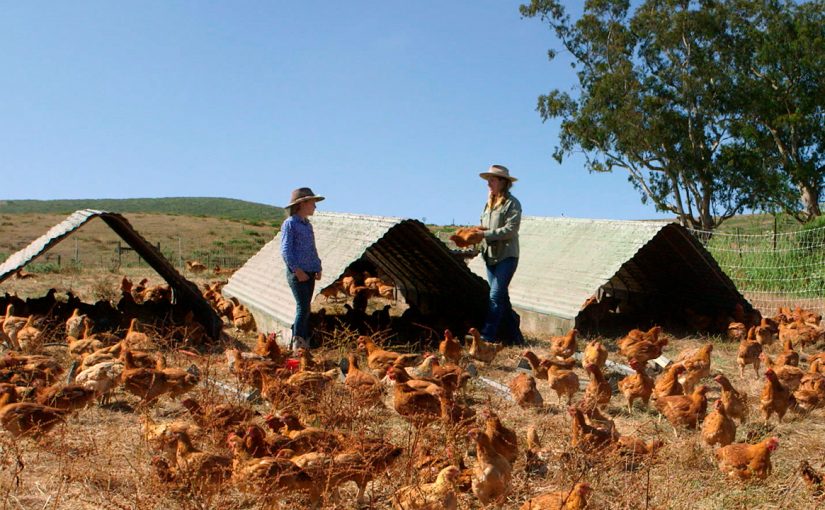
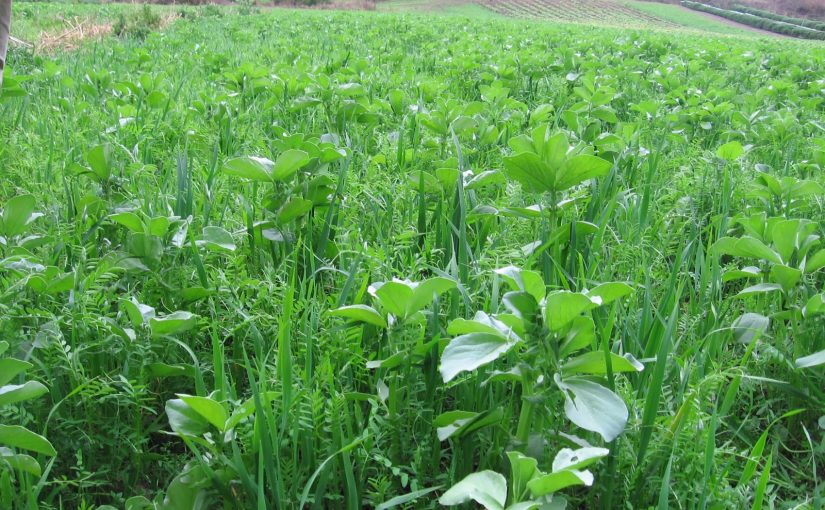
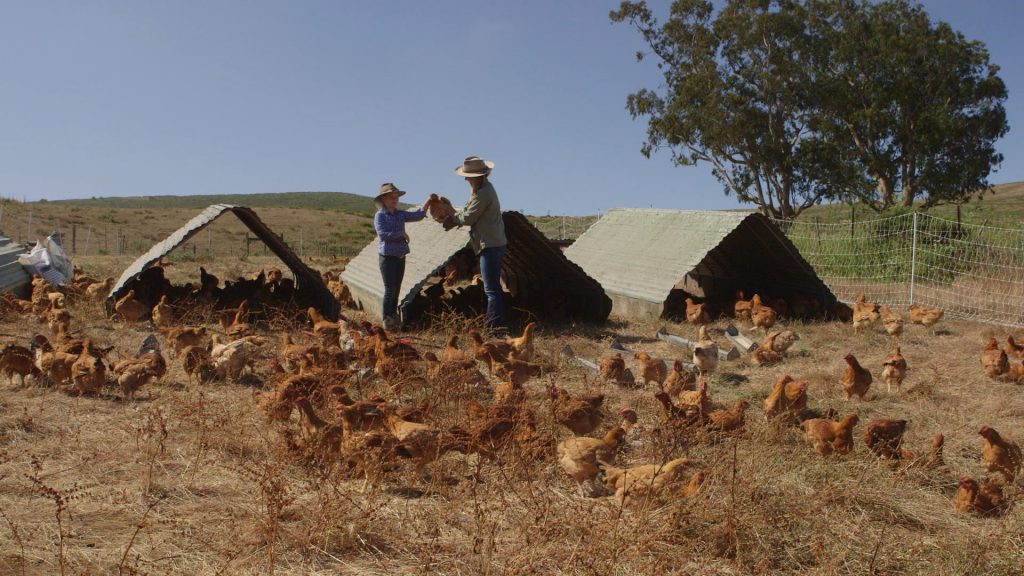
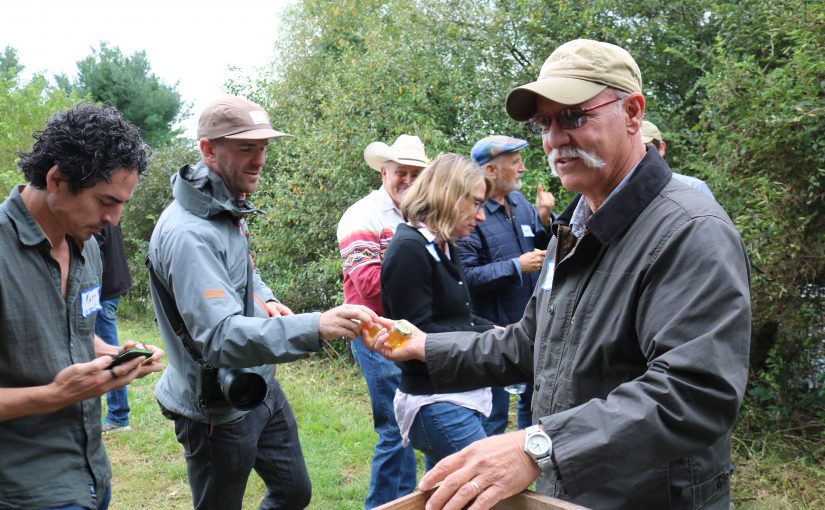
This short video highlights regenerative ranchers and farmers who are bringing life back to working landscapes by mimicking the creative forces of nature. Regenerative agricultural practices draw down atmospheric carbon and sequester it in the soil where it boosts fertility and nurtures biodiversity, making this approach to agriculture a key solution to mitigating climate change.
The State of American Democracy Project seeks to strengthen democratic institutions by igniting an honest conversation on equality, justice, tolerance and fairness. This episode is the first of a ten-part conversation series, where political thought leaders explore the moral foundations of democracy as the most certain way of defending the dignity of all citizens.
Reforms will not be adequate enough to confront deteriorating democratic institutions without structural political and economic shifts. America is overdue for a reckoning with the dark side of its history — including racism, inequality, militarized violence, stolen land, voter suppression and corruption. It’s imperative that compassion and justice guide the movement toward a more just democracy.
This article contains the content from the 9/18/2020 Bioneers Pulse newsletter. Sign up here to get the newsletter straight to your inbox!
The food system, dominated by corporate monopolies and industrial agriculture, is one of the most socially unjust and environmentally destructive sectors of the global economy. But farmers, ranchers, scientists, and activists are increasingly turning toward the solution of regenerative agriculture: a more holistic approach to food and farming systems. The new Bioneers media series on Regenerative Agriculture highlights the wisdom and best practices of a new approach to growing food.
While organic agriculture focuses on sustainability, regenerative agriculture takes things further. By working with nature, regenerative agriculture can reverse climate change by revitalizing ecosystems, increasing biodiversity and restoring soils degraded by industrial farming.
This week, we gathered some of the world’s experts on regenerative agriculture to discuss exactly what it is and why it matters.
Regenerative Agriculture Media Series: Healing Ecosystems and Stabilizing the Climate
In this brand new Bioneers content series, we share the knowledge and experiences of scientists, regenerative farmers and ranchers on transforming agriculture. Just as nature is constantly evolving, regenerative agriculture is a system of continued learning and improvement and adapting to local dynamic conditions. That’s why we’ve broken down different topics, principles, tools and practices that are advancing innovation in the field.
This short video highlights regenerative ranchers and farmers who are bringing life back to working landscapes by mimicking the creative forces of nature. Regenerative agricultural practices draw down atmospheric carbon and sequester it in the soil where it boosts fertility and nurtures biodiversity, making this approach to agriculture a key solution to mitigating climate change.
Organic Regenerative Agriculture: An Interview with Jeff Moyer of The Rodale Institute
Jeff Moyer has been with The Rodale Institute for 40+ years, starting as a farm laborer and currently as its CEO. His legacy is marked by innovating new instruments and practices to help farmers reap the benefits of more ecological farming — a demonstrated commitment to the Rodale’s mission of “leading the way in organic agriculture research.”
In this interview, Jeff explores his dedication to organic regenerative agriculture and how it keeps soil healthy for generations to come.
Fred Kirschenmann, a Distinguished Fellow at the Leopold Center for Sustainable Agriculture, is a persuasive advocate for soil health and agricultural resilience and a farmer of 1,800 certified-organic acres in North Dakota.
In this interview, Dr. Kirschenmann discusses the looming global food crisis, and how to shift the extractive industrial system to a biological self-renewing system before it’s too late.
David Montgomery, a MacArthur Fellow, is a professor of Earth and Space Sciences at the University of Washington and the author of Dirt: Erosion of Civilizations and Growing a Revolution: Bringing Our Soil Back to Life.
This is an edited version of his presentation at a past Bioneers Conference, about the importance of soil health — for good and for worse. David explores the role of soil erosion in the demise of civilizations all the way back to ancient Greece, how farmers can reverse the historical pattern of land degradation, and beyond.
Gather, a recently released documentary and New York Times critic’s pick, is an intimate portrait of the growing movement amongst Native Americans to reclaim their spiritual, political and cultural identities through food sovereignty, while battling the trauma of centuries of genocide.
Gather follows Nephi Craig, a chef from the White Mountain Apache Nation (Arizona), opening an indigenous café as a nutritional recovery clinic; Elsie Dubray, a young scientist from the Cheyenne River Sioux Nation (South Dakota), conducting landmark studies on bison; and the Ancestral Guard, a group of environmental activists from the Yurok Nation (Northern California), trying to save the Klamath river.
INFINITE POTENTIAL: The Life & Ideas of David Bohm | In celebration of International Peace Day, join us for a virtual screening and post-viewing panel discussion of this film. This gathering centers around the life and ideas of David Bohm, a physicist and explorer of Consciousness, who developed groundbreaking insights into the profound interconnectedness of the Universe and our place within it.
From Reasons to be Cheerful: “The New Solar Farm Is a Real Farm, Too” | Solar companies are starting to partner with local farmers, presenting a huge opportunity to use land for producing food, improving soil health, supporting pollinators, and slashing emissions — all at the same time.
From The Future Is Beautiful: “Lyla June on Indigenous Food Systems, Sacred Knowledge and Compassion” | In this podcast episode, Lyla June — a Diné/Cheynne activist and Bioneers alumna — speaks on how Indigenous sacred practices and personal insights can aid us in our healing and in growing our courage so we may connect with pathways for liberating and reforming ourselves through self-love.
From Los Angeles Review of Books: “Coronavirus and Conservation: Preventing the Next Pandemic” | In this new essay, groundbreaking ethnobotanist and Bioneers alum Mark Plotkin writes about the implications of the COVID-19 pandemic on conservation, with respect to the “direct correlation between our lack of respect for nature and our own well-being.”
Kiss the Ground | Narrated by and featuring Woody Harrelson, this groundbreaking new documentary reveals how regenerating the world’s soils can rapidly stabilize Earth’s climate, restore lost ecosystems and create abundant food supplies. Learn more about the film and why soil is the missing piece of the climate crisis puzzle.
This article contains the content from the 9/18/2020 Bioneers Pulse newsletter. Sign up here to get the newsletter straight to your inbox!
Rupa Marya, M.D., is an Associate Professor of Medicine at the University of California, San Francisco and Faculty Director at the Do No Harm Coalition-an organization co-founded by Marya to combat systems of oppression that predispose marginalized populations to state sanctioned violence. Marya’s research focuses on exploring the nexus of racism and state violence to uncover howsocietal structures make certain populations more susceptible to illness.
In this article, Marya writes about how colonialism has factoredinto creating unsustainable and destructive relations with the land. Rupa argues for the return of land to the original Indigenous caretakers in order to restore balance. Marya asserts that Indigenous knowledge and sovereignty is essential for the future of our planet and calls on everyone to follow the leadership of Indigenous nations.
Dr. Rupa Marya
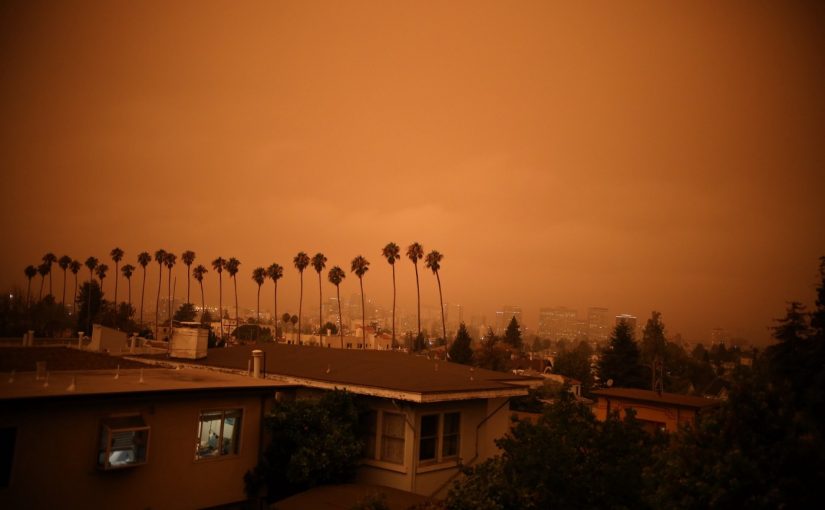
I have been saying this for some time but maybe now that the sky is an apocalyptic shade of orange, it may land differently on the ears of those who thought my words were too radical or too far-fetched. The lands and water and air of what we now call California have been mismanaged and abused since colonizers took this land by force in the 1700s. They continue to be mismanaged and abused.
The only way forward to restore what Haudenosaunee seedkeeper Rowen White calls “cultural sanity” is to give all the land back to California native tribes. To ask permission to be here. To restore their place as the rightful stewards of these lands, to create space for their stories, their priorities, their languages, their cosmologies, their ways. To make visible what has been cast aside and made invisible for far too long.
When the ceremonies return, the songs, the languages, the people to the ecologies that they know inside their very DNA, we can reenter balance, which was present here in these lands for over 10,000 years of their inhabiting them. Indigenous ecological knowledge is an incredible scientific system of understanding, based on timescales of gathering empirical evidence that eclipse what we normally see in ecological journals. I consider it more holistic than western science because it is, in its essence, deeply moral. And that morality is dictated by what is generative for life to continue in optimal health.
People say that millions of acres of California burned every year before the colonizers came and that fires are nothing new. It is part of the ecology. Yes, but what they fail to mention is that the forests that burn now are not the same as the forests that burned then. They are categorically different. The ecology of the forests and soils that were burning before colonization were very different then than they are now, because those forests were being actively managed by the people and the grizzlies and the elk and the beaver and the salmon. All of these entities were wiped out when the colonizers cleared the land for themselves, as if Europeans on their own were the only thing needed for life to prevail.
Those forests that burned as a part of the pre-colonial fire ecology were old growth forests, whose complex soil microbiology led them to burn at lower temperatures. The water retained by networks of mycelia present in the soil of old growth forests would cause those burns to move more slowly. There was no massive sudden release of carbon into the air we see with the fires now. When our forests burn today, young growth trees are burning. These young forests do not have the density or biodiversity of life associated with them, from what we call wildlife to the humans to soil. Today, after decades of clearcutting and the presence of relatively young trees, we have forests that present danger. Our forests are managed for extraction and fire mitigation, not for the creation of the complex microbiology which generates and supports an incredible biodiverse richness as we see in old growth forests. As such they do not have the microbiology that slows a burn down. So now we have rapid massive and intense burns. We have temperatures that are extreme.
In addition to the mismanagement of forests, there is the lack of deep understanding about the waterways in our state. Water has been impounded and rerouted, diverted and forced underground. The salmon and the people whose cultures have been based around the salmon for thousands of years have suffered as a result. The land has too. Most of California’s water is used for intensive agriculture practices that also decrease the biodiversity around them, from tilling to the use of fossil fuel-based fertilizers and pesticides. Since 1920, the land in the San Joaquin Valley has sunk 28 feet from groundwater depletion pumped for industrial agricultural practices. And then there’s hydraulic fracking and cyclic steaming for fossil fuel extraction. These are all signs of mismanagement and a deep and tragic lack of understanding our role in the web of life.
Simply bringing back fire medicine will not recreate the complex ecology of an old growth forest. It takes thousands of years with highly intensive disturbance regimes to generate more biodiversity, following the ways a beaver knows. Right now our forest soils, like the rest of California, have been abused through deforestation, the genocide of the native people, the bear, the elk, the salmon and the beaver and the widespread use of chemicals. You cannot bring back that rich ecology by just bringing back prescriptive burns. You must bring back the entire ecology, including the humans who knew how to tend it.
What we are seeing now is that the colonial mindset that got us here is gravely incorrect. It is deadly. It is dangerous. It is time for Another Way. We settlers must lead by following. We must have power by giving it away. We must ask for forgiveness and follow their leadership. We must do everything in our capacity to make space for indigenous people to heal and to find their way back to their ways of knowing, so that this place can be in balance yet again. We must create a new culture where our work is to play a supportive role. And that is all.
It is deeply time to #Decolonize. Mother Earth is screaming for us to listen. Let’s listen.
We are deeply honored and excited for Bioneers to serve as a Project Partner with David Orr’s State of American Democracy Project. David delivered a powerful keynote on this topic at the 2019 Bioneers conference, and he has been a deep partner with us in the work for decades, including his many years on the Bioneers Board.
As we face a concatenation of converging crises, the democracy crisis is a key to addressing and solving all the others – from the climate crisis to the crises of public health, racial injustice, obscene inequality, gender injustice, and the age of extinctions.
Originally planned before the Covid crisis as a 2020 series of 11 live national events, the project evolved into a series of video conversations to be broadcast on multiple platforms.
Episode one features Van Jones, David Brooks, Jill Lepore, & others, to explore the question: “What are the Moral Foundations of Democracy?” It premieres Sept. 17, 2020 at 7 p.m. EST/4 p.m. PST.
Please tune in, and please spread the word.
Note that David Orr will be leading a session at the online Bioneers Conference in December, and project leader Bakari Kitwana will be presenting a keynote and leading a session on Race and Democracy.
PRESS RELEASE:
STATE OF AMERICAN DEMOCRACY PROJECT TO PREMIERE “DEMOCRACY UNCHAINED: A CONVERSATION SERIES”
(Washington, D.C.) —The State of American Democracy Project—a nonpartisan collective of thought leaders and non-profit organizations and foundations who are passionate about rebuilding politics and U.S. government fo the benefit of all Americans—is premiering the first episode of its new series, “Democracy Unchained: A Conversation Series,” on Thursday, September 17, 2020 at 7 p.m. EST/4 p.m. PST.
The first episode, to be streamed on Facebook, YouTube, Vimeo, Roku and Fire TV, brings together journalists, politicians, religious leaders, and others to answer the question, “What are the moral foundations of democracy?”
The series begins under the backdrop of Washington National Cathedral, who calls itself “a unique place at the intersection of sacred and civic life,” and who strives to serve as “as agents of reconciliation, a trusted voice of moral leadership and a sacred space where the country gathers during moments of national significance.” The first episode of “Democracy Unchained” includes conversations with:
Van Jones, CNN political contributor and host of the Van Jones Show
David Brooks, New York Times columnist
Jill Lepore, writer for The New Yorker, and author of These Truths: A History of the United States
Tiokasin Ghost Horse, speaker, musician, and member of the Lakota Nation
Preet Bharara, former U.S. Attorney for the Southern District of New York
Michael Eric Dyson, Georgetown University professor, New York Times contributing writer, and contributing editor of The New Republic
Tracy Sharpley-Whiting, Vanderbilt professor, scholar and author
Sally Yates, former Deputy Attorney General at the U.S. Department of Justice
David Orr, founder, State of American Democracy project and co-editor, Democracy Unchained
The Very Rev. Randolph Marshall Hollerith, dean, Washington National Cathedral
Also Featuring:
The Right Rev. Mariann Edgar Budde, bishop, Episcopal Diocese of Washington
The Rev. Canon Kelly Brown Douglas, canon theologian, Washington National Cathedral and Dean, Episcopal Divinity School at Union
MEDIA CONTACT: Ann Barnett, abarnett@stateofamericandemocracy.org, 216-505-0687
About the State of American Democracy Project
The State of American Democracy initiative began with a conference at Oberlin College in 2017, with a goal to clarify the historic and institutional origins of the election of 2016 and the breakdown in governance, civility, and fairness that transcends party politics. The second phase of the work through the election of 2020 focuses on repairing and strengthening democratic institutions to serve the aims of justice, fairness, prosperity, and resilience.
Today, the State of American Democracy is a nonpartisan collective of individuals and organizations from across the country who are passionate about rebuilding politics and government in America for the benefit of all Americans. Democracy Unchained, the book, edited by David W. Orr, Andrew Gumbel, Bakari Kitwana and William S. Becker (New Press, March 2020), brings together more than 30 contributors, and “Democracy Unchained: A Conversation Series” brings together more than 100 thought leaders from a variety of disciplines.
Today, more than 50 organizations have also partnered and/or sponsored this project, as well. The State of American Democracy project is made possible through the generous support of Ford Foundation, Germeshausen Foundation, The Heinz Endowments, Wallace Global Fund, Park Foundation, and Kallopeia Foundation.
In their recent McGirt v. Oklahoma decision, the Supreme Court ruled that Native American reservations comprise nearly half of eastern Oklahoma. Tribes are widely celebrating this decision as it defends their tribal sovereignty, but now they’re facing a big challenge as Oklahoma governor Kevin Stitt is calling to override the McGirt decision and force fracking and drilling on the state’s tribal territories.
A new press release, jointly released by two Bioneers alumnae — Casey Camp Horinek, Environmental Ambassador of the Ponca Nation of Oklahoma, and Pennie Opal Plant, co-founder of the nonprofit organization Movement Rights — serves as a call to action by illustrating the scope of implications for indigenous rights and the environment. Read the full report below to learn more about this pressing issue and what you can do to help.
WHITE EAGLE, OK: Following decades of broken treaties, brutal forced removals and diminished tribal authority over their own lands, in a July 2020 landmark decision, the US Supreme Court ruled that much of Eastern Oklahoma falls within Indian reservations. Known as the McGirt decision, it is a victory for tribes with far-reaching implications, including affirming tribal sovereignty over environmental lawmaking. OK Governor Kevin Stitt (R), has already announced his intention to undermine the SCOTUS decision by stripping environmental authority from tribes and placing it under the auspices of the EPA.
“The actions of Governor Stitt are not surprising,” says Ponca Tribal Environmental Ambassador, Casey Camp Horinek, “The State of Oklahoma was founded on racism, and Stitt follows a long line of governors who have considered tribes sacrifice zones for fossil fuel industry profits.” In recent years Oklahoma has shifted its economy to become a fossil-fuel dependent state, now home to the largest convergence of pipelines in the US, a fracking boom, and fracking wastewater injection-wells resulting in massive man-made earthquakes.
Much of these oil and gas activities are placed on or near tribal land, contaminating soil, rivers, aquifers and air while adding to the climate crisis and directly impacting community health. “Tribes across the state have been targeted for environmental genocide at the hands of the oil and gas industry, enabled by state agencies and government officials, including the Governor’s office,” says Horinek, “and it all comes down to money.”
Governor Stitt, who has already received $239,102 in oil and gas industry donations since his November 2018 election, is asking the Trump-era EPA to override the Supreme Court and give his state control over environmental regulations on Native American reservations—including regulating fossil fuel activities. While the SCOTUS ruling has clearly empowered tribes to enforce their own environmental laws, Stitt believes he has found a loophole. In 2005, a “midnight rider” was quietly attached to an unrelated federal highway bill that Stitt claims requires tribes within Oklahoma to request permission from the state to be treated as sovereign states.
“Tribes are already sovereign, despite decades of attempts to diminish our authority over our own lands to protect our communities and make laws governing clean water, air and soil,” Horinek says. “On Ponca territory, our well water is so polluted from industry activities we now must buy water for our community.” In 2017 the Ponca banned fracking and became the first tribe to pass a statute recognizing the Rights of Nature to be free from fossil fuel contamination by asserting that ecosystems, including humans, have legal standing in a court of law.
Pennie Opal Plant, co-founder of the Indigenous and Rights of Nature organization, Movement Rights, says, “Following the Ponca, several other tribes across the US have also recognized Rights of Nature as law consistent with their Indigenous values and traditions, and as a way to protect clean water, air and soil not only for their tribes, but for everyone. We all live downstream and downwind from fossil fuel pollution and we all share the same climate.”
Fighting for Industry profits is not the first time Governor Stitt has attempted to thwart existing law when it comes to Native American tribes in Oklahoma. He has also been in a pitched battle with the 39 federally-recognized tribes over casino profits. While not all tribes operate casinos, through a state compact that was set to automatically renew in January, the state receives between 4-6 percent of gaming revenues, generating about $184.3 million in 2020 alone for the state’s Education and General Revenue Fund. Despite the automatic 15-year rollover renewal of the Compact, Governor Stitt wants to renegotiate more money from tribes.
With growing unrest among many tribes and communities about the role of fossil fuels in the state in 2017, Oklahoma was among the first to pass anti-protest laws. It is now felony with a mandatory $10,000 minimum fine to block or impede fossil fuel operations. Oklahoma’s law is unique in that it also broadly targets groups and organizations “conspiring” with protesters. This law paved the way for TC Energy’s Keystone XL pipeline extension, poised to move through Oklahoma, including through reservation land beginning this year. It is unclear whether the SCOTUS ruling would enable protestors to blockade the project on tribal land with tribal permission, yet another reason Stitt is keen to work with GOP lawmakers to put tribal land under EPA control.
“It is more race-baiting,” says Horinek. “The tribes impacted by the Supreme Court’s McGirt decision and all tribes in the state must stand together. Our very existence is at stake. If Stitt has his way the fossil fuel industry will line his pockets with our lifeblood.”
Jeff Moyer has been with The Rodale Institute for over 40 years starting as a farm laborer and currently as its CEO. Jeff designed and built out the roller crimper, an instrument that makes it possible for organic farmers to minimize or eliminate tillage, a practice that damages the soil. Jeff has also been involved in Rodale’s long-term Farming Systems Trial that provides rigorous scientific data proving the benefits of organic agriculture.
ARTY MANGAN: J.I. Rodale once said,“Healthy soil equals healthy food equals healthy people,” but the USDA reports that the nation’s soils are becoming increasingly deficient in vital nutrients. What’s happening with agricultural soils?
JEFF MOYER: The big problem is that we’ve never focused on the idea of healthy soil. J.I. Rodale was making references to healthy soils back in 1942. He was absolutely correct in saying that the health of humans is directly connected to the way we treat our soil. Now The Rodale Institute has added the words “healthy planet.” Conventional farming is narrowly focused on yield. Yield, not quality, is the metric used to judge the success of almost all farm operations in this country and around the world. We know that a good bit of the farm acreage between me in Pennsylvania and you in California is made up largely of corn and soybean. Corn and soybeans are planted in the spring and harvested in late summer, but the rest of the year the ground is bare, and nobody thinks about the health of the soil; it’s just how many tons or bushels of corn and soybeans can be produced and how cheaply it can be done. Any time you set up just one metric as your measurement of success, you’re doomed to failure because you have to look at the entire system.
As a society and a farm community, focusing on yields has created a lot of problems; the health of our soil is declining. As the health of our soil declines, the nutritional value of our foods declines because if it’s not in the soil, it can’t be in the food. Seeds and plants don’t make minerals; they just take them out of the soil and put them into a form that you and I and animals can consume. Likewise, if a contaminant is in the soil, that ends up in the food, and, of course, it ends up in us. By focusing on the soil and soil health, we stand a much better chance of producing healthy populations of people and a healthy planet.
ARTY: The Rodale Institute has been a pioneer in advancing organic practices, and in the 1990’s you were part of the process that developed national organic standards, but now Rodale is promoting the concept of regenerative agriculture. Why has it become necessary to go beyond organic?
JEFF: In the 1980s, much of the world was focusing on the words “sustainable” and “sustainability,” but sustainable is a weak word when you look at it in the context of agriculture because to sustain something is to maintain a status quo, It’s difficult to have something static in a living biological system. It’s either improving or degrading. It won’t stand still. That’s why Bob Rodale began using the word “regenerative.” So now at Rodale, we’re focusing on regeneration. We want to improve the resources that we use to produce food and fiber instead of degrading them. Our goal is to improve the soil’s health while we use it. And we can do that because the soil is based on biology.
We can actually improve the soil while we use it, and we can produce all the food that this planet needs to feed a growing population. In fact, it’s the only way to can feed an expanding population. The conventional system, has not, and will not be able to sustain a healthy population of humans on this planet. Organic systems and organic regenerative systems are the only systems that can do that.
ARTY: But organic hasn’t completely fulfilled its promise in that regard, otherwise you wouldn’t be pushing for this new standard, a regenerative agriculture certification.
JEFF: There is a lot of science in the last 20 or 30 years that shows us we can move the needle on organic farther and faster, but the current organic standard doesn’t really allow for that. What we have now is a baseline minimum standard. As long as you meet that standard, you’re in the club, you get your organic certification. So, the goal financially, for many organic farmers, is to get as close to that standard as you can without going under it, but there’s no incentive to get better. The federal law, the Organic Food and Fiber Production Act of 1990, mentions soil health, but the USDA standards for soil health in the regulations are very weak. They’re also very weak in the area of animal welfare, and they’re completely silent on the issues of social justice and fair conditions for farm workers.
With regenerative organic certification, you must first be certified organic. That’s a minimal starting point, but we believe that in order to be completely regenerative, you have to include those other criteria. We know that aware consumers go to the marketplace with a suite of values, not just one individual value. While organic may be important to them, so is social fairness, so is animal welfare, and so is soil health. And yet the organic standard is very quiet about those things. What that means is we’re either forcing farmers to have multiple certifications to satisfy the consuming public, or we’re asking consumers to choose between values that may be equally important to them in their purchasing decisions.
We feel that organic regenerative certification can include all of those things that are important to the public. It will be more cost effective for those farmers who want to do that, and more cost effective for consumers. We can move the needle farther and faster by giving consumers the products they want for their personal health, as well as products they feel good about in terms of environmental impact. A truly regenerative system can regenerate the health of the soil and of the consumers who purchase the products. It can also regenerate the spirit of farmers and their communities.
ARTY: Some people say, referring to certification, that regenerative agriculture shouldn’t be an exclusive club, that there shouldn’t be barriers to entry. The argument is that we need large scale Midwestern farmers to adopt regenerative practices, and if you mention the word organic, they’re going to slam the door in your face.
JEFF: We understand that, but we firmly believe that true leadership sets high standards. We don’t want to be so far out in front of the masses that they can’t see where we are, but as more and more of the industry begins to gravitate towards organic, we really believe the time is right now to move the bar to a higher level.
As the industry grows and matures and puts products on the shelf that consumers who demand a high standard want, we believe the entire industry is going to move. When BMW invented disc brakes and put them on cars, everybody looked at that and realized that it’s a better way to stop cars. Now every car and bicycle has disc brakes because everyone followed the engineering leaders. Why would anyone make drum brakes anymore? No one would buy that car. I have a ’59 Chevy. It has drum brakes. When you push on the brake pedal, you’re pushing and praying at the same time hoping it will stop.
We know that whenever an industry leader sets a high standard, it forces the entire industry to move in that direction. Will every farmer in the Midwest become certified regenerative organic? No. But will many of them adopt regenerative principles and begin to move in that direction? Yes. So, if every acre of land between you and me this fall gets planted with a cover crop, I’ve done my job. Even if they’re not organic or regenerative, we’ve improved the biology of the system, we’ve sequestered more carbon, and we’ve brought more life back into the soil. It’s going to take time, but over time, everyone will become regenerative organic because it is the future, and it is the direction in which we have to go.
ARTY: There’s a lot of conversation around agriculture’s role in climate change, and how it can be a part of the solution.
JEFF: Rodale Institute is in the process of writing a climate paper to be a sequel to our carbon paper, which we wrote about six years ago, and which has elicited a lot of interest around the world because of the bold stance we took. We have the science that showcases how the way we farm can have a very positive impact on climate.
For too long, farmers have not been considered part of the problem. If you’re not considered part of the problem, then you cannot be considered part of the solution. Agriculture and managed soils hold one of the keys to reducing CO2 levels in the atmosphere because the soil is really the only economical sink that we have for pulling atmospheric carbon out of the air and sequestering it long term. There is a magical, wonderful process called photosynthesis that does that for us. If you or I had invented photosynthesis, we’d be Nobel Prize winners, and we’d be touted as the greatest heroes the planet has ever seen. And yet because it happens naturally, we take it for granted and we haven’t put it to work. All the carbon that is pumped out in the form of coal was sequestered by the process of sunlight on plant leaves.
The more we can cover the ground with something growing, the more we can pull carbon out of the atmosphere and sequester it in the soil. If we can do that, we’re going to use less water. Irrigation rates go down when you start managing plant cover on the soil. All these things are interconnected.
ARTY: You mentioned soil as the most economical carbon sink that we have, and there’s science to back that up, and yet there are people who are dismissing the ability of soil to significantly draw enough carbon to help heal the climate.
JEFF: I think they’ve bought into a false narrative. They’re looking at the predominant production practices in place across the world and saying those soils cannot sequester carbon under that management, and they are absolutely correct. If you talk to the world’s leading scientists on carbon sequestration, they will tell you that conventional, corn planting across the United States sequesters no carbon. What we’re talking about is radically changing the entire production system to focus on the soil not on the crop, and you begin to do that with the goal of making people healthy and making the planet healthy. By focusing on the soil, the whole world changes, and then carbon can be sequestered.
If you look at our system of livestock production in large feedlots across the Southwest, where they have taken feedstock grains out of the bread basket of the country and are sending them to feedlots in Kansas or New Mexico or Arizona, the manure never goes back to where the feed was grown. So, carbon goes in one direction and it cannot be sequestered, but if you focus your energy on carbon then what you should be doing is growing grass. One-third of Iowa, Indiana, Illinois and Ohio should be in grass. The animals shouldn’t be in the arid Southwest; they should be out in those states walking around the countryside moving across a landscape on their own four legs eating grass.
Maybe we’d have a little less biofuel, but that’s okay with me. We don’t really need ethanol. The animals would be healthier, people would be healthier, the soil would be healthier, and we’d sequester carbon so the planet would be healthy. So if you look at the current feedlot system and say it doesn’t sequester carbon, you are absolutely correct, but that’s not what we’re suggesting. We’re suggesting rewriting the rules for how we farm. Anytime you do that, people who are making money with the system the way it is will put out papers saying it cannot work.
ARTY: One of the principles of regenerative agriculture is the idea of mimicking nature. How does regenerative agriculture mimic nature?
JEFF: It mimics nature, but it doesn’t try to copy nature. It looks at a natural system and tries to identify its strengths and weaknesses. We have to ask how can we superimpose a population of seven to nine billion people onto natural ecosystems and make it work. We know we’re going to have to muck with the system a little bit. The landscape of the Midwest doesn’t want to be corn and soybeans. It wants to be either tall grass or short grass prairie, but people are not inclined to eat grasses. We’re not suggesting we put three million bison on the prairies and have Native Americans manage them. That was a system that worked in the past. It doesn’t work for where we are as a society and a planet today, but we still want to look at nature and get grass back into this system. That’s how soils are built. They’re built with grass. So, we need more grass and more animals in the system. Raising grasses on a prairie landscape is mimicking nature.
We also have to change our diet. Our diets should not be so heavily focused on meat. We need to reinvent ourselves as dieticians and nutritionists. The Rodale Institute recently wrote a white paper called The Power of the Plate promoting a whole-food, plant-based diet.
We just opened up a research station in Iowa, and one of the reasons we did that is because it’s very difficult to buy any food that was produced in Iowa. Iowa is sitting on some of the best farmland in the world with a climate that in the summer can produce almost any crop you want, and yet there’s no food being producedthere for local consumption. So, Iowa is a food desert. That’s almost criminal. It’s certainly insane that Iowa is a net importer of food. It just doesn’t make any sense. So how do we get more of our landscape involved in real food production?
I think the USDA says that we use about to three percent of our landscape for fruits and vegetables. The rest is in commodity crops that can be produced cheaply, stored economically for the long term, and torn apart chemically as ingredients for processed food that ultimately makes people sick. That’s inherently wrong.
ARTY: Another principle of regenerative agriculture is biodiversity. Why is biodiversity important?
JEFF: We talk about biodiversity above ground, but we focus a lot on the biodiversity of micro-organisms below the ground, in the soil. We know that in order for any system to function in a biological manner, it has to be diverse. We don’t fully understand the complexity and the diversity that takes place below the soil, but we know we can manage it and have an impact on it, positive or negative, based on how we farm. When we have more diversity, we build resilience into our systems.
The Rodale farming system trial, which is 40 years old, compares side-to-side a conventional production system to an organic system. For four decades, it’s been managed with the same equipment for both the organic and conventional production models. When we look at the microbial life of the soil on the conventional side, we still have a very large pool of microbes but within a very narrow spectrum of diversity because conventional farming self-selects for microbial life that can live in the chemical soup that that system dumps into the soil. It can live with salt from fertilizers. It can live with pesticides. It can live with herbicides. It’s not particularly useful in making people healthy or in facilitating plant health, which is why we have to put a lot of nutrition into the plant. The more you use that system, the more fertilizer you need because the soil becomes inherently dead.
On the organic systems, we may have the same sized pool of microbial life, but the complexity and the diversity is off the chart, and for much of that we don’t even understand what’s happening. It’s very dynamic. It’s changing all the time. But within that complexity and diversity, we can become very efficient and effective at growing crops without chemical inputs.
Once you start using chemicals in your system, you need more. In an organic system, we’re invested in soil health. There’s more diversity within the system, there’s more diversity within the people involved in the system, there’s more diversity above ground. You need crop rotations to be a regenerative organic farmer. We have farmers that call us and they say, “I want to adhere to the new regenerative organic standard, but I just want to grow soybeans on 3,000 acres. That’s not going to work. You’re going to have to diversify your crop rotation.
So, we’re working with some of the large global players in the world who are buying grains and saying you’re going to have to diversify your buying practices. You’re going to have to buy the spectrum of crops a farmer produces, so farmers can have longer crop rotations because the more diversity they grow, the more resilient and stable the system gets. We’re trying to make the global commodity processing and trading companies understand that they have to change the marketing. We have to change all these ancillary systems that are built around agricultural production.
It’s not impossible. We can do it if we choose to do it, if we as a society say that’s what we want to do. There will be opportunities for everybody to make a living in this system and to become healthier while we do it. We can heal the planet and we can heal people by doing it.
Patsy Craig is a curator/producer, author/artist and Indigenous rights advocate who has for over 16 years generated and cultivated a wide range of cross-cultural collaborations in the fields of art, music, architecture, and urbanism. This output has included publications, exhibitions, and events, including lectures, concerts, symposia, workshops, etc.
Four years ago, Craig turned her focus to environmental and Indigenous issues and spent time at Standing Rock to support the water protection movement there resisting the infamous Dakota Access Pipeline. Since then she has continued her activism and seeks to provide platforms that contribute to amplifying Indigenous world-views and ancestral knowledge. She recently opened AWA Galería in Cusco, Peru to showcase the work of Indigenous artists.
Bioneers Arts Coordinator Polina Smith interviewed Craig in August 2020.
POLINA SMITH: Patsy, could you tell us about your own background as a curator, artist and author and how you came to open a gallery in Perú.
PATSY CRAIG: I grew up in New York and from the age of 12 my family lived in different countries in South America due to my father’s work. I received my Bachelors degree in fine art from the Rhode Island School of Design (USA) and my Masters degree in Cultural Studies from Birkbeck College University of London (UK). A few years after graduating from art school I moved to England where I have lived for the past 24 years. My mother was Peruvian and my father American. On both sides I have Indigenous ancestry but my upbringing was very Western and unfortunately very unconnected to these roots. But I have always felt the pull of my ancestors which is what I believe took me to Standing Rock in 2016, and that became a real turning point for me. I’m ashamed to say I had not been involved in environmental activism until then but I was very moved by everything that was going on there and it changed everything for me. After my time at Standing Rock, I decided that I wanted to focus my efforts on Indigeneity and environmentalism so ever since I’ve been trying to educate myself as much as possible about the Indigenous cultures that I have connections to. Since 2016 I have spent most of my time in the US and in Peru researching various aspects of traditional environmental knowledge and I began focusing on what I might be able to contribute towards disseminating a greater understanding of Indigenous world views. Given my background, providing a platform for the work of Indigenous artists made a lot of sense and seemed imperative.
POLINA: What inspired you to go to Standing Rock in the first place?
PATSY: I remember the moment clearly: It was in September 2016, I was in Berlin, Germany and I was watching “Democracy Now,” which was one of the first news programs to cover the water protection movement at Standing Rock. I was outraged by what I was seeing but also very inspired by this Indigenous-led movement. I believe it was the call of the ancestors that sparked a bright light in my mind and heart and I decided on the spot that I needed to support it. So I contacted my cousin who lives in the Bay Area and has had a beautiful connection with Native culture most of her adult life- she and Winona La Duke were friends and roommates at Harvard for a few years- and we decided to go out and be there for Thanksgiving, to give a new meaning to the celebration. It was amazing, we stayed in a yurt with Cheryl Angel and other folks at Sacred Stone Camp. I learned so much and have been learning ever since. And it wasn’t just me. There was something incredibly special about that time and place so there are quite a few people who were very moved by their experience at Standing Rock and are now doing significantly relevant things in the world. Beyond being physically present there, I think it resonated the world over and brought a lot of attention to the climate crisis and Indigenous-led environmental movements generating a lot of much needed momentum in this regard.
POLINA: So, can you share a bit more about your trajectory from Europe to Standing Rock to recently opening your gallery in Cusco?
PATSY: After moving to the UK in 1996 I was very involved in the art world there but eventually I became disenchanted with it. I felt like it was all about money and it had lost a lot of the appeal that originally drew me to it so it wasn’t feeling right for me. After publishing my book Making Art Work (Trolley 2003) about how ideas translate into physical form, I began working with music, with jazz. Music felt less ego-driven, more joyous and joyously collaborative. And so I moved in that direction, but it was always with a social conscience and not just a purely aesthetic pursuit. I invited many American jazz luminaries to perform in London and in so doing learned a lot about jazz in those years both as an art form and as a culture, which was beautiful. The origins of jazz are about resistance and the music is of course associated with social struggle and civil rights, and that always resonates with me. So while my experience at Standing Rock was pivotal, in this way it didn’t seem like a huge leap, but rather a re-focusing, and it started me down a path of connecting to aspects of my own roots that I hadn’t yet delved into. It also brought me back into the visual arts, which I had to a large extent left behind. Ultimately, I feel my path, my trajectory, is resolved by my guardian spirits, my ancestors.
As a result of my research in Peru, early last year I decided to take an exhibition of contemporary Amazonian art to London to coincide with a project I was working on with UCL to provide platforms from which to amplify Indigenous world views in the UK. So last June the exhibition called The Invisible Forest was presented at Gallery 46 in Whitechapel. Presenting this beautiful selection of works was unique in a London context. In the heart of Empire my intention was to make visible an understanding of the Amazonian rainforest that was invisible to most and I organized talks with our artist-in-residence, a native Amazonian, which brought together folks from different worlds, anthropology, art, and environmentalism mostly. At one point while in the gallery I was on a Skype chat with Alexis (i.e. Alexis Bunten, co-director of Indigeneity Programs at Bioneers) and I was showing her the exhibit, and it just kind of popped into my head, I said, “Why don’t we show these works at Bioneers?” She agreed and put you and I in touch and with the help of the Peruvian Consulate in the Bay Area we managed to make it happen for the 2019 Bioneers Conference, which was wonderful.
After that I decided to live in Peru to generate something that ironically doesn’t exist here. Even though Indigenous culture is so prominent here in the Andes and in all the different geographical regions of Peru, there isn’t a gallery like mine, one that elevates contemporary Indigenous culture giving these art-forms the status they deserve in this dominant capitalist system, which of course is very divorced from original Indigenous contexts… It’s complex, tourism dilutes the local culture and the traditions become a spectacle here often very removed from their origins. Plus, art schools in Peru are very steeped in Western art traditions, which seems crazy given the ever rich cultural history of these lands. This erasure being one of the legacies of colonialism obviously. So for me this is my personal process of decolonization and a return to my roots. Cusco is a centre of Indigenous culture in the Americas, the belly button of the ancient world some say- I am blessed to be here, have much work to do, and it feels right.
POLINA: What has it been like during the pandemic for you in Cusco?
PATSY: Well I just opened the gallery in January, and obviously the gallery is not physically open right now. I’m trying to figure out ways to make it work that are adapting to these circumstances and I’ll find a way to make it relevant because I feel profoundly that COVID is a teacher. And I feel certain that this virus has made itself manifest in the world at a time when we actually desperately need to pay attention to what it has to teach us, so I don’t see it as a totally negative experience even though I know many people are suffering. We have just come out of one of the world’s longest quarantines which for me was a spiritual time.
POLINA: I’m wondering if you could share a little bit about the artists who are exhibited at the gallery.
PATSY: There is a strong energy now in Peru around contemporary Indigenous Amazonian artists so I was drawn into that scene and I started meeting people in Lima, the capital, that were a part of it. When I started digging deeper I went to the jungle and met various artists in their villages and in their homes and studios, etc. The exhibition I brought to England, “The Invisible Forest,” was a result of that research. This second exhibit, “The Sacred Forest,” is also about the jungle but is about a deeper gaze, it’s about looking at the sacred aspects of the forest, the plants, the knowledge that comes from working with the plants and understanding something about their healing energies.
POLINA: How do you find your artists?
PATSY: I follow my nose! Some of them are known in Peru, and some of them are less known. I tend to dig deeply when I do things, I do research, I use my eye and I go to the places where people live; when you seek, you find…The principal artist of “The Sacred Forest,” Dimas Paredes, began painting fairly late in his life. He studied with an internationally renown artist from Ucayali, Pablo Amaringo, who started the Usko-Ayar School in Pucallpa where students are taught to recreate their personal experiences through paint related to the biodiversity, cosmology, and mythology of the forest influenced by Ayahuasca visions. In this context Dimas developed his own unique personal style. I found that quite a few of Amaringo’s students copied the master and didn’t develop their own authentic personal voice but Dimas definitely did. And Dimas’s father was a well-known master healer in that region so you can see in his work that he has a deep understanding of the magical qualities of each plant represented in his paintings. He’s a “modern” artist because he paints on canvas, which is not a traditional format, but his iconography is steeped in an ancient tradition and way of knowledge.
POLINA: Given the ayahuasca-inspired paintings in this beautiful show you’ve curated, I was wondering if plant medicines have been part of your own journey?
PATSY: Not really, I haven’t taken ayahuasca or many plant medicines like it. It may be surprising to some because I am Peruvian and I’ve been coming to Peru all of my life to visit my grandmother and other family members so I’ve long been aware of these native traditions of healing that include sacred plant use but I’m wary of plunging into the whole Western immersion and appropriation of ayahuasca that’s been so intense in recent years. I have reservations about many aspects of that scene because I want to be careful and respectful of the cultures that originated the use of ayahuasca and other sacred plants. I have great respect for those traditions and want to learn as much as I can about them and to support the Indigenous artists who work with that imagery and those teachings, but sacred plant use has not so far been a part of my own personal experience.
POLINA: More and more Westerners are coming to Peru to try ayahuasca. Some of the artists you work with create art inspired by the medicine; what are your and their thoughts around this?
PATSY: I think money is a big part of it, it’s a whole touristic industry here now, and I think it has the potential to dilute the culture in ways that are having a negative impact, so I’m quite critical about it, actually. And I feel like there should almost be some kind of regulation on how it is dealt with. I’m not quite sure who the regulating body would be, so maybe that’s unrealistic, but when the authenticity and real cultural connection isn’t there, it loses its purpose and its power and its intention, so I feel like it needs to be done well, and needs to be done less. I feel like people need to have more respect for all that it is about and often you don’t see that. You just see a kind of Consumption.
Western culture is a culture of addiction in many ways, and I feel like that just gets translated into this. It’s a problem, but I’m not quite sure what the solution is. And many Westerners have a very incomplete sense of how these plants are used in traditional healing practices. Often it is just the healer who ingests ayahuasca, for example, as a tool to help see or “diagnose” the person’s condition, and then prescribes the appropriate plants or other healing techniques. So, it’s much more complex than this mainstream consumption that is so prevalent now. I’ve never even done ayahuasca and I feel like I could do it “well,” but I haven’t because I don’t want to participate in what I’m referring to. I want to be thoughtful and only participate in ways that are respectful of its origins and its better intentions. If the right time comes, I will engage because I am interested in its true value, and not just in ayahuasca, but in many other healing plants too. I think the artists I work with understand the tradition and its purpose.
POLINA: Will you share a little bit more information about the gallery?
PATSY: So I’ve done these 2 exhibitions presenting Amazonian art. The first one went outside of Perú, and this one is here in Cusco, although I’d love to have it travel abroad too so if anyone has suggestions or an interest in hosting it elsewhere I’d love to hear from them! But my intention is not to only focus on the Amazon. My intention ultimately with the gallery is to also represent Indigenous artists throughout South, Central and North America. And in this way I also hope to be a bridge that connects these various cultures, to encourage alliances and environmental activism always in hopes that these alliances can be an empowered protective resistant force. In this context I also aim to raise consciousness and encourage the art education system in Peru at least to become far more inclusive and open to evolving their own rich, ancient and homegrown artistic traditions. On their own decolonized terms.
POLINA: If your wildest dreams could come to fruition with this gallery, what would they be?
PATSY: The art is a means through which to enter into Indigenous world views, something I feel is crucial in these times. The dominant culture is clearly out of balance so we are at a critical point right now with preserving life on this planet and I think most people don’t connect these dots, which are ultimately about learning how to live sustainably with nature from cultures that have done this for thousands of years. We all have much to learn from this wisdom which respects the interconnectedness of all life so for me it’s about valuing Indigenous peoples and cultures, many of which are in danger of being lost. It’s about giving them physical, spiritual, and political space to exist and thrive. This I feel strongly will result in a mutual flourishing. Let’s hope we get it right.
I also hope to be a bridge that connects Indigenous folks throughout the Americas. For example, Lyla June is someone I’m in touch with, and I would love to translate the great work she is involved with online into Quechua and Spanish, so that it can be accessible to Indigenous communities here in Peru. I’ve begun to do that with her work but I need funding to continue. And I’d love to share the voices of others like Lyla’s mom Pat Mcabe and Casey Camp-Horinek, who I invited to London- both amazing women! And Tom Goldtooth who I met through Bioneers, and Wendsler Nosie Sr, who I met while supporting the movement in Oak Flats, Arizona, and Cheryl Angel who was my teacher at Standing Rock, etc. And on and on. I’d love to connect them all with folks down here to facilitate an empowering dialogue of interconnection and alliance…but I need support to do the work of translating Spanish, Quechua, and English content to present on radio and the internet.
You know, for a long time indigenous-led environmental activism in much of Latin America has been considered by the powers that be, a kind of terrorism, even more than in the U.S., so I’d love to be able to help open up these dialogues to change that perspective and those misinformed and destructive policies- to de-stigmatize the efforts of the protectors of these beautiful traditions and open up their profound teachings to a wider audience.
Every year Earth Island Institute’s New Leaders Initiative recognizes six young environmental activists from North America, ages 13 to 22, for their outstanding efforts to promote ecological sustainability and social justice. We are excited to announce the 2020 recipients of the Brower Youth Awards.
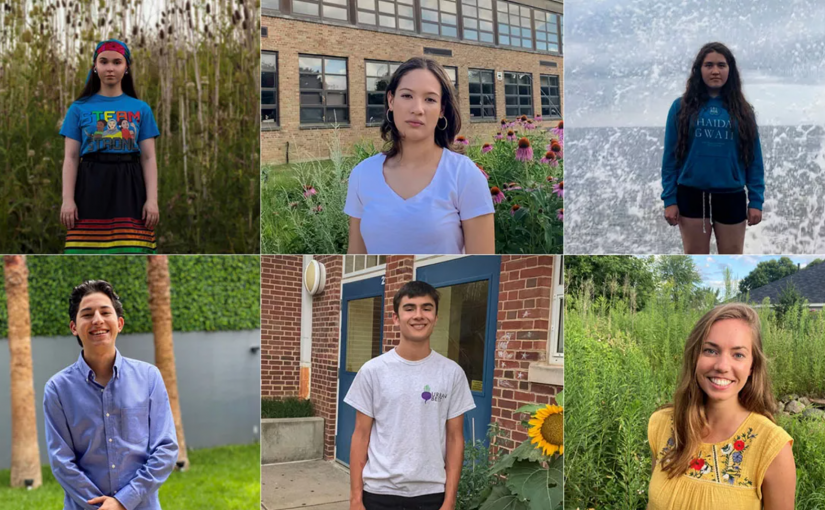
Clockwise from left: Danielle Boyer, Alexandra Collins, Haana Edenshaw, Diego Arreola Fernandez, Chander Payne, Isabella Wallmow. Photo by New Leaders Initiative.
Alexandra Collins, 16
Hinsdale, Illinois
Battling Cancer-Causing Air Pollution
In 2018, Alexandra Collins discovered that for 30 years industrial sterilization company Sterigenics had been emitting high levels of ethylene oxide (EtO) — a colorless gas that is a known carcinogen — near homes and schools in her neighborhood in Hinsdale, Illinois. Collins’s community suffers from a cancer rate nearly nine times the national average. After learning that many students and teachers were unaware of the danger EtO posed, Collins and her sister co-founded Students Against Ethylene Oxide (SAEtO), which harnesses the energy of young people to fight for a ban of ethylene oxide emissions, especially near schools and residential areas.
In the fall of 2019, SAEtO and allied community groups persuaded the Sterigenics facility near Collins’s home to close.
Recently, Collins also helped launch SAEtO’s first specialized project, EtO-Free that reviews EtO-free beauty products and pushes for transparency in product manufacturing and labeling.
Danielle Boyer, 19
Troy, Michigan
Bringing STEAM Education to Indigenous Youth
After teaching her first kindergarten science class at age 10 in Troy, Michigan, Ojibwe youth Danielle Boyer became acutely aware of how disparate access to quality STEAM (Science, Technology, Engineering, Art, and Math) education among low-income students disadvantages them and impacts the future of our Earth. She’s been working to increase STEAM education accessibility and affordability ever since through innovative programs that promote technical competency and develop a tangible love for our Earth. In January 2019, Boyer founded her own educational organization, The STEAM Connection, to further this cause.
The STEAM Connection prioritizes work with communities of color, particularly Indigenous communities, providing free classes and events on recycling, innovation, and sustainable design.
Haana Edenshaw, 16
Haida Gwaii
Suing Canada for Its Role in the Climate Crisis
A member of the Tsitts Gitanee clan of the Haida Nation on Haida Gwaii, Haana Edenshaw is one of 15 Canadian youth suing the Canadian federal government for its contributions to climate change. Edenshaw has been an environmental justice and Indigenous rights activist for much of her life, organizing climate strikes, speaking alongside Greta Thunberg at the 2019 Rally for Climate Justice in Vancouver, and delivering a speech in the Masset dialect of the Haida language at the United Nations Permanent Forum on Indigenous Issues last year.
In the lawsuit, Edenshaw and her co-plaintiffs argue that their rights to life, liberty, security of person, and equality, and their public trust rights, are being violated by the Canadian federal government due to its continued support of fossil fuels. The lawsuit is part of a global movement of youth, supported by the nonprofit law firm Our Children’s Trust, holding governments accountable for their role in the climate crisis.
Diego Arreola Fernandez, 18
Mexico City, Mexico
Fostering Environmental Activism in Mexico
Diego Arreola Fernández created Green Speaking after learning about the devastating consequences of plastic pollution and excessive consumerism while at the 2019 Ocean Heroes Bootcamp in Vancouver, Canada. His campaign uses in-school engagement, social media, and motivational videos to encourage children, schools, and businesses in Mexico to fight plastic pollution by modifying their habits, policies, and strategies.
In a country contending with serious gang-related violence, deep poverty, and pervasive social inequality, raising awareness about the environment is no small task. But the need for it is urgent.
Arreola Fernandez’s next goal is to turn his campaign into an environmental organization with the mission of cultivating more environmental leaders prepared to raise their voices for the planet and inspire people towards a truly sustainable future.
After noticing a lack of fresh produce at his school in Bethesda, Maryland in 2016, Chander Payne connected his school food pantry with a local rooftop farm and began delivering 20 pounds of fresh produce to the pantry each week. That summer, he fell in love with regenerative agriculture and returned to school with a mission to use the practice to help marginalized youth grow food. He founded Urban Beet farm in his high school’s courtyard and invited young people from the Washington DC-based Homeless Children’s Playtime Project to grow and harvest vegetables there.
Over the past two years, Urban Beet has provided 2,500 pounds of produce to underserved families and people experiencing homelessness, and it has begun to replicate its work at other schools across the country.
Isabella Wallmow, 20
Andover, Minnesota
Creating a Healing Space for Incarcerated Youth
While volunteering with incarcerated youth at a juvenile detention center in Warrenville, Illinois, Isabella Wallmow came to realize that the youth needed healing, not punishment. After learning about the holistic, community-oriented approach of permaculture agriculture in 2018, she had an idea: set up a gardening program. With support from the Resiliency Institute, which uses permaculture design to transform suburban communities, as well as enthusiastic detention center staff, Wallmow launched the Seeds for Change Garden Program in 2019.
Seeds for Change puts voices, visions, and dreams of incarcerated youth at the forefront of running the garden. It creates a safe, healing space for them and equips them with a marketable skill.
Save the Date:Join us for the 2020 Brower Youth Awards! The awards will be celebrated virtually on October 15 and will be followed by a virtual Q&A session with the winners on October 20. To register for these events, visit: broweryouthawards.org.
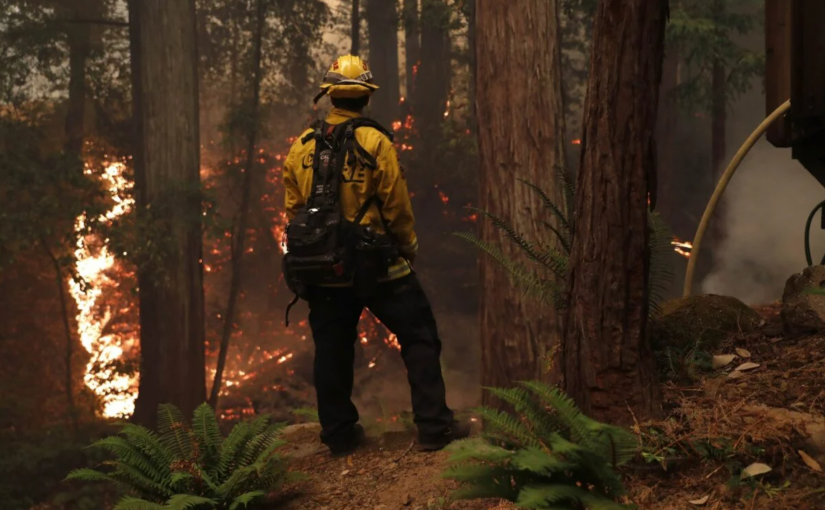
What a week. Rough for all Californians. Exhausting for the firefighters on the front lines. Heart-shattering for those who lost homes and loved ones. But a special “Truman Show” kind of hell for the cadre of men and women who’ve not just watched California burn, fire ax in hand, for the past two or three or five decades, but who’ve also fully understood the fire policy that created the landscape that is now up in flames.
“What’s it like?” Tim Ingalsbee repeated back to me, wearily, when I asked him what it was like to watch California this past week. In 1980, Ingalsbee started working as a wildland firefighter. In 1995, he earned a doctorate in environmental sociology. And in 2005, frustrated by the huge gap between what he was learning about fire management and seeing on the fire line, he started Firefighters United for Safety, Ethics, and Ecology. Since then FUSEE has been lobbying Congress, and trying to educate anybody who will listen, about the misguided fire policy that is leading to the megafires we are seeing today.
So what’s it like? “It’s just … well … it’s horrible. Horrible to see this happening when the science is so clear and has been clear for years. I suffer from Cassandra syndrome,” Ingalsbee said. “Every year I warn people: Disaster’s coming. We got to change. And no one listens. And then it happens.”
The pattern is a form of insanity: We keep doing overzealous fire suppression across California landscapes where the fire poses little risk to people and structures. As a result, wildland fuels keep building up. At the same time, the climate grows hotter and drier. Then, boom: the inevitable. The wind blows down a power line, or lightning strikes dry grass, and an inferno ensues. This week we’ve seen both the second- and third-largest fires in California history. “The fire community, the progressives, are almost in a state of panic,” Ingalsbee said. There’s only one solution, the one we know yet still avoid. “We need to get good fire on the ground and whittle down some of that fuel load.”
Yes, there’s been talk across the U.S. Forest Service and California state agencies about doing more prescribed burns and managed burns. The point of that “good fire” would be to create a black-and-green checkerboard across the state. The black burned parcels would then provide a series of dampers and dead ends to keep the fire intensity lower when flames spark in hot, dry conditions, as they did this past week. But we’ve had far too little “good fire,” as the Cassandras call it. Too little purposeful, healthy fire. Too few acres intentionally burned or corralled by certified “burn bosses” (yes, that’s the official term in the California Resources Code) to keep communities safe in weeks like this.
Academics believe that between 4.4 million and 11.8 million acres burned each year in prehistoric California. Between 1982 and 1998, California’s agency land managers burned, on average, about 30,000 acres a year. Between 1999 and 2017, that number dropped to an annual 13,000 acres. The state passed a few new laws in 2018 designed to facilitate more intentional burning. But few are optimistic this, alone, will lead to significant change. We live with a deathly backlog. In February 2020, Nature Sustainability published this terrifying conclusion: California would need to burn 20 million acres — an area about the size of Maine — to restabilize in terms of fire.
Mike Beasley, deputy fire chief of Yosemite National Park from 2001 to 2009 and retired interagency fire chief for the Inyo National Forest and the Bureau of Land Management’s Bishop Field Office, was in a better mood than Ingalsbee when I reached him, but only because as a part-time Arkansan, part-time Californian and Oregonian, Beasley seems to find life more absurd. How does California look this week? He let out a throaty laugh. “It looks complicated,” he said. “And I think you know what I mean by that.”
Beasley earned what he called his “red card,” or wildland firefighter qualification, in 1984. To him, California, today, resembles a rookie pyro Armageddon, its scorched battlefields studded with soldiers wielding fancy tools, executing foolhardy strategy. “Put the wet stuff on the red stuff,” Beasley summed up his assessment of the plan of attack by Cal Fire, the state’s behemoth “emergency response and resource protection” agency. Instead, Beasley believes, fire professionals should be considering ecology and picking their fights: letting fires that pose little risk burn through the stockpiles of fuels. Yet that’s not the mission. “They put fires out, full stop, end of story,” Beasley said of Cal Fire. “They like to keep it clean that way.”
(Cal Fire, which admittedly is a little busy this week, did not respond to requests to comment before this story published.)
Carl Skinner (Courtesy Carl Skinner)
So it’s been a week. Carl Skinner, another Cassandra, who started firefighting in Lassen County in 1968 and who retired in 2014 after 42 years managing and researching fire for the U.S. Forest Service, sounded profoundly, existentially tired. “We’ve been talking about how this is where we were headed for decades.”
“It’s painful,” said Craig Thomas, director of the Fire Restoration Group. He, too, has been having the fire Cassandra conversation for 30 years. He’s not that hopeful, unless there’s a power change. “Until different people own the calculator or say how the buttons get pushed, it’s going to stay that way.”
A six-word California fire ecology primer: The state is in the hole.
A seventy-word primer: We dug ourselves into a deep, dangerous fuel imbalance due to one simple fact. We live in a Mediterranean climate that’s designed to burn, and we’ve prevented it from burning anywhere close to enough for well over a hundred years. Now climate change has made it hotter and drier than ever before, and the fire we’ve been forestalling is going to happen, fast, whether we plan for it or not.
Megafires, like the ones that have ripped this week through 1 million acres (so far), will continue to erupt until we’ve flared off our stockpiled fuels. No way around that.
When I reached Malcolm North, a research ecologist with the U.S. Forest Service who is based in Mammoth, California, and asked if there was any meaningful scientific dissent to the idea that we need to do more controlled burning, he said, “None that I know of.”
How did we get here? Culture, greed, liability laws and good intentions gone awry. There are just so many reasons not to pick up the drip torch and start a prescribed burn even though it’s the safe, smart thing to do.
The overarching reason is culture. In 1905, the U.S. Forest Service was created with a military mindset. Not long after, renowned American philosopher William James wrote in his essay “The Moral Equivalent of War” that Americans should redirect their combative impulses away from their fellow humans and onto “Nature.” The war-on-fire mentality found especially fertile ground in California, a state that had emerged from the genocide and cultural destruction of tribes who understood fire and relied on its benefits to tend their land. That state then repopulated itself in the Gold Rush with extraction enthusiasts, and a little more than half a century later, it suffered a truly devastating fire. Three-thousand people died, and hundreds of thousands were left homeless, after the 1906 San Francisco earthquake and attendant fires. The overwhelming majority of the destruction came from the flames, not the quake. Small wonder California’s fire ethos has much more in common with a field surgeon wielding a bone saw than a preventive medicine specialist with a tray full of vaccines.
More quantitatively — and related — fire suppression in California is big business, with impressive year-over-year growth. Before 1999, Cal Fire never spent more than $100 million a year. In 2007-08, it spent $524 million. In 2017-18, $773 million. Could this be Cal Fire’s first $1 billion season? Too early to tell, but don’t count it out. On top of all the state money, federal disaster funds flow down from “the big bank in the sky,” said Ingalsbee. Studies have shown that over a quarter of U.S. Forest Service fire suppression spending goes to aviation — planes and helicopters used to put out fire. A lot of the “air show,” as he calls it, happens not on small fires in the morning, when retardant drops from planes are most effective, but on large fires in the afternoon. But nevermind. You can now call in a 747 to drop 19,200 gallons of retardant. Or a purpose-designed Lockheed Martin FireHerc, a cousin of the C-130. How cool is that? Still only 30% of retardant is dropped within 2,000 yards of a neighborhood, meaning that it stands little chance of saving a life or home. Instead the airdrop serves, at great expense, to save trees in the wilderness, where burning, not suppression, might well do more good.
This whole system is exacerbated by the fact that it’s not just contracts for privately owned aircraft. Much of the fire-suppression apparatus — the crews themselves, the infrastructure that supports them — is contracted out to private firms. “The Halliburton model from the Middle East is kind of in effect for all the infrastructure that comes into fire camps,” Beasley said, referencing the Iraq war. “The catering, the trucks that you can sleep in that are air-conditioned…”
Cal Fire pays firefighters well, very well. (And perversely well compared with the thousands of California Department of Corrections inmates who serve on fire crews, which is very much a different story.) As the California Policy Center reported in 2017, “The median compensation package — including base pay, special pay, overtime and benefits — for full time Cal Fire firefighters of all categories is more than $148,000 a year.”
The paydays can turn incentives upside down. “Every five, 10, 15 years, we’ll see an event where a firefighter who wants [to earn] overtime starts a fire,” said Crystal Kolden, a self-described “pyrogeographer” and assistant professor of fire science in the Management of Complex Systems Department at the University of California, Merced. (She first picked up a drip torch in 1999 when working for the U.S. Forest Service and got hooked.) “And it sort of gets painted as, ‘Well, this person is just completely nuts.’ And, you know, they maybe are.” But the financial incentives are real. “It’s very lucrative for a certain population of contractors.”
By comparison, planning a prescribed burn is cumbersome. A wildfire is categorized as an emergency, meaning firefighters pull down hazard pay and can drive a bulldozer into a protected wilderness area where regulations typically prohibit mountain bikes. Planned burns are human-made events and as such need to follow all environmental compliance rules. That includes the Clean Air Act, which limits the emission of PM 2.5, or fine particulate matter, from human-caused events. In California, those rules are enforced by CARB, the state’s mighty air resources board, and its local affiliates. “I’ve talked to many prescribed fire managers, particularly in the Sierra Nevada over the years, who’ve told me, ‘Yeah, we’ve spent thousands and thousands of dollars to get all geared up to do a prescribed burn,’ and then they get shut down.” Maybe there’s too much smog that day from agricultural emissions in the Central Valley, or even too many locals complain that they don’t like smoke. Reforms after the epic 2017 and 2018 fire seasons led to some loosening of the CARB/prescribed fire rules, but we still have a long way to go.
“One thing to keep in mind is that air-quality impacts from prescribed burning are minuscule compared to what you’re experiencing right now,” said Matthew Hurteau, associate professor of biology at University of New Mexico and director of the Earth Systems Ecology Lab, which looks at how climate change will impact forest systems. With prescribed burns, people can plan ahead: get out of town, install a HEPA filter in their house, make a rational plan to live with smoke. Historical accounts of California summers describe months of smoky skies, but as a feature of the landscape, not a bug. Beasley and others argue we need to rethink our ideas of what a healthy California looks like. “We’re used to seeing a thick wall of even-aged trees,” he told me, “and those forests are just as much a relic of fire exclusion as our clear skies.”
Mike Beasley (Courtesy Mike Beasley)
In the Southeast which burns more than twice as many acres as California each year — fire is defined as a public good. Burn bosses in California can more easily be held liable than their peers in some other states if the wind comes up and their burn goes awry. At the same time, California burn bosses typically suffer no consequences for deciding not to light. No promotion will be missed, no red flags rise. “There’s always extra political risk to a fire going bad,” Beasley said. “So whenever anything comes up, people say, OK, that’s it. We’re gonna put all the fires out.” For over a month this spring, the U.S. Forest Service canceled all prescribed burns in California, and training for burn bosses, because of COVID-19.
I asked Beasley why he ignited his burns anyway when he was Yosemite fire chief. “I’m single! I’m not married! I have no kids. Probably a submarine captain is the best person for the job.” Then he stopped joking. “I was a risk taker to some degree. But I also was a believer in science.”
On Aug. 12, 2020, California Gov. Gavin Newsom, the U.S. Forest Service chief and others signed a memorandum of understanding, or MOU, that the state needs to burn more. “The health and wellbeing of California communities and ecosystems depend on urgent and effective forest and rangeland stewardship to restore resilient and diverse ecosystems,” the MOU states. The document includes a mea culpa: “California’s forests naturally adapted to low-intensity fire, nature’s preferred management tool, but Gold Rush-era clearcutting followed by a wholesale policy of fire suppression resulted in the overly dense, ailing forests that dominate the landscape today.”
Ingalsbee looks at the MOU and thinks, That’s not worth the paper it’s printed on. Likewise Nick Goulette, executive director of the Watershed Research and Training Center, has seen too little movement for too long to believe anything but utter calamity can get us back on track. In 2014, Goulette participated in a planning exercise known as the Quadrennial Fire Review, or QFR, that asked the grim question: What is the disaster scenario that finally causes us to alter in a meaningful way our relationship and response to fire? The answer: something along the lines of a megafire taking out San Diego. In the wake of it, Goulette and others imagined one scenario in which the U.S. Forest Service morphed into an even more militaristic firefighting agency that “overwhelmingly emphasizes full suppression” and is “extremely risk averse.” But they also envisioned a scenario that spawned a new kind of fire force, one focused on “monitoring firesheds” and dedicated to changing the dominant philosophy away “from the war on fire to living with fire.”
This exercise took place three years before the devastating 2017 Napa and Sonoma fires, and four years before the Camp Fire destroyed Paradise in 2018. Goulette thought those events would have prompted more change. The tragedies did lead to some new legislation and some more productive conversations with Cal Fire. But there’s just so much ground we need to make up.
When asked how we were doing on closing the gap between what we need to burn in California and what we actually light, Goulette fell into the familiar fire Cassandra stutter. “Oh gosh. … I don’t know. …” The QFR acknowledged there was no way prescribed burns and other kinds of forest thinning could make a dent in the risk imposed by the backlog of fuels in the next 10 or even 20 years. “We’re at 20,000 acres a year. We need to get to a million. What’s the reasonable path toward a million acres?” Maybe we could get to 40,000 acres, in five years. But that number made Goulette stop speaking again. “Forty thousand acres? Is that meaningful?” That answer, obviously, is no.
The only real path toward meaningful change looks politically impossible. Goulette said we need to scrap the system and rethink what we could do with Cal Fire’s annual budget: Is this really the best thing we could do with several billion dollars to be more resistant to wildfire? Goulette knows this suggestion is so laughably distasteful and naive to those in power that uttering it as the director of a nonprofit like the Watershed Research and Training Center gets you kicked out of the room.
Lenya Quinn-Davidson at September Burn in Bear River. (Thomas Stratton)
Some fire Cassandras are more optimistic than others. Lenya Quinn-Davidson, area fire adviser for the University of California Cooperative Extension and director of the Northern California Prescribed Fire Council, remains hopeful. She knows the history. She understands that the new MOU is nonbinding. Still she’s working on forming burn cooperatives and designing burner certificate programs to bring healthy fire practices back into communities. She’d like to get Californians back closer to the fire culture in the Southeast where, she said, “Your average person goes out back with Grandpa, and they burn 10 acres on the back 40 you know, on a Sunday.” Fire is not just for professionals, not just for government employees and their contractors. Intentional fire, as she sees it, is “a tool and anyone who’s managing land is going to have prescribed fire in their toolbox.” That is not the world we’ve been inhabiting in the West. “That’s been the hard part in California,” Quinn-Davidson said. “In trying to increase the pace and scale of prescribed fire, we’re actually fighting some really, some really deep cultural attitudes around who gets to use it and where it belongs in society.”
All Cassandras believe California’s wildfires will get worse, much worse, before they get better. Right now, said Crystal Kolden, the state’s fuel management plan, such as it is, is for Cal Fire to try to do prescribed burns in shoulder season. But given that the fires are starting earlier in the year and lasting later (we are not even this year’s traditional fire season yet), the shoulder doesn’t really exist. “So where is the end?” she asks. “It’s not in sight, and we don’t know when it will be.” The week before this past round of fires saw the hottest temperatures ever recorded in California, the hottest temperature ever reliably recorded on earth: 130 degrees, more than half the boiling point of water, and just 10 degrees below what scientist consider to be the absolute upper limit of what the human body can endure for 10 minutes in humidity.
“Meanwhile, our firefighters are completely at the breaking point,” said Kolden, and there’s little they can do to stop a megafire once one starts. “And after a while you start to see breakdowns and interruptions in other critical pieces, like our food systems, our transportation systems.” It doesn’t need to be this way. We didn’t need to get here. We are not suffering from a lack of knowledge. “We can produce all the science in the world, and we largely understand why fires are the way they are,” said Eric Knapp, a U.S. Forest Service research ecologist based in Redding, California. “It’s just that other social political realities get in the way of doing a lot of what we need to do.”
The fire and climate science before us is not comforting. It would be great to call in a 747, dump 19,200 gallons of retardant on reality and make the terrifying facts fade away. But ignoring the tinderbox that is our state and our planet invites more madness, not just for the Cassandras but for us all.
As Ingalsbee said, “You won’t find any climate deniers on the fire line.”
This article contains the content from the 8/28/2020 Bioneers Pulse newsletter. Sign up here to get the newsletter straight to your inbox!
Indigenous communities have spent thousands of years living alongside fire as a crucial element to regulating ecosystems and promoting biodiversity.
We’ve entered an era that necessitates a healthier relationship with fire. Climate change is intensifying these disasters with drier and hotter conditions, as we’ve witnessed an unprecedented wildfire season in California wreak widespread destruction. Modern society has much to learn from traditional ecological knowledge — which may hold the key to coexisting with fire, rather than struggling to control it. Instead of associating fire with danger and destruction, what if we shifted our mindset toward embracing the renewal and rebirth that come from the ashes?
This week, we highlight the work of fire ecologists helping communities become “fire adapted” in a rapidly warming world.
Living With Fire: Dr. Crystal Kolden on Fire Resilience, Biomimicry and TEK
The California wildfires are razing through homes, cities, and ecosystems at a higher intensity than natural fires — and this problem is far from over. Dr. Crystal Kolden, a self-proclaimed “Pyrogeographer,” has spent years examining humanity’s relationship with fire through the lens of environmental conservation and land management. As an expert, Kolden has gained an intimate understanding of how society can adapt to the more frequent and intense wildfires precipitated by climate change.
In this interview, Kolden uplifts what she’s learned about creating fire-resilient communities, which could be the key to sustainably co-existing with one of the world’s most powerful natural elements.
Fire and Water: Land and Watershed Management in the Age of Climate Change
As climate change makes the environment drier and hotter, wildfires are worsening throughout California. This season alone, these fires have razed hundreds of thousands of acres and continue to spread rapidly.
Fire ecology experts are leading the search for solutions, which includes restoring the natural role of fire in ecosystems and combating the poor land management practices that have led us to this crisis. In this panel discussion from the 2016 Bioneers Conference, four leading fire ecologists discuss one burning question: How can modern society renew our relationship with the land to stop the wildfire crisis?
Nature’s Phoenix: Fire As Medicine | Chad Hanson and Frank Kanawha Lake
Contemporary Western fire science is integrating what Indigenous Peoples discovered over thousands of years of observation, and trial and error: fire is key to optimizing forest vitality and biodiversity. The merging of these two ways of knowing could signal the end to our misguided policy of fire suppression at all costs, and the beginning of an era of building fire-resilient communities with a new relationship to one of nature’s most elemental and fearful forces.
This Bioneers podcast episode features fire ecologists Chad Hanson and Frank Kanawha Lake.
Initiation by Fire: Life During and After a Major California Wildfire
The Ojai Foundation in Ojai, California, is a 42-year-old retreat center whose mission is to “foster practices that awaken connection with self, others, and the natural world.” The new co-directors, Sharon Shay Sloan and her husband Brendan Clarke, were invited to lead a transformation of the space. But disaster hit just weeks after they arrived. The Thomas Fire — one of the worst in California’s history — blazed through the education center’s 37 acres and destroyed 80% of its buildings.
In this interview, Sharon discusses the aftermath of the fire and how she’s leading the effort to rebuild Ojai from the ashes. This story holds deep lessons on being resilient in times of disaster.
In 2019, Bioneers hosted a screening and panel discussion of “Wilder Than Wild: Fire, Forests, and the Future.” This compelling one-hour documentary reveals how fire suppression and climate change have exposed our forests and urban landscapes to high intensity wildfires – and explores strategies to mitigate their impact. In 2020, as multiple wildfires are torching large areas of California, Wilder Than Wild offers an invaluable overview.
California Fire Safe Council | This nonprofit organization leads community efforts toward wildfire risk reduction and resiliency, by bringing together citizens, community leaders, governmental agencies and corporations.
National Fire Protection Association | Firewise USA is a voluntary program from the NFPA, which provides a framework to help neighbors get organized, find direction, and take action to increase the ignition resistance of their homes and community.
This article contains the content from the 8/28/2020 Bioneers Pulse newsletter. Sign up here to get the newsletter straight to your inbox!
Wildfires in California and across the Western US are razing through homes, cities, and ecosystems at record-breaking rates for yet another summer — and this problem is far from over. Dr. Crystal Kolden, a self-proclaimed “Pyrogeographer,” has spent years examining humanity’s relationship with fire through the lens of environmental conservation and land management. Using Biomimicry as a lens, Dr. Kolden and her colleagues have gained an intimate understanding of the solutions needed to adapt to a rapidly warming world, including empowering the leadership of First Peoples.
In this interview with Bioneers Senior Director of Programs and Research Teo Grossman, Dr. Kolden discusses her research into transforming our societal relationship with wildfire, leading towards the creation of fire-resilient communities which can sustainably co-exist with one of the world’s most powerful natural elements.
Dr. Crystal Kolden
DR. CRYSTAL KOLDEN: I am an Assistant Professor of Fire Science based in the Management of Complex Systems Department at UC-Merced. My research is focused broadly on wildfire in a coupled natural-human system. I am a geographer by training, so I call myself a “Pyrogeographer” because I really look at how fire works in the physical Earth system and ecosystems. However, because humans are strongly coupled to that natural landscape and to those ecosystems, we can’t ignore humans. There are feedbacks in that human-natural systems relationship, so I look at understanding how fire works in that coupled system and where fire affects those feedback processes between humans and the landscapes we live on.
TEO GROSSMAN: It’s a crazy moment we’re in — and for many it feels like we keep having more and more of these summers. California fire managers are basically saying the fire season extends year-round at this point. There is obviously a climate signal in this, compounded by a century or more of fairly intense fire suppression. Where is the science currently at?
KOLDEN: That’s a big question. In a nutshell, as the globe warms, we see more local extremes. People have a hard time wrapping their head around global warming as a big, abstract concept. What does it really mean that the planet has warmed an average of two degrees in the last century?
One local manifestation of climate change is change in the frequency and the timing of when extreme events occur. As the temperature warms globally, the variance increases in local systems. Literally thousands of high temperature records have been broken around the world over the last several years. We see more of these extreme events, not just really hot days, but hot days coupled with strong winds, or hot days following a multi-month or multi-week, or even multi-year drought.
These extreme events affect the condition of the vegetation whether it’s forest, shrub lands or grasslands. One of the key drivers of big, explosive wildfires is what we call the vapor pressure deficit, which is a measure of aridity. Extreme heat wave events or drought coupled with heat waves produce really high vapor pressure deficits and all you need is a spark. Depending on location, there are different ratios of human to lightning ignitions. But generally, there is never a shortage of ignitions.
We have stretches of drought followed by a really wet winter that will produce massive growth in vegetation, and then we get a really dry summer following it. That’s always happened, but now the magnitude of the regrowth (and the resulting fire) is much more extreme.
It’s all very interconnected. There are other factors — forest management practices, land management more generally, where humans are building — which all relate to how a lot of these fire disasters play out. The key is that many of these other factors vary locally and can be quite different from from country to country. But we see these fire extremes that I’ve described globally. That’s why, as a fire scientist, I really point to global climate change as being the big driving factor related to increasing fire disasters.
TEO: I first became aware of your work in an article that you wrote with Alistair Smith and David Bowman titled Biomimicry Can Help Humans to Coexist Sustainably with Fire. Can you describe what you and your colleagues were trying to accomplish?
KOLDEN: There are a number of different adaptations that plant species and even animal species have to fire. What we wanted to do with this paper was suggest that we really need to start looking at nature as we try and figure out, as humans, how to live in these fire-prone landscapes. One of the things that humans have realized over time is that nature can be a really powerful teacher, because evolution has basically required species to evolve to become efficient and effective so they can continue to occupy a niche.
“We really need to start looking at nature as we try and figure out, as humans, how to live in these fire-prone landscapes.” – Dr. Crystal Kolden @pyrogeog
We tried to look at a lot of different species and ask, How can we think about mimicking what these plants or animals have already evolved over time, in terms of how they exist in this environment of fire? How can we, as human society, adapt some of those traits in our own way so that we can learn to live successfully in these fire-prone systems and not constantly be having fire disasters.
When fire scientists look at how natural systems function with and without fire, one of the things we see over and over again is that a great many species on Earth are adapted to fire in some way, shape or form. They have evolved with fire. That evolution and those characteristics take many different forms. Some species have evolved to actually be fire dependent. The charismatic mega flora that everyone loves to point to is the Giant Sequoia, a revered tree in California and in Western North America. Giant Sequoias are these amazing trees. It turns out that they actually depend on fire to regenerate. Their cones have a bit of a resin on them and they only open up, allowing the seeds to actually get into the soil to regenerate, if there has been relatively frequent or recent low-severity fire.
Other species are fire adapted in that they will tolerate fire. These might be trees that have developed really thick bark, or armor essentially, so that when fire comes through, they can survive. The Ponderosa Pine tree is one of the most widespread trees in Western North America. Ponderosa Pine can grow very large and has these big, thick plates of bark. When a fire comes through, the first branches on a mature Ponderosa pine are so high up in the air that the flames on the fire actually can’t even reach the lowest branches. The bark is so thick that the heat never penetrates into the core, the living piece of the tree where the water and the food are moving. Ponderosa is a species that is adapted to fire. It doesn’t depend on it, but it also is used to frequent fire and easily repels the effects of fire.
Then there are species that don’t do very well with fire. We think of them as fire intolerant and they are the species that grow in spaces where there is not very much fire or it is highly infrequent. When these species they experience any kind of fire, even just a little bit, they will die and they won’t come back again, often for hundreds of years.
TEO: How similar were your biomimetic findings compared to current approaches for creating fire-resilient or fire-permeable communities. Did they match up? Did you find new strategies that you hadn’t expected?
KOLDEN: Yes. One of the things that we really try and push in our paper is that we as humans have an opportunity to use biomimicry to think more outside the box in terms of how to create fire-resilient communities. A good example of this is that for many decades now, our approach has been to view communities as places where fire should not be. We’ve tried to prevent fire from coming into communities. This approach may work in a city or in a suburban or ex-urban area with relatively dense housing, but as we look at some of these more rural areas, there are subdivisions that are half-acre, one-acre, two-acre lots with houses relatively spread out and with a fair amount of vegetation between homes. Trying to keep fire from moving into those communities is an exercise in futility in many ways.
Instead, one of the things we see when we look to nature is that fire is not kept out of some forests. It is allowed to move through. The evolution of certain forests has facilitated fire actually moving through quickly and at relatively low severity so that it doesn’t kill the big trees. I’ll go back to my example of the Giant Sequoias and to some extent the Ponderosa pines. There are a lot of pictures from early explorers and some of the early settlers in the Western US that show these big park-like areas where the trees are incredibly widely spaced, and the understory is relatively short. It’s grass. It’s mostly short. When a fire moves into those areas, the only thing in the understory is either short or tall grass. Fire burns grass pretty quickly, so it moves fast, and then it also burns at low intensity. There’s not a lot of heat coming off of a grass fire, so there’s not a lot of what we call residence time around the bowl of a tree.
If you light a match, take your finger and you can actually touch the head of a match for a nano second and you won’t really burn yourself. You can put out a candle by just quickly pinching your fingers together on the flame. But if you take the match and you have it right next to your finger, and you hold it there you’re going to give yourself a pretty bad burn. It’s the same thing with trees.
These forests have evolved so that fire moves through quickly and burns off the understory grass and doesn’t have a high residence time around the bowls of the trees. We asked whether we can do the same thing with a lot of these rural communities. Can we actually set them up so that we facilitate fire moving through a community, through some of these land parcels, moving through quickly and at low severity, so that there aren’t a lot of embers generated that can land on houses and ignite housing materials, and so there’s not a high residence time.
I envision being able to live in a community someday in a house that is fully hardened against fire. You see the fire coming, you close all your doors and your windows, and you turn off your air circulation system so it’s not sucking anything in, and you watch the fire go racing by, and you wait a half an hour for the last bits of it to burn out, and then you open your door again, and, yes, you’ve got a blackened property around you, but at low severity, within a week or two, it will actually begin to green up. That type of approach is much more aligned with what happens in a functioning ecosystem than what we see today with communities trying to keep fire out. That’s a really simple example.
When I say that Biomimicry generates outside-the-box ideas, some of the things that we speculate on in the paper are questions and ideas such as whether we could have of elevated communities where the wildlands grow from the soil, from the surface, and the housing is built up on stilts or up in the trees. There are boreal communities of different kinds of species whose approach when a fire comes is to climb the tree, get out of the way, that’s where their nests are, and fire does not affect them at all. Could we say, okay, let’s go ahead and put our houses up on stilts. We do it in some places in flood plains. We do it in some places for hurricanes. It’s an interesting question and one that I’m not qualified to answer from an engineering perspective, but we wanted to put that out there as an idea that it’s in the natural world and it works for species in the natural world. It is something that we can think about that’s an outside-the-box solution for wildfire-prone areas.
TEO: One of the themes in your work (and hopefully increasingly in fire science in general) is the realization that fire is both an essential regenerative process of the landscape as well as a reality that humans, as a species, have always been living with. Modern society seems to have lost touch with the reality of living with fire. You note that Indigenous fire management practices were historically widespread and sophisticated. I’ll add that these practices were frequently stamped out by colonizers. Some of the first laws on the books in colonial California and Australia were bans on traditional burning practices. In some places traditional ecological fire management is still taking place. The science appears to be catching up in some ways. What’s the next step? Where do we go from here?
KOLDEN: It’s interesting that you note that the science may have caught up. I would say science still actually has a lot of catching up to do, particularly with regard to Indigenous knowledge and how Indigenous people were part of that evolutionary process in terms of fire-prone landscapes globally. This has been an interesting debate among fire scientists for a long time. There are fire ecologists and fire scientists who don’t think that there was actually that much Indigenous burning across the landscape. Then there’s a substantial amount of anthropological research and traditional ecological knowledge that supports that there actually was an enormous amount of Indigenous burning, to the point that in places where there was not very much lightning, these landscapes are still very, very much shaped by fire. The only place that that fire could have come from was from widespread Indigenous burning with high frequency. We’re still sort of catching up in that regard.
There are Indigenous communities and tribes throughout the world, who still have that knowledge and have maintained it through oral history and by continuing to use cultural fire. As we start to look at next steps going forward, I think those are the people who should be leading. We should be empowering them as leaders to think through and prescribe how we can take some next steps towards increasing fire on these landscapes.
It’s always really counterintuitive for people to think that the best way to increase our ability to live on these fire-prone landscapes is to fight fire with fire. But it really is. The place that we should be starting from is applying fire in a smart and intentional way, consistent with how fire was applied on these landscapes for millennia by lightning as well as Indigenous people.
TEO: It is really about living with fire, isn’t it? If there’s one takeaway here, it might be getting everyone to really wrap their heads around that phrase, because it’s not going away. We live with wind and rain. Fire is always going to be there.
KOLDEN: I do a lot of press interviews and community outreach work, and one of the things I always ask is: How do you want your smoke? Because that’s really the thing that ends up impacting the most people. The dream of living in a smoke-free world for most of us in the Western US is gone. Those decades are gone. It’s hard for people to let go of that. It’s like addiction. In stage one, admit you have a problem. Once we get to the point of saying, okay, we’re going to have fire and we’re going to have it every year, then we have to ask: how do you want it? Do you want it predictable and spread out over the course of the year via prescribed burning so if you’re highly sensitive to smoke you can plan around it? Or do you want it for two or three weeks in late summer when you simply can’t control it, and you’re stuck, and it’s hot, and you want to be out recreating but you can’t because there’s so much smoke it’s unhealthy?
It’s hard for people to wrap their head around that because they want the good, ole days without fire. But thanks to global climate change, those days are gone. Now we have to figure out how to mitigate the discomfort of having a little bit of smoke instead of being trapped by a lot.
We’re a long way from living sustainably with fire, and we need to get there faster rather than slower.
Keep Your Finger on the Pulse
Our bi-weekly newsletter provides insights into the people, projects, and organizations creating lasting change in the world.