Rethinking the Relationship Between Agriculture and Water

agriculture and water photo of farm sprinkler system

The New York Times front page photo was incomprehensible: it showed Joseph Poland of the U.S. Geological Survey standing by a telephone pole in the San Joaquin Valley with a sign 30 feet above that read 1925. The sign marked where ground level had been 90 years ago. Due to a phenomenon called subsidence, the ground has dropped almost 30 feet, a result of regularly over-drafting groundwater.

GwsanjoaquinI couldn’t wrap my head around it.  How was that possible? Well, when aquifers in the Central Valley are overdrawn, the water no longer helps hold the natural structure of the layered clay aquifer walls, and they collapse into the void that is left. So the ground sinks.

California has never regulated its groundwater. In 2014, the Sustainable Groundwater Management Act was passed, but without specific guidance for the design and structure of groundwater management.

New Report Focuses on California Groundwater

A new report, “Designing Effective Groundwater Sustainability Agencies,” lays out a framework for successful groundwater governance. Coauthor Andrew Fisher of the University of California Santa Cruz said, “California has been over-pumping groundwater for decades, by millions of acre-feet per year…. The Sustainable Groundwater Management Act provides a once-in-a-lifetime opportunity to change how groundwater resources are managed and to put basins on a path towards water security.”

In the Salinas Valley, California’s second largest agricultural region, they face a different issue caused by overdrawn aquifers: salt-water intrusion. Increased salinity from seawater intrusion of coastal aquifers ultimately makes the aquifers unusable for domestic or agricultural use, and the problem will only worsen with sea-level rise. The Salinas Valley Reclamation Project treats wastewater from northern Monterey County municipalities to tertiary standards (filtered and disinfected to drinking water quality).  That recycled water is used to irrigate 12,000 acres of farmland in the northern Salinas Valley to offset well pumping and to inhibit seawater intrusion. The recycled water has successfully arrested increased saltwater intrusion and has prevented salt water from entering the aquifer farther inland. Such water recycling typically uses less energy than groundwater pumping or importing water from long distances, as Southern California does.

Tom-Willey-with-dirt
Tom Willey

But perhaps the most radical idea for rethinking the relationship between agriculture and water is one I heard from organic pioneering farmer Tom Willey at the CalCAN (California Climate and Agriculture Network) Summit at UC Davis last year. He suggested that the way to restore long-term agricultural viability in California’s Central Valley was to look to nature and mimic her methods that sustained ecosystems and built fertility over eons; allow the valley to seasonally flood like it did before the construction of dams and aqueducts restricted natural hydrological processes, so that over time the aquifer can recharge.

Now, that would come with a high cost economically and politically because it would mean farmland lying fallow, at least for some time. But long-term exploitation and disregard for the stewardship of a precious resource like water has led to this crisis. Looking to nature through the lens of biomimicry is not a wild abstract idea, but a prudent and powerful way to regenerate ecological health and ensure long-term sustainability of our food-producing landscapes.

Learn more about how California’s leadership on global climate change is changing agriculture in our free e-book »


Andy Lipkis: Trees as Models for Adaptation and Resilience

“Superheroes are what happens when any of us link hands and say we care.” — Andy Lipkis, TreePeople

This is an edited transcript of Andy Lipkis’s keynote at Bioneers 2015. Full video here.

Times have changed. The doors to the White House have opened. The Pope has opened the doors. This is a critical time because, for all of us who have been knocking on those doors for decades, it’s easy to be frozen, thinking we still need to be pounding. We need to get our feet moving and move forward.

It is a new day, and we need to wake up and notice it. Severe weather is now upon us: the threat of 50-years-out sea level rise, forget about that. We have to accelerate the work.

The times are upon us and not only do we need to work rapidly and with great vigor on policy change, but also our bodies are going to be needed. This is not a time for the faint of heart.

It calls for superheroes. That’s us. It’s our power. Superheroes aren’t macho strong men. Superheroes are what happens when any of us link hands and say we care.

Greening South Central

A retired schoolteacher named Eudora Russell got trained as a TreePeople citizen forester so she could mobilize her Los Angeles neighborhood. She planted some trees. It worked. And then she dreamt big. She wanted to plant all of Martin Luther King Boulevard with trees as a living monument to the man. But the mayor said it would take 5 to 10 years, millions of dollars, not going to happen. She refused to take no for an answer. She came to me and I said, “Yeah, let’s show what people can do when they join together. Let’s do it in a day.”

Now, how did it happen? She shared her idea with me. I shared it with more people. A thousand people volunteered to be trained in advance, and 3,000 people showed up on the day to plant. Every month for 10 years, a dozen TreePeople staff and volunteer leaders were joined by 100 people to water the trees and protect them. And that’s why there’s a 7 mile-long row of trees in South Central Los Angeles that you can see from space, honoring Dr. King.

TreePeople’s Origin Story

It rained a lot in Los Angeles in 1980. Mudslides threatened communities. People called for help, but first responders had no training or tools for dealing with all the mud. There was no 911. There was no preparedness for what happens with severe rain. After three days the mud moves, houses move, people are in trouble.

We used our shovels and got a bunch of volunteers to rescue a couple homes,. A city councilman saw that and said, “If it gets worse, could you do this on a larger scale?” I was 22. I had no idea what I was doing. And I said, sure, why not.

We crowd-sourced and reached out to the community. There were no social media, no cell phones, no nothing back then, but we went to radio and TV, and said we need help. We need able-bodied volunteers. The city certified us all – 3,000 volunteers worked for 10 days, and saved 1,200 homes. The fire department and emergency command center turned their dispatches over to us. But the volunteers who showed up were off-road vehicle association folks, people with bumper stickers on their car that said, “Kill a Sierra Clubber.” Ham radio operators. The community showed up and saved the community.

The Crucial Community of an Oak Tree

Oak tree in downtown Oakland, California
A mature oak tree anchors Oscar Grant / Frank Ogawa Plaza in downtown Oakland, CA.

They took away our sponges. That’s the reason it was flooding in LA for several years. The oak trees are the pillars of our ecosystem, and they are incredibly important.

The minute that acorn sprouts, it puts down a root as far as nine feet deep before it sends out leaves. It’s establishing a stable water supply. But from there it starts to transform the ecosystem and attract all kinds of critters it relies on to be able to thrive and grow. This massive thing, one of the largest living things on the Earth, could not function without the community of tiny critters that live in this space underneath the tree, like the worms and the mycorrhizal fungus.

That tree cannot drink unless each tiny piece of fungus hands a molecule of water to its roots. So you ask, “Who’s more important in this equation?” It’s not about that kind of power. We all need each other. This space is a collaborative space. Everything’s happening because these guys are communicating.

The oak and its community becomes a kind of a sponge with huge capacity and volume to capture water in the massive canopy of the tree. The water drips slowly to the ground below, and that fungus captures it. The animals, critters, everybody works together to clean and treat it, and then they send it to the aquifer. The capacity of that one tree with a 100-foot canopy, is 120,000 gallons of water that is captured, cleaned, sent to the aquifer.

When we take that tree away, we all that water downstream, rather than to our aquifer. We send the soil with it. And what do we replace it with? Bureaucracy. We take the trees out, we pave the land, we lose the water, and then we need to bring water in.

City Agencies in Symbiosis

In Southern California, we have a water supply agency that brings in 90 percent of our water. It costs more than a billion dollars a year to bring it in and distribute it. At the same time, it rains enough in Los Angeles to meet half our needs. But we throw almost all that water away by failing to capture it. And now we need a flood control agency that spends up to a half a billion dollars a year to move that water out of town.

That water is contaminated, so we have a pollution control agency. Meanwhile all that money flowing out is damaging the economy and we’re trying to figure out how to rebuild it and create jobs. Meanwhile, half the water we use in Los Angeles is to grow grass and landscapes. It’s mowed, collected and sent to the landfill, which costs about $100 million a year.

What you see here is a hemorrhage of cash and resources, not from anyone being evil, but because we dis-integrated the ecosystem and then put regulations around these people, our friends, preventing them from collaborating. We had to fix it. We worked to bring them together, slowly, as we convinced them that it made economic sense, engineering sense and social sense to join together. And when they joined, we were able to bring about new solutions.

So, we started biomimicking what the tree does. A TreePeople cistern is the same 100-foot diameter space as that oak tree’s canopy but it’s deeper. Its capacity is a quarter million gallons. It captures enough water to help protect us from floods, and keep a 45-acre park green.

Last year, during the drought we started with an empty cistern. It rained four inches in one week in February, which gave us 65,000 gallons. In May, a fire truck showed up, Code 3, red lights and siren. I ran out. It was 105 degrees. They were deployed, ready for fire. I asked, “What’s up?” And they said, “We heard you have water.” This is the times we live in. I said, “Come and get the water.”

We have spent a lot of time building these partnerships, getting agencies to work together. They knew it made sense, but they still weren’t collaborating full time, all the time, commingling their DNA, their sensibilities, their passion. We needed to take it deeper. Those three agencies – Department of Water & Power, Flood Control, and Sanitation – have asked us to facilitate them in a new partnership where we build new hybrid infrastructure they can work towards full time.

Australia as Climate Bellwether

Climate scientists said Australia would be the first continent to be really rocked with early onset severe weather. They said California would be next. Hotter hot. Drier dry. Wetter wet. Colder cold. And ladies and gentlemen, we are in it.

It hit Australia around the year 2000, the millennium drought. Very similar to the California drought, but it lasted longer. Australians responded, and the government helped. People started conserving and then government helped enable them do more. The government helped people install three types of cisterns for their homes and on their farms: 2,000 gallons, 5,000 gallons, 20,000 gallons per house. Between 20 and 50 percent of the homes in every city adopted these, installed them, connected them to their toilets, their laundry, and saved their landscapes. Everybody in Australia became a manager of the water instead of a mis-manager.

They radically reduced their water use from 80 gallons per person per day to 33 gallons in Brisbane. They did all kinds of other things: water recycling, wastewater recycling. I even visited a farm, an organic biodynamic farm that still retained its certification but using treated wastewater mixed with rainwater, and the wine was amazing.

It is hotter than ever in Australia. It started getting to 115 degrees in cities and people started to die. They’ve died nearly every year there from the heat. City managers figured out that the best way to save their population was to return to the trees and create dense tree canopy. In Melbourne, they committed to 40 percent tree canopy which is enough to cool the city during peak temperatures by four degrees, and save lives.

That country’s resilience is inspiring our leaders. This week, another delegation of California legislators is arriving there and meeting with the same people that we did, and they’re bringing back the solutions.

Australia is so similar to us that it’s easy to think that we could replicate what they’ve done, and replicate it in a hurry. We need to do that.

More about California’s Climate Leadership

Discover how California is setting the pace for addressing global climate change in water management, agriculture, clean energy, environmental justice and more:

Some Dogs Can Sniff Out Cancer

Science is now showing that a dog’s nose is the most sensitive tool known for detecting cancer. Like, 99% accurate. Woof!

My old friend and colleague Ralph Moss just published a fascinating short piece that surveys this remarkable research. Read it and howl.

cancerdogsTruthfully it’s not all that surprising. In the 1980s I produced a movie called Hoxsey: How Healing Becomes A Crime that had a parallel story. In the early 1900s, Harry Hoxsey inherited his family’s herbal cancer treatment from his grandfather, an Illinois horse farmer. Old farmer Hoxsey had devised the formula after reputedly observing a horse with a malignant tumor cure itself by eating unusual plants not part of its normal diet. Call it horse sense. About 150 years later, all the herbs would be shown to have anti-cancer, anti-tumor and immune-boosting properties.

When I invited a Native American friend to the editing room and he saw this part of the story, he audibly grunted. He turned to me, slyly grinned and said, “People think the Indians went around and tasted every plant to gain their knowledge. That would be very dangerous. We watched the animals.”

Today there’s an entire branch of science called “zoopharmacognosy” that Jane Goodall helped develop. Animals have been successfully self-medicating for a very long time. One reason their senses are so highly developed is evolutionary. Predators such as dogs (or their ancestor the wolf) expend less energy pursuing the sick, the weak, the old and the young.

Thus do scientists doggedly pursue the mysteries of healing. We’ve been barking up the wrong tree.

Here’s an excerpt of Ralph’s blog post on this:

In 2006, acupuncturists at the Pine Street Clinic, St. Anselmo, CA, published a pioneering study titled “Diagnostic Accuracy of Canine Scent Detection in Early- and Late-stage Lung and Breast Cancers.” In it, they demonstrated that a dog’s nose is the most sensitive tool known for the detection of cancer cells. …

“Recent research suggests that dogs can detect scent in the measure of one part per trillion,” Nicholas Broffman, son of the clinic’s co-director, Michael Broffman, LAc, told me.

Pine Street then asked Prof. Tadeusz Jezierski, of the Institute of Genetics and Animal Breeding of the Polish Academy of Sciences, to conduct further research on dogs’ scent detection. “We wondered if there was a biomarker, some kind of signature to cancer cells,” said Nicholas. “We set out to look for a device to test for such a thing, and it turns out that it is the dog. There is no technology that even comes close.”

Read the entire blog post here.

Women’s Wisdom: Happy International Women’s Day 2016

International Women’s Day, 2016

It is International Women’s Day and we’re celebrating wisdom with this gorgeous short video by our friend Julia Maryanska in association with Bioneers and the Namaste Foundation.

Women’s Wisdom: International Women’s Day from Julia Maryanska.

Women’s Wisdom, Women’s Leadership

If you’d like to see even more great women’s leadership videos, please check out our Women Leaders on Leadership Collection. This inspiring Collection brings to life the vision, voices and fierce purposefulness of leaders with a different relationship to power: focusing on “power to” and “power with,” rather than “power over.”

These extraordinary leaders are reframing the role of women and the feminine; proposing different responses to confrontation; transforming the story with living models; integrating gender justice with racial justice, cultural diversity and consciousness; leading from the heart; valuing vulnerability and reclaiming wholeness through the inner transformations necessary to be the change we seek in the world.

Here’s to women around the globe!

Philanthropists Disrupting the Giving Game

The traditional philanthropy model is overdue for some serious disruption. At Bioneers 2015, we convened four of the most innovative philanthropists to share their insights and practices. Here are some of the highlights of that electric session.

valentine_stuart_new-e1435340673629Stuart Valentine
Director of the Sustainable Living Coalition
Financial Advisor, Centerpoint Investing

Before we can reimagine philanthropy, take a moment to consider its literal meaning: the love of humanity. Simply close your eyes and take a moment and drop your awareness into the infinite backdrop of your being.

So take a deep breath. Open the mind, open the heart, and open the soul, in that order. Think of the iceberg. When you think of your life, when I think of my life, how much of my life do I dedicate to the tip of the iceberg in the form of my human doing? And how much of my life do I dedicate to the reality of human being that is at the basis of my doing? That is how we can build a new model of philanthropy, from the foundation of universal intelligence, instead of just an ego-driven, mind-based approach to giving.

I refer this model as communion, communication, and community: an integral path to re-imagining philanthropy.

How many of us in the audience would trade the profoundly connected life we have for a pile of cash? In the world of wealth and investment philanthropy, we often give more power to that pile of cash than to the gift of life, and the goal of an integral model of philanthropy is to create a union of the two.

I recently sat with a group of financial advisors who were so steeped in the belief that fossil fuels were the only answer. They literally could not see the data right on the screen. I was flabbergasted. The data did not matter because their beliefs colored their perception. We all have that level of filtering going on.

So look at yourselves and ask yourselves: Where are my beliefs actually bordering on dogma? To the degree that we can release ourselves from that, we have more freedom and liberation.

Out of beliefs come our thoughts, out of our thoughts we grow the model of philanthropy, the model of our life. And, of course, from thoughts, beliefs, emotions, experience, from being come our ethics and our values.

Here’s where we move into action. This is a cosmology from being to action. From ethics, values, thoughts and beliefs, we actually start thinking about our core mission, especially if we’re in the philanthropic world, this is where the rubber really hits the road. Who are we? What do we care about? What has meaning for us? And in the context of philanthropy, where can I give my gift of life, whether it’s an institutional gift or an individual gift?

Philanthropy is not just about money, obviously. If every single one of us has the capacity to give. If it’s of money, fine, great, but also our gift of attention, our gift of skill sets. There’s a numerous range of possibilities, how we give, and it really comes back to somewhat of a selfish but an important feedback loop: What am I here to accomplish in this lifetime? How can I actually live my life consistent with my own personal mission, and therefore act from a greater position of integrity?

The first step is to ask: How do I get more in relationship to myself? How do I establish this state of communion? This is the purpose of introspective exercises – deep breathing, yoga, meditation.

Nina had a really great revelation in the opening plenary today about the importance of reconnecting to ourselves. Her feedback loop is saying, ‘Time to invest more of my attention into being, because there’s so much doing that I’m turning into a stress monkey.’ Right?

So, from communion spontaneously arises insight, communication. And the goal here is let’s get more informed from that source of creative intelligence. Let’s move into action and communicate those ideas with others, because out of communication we start finding our tribe, we start generating commitments. Those commitments are central to generating and creating community.

We find ourselves deeply involved in our communities, because that is where the true wealth of life resides. Cash is no more than a unit of account to facilitate transactions to support greater experience of community.


Marian-Moore-Headshot-e1444926385504Marian Moore
Founder, Play BIG
Senior Advisor, RSF Social Finance

Both of my parents were from super wealthy families. But they were traitors to their class. My dad’s grandfather was one of those Robber Barons who basically did all the things that we’re trying to undo now. When my father and my mother met, they shared an admiration for the Catholic Worker movement and Dorothy Day. My dad became an Episcopal priest and they moved their family to Jersey City for eight years and lived in a slum parish. That’s where I was born.

I recognize that I had these two very strong inheritances. The extreme wealth was sort of bizarre: I visited my grandmother’s house and there was a butler and a maid and a chauffeur. And then we lived in this little parish house in Jersey City slum.

In 1964, when I was 7, we moved to Washington, D.C. I spent my formative years in DC in the ‘60s with activist parents. All the social activism and racial justice, peace movement, politics, human rights—that was what we were raised with.

There was this money, but there was no connection made between these two things. When they died, they left us no guidance for what to do with it.

I didn’t have wealthy friends, so I was totally in the closet about having money. I had a job for many years producing music and TV. All my friends were struggling musicians.

I was in my early 30s when I found The Threshold Foundation, which is a national network of social change philanthropists. Oh my God. I got to go be with people who shared my values and who also had a closet but were out of that closet at least with each other. That’s where my journey started to integrate the money with the values.

My job now with Play BIG is to guide others along that same path. My funny job is to find people who have tens of millions of dollars and are really interested in thinking about it in a different way. We challenge the conventional assumptions not just about philanthropy, but also about people’s assets that are busy, busy, busy doing things that they don’t believe in or want to support. We create an environment to have a conversation to consider a different way of doing it.

What we do is we bring together 18 people who have tens of millions of dollars. Normally they’ve never talked about that money with anybody but their wealth advisor, and not all wealth advisors are talking about the cosmos like Stuart Valentine is. Most wealth advisors are, by definition of their business model, committed to keeping the corpus large so they maximize their percentage.

Someone who comes into Play BIG, yes, they give money; they know what their values are; they have a mission or they wouldn’t be interested in coming. In many cases they have dissociated those things from the invested money because they’ve been told their whole life that it’s very complicated, and you can’t understand it and that’s just how it’s done.


hunt-hendrix_leah-e1432660333748Leah Hunt-Hendrix
Cofounder/Director, Solidaire

I rebelled against philanthropy for a big part of my life, and I now spend most of my time working in philanthropy. Never, even four years ago, would I have imagined myself here.

My grandfather was a poker player in Oklahoma and in a poker game won a piece of land in East Texas and under that land there was all this oil, and he turned out to be a good businessman. He built a big oil company and was a very right-wing conservative guy, very involved in right-wing politics. But he had a couple of good kids, and one of them was my mom. She spent a lot of her life focusing on women’s philanthropy and giving her money away to women, not with a really political analysis, but mostly to make up for the patriarchy within her family.

I basically thought that was boring, and it definitely wasn’t gonna solve the problems of the world.

I went to Princeton and got a PhD, and one of the things I was really interested in was how detrimental philanthropy and international aid are on communities and on political work I studied the ways in which international aid in the West Bank would pull people out of their political struggle. These kinds of apolitical NGOs that were doing palliative work for people who had been freedom fighters.

I decided not to just write a dissertation critiquing this. I got really interested in the idea of solidarity and what it would look like, what it looks like to be someone with wealth in solidarity with people who are struggling.

I came back to New York right when Occupy Wall Street was happening, and got really involved in that. I came to really believe in the power of social movements and in direct action and people getting into the streets, and civil disobedience, and speaking truth to power. But these are things that philanthropy tends not to fund. But I found some really cool philanthropists and we decided, what if we create a community of people who would fund these kinds of things? And who would just sort of ignore all of the trappings of foundations and 501(c)3s, and just get money into movement spaces.

Screen Shot 2016-03-07 at 3.50.38 PMWe started this community called Solidaire. The reason I mentioned the end of philanthropy is because I feel that philanthropy is an interim tool we have in a time when we have vast economic inequality, but it’s only about a hundred years old. The foundation model was created in the late 1800s, and the 501(c)3 was created in the 1950s, and they’re just very ill-equipped to deal with the kinds of problems that we have. These models are structurally unsound.

Can we use philanthropy to think about a new form of ways of funding advocacy and organizing social change in the future? Can we be a part of movements that are addressing economic inequality and racial inequality in ways that will ultimately diminish the amount of money that’s concentrated in a few hands?

On the progressive side of the spectrum philanthropists will think about their interests and their mission and their passions, and then kind of do whatever fits for them. And our question is how can we actually come together and create the structural changes we need, not just as individual philanthropists. If we believe in organizing and movements we have to organize within philanthropy to be more strategic and to think about how we’re going be a part of other social movements of changing the landscape.

Leonardo DiCaprio: Oscar Winner and Bioneer!

It takes a lot more courage than you might think to do what Leonardo DiCaprio did at the 2016 Oscars. When Leo accepted his richly deserved Best Actor award, he passionately and forcefully called out climate change.

“Making ‘The Revenant’ was about man’s relationship to the natural world — the world that we collectively felt in 2015 as the hottest year in recorded history. Our production had to move to the southernmost tip of this planet just to be able to find snow. Climate change is real, it is happening right now, it is the most urgent threat facing our entire species, and we need to work collectively together and stop procrastinating. I thank you all for this amazing award tonight. Let us not take this planet for granted; I do not take this night for granted.”

An Uphill Battle

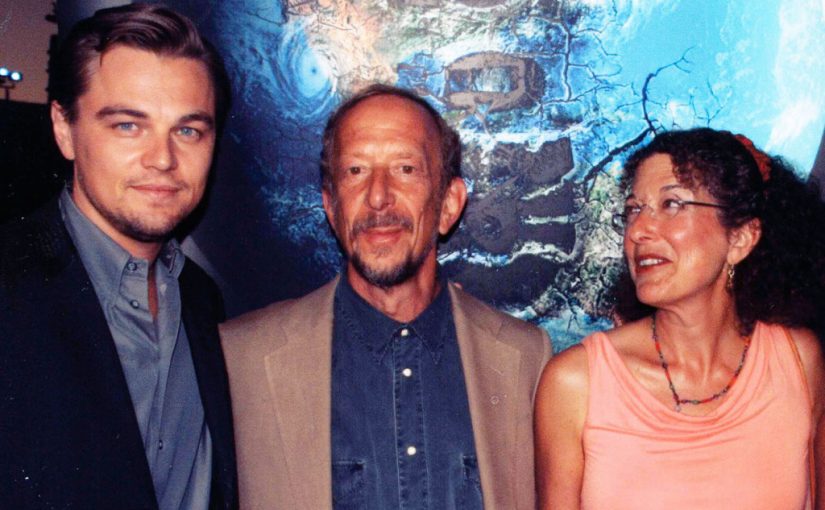
A little over 10 years ago, Leonardo invited me to join him at the Cannes Film Festival for the world premiere of his feature documentary, “The Eleventh Hour,” produced by our friends at Tree Media. I had been a central advisor to the movie, bringing in 30 bioneers (half the film’s interview subjects), and appearing in it myself. Leo brought me to LA for the Hollywood premiere, where we spent two long days doing press.

I got to see up-close-and-personal the kind of madness Leo has to confront for taking a stand, daring to use his celebrity for a higher purpose. Reporter after reporter asked embarrassingly trivial questions, while incessantly attacking the messenger. If you really care about climate change, why do you fly in a private jet? In fact, Leo flies commercial. What right do you have as a movie star to speak to such a complicated scientific issue? In truth, Leo is exceptionally knowledgeable and has been a diligent learner since his youth who has done his homework and can hold his own with most “experts,” and is far better informed than most politicians.

But the press did not care. They just kept flogging him with the tired old archetypes of a Hollywood airhead and gilded hypocrite. He is neither. It was painful to witness, yet inspiring to see his personal courage and willingness to take the heat in hopes of staving off the planetary heat.

In his Oscar acceptance speech, Leo also said this:

“We need to support leaders around the world who do not speak for the big polluters or the big corporations, but who speak for all of humanity, for the indigenous peoples of the world, for the billions and billions of underprivileged people who will be most affected by this, for our children’s children, and for those people out there whose voices have been drowned out by the politics of greed.”

Leo’s Oscar and brave speech are very personal for us at Bioneers. We are profoundly honored by the Leonardo DiCaprio Foundation’s unwavering support of Bioneers’ leadership over the past decade-plus. In late 2015, here’s what Executive Director Justin Winters wrote to us:

“This multi-year commitment and increase in our funding reflects our firm belief in the unique value of Bioneers. We see you as being among the most important movement-building forces in the world today, the rare ‘big tent’ that brings together a genuinely diverse set of key players and influencers making real breakthrough change and innovation in the world. The Bioneers gathering is a place to convene and provide practical guidance on creating a sustainable world to a broad network of committed change-makers. So much happens because of Bioneers that otherwise might not.

“We recognize your exceptional gift for spotting talent early and serving as a hatchery to bring countless key figures to far wider recognition and influence. The Foundation itself has benefitted directly with invaluable connections such as Chief Oren Lyons, Paul Stamets and Janine Benyus. As a connector, Bioneers is unparalleled, catalyzing important collaborations and novel new networks with remarkable diversity and creative power, which we are grateful exist today.”

Leonardo DiCaprio is showing the kind of leadership we deserve to see in our leaders. He knows the planetary peril we face and he’s calling on all of us to face it squarely and work together to turn the tide.

Yay, Leo!!!! You deserve a second Oscar for your climate action and environmental leadership.

Check out our Climate Leadership Media Collection for more on global responses to climate disruption »

2016 Summer Bioneers Kinship Expedition: A Circle of Friends in Spain

We are thrilled to invite you to join us on this year’s Kinship Circle expedition, a journey into the heart of Spain’s revolutionary political and cultural landscape.

Our eight-day voyage will take us from San Sebastián to Barcelona, where we will meet with and learn from key leaders of the major Spanish social movements, all while delving into the magnificent art, culture, and natural beauty of the region.

The adventure spans from June 22nd through July 1st, 2016, though you are certainly welcome to extend your stay. Spots are filling up fast, so please register soon or get in touch for further information!

We have to announce the cancellation of the 2016 Bioneers Conference in the Basque Country. Our partnership with the Basque Government, our host and primary underwriter, was brokered at a time of political upheaval in Spain. After recent elections, the present Basque Government’s ability to host and fund the event became less-than-secure and it became necessary to pull the plug.

Nevertheless, we’re pleased to still be working with other partners in Spain who have helped us develop this spectacular Kinship journey.

Trip Overview & Highlights

Spain is at the forefront of fascinating developments in progressive politics. The anti-austerity protests that began in May 2011 in Puerta del Sol Square in Madrid and spread throughout the Iberian Peninsula inspired the Occupy Movement in the US. Subsequent developments, including the emergence of the Podemos party and other leftist coalitions, make the current Spanish scene perhaps the most dynamic locus of progressive political ferment on the planet.

It’s particularly worthwhile for U.S. progressives to study because (the Bernie Sanders campaign not withstanding) the Spanish left has been far more adept at organizing itself to mobilize effective coalitions to compete for real political power.

Spain is also obviously steeped in history, food and culture, which we will be engaging with. Our time together will combine old and new, social movements and ancient heritage, local innovations and continental ambitions.

Our adventure will consist of three legs:

  • Three days in the beautiful Basque Country, a hotbed of progressive political activism, artistic creativity and legendary gastronomy. We begin in San Sebastian, welcomed by revelry at the Noche de San Juan, a very early (centuries) precursor to Burning Man, this celebration is an annual festival that concludes with the seaside burning of a large wooden sculpture. We will meet with political leaders and movement activist and take a deep dive into the legendary Mondragon Cooperative, the world’s largest with 75,000 employees. Mondragon represents a third way: an ethical, worker-owned, trans-generational enterprise competing successfully on a global scale.
  • Two days in the Spanish Countryside. We will take two days to leisurely travel the six hours across the Spanish countryside from Basque Country on the Atlantic coast to Barcelona on the Mediterranean. Along the way we will visit leading edge sustainable vineyards and the legendary Neolithic Cave Paintings in Aragon.
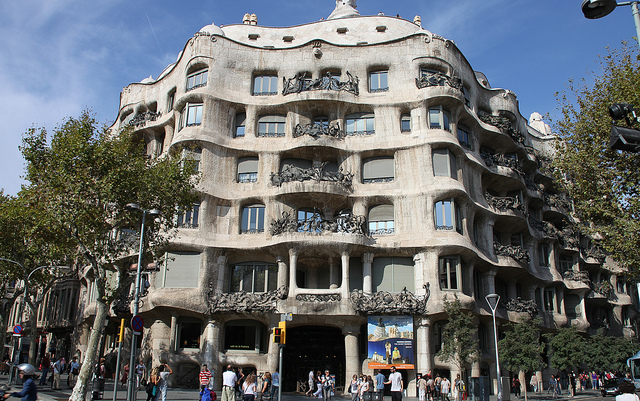
  • Four days in Barcelona, a cultural center renowned globally for its vibrant street life and beautiful architecture. Again, we’ll be provided an intimate look into the state of the Spanish social movements headquartered there, with personal meetings with leading figures in the nation’s cultural and political scene, including the current Mayor of Barcelona. We’ll take a deep dive into Gaudi and green design, visit the legendary Boqueria market and have additional cultural engagements.

Here are some of the inspirational leaders we’ll have the opportunity to meet over the course of our journey, with more in the works:

  • In addition to the Bioneers leadership team, we’ll be joined by Professor Manuel Pastor from USC, a brilliant analyst on the economic, environmental and social conditions facing low-income urban communities and the social movements seeking to change those realities.
  • The “Next Generation of Mondragon” — a younger set of leaders who are working to transform the business model of the legendary Mondragon Cooperatives into a truly green enterprise. Globally competitive and cooperatively owned, Mondragon has long been a model for how equitable business can be scaled up. We’ve been personally invited by these revolutionary youth leaders to experience their transformative work firsthand.
  • The brilliant minds behind “The Art of Collaboration” gathering in San Sebastián, a special event hosted by the Global Eco-Village Network. The Bioneers leadership team will be speaking at the event, and we’ll accompany them for special networking events with conference speakers, participants and organizers.
  • Juan Lopez de Uralde, the former president of Greenpeace Spain, now turned politician. As of December, Mr. Lopez de Uralde’s Podemos party received a majority in the Basque Country elections.
  • Ada Colau, the current Mayor of Barcelona. The former leader of the Anti-Eviction Movement, she has been Mayor of Barcelona since May 2015, voted into office on an anti-austerity, equity and social justice platform.
  • Carlos Fresneda, a journalist, green activist and correspondent in the US (now in London) of the newspaper El Mundo.
  • Gijsbert Huilink, Founder of Som Energia, the first renewable energy cooperative in Catalonia.
  • And much more – see the comprehensive itinerary below.

The price of the trip is $7500 and that is all-inclusive (within reason) from our starting point in San Sebastián to the close of the trip in Barcelona. Airfare and ground transport to and from these cities is not included. Below is a link where you can register and make payment. If you prefer to call with a credit card, please contact Maria Rotunda at 505-395-2801 or maria@bioneers.org.

Some Backstory on the Kinship Circle

Our Kinship Circle consists of our most supportive of supporters. They help provide the financial oxygen that keeps the fire of Bioneers burning bright.

Yet this circle brings much more than financial mojo. It is a community of highly accomplished people who offer deep expertise, wisdom and diverse points of engagement and working partnerships in our shared work.

In fact, we started the Kinship Circle after we realized what an authentically amazing donor circle Bioneers has, how few of you know each other, and how much everyone would benefit from getting connected.

The Kinship Circle consists of Bioneers donors who give $25,000 or more annually. If your current giving is less or you are new to Bioneers, you are welcome to come if you are committed to considering making a gift at that level.

Our first Kinship gathering in the spring of 2014 took place in Hana, Maui, a deeply Indigenous community with ancient roots, brilliant contemporary vision and ongoing struggles. Next year’s adventure brought us to British Columbia for an exploration of Canada’s thriving environmental movement. The expeditions were hugely successful, bringing together a circle of friends for truly transformative learning-in-action and creating a collaborative network we believe will last a lifetime.

Third time’s the charm, as they say, so here’s to an adventure that pushes the boundaries of kinship and creativity, broadening the Bioneers family beyond borders for true global partnership!

Several of you have already signed on, and it’s shaping up to be a spectacular group of people. We hope you will join us!

With Heartfelt Love and Gratitude,
Kenny Ausubel & Nina Simons, Founders

Draft Itinerary

Wednesday, June 22
Arrival in San Sebastián from US (via connecting flight from Madrid).

IN SAN SEBASTIÁN JUNE 22 – 26

June 23: Mondragon Cooperative Tour

We’ll travel the short distance to Mondragon for a special day to learn about the legendary Mondragon Cooperatives. Globally competitive and cooperatively owned, Mondragon has long been a model for how equitable business can be scaled up. We’re particularly excited to be invited by the “Next Generation of Mondragon”, a younger set of leaders who are working to transform the business model into a truly green enterprise.

Night event: Noche de San Juan

Early precursor to Burning Man, Noche de San Juan is an annual festival in San Sebastián that concludes with the seaside burning of a large wooden sculpture. This even also coincides with the opening of “The Art of Collaboration” week in San Sebastián.

June 24 – 25: San Sebastián Activities

The Art of Collaboration

Participate in The Art of Collaboration, a special gathering hosted by the Global Eco-Village Network. The Bioneers leadership team will be speaking at the event and we’ll accompany them for special networking events with conference speakers, participants and organizers.

Meeting the Movement

While in San Sebastián, we will have the honor of meeting with representatives from this emerging political movement including:

  • Juan Lopez de Uralde, former president of Greenpeace Spain turned politician. As of December, Mr. Lopez de Uralde’s Podemos party received a majority in the Basque Country elections.
  • Eduardo Maura, the Podemos deputy from the Basque Country
  • Carlos Fresneda, a journalist, green activist and good friend of Bioneers. Carlos will offer an in-depth overview of what is going on around Europe in the Eco scene. For ten years he was the correspondent in the US (now in London) of the newspaper “El Mundo”, where he publishes the series of interviews “Ecoheroes.”

June 26 & 27: Spanish Countryside
We will take two days to leisurely travel the six hours across the Spanish countryside from Basque Country on the Atlantic coast to Barcelona on the Mediterranean. Along the way we will visit leading edge sustainable vineyards and stay for the night in a local hotel. On the way to Barcelona the following day, we will stop for lunch near the legendary Neolithic Cave Paintings in Aragon. Arrive in Barcelona in the afternoon and settle into the hotel.

IN BARCELONA June 27 – July 1
While in Barcelona, we will have the opportunity to meet key players in Spanish progressive politics, visit legendary landmarks accompanied by experts and enjoy some of the best the city has to offer while allowing for plenty of down time, relaxation and exploration. Our four days in Barcelona will include:

Exploring Barcelona

  • Gaudi, Nature & Green Architecture. We will visit several Gaudi Buildings and Parks, guided by Claudia Marie Vargas, author of the book “Gaudi and Nature”.
  • Mercat de la Boqueria. We will enjoy a sustainability oriented tour of Barcelona’s legendary open produce and meat market.
  • Sustainable Bike Tour of Barcelona with Jordi Miralles of Fundació Terra

Meeting the Movement
We will visit and receive briefings from a number of luminaries and players in the larger eco-social movement in Barcelona and Spain, including:

  • Ada Colau is the current Mayor of Barcelona, representing “Barcelona en Comú”, a coalition of eco-social movements. The former leader of the Anti-Eviction Movement, she has been Mayor of Barcelona since May 2015, voted into office on an anti-austerity, equity and social justice platform.
  • David Fernandez, a former representative of CUP, the radical left-wing Catalan Independence party, now working with COOP57, a very successful social banking cooperative.
  • Gijsbert Huilink, Founder of Som Energia, the first renewable energy cooperative in Catalonia.
  • Ignasi Fontanals, member of the Barcelona Resilience Group and Opticits and representative of the Barcelona 100 Resilient Cities efforts.

Outside Barcelona
Just outside the urban center of Barcelona are a number of fascinating efforts related to sustainable food and farming practices. Possible short trips include the following:

  • Fundación Alicia is led by the legendary Spanish chef Ferrán Adriá and is located in beautiful Mont Sant Benet
  • Torres Wines and Vineyard, one of the most sustainable vineyard in all of Spain.
  • La Fagenda, a cooperative for the integration of mentally disabled people, and a successful sustainable yogurt and cheese producer, located 1.5 hours north from Barcelona in the Natural Park of the Vulcanos.

July 1
Kinship Trip concludes and participants depart for home or further European travel.

Questions? Please contact Maria Rotunda at 505-395-2801 or maria@bioneers.org.

How to Legalize Sustainability: An Interview with Thomas Linzey

Life, liberty, and the pursuit of happiness have long been held as the inalienable rights of US citizens. Then why is it that “corporate personhood” consistently overrides the legal rights of people? And what about the rights of nature? Do rivers, mountains – whole ecosystems – have inalienable rights that guarantee their interests?

Innovative environmental attorney and long-time bioneer Thomas Linzey co-founded Community Environmental Legal Defense Fund (CELDF) with Stacey Schmader to tackle these questions with practical action. Their breakthrough work has been redefining democracy.

Begun as a traditional public interest law firm seeking to protect the environment, CELDF quickly realized that no matter how hard they tried to stop harmful projects, our structure of law is not only inherently unsustainable, it has, in fact, made sustainability illegal.

Today, through grassroots organizing, public education and outreach, and legal assistance, nearly 200 municipalities across the U.S. have enacted CELDF-drafted Community Rights laws which ban practices that violate the rights of people, communities and nature– including fracking, factory farming, sewage sludging of farmland, and water privatization.

Teo Grossman, Senior Director of Programs & Research for Bioneers, caught up with Thomas earlier this month to hear more from the frontlines of the growing movement for Community Rights and Rights of Nature.

TEO GROSSMAN: For those unfamiliar with the work of the Community Environmental Legal Defense Fund, can you provide a brief overview of what you do?

THOMAS LINZEY: We’re the lawyers of last resort for those communities faced with corporate projects that they can’t stop through any other means. For the past 15 years, we’ve assisted close to 200 communities across the country to adopt Community Bills of Rights which ban dangerous corporate projects, like water bottling operations, factory hog farms, and fracking.

Because legal doctrines have been manufactured over the past hundred years by corporations to shield themselves from local control when that local control seeks to stop harmful corporate projects, the laws that we help communities to write and adopt include direct challenges to corporate constitutional “rights” and other powers that have routinely been used in the past to override those local laws.

It’s our belief that, until communities have more rights than the corporations which seek to use our communities for their resources, we will be unable to create economic or environmental sustainability. In other words, we don’t have a factory farm problem or a fracking problem, we have a democracy problem.

GROSSMAN: It has been several years since you last presented at a Bioneers Conference. Has the work of CELDF changed, expanded or shifted in any significant ways? Any major success stories and/or hurdles to share?

LINZEY: The community stories that we’ve shared over the years have begun to merge. People across different issue areas now understand that their work is the same as others, regardless of what the underlying issue is. Over the past three years, communities have joined together in Oregon, Colorado, Ohio, Pennsylvania, and New Hampshire to create statewide Community Rights Networks. Each of those state organizations is now proposing state constitutional amendments that would elevate community rights above corporate “rights.” In addition, those state networks have joined together to create the National Community Rights Network (NCRN), which has now proposed a federal constitutional amendment that would recognize the authority of community lawmaking. As the community rights movement grows, these organizations give the communities a louder voice at the state and federal level.

GROSSMAN: At root, your work focuses on drawing attention to and hopefully altering the constitutionally embedded elevation of corporate rights over individuals, communities and natural systems. In an interview you gave to Mother Jones in 2006, you said the following: “The dream is that, 30 years out – and my heart sinks, because I don’t know if we even have 30 years from an environmental perspective – other places will join hands as well, and lead to a rewrite of the U.S. Constitution.” 10 years later, in the midst of a national political campaign replete with populist rhetoric, does this still feel like a dream or are we making some real progress?

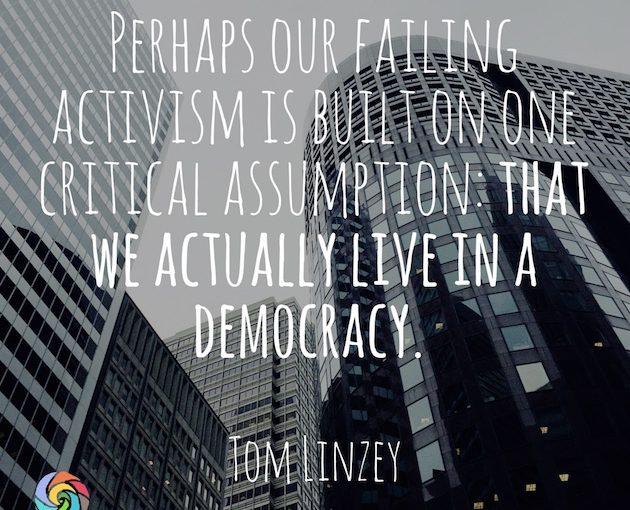
LINZEY: The progress that’s being made is by individual people and their communities who are coming to grips with the fact that we don’t live in a democracy. The relatively small number of people who run this country’s largest corporations haven’t had to deal with any visions other than their own over the past hundred years, because people in each community haven’t had the legal authority to take them on.

That’s starting to change, but the institutions that have brought us to this point, including state and national political structures, will be the last ones to shift. While populist rhetoric grounded in the need for economic and environmental sustainability is a good thing, that rhetoric is usually drowned out by mainstream candidates who have more of an interest in merely “regulating” certain activities rather than stopping them completely. So, a lot of it is still a dream, but there is real progress on the ground towards people reclaiming the “we the people” of American historical lore, one community at a time.

GROSSMAN: In one of your talks at Bioneers, you said of environmental regulations: “Even when working perfectly, [environmental regulations] simply regulate the rate at which we destroy our communities and our planet.” The competing view is that if we can get that rate down to a manageable level, it’s better than nothing (this is basically the Obama Administration’s approach to climate change at the moment, leveraging existing regulations to their maximum extent.) Given the time crunch we are up against with many of these issues, is it possible to “change the system” and “work from the inside” at the same time?

LINZEY: Probably not. Almost all activist resources over the past fifty years have been focused on using tools that we’ve been given – like environmental regulations and regulatory agencies – to protect ourselves and the natural environment. There’s a belief that if we use those mechanisms enough, and if we change our own behavior enough, that we’ll be able to stop climate change in time and stop the other catastrophes that are bearing down on us. The problem is that we’ve been trying to use those tools for a long time, and we’ve been changing behaviors for a long time, but that simply hasn’t worked – things are worse now in this country than they were before the major environmental laws were adopted. “Working from the inside” means working with tools that the current system allows us to use, i.e., those tools which reinforce, and do not challenge, the basic operation of the existing system. As a colleague of mine likes to say, “If voting could actually change anything, we wouldn’t be allowed to do it.” The type of system envisioned by people at the Bioneers Conference – the type of system that will stop the planet from exploding – is so inherently in conflict with the economic system that currently exists that the two can’t cohabit the same space. One has to give way to the other, otherwise we’ll continue to accelerate our way off the cliff.

GROSSMAN: Outside the US, efforts (supported by CELDF) in countries like Ecuador and Bolivia have managed to inscribe Rights For Nature into national constitutions. Are there similar efforts in other countries? Is CELDF involved in additional work internationally?

LINZEY: We now have a program that focuses specifically on assisting people and communities in other countries to replicate the work happening in the United States. In addition to assisting people in Ecuador and Bolivia, we’ve been working in Nepal (to advance enforceable Rights For Nature in their national constitution), in India (to advance a rights of the Ganges River bill), and with communities in Canada, Mexico, Ireland, Ghana, Cameroon, Australia, and Colombia. While most of that work focuses on driving enforceable Rights For Nature and ecosystems into law, a lot of it focuses on local self-determination.

GROSSMAN: These types of ground-floor changes are inspiring to hear about, particularly given our struggles in the US. Now that it’s law, are you seeing that this is practically increasing the ability of local citizens in these countries to conserve and protect natural systems and community rights?

LINZEY: Yes. In Ecuador, cases have now been brought to enforce the rights of nature provisions in Ecuador’s constitution, and judges have held on at least two occasions in favor of an ecosystem. Of course, you’ve also had President Correa continue to be a big advocate for drilling in the Amazon, and the constitutional provisions haven’t been able to stop that drilling, but this type of paradigm change never comes all at once. In the United States recently, with our help, a watershed in Pennsylvania filed to intervene in a case brought by an oil and gas corporation against a community which banned a frack wastewater injection well. So, there’s a growing recognition of how these laws aren’t just for show, but can be used to strengthen community fights against these often-global corporations.

GROSSMAN: Are there any particular efforts, campaigns or local/national news stories that we should be aware of, that may be flying under the radar or not getting the coverage or attention they deserve (domestic or international)?

LINZEY: There’s an incredible fight happening in a small rural community in western Pennsylvania. In 2014, the elected Supervisors of Grant Township, a municipality of about 700 people, adopted a community bill of rights guaranteeing clean air, clean water, and a sustainable energy future to the people of Grant. The law banned frack wastewater injection wells within the Township, while removing certain powers and “rights” from oil and gas corporations within the municipality, and recognizing the rights of ecosystems. The Township was then sued, and they’ve been fighting the lawsuit ever since. In October of 2015, a federal judge overturned six sections of the law, and in response, the people of the Township overwhelmingly voted to become a “home rule” municipality.

By transforming their municipal government, the Township nullified most of the judge’s ruling, and they adopted a new municipal Charter, which again banned frack wastewater injection wells, while removing corporate “rights” and powers from oil and gas corporations, and recognizing rights for ecosystems within the Township. The oil and gas corporation has threatened to sue the Township again, and it’s pressing for at least half a million in damages as a result of Grant’s law. The Grant Supervisors have publicly declared that they will file for bankruptcy if a damage award is issued by the court.

The battle is a long way from being over, but it would be the first municipality in the United States to not knuckle under to a corporate challenge, but declare that the battle is important enough to bankrupt the Township.

Learn more about the struggle in Grant Township and how you can help »

Check out Thomas’s terrific book Be the Change: How to Get What You Want in Your Community (co-authored with bioneer Anneke Campbell) which details this growing movement and shows the arc of genuine political revolution brewing at the grassroots level across the US.

3 Bioneers on the Grist50 List

For the beginning of 2016, Grist.org, the irreverent environmental news blog, created Grist50, a list of “The 50 People You’ll Be Talking About in 2016.” Obviously there are far more than 50 people doing great work worth promoting in 2016, but here at Bioneers we’re quite familiar with the excitement and struggle of annually identifying a bounded number of incredible people and projects to highlight. We’re thrilled to see some of our favorite Bioneers speakers over the years making the Grist50 list, alongside many other brilliant minds. Check out some of these luminaries and their Bioneers talks below:

Adrianna Quintero

Bioneers was honored to have Adrianna Quintero presenting a keynote address at the 2015 Bioneers Conference. Adrianna is Director of Partner Engagement for the Natural Resources Defense Council (NRDC) and founder/Executive Director of Voces Verdes, a leading national Latino coalition on climate change and clean energy, started as an attorney in NRDC’s Environment and Health program litigating cases on pesticides, toxic chemicals, safe drinking water, clean air, environmental justice, and US-Mexico border issues.

“Let’s re-imagine what environmentalism means, and re-identify, re-envision what an environmentalist is. Because whether we are out on a beautiful hike or we’re walking our dog with our family, we’re appreciating nature and we are enjoying and valuing what it gives to us. That exposure is what makes us truly care and take the action that we need to in order to protect our environment. It’s time for us to do this, it’s time for us to bring diversity, the same biodiversity that we see in nature and value so strongly, into our movement.”

Vien Truong

Vien Truong, J.D., has been a speaker at several Bioneers Conferences, most recently in 2015. Her voice and work are featured in one of our most downloaded episodes from the 2015 radio series, Bioneers: A Revolution from the Heart of Nature, embedded below, and in a chapter of our recent eBook, available for free here. Vien is the National Director of Green For All, a national initiative to build an inclusive green economy, previously led the Greenlining Institute’s Environmental Equity team, helping pass SB 535, which directs a quarter of CA’s Greenhouse Gas Reduction Fund to disadvantaged communities.

“Often, our environmental campaigns are focused on traditional environmental groups, and yes, that is important. We need to have people who are fighting for the environment at the table. We now also have to realize that sixty percent of Californians are people of color. Seventy-three percent of people under eighteen years old in California now are people of color. We have to recognize this, and we have to organize around it if we’re going win.”

Jihan Gearon

Jihan Gearon, joined us in 2013 on several panels as part of the Bioneers Indigenous Forum. Jihan is of Navajo and African American ancestry, originally from the Navajo reservation, is the Executive Director of the Black Mesa Water Coalition, a board member of the Center for Story-based Strategy, and a steering committee member of the Climate Justice Alignment. She is a graduate of Stanford with a Bachelors of Science in Earth Systems and a focus in Energy Science and Technology.

“Under Black Mesa is the Navajo Aquifer, a pristine aquifer, the best water you can drink and the sole source of drinking water for Navajo and Hopi communities that exist in that area. Coal was being pulverized, mixed with water from the Navajo aquifer and pumped 273 miles through a slurry line to the Laughlin generating station. This was the only place in the world where coal was still being transported in this way. That’s how we got started, around protection of the water because it was being used up and contaminated.”

Bioneers 2015 Youth Leadership Program: Moving the Movement!

Way back when a handful of youth convened under a tree at Bioneers in 2000, at the behest of Julia Butterfly-Hill, we knew an essential piece of the puzzle had just been placed. This program was born to bring youth into the fold of Bioneers in a way that would inspire, inform and engage them, generating ambassadors for the world the world wants. Ever since, these inspired young people have set about translating the Bioneers messages of real, solutions-based hope into the language of our emerging generations of leadership.

That handful of young people turned into almost 500 youth at Bioneers 2015, thanks to your awesome support! The Bioneers Youth Leadership Program (YLP) today is making a deep and powerful impact for thousands of young leaders – and for our collective future.

[quote style=”default”]I was grateful this year to be part of the Youth Leadership program, where I was surrounded by motivated young adults to change the world. The dire state of our planet is often scary and overwhelming to think about, but the capacity of humans and our ability to collaborate on solutions keeps me hopeful. That is why I love Bioneers.

– Lily Urmann, student, University of California Santa Cruz[/quote]

Bioneers 2015 Youth Leadership Highlights

This year we hit high water marks across the board – and we had our highest youth attendance ever!

  • About 20% of attendees at Bioneers 2015 were youth, nearly 500
  • Bioneers awarded a total of 376 scholarships, a 37% increase in the last two years
  • We extended our invitation to all youth called to come, and 115 youth attended Bioneers with their own support, bringing overall youth attendance to 491!
  • Youth were supported by a total of 26 organizations from different cultural backgrounds and economic spectrums – vibrancy and diversity.
  • Approximately 42% of our YLP participants identified as youth of color.
  • Over 70 Indigenous youth attended the Youth Leadership Program on scholarships – a 20% jump – representing 20 tribes. Twenty-five were from the Navajo nation!
  • 2,500 meals were served throughout the weekend. BIG THANKS TO OUR SPONSORS!

Groups attended from California, New York, New Mexico, Colorado, Arizona, Texas, New Mexico, Washington, Arkansas and Illinois. The diversity, vibrancy and energy were awe-inspiring.

Every single youth participant had open access to all three days of powerful keynote talks on the main stage, as well as an impactful offering of activities:

  • Community of Mentors
  • Weaving Earth Mentoring Circles
  • Just Us For Food Justice (JU4FJ) Pre-conference Intensive
  • Interactive Living Mandala Art Project
  • LGBTQ Talking Circle
  • Brower Youth Award Winners
  • Generation RYSE organizing meeting
  • Youth of Color Caucus
  • The Trashion Show
  • The Power of Our Food Choices
  • Poetry Slam
  • Transforming Inspiration Into Action
  • Open Mic
  • The Singing Tree Art Project
  • Wiser Together Café
  • Digital Storytelling
  • Strategic Energy Innovation (SEI) Internship Program

And more! And youth participation and engagement were consistent throughout. These young people all took this seriously – as an opportunity to learn, grow and create relationships that will help them on their way on the road ahead. And when you have mentors like Luisah Teish, you’ve got good backing!

Luisah Teish Youth Mentor Bioneers 2015 © Republic of Light 650px
Luisah Teish, an elder in the Ifa/Orisha tradition and renowned speaker and artist-activist, met with youth for an intergenerational mentoring session at the 2015 Bioneers National Conference. Photo by Republic of Light.

What Bioneers Youth Say

Our overall success came through in the responses of the youth themselves:

[quote style=”default”]This year the conference had a very strong presence of Indigenous speakers, panelists, youth scholars, and attendees and I am both honored and proud to say that I was one of the Youth Scholars. For me this opportunity has been invaluable. Growing up I experienced conflicting and confusing feelings about my culture. There were times where I struggled to feel proud about my Indigenous roots, so I hid it. And there were also times when I felt guilty and ashamed that I wasn’t “Native” or traditional enough because I attended non-native schools and eventually left the community for college. I still work with this internalized oppression, however, there are moments when someone or something frees me from that, and that’s what happened at Bioneers.

Jade Begay (Tesuque Pueblo and Dinétah), Sustainability and Justice Communications Fellow at Resource Media[/quote] [quote style=”default”]Bioneers made me come alive in such a way that I belonged deeply to myself and to this world. I was reminded that I belong to this small spinning water planet and that my work is to continue to serve this Great Turning in any way I can. That we all – every living thing – have work to do to feed and to feel that belonging. Thank you for reminding me of this.

– Justine Epstein, youth scholarship recipient[/quote] [quote style=”default”]Through all of my perspective changes and my brain being stuffed full of knowledge the thing that made Bioneers truly special for me was the absolute unity of everyone. Although we came together from all around the world, we all sought in one form or another to solve the major problems that are harming our world. This is so unique to gather several thousand people that all have the same desire to help, that is all we need to solve the problems of our world.

– Quincy Meisman, student, Alpine Achievers Initiative[/quote] [quote style=”default”]The Bioneers conference for me reinforced the idea that we are in it together and we need to stop dividing ourselves. Collaboration, innovation, and integration are essential elements needed to create change within our society. It was definitely a eye opening experience to me and one that I will not forget anytime soon.

– Miguel Garcia, student, A.L.M.A.S.[/quote] [quote style=”default”]Bioneers is not only an event. It is not only a group of people, or a media outlet. To me, Bioneers symbolizes a collective consciousness, with a conscience that’s caught up with us. There are no spectators here. I’m figuring out how I fit in, and what a glorious journey it is.

– Cal Huss, youth scholarship recipient[/quote] [quote style=”default”]If there is one lesson that I have learned from Bioneers, that sticks out above the rest, it is that bringing people together is one of the most powerful things that we can do.

– Lily Leveque-Eichorn,Youth Program Manager, Ceres Community Project[/quote]

Create and Support Youth Engagement at this Critical Time

As Bioneers so vividly shows, one person can make a real difference, and today’s leadership arises in and from community. Youth know this and today’s young people are deeply enmeshed in community. The Bioneers Youth Scholars are on their paths – or on their way to finding them – and they’re determined to bring about the world the world wants.

And we all know that they can’t do it alone-your partnership is essential to keep bringing youth to the movement and illuminating some of the pathways. Bioneers is a way station for them where they can find new maps, reset their compasses and form new relationships that will strengthen and support them on their journeys. Your support is vitally important.

You can contribute once a month and you can make a huge difference. Give as little as the price of a weekday lunch – $10. That becomes $120 a year and that’s almost a quarter of a youth scholarship! If you can commit to $50 a month, you’ll fund a full Youth Scholarship!

If you prefer, you can also make a one-time gift. It will make a difference that really makes a difference. And that’s perhaps most true when you consider that you are investing in these bright young advocates for our future.

The real power here lies in your giving. Investing in Youth Leadership offers such uniquely high value. And truthfully, in our efforts to shape a brighter future for all of us, we rely on you to make this powerful program and these profound opportunities real. We could not do this without you. And with you – together – we all benefit.

With your support, we can continue to provide a one-of-a-kind experience, network and way station for tomorrow’s leaders, the compassionate and caring youth, to connect, collaborate and create.

Thank you!

Bioneers 2015: Formidable New Output & Breakthroughs

Each year we produce a recurring cyclical body of work such as the annual conference, radio series, Cultivating Women’s Leadership trainings and Resilient Communities Network events. In 2015, several landmark accomplishments occurred, as well as new developments for future work in 2016 and beyond.

2015 New Media Products

In 2015, we released a formidable body of new media products developed over the past 3 years.

  • 18 New Media Collections. These 18 new themed Media Collections add to the 14 released in 2014, including an audio Collection on Women’s Leadership. See all Media Collections »
  • Indigenous Forum Media Collection. Edited from the unique material filmed at the 2013 and 2014 Indigenous Forums, this Collection is designed for the general public, educators and Indigenous communities. Check it out here » 
  • California Climate Leadership e-book. Edited from proceedings from the 2014 one-day Bioneers Summit, this short and compelling e-book is designed for educational and organizing purposes to continue to spread the California model nationally and globally. Download your copy »
  • Study & Discussion Guides. Our first three Study & Discussion Guides are companions to the Media Collections for use in schools and engaged civic settings: Climate Leadership; Food & Farming; and Indigenous Knowledge. A Women’s Leadership Guide is in production. These highly professional products meet rigorous educational standards for use in multiple contexts including service learning and project-based learning. They are formatted for multiple media including iPads and mobile devices and Skype in the Classroom. We created an education-centric microsite on our website as a repository and connection point for educators and students. In response to many requests, these materials will help disseminate our media and networks through current and new networks. They will engage people in action-oriented relationships in their schools, communities and/or workplaces. We propose to continue to produce these ongoing. See all Study Guides »
Dutch allies Bioneers 2015 © Nikki Ritcher 640px
Our Dutch Allies: (left to right) Netherlands Consul General Hugo von Meijenfeldt, Paul Vosbeek of Real NewEnergy, Bioneers E.D. Joshua Fouts, Special Envoy for International Water Affairs at Kingdom of the Netherlands Henk Ovink, Emily Ryan, Transformative Education Designer

2015 Special Events

In 2015 we also produced and/or participated in two important special events.

  • California-Netherlands Sustainability Summit. Bioneers co-sponsored a February 2015 event in San Francisco with the Dutch Consulate related to linking California Climate Leadership initiatives with advanced Dutch practices and policies around water and sea-level rise. (The Dutch subsequently signed a climate action pact with California in May 2015.) We then featured Dutch models and speakers at the 2015 Bioneers Conference and in the pre-conference intensive, including the globally renowned Dutch water wizard Henk Ovink. Discussions are underway about a Bioneers Global pan-European event in Amsterdam in partnership with the Dutch Consulate and others.
  • California Climate Leadership Summit Intensive II. Building on the highly successful first such intensive in 2014 in collaboration with Tom Hayden, we deepened our engagement with the California Climate Leadership model with a second one-day intensive. We went global in scope with major figures from other nations as well as key national and California government leaders and other national leaders. This work is an evolution of our Resilient Communities program and the Dreaming New Mexico project, building local, national and global resilience networks below the federal level.

2015 Program Breakthroughs

Please see our organizational brochure for a full description of our three core Bioneers programs:

  • Changing the Mindscape: Public Education and Media Outreach (includes our annual conference)
  • A Community of Leadership: Women, First Peoples and Youth
  • Resilience from the Ground Up: Resilient Communities Network (includes Bioneers Global)

All our programs produced significant milestones, breakthroughs and accomplishments in 2015. Following are the most significant.

Youth Leadership Program

  • The Youth Leadership program skyrocketed, with nearly 500 youth (ages 13-23) participating in the 2015 conference (20% of all attendees), including about 375 on scholarship. It is the most diverse constituency, with nearly half being youth of color. The past two years have seen a radical spike in requests for scholarships. The surge in youth participation may be the single biggest indicator of the health of the work and organization.
Indigenous Forum 2014 Oren Lyons © Zoe Urness
Indigenous Forum: (left to right) Evelyn Arce, IFIP; China Ching, The Christensen Fund; Pearl Gottschalk, LUSH Cosmetics; Chief Oren Lyons, Haudenosaunee

Indigenous Knowledge Program

  • The Indigenous Knowledge program achieved multiple breakthroughs and milestones over the past two years. At the 2015 conference, over 220 Native people participated, a record high of participants, from at least 87 nations. About 70 Native youth participated, also a record high. The conference Indigenous Forum has become like a mini-UN for Indigenous people and a trusted bridge with non-Native allies. It also serves as a key communications platform and focal point for educators and change-makers.
  • We were invited to jointly produce to the first-ever Intertribal Bioneers (see “What’s On Deck: 2016”).
  • We released multiple Indigenous Knowledge Media Collections and produced our first Study & Discussion Guide, an invaluable and unique tool.

Everywoman’s Leadership Program

  • Our ongoing Cultivating Women’s Leadership (CWL) Trainings began deepening place-based trainings to strengthen local and regional networks of diverse women leaders.
  • Our new CoMadres Leadership Retreats for advanced women leaders began creating the relationship infrastructure for a national Bioneers network of accomplished, diverse and well-networked women leaders.
  • The program released multiple Media Collections.

The Resilient Communities Network

This program has evolved to include our ongoing community-based partners across the country, our work with the California Climate Leadership model, and Bioneers Global Partnership events.

  • With a second one-day conference event, Bioneers continued to highlight and promote the California climate leadership model and to link “sub-national” resilience networks to build “resilience from the ground up.”
  • We began laying the tracks for future Bioneers Global partnership events abroad.

Keep the success going – make a gift to support Bioneers today! 

Bioneers 2016: Biomimicry Food Systems & Gender Equity

Biomimicry shows up in many aspects of modern life. Nature has over 3.8 billion years of proven designs to mimic! Image credit: Treehugger. Photo of train via wikipedia; photo of kingfisher via Len Blumin

For the Bioneers 2016 National Conference, we’re thrilled to announce two special programs around Biomimicry Food Systems and Gender Equity & Reconciliation.

2016 Biomimicry Global Design Challenge

We’re deeply honored to partner with the Biomimicry Institute and Ray C. Anderson Foundation to host the final presentation of the inaugural $100,000 Ray of Hope Prize for the winner of the Biomimicry Global Design Challenge focused on Food Systems! The challenge? Design teams from around the planet are working on projects that “show how modeling nature can provide viable solutions to reduce hunger and address industry challenges, while creating conditions conducive to all life.”

As the Biomimicry Institute explains:

“Healthy ecosystems are models of abundance, resilience, and fertility. Nature’s gardens feed hundreds of billions of organisms across the globe every day, without the need for miles of irrigation pipe, pesticide applicator licenses, refrigerated trucks, and imported fertilizers. Nature processes waste on site, and uses that waste to fuel fertility. Instead of harming or limiting biodiversity, nature’s food production techniques support conditions that enhance biodiversity. And even as they produce an abundance of food, most ecosystems sequester carbon rather than contribute to our global atmospheric carbon load as most conventional agricultural techniques do. Nature has an abundance of lessons to offer us with regard to our food system.”

Now there’s a model to emulate!

Join us at the 2016 Bioneers Conference to meet the brilliant innovators who are finalists for this competition. Find out which of the amazing eight global teams, including one high-school team, will garner the $100,000 prize.

We can’t wait to see what happens when the Bioneers community engages with all the finalists and their projects!

Biomimicry a Core Concept for Bioneers

For us, this event has extra-special meaning. Biomimicry was a core inspiration for founding Bioneers in 1990. Then in 1997, Janine Benyus, the brilliant naturalist and writer who coined the term “biomimicry,” wrote to Bioneers with a conference speaking proposal just when her landmark book was coming out.* Even though the program was already fully booked, we couldn’t say no!

The rest is history, and perhaps no single individual has been more primary to the practical spreading and scaling of Biomimicry. Janine and her organization, the Biomimicry Institute, have spent nearly two decades working with scientists, business leaders, designers, architects and citizens of all stripes to push biomimetic solutions into the mainstream. It has been our great honor to partner with Janine and the Institute for nearly 20 years, leading to this breakthrough event in 2016! Thank you!

Stay tuned here for updates, stories and information about the Biomimicry and Food Systems program throughout 2016.

Gender Equity & Reconciliation: A Game-Changing Breakthrough

We’re also wildly excited about the major program on Gender Equity & Reconciliation with Gender Reconciliation International’s Will Keepin and Cynthia Brix. I referenced their stunning work in my 2015 opening talk at Bioneers because I believe it’s one of the truly game-changing breakthroughs afoot today.

Cynthia Brix and Will Keepin of Gender Equity

Domestic violence is the leading cause of injury and death for women worldwide between the ages of 15 and 44, a third of all women. As the authors of the remarkable book Sex and World Peace document, “The physical security of women is strongly associated with the peacefulness of the state.”

States with higher levels of gender equality are less likely to rely on military force to settle international disputes – to threaten, display or use force – or go to war once engaged in an intrastate dispute. They’re also less likely to experience domestic conflict.

As the authors show, “States that have improved the status of women are as a rule healthier, wealthier, less corrupt, more democratic, and more powerful on the world stage in the early 21st century.”

The authors conclude: “The primary challenge of the 21st century is to eliminate violence against women and remove the barriers to the development of their strength and creativity and voice. Establishing gender equality in interpersonal relationships, in homes, in the workplace, and in decision-making bodies at all levels will change states and their behaviors, and in turn will bring prosperity and peace to the world.”

Connecting Racial & Gender Reconciliation in South Africa

To address this profound gender wound, Will Keepin and Cynthia Brix developed a process called Gender Equity & Reconciliation. It applies the principles of “truth and reconciliation” from South Africa’s post-Apartheid era to gender relations. They create a unique forum for women and men to come together safely to speak truth to their experience and seek healing. Gender Equity work originated within the environmental movement, recognizing a direct parallel between exploitation of the feminine and exploitation of the Earth.

South Africa has the world’s worst rate of violence against women and girls. Will and Cynthia were invited there by the deputy minister of health to work with members of Parliament and senior government and NGO leaders. Their methodology has been endorsed by Archbishop Desmond Tutu and his daughter Mpho Tutu, who says that “racial reconciliation will never be completed without gender reconciliation.”

At the end of the workshop, the men made this statement:
[quote] “The bonds of humanity have been broken. We acknowledge that we have shared in the unfair and unjust advantage that has upset the Creator’s intended balance of human relationships for love, companionship, and cooperation. We further acknowledge that we have been complicit in breaking the intended dream of equality. So now we come forward to you to say we are sorry. We affirm that we want to start anew, and we ask you to accept our offer to take responsibility as we commit ourselves to live out and challenge and support all men everywhere to live and work for gender equality, and thereby seek reconciliation.”
[/quote] “The women were profoundly moved,” recalls Cynthia. “Most women report a greater trust of men, and deep gratitude to discover true male collaborators in fostering gender equity.”

Will adds that, “What men discover is that the greatest male privilege is to participate in the deconstruction of the patriarchy.”

Cynthia Brix dancing SA

Take Action: Special 2016 Opportunities

Will and Cynthia will share a joint keynote and produce a one-day post-conference intensive that’s a deep dive into the work, which is profound and profoundly transformational.

And here’s a special call to action. Will and Cynthia are expanding the work by launching a special “train the trainers” training beginning in April at Ghost Ranch Center in New Mexico. Their remarkable multi-cultural training team includes leading South African trainers. If you are a facilitator or coach, or if you are inspired professionally to learn and spread the practices of Gender Equity, please contact Cynthia and Will at training@GRworld.org to learn more and sign up. Some scholarships are available.

And by the way, we’re designing multiple other exciting 2016 Bioneers Conference programs closely related to Biomimicry and Gender Equity – plus lots more. Stay tuned for updates in 2016…

Be sure to sign up for the 2016 conference, and at this winter solstice time of reflection and kindness, be sure to support our Youth Scholarships to bring even more inspired youth in 2016. Can you imagine the influence these programs will have on young people? Wow, I wish I had been exposed to this genius and these breakthroughs when I was young!

With love and gratitude –

Kenny Ausubel