This is an excerpt of a long distance interview that Bioneers Senior Producer J.P. Harpignies conducted via Skype with Anne Laudisoit, a Belgian explorer, wildlife field biologist and disease ecologist affiliated with the EcoHealth Alliance. She has long tracked emerging and neglected vector-borne zoonotic diseases in a wide range of ecological and social contexts from Tanzania, Madagascar and the Democratic Republic of Congo (DRC) to Kazakhstan.
An award-winning film directed by Caroline Thirion about Anne’s discovery of a hitherto unknown-to-science band of chimpanzees in a remote unstudied forest fragment in the DRC’s Ituri Province in 2015, “Mbudha: In the Chimpanzees’ Footsteps”, was screened at the 2019 Bioneers Conference.
Since 2015, among other projects, Anne has worked in partnership with Congolese researchers and local villagers to continue exploring this often war-torn area’s flora and fauna and help develop conservation plans for the region.
Harpignies spoke with Laudisoit in late April, reaching her on the banks of the White Nile in Uganda, on the Congolese border. Laudisoit had been in the process of returning to continue her work in Ituri Province when the COVID-19 crisis began shutting down borders and forcing quarantines, and violence (which has only gotten worse since then) flared up again in various parts of the country, including the areas she was slated to work in, so she was unable to enter the DRC and was hunkering down as the only guest in an otherwise shuttered eco-lodge.
She was in a little cabin with only a solar lamp as lighting and a wild elephant (frequent visitors) was chewing bushes only a few yards away behind her little cabin during the conversation.
To learn more about Anne’s work, and the work of the EcoHealth Alliance, visit www.ecohealthalliance.org
Anne Laudisoit is a Belgian explorer, wildlife field biologist and disease ecologist affiliated with the EcoHealth Alliance. She has long tracked emerging and neglected vector-borne zoonotic diseases in a wide range of ecological and social contexts from Tanzania, Madagascar and the Democratic Republic of Congo (DRC) to Kazakhstan.
An award-winning film directed by Caroline Thirion about Anne’s discovery of a hitherto unknown-to-science band of chimpanzees in a remote unstudied forest fragment in the DRC’s Ituri Province in 2015, Mbudha: In the Chimpanzees’ Footsteps, was screened at the 2019 Bioneers Conference.
Since 2015, among other projects, Anne has worked in partnership with Congolese researchers and local villagers to continue exploring this often war-torn area’s flora and fauna and help develop conservation plans for the region.
Bioneers Senior Producer J.P. Harpignies conducted a long-distance interview with Anne Laudisoit via Skype in late April, reaching her on the banks of the White Nile in Uganda, on the Congolese border. Laudisoit had been in the process of returning to continue her work in Ituri Province when the COVID-19 crisis began shutting down borders and forcing quarantines, and violence (which has only gotten worse since then) flared up again in various parts of the country, including the areas she was slated to work in, so she was unable to enter the DRC and was hunkering down as the only guest in an otherwise shuttered eco-lodge.
She was in a little cabin with only a solar lamp as lighting and a wild elephant (frequent visitors) was chewing bushes only a few yards away behind her little cabin during the conversation.
J.P. began by asking Anne what the situation regarding COVID-19 was in Uganda:
ANNE: Here in Uganda, there have only been 56 known cases as we speak [editor’s note: as of May 11, case count was 121], and they were forced into quarantine facilities. The government imposed very strict rules quickly, including limits on all transport. There is almost no movement whatsoever except for trucks carrying merchandise, but some people escaped from quarantine and tried to cross borders. That’s a major concern everywhere in Africa, the porosity of the borders (which could help spread the virus).
So far there are clearly far fewer cases (than in Europe), but is it because there have been very few tests done, so we don’t have any real idea of the number of cases, or is it because the population in Africa is much younger on average, so less prone to manifesting symptoms or are asymptomatic carriers?
JP: Is it also possible that it’s earlier in the wave there, or that perhaps the warmer weather is less conducive to spreading the virus?
ANNE: It’s difficult to say. The curve here hasn’t seemed to be escalating like in some other parts of the world, so far, and clearly the first cases were imported, and it took time before there was local transmission. Now there is local transmission, but mostly in cities. We will have to see if it spreads to the countryside or if the government lockdown helped prevent that from happening.
In terms of weather, it is not clear at all because you have tropical countries in Southeast Asia that had big numbers. And in hot parts of the U.S. such as Florida, a lot of people live in air-conditioned houses, so that could change the pattern. It is just too difficult to say right now if temperature is a factor.
JP: Do you think it will be safe enough to go back and continue your work?
ANNE: Well, it’s something that you have to monitor on a daily basis. Besides all the guerilla conflicts in the DRC and in the larger region, in many places in the world there has been a lot of stigma towards foreigners. Rumors start that foreigners are the ones introducing the virus, and this has led to violent incidents. I have friends who have been living for 20 years in India and then suddenly they became targets in their village. This is something that’s being seen in many countries.
But of course there’s a history in the DRC because the latest Ebola outbreak had just ended there not long ago, and that already created a lot of distrust and paranoia, and now local people think foreigners are coming back bringing yet another virus. It triggers a lot of hatred and potential violence, so we have to monitor. I can’t say anything right now about the situation, even in two weeks.
JP: Let’s talk a little bit about one of your areas of expertise—zoonotic diseases. Obviously COVID-19 is one in a collection of zoonotic diseases. Could you explain for people who might not have a good understanding what zoonotic diseases are, how important they are, and how COVID-19 fits into that family.
ANNE: A zoonotic disease is a disease that is transmitted from animals to humans. That’s the classical definition. So you have a lot of these historical diseases like plague, and then you have less-known or emerging diseases such as Lassa fever, Ebola, monkeypox (a smallpox-like disease), and all those bat-borne diseases such as SARS and COVID-19.
JP: And all the influenzas, right?
ANNE: They are not as simple. They often combine different pieces of viruses from different animals, but, yes, of course, they are zoonotic diseases.
JP: A fairly high percentage of human diseases are zoonotic in origin, is that right?
ANNE: Yes. Around 70%, more or less.
JP: Which diseases have you specialized in and where has your research taken you?
ANNE: I’m clearly a specialist of plagues, such as the famous bubonic plague, and I’ve spent more than 10 years of my life trapping rodents around the world and studying their fleas and also studying the dynamics of transmission. But I’ve also studied how people relate to infectious diseases, how diseases are perceived in different communities, so I study diseases and I work with people who are suffering from those diseases. I study how humans and animals interact and the way human behavior affects disease transmission.
I started to work on monkeypox, which is a smallpox-like disease, also a zoonotic disease, but we don’t know which animal is the reservoir yet. It mostly hits the Congo. It’s endemic to Africa but is now (re)emerging in several west african countries. Most of my research has been trying to identify the reservoir of the disease, trying to understand which animals are the carriers and what the relationship of humans to these animals might be: Do they eat them? Do they live close by? Do humans come in contact with them because they encroached a forested environment where these animals live or because they modified the land to grow crops? Those kinds of questions have always been central in my research.
JP: In a way your research combines the scientific lab work and tracking with anthropological or ethnographic work because you’re embedded in the cultures and you’re trying to understand their cultural, personal, and psychological relationship to the diseases as well. Your work is holistic in that sense.
ANNE: It’s interdisciplinary. I’m a scientist but maybe I’m not a traditional scientist in a way, in that I’m not pushing to publish a lot of high-level papers, which might be something that people check on your CV. I’ve always been a field scientist living with the local people, which gives me a very different viewpoint than the researchers who stay in labs and offices – which is part of the work and we need that – but I’ve always realized how important it was to be immersed in the local reality to really understand the way people think and look at diseases.
For example, for diseases, we always picture them as horrible things that attack us, that we have to defeat. We rarely look at the whole human/environment relationship which, if we dealt with it in a positive way, might be a more important path to overall health. That’s the concept of “One Health” that has been emerging in the last 20 years, since the first episode of SARS around 2000, when it became clear there was a need to have a different view to try to bring different disciplines together.
JP: Can you talk about the “One Health” perspective, this idea that to understand disease, one has to understand human relationships to ecosystems and with animals? That approach combines human and veterinary medicine, conservation, and ecology, right?
ANNE: Exactly. It’s an attempt to work toward health for humans, animals and the environment holistically because you cannot disconnect these things. It is sometimes difficult to implement because it might seem very theoretical to people. We scientists have to do a better job to explain more clearly how a one health approach can be implemented.
We are learning more every day about how everything is interconnected, and there is a lot of research and discussion about how to better integrate our scientific, medical, social and conservation efforts because all these separate sectors are working on the same problem but are usually not coordinating. We could get more results with less money spent if we brought them together with coordinated strategies.
JP: In an ideal society in which people took the concept of one health as a guiding principle, would you be sending in teams of people and developing local resources so that people could be studying the ecology while they’re treating diseases, while they’re helping economic development? Would it be something like that, a multi-faceted approach? We’re far away from that, but is that the kind of thing you could envision?
ANNE: That is the kind of model we are working towards. There are projects that have been trying to do that, encouraging people from different disciplines to work together while demonstrating and explaining the benefits of working in interdisciplinary teams.
I can give you a very good example: when you have an outbreak, an epidemic, nearly all the efforts and funds go towards saving human lives, which is understandable, but it’s just dealing with the consequences. Comparatively very few people or resources are devoted to working on the cause, which is the zoonotic source (and the ecological disturbance that led to the transmission). So we are devoting far more energy to consequences than to causes, and there is often a long delay between the time medical teams come in to treat people and the time when biologists and people working on the environmental factors are called in to track down the source. That makes it very hard to understand how and why an epidemic started.
Those of us who work in this field are arguing that we need to get access to the epidemic centers at the same time as the medical teams to give us a better chance of analyzing the source of an outbreak. That would be ideal, but it’s rarely the case now.
JP: Let’s back up for a minute and talk a little bit about previous histories of zoonotic diseases and of epidemics, because obviously human history has been characterized by many episodes of epidemics. Some of them are very famous like the Black Death and others people know less about, such as Justinian’s plague that actually wiped out even more of Europe’s population. More recently we’ve had outbreaks of SARS and Ebola, and people talk a lot about the 1918 episode, which was the last big one that impacted the industrialized world after World War I. What do you see as some of the episodes in previous zoonotic pandemics that might have lessons to teach us about what’s happening now with the COVID-19?
ANNE: Of course, with the Justinian plague and other epidemics until the scientific revolutions of the 18th and 19th centuries, it was too early in history for people to know about microorganisms and to know that rats and fleas were the carriers and vectors. But the way people reacted is not as different as we might imagine. The fear of an invisible threat with an invisible enemy is hard for humans to digest and react to intelligently.
One big difference was that there was no social media in these past pandemics, so there was not the same amount of information and disinformation at such speed. People were more fatalistic; they were just waiting for death to come to their households or – if they were well off – to flee far away. They didn’t really know what was happening. They couldn’t explain it. There was no treatment. But they did sometimes seek to blame other groups, so reactions are not all that different today: fears are surging in people’s minds, because it’s an invisible enemy and everybody’s trying to find someone to blame. Many cannot accept the explanation that it just happened because of bats or a virus jumping from an animal to a human. It’s difficult for the human brain to take in, and nowadays we are frustrated when we can’t simply get an immediate answer from a Google search to find an explanation for everything.
JP: We’re in an age where there’s much more information than there would have been, as you said, 100 years ago. There’s an irony there that people are maybe more anxious, but at the same time there’s access to more information. It’s an ironic paradox.
ANNE: I can really talk about that because, given my job, I receive messages about the pandemic constantly. People bombard me with texts, emails and papers and opinions of self-proclaimed gurus on the Internet who have found “the solution,” and I have to navigate through all this and look at the scientific evidence. But the scientific understanding of this epidemic is evolving every day, so it’s not easy, and too much information actually makes it more difficult to deal with and to do your job as a scientist. Doubts come into your mind, and it’s good to have doubts, but it doesn’t help when you have so much information, a lot of it very unreliable, to have to sift through. I am currently working on writing and updating a living paper with scientific facts that we are calling the COVIPENDIUM. I am largely responsible for the animal side of it, and risk of back spillover from humans to animals and back in countries where the virus is circulating.
JP: I’d like to focus on the role of ecological disruption in zoonotic diseases. A common premise suggests that the growing human population along with increasing human incursions into habitats we didn’t normally spend as much time in creates more opportunity for disease transmission, like in the wet markets in Asia. What role does that ecological disruption play and what do you think could be ameliorated to try prevent or reduce these situations?
ANNE: Again, bringing back the one health concept, the fact is that everything is interconnected. If you disrupt one part of the system, you might have unexpected consequences or collateral damage that you didn’t predict. If you have a forest, and you cut that forest and transform that land into crops, what do you do with all the connections between the plants, the trees and the animals living there? Some of that you can see, and some you don’t see, because of course we have all the hidden, microscopic soil interactions and the unassessed consequences on the “micro-biodiversity” once the macro-biodiversity has been evicted. What are the consequences of all those changes?
Especially in forests, where you have a big patch of forest and you start to encroach the edges, then you increase the chances that species will appear in those edges that have never been in contact with each other, and you increase the probability of contact between species that used to be separated. I’m not speaking only about humans. It can be rodents that normally live in your house or in crop fields, and because you bring them closer to rodents that live in the forest, they might actually exchange pathogens or parasites. Those encroachments actually change the interaction between species and might trigger what we call a jump in species and for pathogens to emerge in a new host that might be suitable for that virus, because for a virus, a host is a habitat. Right? We tend to see it as a horrible enemy of ours, but a virus is just looking for a new habitat to breed and to reproduce and expand.
JP: What about the bushmeat trade in Africa? Everyone is talking now about the wet markets in Southeast Asia, because of the probability that that’s how this began, but are some of the zoonotic diseases in Africa transmitted through the bushmeat trade?
ANNE: It’s, again, a difficult question, but yes, the people most at risk of introducing a zoonotic disease from deep in the forest are probably hunters or people logging who have been in contact with species humans were previously not usually in contact with. But the other way around is also true. If you have disturbed so much habitat that you have only a few remaining trees in an area on your farm, then bats that used to roost deep in the forest will only find those roosts in your plot, and they will come there, and if they are carrying disease, they can introduce that disease to your farm. The transmission is not always straightforward.
There is a lot of bushmeat harvesting and, because the animals have been so overharvested and exploited, they are mostly smoked when they reach many cities in Africa. Now we can see there is a trend for these wild species like monkeys or even pangolins, for that matter, to reach the urban markets smoked, because due to deforestation and overhunting the poachers have to hunt them further and further out and travel long distances to bring them to market. So they smoke them in the bush and there is less risk of transmission, but there are some instances, even in New York, in which illegal bushmeat was found in the luggage of travelers from Africa at the airport, and some herpes viruses and simian foamy virus were found in the meat. Whether or not this was infectious, we don’t know, because DNA or RNA is not a proof of infection, but still, this definitely should raise alarm bells. However bats live everywhere and are nearly always sold fresh at such markets, so the best option there is to raise awareness regarding risks and how to avoid becoming infected (e.g. through outreach campaigns such as the Living Safely with Bats publication published in English and Mandarin).
JP: What do you think are some of the strategies that the human species should employ to try to prevent or better manage these types of outbreaks? Do you think further outbreaks are inevitable, and do you want to venture a guess as to which of the candidates of diseases might be the next one? I realize that’s just speculation, but what do you think would be good strategies that we can adopt that are achievable that might help prevent such situations or at least mitigate them?
ANNE: There are a lot of people doing research, asking those sorts of questions right now. There are lots of papers coming out advocating less competitive, more collaborative scientific approaches to addressing these crises. Science is often competitive because people want to be recognized, to publish important papers, etc., so sometimes it’s actually hindering collaboration, but there is a real call now for sharing information much more openly. If we share what we have already done in our labs, what we have learned in the field about potential pandemic diseases, (especially in terms of DNA/RNA sequences, proteins), that will allow everybody to actually assess what is already out there that we know of, and what people have been working on, and not to waste time and effort, so more progress can be made more quickly.
We are already well prepared in some ways. There is a repository of all known DNA sequences (Genbank hosted by NCBI-NIH), a big library that gathers all the known sequences of living beings that is already accessible and public. For the current outbreak, people are using it to track the evolution of the SARS-COV-2 as sequences become available (see the interactive site here). Yet as regards the research being done on particularly dangerous diseases, clearly not everything is published. One reason not to publish such material is that badly intentioned people, such as terrorists or rogue governments, might use that information to make bio-weapons (more here).
In terms of preparedness, warnings were there for this outbreak. There were scientists we worked with who had been studying and warning about the risks of bat-transmitted viruses in Wuhan five years ago, but it just wasn’t taken seriously enough. The attitude seemed to be: it can’t happen to us.
JP: It reminds me a little bit of nuclear power, because nuclear power is the kind of thing that, every rare once in a while, with a Chernobyl or Fukushima, there’ll be an accident, and the consequences of that accident are absolutely devastating. In the case of both of those we’re still seeing dire repercussions today, but because it happens infrequently, then everyone forgets about it and they don’t worry about it until the next one comes. It almost seems, in a very different sphere of human activity, that this is the same thing: because we haven’t had an outbreak as big since 1918 that was really this global, no one was ready even though it was inevitable that something like it would happen.
JP: So a lot of the people who were at the leading edge, the forefront of exactly the kind of research that is desperately needed in this kind of situation, those budgets have been seriously cut or zeroed out in the U.S. by the Trump administration. Cutting the funding of an organization doing such cutting-edge work on the sources of pandemics as EcoHealth Alliance has long done at a time like this seems nothing short of insane to me.
ANNE: It’s true that scientific grants are finite. You get a grant for five years, you renew it, and sometimes it doesn’t get renewed, but cutting funding for EcoHealth Alliance makes no sense. As I mentioned, my colleagues had been publishing about coronaviruses already seven years ago, saying that some coronaviruses closely related to SARS were reproducing in China in bats, and more recently that some people in China were testing positive for coronaviruses. All the ingredients were there to show there was a danger. It was all published and vulgarized in scientific magazines years ago. It was there for all to see, but maybe our species has to hit the wall a number of times to learn the lesson.
In terms of nuclear threats, I think again even though some of us perceive it as a global threat because we have one atmosphere, so one health, most people saw each incident as a local event. People in other countries were not directly hit by the problem. It remains something far away from you and you don’t relate to it. As long as it doesn’t hit you very close, the human brain is like that. It’s necessary protection on one level: you can’t be worried about everything happening in the world, but clearly, we tend to overlook and ignore those threats because they’re happening far away. When it hits you right in the face, then you start understanding the definition of an epidemic. That’s what I’ve been saying since the beginning – now people finally understand what it means to be quarantined, to be restricted in your movement and basic freedoms. We will have a lot of lessons to learn from this crisis, for sure.
JP: Well this one certainly has been hitting everyone enough that if there’s ever going to be a lesson learned about “one health” and global interconnections, this is one that should finally do it. If this doesn’t do it, I don’t know what will.
What do you think are just a few of the main strategies that should be implemented? What would your recommendations be? You talked about trying to coordinate the research and to use a one-health approach, but are there any other things you think should be implemented that would be helpful, besides obviously more funding for the research, more coordination?
ANNE: I think what is often missing – and we have been seeing it even in the projects we’ve been doing – is effective communication. We need to be better at communicating what the real risks are likely to be in a way people can understand. During the crisis there are so many different messages and so much noise that people are unable to understand what’s happening. We need to get society’s major communication channels diffusing the same accurate information, so contradictory messages don’t completely confuse the public. But obviously, politics can get in the way, and we’ve seen a lot of erroneous ideas and information in this epidemic that have made the situation much worse. Communication is key in dealing with epidemics. It’s not only about the science, studying the risk factors and how it emerged, but being able to communicate what we know already and what the best policies and practices are.
JP: Do you worry that eventually if and when we develop a vaccine that we might again go into forgetfulness? I know the 1918 epidemic was pretty rapidly forgotten; it wasn’t even taught about in history classes in schools when I was young. Do you think there’s a risk that they’ll just think now we have the vaccine, so we can forget about this and it will disappear from public discourse?
ANNE: That’s definitely a risk. If we fail to learn our lessons, society, except for the experts, will forget again. We won’t prepare, and then the next one will come along (and it will come along). If we develop a vaccine for this virus, my boss always reminds us that there are probably somewhere around 1.7 million other viruses out there, and you cannot develop a vaccine for every single one that will emerge as a threat. Of course the ideal situation would be to have a vaccine that protects against a whole family of viruses. In this case it would be a pan-coronavirus vaccine, so it could immunize us from all the members of the Coronavirus family. That would be ideal, but it doesn’t exist, and it might not be possible.
JP: Do you feel that there’s been any advancement in terms of getting a concept like one health or ecological medicine, an ecosystemic view of health, in the medical community? Has that penetrated very much? I get the impression you don’t hear a lot from the medical community about this concept. I know at Bioneers we have pushed the idea of ecological medicine for decades, and some people get it, but it hasn’t penetrated very deeply into the medical establishment as far as I can tell.
ANNE: Maybe “establishment” is the right word in terms of human medicine. Human medicine has long been narrowly focused on the health of humans. It has inherited, just like the rest of society, this anthropocentric view that we humans are the best, most noble creatures on Earth, the only ones who really matter, so it has been difficult to work with many doctors, to get them to see that people’s health is linked to the health of animals and of ecosystems, and that’s why we have to work together to prevent habitat and species loss rather than only focusing on trying to save human lives to the exclusion of the larger context. We need to find a way to reframe the issue so they can understand it better, but they are not trained to think about ecology.
Still, there has been progress. In some countries a “one health” approach is getting well accepted, and wherever a one-health approach has been adopted, it’s been beneficial. However, worldwide there is virtually near to zero budgeting for epidemiological surveillance of wildlife, which is key to the “one health” approach. Clearly it is something that will take time to integrate. But the medical establishment isn’t the only problem. Often the conservation/environmental sector doesn’t know how to integrate human health issues into its language and programs, so those organizations need to evolve in their understanding and develop better strategies to factor in questions of health into their work as well.
JP: I think we can end it there. Thank you so much, Anne, for being on the frontlines, doing such critically important work. I hope that you and your colleagues can get more funding and will be listened to in advance rather than after the epidemics begin in the future. And thank you so much for doing this interview. Good luck with the rest of your stay there along the White Nile, and say hi to all the elephants for us.
Doug Fine is an investigative journalist and pioneering voice in cannabis/hemp and regenerative farming. He’s an award-winning culture and climate correspondent for NPR, the New York Times, and the Washington Post, among others. He is the author of Hemp Bound, Too High to Fail, and Farewell, My Subaru. The following excerpt is from Doug Fine’s new book American Hemp Farmer: Adventures and Misadventures in the Cannabis Trade and is reprinted with permission from the publisher.
By
Doug Fine
Six years ago, a bear
fleeing a wildfire in our New Mexico back-yard killed nearly all of my family’s
goats in front of our eyes. It wasn’t the bear’s fault; he was a climate
refugee. It was June of 2013, and drought had weakened the ponderosa pines and
Douglas fir surrounding our remote Funky Butte Ranch. Beetles took advantage,
and all of southern New Mexico was a tinderbox. Ho hum, just another climate
event that until recently would have been called a “millennial” fire.
The blaze cut a
130,000-acre swath that year, poisoning the air before the monsoon finally
arrived about half a day before we would’ve had to evacuate. But it was too
late for the large juvenile black bear, who’d lost his home and his mind. He
didn’t even really eat most of the goats. We lost all but one of the animals
that provided our milk, yogurt, and ice cream.
Baby Taylor Swift survived, but Bette Midler, Stevie Nicks, and Natalie Merchant (who loved meditating with me in the morning) perished, as did the bear several weeks later, care of a Game & Fish marksman, upon going after a dozen of our neighbor’s sheep. Ever since, my sweetheart and I have had to keep a constant eye on our human and goat kids. We react like a frenzied SWAT team to any unusual noise up in the eponymous buttes above our small adobe ranch house. We’ve had our climate change Pearl Harbor—the event that shifted us into a single-minded new normal. If you haven’t had yours yet, you probably soon will.
This is the paramount
reason I’m an overworked employee of the hemp plant: The people I care about
most are one blaze away from joining the world’s 20 million climate refugees.
At least I get the pleasure of putting “goat sitter” under occupation on my tax
form.
There’s nothing like
wildfire-fleeing bears attacking your livestock before breakfast to hammer home
the fact that humanity is in the bottom of the ninth inning with two outs. The
conflagration convinced me that I had to do something, personally, to work on
this climate change problem. After some research about carbon sequestration
through soil building, it became clear that planting as much hemp as possible
was the best way to actively mitigate climate change and help restore normal
rainfall cycles to our ecosystem.
At least the fire’s
timing was good. Hemp was de facto legalized for “research purposes” in 2014,
two months before the publication of my earlier book about hemp, Hemp Bound.
I’ve spent the five ensuing years not just covering the new industry but
joining it: developing genetics in Oregon and a farm-to-table product in
Vermont; consulting, filming, and speaking all over the world; working on
university research in Hawaii; and teaching a college course.
But planting hemp and making a living at it can be two different endeavors. My new book American Hemp Farmer blueprints possibilities for independent farmers like myself who’d like to do both, particularly on their own land. If a lot of things go right, an independent farmer (or a farmer cooperative) can make a viable living on a small number of acres. That ain’t exactly the way agriculture has been going for the past century. Just how many acres depends most of all on the part or parts of the cannabis plant you are cultivating (seed, flower, fiber, root). Another variable is whether you’re planning to create a value-added product. A third is if you’re going at it alone or in partnership with others.
Hemp markets are diverse enough that I’ve met farmers who
have developed a viable business plan for a 1-acre harvest at the same time
that there are independent farms in Oregon, Kentucky, Montana, and Colorado
cultivating in the 2,000-acre realm. American Hemp Farmer focuses on a
20-acre enterprise, from soil prep through cultivation and on to strategies for
marketing final products.
Though I still consider myself a hemp journeyman, I’ve
got a dozen crops under my belt, across varied soils, climates, and laws. So my
book explores the most illustrative ways that this plant has put me and others
through the wringer during each part of the season. It also follows the efforts
of several pioneer hemp-farming enterprises to bring the resulting
farm-to-table products to the world.
For those who don’t
want to make a living with hemp work but would like to support the farmers who
do or perhaps grow their own ancient superfood while sequestering some carbon,
the lessons from my ongoing immersion are the same. Plus, for backyard
gardeners and pros, working in a hemp field is the most fun you can have outside
the bedroom.
Even as I relate the
experiences of a half decade in hemp, my book also reflects life unfolding in
real time. That’s because when you’re strapped in for the roller-coaster ride
of a major industry’s first wild years, new realities arise almost daily on all
fronts. In the case of hemp, cultivation lessons, permitting and marketing
rules, and promising markets are all in constant flux. Perhaps most important,
hemp was just fully legalized for commercial purposes in the United States a
few hours before the 2018 winter solstice, the day I started working on this
project.
Thanks to a little
28-page provision tucked into the 807-page, $867 billion Agriculture
Improvement Act (2018 Farm Bill)—which became law while I was extracting our
newest Houdini of a goat kid, Julie Andrews, from the ranch’s winter cover
crop—hemp’s federal oversight has been transferred back from the purview of the
Justice Department to that of the Department of Agriculture (USDA). This is
where it belongs—hemp being just another farm product.
For three-quarters of
a century, cultivating hemp (today meaning nonpsychoactive varieties of
cannabis) had been functionally illegal in the United States. This started in
large part because of a bureaucratic budget shuffle. The guy who ran the
federal alcohol prohibition program during its final stages, Harry Anslinger,
needed a job for himself and existing staff, so he and some friends in the
yellower media set about inventing a problem with one of humanity’s
longest-utilized plants.
Under the 2018 Farm
Bill provision, our public servants at agencies like the Food and Drug
Administration (FDA) will chime in on edible products. In fact, FDA honchos
were already issuing menacing memos about being the new sheriff in town, just
minutes after law enforcement agencies such as the Drug Enforcement
Administration (DEA) had been freed to focus on the opioid epidemic and other
real problems.
Those administrative
shuffles mean that, in my book, we’ll have to spend a portion of our hemp year
off the field, learning how to deal with—and shape—all kinds of regulations:
farming regulations, nutritional-supplement regulations, hemp-testing rules.
Another way of putting this is that the entrepreneurs and activists who worked
for decades to bring about this momentous legalization—and who were justifiably
blowing up my phone with a barrage of emoji-laden “Victory!” notes on that
joyous day the 2018 Farm Bill passed—are about to have a “be careful what you
wish for” adjustment. But that’s okay, and to be expected. Collectively we
independent farmer-entrepreneurs (and the customer base that supports us) will
make sure the emerging industry rules work for our farm-to-table craft sector.
That way we can rebuild both soil and rural communities.
As I type here on the
ranch, 10 months after that legalization solstice, the unusually orange orb of
a near-full moon is rising outside my office window as though in
celebration—one more crop has come in. The long nightmare of cannabis
prohibition is over. Its three-generation duration is to our advantage: We can
shape this industry any way we like.
Fred Kirschenmann, a Distinguished Fellow at the Leopold Center for Sustainable Agriculture, is a persuasive advocate for soil health and agricultural resilience and a farmer of 1,800 certified-organic acres in North Dakota. Dr. Kirschenmann was interviewed by Arty Mangan, Bioneers Restorative Food Systems Director
ARTY: A recent post on the UN Food and Agriculture Organization’s website said the world risks a looming food crisis unless measures are taken fast to protect the most vulnerable, keep global food chains alive, and mitigate the pandemic’s impacts across the food system. Is the food system structured to be able to withstand crises like pandemics and climate change?
FRED: Ernest Schusky in 1989 wrote Culture and Agriculture: An Ecological Introduction to Traditional and Modern Farming Systems. Schusky, an anthropologist, asked the question: How have we humans fed ourselves ever since we’ve been on the planet? He points out that humans evolved roughly 200,000 years ago, and for the first 190,000 years, we were not food producers, we were food collectors, we were hunter/gatherers. For 190,000 years, we simply lived in our own bioregions and collected the food from wild plants and hunted animals in the region.
It wasn’t until about 10,000 years ago that we became food producers. He called that slash-and-burn agriculture because what we basically did was collect the seeds from plants that we had been eating, cut down the perennial grasses and trees and burned them, and then planted those seeds. We also started to domesticate the animals that we liked to eat. That’s how we then fed ourselves until the middle of the 1800s.
We started, what I would call, the whole industrialization of our culture by the middle of the 17thcentury. René Descartes said first that we had to become the masters and possessors of nature, and Frances Bacon said we had to bend nature to our will. That kind of relationship and approach to nature began to be incorporated into agriculture basically in 1840.
In 1828, Carl Sprengel came up with the concept of the law of the minimum. How do you get the maximum output for the minimum input? In 1840, Justus von Liebig applied that concept to agriculture in his book Organic Chemistry in Its Application to Agriculture and Physiology. He was the one who first came up with the NPK [nitrogen, phosphorus and potassium] concept: by just putting those three elements into the soil you get the maximum yield and the maximum return. That was the beginning of our input-intensive agriculture.
Ernest Schusky points out that this input-intensive agriculture is going to be one of the shortest periods of how we do agriculture in the timeline of human history. The reason is because all of these inputs that we’re using are old calories and therefore they’re not renewable. At some point, we’ll use them up and then we can’t feed ourselves that way anymore. I would argue that we’re at that point now, where we’re reaching the end of the old caloric era. The best example of how that’s already happening is David Montgomery’s book Growing a Revolution: Bringing Our Soil Back to Life in which he featured eight farms who recognized that the input-intensive system caused them to lose money. So, they began to transition to a different kind of agriculture where they were using the natural resources of nature to produce their food.
ARTY: How do you define resilience in a food system?
Fred Kirschenmann
FRED: Resilience is a system’s self-renewing capacity. The interesting thing about Justus von Liebig’s book is that 23 years later he published a second book in which he said that he was wrong about emphasizing NPK for maximum return. In his second book, The Natural Laws of Husbandry, he said we have to look at the soil and the self-renewing capacity of soil.
Farmers are in the very early stages of beginning to recognize that they need to pay attention to the self-renewing capacity of soil, which is what regenerative agriculture at its best is really all about.
Earl Butz, the Secretary of Agriculture [under Nixon and Ford], said that farmers had to get big or get out, and that they had to farm fence row to fence row. That became the mission of farmers, and to accomplish that they use those NPK inputs.
As the costs have continued to go up, farmers can’t do that anymore. Take phosphorous for example, only four countries still have rock phosphate, which is the source of phosphorus. In 1960, phosphorous was $60 a ton, now it’s $700 a ton. As they continue to deplete those resources, it’s not unimaginable that at some point in the next 10 years, phosphorus will become $2500 a ton. Economically, that won’t work anymore. We’ll then have to look at how to farm using self-renewing systems, and the soil is the foundation of that.
Farmers like Gabe Brown have demonstrated that managing the soil is good agricultural economics.
Most farmers now are spending almost $4 a bushel to raise corn. Gabe Brown, who is improving his soil’s self-renewing capacity, is raising corn for $1.41 a bushel.
ARTY: Can we move from the extractive industrial system to a biological self-renewing system before the existing system fails?
FRED: John Thackara, who wrote How to Thrive in the Next Economy, points out, based on his travels around the world, that a lot of farmers have already made this kind of transition, and it is mostly smaller farmers. He sees that as a kind of revolution that’s in the process of happening.
I would argue that in the United States we have a bigger problem because of the get-big-or-get-out concept. Farmers now in the United States are almost 60 years old on average, and that means a lot of the farmers are in their 70s or 80s, and they have all operated by this get-big-or-get-out concept. They’re still trying to make monocultures work for them economically. But gradually it doesn’t work.
If you look at farm organizations in Iowa, for example, the farmers who are part of that old system, that get-big-or-get-out concept, are part of the more traditional farm organizations like Farm Bureau, etc. But in the new organization, Practical Farmers of Iowa, farmers are mostly under age 50 and they are not interested in the get-big-or-get-out concept. They’re interested in how to put systems together that are self-renewing and self-regulating.
It’s going to be a long transition. How we make that transition of land ownership, so these younger farmers can get access to land, is definitely going to be one of the big challenges. I think there are going to have to be some government policies to help make that happen.
ARTY: How do you see that transition happening?
During the whole century-long industrialization process, we moved people off the farms into the cities because that’s where the jobs were. But now we’re reaching the point where it’s forcing us to rethink that. How we eat is going to be a part of that.
I know some people who’ve written about the ‘re-ruralification’ of America. As we move into this post-industrial period, the concentrations of people in cities working in factories is not going to be the way the economy functions. There are going to be more people moving out of the cities into more rural communities where they will begin to not only work together in terms of how they can have a productive life, but also how they will eat. I think we’ll begin to see more bioregional food systems and regional economies.
One of the resources I’ve found interesting is E.O. Wilson’s most recent book Half Earth. If we want to truly have a resilient society and a resilient culture and biology, then we have to recognize that wildness needs to be half of how the Earth is functioning. That’s another big transition.
If we want to use nature as the model of how we think about the future, we have to consider that whenever any species reaches a population which puts it out of the self-renewing capacity of its culture, nature doesn’t support it anymore. Humans are probably a part of that. This isn’t saying that we tell people you can only have one or two children. As we do know from many places on the planet, when you empower women, the population numbers go down considerably.
In the longer term as we think about the future, we need to think about what is an appropriate number of humans as a population as a part of a life on planet Earth. Then we can begin to consider having half of the Earth in wildness as E.O. Wilson suggests we need for long-term sustainability.
ARTY: Local food and urban agriculture are often offered as the answer to food security, but don’t we need non-local supply as well to provide a hedge against the disruption of a local food supply?
FRED: We need to transition from having only a very small percentage of the population producing all of the food. As we go through the transition of the ‘re-ruralification’ of America, then there will be more people involved in producing food in their own communities.
In terms of local ecologies, it’s not just the farmers, it’s people in a whole bioregion. They can’t continue to get inputs from outside in order to do what they want to accomplish. They have to use their own resources in their own bioregion and use them in a way that they get renewed in the process of using them. That’s the emerging culture that’s developing.
ARTY: Cities, counties, and states now are all prioritizing resilience planning, but food systems and food security seem to be overlooked.
FRED: If you look at it in terms of the long history, we’ve gone through various cultural changes. I would argue that we’re at a point now where we have to make a new cultural change, and that’s not going to happen in five years.
The most recent IPCC [Intergovermental Panel on Climate Change] report pointed out that we only have about 10 years to make major changes in terms of climate change or else climate change will become catastrophic.
It’s the millennial generation and the younger generation behind them who realize this is their future that’s at stake. They are very passionate and energized about making changes as quickly as possible, otherwise their future is going to be in jeopardy. It’s going to be important for all of us who are part of the older generation to begin to recognize that it’s our children and grandchildren who are at stake. Is that going to motivate us to make the kinds of radical changes that I’ve been proposing? We’ll have to see how it plays out, but I think there’s a possibility it can happen.
We know what we can do and what we need to do. It’s making the transition from the industrial economy, which we’ve shaped for basically 100 years, into the post-industrial economy. Of course, corporations and others have made huge investments in the industrial economy. They want to try to keep that going as long as possible, but they also need to come to an awareness that since we only have 10 years, they’ve got to become involved in the change game as well.
This article contains the content from the 5/07/2020 Bioneers Pulse newsletter. Sign up here to get the newsletter straight to your inbox!
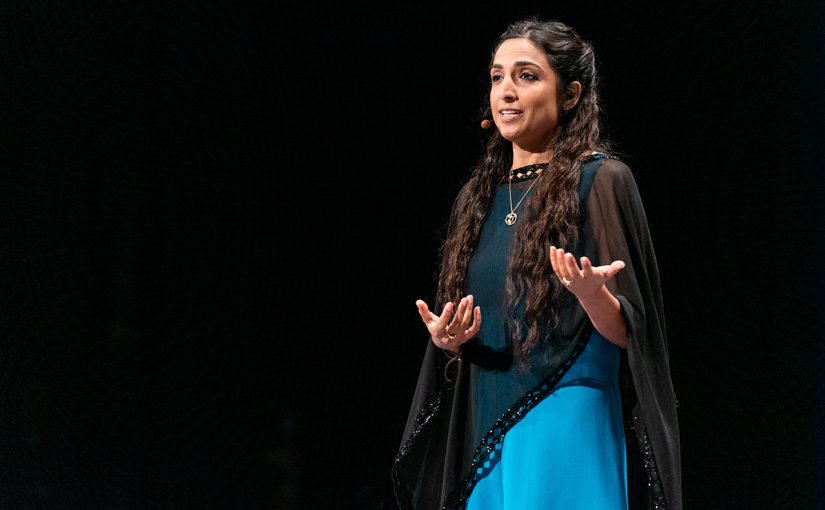
We’re living in an era overwhelmed with disconnection, rage, and grief. Valarie Kaur, founder of the Revolutionary Love Project, has recognized these emotions as the foundation for institutional hate — nationalism, racism, and more — but also as the starting point to break a cycle of trauma.
But love and empathy should play an essential role in work outside of social movements, too. All people can find courage and resilience in love, no matter their background or industry, and this practice can help create a more equitable future for all.
This week, we take a look at the powerful role of love and empathy in overcoming the challenges of life.
Six Essential Aspects of Empathy – A Conversation with Karla McLaren
In this conversation between award-winning sociologist Karla McLaren, M. Ed and Bioneers Senior Producer Stephanie Welch, we learn about Karla’s work to teach us that there are various aspects of empathy and how valuable it is to learn the language of emotions.
New Podcast Episode — Laboring for Justice: See No Stranger
In a world that’s unraveling from climate disruption and gaping inequality, another climate crisis confronts us: the climate of hate and othering. In this new Bioneers podcast episode, award-winning scholar and educator Valarie Kaur says to overcome racism and nationalism, we must not succumb to rage and grief.
As someone who has spent much of her life challenging horrific injustices and intolerance, Kaur learned the lesson that historical nonviolent change-makers understood: Social movements must be grounded in an ethic of love. She founded the Revolutionary Love Project, and has emerged on the national stage as one of the most important voices of the American Sikh community.
See No Stranger by Valarie Kaur: Pre-Order Your Copy!
Bioneers invites you to mark your calendars for June 16, the upcoming release date of Valarie Kaur’s new book, See No Stranger: a Memoir and Manifesto of Revolutionary Love. Show your love by pre-ordering a copy today.
Enjoy this inspiring passage below:
“You may say: It’s too much — all this grief, all this violence and injustice, it’s too hard. You are right: The mind can comprehend one death, but it cannot comprehend thousands, especially when one’s own community, nation, or ancestors played some part in causing the death. Mother Theresa once said, ‘If I look at the mass, I will never act. If I look at the one, I will.’ And so, begin with one.
Can you choose one person to practice wondering about? Can you listen to the story they have to tell? If your fists tighten, or your heart beats fast, or if shame rises to your face, it’s ok. Breath through it. Trust that you can. The heart is a muscle: the more you use it, the stronger it becomes.” — Valarie Kaur
Tribal Sovereignty at Risk: Alexis Bunten and Danielle Hill on the recent Mashpee Wampanoag Decision
The U.S. Government kneecapped the federally recognized Mashpee Wampanoag tribe by de-establishing their reservation trust land in the midst of the COVID-19 pandemic.
Listen in on this fascinating conversation between Alexis Bunten, co-director of Indigeneity for Bioneers, and Danielle Hill, Mashpee Wampanoag tribal citizen and co-founder of Wisconsin’s Singing Trees Farm Collective. They discuss how this decision connects to a broader legacy of tribal termination, how capitalism and racism figure into this tragic decision, and much more.
This Is Not a Rehearsal: Handling Grief, Empathy and Hope During the Pandemic
Self-quarantined and isolated in her apartment in Brooklyn, author Hala Alyan is more aware than ever of humanity’s interdependence—suddenly exposed as a raw, pulsing nerve. With all of us inescapably together as we move through this pandemic, how, she asks, can we make room for grief, empathy, and hope?
This story was originally posted on Emergence Magazine. Essay by Hala Alyan. Illustration by Michelle Urra.
For decades, Bioneers has been uplifting solutions and inspiring movements for a more just world. The COVID-19 pandemic has, practically instantaneously, dramatically changed the shape of our lives. While the virus itself is considered “novel,” its emergence, spread and the varied global response has unmasked systemic realities that are certainly less than “novel,” including issues that many in this community have been working on for decades.
Explore this Bioneers media collection dedicated to COVID-19, which features leaders in diverse fields, from medicine to conservation to climate justice and more.
Thanksgiving in the Cosmos: The Next Enlightenment | In this Bioneers audio special for Earth Day, we take an experiential journey into cosmology, consciousness and change. Featuring Richard Tarnas, author of Cosmos and Psyche: Intimations of a New World View; and Chief Oren Lyons, Native American leader from the Onondaga Nation.
Time to Rescue Main Street: How Congress Can Reboot the Real Economy | In this open letter to congress, Ellen Brown, founder and chair of the Public Banking Institute outlines four immediate actions that will prevent financial catastrophe in our communities and set them up for future fiscal health.
A Plea: Utopian Aspirations vs Avoiding Catastrophe (Opinion) | “If you’re in the midst of an argument with other passengers while driving directly toward a steep cliff, common sense would dictate that you should all agree to pause fighting temporarily to at least stop, or to turn the vehicle in another direction.” —J.P. Harpignies, Bioneers Senior Producer
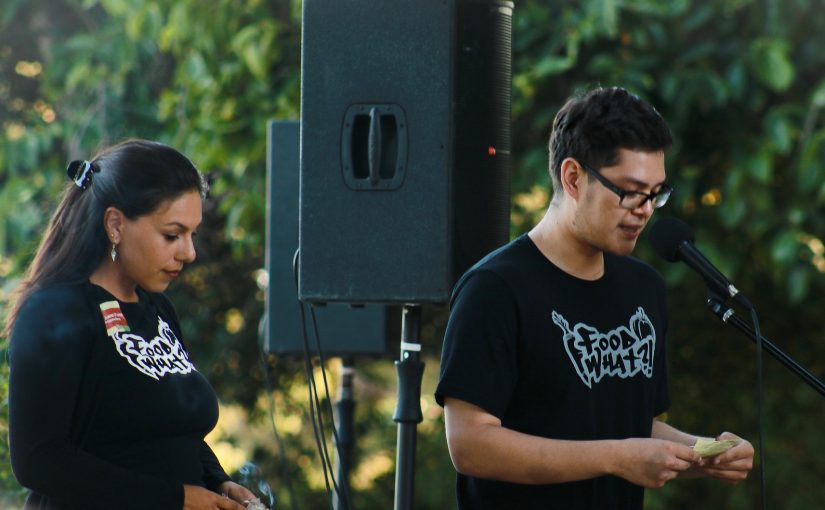
Uplifting Youth: An Interview with Irene Juarez-O’Connell of FoodWhat | In this interview with Arty Mangan, Director of the Bioneers Youth Leadership and Education Program, we learn more about Irene Juarez O’Connell’s work as the Programs Manager for FoodWhat, a youth empowerment and food justice organization that was named the California nonprofit of the year in 2019.
This article contains the content from the 5/07/2020 Bioneers Pulse newsletter. Sign up here to get the newsletter straight to your inbox!
The following is a conversation between Bioneers Senior Producer Stephanie Welch and Karla McLaren, M.Ed., an award-winning author, researcher, and pioneer in the study of emotions, self-awareness, effective communication, and healthy empathy. McLaren is the author of The Art of Empathy (2013) and The Language of Emotions (2010). Her applied work, Dynamic Emotional Integration®, is taught online at EmpathyAcademy.org. Visit her website to learn more and to find tools, including a vocabulary of emotions and a quiz to see whether you are what she describes as an “empath”.
KARLA: Studying emotions and empathy wasn’t a choice for me. I was abused as a child. I was traumatized, and for a lot of kids who are traumatized, they turn up their ability to read people. Especially if it’s repeated trauma, which mine was. It’s basically a safety measure: read people to know who’s safe and determine when the next problem is going to happen. Then you get yourself ready as much as you can.
I ended up being a very, very, hyper kid – hypersensitive, hyper-angry, just a little whirlwind of a kid. I was just responding to what had happened to me. All my emotions got really revved up. I didn’t feel a little angry, I would feel enraged or sad. I would be in despair. I needed to figure things out or life was just going to keep spinning out of control for me.
So it started when I was young. I was aware of emotions, what we call “hyper-empathic”. I needed to learn how to identify what I was seeing and to sort of put boundaries around it, put it in an Excel spreadsheet, make it all make sense.
Thankfully, it has grown with me. Now when I’m angry, I can get a tiny bit angry. I don’t have to go all the way to rage. So it’s been my personal life’s practice. I was able to open it up and ask, would this work for anybody else? And it did.
Karla McLaren, photo by Michael Leras
STEPHANIE: How do you define the word “empathy”?
KARLA: In research for my book The Art of Empathy, I found that nobody can agree on the definition of the word. Mine is basically “Empathy is your capacity to engage with anything – with emotions, with other people, with animals, with ideas, with cooking, with art.” It’s your capacity to engage and be relational.
A lot of people think empathy is just listening. For me, it is primarily our capacity to read emotions, but it’s also about reading undercurrent, social space, relationships, the sense of place. So there are all kinds of nuanced things you’re picking up with your empathy, which is why a lot of people think empathy is a psychic skill – there’s so much that’s unsaid. Listening for tones, reading the situation. You need to know how that person smiles. You need to know what that person’s signals are. It’s a very full-bodied experience of the world.
STEPH: In your book, you wrote about “empathy deficits”, what is that?
KARLA: An empathy deficit would be either the incapacity or unwillingness to engage. But everybody is empathic in their own way. One of the first things I did with the book was find a way to include all of what I call the “exiles of empathy” – men and boys, autistic people, and people with conditions – I don’t call them disorders, I call them conditions – sociopathy, personality conditions. Because for many people who have sociopathy or personality differences, it was a response to their early life when perhaps empathy was used against them.
STEPHANIE: Can you give us an example of that?
KARLA: Let’s say someone was manipulated as a child into molestation, into a long-term relationship with someone who hurt them. So the person who was being abusive would make the child feel responsible, play up their pain and their need and their problems. That would be using the child’s empathy against him or her, and that child may grow up and think, you know what, people aren’t really worth it; they’re just not worth it.
There’s a lot of decision-making in early childhood – there’s a sort of switch that may or may not turn on for people, or they may actually decide that empathy and engagement with people and that kind of intimacy is too much. So they may turn their empathy towards something else.
So when people say, “This person isn’t empathic”, usually it means “They won’t do what I say”. Well, where is that person’s empathy, where are they engaged? Often it’s with animals or art or science, or philosophy or something. There’s always some place that people are engaged, just maybe not with people.
People are sometimes a giant handful, I support the lack of engagement. [LAUGHS]. But my work is sort of teaching people about empathy as a process that you can learn, and that you have choices about. So if a person has way too much empathy and they pick up everything in the room and they can’t manage themselves, the book would help them calm it down. Or if they can’t get people, they just don’t understand, they’re always sort of putting the foot wrong in their relationships, then the book offers some skills to try to bring that part of empathy up, if they want to.
You also need to know what the names of emotions are. A lot of research shows that the more words you have for emotions, the better you are at working with emotions. On my website, I have a free emotional vocabulary list. I thought, Let’s do it! Let’s make everybody better at emotions.
STEPHANIE: Yes, can you give us an example? Someone may say “I’m angry right now”, but perhaps that’s not the best word.
KARLA: Peevish. Cranky. Critical. Sarcastic. Enraged. Steamed. To have as many words for your emotions as you possibly can so that you can start to think, well, actually how am I? Detached, indifferent, hateful, vengeful, vindictive. You know? There are so many cool words.
It’s important to understand not just that you’re angry, but what is the level of anger that you’re feeling, because then you’ll know, Okay, this was a minor issue here. I’m just a little peeved, or no, I’m full of hatred and I want to set the world on fire. I would say, Okay, that’s a lot of anger right now. So understanding your emotions and how they arise.
When I was little, anger would go immediately to rage, so I had to learn how to work anger at a lower level of activation so that I could start noticing earlier in the arc of anger when I was feeling peevish, cranky, critical or whatever, so that I didn’t get to a place where the anger was so powerful to where I was kind of a weapon. Right? Not many people can deal with intense anger with a lot of grace, they just go off. So grabbing emotions when they’re at their softer, more subtle place is a great thing for everybody to do. Let’s catch sadness before it goes to suicide urge. How would that be?
STEPHANIE: You talk about six essential aspects of empathy, what are those?
KARLA: They are from research, and I had to go to a lot of different fields. What’s funny is that empathy researchers are fighting with each other. [LAUGHS] So I had to look at child development, psychology, social psychology, anthropology, conversation analysis, linguistic anthropology. I went everywhere to see who’s talking about empathy.
Emotion Contagion: I say empathy is first and foremost an emotional skill called “emotion contagion”, or to use a non-research based term, I would say “emotion awareness” – you’re aware that you’re feeling an emotion or that someone is feeling an emotion, or that there is an emotion expected of you. That’s the first step. If you aren’t aware of that, then empathy falls apart right there, because you can’t engage properly.
Empathic Accuracy: This means knowing for yourself and others what that emotion is, what the situation is, what the context is. Let’s say you pick up an emotion, but your empathic accuracy is off, so you’re not in the right emotion. Then empathy would end there as well.
Emotion regulation: This is something we learn before we’re 2 years old, so it’s not difficult. It’s your ability to regulate your own emotions and the emotions of others so that you just don’t go into the emotion with them. So someone’s crying and feeling anxious and stressed about being late, and you start crying and being anxious and stressed. Now you’ve got two people who are anxious and stressed and crying, and nobody is helping the person get where they need to go. So if you can’t regulate your emotions, then empathy would also stop there because you can’t actually do anything for the person.
Perspective taking: This is your capacity to understand, I am feeling this and you are feeling that, so if I want to support you, I need to focus on you and not go into the emotion with you at the same level you are, and just fall apart with you. I need to have regulated my emotions well enough to be able to take perspective and say, Okay, what do you need? Not “It’s all about me”.
Say people who give you a gift that would actually work better for them. They bring you this big wrapped package, and you’re like, Oh my word! What is it going to be this time? It goes in the present area of a closet so that you can re-gift it to someone else because you really don’t need it. So perspective taking is really important.
At each of these places you can spin off, you’re not in the correct emotion, you’re not paying attention, you haven’t taken perspective. So you’re not really able to be fully empathic.
Concern for Others: You actually have to care enough to do something. Have you ever been in a situation where you see someone, you read the emotion, you’re accurate about it, you regulate it in yourself, you think, That’s how that person feels. Don’t care! [LAUGHS] So that’s fine for you. So concern for others is the next step to the full six aspects blossoming of empathy.
Perceptive engagement: In the research, this sixth aspect is called consolation. So you’re walking down a street and across the street from you, a very well-dressed man with a briefcase trips on something on the sidewalk, and the first thing he does is whip his head around to make sure nobody saw him. The empath does not let him know you saw him. Right? You’re like, Look at that lovely bird, and you might keep him in your peripheral vision to make sure he hasn’t really been hurt. That’s why I call it perceptive engagement, because if you perceive truly what the needs of the other are, then your empathy’s going to look a lot different.
STEPHANIE: So sometimes doing nothing is the most empathic thing?
KARLA: Right, if someone is crying in public and they don’t want anyone to know, you don’t go over and say, What’s wrong? Here’s a tissue. Everything they’re doing is telling you, I am trying to disappear at this point. So I might make eye contact for a second, wink, and that’s it.
There’s so much about empathy that people think is a very active thing, that you have to perform empathy, and put on your rainbow empathy cape and tie it on. You see the man trip, and you run across the street, Sir! Sir! I saw you trip! And you’re so empathic and the man is just dying inside because you did the exact opposite thing he needed.
So empathy has a lot of nuance in it. Often if you’re good at it, it doesn’t look like you did anything, especially with children. They’re like, I can do it myself! And you know they can’t. So you just do little things to the side, invisible ways to help the child not hurt himself with whatever’s he’s doing so that they don’t know and nobody knows that you made it possible. We call it “stealth empathy”.
STEPHANIE: One thing that stood out to me as I was doing research about this topic was the feeling that we may have the least empathic president and legislative body, at least in my lifetime and my parents’ lifetime. What harm are we suffering as a society when you have leadership that’s exemplifying the very opposite of an empathic person or body?
KARLA: I’ve been doing a lot of work, a lot of stealth empathy with our president, and he has empathy with very specific things. He has it with money. Right? It’s not with people generally. He may have it with people in his family, or people who are close to him who don’t challenge him. I think he’s also very vulnerable to manipulation.
I look at 17 emotions, and I’m still not sure if he can regulate any of them, and that makes his life miserable and the people around him miserable, and it also makes our country miserable. We went from Obama, who’s one of the most emotionally regulated people I’ve ever seen in my life. I loved to watch him, his emotions, and watch what he said, because it was different. You may have seen Key & Peele [the comedy show], which had Luther, the “anger translator” for Obama, so I wasn’t the only one who saw this.
STEPHANIE: You talk about perceptions about empathy in terms of men and boys. There’s a resurgence of research seeking biological roots for differences between men and women, and even some people arguing that boys and girls should be separated in school because they learn differently. Do you agree that there is a dominant view that women are more naturally empathic and men have less of that capacity?
KARLA: That’s nonsense, but it is the dominant view. Men are brilliant artists and writers, and dancers, and choreographers, and actors, and painters. One of the most empathic things you can do is art or music, or drama, or fiction writing, because you are engaging emotionally with a thing. I would call actors empathy professionals because they engage in emotion contagion constantly, and they transmit emotion to us. If you saw an actor who couldn’t transmit emotion, they would be a hack. If you listen to a musician who couldn’t transmit emotion, you’d say it’s got no duende, nothing going on.
We talk babies out of their emotions. There’s a study where researchers put a baby in pink and when people see the baby, they say, What a sweet little delicate darling sweet bunny baby. Then they put the same baby in blue, and people say, What a strong baby; you’re a strong baby. If the baby cries, they say, Don’t cry, be tough.
Empathy is so misunderstood because there’s the connection to women and to emotions, which we don’t like. Right? [LAUGHS] Well we do, but it’s the lesser of the two, of emotions versus rationality, even though that is not how the brain works. They’re not separate, or men vs. women. We do a lot of damage to men and boys by not teaching them how to work with their emotions, or even how to identify them properly.
STEPHANIE: I hear a lot of discussion about Autism and Asperger’s being perceived primarily as a male condition, but that’s not true, is it?
KARLA: Yes, in the research that I’ve looked at, even when they have the exact same symptoms as boys, girls are not diagnosed as autistic. There’s no test. It’s a group of clinicians getting together and deciding that the person has autism. Girls are generally left out of it, so they’re kind of the silent autistic community.
Simon Baron-Cohen believes autism is the extreme male brain. But that really throws men out the window and treats men as if their brains are unempathic and emotionally incompetent. So I fight with him on that, just in terms of protecting men from that kind of stereotyping. I don’t think this research really bears fruit when you see all the autistic women and girls. They’ve done studies asking do the girls or boys have more testosterone, are they really more male? No, it’s not bearing out. It was just something he floated. But it got taken up because it’s a part of our deep story, that men are one way and women are the other.
One of the ideas about autism is that the person doesn’t have empathy. I worked with a group of autistic teenagers who were going to college, and my job was to support them academically – get them their books, their tutors, learn what classes they wanted, create this whole world around them so that they could go to college and be successful. As a hyper-empathic person, I was really concerned about this job, because I had read everything that said that autistic people are not empathic. Right? They’re little professors. I thought that when I went there to be with them, I would drive them nuts because they were the opposite of me.
After watching them and being with them for about a week or two, I saw their movements and their regular repetitive movements, rocking, their struggle to figure out what humans were doing, and the hard work they were doing to read things. And I went Whoa. Because when I was little, this was me. I said I think these are hyper-empaths.
If we talk about the six aspects of empathy, the emotion contagion is extreme. The emotion regulation isn’t happening. So their experience of neurotypical emotional functioning is that noise-to-signal ratio is much more to the noise. It’s a constant onslaught of other people’s emotions, and not being able to regulate. And if you can’t regulate, then you can’t take perspective and you can’t do perceptive engagement. So it’s not a lack of empathy, it’s hyper-empathy.
So a lot of the work that is done with autistic kids is grabbing their face, forcing them to make eye contact. It treats the child as if the problem is that he or she doesn’t understand human social behavior, and has to be trained. That is abusive if you look at the child as a hyper-empath who needs not to be touched, who needs not to make eye contact if that’s too much.
It took me a while, but I finally did research in the autism community, and things are changing, but we still have the idea that these kids are not empathic when they’re actually hyper-empathic.
I’m seeing that when parents say, “Okay, this is who you are, this is how noises affect you, this is how you like to do eye contact, this is what soothes you, you need to take two hot baths a day, this is who you are”, the kids just flourish, grow up and find their way in the world. Their basic bodily movements and the way that they like to use their eyes weren’t continually being changed and manipulated. But the ones who said, “You can’t have two hot baths a day because normal kids don’t do that; and just get used to the noise and make eye contact with me” and did a lot to enforce neurotypical social behaviors, the child had more of a struggle.
There are many autistic adults running around performing neurotypical, or “normal”, but they don’t know how they feel. They don’t know what’s important to them. So I understand the reason for a lot of this early training, but it is very injurious to a sensitive, unusually hyper-empathic person.
STEPHANIE: It seems there is a real need for people to understand empathy more deeply than we do societally. People talk about our political situation and how they’re experiencing hostility or aggression or racism or sexism, these kinds of things. What do you think the value is for people learning more about and understanding their emotions, and to understand what empathy is on a deep level?
KARLA: I look at emotions as parts of your intelligence, not as the opposite of intelligence. I think it is good when people can understand their emotions and understand what their emotions are trying to tell them, to look at the people who engage hatred for them, because hatred is a powerfully damaging, dangerous emotion.
Carl Jung found a way to work with it, which is called “shadow work”. People are like, I want to achieve enlightenment. I was like, Go look at what you hate and do your shadow work. Boom! You’re enlightened.
We can look at what we hate or what we are being asked to hate. In my liberal Facebook feed, there are a couple of conservatives, but I’m asked to hate Trump every single day. I’m asked to hate him and dehumanize him. So my empathic work right now is, No, I’m not going to. I’m just going to try to just understand him. When I meet someone in my neighborhood who is a Trump supporter, I don’t spill my guts and try to talk down to them. “Well, if you were just intelligent, then you would have voted for Hillary.” Like, I need you to change. Instead I try to understand them.
In order to be a good empathic activist or person in the world, I have to make sure I have my own emotional house in order, and that I know how to regulate my emotions so that I can be present for others. If I’m getting engaged with the hatred and dehumanization of Trump or anybody within the conservative sphere, I’m weaponizing myself and I’m not going to be able to engage with anybody who comes with a conservative idea as a human being. I’m always going to be condescending to them, even if I say things that are nice. I’m going to be less effective politically. Most of my hyper-political friends are saying what you have to do to be effective is to hate. And I was like: How’s that working for you?
STEPHANIE: So you encourage them to do their own shadow work?
KARLA: Yes, because people say, No! He’s not in my shadow, he’s just evil. People are burning out with extreme spikes of intense emotion, and as we all know, it’s hard to manage those. So down regulate. Find the humanity and speak to that. I think that’s going to be the giant movement of our time.
Over the past week, as I surf the waves of emotion and attempt to discern among the suddenly increasing amount of email coming my way, in an effort to both delight myself and share the best of what I see with those I love, I’ve collected various clips, articles and essays I’ve found most enlivening, and supportive of context, meaning-making and narrative. I write to share these with you.
Please feel free to peruse them — or not — as your time and heart/mind permits. No expectation. I offer them in case they may be helpful, with no expectation or pressure, as I know how much this time is asking of so many of us. They are offered with love.
These are the most creative and life-affirming artful videos, featuring some of thebest of human ingenuity, each <6 mins long:
This is a selection of essays and interviews from my recent favorite synthesizer and meaning-maker, Bonnitta Roy:
First, her two essays (part one and part 2) on A Tale of Two Systems, to help remind us of larger context, followed by two video interviews of her, one nearly an hour, and the other 28 mins, for those who like to learn by watching/listening, rather than reading…the beginning of Interview 1 includes some about her Taoist perspective and farming life, which I found fascinating.
This reminds me of many of the ideas, projects and visions I’ve learned through Bioneers — freeing our imaginations to consider significantly new systems — like in Japan, where there’s an online barter system to exchange caring for elders in different places, or the idea of transforming post offices into a community banking system, or malls into community gardens, or many other economic innovations that could shift us meaningfully toward birthing something far closer to a democracy.
In this open letter to congress, Ellen Brown, founder and chair of the Public Banking Institute outlines four immediate actions that will prevent financial catastrophe in our communities and set them up for future fiscal health.
Ellen Brown, J.D.
The same Congress that has insisted we cannot afford a universal basic income, Medicare for All, and other critically needed programs has suddenly discovered it has unlimited funds to ‘do whatever it takes’ to rescue corporations and the stock market. The individuals, local governments, and local businesses suffering the devastating consequences of the shutdown have largely been left out of recent bills. But relief for all is possible, without imposing additional taxes or driving up consumer prices.
In an open letter to Congress, the Public Banking Institute outlines four immediate actions legislators can take to rescue Main Street’s economy and build the publicly-owned, trustworthy financial infrastructure that will keep it healthy long term.
#1: Put real money into the real economy with monthly payments ofat least $1,200 to all US adults, for as long as needed, funded through the Federal Reserve. The same money tree that Congress and the Fed just used to fund a $5 trillion bailout for Wall Street and Corporate America can be used to deliver monthly dividends to the public. The Fed has now agreed to buy Treasury debt via quantitative easing to whatever extent is needed. Why these monthly payments will not result in hyperinflation is explained here.
#2: Put money in people’s hands NOW by direct deposit into either Post Office Savings Accounts or Treasury Direct accounts. People cannot wait months for relief checks. Rent is due now. One in four U.S. households has no access to a bank account, and many are without homes or permanent addresses. PBI Advisory Board member Prof. Mehrsa Baradaran proposes restoring free postal savings bank accounts, available at local post offices, for direct deposit of relief checks. PBI Advisory Board member Prof. Bob Hockett proposes creating new Treasury dollar bills, equivalent to Fed dollar bills, which the Treasury can issue digitally and deposit into Treasury Direct, the Treasury’s existing universal account system, allowing citizens and legal residents to quickly open accounts. These two innovative options allow for immediate payment even to the unbanked, using existing facilities.
#3: Get money to the states through publicly-owned banks. States are facing a tsunami of emergency expenses, collapsing tax revenues, and massive bills for unemployment compensation, pushing state budgets heavily into the red. The Fed is now lending to banks at 0.25%. States can access these 0% loans by setting up their own public banks using their emergency powers, following the stellar example of the state-owned Bank of North Dakota. Capitalization (the money needed to start a bank) can be acquired either from funds allocated by Congress to states under the CARES Act or from existing revolving loan funds or rainy day funds. This capital can then be leveraged into 10 times that sum in loans. Public banks could provide the low-cost credit communities urgently need during this pandemic. Like Germany’s public bank KfW, they could grant 1% loans vs. the complex SBA programs charging 3.75%. By eliminating profiteering middlemen, banks can become public utilities that can lend during a crisis to stimulate local economies while generating profits for local governments.
#4: Cancel debts — without impairing the rights of creditors. As PBI Advisory Board member Prof. Michael Hudson observes, “Debts that can’t be paid won’t be.” Moratoria to delay due dates will not be enough. “If the U.S. government can finance $4.5 trillion in quantitative easing, it can absorb the cost of foregoing student and other debt,” writes Hudson. “And for private lenders, only bad loans need be wiped out.” He writes that it is fair to write down debts to the realistic ability of borrowers to pay, without requiring borrowers to forfeit property or degrade their living standards. For the rest, and particularly for debts the government oversees, it could immediately initiate a debt jubilee by moving the bundled securitized debt into a Treasury-owned Special Purpose Vehicle (SPV) like the ones set up in the CARES Act to bail out businesses and financial institutions. The Treasury’s SPVs are a form of shadow bank (explained here), which are capitalized by the taxpayers and should be available to them.
The time to act is now. New York City Comptroller Scott M. Stringer has said his city will face mass homelessness without a comprehensive plan. Turning the central bank into a true public utility and establishing a stabilizing network of public banks via emergency actions can not only reboot an economy in free-fall but create the trustworthy financial infrastructure necessary for long-term local and national prosperity.
In a world that’s unraveling from climate disruption and gaping inequality, another climate crisis confronts us: the climate of hate and othering. Award-winning scholar and educator Valarie Kaur says to overcome racism and nationalism, we must not succumb to rage and grief. As someone who has spent much of her life challenging horrific injustices and intolerance, Kaur learned the lesson that historical nonviolent change-makers understood: social movements must be grounded in an ethic of love. She founded the Revolutionary Love Project, and has emerged as one of the most important voices of the American Sikh community, and a highly influential faith leader on the national stage.
Featuring
Valarie Kaur, born into a family of Sikh farmers who settled in California in 1913, is a seasoned civil rights activist, award-winning filmmaker, lawyer, faith leader, and founder of the Revolutionary Love Project, which seeks to champion love as a public ethic and wellspring for social action.
Credits
Executive Producer: Kenny Ausubel
Written by: Monica Lopez and Kenny Ausubel
Senior Producer and Station Relations: Stephanie Welch
Host and Consulting Producer: Neil Harvey
Producer: Teo Grossman
Program Engineer and Music Supervisor: Emily Harris
Music
Our theme music is co-written by the Baka Forest People of Cameroon and Baka Beyond, from the album East to West. Find out more at globalmusicexchange.org.
This is an episode of the Bioneers: Revolution from the Heart of Nature series. Visit the radio and podcast homepage to find out how to hear the program on your local station and how to subscribe to the podcast.
Subscribe to the Bioneers: Revolution from The Heart of Nature podcast
Transcript
NEIL HARVEY, HOST: Valerie Kaur was born and raised in Clovis, California, where her family had settled as farmers in 1913 and practiced Sikhism, a religion that originated in India.
When a family friend – a Sikh-American father – was murdered after 9/11, her life changed forever. She began documenting hate crimes against Sikh and Muslim Americans, which resulted in her first film, the award-winning Divided We Fall.
She went on to become a lawyer, filmmaker, innovator and activist in the face of a society increasingly divided by “othering” – by the scapegoating and dehumanizing of marginalized people and communities.
She became a highly influential faith leader in the Sikh community and on the national stage. She emerged as an award-winning scholar and educator, gaining multiple degrees in international relations, media, and religious studies from schools including Harvard, Stanford, and Yale.
In the course of her journey, she experienced a revelation that led herto found the Revolutionary Love Project – a journey she shares in her soulful book titled “See No Stranger: A Memoir and Manifesto of Revolutionary Love”. In the lineage of the visionary nonviolent change-makers across history, she came to understand that movements must be grounded in an ethic of love.
This is “Laboring for Justice: See No Stranger.” I’m Neil Harvey. I’ll be your host. Welcome to The Bioneers: Revolution from the Heart of Nature.
VALARIE KAUR: So my story begins in the aftermath of September 11th, in the wake of the horror of those attacks, when hate violence erupted on city streets across the country. Members of my community were killed. The first person killed in a hate crime after 9/11 was Balbir Singh Sodhi, a Sikh father who was killed in front of his store in Mesa, Arizona by a man who called himself a patriot. He was a family friend I called “Uncle”. And his murder—I mean, I was going to be an academic. His murder made me an activist.
HOST: After 9/11, Valarie Kaur joined with her community of Sikh and Muslim Americans to respond to the climate of fear and bigotry that branded them as the enemy. She soon realized that her community’s struggle was part of something much larger. She began working with other brown and black communities across the United States, sometimes while the blood was still wet on the ground.
She believed that each film and each new campaign would make the nation safer for the next generation. But then she saw that a dark wind was blowing harder and harder across the increasingly dis-United States.
Valarie Kaur spoke at a Bioneers conference.
VK: Fast forward to present day…White nationalists declare this presidency as their great awakening. Executive orders and policies rain down on us every day so that it becomes difficult to breathe. And hate crimes have skyrocketed once again.
But now, now I am a mother. Just a few weeks ago, my son was coming home with my father and my mother from a summer concert. My son was sitting on my father’s shoulders, on top of the world, and they were going to grab a ride on a ferry—across the marina to come back home. I mean, he was… Ahh, his childhood has been magical. Until they heard it. “Go back to the country you came from.” My father was hard of hearing, so my 4-year-old son had to tell my father what the mean lady said. When they came home, my parents were shaken. “Didn’t anyone say anything?” I asked them. And they said, “No. There were a crowd of people who watched, who saw, but no one said anything.” Just like last time when my father was walking on a beach with a baby carrier, with my son at his side, and someone called him a suicide bomber. There were no bystanders who spoke up then.
And I’ve had to reckon with the fact that there will be moments on the street or in the schoolyard when I will not be able to protect my son. For Sikh and Muslim Americans today are still seen as terrorists. Just as black people in American today are still seen as criminal. Just as brown people are still seen as illegal. Just as indigenous people are still seen as savage. Just as trans trans and queer people are still seen as immoral. Just as Jews are still seen as controlling. Just as women and girls are still seen as property. When they fail to see our bodies as some mother’s child, it becomes easier to ban us, to detain us, to incarcerate us, to concentrate us, to separate us from our families, to sacrifice us for the illusion of security.
HOST: But make no mistake – she says – it’s a long hard road. It’s a labor – a labor of love.
VK: I realize that I am being inaugurated into the pain that black and brown mothers have long known on this soil, that we cannot protect our children from white supremacist violence, we can only make them resilient enough to face it. And to insist until our dying breath that there be no more bystanders. [APPLAUSE]
I realized that the last time my body has been in this much pain was when I was on the birthing table. Some women are nodding. [LAUGHTER] You see, in birthing labor there is a stage that is the most painful stage. It is the final stage in labor. The body expands to 10 centimeters, the contractions come so fast there is barely time to breathe, it feels like dying. It is called transition. [LAUGHTER] I would not have given it this name. [LAUGHTER] During my transition, I remember the first time the midwife said that she could see the baby’s head, but all I could feel was a ring of fire. And I turned to my mother and I said, “I can’t!” My mother had her hand on my forehead. She was whispering in my ear, “You are brave. You are brave.”
You see, the stage called transition, it feels like dying, but it is the stage that precedes the birth of new life. And so birthing as a metaphor has begun to fill my imagination.
And it has filled my mind and formed a question in me, a question that I have been asking every single day the last two years: What if? What if the darkness in our country right now, in the world right now, is not the darkness of the tomb, but the darkness of the womb? What if our America is not dead but a country still waiting to be born? [APPLAUSE] What if all of our ancestors who pushed through the fire before us, who survived genocide and colonization, slavery and sexual assault, what if they are standing behind us now, whispering in our ear, “You are brave. You are brave.” What if this is our time of great transition? [APPLAUSE]
My sisters, my brothers, my family, I believe that we are convening right here, right now on this soil at a time when our nation and our world are in transition, for as we speak, in this very moment, we are seeing the rise of far rightwing supremacist movements in this nation and around the world, propping up demagogues, mainstreaming nativism, undermining democracies and politicizing the very notion of truth.
And we know that America right now is in the midst of a massive demographic transition, that within 25 years the number of people of color will exceed the number of white people for the first time since colonization. We are at a crossroads. [APPLAUSE] Will we—Will we birth a nation that has never been? A nation that is multi-racial, multi-faith, multi-gendered, multicultural, a nation where power is shared and we strive to protect the dignity of every person.
Or will we continue to descend into a kind of civil war? A power struggle with those who want to return America to a past where a certain class of white people hold cultural, economic, and political dominion.
HOST: Valarie Kaur says the stakes of the choice we make at this crossroads could not be higher. In a world that’s unraveling from climate disruption and gaping inequality – and a global pandemic – another climate crisis confronts us: the climate of hate and othering. She believes her original premise is truer than ever: United we stand, divided we fall.
VK: The stakes become global when we think of climate change. Right? So those same supremacist ideologies that justified colonization, the conquest and rape of black and brown people around the globe, those same supremacist ideologies have given rise to industries that accumulate wealth by pillaging the Earth, poisoning the waters and darkening the skies. Global temperatures are climbing. The seas are rising. The storms are coming. The fires are raging. And our current leadership is doing nothing to stop it. Humanity itself is in transition. Will we marshal the vision and the skill and the solidarity to solve this problem together?
Is this the darkness of the tomb or the darkness of the womb? I hear your cheers and I feel your energy, and I want to say yes. I want to say yes. We will endure. But I don’t know. I don’t know.
This brings me to you. You are the community leaders. You are the peace builders. You are the faith leaders. You are the indigenous healers. I believe that you are the midwives in this time of great transition, tasked with birthing a new future for all of us.
And so I’ve come to ask you how will you show up? How will you let bravery lead you? And how will you show up with love? Because love, the greatest social reformers in history have built and sustained entire non-violent movements to change the world that were rooted, that were grounded in love, love as a wellspring for courage, not love as a rush of feeling, but love as sweet labor, fierce and demanding and imperfect and life-giving, love as a choice that we make over and over again.
I believe the only way we will endure, the only way we will stay pushing into the fire, stay pushing into the fire is through love. Labor requires pain and love. That’s why I believe revolutionary love is the call of our times. [APPLAUSE]
HOST: For Valarie Kaur, revolutionary love is the call of our times, but she knows all too well that it’s easier said than done. As communities and societies, how can we harness our grief and rage and practice love?
When we return, Valarie Kaur shares her own difficult but necessary descent through the underworld of her own trauma in her quest to reach the light – to birth a labor of love.
This is “Laboring for Justice: See No Stranger.” I’m Neil Harvey. You’re listening to The Bioneers: Revolution from the Heart of Nature.
As Mohandas Gandhi observed, “an eye for an eye leaves the whole world blind.” Valarie Kaur began to see that anger is a candle that burns from both ends. Yet she also knew she couldn’t simply suppress or deny these deeply ancient, instinctual drives of the human psyche.
Could she turn the wound into the gift?
VK: Joy is the gift of love. Grief, grief is the price of love. Anger, anger is the force that protects that which is loved.
Growing up in a Punjabi household, I learned how to suppress my rage. Right? To be good, to be loving meant not to be angry, not to show rage. My mother was very sad for many years, but it was just rage turned inward. And oftentimes it would come out in a flash of rage over things that don’t matter. We know we have rage about things that matter, if we have flashes of a rage over things that don’t matter, like spilt milk, the door left open. And so my mother, watching her on her journey, actually gave me permission to start to explore and unleash the rage inside of me. Because when rage is turned inward, you know that it wreaks havoc on the body.
And so I experience a moment of—just an encounter, like many women of sexual assault when I was a kid, and for many, many years, I had a lot of dysfunctions in my body, in my pelvic floor, and I didn’t know how to solve them. I went to every kind of doctor until I met a mentor who worked with bodies, trauma lodged in the body as much as in the mind, and he helped me imagine that moment when the assault took place, becoming a tiger. I was like, okay, I can imagine becoming a tiger. Sure. It’s like the most ferocious animal I can imagine. It’s like, okay now, it’s about to happen, the boundary’s about to be trespassed, what do you want to do? And I said, “Growl.” He’s like, “Fine. Growl.” [LAUGHTER] So I started growling. He’s like, “Okay, what else do you want to do?” I was like, “I want to roar!” “Okay, roar. What else do you want to do?” “I want to show my fangs.” “Okay, show your fangs. “ “What else do you want to do?” “I want to tear into him!” “Okay, tear into him.” And before I knew it, in my mind, I’m like ripping into this boy’s body, like just tearing, shredding the clothes, and it’s like, “No, but I’ve reached the skin.” “Go deeper.” I am just letting myself experience violent even murderous rage inside of myself. And I was resisting. “No, keep going, let it run its course.” And afterwards, I was like, “Tommy what happened.” He’s like, “Well, where is your assailant?” And I’m the tiger, and I’m sniffing the floor, and there are just bloody clothes on the ground, and I look up, and there he is. But he’s not this monster who has power over me. He’s a frail, wounded kid whose parents were dysfunctional, whose father was an alcoholic who beat his mother. I mean, he himself was so wounded, but he didn’t know how to love. I could see his wound, only after going through my rage, letting it run its course. I could reclaim the fight impulse in my own body.
What Tommy did is he gave me a safe container for my rage- violent vicious rage. And once we have safe containers for our rage, then maybe what’s left over is the kind of outrage that allows us to wonder again about the people who hurt us, that allows us to ask ourselves: What are the cultures and institutions that authorize them to hurt me? Maybe that’s how I fight. I don’t try to tear apart my opponents or unseat bad actors from power, as if that’s enough. Maybe that’s how we fight.
HOST: Valarie Kaur transformed her rage into outrage. Her outrage guided her to deconstruct the culture and institutions that sanction othering, scapegoating, and dehumanization.
Her outrage led her on a quest for healing and reconciliation, and a set of practices to live by. Her journey resonated with the words of Dr. Martin Luther King Jr.:
“We are caught in an inescapable network of mutuality, tied in a single garment of destiny. Whatever affects one directly, affects all indirectly.”
VK: Revolutionary love is the choice to enter into labor, for others, for our opponents, and for ourselves. The first practice – See no stranger. All the great wisdom traditions of the world carry a vision of oneness, the idea that we are interconnected and interdependent, that we can look upon the face of anyone and say as a spiritual declaration and a biological fact, “You are a part of me I do not yet know.”
Yet brain imaging studies tell us that the mind see the world in terms of us and them. In an instant who we see as one of us determines who we feel empathy and compassion for, who we stand up for in the streets and at the polls. Authoritarians win when the rest of us let them dehumanize entire groups of people. But we can change how we see. We can expand the circle of who we see as one of us. Love begins with a conscious act of wonder, and wonder can be practiced. Drawing close to another person’s stories, listening to their stories turns them into us. And so I ask you whose stories have we not yet heard? Whose stories we hear determine whose grief we will let into our hearts. Who have you not yet grieved with? Because who you grieve with, who you sit with and weep with determines who you organize with and who you will fight for.
HOST: The practice of wonder is the first step. Then, she found, truly hearing someone else’s story and letting their wounds into your heart opens the way to a second practice.
VK: Tend the wound.Now how do we fight even our opponents with love? It’s tempting to see our opponents as evil, but I have learned that there are no such things as monsters in this world, only human beings who are wounded, people whose insecurities or anxieties or greed or blindness cause them to hurt us. Our opponents – the terrorist, the fanatic, the demagogue in office – are people who don’t know what else to do with their insecurity but to hurt us, to pull the trigger, or cast the vote, or pass the policy aimed at us. But if some of us begin to listen to even their stories, we begin to hear beneath the slogans and sound bites. We begin to understand how to defeat the cultural norms and institutions that radicalize them. Loving our opponents is not just moral, it is pragmatic. It is strategic. It focuses us not just on removing bad actors, but birthing a new world for all of us.
So the first act in loving one’s opponents is to tend to our own wounds, to find safe containers to work through our own grief and rage so that our pain doesn’t turn into more violence directed outward or inward. Then in our healing, at some point, if and when we are ready, we may be ready to wonder about our opponents.
Now, I know this is hard. It took me 15 years to process my own grief and rage. When I was ready, I reached out to Balbir uncle’s murderer and listened to his story. It was painful, but I learned that forgiveness is not forgetting, forgiveness is freedom from hate. And white supremacists, they carry unresolved grief and rage themselves, radicalized by cultures and institutions that we together can change.
HOST: Forgiving is not forgetting. Forgiveness is expanding our circle of concern to encompass Dr. King’s “inescapable network of mutuality, tied in a single garment of destiny.”
VK: This brings me to the third practice: breathe and push. [LAUGHTER] Our social justice leaders – Gandhi, King, Mandela – they tell us a lot about how to love others and our opponents, but not so much about how to love ourselves. This is a feminist intervention. [CHEERS] For too long have women and women of color specifically been told to suppress our rage and grief in the name of love and forgiveness. No more. The movement can no longer happen on our backs or over our dead bodies. In all of our labors, the labor of raising a family, or making a movement, or birthing a new nation, we need people to help us breathe and push into the fires of our bodies and the fires in the world.
And so I ask you, How are you breathing right now? Who are you breathing with? Breathe with the earth and the sea and the sky. Breathe with music and movement and meditation every day. Breathe to summon the ancestors at our backs, for when we breathe we let joy in. These days, even on the darkest days, I come home and my son says, “Dance time, Mommy?” [LAUGHTER] I’m like, “Ohh…” We turn on the music, and I kind of sway like this, but pretty soon the music rises and my son says, “Pick me up, Mommy,” and I throw him in the air, and my little girl, now 11 months old, we twirl her up in the air and suddenly I’m smiling and suddenly I’m laughing, and suddenly joy is rushing through my body. When we breathe we let joy in. And joy, joy reminds us of everything that is good and beautiful and worth fighting for. How are you protecting your joy every day?
Love must be practiced in all three forms to be revolutionary, and revolutionary love can only be practiced in community. And so this is my invitation to you all. The Revolutionary Love Project has built a powerful, formidable community in the last few years, a coalition of artists and activists, educators and faith leaders committed to showing up in our lives and in our movements, in 2020 and beyond, with revolutionary love.
I ask you to join us. Are you in? [AUDIENCE RESPONDS] [APPLAUSE]
Here’s the truth: The labor for justice lasts a lifetime. There is no end to the labor. That’s what I’ve learned. But I’ve learned that if we labor in love – love for others, love for our opponents, and love for ourselves – then we will last. I want to last. Let us last.
For some day, we will be somebody’s ancestors. They will gather here in this room, and if we get this right, they will inherit not our fear but our bravery. [words from her language] Thank you. Thank you. [APPLAUSE]
HOST: Valarie Kaur… Laboring for Justice: See No Stranger.
Humor me as I engage in a clumsy metaphor: If there are
several of you who have profound political differences arguing vociferously
about your competing worldviews, but you all happen to be in a vehicle that’s
heading directly toward a steep cliff, common sense would dictate that you
should all agree to stop your fighting temporarily to at least stop, or to turn
the vehicle in another direction. Once you’ve done that, then by all means resume
your passionate philosophical and socio-political struggles. And even if you
think the trajectory your entire society is on is the equivalent of a dive off
a cliff, there is a difference between a years-long, fairly slow roll, and an
immediate plunge. The immediate plunge eliminates any future hope of achieving
any of your ideals.
It is true that at their core all political tendencies are
informed by utopian visions of what an ideal society would look like.
Historically the classical left tends to be more obviously utopian, often
following in Rousseau’s footsteps, believing human beings are fundamentally
good but that perverse social structures and hierarchies poison their behavior.
In that tradition an ideal society is therefore one that seeks to unleash human
goodness and creativity by eliminating overly authoritarian constraints and
selfish, materialistic incentives.
But even philosophical pessimists on the traditional “old school” right who draw on such thinkers as Hobbes and Burke and believe that people, left to their own devices will lead lives that are “nasty, brutish and short” (Hobbes’ famous formulation), offer their vision of an optimally functioning society (a highly structured one that strictly controls and canalizes base human impulses with clear hierarchies and robust policing). In my view, it’s still a variant of utopianism because they offer it as the best model that can be achieved, given their pessimistic view of human nature.
So, all political worldviews are informed by their utopian
underpinnings, but once one engages in political struggles in incredibly
complex human societies, things get messier. In any broad political movement,
some people gravitate to more purist stances that hew to the core utopian
vision of their political tradition; others are attracted to more pragmatic
approaches they feel will yield more short term, tangible benefits. Those poles
and that core tension are inevitable in every political tendency. It can
engender healthy, productive debates and actions at times, and rip movements
asunder at others.
I’m not interested in taking one side or another in that eternal push and pull. The one point I want to make in this little spiel is that there are certain critical, pivotal moments in the trajectory of a nation — or in this case, of the whole species — during which the historical imperative demands that utopian aspirations be temporarily put aside to avoid collective disaster.
There were communists, centrists, right wing nationalists, and even royalists working together in the Resistance in France during WWII. Once the war ended, the political fights resumed with all their acrimony. In 2002, when the neo-fascist Jean-Marie Le Penunexpectedly made it to the second round of the French presidential election, an unparalleled unified response of people from across the political spectrum from Maoists to Catholic conservatives and almost everyone in between all flocked to the polls and gave Jacques Chirac 82% of the vote. Many of them held their noses and voted for a center-right candidate they had no resonance with because the alternative was catastrophically toxic. And this is the French who are infamous for their incessant political kvetching, frequent strikes and riots.
And does anyone outside of historians remember who ran against Mussolini in 1924? It would be hard to argue that having elected a potted plant or an insect would not have been a far more desirable outcome.
I would argue that we are in an even more consequential moment this electoral year. What happens here will have enormous global implications. Yes, climate change poses an existential threat to civilization and the resilience of the biosphere; yes, the extreme social inequities both within societies and between the industrialized world and the “global south” are infuriating and need to be fought. But if the last wobbly remnants of democracy, of the infrastructure for effective, rational governance, and of free media are swept away by authoritarian cliques and the total consolidation of oligarchic rule, then any hope to address those other issues will be eliminated for a very long time.
I understand that it is hard to get enthusiastic about geriatric, centrist candidates who aren’t authentic climate or social justice warriors, but I urge everyone, especially the young, to please become very passionate about avoiding disaster, so that we will have the opportunity to return to fighting for our utopian aspirations. Thelma and Louise may have been attractive, romantic characters, and I know that we may, pace Jim Morrison, “want the world, and want it now,” but if we collectively drive off that cliff in November, we may pass the fail-safe limit, and history, if there’s anyone left to write it down the line, will be very harsh in its judgment.
J.P. Harpignies is a long-time Brooklyn resident and has been working with Bioneers since 1990. He is the author of several books includingAnimal EncountersandPolitical Ecosystemsand served as the associate editor of Bioneers titles, Ecological MedicineandNature’s Operating Instructions. J.P was previously the director at the New York Open Center and founder of the Eco-Metropolis conference.
Irene Juarez O’Connell is the Programs Manager for FoodWhat, a youth empowerment and food justice organization that was named the California nonprofit of the year in 2019. Irene was interviewed by Arty Mangan, Director of the Bioneers Youth Leadership and Education Program.
Arty: How are you coping through these challenging times?
Irene: My job at FoodWhat keeps my creative juices flowing and helps me stay positive. When we got the official notice that schools would be closing, we came up with – in what felt like a blessed brainstorm – a social media campaign to take all of our programming that we would normally be doing with the youth on the farm and translated it to our social media on Instagram. The staff is filming videos of ourselves leading workshops. It’s really been a lot of fun because on Instagram you can go live, and people can come in and engage with you in real time. It’s kind of a bummer that we can’t be with the youth in person, but It’s pretty sweet that we can still connect with them.
Arty: What attracted you to work with youth?
Irene: I was working at the Resource Center for Nonviolence [in Santa Cruz], which I loved. It opened me up to so many movements and ideologies. I realized that, at age 22, I was the youngest person there and the only intern who was under 40. I was like, “Where are the young people? Where is the next generation who will be reading these books and sharing these kinds of conversations?”
So at the Resource Center for Nonviolence, I helped start a youth program called Project Regeneration. Every January for Martin Luther King weekend, we put on a big youth day in conjunction with the NAACP and other local organizations. That’s how I first came in contact with FoodWhat.
At the same time that I was working at the Resource Center, I was also working for Barrios Unidos as an outreach specialist in the high school. In the morning, we served breakfast and we provided food in the afternoon. During lunch, we were a space where youth could hang out and feel safe and feel their identity and culture reflected and affirmed. That was so important for me having gone to a high school with predominantly Latinos and Mexicanos, where being Latina was kind of looked down upon. There was a sense that it was inferior somehow. There was a lot of discrimination and white supremacy, frankly.
Having that space at Santa Cruz High opened me up to how incredible the young people in the community were. From that opportunity, I got a chance to work inside the juvenile hall with Barrios Unidos. Twice a week I led circles on culture and spirituality. I saw my role as offering hope to the young people inside, offering stories, art skills, activities and history lessons. I was really just someone to talk to who had a heart and was willing to listen. I realized that this is what I want to be doing. I feel grateful to be someone who young people tend to trust and want to open up to. I slowly saw that as a gift that not everyone had. I wanted to be able to do what I could to leverage power systems or create access points, but more than anything to just be present for young people particularly those who felt like they were alone or those who were feeling like the world had turned its back on them.
After three years in the juvenile hall, I found out about an opening at FoodWhat, and I thought, wow, what an amazing program. I get to do the same kind of outreach, but on a farm and with food. And hopefully work with young people before they get inside the juvenile hall, which is what we have been able to do. We have been able to work with the probation department to create diversions. We’re still just getting our relationship going, but they really love FoodWhat. They see the value in a young person participating in FoodWhat as opposed to sitting in a cell. To me that feels really amazing. FoodWhat has given me the perfect avenue to embrace that gift and share it.
Arty: That’s an impressive trajectory and resume of service. Tell me more about FoodWhat. What do you do? Why do you do it?
Irene: Our program is designed to work with juniors and seniors in high school. That tends to be a critical age for young people as they are transitioning out of high school and into either college, or community college, or the workforce. There are a lot of youth-serving programs in our county, however, there seems to be a gap across the board for young people ages 18-25. There’s not a lot of programming out there that directly serves that age group. We find that’s one of the most critical times in someone’s life when they’re beginning to make formative decisions about the trajectory of their lives. So, we work with that age range.
Our process is based in an empowerment setting because we want youth to choose to do our program; we don’t want it to be mandated. From the very beginning, we frame it as a choice.
We give presentations in schools to share what we’ll be doing in our spring program – one hour of cooking, one hour of farming and one hour of a workshop.
We emphasize to the teachers that the folks we want to make priority are the ones who are experiencing the most struggle. We don’t want the A+ students. We want the ones who are falling through the cracks, or who are struggling with attendance, or are in the foster system, or are on probation, or are in recovery, or experiencing any kind of barriers or challenges at home. There is a learning curve for some of the teachers. At first, many of them say, “Oh, that person’s never going to follow through,” or “You’re not going to want to deal with that person.” We have to pause them and say, “Wait, tell us more about that young person. We want to work with that person.”
FoodWhat creates a different paradigm from the classroom setting. Partly that has to do with the fact that the program is on the farm. We have two farm sites, one at the University of California, Santa Cruz on the CASFS Farm. Our other partner location is Live Earth Farm in Watsonville. Starting in the spring, about 75 students come once a week for three hours for 11 weeks. It’s a lot of young people, a lot of stories to remember, a lot of names, but it’s a lot of fun.
We also offer a robust eight-week summer program that is a paid job. We’re doing a lot of farming, we’re cooking with professional chefs from across the county, we’re doing workshops, we bring in partners, we’re doing field trips, and we participate in a youth summit.
About midway in the summer, the students have the opportunity to apply for fall jobs so they can continue on with adjusted hours, considering most of them are back in school. They can choose what aspects of the farm or what aspects of FoodWhat they want to focus on. We offer around 10 different jobs including catering and culinary. We also offer farm management for those who enjoyed being on the farm and want to learn more about agriculture. We have a flower business; we cultivate, harvest, arrange, and deliver bouquets for local businesses in town. And we offer an event-planning job. There’s a range to allow for the myriad of interests and the gifts that the youth have.
We also take them to Bioneers. They are always excited about an opportunity to go camping. For many of them it’s their first time camping. It’s a critical opportunity for us because at that time in October it feels like a turning point where the relationships between staff and the youth who attend really blossom and deepen in ways that don’t normally happen. For those of us who get to camp and cook and experience the world that is Bioneers together, it really helps to build a deeper relationship and trust with the young people.
In the winter, when the farm is under cover crop and kind of asleep for the season, we roll out our community educator’s program, which is an opportunity for young people to share our FoodWhat workshops with other youth groups, peers, and other high school students. Those workshops range from Trace Your Taco, where students talk about the conventional, industrial food system through the lens of a Taco Bell taco. Another workshop is called What You Think, What You Drink, where youth share how to read the labels of sugary drinks. Fast Food Jeopardy is about the fast food industry.
There’s a long trajectory throughout the year. It is a graduated leadership model. The farming and the food content is the vehicle for the space. Some people consider FoodWhat a job-training program, some people consider FoodWhat a farming program or a cooking program, but it’s really hard to pin down the one thing that FoodWhat is. What we like to say is that we’re a space to uplift the well-being of youth and community in our county. Food is just a way to get youth present and engaged, but more than anything, we want to create a space that youth feel safe in and affirmed in.
Arty: I went to a FoodWhat celebration dinner a few years ago. In the testimonials from the youth, the thing that seemed to be consistent throughout their stories was that FoodWhat had become family. In some cases, they had never before had a positive relationship with an adult.
Irene: Absolutely. It’s real. It’s very sweet to see youth build family within FoodWhat. We never say, “Okay guys, we’re your family now.” Because family holds so much weight and can be a very challenging thing for so many. Youth decide for themselves that they see FoodWhat in that way. It goes beyond any particular staff member. I think it really has to do with the memories and the experience they cultivate during their one-year cohort, their physicality experience on the land, and the physical space they can come back to. Anytime they want to come to the FoodWhat office, we all put down our work and focus on that person. That kind of space is something they continue to come back to, even years later.
We have an annual alumni gathering, and some people are coming back 10 years later, and they have kids and spouses. This space is so impactful that they want to bring your family here. It’s been really remarkable to witness and be part of.
Arty: Can you share a story of a youth who was challenged coming into the program and some years later has put their life together in a positive way?
Irene: Jo Jo is now 27 or 28 and has a daughter. She now works for the Farmers’ Market Association as their accountant. She’s also running the summer camp with Life Lab. It’s so amazing to see Jo, who when she was in the program was deep in struggle when she was 16 or 17. Now she’s totally blossomed into a young professional who’s running programs and as an accountant for the farmers’ market. We had a series of conversations with panels of youth sharing their experience. Her level of insight, reflection, self-awareness and maturity about her journey blew me away. She attributed the pivot point in her life to FoodWhat.
Arty: You mentioned Bioneers. Has Bioneers impacted you as an educator/mentor?
Irene: Huge impact. It taught me a lot. I feel there’s been so many life-learning moments at Bioneers. I am in awe of the expansiveness of the Bioneers network, the level of expertise that was present in the rooms, and the whole breadth of topics that were covered. It was really affirming for me because so many of the things that are talked about at Bioneers are things I care passionately about. Bioneers was very eye-opening; it was very motivating and inspiring. It helped me put language to things I couldn’t quite express.
It actually helped me reflect on how I personally show up in a space, things I’m personally drawn to learn, and how to create a supportive experience for the young people that I’m bringing. As much as I get out of it, my priority is to make sure the young people I’m with are feeling safe and that they’re feeling welcomed.
Self-quarantined and isolated in her apartment in Brooklyn, author Hala Alyan is more aware than ever of humanity’s interdependence—suddenly exposed as a raw, pulsing nerve. With all of us inescapably together as we move through this pandemic, how, she asks, can we make room for grief, empathy, and hope?
This story was originally posted on Emergence Magazine.Essay by Hala Alyan. Illustration by Michelle Urra.
Author Hala Alyan
Two years ago, I had an ectopic pregnancy. It was sudden and unexpected, and left me reeling. It happened during this time of year. The weather was slowly turning. The days suddenly getting longer. I sat in our new backyard and read and deep-breathed and cried. I scooted my chair to chase the sun across the lawn. I watched spring outside my living room window, the women in their sundresses and sandals. Their joy felt a lifetime away from my bitterness. I waited. I waited to see if my body would erupt.
This is what these days remind me of. These days of waiting and foreboding. I sit and wait. But there’s one difference—this time, the whole city’s doing it with me.
Even this is hopelessly human. To connect with any pain, I have to turn self-referential. To understand a global pandemic, I have to make it about me.
One of the things I like least about myself is how insular I am in grief. I give way pretty easily to self-pity and defeatism, like an overbaked cake crumbling under the slightest fork. During the ectopic I felt hard-boiled in rage—I felt worlds removed from everyone I knew. I watched the world in a daze. Those women in sundresses weren’t just a different species; they were a different timeline, future or past, clearly not inhabiting the same days as me. How, then, to make sense of something happening to everyone? There are no women in sundresses. The eruption we are all dreading is already rupturing, and no border—neither physical nor intrapsychic—can separate me from others right now.
Never in my life have I been so brutally aware of interdependence. I imagine I’m not alone in this. All day I think about my body in relation to other bodies. Everything is a calculation of intersection nowadays. The delivery box I touch has been touched by the mail carrier. By a worker at the warehouse. By anybody they’ve touched. Every subway pole is marked by the ghosts of hundreds, thousands, of hands. The stranger whose hand my husband shook at a wedding in Providence weeks ago has intersected with the dog walker of my coworker’s neighbor. We are all suddenly sleeper cells. Nobody is impervious. Nobody can buy their way out of it. (Though certainly those without resources will suffer more.) We are all in an elaborate, complicated ballet with everyone else, and the only thing more astonishing than this new reality is that it isn’t new at all. Only our awareness of it is.
The days blur together in self-quarantine. One evening, my husband and I curl on the couch and discuss the situation. What good might come from this, we ask. It is the question of the lucky, I know. The question of privilege. Of those with jobs easily made remote and healthcare and savings accounts. Even being able to philosophize about bright sides implies the luxury to catch one’s breath. Implies some pockets of calm and quiet and reflection. I’m not an ER doctor. Or a mother of five in a refugee camp. We live in a two-family house. We have our leather couch. Our dog. Our backyard, which catches and releases the sun. We are merely lucky and grateful and afraid.
I’m not an optimist by nature. I’m inclined to distrust and catastrophize. I have a body that tends towards adrenalized, a mind that tends towards obsessive, and when I have too much free time I spiral. It’s strange that, in this time, I’d be looking for silver linings. I’m about to finish my nineteeth day of self-quarantine. My parents flew in from Beirut hours before the travel ban was enacted. I have still not seen them. Every day, for at least a few hours, I feel a pressure akin to brick mount in my chest. I’ve noticed it eases during meditation, which indicates anxiety. I live in Brooklyn, in the current epicenter of the outbreak, and every single morning I flinch when I look at the news. The air is sharp with anticipation and dread. We are here—we are told by the governor, by scientists—for a good, long while. We are to remain indoors with our tap water and canned goods. With our unease and traumas. Our sorrows. Our selves.
Still, I ask that question. What good?
I’ve turned to meditation in earnest this year, a year that’s been marked by chaos, my Jesus year, a year that was already difficult and now feels absurd. In meditation I’ve thought often about abundance, how it exists in times of absence or suffering or resistance, how we can sit with dialectical truths about loss and rebirth at the same time. What good. This kind of experience has never occurred in my lifetime, but history has been around longer than thirty-three years. And the best indicator of the future, as the psychology adage goes, is the past. To look for hope, we must look to our history, to other moments when the world hurt together, to the fertility of those times.
The history of quarantine began during the bubonic plague of the fourteenth century, a practice to protect coastal cities like Venice. Ships remained anchored for forty days before the sailors entered the cities. The world was already entwined by then: trade and expeditions and colonization. In the intervening centuries, the world has only gotten smaller. What took years to travel from one shore to another now takes a six-hour transatlantic flight. The truth is humans have been spreading sickness to one another since the beginning of time. This only makes the xenophobia and nationalism in the political rhetoric around this recent outbreak more frustrating. Historically, colonizers brought the sickness, a quieter, more furtive form of invasion, decimating Indigenous communities.
Think of those sailors, I tell my husband. I tell myself late at night. I imagine their coughing and loneliness, the slapping of water around them. Look at your bookshelves, I tell myself. Your stupid phone. Your pantry.
What I want is to talk to those sailors. To those alive during the Spanish Flu epidemic, which lasted two years and resurged after each summer. But also, I want to talk to my great-grandparents, to the generations who lived through genocide and immigration. Never before have I been more acutely aware of the role of elders, a population that capitalism—and, by extension, our culture—tends to overlook and undervalue. Nowhere does our history exist more vibrantly than in those who lived it. I want to line up my ancestors. I want to know how they survived. This part of the world knows shelter. It has been sanitized for several generations; even its wars are fought on others’ soil. I think of the millions—past and present—pressed in basements with flashlights and stale water, waiting for bombs; my own mother in Damascus after the Kuwait invasion, awaiting my father’s arrival for weeks. The time passed, she tells me. The time always passes. The secret to endurance, it seems, is to get good at waiting.
I am neither historian nor forecaster, and I can barely fathom what the implications of this crisis will be—I close my eyes and distantly envision healthcare reform, better international communication; perhaps this is wishful thinking. But I know every universal calamity, from world wars to crashed markets, has its legacy. Technological advances. Globalized economic markets.
This pandemic seems to have at its core a lesson of kinship. What do we owe each other? What do we owe strangers on the other side of the world? Pull a thread here and you’ll find it’s attached to the rest of the world, Nadeem Aslam notes. Like reluctant marriage partners, we’re in this—together—for better or worse. It’s been easy to forget that. It likely won’t be as easy after this.
Empathy is a powerful potion, not for the faint of heart. Empathy requires opening yourself to suffering. I wonder what muscles of empathy will be built through this experience—towards those who struggle with their health, those who are imprisoned, those who get detained fleeing calamity. Those living under occupation. (Even now, even in lockdown, even in the heart of the outbreak, such comparisons feel repugnant; we are empathizing with their status quo, and for many of us, from comfortable houses with stocked refrigerators and uninterrupted electricity. To consider these places are also experiencing what we are—Gaza has approximately twenty available ventilators for two million people—is incomprehensible even to the most open and empathic of hearts.) But the thread has been pulled ever so slightly, and for many of us, our togetherness is suddenly exposed, a raw, pulsing nerve.
As a therapist, a friend, a person, I’ve noticed a trend. The pandemic isn’t necessarily creating fears for people. It’s instead serving as a flashlight—illuminating people’s unsteadiest, half-finished parts. It’s showing us where our work remains. People talk about their ex-boyfriends, their long-resolved eating disorders, their childhood secrets. I don’t know why this is coming up for me right now, I keep hearing. But it makes sense. Much of the world is on lockdown. There’s nowhere to go, which means there are fewer places to hide from ourselves. From our fears, our sorrows, our obsessions. Modern life is one, long, built-in distraction, to say nothing of movement. Earlier generations spent their lives mostly at home, in their village, with their tribe. But modernity—and modern money—is marked by mobility: eating out in restaurants, going to bars, vacationing in foreign cities. Those distractions have abruptly ceased. As Blaise Pascal declared centuries ago, All of humanity’s problems stem from man’s inability to sit quietly in a room alone, and we’re all, like it or not, being furnished an opportunity to remedy that.
I like my distractions as much as the next person. I’m afraid of too much “empty” time, of being alone for long stretches, losing my routine and habits; this feels like suddenly being thrust into an exposure experiment without any scaffolding. This is not a drill. This is not a rehearsal. My life, along with billions of others’, has been interrupted. But this is the best-case scenario. As my mother says, God willing, health. God willing, safety. So if God wills those things, then I’m curious to see: What will it be like to be robbed of all that scaffolding? In the end, will it be less theft than education?
There is something about the pandemic that reminds me of diaspora. The way everything becomes makeshift—makeshift traditions, makeshift remembrance. There are suddenly no physical markers of familiarity, and, just as in the diasporic experience, in the absence of the familiar, you create ritual wherever you are. The world has shuffled indoors, and amid all this isolation, community is springing up everywhere. From the university to the Islamic Center, from the writing groups to the social clubs, the experience of going remote has distilled—underscored—the value of these connections. All over the world, the arts endure—late night hosts doing monologues from their living rooms, master cellists livestreamed in front of empty auditoriums. With the physical mosque no longer an option, people haven’t stopped praying. They’ve just learned to pray from afar. They’ve learned to create a different kind of mosque.
Some things we learn only by remove—if you want to know how much something matters to you, take it away. If you want to know the role community plays (or doesn’t) in your life, take it away. See what you miss. I’m on week three of self-quarantine, and I miss the subway. I miss my family, even though we’re within miles of each other. I miss the soft, warm fold of bodies on game nights, how we’d pile on the couch together, blissfully unaware of our closeness, taking it for granted, my brother’s girlfriend braiding my hair. I miss Washington Square Park, the L train platform benches, the easy knocking into one another on crowded streets. I wonder if social norms of closeness will change after this. I wonder what it will take to casually fold our bodies into another again.
Listen. The virus is not a blessing. It is not a personal awakening. It is a virus. It is indifferent to epiphanies. A pandemic that is wreaking havoc on systems that—at least in the United States—should have done far, far better. Reflecting on how the pandemic is impacting the ways we love and connect and cope—this too is hopelessly human, a way of trying to impose control, through perspective, if nothing else. I know the truth is that we are limply powerless in the face of what is happening. These are real people who are dying. Every siren that pierces the air in Brooklyn is attached to a person, an address, a family, a whole library, as the saying goes, that will be burned to a crisp if they die. I know this. I don’t want to know this, but I do. And beneath this public, shared grief are millions, billions, of private griefs, too. Cancelled weddings. Missed deathbeds. Griefs that have nothing to do with the virus and happen to be coinciding with it. Miscarriages. Divorces. All those dreams—new job, a transcontinental move, trying to conceive—deferred. The work of being human never stops.
Still…there’s something starkly moving about a global hurt. We are so driven and primed to think of ourselves as nations and individuals; we are fed so much messaging about borders. But what happens when we are devastatingly, unequivocally, reminded of our alikeness? Tell me there isn’t something achingly exquisite about scientists—from every corner of the globe—frantically working for one united goal. Tell me this hasn’t reminded you of how honorable and ancient the role of healer is. Yes, I want nothing to do with this pain sometimes—there are moments I feel myself closing off. Taking stock of my life. My safety. That of those I love. I want to wall myself off. In those moments, I would marry any border in the world. But it doesn’t work. The scarier thing, the truer thing, is not to look away. To be with the suffering. Regardless of where they are in the world, countless people are wondering if the tightness in their chest is worry or virus, if their loved ones will be okay, if they are the only ones feeling this lonely, this overwhelmed, this unsettled. That kind of kinship can’t be feigned.
I hear about a friend afraid of giving birth in this time. I hear about another finding out she’s pregnant. Another can’t stop cleaning her front door. Another nurses a broken heart in quarantine. All through Brooklyn, the ambulances come and go like birds with no migration pattern. Every morning, I hold my phone to my ear and listen to the voices of others. Their joys aren’t exactly mine; nor are their griefs. And yet—even with all this distance, it doesn’t feel so distant. There are no other timelines. I feel stapled to this moment, to the present. I can almost taste the whiskey my friend pours in Beirut. I can step into the dread of giving birth in an emptied room, the mewl of an infant’s first cry rippling through the air. These are the things I want; these are the things I fear. And I can feel them in other people. I see my mother’s face on video. I hear the sirens. The airplanes. People leaving. People returning. It doesn’t feel that far away anymore.
Keep Your Finger on the Pulse
Our bi-weekly newsletter provides insights into the people, projects, and organizations creating lasting change in the world.