“The nation that destroys its soil, destroys itself.” …..Franklin D. Roosevelt
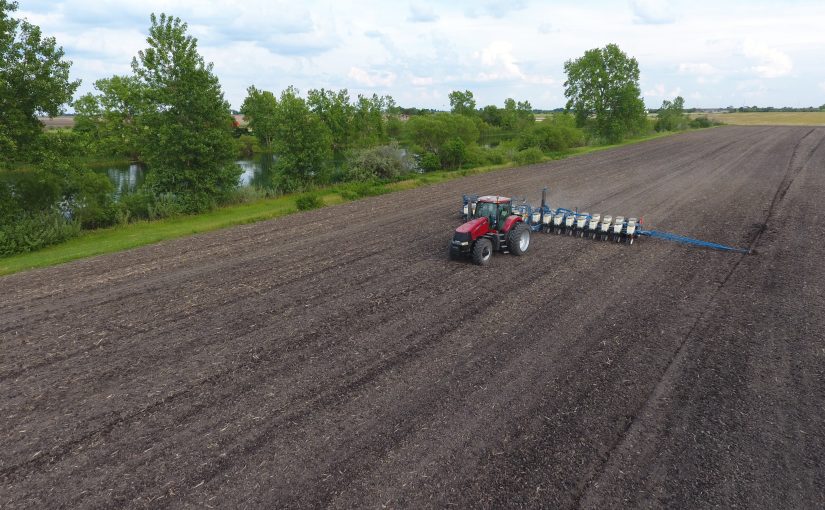
FDR wrote those words in 1937 in conjunction with the recently launched effort to create soil conservation districts. By that time, about 35 million acres of farmland in the Southern Great Plains had been decimated by an extended drought and windstorms that blew topsoil away and devastated the lives of rural people. Farming practices, specifically the plow, greatly exacerbated the impact of the environmental catastrophe of the Dust Bowl era.
Some of the most fertile soil in the world developed in the Great Plains as a result of the co-evolution of enormous herds of bison and deep-rooted perennial native grasses that built a resilient soil structure and provided a protective armor over the topsoil, preventing erosion.
Plowing the grasslands to farm left the ground bare and destroyed the ecosystem’s ability to endure weather extremes. We now know that plowing or tilling also releases carbon into the atmosphere and is a very real contributor to climate change.
The Problem with Tillage
Regenerative farmer Elizabeth Kaiser of Singing Frogs Farm has parked the plow and is using a no till system on her’s and her husband Paul’s 8-acre farm (2.5 acres under cultivation), “Tillage is when you take a tractor, when you take a rototiller, or when you take a horse and plow and you turn up the soil. You take the soil aggregates from larger sizes down to smaller sizes. There are two negative things that will happen. One is chemical and one is biological.
“The chemical part is that as the soil aggregates are broken up into smaller and smaller pieces, the surface area is increased compared to the volume. Tilling also brings oxygen into the system so more oxygen is in contact with the soil, which volatilizes a lot of compounds. Carbon becomes carbon dioxide, nitrogen becomes nitrous oxide, and there are also certain processes that can create methane. Those are the three most potent greenhouse gases. As farmers and ranchers, carbon and nitrogen are the things that we need most in our soil. So, the act of taking them out of the soil and putting them where we need it the least – in the atmosphere – makes no sense.
“The second thing that happens is biological. As the aggregates are broken up, the tilling creates total ecological destruction for the organisms that are in the soil. ‘Tilling the soil is the equivalent of an earthquake, hurricane, tornado and forest fire occurring simultaneously to the world of soil organisms. Simply stated tillage is bad for the soil.’ That quote is from the USDA. This is not some West Coast leftie idea. We know that tillage is bad for the soil, and we need to figure out how to farm and sustain ourselves on this planet in a way that doesn’t do so much damage.”
No-Till Options
If plowing destroys soil health, what alternatives do farmers have? That depends on the scale of the operation. Kaiser describes a few options for the small-scale farm down to the backyard garden.
“There are a lot of options when starting a no-till field depending on what your resources are, what your soil type is, what you’re going to be growing, and how much space you are going to be utilizing.
Elizabeth Kaiser, Singing Frogs Farm
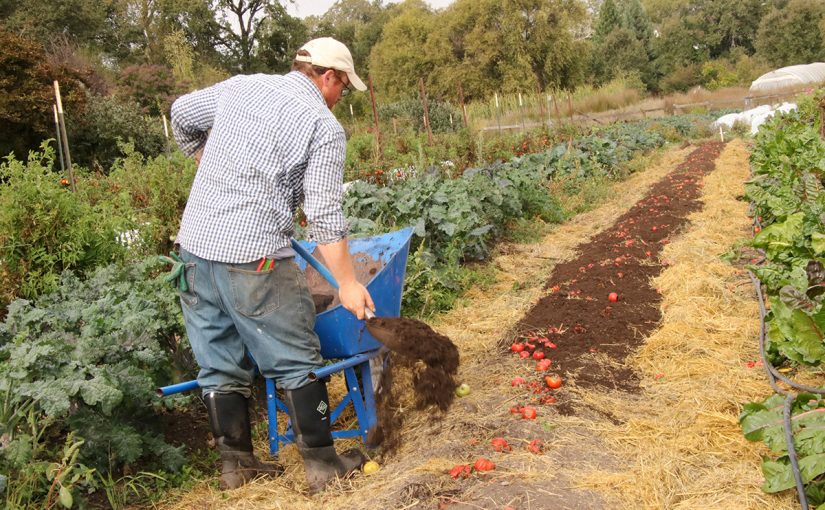
“If you’re already tilling, till one more time, create beds, put compost on top and never till it again. That’s how most of our beds were formed because we were already doing tillage.
“A second way is using occultation, which is more time intensive. Leave whatever is there – the grass, the weeds, or whatever– to decompose in place until you have a clean slate, and then create your beds. To start, we put down landscape fabric over an entire area where there was pretty strong grass and left it for six months. Then we did a slight inoculation with some compost teas to make sure the soil biology was high. We covered the whole thing in straw, and we then pulled up the straw and created beds. We spread a bit of compost on the beds, but not very much and then we were ready to plant.
“The last way is resource intensive. If you have a smaller space or if you want to get going quick, or you have the resources, I highly recommend this. Put down cardboard, build your beds out of two inches of compost, put straw flakes down for pathways, and go. If you’re just doing two beds in your backyard where you have lawn, this is what I recommend.”
No-Till for Larger Farms
But these recommendations, although highly effective, are not practical for larger farming operations. No-till farming systems have been used on medium size and larger farms since the 1940’s and are increasing in favor. According to the 2017 USDA Agricultural Census, over 100 million acres of cropland in the US are no-till. The caveat, however, is conventional no-till farmers use toxic herbicides like Round-Up to kill the cover crop and weeds. Conventional farmers who till also use similar chemicals, but they have the option to use a disc or plow to control weeds. So, no-till does not decrease chemical use and, in some cases, may even increase it.
Organic farmers are highly dependent on tilling because they are not able to use herbicides. The need for herbicides eliminated no-till as an option for organic farmers until the Rodale Institute designed the roller-crimper and made the design available free to farmers in 2006.
No till roller crimper
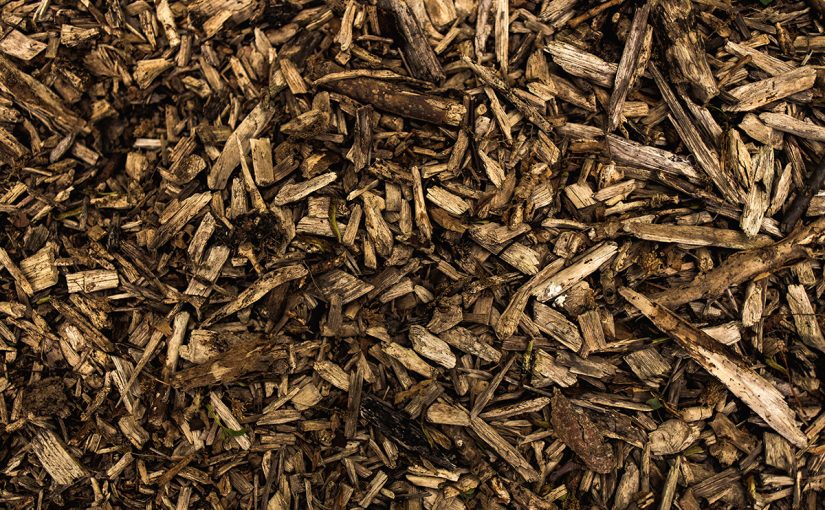
Designed for use after a cover crop has matured, the roller-crimper mechanically kills the cover crop by rolling over and crimping the stem to break the water flow from root to stem. The timing of this is critical; if done too early, the plant may not die back sufficiently, if done too late there will be too much seed produced and left in the field. The optimum time to pass over the field with a roller-crimper is when the cover crop reaches anthesis – the time when the flower opens when the plant goes from the vegetative stage to the reproductive stage. Once the roller-crimper passes through the field a thick, protective, weed-suppressing mulch is formed, which can be planted through. As that mulch breaks down it feeds soil life and deposits carbon in the soil. Iowa State organic specialist Kathleen Delate’s research shows no statistical difference between the yields of no-till and plowed plots of organic soybeans.
Mowing the cover crop is also an option, but that doesn’t result in the same level of weed suppression as the roller-crimper mower and, in some cases, doesn’t kill the cover crop allowing it to regrow.
The Benefits of No Till
No-till has proven agricultural benefits: less erosion, lower fuel cost due to less tractor use, less soil compaction, better soil moisture, and better soil health. Of course, there is a learning curve to adapt the practice to a specific farm crop and soil and some initial start-up costs, but the past has shown the terrible ecological and economic costs of tilling.
People in the 1930’s who lived through the trauma of, what was at the time, the greatest ecological disaster in the US history, learned the value of soil the hard way. Today topsoil is being lost at an alarming rate threatening global food security. At the same time, we face an even greater ecological crisis – the disruption of the climate due to anthropogenic causes. No-till can help address both of those problems.
Will we make the same mistakes over again or can humanity make the necessary changes to protect life on the planet? Agriculture, a key contributor to climate change, has the potential to be a leader in mitigating the climate crisis. Adopting no-till farming, one of a number of Regenerative Agricultural practices, is a readily available tool to help turn things in the right direction.
“Our soils have a carbon debt; the atmosphere is gushing with carbon. The carbon over our heads is literally in the wrong place.” Rebeca Burgess of Fibershed
Most terrestrial life is dependent on a thin layer of topsoil where our food is grown and where the plant kingdom converts carbon dioxide into life sustaining oxygen. It takes a millennium for nature to produce 1.2 inches of topsoil, the zone where most of the nutrients and biological activity reside. Maria-Helena Semedo of the UN’s Food and Agriculture Organization says that if the current rates of degradation and erosion continue we may only have sixty years of topsoil left. With the possibility of so few harvests remaining, the threat of global food insecurity is a serious concern.
The concurrent climate crisis is in need of real solutions, not to just reduce the increasing damage of ongoing greenhouse gas emissions, but, perhaps even more importantly, to reduce the amount of carbon that permeates the atmosphere.
Carbon is the common element in both crises. In soil there is a deficiency and in the atmosphere an excess. As Rebecca Burgess, Executive Director and Founder of Fibershed, says, “The carbon over our heads is literally in the wrong place.” Carbon is an essential component and building block of healthy soil and soil is a potential superstar when it comes to mitigating climate change.
Carbon Can be the Solution Instead of the Problem
Tim LaSalle, co-founder of the Center for Regenerative Agriculture at California State University at Chico, has been an early proponent of the power of soil to draw CO² from the atmosphere and sequester it in the soil where it provides multiple agricultural benefits.
At a Bioneers on-farm field day, LaSalle talked about the relationship between the mismanagement of soil and climate, “We have no experience of trying to live on a planet of 350 parts per million (ppm) CO² in the last 400,000 years. There’s been nothing that says this kind of lifestyle, food production, water cycling, weather disturbances will work except below 300 ppm. That’s why in any organizations I work with, I would promote and work towards 280 ppm or less.
“Within a year or two, we really have to turn the trajectory of our climate pathway around, and that doesn’t mean just reducing emissions. As a matter of fact, if we stopped emitting today, the planet would continue to warm beyond habitability. We have to draw down carbon out of the atmosphere.
“If you look at the amount of greenhouse gasses that industry has emitted, it doesn’t add up to what we’ve lost in carbon from our soils. 10,000 years ago when agriculture began, we started to clear forests, disturb grasslands, and eventually invented this thing called a plow that disturbs the soil and releases carbon into the atmosphere. From a legacy level, there’s more carbon in the atmosphere from our soils than there is from our fossil fuels.
“Look up and down the fields in California, in the Midwest, in the East and in the South of this country. When we plow and disc, we lose soil and we lose carbon because carbon dioxide is emitted into the atmosphere every time the soil is turned over.”
Carbon’s Agricultural and Climate Benefits
Carbon makes up approximately 50% of soil organic matter (SOM). Regenerative farmers are placing a focus on increasing SOM because it increases the soil’s capacity to hold water, making it more drought resilient and reducing erosion. SOM is the basis for a healthy soil structure that creates an environment for beneficial soil microbes to thrive and support fertility. As soils are farmed in ways that optimize carbon sequestration, SOM can play an important role in keeping excessive carbon out of the atmosphere.
Raising livestock holistically on 10,000 acres of California coastal prairie, Doniga Markegard is focused on carbon. “It’s all about the carbon cycle. You want more roots, more carbon stored, less carbon in the atmosphere. Each 1% increase in soil organic matter holds 20,000 gallons more water per acre. That’s really key because essentially in the last 150 years, prime agricultural soils have lost 30-75% of carbon, which has added billions of tons of CO2 to the atmosphere.”
The UN’s Intergovernmental Panel on Climate Change has found that sequestering atmospheric carbon in agricultural soils and rangelands has the potential to return carbon levels to those prior to the Industrial revolution.
In 2015 France launched the 4 per 1000 program at the COP21 Paris Climate Conference to encourage farmers to increase carbon in their soils by .4% per year. If all farmland, pastures and rangeland worldwide accomplished this increase annually, in a matter of a few decades a significant amount of CO2 could be drawn out of the atmosphere and sequestered in soils, increasing fertility and stabilizing the climate.
In 2008 when LaSalle was CEO of the Rodale Institute, he and Dr. Paul Hepperly studied the carbon sequestration data from the Rodale Organic Farming Systems Trials; they found that Regenerative agricultural practices like no-till, applying compost, growing multispecies cover crops, planting hedgerows, not leaving bare soil, and others increase the soils capacity to sequester carbon.
Research Shows How to Optimize Soil Carbon
According to LaSalle, breakthrough research by Dr. David Johnson, a molecular biologist at New Mexico State University (NMSU), has shown how a “healthy soil biome with a fungal dominant community can actually sequester a magnitude greater than what we previously understood was possible, maybe even 10 times as much.” On the NMSU webpage Be Bold Shape the Future, Dr. Johnson writes, “Soils with higher carbon content and larger fungal populations enabled us to double the production in the soil with the same amount of water.”
With higher yields, water conservation, increased resilience to droughts and floods and the power to dial back climate catastrophes, what’s not to like about soil carbon sequestration? But LaSalle points out that there are some skeptics,
“Some people say that the science isn’t peer-reviewed yet. But I am aware of at least three farmers – and I know there are a lot more — who are reporting soil carbon sequestration levels even greater than what Dr. Johnson is showing. Their soil has been tracked, so we have valid affirmation that Dr. Johnson’s test plots in New Mexico are being replicated on-farm at farm-scale right now.
“This is something that scientists should be more inquisitive about, not critical of, and start to replicate trials all over the place in their test plots and with farmers and start to measure the carbon changes. We need this information. We need these practices. We need to start applying them. If we have more to learn, which I know we do, we better get busy.”
Keeping an armor on the soil with living plants, crop residues or mulches protects the soil in a multitude of ways. The cultural practice of having “clean” farm fields with exposed soil had, in the past, been considered a sign of a good farmer, but that misconception is changing thanks to research that shows that a protective covering is a key element of healthy soil practices. Soil armor keeps the soil cool and moist. Bare soils will evaporate more quickly due to exposure to heat and, in the extreme, can reach 140 degrees killing microorganisms.
An armor on the soil prevents erosion from wind and rain. A soil cover buffers the impact of rain – which on a bare soil can cause compaction – and allows rain water to infiltrate into the soil rather than running off. Crop residues and mulches suppress weeds and as they breakdown they recycle nutrients back to the soil.
The leaves of cover crops shield the soil surface, and their living roots cycle nutrients produced by photosynthesis into the soil to sustain the health of soil microbial communities. The Natural Resources Conservation Service claims that healthy soils are covered all the time.
The Regenerative Organic Alliance has developed standards for Regenerative Organic Certification (ROC) that addresses all aspects of regenerative agricultural practices and principles including a section on Farmer and Worker Fairness. The program uses the National Organic Standards as a minimum requirement, but goes beyond organic in some specific areas. Social and economic justice for farmers and farmworkers is one of those. The Farmer and Worker Fairness section contains fair pay to the farmer and a living wage to farmworkers, equal opportunity regardless of race, gender, marital status, religious beliefs, disabilities or political opinions. It recognizes the rights of small farmers to organize to be able to compete globally and for farmworkers to organize and collectively bargain for fair wages and good working conditions. A clean and safe working environment would be ensured by third party audits.
Farmers and farmworkers are exploited by an economic system that places corporate profits over financially equitable and respectful relationships. According to the World Bank 78% of the world’s poor are farmers or ranchers. Most farm workers do not enjoy the same rights as workers in other industries; rights like worker’s compensation, disability insurance, health insurance and the right to join unions and collectively bargain. Federal law does not entitle farm workers to overtime pay and in some cases farm workers are not guaranteed a minimum wage.
By including Fairness in the standard, the ROC places an equal importance on the human aspect of agriculture along with soil health, ecosystem stewardship and climate friendly practices.
The Coalition of Immokalee Workers (CIW), based in Florida where 90% of the tomatoes produced in the US during the winter months are grown, is one organization that has been fighting for fair wages and decent working conditions for farmworkers. CIW has brought to justice those responsible for modern day farmworker slavery, and brutality and sexual harassment in the fields. They have negotiated with some of the largest fast food chains to increase the pay of Florida tomato pickers to raise them above sub poverty wages. Lucas Benitez, the founder of CIW, spoke at the Bioneers Conference about the Fight for Justice for Farmworkers.
J.I. Rodale, an organic farming pioneer and founder of the Rodale Institute, in the Encyclopedia of Organic Gardening wrote, “In the soft warm bosom of a decaying compost heap, a transformation from life to death and back again is taking place. Life is leaving the living plant of yesterday, but in their death these leaves and stalks pass on their vitality to the coming generation of future seasons.”
The process of composting is a form of biomimicry. Nature ultimately and systematically breaks down and decomposes all life’s substances transforming them into a resource for new growth. Composting creates ideal conditions to speed up that process and produce a high-quality input for soil and plant health in the farm and garden.
John Wick of the Carbon Farming Project – which demonstrated the role that compost plays in sequestering carbon in the soil – says, “When making compost, if you create the ideal conditions, naturally occurring bacteria populate that pile. They’re already there. They start building their bodies out of those ingredients and through their respiration, it gets warmer and warmer and warmer. Then only thermophilic bacteria can tolerate the high heats and in that environment, weed seeds and pathogens are destroyed.
“When you make thermophilic bacteria-based compost, you create a beautiful molecule, a little carbon-nitrogen molecule covered with life, and it turns out when you put that compost on top of the soil system, the soil knows exactly what to do with it.”
Compost made from leaves, grass clippings, kitchen waste, manure, weeds, twigs, agricultural waste, etc. supports soil fertility, creates a good environment for beneficial soil microbes, suppresses plant disease and can be good for the climate. According to Dr. Whendee Silver of UC Berkeley, “Composting manure actually decreases greenhouse gas emissions. We’re measuring greenhouse gas emissions from the composting process; it appears that composting, if you do it well, leads to relatively low emissions compared to allowing the material to naturally decompose, which can lead to carbon dioxide, methane and nitrous oxide emissions.
“If you put the material into a well-managed compost pile and keep that compost pile turned – weekly turning is sufficient – that results in relatively low methane emissions and very low, undetectable emissions from nitrous oxide [a greenhouse gas more potent that carbon dioxide and methane].”
The Multiple Methods of Composting
The multiple soil health benefits of compost have been known since ancient times. Today commercially produced compost is available by the bag or by the truck load, but can vary greatly in quality depending how the compost was made and what materials were used. Were they exposed to noxious inputs that have not properly degraded like antibiotics in chicken manure or herbicides in green waste? Those things are difficult to know. However, with some trial and error, it is relatively simple, whether you are a gardener or a farmer, to make your own. There are several different methods of composting so the process can be adapted to different scales, uses and preferences. All methods, when done properly have similar benefits with some notable differences.
Thermophilic composting, which can be done on a small or large scale, is an aerobic process in which microorganisms consume carbon and generate heat that can kill weed seeds. Vermicomposting, usually done at a small scale in a bin, uses red worms that eat kitchen scraps and plant residues, produces nutrient and microbial rich castings that have similar benefits to thermophilic compost, but doesn’t kill weed seeds. Vermicompost, unlike thermophilic compost, has naturally occurring plant growth hormones.Depending on how the compost will be used and applied, the two methods have their pros and cons.
Compost Tea, researched and popularized by Dr. Elaine Ingham of the Soil Food Web Inc., is a process in which quality compost is brewed into a tea that greatly increases the beneficial microbial population so that relatively small amounts of the tea can be sprayed on large acreage to increase soil biology and fertility. Sheet composting, popularized by permaculturists, is a low labor method that is done in place in the garden bed. In this brief podcast, ecological farmer Bob Cannard explains how to do sheet composting.Biodynamic (BD) compost has specially made BD preps and herbs embedded in it that attract cosmic forces into the compost pile that help harmonize the life force and energies of the farm. The latest breakthrough on compost has been made by Dr. David Johnson, of New Mexico State University and CSU Chico State, who has developed a unique composting process that results in a fungal-dominated compost that his research has shown to increase crop yields and dramatically increase soil carbon sequestration.
Compost is the single most important amendment for organic regenerative gardeners and farmers. It increases the health of the soil, which promotes healthy plant growth. Composting is an ideal way to turn food waste into a valuable resource and composting animal manure and other waste reduces greenhouse gas emissions. And as a tool to mitigate climate change, compost increases the soil’s capacity to sequester carbon from the atmosphere.
Grasslands, known by a variety of names – prairies, savannahs, steppes, pampas, etc. – are vast ecosystems throughout most of the world that support a diversity of wildlife. According to Andrea Basche of the Union of Concerned Scientists, “Grasslands provide protection against floods and droughts, have the potential to store carbon in the soil, and as a result, help increase overall climate stability.”
The distinct characteristics of grasslands – open, flat, treeless, with deep topsoil and high fertility – have made them victims of exploitation by unsustainable agricultural practices and over- grazing. Half of the North American prairies have been lost to agriculture and the loss continues at rates equivalent to the destruction of the Amazon. The trend of disappearing grasslands is global and with that comes the loss of wildlife habitat, ecosystem services and potential for climate change mitigation.
Zimbabwean ecologist and farmer Alan Savory developed holistic management to help heal the declining health of the world’s grasslands. Holistic management, based on mimicking the dynamics among grasses, ruminants and predators, is a framework for making decisions that takes into account the needs of the land, the animals and ecosystem functions. Timing, location, livestock density, grazing duration and ecosystem cycles are part of the complexity that is intensively managed by holistic ranchers on approximately 40 million acres worldwide.
Despite abundant empirical evidence of success on the ground, Savory has had his detractors who claim that his conclusions about carbon sequestration are not supported with scientific research. However, in the examples that I’ve read of studies refuting the effectiveness of holistic management, the research was not done on holistically managed systems.
Hunter Lovins, in an article in The Guardian refuting criticisms of Savory’s claims that properly managed livestock can be key to sequestering carbon to mitigate climate change, cites soil Scientist Elaine Ingham, The Rodale Institute and range scientist Richard Teague of Texas A&M in support of Savory’s concepts. A Michigan State University study also supports the idea that holistic practices like adaptive multi-paddock grazing “can contribute to climate change mitigation through SOC [soil organic carbon] sequestration.”
Most people don’t think of California as a prairie state, but the coastal prairies, which are rich in biodiversity and are classified as critically endangered, are found from Los Angeles to Oregon.
Doniga Markegard and her family holistically manage 10,000 acres on a number of ranches both north and south of San Francisco.
Doniga Markegard and Family
“Holistic management,” Doniga said in a presentation at the Bioneers conference, “is an approach to an ecological agriculture system that works with nature and focuses not only on the production and the products, but also on the environment and people while ensuring that it’s financially profitable. The basis of holistic management, first and foremost, is to define and know the environment that you’re working with. It really blends well with my background as a naturalist and wildlife tracker because first, we’re getting to know our environment, and only until we have a deep relationship with those species that we’re in this dance with, can we then apply our design and our stewardship.
“I love tracking large predators, not just because of the thrill, but also because we can learn so much from those keystone species. I spent seven summers tracking wolves in Alaska and Idaho; part of what I learned was the dance between predator and prey. When the wolves are in an ecosystem, there’s a trophic cascade where they are preying on the elk forcing them to move. Because of that constant movement away from the predator, the elk aren’t putting as much pressure on the riparian areas. As riparian areas flourish, songbirds and beavers come back. It’s all a beautiful orchestrated dance.
“Nature functions in wholes and patterns. What we’re doing with holistic management is mimicking nature to not only produce abundant food for humans, but for all life on Earth.
“With conventionally managed land, often the perspective is what don’t we want on the land and how do we get rid of it. In comparison, with holistic management we’re looking at what we are managing towards. We’re not saying, we don’t want this or that. Even if there is a species that’s taking over the grasslands, we don’t try to conquer it and get rid of it. Instead we manage for biodiversity. What are the things that you want to see on your land, like pollinators for example? Then you set up those conditions and they will come. Pollinators will come. Birds will come, and they’ll be thanking you for setting up the conditions that they can live and have their babies, and produce more abundance.”
As biodiversity increases, the landscape supports more life. Paicines Ranch, near Hollister California, is working to regenerate ecosystems on their 7000 acres while producing healthy food. Claudio Nuñez, of Paicines is noticing how nature is responding. “We’ve probably had a tripling of bobcats in the last two years. We’ve seen a fair number of eagles showing up, we used to see one once a week or so, now I’m seeing them two or three times a week. If given the opportunity, nature is very resilient. Watching how it responds is a fantastic feeling.”
Paicines Ranch
The key to holistic management and regenerative agriculture is healthy soil. Poor farming and ranching practices that dominate conventional agriculture, like plowing, leaving soil bare, overgrazing, chemical use, lack of cover crops, etc. are destroying the beneficial soil microorganisms that are the key to nutrient cycling. Today most conventionally farmed soils lack key nutrients that are essential for optimum plant and human health.
Holistic ranchers manage land to increase soil organic matter, 50 % of which is made up of carbon. Carbon supports life in the soil and increases the soil’s capacity to hold water making it more resilient to drought and erosion. Carbon rich soil allows rain and irrigation water to infiltrate rather than run off and erode precious topsoil. For every 1% increase in organic matter an additional 20,000 gallons of water per acre can be stored in the soil.
One of the ranches that Markegard Family Grass-fed manages is the Jenner Headlands Preserve on the Sonoma Coast. “When we got there,” Doniga said, “it had been ranched conventionally. By using planned grazing, bunching the animals up and mimicking what nature would have done with the large herds of elk and pronghorn being moved by wolves, we were able to see an increase in perennial bunch grasses, an increase in diversity, an increase in water stored in the soil which means an increase in carbon.
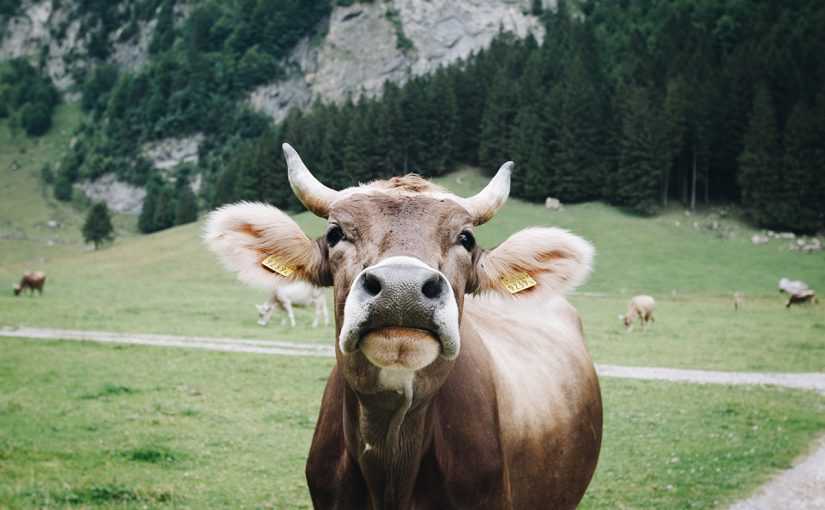
“How is this done? The ultimate biological farming unit, whether you like them or not, whether you eat them or not, they are amazing. Cattle can help us with the next phase of healing the planet, as long as they are managed well and taken out of the feedlots and allowed to live a life that they are designed to live. They are ruminants. They mow the grass by eating it. They have incredible horse power. They have a carbon converter fermentation vat. They’re mulching. They’re fertilizing out the back end, and they’ve got all these great microbes in their gut that are directly linked to the microbes in the soil.
“Always plan for the health of your animals. They need a larger area to graze so that they can have a diversity of nutrients from different plants. The pastures have a longer time to recover because you are moving the animals from one area to another. You match your moves with how rapidly the forage is growing. When the forage is growing fast, you want to move your animals faster so that you can feed when the grass is sweet just before it matures.
“Grazers have a symbiotic relationship with the species of the grasslands. The animals create an impact on the land as they move around that encourages green plant growth. Asregenerative agriculturists, we’re farming light. We’re maximizing the leaf surface of green growing plants to capture more carbon out of the atmosphere. That carbon is what feeds the plants. The green plants have the protein that the cattle need.”
Cattle have been identified as significant climate change contributors because they emit methane when burping and farting. Methane is roughly 30-80 times more potent a greenhouse gas than carbon. The vast majority of livestock are raised in systems that damage the climate. Concentrated Animal Feeding Operations (CAFOs) confine thousands of animals inhumanely to a small industrial space. CAFO animals are fed grains, which are hard for ruminants to digest and cause them to produce even more methane emissions. The enormous amount of waste that CAFOs produce is typically stored in anaerobic manure lagoons that emit carbon, methane, ammonia and other toxic gases. Conventional grazing operations often result in overgrazing and a degradation of the ecosystem’s ability to store carbon and regenerate.
Richard Teague found that when cows grazed in adaptive multi-paddock systems, like holistic management systems, grasses grow with a higher nutritional quality and can be digested more quickly which lowers the amount of methane emitted. Under proper management, according to Teague, much more carbon is sequestered in the soil than is emitted by the cows resulting in a net climate mitigation. As it turns out the consumption of meat, now justifiably accepted as a climate change culprit, can actually be part of a climate change solution if the animals are raised in a system that uses nature as a model allowing animals to enjoy their natural life habits, which will increase biodiversity and sequester atmospheric carbon in the soil.
For too long women in general and women of color even more pointedly have been told to suppress their grief and rage in the name of love and forgiveness. No more. How do we reclaim our emotions in the labor of loving others? What might authentic reckoning, apology, and transformation look like, personally and politically, and where would they ultimately lead us?
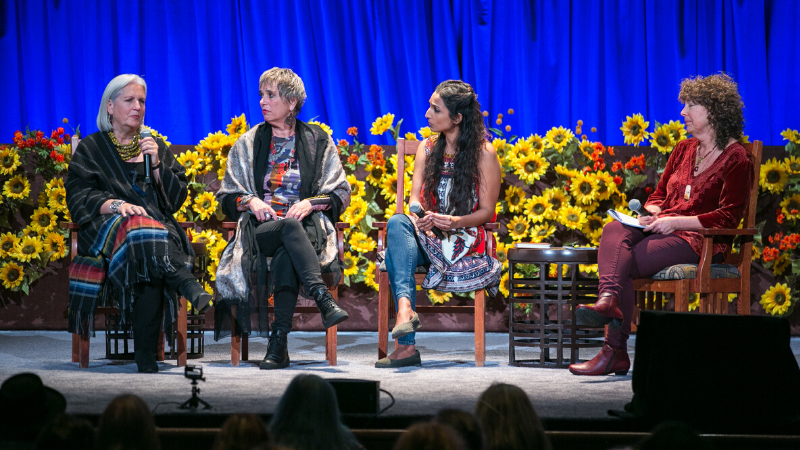
Following is a transcript of a conversation between four extraordinary writers, activists and thought leaders of our era: Terry Tempest Williams, Eve Ensler, Valarie Kaur and Nina Simons.
Terry Tempest Williams, one of the greatest living authors from the American West, is also a longtime award-winning conservationist and activist, who has taken on, among other issues, nuclear testing, the Iraq War, the neglect of women’s health, and the destruction of nature, especially in her beloved “Red Rock” region of her native Utah and in Alaska.
Eve Ensler, Tony Award-winning playwright, performer, and one of the world’s most important activists on behalf of women’s rights, is the author of many plays, including, most famously the extraordinarily influential and impactful The Vagina Monologues, which has been performed all over the globe in 50 or so languages.
Valarie Kaur, born into a family of Sikh farmers who settled in California in 1913, is a seasoned civil rights activist, award-winning filmmaker, lawyer, faith leader, and founder of the Revolutionary Love Project, which seeks to champion love as a public ethic and wellspring for social action.
Nina Simons, co-founder of Bioneers and its Chief Relationship Strategist, is also co-founder of Women Bridging Worlds and Connecting Women Leading Change.
VALARIE: I am deeply grateful, deeply grateful to be here in this moment next to these. They are my sisters, they are my godmothers, they return me to the fight.
I look at you, and I see how you’ve moved through this world, and I want to last like you. And I want to know how. This is my question to you: What has made you brave enough in these years to keep showing up with love despite everything anyway?
EVE: People like you. Really. I think of you. I think of the magnificence of you and the younger generations, and we don’t dare give up. What will we say to the people who come after us? We are all a chain of evolving humanity, and if we quit, it doesn’t get to go on. That’s just that. But also, I’m of the Beckett school: If I can’t go on, I must go on, I will go on. And why not? The alternative is not going on, and that does not seem appealing.
Also, I am here because of my sisters. I am here because I am in a community of Bioneers, I’m in a community of One Billion Rising, I’m in a community of V-Day, I’m a community of activists, of sisters and brothers all around the world, who have made a commitment that is bigger than me. It’s not about us. I’m old. I’m done. And I’m okay with that. But my commitment is to life; it’s to something much bigger than me. And I think once you get hooked to that thing, that bigger thing, then it isn’t about you anymore.
So you’re in pain, so get over it. So you feel sad, so get over it. Get connected to the bigger thing.
And I just want to say one other thing: There’s a woman named Jane who is my inspiration. She’s at the City of Joy in the Congo. I met Jane nine years ago, and Jane suffered some of the worst violence I’ve ever heard of on the planet, and I’ve heard a lot of violence – raped, and her insides were destroyed. She came to a hospital for five years, went back to her community and got raped even worse, tied to a tree for a month, almost died, was impregnated by soldiers. I’m telling you this because it’s a public story. When I met Jane nine years ago, she was broken, and her body was broken. She was in the hospital eight years, undergoing nine operations. Today, Jane is literally a Bodhisattva. She is a light. She is the light. She’s one of the leaders at City of Joy. She lifts up the other women. Her life is devoted to the health and welfare and radicalization of her sisters.
I look at Jane, and I think, ‘What fucking problem could I possibly have?’
I really hold her—I have a picture of her. I have pictures of her all over, because she represents to me what happens when your light gets hooked up to the divine. It’s just not about you anymore. It’s about taking that poison and turning it to medicine, taking that pain and turning it to power. And I think the way to go on is to get hooked up.
TERRY: There are days when I wonder how I can get up in the morning. And you must feel that too. In those days, I’m aware of the limits of my own imagination. But what I have learned is that imaginations shared create collaboration, and in collaboration we find community, and in community anything is possible. That’s how I go on.
I agree, it’s not about the individual, it’s about the community, both human and wild. Most of my life I’m feral. And when I can’t contain myself, I howl. To me, joy is a sibling of grief. And it is parented by love.
NINA: When my mother was dying, I reached a point where I knew that I needed to be held in community. So I would come home from my mother’s house at night, and I would write these letters, and both Eve and Terry were on the receiving end of them. I didn’t need answers back, I just needed to know that they knew what was going on in my life. It was such a gift to know that that net of connection, that web, was there for me, and that these magnificent women were helping hold it. That’s how we get through.
VALARIE: We are each other’s midwives.
NINA: Yes, exactly. Midwives and hospice workers.
VALARIE: It made me want to share this with you. This word love, which is on our lips, and it’s also such a triggering word. I feel like culture has butchered this word. And when I am thinking about what we’re talking about, I come back to this word. I’m a lawyer, so I never use the word love in public. They’re going to eat you alive if you talk about love when you’re trying to fight the good fight.
My daughter is 11 months, my son is 4 years old now. The moment that he was put on my chest, I had that rush of oxytocin. It’s a falling in love. Most of the time when our culture talks about love, they’re talking about that rush of feeling, being swept away, and it’s delicious, and it’s delirious, and it’s what we live for. It’s glorious. And it’s fleeting. And it’s something that happens to you, right? We fall in love like we fall into a jar of honey. It’s something that happens to you if you’re lucky. That’s our only definition of love. Then we are told that love is the most important thing in our lives, and yet it’s something that we have little control over. No wonder so many of us are so anxious about what it means to love.
What would it mean to expand that definition? I didn’t know until this weeping, sobbing, shaking feeling, that rush and falling into love. I looked over at my mother, who had been my midwife this whole time, and she’s unpacking her back, getting ready to feed me. And I realized like my mother had never stopped laboring for me.
My mother had an arranged marriage when she was 18. She and my father decided, “Our daughter is not going to have this kind of life; she’s going to be able to be free.” I thought I wasn’t supposed to be like my mother, and all this time she was showing me what love actually is. Love is more than a rush of feeling. Love is sweet labor. It is fierce. It is bloody. It is imperfect. It is demanding. It is life-giving. And it is a choice that we make over, and over, and over again.
It’s not just one feeling, it’s all the feelings. Joy is the gift of love. Grief is the price of love. Anger is the force that protects that which is loved. We need to move through all of these emotions in the labor.
So I want to ask you about rage, because you touched upon it. You talked about how rage is the site for healing, that perhaps we move through the rage to find healing. What do you do with your rage?
TERRY: For me, it’s always through action. What is the gesture? What is the action shared?
My brother took his life a year ago. Dan Tempest. He was a beautiful human being, an artist, a philosopher. He loved language. He was a working man. He worked the frack lines in North Dakota. He worked in our family business. He also banded migrating birds.
Three months before he took his life, he called me and said, “I bought the rope.” And we had a conversation. He said, “I’m eroding. I am eroding. And you are in denial.” And he said, “I’m fucked. You’re fucked. The Earth is fucked. You have to wake up.”
And I just said, “Dan, I will never give up on you. I will never give up on the Earth.”
The last thing he said to me was, “I’m going under. Knock if need be.” I never did.
I realized in those moments, it’s not the big gestures. You know, we think we can save a landscape, a species. I’m haunted by what if I had just knocked. The small things, the small gestures. We would have held each other.
EVE: Rage is such an interesting thing. I was filled with it for so many years, and it was such a motivator. It got me to do a lot. It compelled me, and compelled me, and compelled me. But it has a particular energy that is not always kind, not always inclusive, not always aware. It’s got a very specific trajectory. And I don’t like that anymore. I don’t want to be ruled by rage anymore. It doesn’t sit well inside me.
I don’t think we can deny rage, but I think the transformation of rage is really critical. What I do with rage is I write. What I do with rage is I dance. What I do with rage is be more generous than I thought I could be. I push it further. I give more. I give more. I give more, go past that point.
The other night I was with my dear friend Pat Mitchell, whose book Becoming a Dangerous Woman just came out. We were talking about what it means to be dangerous. Being dangerous right now is loving. That is really the most dangerous thing we can do. And by that, I mean really loving, really giving to people, really seeing people, really experiencing everyone around you and tuning in to their suffering or their needs or their trauma or their feelings. Being loving, to me, is really about not hoarding.
We have a terrible tendency on the left which has been conditioned into us, I think, by deprivation rations, by capitalist programming, by a competitive paradigm. We think that if one person gets something in our movement, it’s going to take away from somebody else, even if we’re all fighting for the same issues. To me, loving and being dangerous is saying, “Here, have it. Take it. We all get to have it. I’m going to support you completely and totally, even if I have jealousy, even if I have competitive feelings. Actually, the more I have of that, the more I’m going to give you.”
I used to have a rule for myself: If I ever was jealous of my women friends for their success, I had to buy them a present. So for a period of a year, women were getting lots of presents from me. It retrained and retaught and reprogrammed that part in myself that always thinks, ‘If she gets it, I don’t get; if she moves ahead, I don’t; if she rises up, I fall.’ It’s completely a lie. When your sisters rise, you rise. Period.
NINA: I’m inclined to add that I’ve been wrestling with a question of anger for a long time. I felt like I grew up in a household in which it wasn’t safe to express anger at all. I grew up thinking, ‘Okay, well is there something healthy about anger that I can wrap my heart around? What does that look like?’ My best clue so far comes from a woman named Karla McLaren, who wrote a book called The Language of Emotions. She says that anger is your body’s way of telling you that a boundary has been trespassed.
I find that I’m more interested in outrage than in rage. As women, we have had so much conditioning to not express anger or outrage. But we live in a world where babies are born with over 200 exogenous chemicals in their bodies from birth. If that’s not trespassing a boundary, what is? And we should have all been out on the streets about that a long time ago.
I feel like I’m in this inquiry about: How do we reclaim healthy outrage? Because it’s part of what can fuel us into the action that’s so needed.
VALARIE: I resonate with that. Growing up in a Punjabi household, I learned how to suppress my rage. To be good, to be loving, meant to not be angry. My mother was very sad for many years, but it was just rage turned inward. Oftentimes it would come out in a flash of rage over things that don’t matter. Watching my mother on her journey actually gave me permission to start to explore and unleash the rage inside of me. Because when rage is turned inward, we know that it wreaks havoc on the body.
I experience an encounter of sexual assault when I was a kid, and for many, many years, I had a lot of dysfunctions in my body, in my pelvic floor. I didn’t know how to solve them. I went to every kind of doctor until I met a mentor, Tommy, who worked with trauma lodged in the body as much as in the mind. He helped me imagine that moment when the assault took place, and becoming a tiger. So I started growling. I roared. And before I knew it, in my mind, I was ripping into this boy’s body. I was letting myself experience violent, even murderous rage inside of myself.
Afterward, I said, “Tell me what happened.” My mentor said, “Well, where is your assailant?” And as the tiger, I sniffed the floor. There were just bloody clothes on the ground. I looked up, and there he was. But he wasn’t this monster who had power over me. He was a frail, wounded kid, whose parents were dysfunctional, whose father was an alcoholic who beat his mother. He, himself was so wounded. He didn’t know how to love. I could see his wound only after going through my rage and letting it run its course. I could reclaim the fight impulse in my own body.
What Tommy did is he gave me a safe container for my rage. And once we have safe containers for our rage, then maybe what’s left over is the kind of outrage that you’re talking about, Nina, that allows us to wonder again about the people who hurt us. What are the cultures and institutions that authorize them to hurt me?
EVE: That’s beautiful.
A few days ago, I moderated this incredible panel in New York on why we should care about Brazil. There were beautiful people on this panel – Caetano Veloso and Glen Greenwald and Petra Costa, who’s made a beautiful film called Edge of Democracy that everybody should watch. There was a woman named Celia Xakriaba, who’s from the Xakriaba tribe. She’s one of the leading Indigenous women fighting to protect Indigenous People and the Amazon. She wrote me this week, and she said, “When we marched on the Capitol, we didn’t have guns. We didn’t have anything that the opposition had. What we had was our singing. Our singing was so strong that we went into the Congress, and they couldn’t stop us.” And I just feel … have a power in us—I’m going to say this as women—that we haven’t even begun to tap into. We have a power in us that we don’t even recognize yet, I’m promising you.
Between the years of rapes, the years of burnings, the years of undoings, the years of oppression, our power has been pushed down and pushed down. But it is beginning to emerge. When this power emerges, it is so much more powerful than violence. It is so much more powerful than guns. I promise you, when this power emerges, we won’t even recognize this world as we know it.
Our goal now is to unlock the obstacles that are preventing that power to come through in each and every one of us. We have to be bold now.
They danced and sang their way into Congress. I have seen this all over the world with One Billion Rising: women dancing their ways into situations they never dreamed they could get into, because our power is in our bodies. It’s in our bodies. And when we untap, untangle, uncap all those things that have been put like stones, like boulders, like meanness on top of ourselves, I promise you, we will know where we’re going. We will know the way, and we will know how to get there. So the work is to get your bodies free.
NINA: I want to ask you what authentic reckoning, apology, and transformation might look like personally and politically? Where will they ultimately lead us?
VALARIE: I do believe that revolutionary love is the call of our times, that the only way that we are going to confront the racism and patriarchy and white supremacy and capitalism and greed and hate and the white nativist forces that are rising in America, and the supremacist movements that are rising around the world, is if we show up to the labor. The only way we will be able to show up to the labor and last is if we show up with love through love. Love for others, love for ourselves, and love even for our opponents, which is the refusal to dehumanize them.
I believe that the only way we can practice love is in communities and pockets, and when we do that, we experience what we’ve been experiencing here. We experience the world that we want. We feel it in our bodies. I have felt it in my body, this sense of community and transparency and bravery. That’s the world that we’re birthing. We get glimpses of it when we create pockets of it large enough for us to inhabit and occupy it together.
TERRY: I have two images. If I’m honest, what the reckoning looks like for me is to stay home. Years ago I wrote a sentence: The most radical act we can commit is to stay home. That’s the reckoning for me. No more flights. No more distractions. But to really do the work in our own communities, with the gifts that are ours, whether it’s working in local schools, whether it’s restoring the lens where we live, and really working on that local scale.
Each of us has gifts that only we can do, that we can offer up in the name of community, as a piece of this larger mosaic at this moment in time. We have to really ask ourselves in the deepest humility: “What is my gift? How can I go deeper and offer it up in the name of community?”
EVE: I think we keep going at them. We keep using their tools and their language and their energy to go at them, and we’re always going to lose on those terms, because we’ll never be that greedy, we’ll never be that mean, we’ll never be that thoughtless, we’ll never be that cruel. What’s calling me lately is how do we go under? How do we really figure out how we’ve gotten here? What’s been done to people that have driven them to do the things they’ve done?
I had the privilege of working at Bedford Correctional Facility for eight years in a group with long-term women prisoners who had done violent crimes. Those women really educated me. Every week they would go deeper through writing to really investigate why had they done what they’d done. I’ve just never been with people who were so honest and so real.
What I learned in that process is that nobody’s ever really thought about their lives. Life has just happened to people. Then they wake up one day, and they’re in a marriage, and they don’t know how they got there. Or they’re in a jail cell, and they don’t know how they got there, or they’re in a job, and they’re like, “What am I doing here? What happened?”
I think part of what we have to do is really think about our lives. How do we get here individually? How do we get here as a community? And how do we get here as a country? And we have to start really making amends.
I hear white people say all the time, “Well, I’m not responsible for the people who came before me.” And I always want to laugh and say, “We’re responsible for everything. We are responsible for everything. Period.”
What legacy runs through you that you have to make amends for? What story has gone through your cellular makeup that you need to clean up?
I also think we have to go above, and by that, I mean we have to go to the mystical. We have to go to the divine. We have to open the next pathways through plant medicine, and through all kinds of plants that will take us to another zone. I can only share my own experience that I think the journeying and doing plant medicine has been the most profound experience of my life. It has opened the pathways to another dimension. It has allowed me to see myself in ways I could not see myself standing here. It has opened my heart beyond any capacity I thought it could open.
I feel blessed that plants brought me to the Mother, that plants brought me to the vine, that plants taught me who my real mother is. I know who my mother is now. We all have a mother. And she is sacred, and she is generous, and she is patient, and she is merciful.
I think the Mother made us. We’re her creations. Why would she want us destroyed if she created us? She wants us to change. She wants us to be the children she wanted us to be. That’s what she’s calling us to do. She’s an old, divine, loving entity that created all of this. And it’s our job to cherish her, to protect her with our lives, to go the distance so that we get to all be here in a new time, in a new world, in a new transformation.
As founder and leader of the Revolutionary Love Project, activist and lawyer Valarie Kaur advocates revolutionary love as the call of our time. It is the foundation of our movement toward a better world, as it emphasizes the very truth of humanity: that we are all interconnected. Valarie empowers us to practice the labor of revolutionary love for ourselves, but also for our opponents, in response to the hate and division seeming to consume our world. In the following speech, she shares three ways you can join community leaders and peace builders in fostering a mindset of revolutionary love today.
I want to invite you to imagine my grandfather standing behind me, a tall man who wore a turban as part of his Sikh faith. He taught me how to be brave.
More than 100 years ago, he arrived from India to America sailing by steamship in the year 1913. He arrived in a port in San Francisco, not just a few miles away from here. His generation fought for the right to become citizens, to earn equal protection under the law. It was my grandfather’s spirit, his ancestry behind me when I was growing up on the land that he farmed. And so I invite you to imagine him behind me now as I tell you my story, and share with you why I believe Revolutionary Love is the call of our times.
My story begins in the aftermath of September 11th, in the wake of the horror of those attacks, when hate violence erupted on city streets across the country. Members of my community were killed. The first person killed in a hate crime after 9/11 was Balbir Singh Sodhi, a Sikh father who was killed in front of his store in Mesa, Arizona, by a man who called himself a patriot. He was a family friend I called “uncle.”
I was going to be an academic. His murder made me an activist. I joined a generation of Sikh and Muslim Americans fighting for our communities, fighting hate violence on the street, fighting policies by the state. And soon, I realized that our liberation is bound up with one another. I found myself working with brown and black communities across the United States, sometimes when the blood was still fresh on the ground. And with every film, with every loss, with every campaign, I thought we were making the nation safer for the next generation.
Fast forward to present day: White nationalists declare this presidency as their great awakening. Executive orders and policies rain down on us every day so that it becomes difficult to breathe. And hate crimes have skyrocketed once again.
But now, now I am a mother. Just a few weeks ago, my son was coming home with my father and my mother from a summer concert. My son was sitting on my father’s shoulders, on top of the world. They were going to grab a ride on a ferry to cross the marina and come back home. His childhood had been magical. Until they heard it:
“Go back to the country you came from.”
My father was hard of hearing, so my 4-year-old son had to tell him what the mean lady said. When they came home, my parents were shaken. “Didn’t anyone say anything?” I asked them. And they said, “No. There was a crowd of people who watched, who saw, but no one said anything.” Just like last time when my father was walking on a beach with a baby carrier, with my son at his side, and someone called him a suicide bomber. There were no bystanders who spoke up then.
I realized that I have been reckoning with the fact that my son is growing up in a nation more dangerous for him — a little boy with long hair, who may someday wear his hair in a turban as part of his faith — than it was for me. More dangerous even than it was for my grandfather. That generations of advocacy have not made the nation safer for our children, for my son.
I’ve had to reckon with the fact that there will be moments on the street or in the schoolyard when I will not be able to protect my son. For Sikh and Muslim Americans today are still seen as terrorists. Just as black people in America today are still seen as criminal. Just as brown people are still seen as illegal. Just as indigenous people are still seen as savage. Just as trans and queer people are still seen as immoral. Just as Jews are still seen as controlling. Just as women and girls are still seen as property. When they fail to see our bodies as some mother’s child, it becomes easier to ban us, to detain us, to incarcerate us, to concentrate us, to separate us from our families, to sacrifice us for the illusion of security.
I realize that I am being inaugurated into the pain that black and brown mothers have long known on this soil; that we cannot protect our children from white supremacist violence. We can only make them resilient enough to face it, and to insist until our dying breath that there be no more bystanders.
But does it have to be so painful?
You know, I realized that the last time my body has been in this much pain was when I was on the birthing table. In birthing labor, there is a stage that is the most painful. It is the final stage. The body expands to 10 centimeters, the contractions come so fast there is barely time to breathe, it feels like dying. It is called “transition.” I would not have given it this name. During my transition, I remember the first time the midwife said that she could see the baby’s head, but all I could feel was a ring of fire. And I turned to my mother and I said, “I can’t!” My mother had her hand on my forehead. She was whispering in my ear, “You are brave. You are brave.” And just then, I saw my grandmother standing behind my mother, and her mother behind her, and her mother behind her. A long line of women who had pushed through the fire before me. I took a breath. I pushed. My son was born.
You see, the stage called transition, it feels like dying, but it is the stage that precedes the birth of new life. And so birthing as a metaphor has begun to fill my imagination. You know how we say “warrior on” or “soldier on.” Only a subset of men for most of human history have had the experience of going to war, yet we all know what it means to be brave enough to “fight the good fight.” So too, only a subset of women have had the experience of birthing, or birthing that way. It is not special. It is very specific. It is distinct. It requires a certain kind of courage to create something new. I began to wonder if the metaphor of birthing may have something to offer all of us.
It has filled my mind and formed a question in me — a question that I have been asking every single day of the last two years: What if? What if the darkness in our country right now, in the world right now, is not the darkness of the tomb, but the darkness of the womb? What if our America is not dead, but a country still waiting to be born? What if all of our ancestors who pushed through the fire before us, who survived genocide and colonization, slavery and sexual assault, what if they are standing behind us now, whispering in our ear, “You are brave. You are brave.” What if this is our time of great transition?
My sisters, my brothers, my family, I believe that we are convening right here, right now on this soil at a time when our nation and our world are in transition, for as we speak, in this very moment, we are seeing the rise of far rightwing supremacist movements in this nation and around the world, propping up demagogues, mainstreaming nativism, undermining democracies and politicizing the very notion of truth.
And we know that America, right now, is in the midst of a massive demographic transition; that within 25 years, the number of people of color will exceed the number of white people for the first time since colonization. We are at a crossroads. Will we birth a nation that has never been? A nation that is multi-racial, multi-faith, multi-gendered, multicultural? A nation where power is shared and we strive to protect the dignity of every person?
Or will we continue to descend into a kind of civil war? A power struggle with those who want to return America to a past where a certain class of white people hold cultural, economic, and political dominion.
The stakes become global when we think of climate change. Those same supremacist ideologies that justified colonization, the conquest and rape of black and brown people around the globe, those same supremacist ideologies have given rise to industries that accumulate wealth by pillaging the Earth, poisoning the waters and darkening the skies. Global temperatures are climbing. The seas are rising. The storms are coming. The fires are raging. And our current leadership is doing nothing to stop it. Humanity itself is in transition. Will we marshal the vision and the skill and the solidarity to solve this problem together?
Is this the darkness of the tomb or the darkness of the womb? I hear your cheers and I feel your energy, and I want to say yes. I want to say yes. We will endure. But I don’t know. I don’t know.
All I know is that the only way we will survive as a people is if we show up. If we show up to the labor the way that you are showing up right now with your ancestors behind you, because this brings me to you. You are the community leaders. You are the peace builders. You are the faith leaders. You are the Indigenous healers. You have at your hands thousands of years of scriptures and stories and songs, inspiring us to show up to the labor of justice with love. I believe that you are the midwives in this time of great transition, tasked with birthing a new future for all of us.
So I’ve come to ask you, how will you show up? How will you let bravery lead you? And how will you show up with love? Because love, the greatest social reformers in history have built and sustained entire non-violent movements to change the world that were rooted, that were grounded in love; love as a wellspring for courage, not love as a rush of feeling, but love as sweet labor, fierce and demanding and imperfect and life-giving, love as a choice that we make over and over again.
I’m a lawyer. For so long, I couldn’t even use the word love. I was afraid that I’d be eaten alive. Until I finally came to terms with the truth, that the only way we will survive, the only way that we will endure, the only way we will stay pushing into the fire is through love. Labor requires pain and love. That’s why I believe revolutionary love is the call of our times.
So this is the offering that I have come to make for all of you today, because if love is labor, then love can be practiced, love can be modeled, love can be taught. So what does it mean to practice love when we are tired, when we grow numb? How do we keep showing up to the labor? I lead something called the Revolutionary Love Project. We produce tools that equip and inspire and mobilize people in the labor for love. I’ve come to give you an offering of three practices that have guided us today; three practices that I want to offer you right now.
Revolutionary love is the choice to enter into labor, for others, for our opponents, and for ourselves. The first practice: See no stranger. All the great wisdom traditions of the world carry a vision of oneness; the idea that we are interconnected and interdependent, that we can look upon the face of anyone on anything and say as a spiritual declaration and a biological fact, “You are a part of me I do not yet know.”
Yet brain imaging studies tell us that the mind sees the world in terms of us and them. In an instant, who we see as one of us determines who we feel empathy and compassion for, who we stand up for in the streets and at the polls. Authoritarians win when the rest of us let them dehumanize entire groups of people. But we can change how we see. We can expand the circle of who we see as one of us. Love begins with a conscious act of wonder, and wonder can be practiced. Drawing close to another person’s stories turns them into us. And so I ask you, whose stories have we not yet heard? Whose stories we hear determines whose grief we will let into our hearts. Who have you not yet grieved with? Because who you grieve with, who you sit with and weep with, determines who you organize with and who you will fight for. How can you use your pen, your voice, your art to show up in places you haven’t yet been to fight in solidarity? Each of us has an offering.
And that brings me to the second practice: Tend the wound. How do we fight even our opponents with love? It’s tempting to see our opponents as evil, but I have learned that there are no such things as monsters in this world, only human beings who are wounded; people whose insecurities or anxieties or greed or blindness cause them to hurt us. Our opponents – the terrorist, the fanatic, the demagogue in office – are people who don’t know what else to do with their insecurity but to hurt us, to pull the trigger, or cast the vote, or pass the policy aimed at us. But if some of us begin to listen to even their stories, we begin to hear beneath the slogans and sound bites. We begin to understand how to defeat the cultural norms and institutions that radicalize them. Loving our opponents is not just moral, it is pragmatic. It is strategic. It focuses us not just on removing bad actors, but birthing a new world for all of us.
So the first act in loving one’s opponents is to tend to our own wounds, to find safe containers to work through our own grief and rage so that our pain doesn’t turn into more violence directed outward or inward. Then in our healing, at some point, if and when we are ready, we may be ready to wonder about our opponents. Now I know this is hard. It took me 15 years to process my own grief and rage. When I was ready, I reached out to Balbir uncle’s murderer and listened to his story. It was painful, but I learned that forgiveness is not forgetting, forgiveness is freedom from hate. And white supremacists, they carry unresolved grief and rage themselves, radicalized by cultures and institutions that we together can change.
Now, it took 15 years for me to make that call, and so this is what I say to you: You may not be ready to reach out to some of your opponents. In fact, if you are in harm’s way right now, your job is to tend to your own wounds to survive, to endure. Let others do the labor of understanding our opponents. That’s why we are a community, that’s why we are a movement. We all have different roles.
This brings me to the third practice: Breathe and push. Our social justice leaders – Gandhi, King, Mandela – they tell us a lot about how to love others and our opponents, but not so much about how to love ourselves. This is a feminist intervention. For too long have women and women of color specifically been told to suppress our rage and grief in the name of love and forgiveness. No more. The movement can no longer happen on our backs or over our dead bodies. The midwife tells us to breathe and then to push. Not to breathe once and then push the rest of the way. No. She says breathe and push and then breathe again. In all of our labors, the labor of raising a family, or making a movement, or birthing a new nation, we need people to help us breathe and push into the fires of our bodies and the fires in the world.
And so I ask you, how are you breathing right now? Who are you breathing with? Breathe with the earth and the sea and the sky. Breathe with music and movement and meditation every day. Breathe to summon the ancestors at our backs, for when we breathe we let joy in. These days, even on the darkest days, I come home and my son says, “Dance time, Mommy?” We turn on the music, and I kind of sway, but pretty soon the music rises, and my son says, “Pick me up, Mommy,” and I throw him in the air, and my little girl, now 11 months old, we twirl her up in the air and suddenly I’m smiling, and suddenly I’m laughing, and suddenly joy is rushing through my body. When we breathe we let joy in. And joy reminds us of everything that is good and beautiful and worth fighting for. How are you protecting your joy every day?
Loving only ourselves is escapism. Loving only our opponents is self-loathing. Loving only others and forgetting to love our opponents or ourselves, that’s ineffective. Love must be practiced in all three forms to be revolutionary, and revolutionary love can only be practiced in community. And so this is my invitation to you all. The Revolutionary Love Project has built a powerful, formidable community in the last few years; a coalition of artists and activists, educators and faith leaders committed to showing up in our lives and in our movements, in 2020 and beyond, with revolutionary love. We are curating dialogues, hundreds across America. We are hosting convenings, we are building tools and curricula in a book that will come out next year. We are mobilizing the vote.
I ask you to join us. Are you in? Here’s the truth: The labor for justice lasts a lifetime. There is no end to the labor. That’s what I’ve learned. But I’ve learned that if we labor in love – love for others, love for our opponents, and love for ourselves – then we will last. I want to last. Let us last.
For some day, we will be somebody’s ancestors. They will gather here in this room, and if we get this right, they will inherit not our fear, but our bravery.
As survivors of trauma navigate their path to emotional freedom, a true apology can help validate their emotions and return their dignity. But apologies are just as healing for the person making them as they are to whom they are being made.
Eve Ensler is one of many women who have never received an apology from the perpetrator of her sexual assault. Having struggled for years with the sexual abuse inflicted by her father, the award-winning playwright and author has dedicated her career to women’s rights, not only with her nonprofit, V-Day, but also with her words.
In her new book, The Apology, Ensler formulates an apology to, and by, herself from the perspective of her father. (Read an excerpt from The Apology here.) Ensler’s transformative journey with storytelling, and using the words she longed to hear in a practice of self-healing, taught her that forgiveness truly comes from within.In this speech, she offers her own story as inspiration for all other women who can reclaim the apologies that, otherwise, may never come. (Watch a full video of her speech here.)
A couple of notes before I start. This is an offering, not a prescription. If it doesn’t work for you, release it. If it does, excellent. When I use the word woman, I mean to include women – straight, gay, bi, trans, non-binary, queer, gender queer, agender, and gender fluid.
I was sexually abused by my father from the time I was 5 until I was 10. Then physically battered regularly and almost murdered several times until I left home at 18. Some place deep inside, I believe my father would one day wake up out of his Narcissistic, belligerent blindness, see me, feel me, understand what he had done, and he would step into his deepest truest self and finally apologize. Guess what? This didn’t happen. And yet the yearning for that apology never went away. I cannot tell you how many times I’ve rushed to the mailbox, believing that finally today there will be a letter waiting, an amends, an explanation, a closure to explain and set me free.
It’s 31 years since my father died. For over 22 of those years, I have spent and been a part of a glorious movement to end violence against women, struggling day in and day out to put an end to the scourge. I’ve watched as women break the silence, share their stories, face attack, doubt, humiliation, open and sustained shelters, start hotlines. I’ve been part of a movement that is 70 years old, began by African American women fighting off their rape of slave owners and white supremacists. I have witnessed the recent powerful iteration of Me Too. I’ve seen a few men lose their jobs or standing, a few go to prison, a few faced public humiliation, but in all this time, I have never seen or heard any man make a thorough, sincere public apology for sexual or domestic abuse. In 16,000 years of patriarchy – and I have done a lot of research – I’ve never read or seen a public apology for a man for sexual or domestic abuse.
It occurred to me there must be something central and critical about that apology. So I decided I wasn’t going to wait anymore, that I was going to climb into my father and let my father come into me, and I was going to write his apology, to say the words, to speak the truth I needed to hear. This was a profound, excruciating, and ultimately liberating experience. And I have to tell you, I learned something very profound about the wound. I don’t imagine there’s anyone sitting here today that doesn’t have a wound that they carry, that has in some ways defined or guided or determined your life.
And what I learned writing this piece is that when we sit outside the wound, the radiation pours down on us, but when we go through the wound, it’s very, very painful, and it feels as if we might die, but as we keep going and going and going, we come to a point of ultimate freedom. I’ve learned about what a true apology is.
We teach our children how to pray. We teach them the humility of prayer, the devotion of prayer, the attention required, the constancy, but we don’t teach our children how to apologize, or maybe they get to say an occasional meager, “I’m sorry if I hurt you,” or “I’m sorry if you feel bad,” but what I learned writing this book is that an apology is a process, a sacred commitment, a wrestling down of demons, a confrontation with our most concealed and controlling shadow.
I learned that an apology has four stages, and all of them must be honored. The first is a willingness to self-interrogate, the delve into the origins of your being, what made you a person who became capable of committing rape or harassment of violence, to investigate what happened in your childhood, in your family, in this toxic, toxic culture.
In my father’s case, he was the last child, the accident who became the miracle. He was 15 years older than his older brothers or sisters, and he was adored. But I’m here to tell you, adoration is not love. Adoration is a projection of someone’s idealized self-image onto you, forcing you to live up to their image at the expense of your own humanity. My father, like many, many boys, was never allowed to be tender, vulnerable, full of wonder, doubt, curiosity and yearning. He was never allowed to cry. All of those feelings had to be stifled, pushed down, and in doing so they metastasized, and eventually became what he called the shadow man, this buried creature who later surfaced as a monster.
The second stage of an apology is a detailed accounting and admission of what you have actually done. Details are critical because liberation only comes through the details. Your accounting cannot be vague. “I hurt you,” or “I’m sorry,” or “I’m sorry if I sexually abused you” just doesn’t do it. Those words don’t mean anything. One must say what actually happened. “Then I grabbed you by your hair, and I beat your head over and over against the wall.” This investigation into details includes unmasking your real intentions and admitting them. “I belittled you because I was jealous of your power and your beauty, and I wanted you to be less.”
Survivors, and I know there are many here today, are often haunted for years by the why. Why would my father want to kill his own daughter? Why would my best friend drug and rape me? There is a difference between explanation and justification, and knowing the origin of a perpetrator’s behavior actually begins to create understanding, which ultimately leads to freedom.
Eve Ensler’s most recent book, The Apology
One of the hardest things about writing this book was how deeply I didn’t want to feel my father’s pain. I didn’t believe he had earned the right from me to feel his pain. But to be honest with you, I have remained connected to my father since the time of the abuse through my rage. I was a permanent victim to his perpetrator. And I just want to say about my anger, I was very able to be compassionate to so many people in my life, in all sorts of countries and places, I always had compassion. But I found the way I talked about white men very discompassionate. I found it in anger, and I listened to myself. There was a part of me that I just wasn’t happy with. I was stuck in a paradigm I realized that my father had designed. And as my father’s mother says to him in my book, anger is a potion you mix for a friend but you drink yourself. Feeling my father’s pain and suffering, ironically, released me from his paradigm.
The third stage is opening your heart and being, and allowing yourself to feel what your victim felt as you were abusing her, allowing your heart to break, allowing yourself to feel the nightmare that got created inside her, and the betrayal and the horror, and then allowing yourself to see and feel and know the long-term impact of your violation. What happened in her life because of it, who did she become or not become because of your actions?
And the fourth stage, of course, is taking responsibility for your actions, making amends and reparations where necessary, all of this indicating you’ve undergone a deep and profound experience that has changed you and made it impossible for you to ever repeat your behavior.
What and why should one want to undergo such a grueling and emotional process? The answer is simple: freedom. No one who commits violence or suffering upon another, or the Earth, is free of that action. It contaminates one’s spirit and being, and without amends often creates more darkness, depression, self-hatred and violence. The apology frees the victim, but it also frees the perpetrator, allowing them deep reflection and ability to finally change their ways and their life.
My father, in my book, wrote to me from limbo, and it was very strange. I have to tell you, he was present throughout the entire writing of the book. He had been stuck in limbo for 31 years. I truly believe that the dead need to be in dialogue with us, that they are around us, and they are often stuck, and they need our help in getting free.
With this exercise, I believe now that my father is free. And because he was willing to undergo this process, he’s moved on to a far more enlightened realm.
As for those of you who cannot get an apology from your perpetrator, I believe that writing an apology letter to yourself from them is one of the most powerful things I’ve ever done, and it can shift how the perpetrator actually lives inside you, for once someone has violated you, entered you, oppressed you, demeaned you, they actually occupy you. We often know our perpetrators better than ourselves, particularly if they are family. We learn to read their footsteps and the sounds of their voices in order to protect ourselves. By writing my father’s apology, I changed how my father actually lived inside me. I moved him from a monster to an apologist, a terrifying entity to a broken little boy. In doing so, he lost power and agency over me.
We cannot underestimate the power of the imagination. And I just have to say in these times that we are living in, our imagination is our greatest tool. It is shifting trauma and karma that has numbed our frozen life force, and in the deeper and more specific my imagining and conjuring in this book, the more liberation I experienced. When finally at the end of the book my father or me, or me or my father, or both of us as one – I’m so not clear who wrote this book – my father says to me, “Old man, be gone.” It was exactly like the end of Peter Pan. Do you remember when Tinkerbell says goodbye and goes whoosh into the ethers? My father was gone, and to be honest, he hasn’t come back.
And I want to talk a little bit about forgiveness because I think often we are survivors of all kinds of things, whether it’s racial oppression, or physical oppression, or economic oppression, or sexual violence. We’re told that we have to forgive and get over it. I don’t really believe that the mandate is ever on the victim to forgive, ever. But I do believe that there is an alchemy that occurs with a true apology, where your rancor and your bitterness and your anger and your hate releases when someone truly, truly apologizes.
People have asked me throughout the tour of my book, “What will it take to get men to apologize?” This is the $25 million question. And I have to tell you, it’s a question that is underlying everything that we are experiencing on this planet right now. At one point in the book, my father tells me that to be an apologist is to be a traitor to men, to be an apologist is to be a traitor to men. Once one man admits he knows what he did was wrong, the whole story of patriarchy will come tumbling down.
So I say to all the men here, what we need now is for men to become willing gender traitors, and stand with us, and apologize so we can all get free.
There are so many apologies that need to be made. Our entire country rests on unreckoned landfill. That’s why it so easily becomes unraveled. Think of the massive apology and reparations due the First Nations people for the stealing of their lands, the rapes, the genocide, the destruction of culture and ways.
Think of the apology and reparations due African Americans for 400 years of diabolical slavery, lynchings, rape, separations of family, Jim Crow and mass incarceration. I honestly believe that apologies, deep, sacred apologies are the pathway to healing and inviting in the New World.
So as I was preparing this talk, something miraculous and difficult happened. I realized there was an apology I needed to make, an apology that would force me to confront my deepest sorrow, my guilt and shame, an apology I had been avoiding since I moved out of the city to the woods where I now live with the oaks and the locusts and the weeping willows, Lydia, the snapping turtle, running spring water, foxes, deer, coyotes, bears, cardinals, and my precious dog Pablo. This is my offering to you this morning. It is my apology to the Earth herself.
Dear Mother, it began with the article about the birds, the 2.9 billion missing North American birds. The 2.9 billion birds that disappeared and no one noticed – the sparrows, the blackbirds, and the swallows who didn’t make it, who weren’t even born, who stopped flying or singing, making their most ingenious nests that didn’t perch or peck their gentle beaks into moist black earth. It began with the birds. Hadn’t we even commented in June, James and I, that they were hardly here? A kind of eerie quiet had descended. But later they came back, the swarms of barn swallows and the huge ravens landing on the gravel one by one.
I know it was after hearing about the birds that afternoon I crashed my bike, suddenly falling and falling, unable to prevent the catastrophe ahead, unable to find the brakes or make them work, unable to stop the falling. I fell and spun and realized I had already been falling, that we had been falling, all of us, and crows, and conifers, and ice packs, and expectations falling and falling, and I wanted to keep falling. I didn’t want to be here anymore, to witness everything falling and missing and bleaching and burning and drying, and disappearing and choking and never blooming. I wanted—I didn’t want to live without the birds or bees, or sparkling flies that light the summer nights. I didn’t want to live with hunger that turns us feral and desperation that gives us claws. I wanted to fall and fall into the deepest, darkest ground and be still finally, and buried there.
But Mother, you had other plans. The bike landed in grass and dirt, and bang, I was 10 years old, fallen in the road, my knees scraped and bloody, and I realized even then that earth was something foreign and cruel that could and would hurt me because everything I had ever known or loved that was grand and powerful and beautiful became foreign and cruel and eventually hurt me. Even then, I had already been exiled, or so I felt, forever cast out of the garden. I belonged with the broken, the contaminated, the dead. Maybe it was the sharp pain in my knee or elbow, or the dirt embedded in my new jacket, maybe it was the shock or the realization that death was preferable to the thick tar of grief coagulated in my chest, or maybe it was just the lonely rattling of the spokes of the bicycle wheel still spinning without me. Whatever it was, it broke, it broke inside me. I heard the howling.
Mother, I am the reason the birds are missing. I am the cause of salmon who cannot spawn, and the butterflies unable to take their journey home. I am the coral reef bleached death white and the sea boiling with methane poison. I am the millions running from lands that have dried, forests that are burning, or islands drowned in water. I didn’t see you, Mother. You were nothing to me. My trauma made arrogance, and ambition drove me to that cracking, pulsing city, chasing a dream, chasing the prize, the achievement that would finally prove I wasn’t bad or stupid or nothing or wrong.
My Mother, I had so much contempt for you. What did you have to offer that would give me status in the marketplace of ideas in achieving? What could your bare trees offer but the staggering aloneness of winter or a greenness I could not receive or bear. I reduced you to weather, an inconvenience, something that got in my way, dirty slush that ruined my overpriced city boots with salt. I refused your invitations, scorned your generosity, held suspicion for your love. I ignored all the ways we used and abused you. I pretended to believe the stories of the fathers who said you had to be tamed and controlled, that you were out to get us.
I press my bruised body down on your grassy belly, breathing me in and out, and I inhale your moisty scent. I have missed you, Mother. I have been away so long. I am sorry. I am so sorry. I know now that I am made of dirt and grit and stars and river, skin, bone, leaf, whiskers and claws. I am part of you, of this, nothing more or less. I am mycelium, petal, pistol, and stamen. I am branch, and hive, and trunk, and stone. I am what has been here and what is coming. I am energy and I am dust. I am wave and I am wonder. I am impulse and order. I am perfumed peonies and a single parasol tree in the African savannah. I am lavender, dandelion, daisy, dahlia, cosmos, chrysanthemum, pansy, bleeding heart, and rose. I am all that has been named and unnamed, all that has been gathered, and all that has been left alone. I am all your missing creatures, all the sweet birds never born. I am daughter. I am caretaker. I am fierce defender. I am griever. I am bandit. I am baby. I am supplicant. I am here now, Mother, in your belly, on your uterus. I am yours. I am yours. I am yours.
Natural Magic is a one-hour special from Bioneers Radio that explores the time-tested processes, relationships and recipes that have allowed life to flourish during 3.8 billion years of evolution. Our guides are scientific and social innovators known as “the Bioneers.”
Luminaries featured in the program include globally renowned biologist and educator David Suzuki, bestselling author and environmental entrepreneur Paul Hawken, biomimicry master Janine Benyus, clean energy expert Amory Lovins and author and climate leader Bill Mckibben.
They say the solutions to our environmental challenges are largely present – if we just ask nature. They herald a revolution from the heart of nature – and the human heart.
Also Featuring:
Paul Stamets – Visionary myco-technologist working with mushrooms to heal the planet
John Mohawk – Turtle Clan Seneca elder and educator
Jeanne Achterberg – Pioneering researcher in medicine and psychology
Jeremy Narby – Anthropologist and author who has worked closely with Native Amazonian peoples
Dan Dagget – Pulitzer Prize nominated author for the book Beyond the Rangeland Conflict: Toward a West That Works
When we consider our clothing choices, we often make decisions based on color, size, and style, not on the carbon pool from which a piece of clothing originates. But the ultimate source of your clothes makes a huge difference. We should be considering clothing in the context of the following questions: Are we wearing clothing from the fossil carbon pool or are we wearing clothing grown in the soil? Are our clothes designed to return to the carbon pool from which they came? Can we compost our clothes and return them to the soil? Does our clothing degrade into smaller and smaller synthetic fossil carbon fibers (plastic) and create microfiber pollution in our oceans, soils, and landfills? How can our clothing choices help us move atmospheric carbon into the soil? Then we must discontinue our part in the production of carbon dioxide emissions by divesting heavily from fossil carbon sources of clothing: virgin acrylic, nylon, and polyester, as well as synthetic dyes and synthetic finishing agents. Once we regain our focus on natural fiber systems—materials that are farmed, ranched, and in some rare cases wild-harvested—the opportunity to restore carbon to our soils becomes a reality.
The next step is to restore and maintain healthy soils on our farms and ranches. Again, how we grow organic food is a good comparison. The same factors that make the soil productive for organic food—abundant microbial life, proper nutrient cycling, vigorous plants, holistically managed livestock, and resilient watersheds—also produce durable and self-renewing fiber for our clothes. Plant and animal fibers have historically been grown without pesticides, insecticides, or fossil fuels, and instead with natural processes that mimic natural ecology. The Soil-to-Soil system is the same whether a farmer is producing organic lettuce or organic cotton, and consumers should be just as demanding when considering the source of their clothing as they are about the source of their salads. This natural affinity between food and clothing, as well as their corresponding markets and social movements, is a critical element in the fibershed model.
Since the start of the Industrial Revolution, scientists estimate that we’ve lost 136 gigatons (136 billion metric tons) of carbon from our soils globally, and the excess carbon dioxide in our atmosphere from soil degradation and fossil carbon burning is trapping the sun’s long-wave radiation and heating our planet at a pace unprecedented in geologic history. Making matters worse, our industrial fiber and food systems are net emitters of greenhouse gases, contributing approximately 50 percent of annual global emissions. [1] Nearly every aspect of the production and distribution of food and fiber in industrialized nations, not to mention the waste they generate, carries a large carbon footprint, including the fossil fuels required to power machinery and transportation, as well as the synthetic chemicals used as fertilizer and herbicides to keep yields up.
However, as dire as it sounds, this situation can be turned around. Soil-to-Soil systems are designed so that agriculture and its supply chains can move from being net emitters of greenhouse gases to net reducers. In other words, by employing region-appropriate carbon farming practices, food and fiber systems can help build up the soil carbon pool over time and thus become part of the solution to climate change. [2] This turnaround in food and fiber systems is good for farmers and ranchers as well, because global warming is creating increasingly frequent and unpredictable weather extremes, making it more difficult to farm and ranch across a wide variety of landscapes. We are seeing an increase in soil moisture loss due to evaporation and an increasing rate of soil erosion due to severe weather events, from floods to droughts. The overall heating of our planet is also contributing to carbon losses in our soils. [3] Altogether, these outcomes of climate change are leading to wide- spread soil degradation. There is a great need to create resiliency strategies that can support farmers and ranchers in growing and producing our fiber and food regeneratively.
Building soil organic matter has an important additional benefit: It increases the soil’s water-holding capacity, thus reducing agriculture’s need to draw from aquifers and surface water sources. This means water can be conserved for other uses, including the survival of imperiled species, lessening the tension between biological diversity and human-managed systems. From an economic perspective, improving the soil’s ability to capture and retain water can be done naturally and relatively inexpensively while increasing yields and net primary productivity on working lands. This equates to increased fiber and food security and less land required to meet our essential needs. Focusing on the ground beneath our feet is a place-based strategy that every community can engage in without the need for complex technologies that come with hidden costs.
An illustration of the many benefits that accrue when soil organic matter is increased comes from research conducted by the Silver Lab at the University of California–Berkeley. In 2008 a single half-inch layer of compost produced from green waste and animal manure was applied to two different types of grazed rangelands in Northern California to see whether there would be any increases in forage production, soil carbon, and soil water-holding capacity and whether these increases could be sustained over a period of time. Initial results were very promising. After three years data showed that forage production increased by 40 and 70 percent, respectively, on the two sites; water-holding capacity of the soils increased by nearly 25 percent, while soil carbon increased by about 0.4 metric ton (the equivalent of 1.49 metric tons of CO2) per acre per year. Significantly, these increases have persisted across ten years of data collection, and ecosystem modeling by the scientists at the Silver Lab suggests that these improvements will continue well into the future—all in response to a single application of compost. [4] The research provided an important starting point for proving, through peer-reviewed science, what the ecosystems response to adding energy (carbon) into the system could do to regenerate that system while having a positive climate impact. This body of research enabled changes in policy at the state level.
There are many methods for increasing soil organic matter (which is roughly 58 percent carbon), of which compost is just one. Integrated crop-and-livestock systems, windbreaks, hedgerows, silvopastures, and riparian corridor restoration are a few noteworthy practices that are commonly implemented in our region. These methods are most effective when stacked and combined into a farm or ranch setting. Regardless of the methods a land manager chooses for their particular place, the Soil- to-Soil system provides organizing principles that are key to regenerating soil, food, and fiber.
[1] Eric Toensmeier, The Carbon Farming Solution: A Global Toolkit of Perennial Crops and Regenerative Agriculture Practice for Climate Change Mitigation and Food Security (White River Junction, VT: Chelsea Green, 2016).
[2] Doug Gurian-Sherman, Raising the Steaks: Global Warming and Pasture-Raised Beef Production in the United States (Cambridge, MA: Union of Concerned Scientists, 2011), https://www.ucsusa.org/sites/default/files/legacy/assets/documents /food_and_agriculture/global-warming -and-beef-production-report.pdf.
[3] Kees Jan van Groenigen et al., “Faster Decomposition Under Increased Atmospheric CO2 Limits Soil Carbon Storage,” Science 244 (May 2014): 508–09, https:// doi.org/10.1126/science.1249534.
[4] Rebecca Ryals and Whendee Silver, “Effects of Organic Matter Amendments on Net Primary Production and Greenhouse Gas Emissions in Annual Grasslands,” Ecological Applications 23, no. 1 (2013): 56, https://doi.org/10.1890/12-0620.1.
This is the second part of a series on indigenous food systems with Diné artist, activist and scholar Lyla June. In Part One: Kelp Gardens, Piñon Forests, she shares some of her personal journey with food and agriculture and what inspired her to focus the next stage of her life on traditional food systems and language.
In Part Two, she delves more deeply into the eye-opening science coming forward about pre-colonial land management practices and the sophisticated foodscapes co-created with nature over the centuries. This piece was drawn from a presentation to the Sovereign Sisters Gathering at Borderland Ranch in South Dakota.
The squash blossom, a recurring image in Diné art and jewelry, is a part of the Diné traditional agricultural and food system. Lyla June/Instagram photo in honor of Mauna Kea.
I’m introducing my clans from the Diné nation; our first clan is the Black Charcoal Streak Division, aka Zuni People; Division of the Red-Running-Into-the-Water People of the Diné Nation, also currently known as the Navajo. My father’s mother is of the Cheyenne clan, Tsétsêhéstâhese. My mother’s father’s mother is the Salt Clan of the Diné, and my father’s father’s mother is the Scandanavian clan. Those are the main matrilineal lines that I carry.
There’s a huge mythology that native people here were simpletons, they were primitive, half-naked nomads running around the forest, eating hand-to-mouth whatever they could find. That’s how Europe portrays us. And it’s portrayed us that way for so many centuries that even we’ve started to believe that that’s who we were. The reality is, indigenous nations on this Turtle Island were highly organized. They densely populated the land and they managed the land extensively. And this has a lot to do with food, because a large motivation to prune the land, to burn the land, to reseed the land, and to sculpt the land, was about feeding our nations. Not only our nations, but other animal nations as well.
So for instance, one of the things I’m interested in is the soil cores that they get out of the Earth; they’re very thin but they’re maybe 10 meters deep, and you can analyze the fossilized pollen from the bottom up to the top. And you can date each layer to see what time it was deposited; and there also is fossilized charcoal, and this is evidence that the people would burn the land routinely and extensively.
There’s a soil core from what we now call Kentucky that goes all the way back to 10,000 years ago. And it shows that from 10,000 years ago up to about 3,000 years ago, there was a mainly cedar and hemlock forest. But about 3,000 years ago the whole forest composition changed to a black walnut, hickory nut, chestnut, acorn forest. Also they noticed that a lot of edible species like goosefoot and sumpweed, their pollen was found around that time. So these people – whoever moved in around 3,000 years ago —radically changed the way the land looked and tasted.
This is a type of what we call anthropogenic or human-made foodscapes, where we would shape the land – not in a dominating way but in a gentle way. Similarly, in the Amazon you have these food forests where again they look at the soil cores and you have a lot of fruit trees, and they call it hyper-dominance, which means naturally you wouldn’t see that many fruit trees and nut trees. So you couldn’t know it but human beings really made the Amazon rainforest as we know it. And they also utilized the terra preta soil composting technology where they would generate highly fertile soils that were 10 feet deep and they would use their refuse and their compost to generate these black soils. And you only find the terra preta or black earth near these human settlements.
Human beings are meant to be a gift to the land. Another example is in Bella Bella, BC, where the kelp gardens are actually planted by hand by the Bella Bella Nation. And these kelp gardens provide the spawning ground for the herring, which lay their roe and their eggs – and their roe is a major foundation of the whole web of life there. The humans eat the roe, the wolves eat the roe, the salmon eat the roe, and that in turn feeds the killer whales — everyone eats the roe, and everyone eats the things that eat the roe. And without this human touch along the coastline, the whole ecosystem would be compromised.
What we’re finding, and what European scientists are finally figuring out, is that human beings are meant to be a keystone species. And a keystone species is a species that if you take it out, the whole thing unravels.
When I was at the Parliament of World Religions there was a Yoruba elder there giving a speech. And he said in our language, the word for human means “chosen one.” And he said, “We are called chosen ones because we were chosen by Creator to take care of the Earth. We are the chosen species to steward her and to facilitate.” We are here for a reason.
Every being is here for a reason – every rock, every deer, every star, every person is here – Creator doesn’t just make things that don’t have a purpose or a function or a part in the puzzle. And so we as human beings are trying to bring the human being back into the role of keystone species, where our presence on the land nourishes the land. And one of the women I’m learning from for my doctoral pre-research is saying – I don’t like the word sustainability. We’re not just going to sustain ourselves; that’s a low standard. I’m going for enhanceability. The ability to enhance wherever I walk. The ability to make it better than when I found it.
So it depends on where you are from; what biome or ecosystem you live in, that will determine how we are meant to work with the land. For example the Amah Mutsun Nation, which is indigenous to what is now called Santa Cruz, California, have a ceremony that they do with the oak trees. And if you look at their oak trees, they’re very hard and fire resistant – because they co-evolved with Amah Mutsun people for tens of thousands of years. And he said what we do is, we have a rule of thumb. We say only 14 trees per acre. He said, these days you go around and you see 200, 400 trees per acre. The land can’t handle that. All those trees and all those plants are starving. They’re starving because there’s limited nutrients and limited water in the soil. So what our people used to do is we would create savannahs where there are 14 trees per acre.
And what we’d do each year is we’d cut down the low-hanging, older branches so that they wouldn’t get burned. And we’d gather all the leaves together and we would burn around the oak trees. And he said the smoke would go into the leaves and it would smudge the oak trees. He said we would bless the oak trees with the smoke. And the oak trees began to get used to that. And they miss us, because we hadn’t been doing that. He said the smoke would go up and burn or suffocate the pests, so you’d have a healthier acorn crop to choose from. And all the bugs would fall into the fire. And all the saplings would die off. So only the hardiest and strongest plants would arise, he said. So this is just one example of the very important role of fire in maintaining the health of the land.
He said we would do this all throughout what is now called California – and because we have been prohibited from our burning, we now have these catastrophic fires throughout California. He said that this has to come back. He said we wouldn’t just change the land however we wanted it; we would look at what was going on on the land, and we would preference the food-bearing plants, but we would listen to her, and then create what she had there and tend it. So European explorers and pirates would come to the Eastern seaboard and would marvel at the forests there, and they would say, wow, these forests are like parks. There was space between the trees, there were deer walking through; and they said wow, the wilderness here is beautiful.
Native Stewards tend hummingbird sage (Salvia spathacea) at the Amah Mutsun Relearning Garden at the UC Santa Cruz Arboretum with AMLT Research Associate Rick Flores. (Photo: Amah Mutsun Land Trust)
But wilderness is a very interesting word that we need to examine and reconsider how we use it, because it’s not necessarily wild. If you call it wilderness, for one thing, you separate yourself from it. Like that’s that, and I’m over here in the non-wilderness. But secondly, it wasn’t so wild, actually, because it was very, very tended by human hands.
But this is not necessarily a bad thing. My father for example says, “We should just leave nature alone – don’t touch it, because it’s perfect the way it is.” But we’re saying you have to find a middle ground – where you don’t leave marks on the Earth, you don’t harm the Earth, but you’re also allowed to go in and gather. You’re allowed to go in and harvest. You’re allowed to go in and spread seeds as you harvest.
That’s what the Amah Mutsun elder said. He said, first we give one shake for the birds. And one shake for the next year’s planting. And then we take the seeds. So you’re regenerating as you’re harvesting. And the harvest was the way in which we’d do these management practices.
So the Great Plains and the buffalo we hunt are also anthropogenic. People don’t know that but people used to call them Indian Summers because the sky would be black because there would be fires all over. And we would manage the Great Plains with fire. And yes, we hunted buffalo – but we hunted in the grasslands we made for them.
For example, there’s something known as successive regrowth, where if you burn an area one year later it will have one set of flora and fauna. Two years later it will have another set of flora and fauna. Three years later it will have another set of flora and fauna. Four years later it will have another set of flora and fauna. So you had patches all over the Great Plains that were at different stages of regrowth. Maybe this one was burned a year ago; this one was burned two years ago. Three years ago, four years ago. And each one had a different set of flora and fauna, and in that manner we’d enhance the biodiversity of the area. That’s the kind of genius our ancestors held.
But even today you’ll see our elders thinking that we weren’t all that smart. But we have to understand that 98% of our people were wiped out before they even started writing stories about us. Before they even started taking pictures of us. Every picture you see – those black-and-white pictures – were taken after 98% of the population was decimated – or at least 90% – by disease and massacre.
So the native nations we know of today – Cherokee, Seminole – these are survival bands. These are the 2% who survived and got together and tried to make things work. They do not reflect the original composition of the people. It doesn’t belittle them, it’s just beckoning the world to look deeper. To understand that the story that unfolded on this continent is much greater than what any of us had been told. And that story needs to be told. And when we think about the original composition of the people, it was vast, and it was highly organized. We are the ones who inspired Ben Franklin to generate this new thing called democracy.
The Iroquois Confederacy is the blueprint for American democracy – which at the time was very revolutionary, coming from monarchies. So we had technologies not only that enhanced the Earth but we had social technologies as well. And we didn’t learn these technologies just magically. We learned them through trial and error. The Peacemaker of the Iroquois Confederacy only came after centuries of war. We had war here, we had slavery here, we had horrific things go on here.
My people, we descend from the Chaco Canyon people. Chaco Canyon is revered as this great archaeological site – but if you really dig into it, we had caste systems there, we exhausted the land, we manipulated the water, we had running water there – which isn’t necessarily bad – but we weren’t honoring the way it wanted to flow. And Creator sent us a drought. And it was the youth of Chaco Canyon who decided that we were going to not live that way anymore. And so when the drought came it gave us the courage to change. And we left; we abandoned it.
And as Diné people, we’re not supposed to go back there. We say, That era is over. And so from that fire was born a new society.
All of these kinship terms: my maternal grandmother, my paternal grandmother, my sister, my younger brother – all those terms of endearment, of humbling yourself, of preciousness, came from that period of complete chaos, where we learned the hard way that inequality does not work. That altering the Earth does not work.
So that’s true for a lot of Native nations. We’ve been here for hundreds of thousands of years. They try to say we’ve just been here since the Bering Strait. No. They just found mastodon bones in San Diego that had human carvings on them. 130,000 years old. And of course all the Western scientists don’t want to believe it. They say, “No, no, no, you must have dated it wrong. No, those can’t be human markings.” No, we didn’t date it wrong. And those are definitely human cuts. Someone cut that mastodon up with a tool. There’s no doubt about it. But they don’t want to hear it, because they want our time period to be shortened. Because then we never really were here anyways. And if they exterminated us – well, we hadn’t been here that long. They don’t want to face the truth that we’ve been here a very, very, very, very long time. And this is our home, and we do have a right to be here.
They also don’t want to face the truth that we were highly civilized. More civilized than they – in the sense that we did not leave marks on the Earth. If you leave a mark on the Earth, it meant you’d done something disrespectful – marks that you could see hundreds of years later. So the archaeologists are like, there were no people here – you would see aqueducts, you would see pyramids, you would see roads – you would see something. And we say, No. We never made marks on the Earth that lasted more than a decade at the most. Because we were the original “Leave No Trace.” But we did leave one thing in our wake, and that was biodiversity.
And so the archaeologists don’t even have the tools to detect how long we have been here because they’re looking for the wrong things.
They say, “Oh, Chaco!” and “Oh, here’s a Mayan city in Guatemala!” The Mayans left that city the same way we left Chaco, because we decided we were not God. They went back to the forest.
So that’s why the Maya cities collapsed — they left the cities on their own because they decided they were not God. They were going to live humbly again. They’d kind of been there, done that.
So now here we are with all our fancy technology and we can’t even close the wealth disparity gap. All of our PhDs going to the moon and we can’t even keep our oceans clean. So we have all this knowledge but we have no wisdom. So here we are learning, just like our ancestors learned – inequality does not work. Patriarchy does not work. Rape culture does not work. That’s why White Buffalo Calf Woman had to come – the Lakota were steeped in rape culture. And it wasn’t working. Their whole world was unraveling. And White Buffalo Calf Woman came to say, “This is how you treat the women.” Then it gave birth to a great nation that we learn from today.
Lyla June holds hickory nuts from Kentucky forests tended by the ancestors of the Shawnee for over 3,000 years. Lyla June/Instagram photo.
And so we are in the process as a species of learning the hard way. And it does suck – it’s hard. We’re taking out a lot of species just to learn this lesson. But we will emerge wiser, and we will emerge more sovereign. We have to; it’s the only way. Only sovereignty is sustainable.
So when we circle back around to food, it’s not so much what you do but why you do it. What you do can change from biome to biome; but why you do it remains the same. You do it to honor what Creator has made; you do it to enhance the land you live on. You do it to diversify genes at every opportunity; and you do it to honor the natural flow of water. You do it in the spirit of selflessness, in the spirit of service, in the spirit of community. And as long as you’re doing that, the technical skills will follow.
And so when we talk about food sovereignty, I know the theory but I need to practice a lot more. I don’t know a whole lot about on-the-ground stuff, which is what I’ll be spending the next few years doing. But I think the core principles are: don’t leave marks on the Earth; honor what Creator has made; honor the women; honor women’s leadership; and diversify – diversify – diversify.
They talk about the Andean people having 400 types of potatoes. This helps us in a time of climate change because one potato does good in a drought; one potato does good in a rainy season. And they look at the signs of the plants – oh, this one’s blossoming early; that means it’s going to be a rainy season. Or they look at the stars at a certain time of year; this is going to be a wet season. But they still prepare for every situation. They might plant a little more of what they expect to work. But they’re still going to plant all the different types.
When we went to Villa Rica, Peru, that had so many fruits I’ve never seen in my live. They have fruits that probably most of us have never even heard of. When I went to a restaurant to order a juice — every restaurant has juice – you could order from 12 different kinds of juice. How many kinds of juice do we have? Apple juice, orange juice, maybe some kind of cranberry juice if we’re lucky – but that’s Minute Maid, right? That’s your palate. So our corn, too, was smaller, but it had way more nutrients in it. And when Cheryl and I went to Cuetzalan, Puebla, I had the most delicious banana in my life – and it was only this big. (uses fingers to measure about 6 inches)
And so those bananas – we don’t need to blow things up with our GMOs. Because it dilutes the nutrient content; we don’t need to eat as much as we eat. We don’t even know what it’s like to eat normally, to eat like a normal human being, the way Creator intended. We eat and eat and eat, and we’re still hungry. Back in the day, the Chia seeds would sustain a warrior for a whole day.
It’s hard to know where to go if you’ve never been exposed to the truth of what happened on this planet, and how it flourished – huge civilizations. There were 80 languages spoken in California alone. Eighty languages that were mutually unintelligible. Incredible things happened here – and a lot of that has been erased or we’re just not able to find it. So expanding your imagination about what happened here will help us set the record straight about who was primitive and who was civilized – and will also help us generate that world again. Maybe through thinking about which seeds we plant. Maybe trying to have 12 different kinds of squash, 12 different kinds of corn in your garden. Maybe instead of cutting down a forest to make room for a farm, realize the forest already is a farm, if you know how to take care of it – it will make food for you, way better than any monocrop.
So it’s time for us to remember that a forest is a farm. And if it’s not a farm, delicately, respectfully, carefully turn it into a farm. Don’t cut it down.