Hate Crime Against Tribe’s Holy Ground at Oak Flat

By Alexis Bunten, Bioneers Indigeneity

On March 17, 2018 a sacred Native American religious site in southern Arizona was destroyed and it seemed like nobody cared. A representative from the Apache Stronghold came to Oak Flat, a sacred place where the San Carlos Apache people connect to The Creator through prayer and ceremony, and found the crosses marking the four corners of the sacred space intentionally destroyed. Two of the crosses were ripped from the ground and two were left standing, but were violently hacked with what appears to be an ax. Ceremonial eagle feathers were ripped from the crosses and tire tracks criss-crossed the sacred grounds.

Four crosses mark the sacred space of prayer at Oak Flat before it was vandalized.
(Image Credit: Wendsler Nosie)


Vandals destroyed the crosses, ripping sacred eagle feathers from them, and hacked at them in sending a violent, hate-filled message. (Image Credit: Wendsler Nosie)


The racially motivated violence embedded in this act of vandalism against one of the tribe’s most important religious sites makes it a hate crime, no different than when a church is attacked. San Carlos Apache elder, Wendsler Nosie, described the reality on the ground to AZFamily.com (and subsequently released his quote to Bioneers):

“This site is like a church. If this attack had happened at a church, it would be considered a crime A lot of people have come here to be healed from sickness and for their loved ones, asking for blessings. Throughout the year, this has been a site for families to gather and teach their children about the land. There are federal laws that are supposed to protect a place like this. We have never seen this kind of violence against us here. There needs to be accountability for this crime.”


It sent a terrifying message to the San Carlos people that what they hold sacred is worthless. Unfortunately, while explicit violence such as this is uncommon, overall disregard for sacred sites is nothing new to the San Carlos Apache.

Hate Crime Is Just the Latest In Assaults Against Apache Religion

San Carlos Apache and their allies have been fighting to protect Oak Flat for over a decade. The protectors call themselves Apache Stronghold, and formally organized in 2014, when John McCain snuck a rider into a Defense Bill that essentially gave the (stolen) federal land to Resolution Copper to destroy for mining.

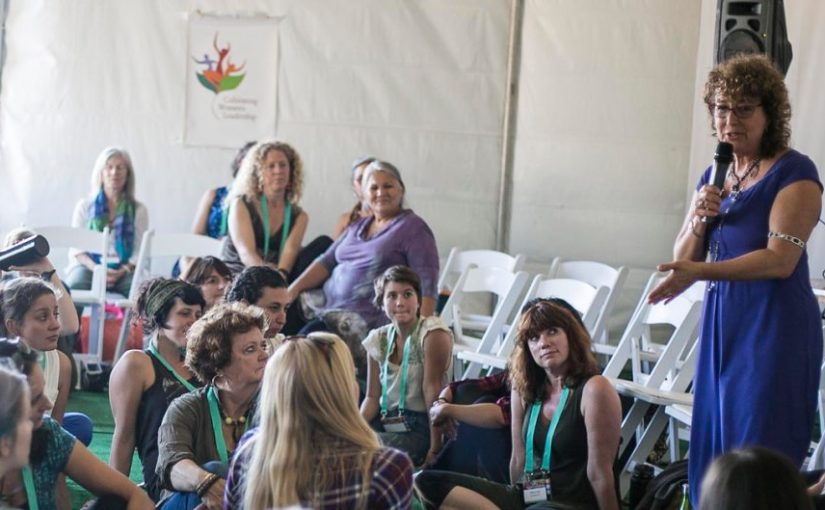
Bioneer, Naelyn Pike, and her tribe have been fighting to protect Oak Flat, a sacred site to the Apache people, for over a decade, from being destroyed through one of the world’s largest proposed copper mines. Naelyn speaking at the 2017 Bioneers Conference.

Following their traditional beliefs, the Apache Stronghold’s first line of defense has always been prayer, supported by marches and other non-violent campaigns. The Apache Stronghold movement is inter-tribal and inter-cultural, inviting anyone who understands the need to protect religious freedom and the environment from faceless multinational corporations who seek to destroy it. Ceremonies and prayer at the holy ground where the crosses to the four directions were vandalized have been central to upholding the Apache Stronghold movement.

Last weekend’s hate crime committed against the Apache at Oak Flat is the latest and most direct assault on tribal members’ ability to practice their religion. According to the FBI, a hate crime is the highest priority of its Civil Rights program and they must be investigated, especially when victims are engaged in a federally protected activity. Chi’Chil’Ba’Goteel, as Oak Flat is the Apache placename for the site, has been a sacred site for Apache people since time immemorial. Under the American Indian Religious Freedom Act, Native Americans have a right to access to sacred sites and the freedom to worship through ceremonial and traditional rights. The act requires all governmental agencies to accommodate access to and use of religious sites.

Is This Hate Crime Being Treated Seriously?

The American Indian Religious Freedom Act requires the U.S. Forest Service to work with law enforcement to investigate and prosecute the perpetrators. When the crime was discovered over the past weekend, members of the Apache Stronghold demanded an immediate response from the U.S. Forest Service and local law enforcement. But the site was not taped off and one bystander alleged that the officer sent to investigate claimed he “couldn’t find the spot.” Unfortunately, this kind of response is common when it comes to crimes against Native Americans. It has been widely reported elsewhere that crimes against Native Americans (especially murders and missing women) regularly go uninvestigated, sending the message that Native lives don’t matter.

The Apache Stronghold wants to cooperate with the U.S. Forest Service and Law Enforcement to ensure this crime gets investigated and brought to justice before too much time has passed. Here is the message Naelyn Pike’s family shared with Bioneers to spread throughout our community and beyond:

“Urgent, Urgent, Urgent…. Call to Action!! Please share!!!

What has happened to our holy ground should be no different then any church and needs the same respect. Who ever has done this hate crime needs to be held accountable. If anyone has information, please contact local law enforcement or Tonto U.S. Forest Service. This is a Non-violent action to demand greater protection from hate crimes in our national forest and to stand together against attacks to prayer site. Please sign our petition in partnership with the Poor Peoples Campaign: A National Call for Moral Revival, or directly contact the Tonto National Forest Supervisor’s Office to tell them that hate crimes cannot be tolerated and that the Apache deserve justice and equal rights to all other Americans at:

Neil Bosworth, Forest Supervisor
2324 E. McDowell Rd.
Phoenix, Arizona 85006
(602) 225-5200
nbosworth@fs.fed.us


Taking A Stand for Sacred Sites

As we learned at Standing Rock in 2016, the destruction of Native American sacred sites is ongoing. Just in Bioneers’ Bay Area backyard ,the West Berkeley Shellmound, , the oldest inhabited site in the region, is slated for development. Juristac, a sacred site to the Amah Mutsun tribe near Gilroy, CA, is being threatened with a sand gravel mining operation. These stories are rarely told in the mainstream media. Now more than ever, when America’s values of equality and justice for all are being tested at every turn, it is important that we all stand up for the disempowered peoples whose human rights have been systematically erased for generations. Stand up today by supporting the Apache Stronghold at Oak Flat. Stand up tomorrow and beyond for the many vitally important fights being waged and Indigenous movements being built across this continent and around the world.

Andy Lipkis and TreePeople: Green Cities Grown From Roots of Bioneers Validation

Innovation, by its definition, means bucking tradition. Thinking outside the box. Doing what hasn’t been done before—what isn’t “normal.” Andy Lipkis, founder of TreePeople, spent much of the beginning of his career oscillating between his desire for normality and his need to do world-changing work. Bioneers, he says, was integral in his gravitation toward the latter.

When Lipkis was starting his career, he had big ideas but lacked the financial support he needed to get them off the ground. As a teenager, he was passionate about finding ways to restore his local California forests. While attending a summer camp with a forest-restoration program, he saw immediate potential: Kids at summer camps throughout California should be able to take part in tree-planting initiatives.

Lipkis followed a winding road through several failures (what he calls “failure compost”) and a couple of big successes to finally fund what would become the California Conservation Project: the early nonprofit that would eventually become today’s TreePeople. The support of those close to him, he says, was key.

“Something that my parents did—and it’s what Kenny and Nina are doing in a macro kind of way—is when I had a weird idea, they didn’t judge it. They said, ‘How would you do that?’” Lipkis says.

Sowing Seeds

Getting people working together on a small scale to plant trees was Lipkis’ first big success, but it was far from his last “How would you do that?” experience. Through a deeper connection with his Los Angeles community, he started to notice how broken the social and city systems around him had become. He saw agency leaders working largely in isolation from one another and infrastructures designed to treat humans as simple-minded consumers rather than integral participants.

Lipkis envisioned a better Los Angeles—one that wasn’t a piece of dirt, but a living ecosystem, similar to the forests he loved. It would require biomimicry at a deep, systems level. To start, and armed with the knowledge that people care for what they sow, he was determined to find ways to bring his community together with purpose.

Starting with two massive floods in the late 70s, Lipkis’ ability to mobilize people proved powerful. So powerful, in fact, that city leaders began calling on him to find strong bodies to help mitigate the destruction. He discovered within himself an aptitude for grassroots organizing, but also substantial respect for the people around him. If he could organize people for flood response, he thought, he ought to be able to organize them to support and solve other problems.

In the early 80s, information about global climate change and its effects was starting to be widely disseminated. The 1984 Summer Olympics were held in Los Angeles, and the city had a serendipitous goal of planting 1 million trees before the events began. Lipkis joined forces with government agencies, private corporations, and volunteers to reach the city’s goal, creating an astounding, replicable model of citizen mobility for a worthy cause.

A Flywheel Effect

By the time he attended his first Bioneers Conference as a workshop speaker in 2002, Lipkis had become an expert in grassroots organization and was making impressive gains in the world of urban planning. Over the course of more than ten years, he continued to speak at subsequent Bioneers events, finding that the community often gave even more back to him than he gave it.

“It was a flywheel effect,” Lipkis says of his professional growth alongside working with Bioneers. “I was seeing people I so admired, and their acceptance was a validation. It moved me from outside worm to being recognized by smart people. That emboldened my craziness. Positive feedback in a world that has no positive feedback for that—it kept me in the game.”

Of the “smart people” Lipkis met at Bioneers, one of the most influential was Paul Hawken, one of the world’s leading environmental activists. Lipkis invited Hawken to a large meeting of designers and government officials, tasked with reimagining Los Angeles as a more sustainable, resilient city. Lipkis credits that meeting with laying the groundwork for what is now called “green infrastructure.”

Today, Lipkis and TreePeople continue to use forest-inspired technologies to heal and bring together Los Angeles, which they hope will become a model for many other cities in the future. (Read more about his current work in Bioneers’ Climate Leadership e-book, starting on page 30.) While ingenuity and thinking outside the box have been essential to his achievements, Lipkis says, it’s average people that create the biggest waves.

“Humans are capable of so much more than our modern systems recognize. I’ve learned it through all my life’s works, and I’ve learned it through Bioneers.”

Stay up-to-date on what world-changing Bioneers like Andy Lipkis are accomplishing by signing up for our newsletter.

3D Ocean Farming’s Accelerated Success Through the Bioneers Community

Bioneers co-founders Nina Simons and Kenny Ausubel have spent much of their adult lives cultivating a community that works toward solving the world’s biggest problems. Take, for example, the twin problems of overfishing in our oceans and the fundamental decline of the health of these ecosystems. Greenwave founder Bren Smith’s revolutionary 3D-ocean-farming system offers a solution to these problems and more: Using 3D ocean farming, Smith and a growing pool of independent farmers construct underwater vertical setups that employ cages and ropes, allowing them to farm mussels, scallops, oysters, clams and sea vegetables within remarkably small areas. GreenWave ocean farms produce high yields without requiring substantial resources, making them far better for the planet than traditional fishing and agricultural practices.

When Ausubel, Simons and the Bioneers team heard about GreenWave, they immediately saw its world-changing potential. They booked Smith for a keynote address at their 2016 conference, marking a major positive shift for the 3D-ocean-farming movement. “After speaking at the event last year, we had over 100 people who wanted to start farms in California alone,” Smith says. “We directly raised $100,000 after the event, and I think it was the first time we were introduced and given access to such a diverse set of allies.”

To date, more than 24 ocean farms in the Northeast have been established through GreenWave, and Bioneers is officially partnering with GreenWave to build out a strong California program, starting with two new West Coast farms. In addition to their ability to produce food and jobs, ocean crops are ideal for creating biofuel, and kelp soaks up more than five times the carbon of land-based plants. “If you take an area the size of Maine, you could replace all the oil in the United States, according to the Department of Energy,” Smith said in his keynote address. “The New Yorker recently called it the culinary equivalent of the electric car.”

Building a Community of Solutions

For more than three decades, Ausubel and Simons have led Bioneers, an organization that has come be be known for its knack in identifying inspirational minds and giving them a platform from which to speak and connect. From that platform and the networks it’s enabled, dozens of groundbreaking ideas have become a reality.

Simons and Ausubel credit their community of luminaries, supporters and staff for making this recognition possible. Meanwhile, Smith credits Ausubel and Simons with helping him expedite the expansion of his vision. “That really broad frame and community that they’ve built is really impressive,” he says. “It’s really important to those of us trying to develop solutions to all the problems we face and kind of get all hands on deck. It’s a great, loving family.”

Like Simons and Ausubel, Smith is a believer in the idea that individuals can make change happen. “This isn’t just about jobs,” Smith said in his keynote address. “This is about agency. One of the major deficits in our society today is the feeling that you can make a difference—that you have to be an Amazon, you have to be a Google, in order to tackle the big problems. You don’t.”

Bren Smith’s 2016 Bioneers Keynote

Stay up-to-date on what world-changing Bioneers like Bren Smith are accomplishing by signing up for our newsletter.

Act for Rivers: Kate Horner on Protection and Restoration

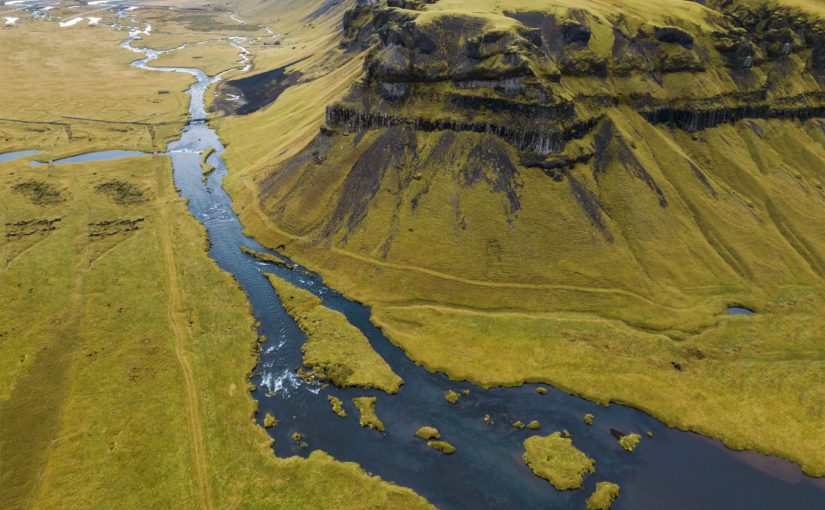
We live on a water planet. More than two-thirds of Earth’s surface is submerged and, while life is largely carbon-based in terms of structure, it’s water that makes the whole idea of life possible. As humans, we’re up to 80-85% water by volume as infants, a ratio that decreases as we age. As Brock Dolman, Director of the Water Institute at the Occidental Arts & Ecology Center, has joked, death may be just a function of dehydration. Another obvious but worth-a-reminder fact: 90% of humanity lives within 10 kilometers of a freshwater body. Rivers, in particular, are extraordinarily essential, containing vast biodiversity, transporting billions of tons of nutrient rich sediment to agricultural lands and coastal waters and providing essential spiritual and aesthetic functions for many millions of us who dwell upon their banks.

Today, on the 21st Annual Day of Action for Rivers, we highlight the unique and spectacularly important role that freshwater ecosystems play in supporting both the extraordinary diversity of life on earth as well as the critical role of river systems in allowing humanity to thrive. One of the truly heroic organizations engaged in protecting and supporting rivers and river-dependent communities globally is International Rivers. For nearly 40 years, International Rivers has been engaged at a global level successfully advocating for river health and rights. Bioneers was honored to host Kate Horner the Executive Director of International Rivers at a recent Bioneers Conference and an excerpt of her remarks are included below.

For more information and to take action on behalf of global rivers, visit International Rivers.

Kate Horner, Executive Director for International Rivers:

“I’m very honored to be speaking about the vital necessity of our rivers as part of this immense global challenge that we face. Rivers are the arteries of our planet. They’re an ecosystem that is often overlooked, but they are essential to the livelihoods of billions of people. Rivers are the primary source of protein for millions. Rivers nourish fertile agricultural plains around the world, and for many people they are a sacred source of life in and of themselves.

But freshwater systems are uniquely under threat. I think they’re the most threatened ecosystem in terms of biodiversity loss and species extinction. This is because rivers are threatened with a boom of dam building around the world with 3,700 new dams being proposed globally. These dams will fragment further our precious sources of water and prevent important fish from migrating. There are hundreds of species fish that travel up many of these rivers to nourish millions of people. New dams prevent us from creating the fertile terrain to feed the world.

I was in Thailand recently and had the great privilege of meeting many community members who are defending against a new cascade of dams being planned on the Mekong River, or as it’s known in Thailand, the Mother River, Me and Kong. This river travels through a number of countries and 60 million people are dependent on the Mekong as a primary source of their protein. It’s also an extraordinary source of biodiversity – and it’s under threat from these new dams.

The same is true around the world. In the Amazon, the world’s largest freshwater ecosystem, there are 334 dams being planned. This river sustains not only many who depend on it for their source of protein, but it also feeds the largest rainforest in the world. The Amazon River’s annual floods drench 250,000 kilometers of rainforest with life sustaining sediment on an annual basis. Without that sediment being delivered to the forest system, the lungs of our planet are increasingly imperiled. We need the lungs and we need the arteries; they’re connected ecosystems.

Although we see this massive expansion of dams around the world, I am hugely heartened by the connections that we are beginning to see, and the recent wins that we are having. In recent years, the Italian energy giant that had planned six dams on the pristine rivers in Patagonia in southern Chile relinquished their rights to the rivers. They said that it was because the project was no longer economically viable because communities stood up for their rights.

Around the world, when we gather together and speak as one with nature, the incredible biodiversity that gives us life, we can win.

After years of degrading and channelizing and diverting and damming our rivers, we are now beginning to see the light. These are the rivers that are essential to the health of our fisheries and the health of our agricultural systems. They help us weather the extraordinary storms of an increasingly chaotic climate-changed world.

We know now that when we dam the rivers, we dam ourselves. We must work together to protect these vital ecosystems because they are so important, not only for rivers, not only for people, but the restoration of the biodiversity that they serve.”

The Will of The Land: Dave Foreman on Aldo Leopold

The second week of March marks #LeopoldWeek, an annual celebration of the work and influence of the legendary conservationist and ecologist, Aldo Leopold. Hosted by the Aldo Leopold Foundation, events related to Leopold and his work and influence are taking place online and all over Wisconsin, where he lived for most of his life in a small cabin on former agricultural acreage fronting the Wisconsin River. Leopold’s classic volume, A Sand County Almanac, was published in 1949 and his clear, caring and compassionate writing has profoundly influenced countless people who have identified with his call for a Land Ethic. This is succinctly defined by the Leopold Foundation, “In Leopold’s vision of a land ethic, the relationships between people and land are intertwined: care for people cannot be separated from care for the land. A land ethic is a moral code of conduct that grows out of these interconnected caring relationships.”

In honor of Leopold Week, we scoured the Bioneers archives for references to and stories about Aldo Leopold from speakers and presenters during the past decades of Bioneers Conferences. Among the many shout-outs to Leopold we discovered, an interview with Dave Foreman, co-founder of Earth First! and Founder of the Rewilding Institute, stood out and we’re pleased to share an excerpt of this conversation here.

From an interview with Dave Foreman at the 2000 Bioneers Conference:

“Gary Snider and others have shown that the word wild is one of the most complex words in the English language. It’s a very old word that goes back even before old English. In some ways we think of “wild” as meaning unruly, criminal, violent, that type of thing, e.g. the idea of the “Wild West.” And we confuse that sense of wild with the natural wild. For example, the Wild West was not the wilderness west. The Wild West was the West being tamed with cattle drives, outlaws and cavalry trying to exterminate the Sioux and all that. That was the Wild West; it really had nothing to do with wilderness, with the meaning of the word wilderness. It’s a complex word and we have to be very careful with how we define it or we get in trouble and a lot of people take advantage of that complexity of the word and try to confuse things. If we go far, far back to the roots of our language, we find that the word wilderness comes from three words: wil-der-ness.

Wilderness translates exactly as “will of the land.” In other words wilderness means self-willed land as opposed to land dominated by human will and civilization. It implies a recognition that there is land beyond our control, beyond our will. A closely related word is wildeor, which means self-willed beast or animal, an animal that is not under human control, not a domestic animal. I think there is something in our insecurity as a species that finds that self-willed land and self-willed animals are an affront to human arrogance, to our control of the planet, and therefore we’re afraid of them. Because we’re afraid of them we begin to loathe them, so fear and loathing of self-willed land and self-willed animals, I think, is at the root of the ecological crisis we find ourselves in now.

We need to come to terms as a people with the idea and the reality of land with a will of its own. We have to reach inside ourselves and find the generosity of spirit and the greatness of heart and the humility to say, yes, it’s good for there to be land not under our control, land with a will of its own, that we human beings should not be everywhere all at once, all at the same time, that there should be places operating under their own will. Far from being a threat, a self-willed animal is a great benefit to human beings because it teaches us humility, and goodness only knows we need to learn humility more than anything else in this modern era.

I think coming to terms with the real meaning of wilderness, the real meaning of wild animal is fundamental to the healing our breach with the land. Some people argue “Well, that sense of wilderness creates a duality between humans and nature,” and I say to the contrary, going into self-willed land in a humble and generous way and encountering the wildeor, just seeing the tracks of the grizzly bear, is the best way to come back to terms with the land and to heal that breach between civilization and nature. Recognizing that we do not have to dominate the land or nature to get benefit from it. It is not a threat to us. Instead it is a benefit to us and it’s good for our soul.

I don’t think anybody has thought more deeply into this than the naturalist Aldo Leopold whose book A Sand County Almanac, I think, was the most important book published in the world during the 20th century. It is a work of great humility and genius, a very wise book. Aldo Leopold was an early day forest ranger in Arizona and New Mexico back before World War I. Some of the experiences that he had as a forest ranger really changed his attitude, and he wrote them about ten years later in A Sand County Almanac. The one that strikes me the most, and the one that teaches us more than any other, is a story about the first year he worked for the forest service in Arizona.

He was assigned to the Apache National Forest, which was in eastern Arizona in the White Mountains in the Blue River country, which at that time had no roads in it. It was a vast wild place, accessible only on horseback. Even though they wouldn’t be able to log it, the Forest Service folks still wanted to know about the trees, what the standing board volume was. Leopold, newly graduated with a Masters Degree in Forestry from Yale, would go out for two weeks at a time with a crew of men on horseback and cruise timber. On one of those trips they had stopped for lunch on a rocky little rimrock overlooking a rushing stream. As they sat there eating their lunch they thought they saw a doe ford the stream below, but when they saw a bunch a wolf pups come tumbling out of the willows they realized it was an old mamma wolf. A wolf has very long legs and you can often mistake them for a doe. But in those days any wolf you saw was a wolf you shot, so Leopold and his men ran to their horses and pulled the 30s out of the scabbards and began to blast away down hill. Even though it’s hard to aim down hill, they sent a lot of lead down the hill that day and the old mama wolf crumbled and all the pups dragged her shattered legs into the willows to die a slow death. Leopold and his men mounted up and rode down the hill to skin out the varmints and pack their hides back to town to sell.

But something happened to Leopold that day that he wrote about in A Sand County Almanac decades later. He wrote, “We reached the old wolf in time to watch a fierce green fire dying in her eyes. I realized then and I’ve known ever since that there was something new to me in the eyes of the wolf, something known only to the wolf and to the mountain. I was young then and full of trigger itch because fewer wolves would mean more deer. I believed no wolves would mean hunters paradise. But after watching the green fire die I realized that neither wolf nor mountain agreed with such a view.”

I think in that story Leopold sums up our relationship with nature and the path we need to take towards healing that breach, to begin to think like a mountain and begin to think in the long term, to look at other values instead of just monetary ones. So many people today know the price of everything and the value of nothing. We’ve got to get back to values instead of prices. That’s how we need to look at nature, not how much money it can make us, but what is there in it and what its real value is to the human spirit and to its own self. That is why we need big wild places with wolves and grizzly bears and mountain lions and jaguars in them—for their own sake and for the whole dance of life to keep going on and on through generations and also for our own mental health. I think it is very difficult for individual human beings or human society as a whole to be mentally healthy when we are not in the presence of self-willed land and the self-willed beast.”

Celebrating #Bioneers on International Women’s Day

As we celebrate International Women’s Day, we are thankful for another year of power, spirit, and the vision for a more equitable future in the face of a system and political leaders who try to convince us otherwise. Today (and every day) we amplify the voices of the mentors who guide our creative visions, those who inspire and shift us into action, and the centuries old history of women, femmes, and allies whose voices and stories continue to shape the movement. We are honored and delighted to be able to share these incredible women’s talks from the Bioneers Conferences:


Heather McGhee

I don't know about you, but I need to find a way to love this country. One of the things that helps me do that is because of the beauty of who we are becoming. - Heather McGhee @hmcghee Share on X

I don’t know about you, but I need to find a way to love this country. One of the things that helps me do that is because of the beauty of who we are becoming.

Heather McGhee, President of Demos, depicts how deep democracy is the only solution to the crises of inequality and climate change, and how the changing demos — people — of America can rise to meet this moment.


Kandi Mossett

We are going to continue to fight, because it's not just about one pipeline. - Kandi Mossett @mhawea Share on X

Kandi Mossett (Mandan/Hidatsa/Arikara), Native Energy and Climate Campaign Organizer for the Indigenous Environmental Network (IEN), has emerged as a leading voice in the fight against environmental racism at Standing Rock and beyond. Kandi shares the powerful story of how her community drew on its cultural resilience to resist fracking in North Dakota, and how the re-assertion of tribal sovereignty, revitalization of language and restoration of traditional foodways can point the way to a just transition to a clean energy future for all of us.


Dr. Teresa Ryan

We also found evidence that trees could recognize their relatives...When a mother tree was injured, she transmitted even more carbon to her kin, as though she were leaving her energy, her legacy, to the next generation. - Dr. Teresa Ryan Share on X

Ecologist and Tsimshian native, Dr. Teresa Ryan shares from her training in Western scientific observation, insight into the relationships between tree roots, mycorrhizal fungi, marine-derived nitrogen that came from the bodies of spawned-out salmon that were defecated out by bears and eagles and otters.


Corrina Gould

People in the Bay Area have a responsibility because you are now settlers on our land. You have to be able to protect these places because these shellmounds not only protect us, they now protect you. - Corrina Gould @corrina_gould Share on X

California Indians have survived some of the most extreme acts of genocide committed against Native Americans. Prior the ongoing genocide under Spanish and American colonizations, California Indians were the most linguistically diverse and population dense First Peoples in the United States. In this historic panel, four California Indian leaders share the stories of kidnappings, mass murders, and slavery that took place under Spanish, Mexican and American colonizations.


Saru Jayaraman

Seventy percent of tipped workers in America are, guess who? They are women. This is how we are taught what is acceptable and tolerable in the workplace. - Saru Jayaraman @SaruJayaraman Share on X

Before the election, workers were already rising up all over the country and have continued to do so even more now, joining the campaign for “One Fair Wage,” demanding higher wages and the elimination of lower wages for tipped workers. The movement helped torpedo Trump’s first Secretary of Labor nominee and is ramping up the fight for a $15/hour national minimum wage. Innovative, award-winning labor leader Saru Jayaraman says that, if we join together, we can end economic inequality in America.


Patricia Gualinga & Atossa Soltani

We know that this is a fight that is not just for us, in every forest there are living beings who are also defending the future of humanity and the planet. They have many different names, and when the forest is protected they are also… Share on X

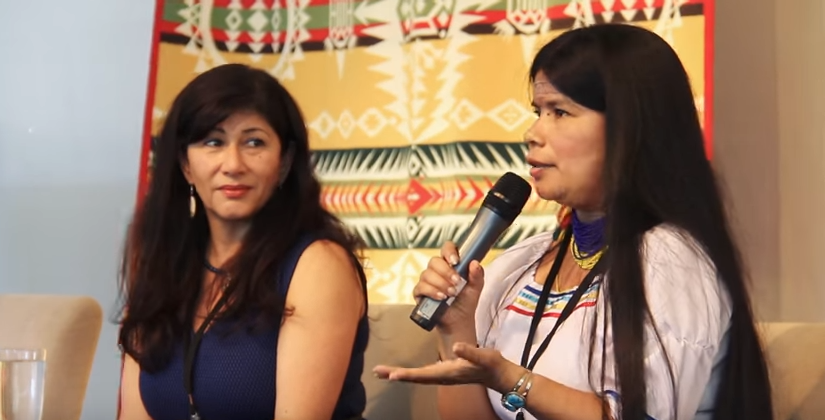
Gualinga (Kichwa) tells the story of the resistance of her Sarayaku village of 1,200 against oil concessions that have been trespassing on Native lands in the Ecuadorian Amazon, illegally claiming subsurface rights. Soltani, Executive Director of Amazon Watch, interprets from Spanish to English. With help from Amazon Watch and Fundación Pachamama, Gualinga and her neighbors have triumphed against the oil companies by receiving legal assistance from the Inter-American Commission on Human Rights. Sarayaku holds a bright torch for justice, not just for neighboring tribes – but for the health of the entire planet.


Naelyn Pike

In order to create change for the people, we must unify, because a true unity is accepting one another's diversity. - Naelyn Pike @naelyn_pike Share on X

This luminous 17-year-old Chiricahua Apache changemaker from San Carlos, AZ, co-leads the Apache Stronghold group to defend her people’s sacred sites, tribal sovereignty, culture and language.


As Bioneers co-founder, Nina Simons, reflects: “Thankfully, as the Dalai Llama suggested, it’s not a question of whether or not rebalancing the feminine and masculine, and transforming our worlds into places of equity, peace and regeneration will happen. It must. It’s a question of when, and how, which will be determined by how many of us rise to the occasion how soon, and with what levels of commitment, love and endurance. May we rise soon, and ongoingly, and stand with those frontline women who’ve endured the most, as they understand essential lessons about resilience, lessons we all need to learn.” Happy International Women’s Day, Bioneers.

Student Massacre Survivors Teach the Country a Lesson

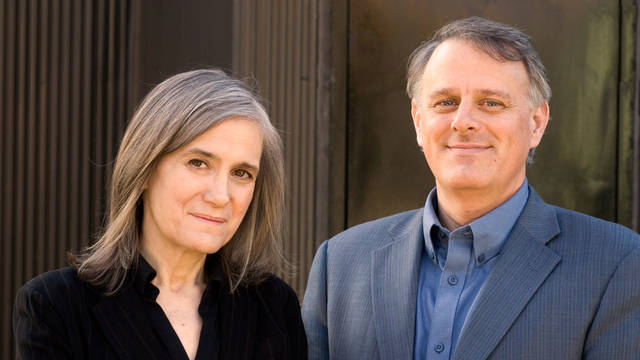
By Amy Goodman & Denis Moynihan

This article was originally published on the Democracy Now! website.

The National Rifle Association didn’t see it coming. It could have predicted yet another school shooting, like so many that have happened before in the United States. But what the NRA couldn’t predict was the immediate and unrelenting response of the student survivors. They channeled their rage and sorrow over the killing of 17 of their classmates and teachers against the gun lobby and the politicians in their pocket. Pushed by this new momentum for change, President Donald Trump held a bipartisan meeting of congressional lawmakers Wednesday afternoon. The senators and representatives took turns laying out their policy prescriptions while heaping praise on Trump, who took credit in advance for what he said would be a “beautiful” bill that would pass the Senate with so many votes over the required 60 that it would be “unbelievable.”

Whether any of the proposed policies make it into a comprehensive gun control bill remains to be seen. There are plenty of reasons to be skeptical, including the $54 million the NRA spent on presidential and congressional races during the 2016 election cycle. Democratic Congressmember Elizabeth Esty of Connecticut offered one undeniable truth at the bipartisan meeting, saying, “We’re at a tipping point, because of the students.” The student survivors of the Valentine’s Day massacre at Marjory Stoneman Douglas High School are the heart of the movement for gun control. They are embracing one of the strongest currents in United States history: the tradition of youth activism.

By now, many of the Parkland, Florida., survivors are nationally recognized: Emma Gonzalez, whose fiery speech days after the shooting ignited the movement; David Hogg, director of the school’s student-run TV station, whose impactful media appearances contributed to a disgraceful right-wing conspiracy theory that he and others were actually trained “crisis actors”; and Sam Zeif, who at the White House “listening session” told the president: “These are not weapons of defense; these are weapons of war. … I still can’t fathom that I, myself, am able to purchase one.”

Others helped organize a trip of over 100 survivors from Parkland to Tallahassee, Florida, to push the state legislature for an assault-weapons ban. While the effort failed, the students emerged more determined than ever.

Youth activism goes back a long way in the U.S. In 1903, Mary Harris Jones, the legendary Irish labor organizer known popularly as “Mother Jones,” led a march of hundreds of striking child laborers and their parents from Philadelphia to New York City. They were fighting against the scourge of child labor.

The civil-rights movement was propelled by youth activists. Claudette Colvin was just 15 when she refused to give up her seat for a white passenger in Montgomery, Alabama — nine months before Rosa Parks did the same thing. Colvin told us on the “Democracy Now!” news hour: “I could not move, because history had me glued to the seat. … Because it felt like Sojourner Truth’s hands were pushing me down on one shoulder and Harriet Tubman’s hands were pushing me down on another shoulder … and I yelled out, ‘It’s my constitutional rights!’”

One of the principal architects of the nonviolent strategy used by Martin Luther King Jr. was James Lawson, who received his ministry license in high school in 1947. He in turn trained countless activists, including John Lewis. Lewis was a leader of the Nashville Movement to desegregate lunch counters in the South, and was one of the original Freedom Riders, who braved beatings, arrests, angry mobs and death threats as they rode buses to force the desegregation of the interstate bus system.

John Lewis was just 23 when he addressed the 1963 March on Washington, where King delivered his famous “I Have a Dream” speech. In deference to suggestions made by King and fellow march organizer A. Philip Randolph, Lewis edited his speech. He took out the lines: “To those who have said, ‘Be patient and wait,’ we must say that ‘patience’ is a dirty and nasty word. We cannot be patient. We do not want to be free gradually. We want our freedom, and we want it now.”

The Parkland students have called for a national March for Our Lives on March 24, in Washington, D.C., with sister marches around the country. They have raised over $3 million to support the organizing effort. Emma Gonzalez wrote in Harper’s Bazaar: “March with us on March 24. Register to vote. Actually show up to the polls. Because we need to relieve the NRA of its talking points, once and for all.” There are concurrent calls for nationwide high school student walkouts to demand gun control on March 14, as well as April 20 — the 19th anniversary of the Columbine massacre.

Activism as Art: Giving Dolores Huerta Her Rightful Place In American History

By Maria Juur, Program Associate

This article was originally published on the Center for Food Safety website.

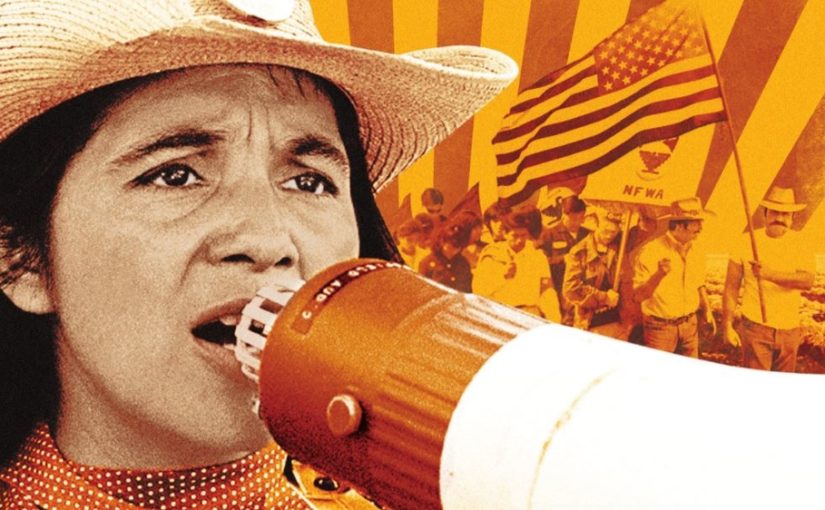
We live at an age where personality cult is rife, yet there are fewer heroes. At the age of 87, the legendary organizer and United Farm Workers (UFW) co-founder Dolores Huerta is an American hero whose life’s work, amazingly, is still not done. Peter Bratt (Director) and Carlos Santana (Producer) tell her story in the new documentary Dolores, finally giving her the rightful place in history she deserves.

Why isn’t Huerta a household name outside of California?

Dolores sets out to answer this question while chronicling her relentless organizing and advocacy work spanning over six decades. Though she was an equal partner in co-founding the UFW alongside Cesar Chavez, she barely got credit. Oftentimes, she was the subject of blatant sexism and discrimination. Fortunately, Huerta never paid much attention to the naysayers and kept working day and night for farmworker justice.

Here’s what we learned from watching Dolores:

1. Huerta is closely connected to the rise of the environmental justice movement.

As the documentary points out, American farmworkers were amongst the first to question our deepening reliance on pesticides and industrial agriculture. Chronic exposure to toxic synthetic chemicals brought about a surge in birth defects and mystery illnesses in rural communities, mostly impacting people of color. As Gloria Steinem notes in the documentary: “To talk about grapes and lettuce produced in poverty and suffering felt like the first step. An additional step was to talk about grapes and lettuce produced in poisons.”

The documentary features archival footage of Huerta raising awareness on the impacts of pesticide poisoning during the Vietnam War era. In comparison, Rachel Carson’s Silent Spring was published in 1962. A recent article by Martin Lukacs in The Guardian explains how neoliberalism has conned us into fighting climate change as individuals. With the challenges that lie ahead for the environmental movement and mankind in general, we must revisit Huerta’s notion of “people power” and solidarity amongst groups.

2. Huerta and Chavez’s professional relationship falls into the “It’s complicated” category.

In an interview featured in the documentary, the reporter asked Chavez why he picked Huerta, a woman, to work alongside him. He admitted that he preferred surrounding himself with women because they “do the work.” Despite that, sexism was rife within the UFW and for many years, Huerta was the only female Board member. Huerta called Chavez out over these issues in the media, which didn’t go down well with the UFW leadership. In the public eye, Huerta’s romantic relationship with Chavez’s brother added fuel to the fire. To this day Huerta is often referred to as Chavez’s ex-girlfriend.

3. After leaving the UFW, Huerta reinvented herself as an all-around activist.

Huerta co-founded UFW but wasn’t elected president of the union upon Chavez’s death in 1993. This part of the documentary will make you cringe, but Dolores Huerta wasn’t done quite yet. She went on to create the Dolores Huerta Foundation and continues to work as an educator, organizer, and activist.

CFS has been lucky to work with Dolores Huerta on food and environmental issues. Here’s Huerta at the Climate Rally in Washington, DC in November 2015, discussing the DARK Act and the urgent need to label genetically engineered foods in the United States:

In California, state offices and schools are closed on Cesar Chavez Day on March 31st. In Los Angeles, the famous Sunset Boulevard turns into Cesar Chavez Avenue. It’s about time for Dolores Huerta to receive similar recognition for her work. She clearly deserves it.

Nation Undivided: Growth Happens When We Accept Our Differences and Find Shared Values

By Bryan Welch

This article was published in B the Change, which exists to inform and inspire people who have a passion for using business as a force for good in the world.

Every business has the potential to create shared prosperity among diverse groups of people, which brings us closer together and creates mutual benefit. We find friends, mentors, sometimes life partners. Business can be a powerful builder of community.

Our business friendships form a human panorama of diverse ages, cultures, nationalities, beliefs and orientations. Most of my friendships came to me through business. Our work gave us something to collaborate on, and in the process we grew close. I think that’s beautiful.

That is likely not the sentiment you’ll gather from reading the news. Politicians and much of the news media are dividing communities to create power. Even conscientious politicians. Even the most prestigious news outlets. They are driving us apart by defining us as separate and appealing to us as partisans. They define an audience, then they attempt to build loyalty by adopting that audience’s perspective, even when the perspective is prejudiced.

A case in point was The New York Times’ December story headlined “An Oklahoma Newspaper Endorsed Clinton. It Hasn’t Been Forgiven.” The story was synopsized in a tagline: “An editorial in Enid opposing Donald J. Trump brought a spate of canceled subscriptions and pulled ads, showing the raw power of partisanship in small-town America.”

Then, in the sixth paragraph, the reporter describes the extent of the damage: 162 subscribers, out of 10,000, canceled their subscriptions. Eleven advertisers pulled ads. Someone pasted a “Crooked Hillary” sticker on the newspaper’s doors.

The Enid News & Eagle in Enid, Oklahoma, is a resolutely conservative newspaper serving a conservative city in a deeply conservative state in the heart of one of the nation’s most conservative regions. It apparently had never endorsed a Democrat until this year. When it endorsed Hillary Clinton, only 1.62 percent of its readers canceled subscriptions. Only one of the 11 disgruntled advertisers was apparently of any significance to the paper’s revenue.

The “raw power of partisanship?” Hardly. The more significant and accurate story might have been headlined, “Citizens of Conservative Stronghold Reveal Tolerance and Broad-Mindedness.” But tolerance and broad-mindedness are not virtues promoted by today’s news media.

Could that be because those media hope to benefit from “the raw power of partisanship?”

Politicians began working to divide us long ago, using broad and bizarre misinterpretations of current events to reinforce cultural prejudices. McCarthyism provides the textbook example:

Convince people that they are threatened by powerful and devious forces (screenwriters, homosexuals, longshoremen). Mark those sinister forces as fundamentally different. Then pursue your own agenda by pitching it against the dangerous “Other.”

Diverse and powerful news media — from Fox News to The New York Times — have adopted essentially the same approach for securing attention and loyalty. Stories focus on conflict, which generates interest but divides society. Expert opinions come from politicians and pundits who build power bases by sowing suspicion and alienation.

The Enid story spent days on the “Trending” list, probably because it reinforced a typical Times reader’s stereotype of small-town America as ruled by angry reactionaries. And, of course, the pundits of Fox News hammer away at the “liberal elites” and “illegal immigrants” who are destroying our culture, denunciations that make their way into coffee klatches and dinner parties across rural America where few undocumented workers, liberals or elites are likely to be present to defend themselves. The news media are winding us up by appealing to our tribal prejudices.

There are more wholesome ways to build an audience, and a business. Mother Earth News (which I previously ran) is the world’s largest media brand focused on sustainability. Our readers, according to independent research, were twice as likely as the average American to say they were politically “very liberal.” And they were also twice as likely to say they were “very conservative.”

About 9 percent of the readers were “very liberal” and almost 21 percent were “very conservative.”

Evidently, conscientiousness appeals to people at both ends of the political spectrum. Clean air and clean water are, it turns out, not divisive concepts.

We examined the ways we had reacted to our own research data over the previous decade. We had eliminated cultural buzzwords, like “green,” from our coverage because they seemed to depress engagement. We learned that we could draw people to explore almost any environmental or social problem if we included a solution near the top of the story — specifically a personal solution like driving a hybrid car or installing home solar panels.

The realization that we had grown a pretty big media audience by unifying, rather than dividing, diverse people was, well, thrilling. Even more thrilling was the fact that they were brought together by their desire to do the right thing.

The local paper, in Enid, Oklahoma, or wherever, serves an audience that shares a large set of basic concerns — economic prosperity, physical security, social harmony, the weather. So it’s not surprising that 98.4 percent of Enid’s newspaper subscribers are loyal to the News & Eagle. Many of them surely disagree, but disagreement doesn’t automatically constitute disrespect. Nor does it negate mutual interest. On the local scale, that’s obvious.

Businesses that intentionally focus on building healthy communities, creating shared prosperity and protecting shared assets like a clean environment create what is possibly the most profoundly unifying force in our society. Like clean air and clean water, good business is not controversial. And every day billions of people all over the world come together to do business.

International Women’s Day Reflections

I am preparing to fly to CA to offer a keynote at the Central Coast Women’s Symposium in San Luis Obispo for their annual convening and celebration of International Women’s Day.

I’m grateful for this invitation from host Laura Grace, Ph.D, (who is also a Jungian therapist), as it signifies to me that I may speak not only about women and leadership for change, but about reclaiming a balance between feminine and masculine archetypes within our selves as well as our institutions, cultures and societies.

In my view, those two topics hold the greatest hope for our world, right now. For me, they clarify what the Dalai Llama’s might have meant when he said that “the world will be saved by Western women.” We who still have greater freedoms and stronger voices than many others around the world, are being called to step up our games, now.

I’m also thankful for the persevering work of Stacey Hunt and her fellow educator in Ecologiistic, who’ve been hosting Central Coast Bioneers in SLO for so many years, to help people in that region who yearn to be engaged to transform our systems to become equitable and resilient, and to find each other in this transformative time.

As I reflect, I notice within myself a braiding of the past, present and future. The future currently looks both bright and challenging, requiring both the perseverance and adaptability that the women upon whose shoulders we stand – those who fought for the rights we now enjoy – had to employ to succeed.

It feels hopeful, as so many are speaking out, protesting and being woke through the Women’s March, the #metoo movement, and Frances McDormand’s elegant modeling of shared leadership in her inclusionary honoring of all women who’d been nominated, in any category, when she accepted her best actress Oscar. Hopeful, as a need has clearly emerged to include ALL women in this massive movement, to educate ourselves about intersectionality and white privilege, and to reach out to those who’ve been marginalized by unjust systems to value their wisdom and power in the mix.

I am also heartened by how more people are looking to find ways to welcome and integrate men and boys into this massive movement toward equity. By how gender fluidity and nonconformity have become so much more accepted and appreciated. I’m hopeful to see young parents are sharing parenting and workloads without predestined gender definitions. I’m deeply grateful that so many more of us are thinking about this stuff, and doing our own work to decolonize our minds and to shed the self-limiting stories and assumptions we often carry.

What we face is also daunting and will ask much of us to co-create the changes that are needed. I’ll be difficult, because the Handmaid’s Tale feels closer than ever, and the president is an admitted sexual predator. Difficult, because the 45th administration is ramping up its War on Women, with policies already altered and rescinded to limit women’s reproductive freedoms worldwide and the judiciary stacked with anti-abortion judges. Difficult over a long haul, as I remind myself that global studies have revealed gender bias as the deepest in the human psyche, creating deeper divides among people than faith, race or class.

Thankfully, as the Dalai Llama suggested, it’s not a question of whether or not rebalancing the feminine and masculine, and transforming our worlds into places of equity, peace and regeneration will happen. It must. It’s a question of when, and how, which will be determined by how many of us rise to the occasion how soon, and with what levels of commitment, love and endurance. May we rise soon, and ongoingly, and stand with those frontline women who’ve endured the most, as they understand essential lessons about resilience, lessons we all need to learn.

Soil Tasting: The Pleasures and Benefits of Healthy Soil

“All good farmers become connoisseurs of dirt and dust”- farmer, author Mas Massamoto

At first it seemed like an elaborate joke–hundreds of wine glasses filled with soil from five different farms elegantly displayed on white linen tablecloths. It must have taken hours to set up.

“They don’t really expect us to eat dirt, do they?” I said out loud to no one in particular.

Initially, a soil tasting had no appeal to me, but then I remembered a scene in the film, The Real Dirt on Farmer John, the outrageous documentary about how John Peterson resurrected his Midwest family farm amidst a failing rural economy by starting an organic CSA.

The scene shows Peterson on his knees in his field licking a handful of soil. I interviewed John and asked him if he could actually taste fertility in the soil. He said, “There was a time when people were trained in that, but I’m not. It’s just a daily routine of mine. It’s an old custom that preceded soil testing and apparently was a way that people evaluated their soil. I couldn’t taste the soil and say that it’s a little short on phosphorus, for example. The aroma that makes fertile soil really distinctive is a result of bacteria. It must go way beyond what happens in a bottle of wine.”

When my mother was pregnant, she told me that she had a craving to eat dirt. Geophagy, eating soil, has a tribal and rural tradition outside of agriculture and is still practiced today among children and pregnant women.

So, with all of that in mind my reluctance to participate in the Taste of Place, which was part of the Regenerative Agricultural Field Day at Paicines Ranch produced by Eco Farm, began to erode.

Artist Laura Parker designed the tasting around the question “How does soil touch our lives and affect our food?” She encouraged people to develop impressions of the soil based on its smell and taste. The earthy smell of soil that is apparent after a rain is known as geosmin, which is a protein produced by bacteria and fungi that indicates healthy soil life. Geosmin is what gives beets an earthy flavor.

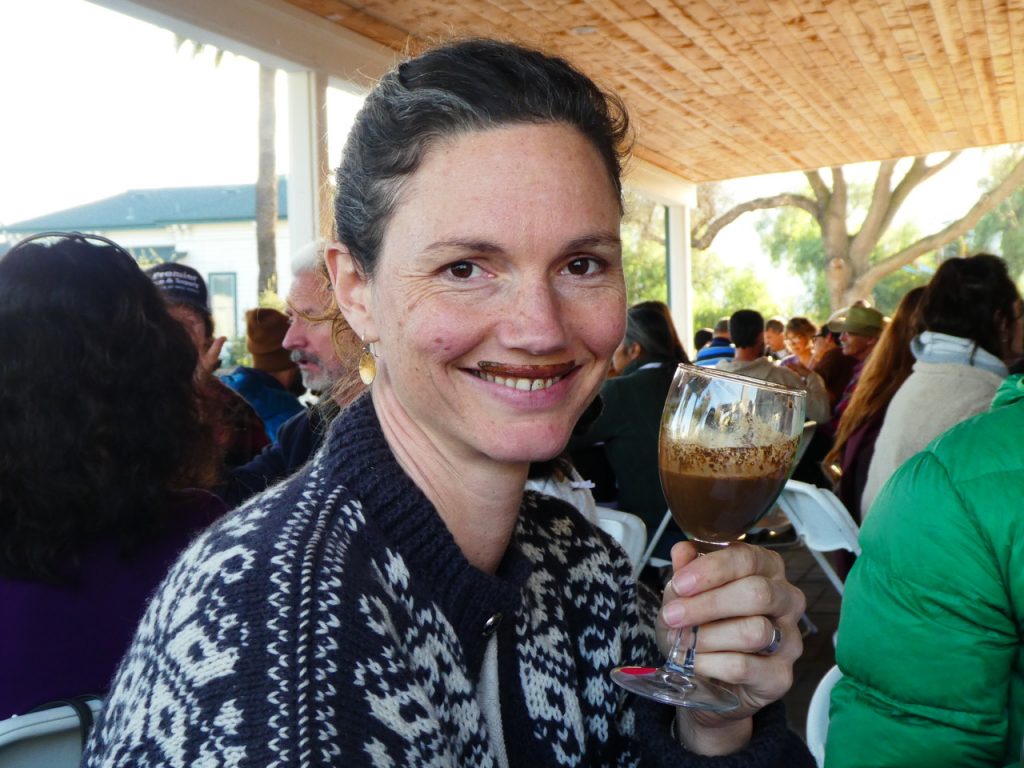
To simulate rain and bring out the geosmin to the fullest, we added a small amount of water and stirred the soil in our wine glasses and, like a wine tasting, stuck our noses into the glass for the full effect. From there it became a small step to take a sip and put a morsel of the moist soil in my mouth and roll it around my tongue. Katy Mamen, an environmental consultant, enjoyed the samples with gusto and claimed that one tasted like “a storm or thunder.”

Environmental consultant, Katy Mamen, at the Eco Farm soil tasting.

The soil samples, whose colors ranged from dark brown to reddish brown to gray, had distinct aromas and flavors. A silty clay loam had a rich chocolate flavor while a sandy loam was rather bland tasting. After each taste of soil, we sampled food from the California farms where the soil came from- Niseko White Turnip from Phil Foster’s Ranch in Hollister, Rainbow Chard from Fifth Row Farm in Pescadero, Red Cabbage from the Chico State University Farm, grass from Paicines Ranch pasture, and milk from the Burroughs Family Farm in Balico.

Soil structure and type, fertility, climate, cultural practices and of course geosmin are significant contributing elements of terroir, that distinct flavor characteristic imparted to wine by a specific environment. Crunching on Chico State’s Red Cabbage, I realized that terroir was palpable in these organic vegetables as well.

By some accounts, the concept of terroir originated in Burgundy with the Benedictine and Cistercian monks who, while stewarding the vineyards, observed regional characteristics in the wine and even tasted the soil to help fill out their understanding of terroir.

Earthy aromas and distinct flavors are their own rewards, but their underlying cause, healthy soil, has implications far greater when it comes to our relationship with working landscapes. The health of the soil has profound beneficial effects on the carbon cycle and climate change mitigation, erosion of topsoil, elimination of chemical fertilizers and herbicides, and the health of surrounding ecosystems. And that’s what the Regenerative Agricultural Field Day was all about.

Throughout the day, Ray Archuleta, a soil expert formerly with USDA, and Midwest farmer extraordinaire Gabe Brown shared their brilliant understanding of soil and cultural practices that could revolutionize farming.

They started with the premise that soil health (or lack of it) is a reflection of the farmer’s understanding of their ecosystem and implored farmers to mimic nature with multispecies cover crops whose diverse leaf size and shapes capture sunlight from all angles to maximize photosynthetic carbohydrate production.

The plant kingdom is generous and builds community by sharing some of that food through its root system with symbiotic soil microorganisms that provide ecosystem services to the plant like solubilizing minerals for the plant to uptake in a natural system of nutrient cycling that creates plant pest resistant and a wonderful tasting crop. Why then, Ray and Gabe asked, would you want to plough or add chemicals to destroy all of that life-supporting activity?

“Land,” Aldo Leopold wrote in A Sand County Almanac, “is not merely soil; it is a fountain of energy flowing through a circuit of soils, plants, and animals.” Industrial agriculture has lost all sense of that magical ecological reality. There are more living organisms in the soil than all other life forms above ground. And they are constantly busy cleaning, decomposing, recycling nutrients and functioning in ways that science has yet to understand. They are the dynamic edge of life, the keystone species of evolution and our relationship with soil life is more intimate and essential than we realize.


Spotlight On Bioneers Indigeneity Program Director, Cara Romero, Award-Winning Photographer

Cara Romero (Chemehuevi), has been directing the Bioneers Indigeneity Program for seven years. During this time, she has formalized the Indigeneity Program. She has strengthened the Indigenous Forum Panels that feature some of the most urgent and fascinating voices from Native America today, and she has also developed go-to resources for Native change makers and our allies.

However, a lot of our Bioneers Community doesn’t know that she is ALSO a world-class, award-winning photographer.

Cara’s photos have received multiple awards. Her photograph, Ty, won the Best of Classification in Class III: Painting, Drawing, Graphics & Photograph, and Kaa won First place in Division F (Computer Graphics) at the 2017 Santa Fe Indian Market. In addition, Cara is a recipient of the Distinguished IAIA Alumni Award.

I interviewed Cara in the current issue of First American Art Magazine, which features one of her haunting images on the cover.

Here’s an excerpt of the article introduction:

Cara Romero’s work has matured and seasoned over the past 5 years, as her imagery –which has ranged from Indianized pop culture satire to otherworldly Pueblo figures— continues to push the boundaries of “Native American photography” to convey the complex and sometimes messy lived realities of contemporary Native women.

I recently had a series of conversations with Cara about her art. I know her backstory –that she was conceived on the Chemehuevi reservation, but born in LA, only to return and grow up on the reservation, free to roam the deserts and play endless hours in the waters of Lake Havasu, under her Chemehuevi grandmother’s care. Her parents’ eventual split forced Cara to Houston as an adolescent, where she weathered her time taking anthropology and art classes, moving from Texas to Santa Fe, Oklahoma and back again, until she found herself back in the womb of her reservation. But, Cara’s need to make art forced her to face her own demons and called her back to finish her degree at the Institute of American Indian Arts…

In the article, we talked about things that are interesting to us, like how to learn how to “make it” by investing in yourself despite living through intergenerational trauma and drug abuse.

In recent years, she has begun to become known for her figurative portraits of strong Native women.


Here’s what Cara had to say when I asked her about what her art elicits in diverse audiences;

“I found the response in Indian Country, and particularly among women, has been overwhelmingly loving. Women have told me, ‘This is how I feel about my body too.’ And even other women of color have come up to me and said, “When are you going to do this for black women?”

But this is only my story to tell [and] I will continue because there’s a truth that has to be told. We need to find a way to push the envelope and to reclaim figurative art in the Native art world because we have been abused, and we have been put in a box, and I don’t believe in staying silent on that matter.”

You can get to know Cara more by purchasing a digital copy of First American Art Magazine, and supporting Native American art, here. And, if you happen to be in Phoenix March 3-4, you can also see her at the 2018 Heard Museum Guild Indian Fair and Market, where she will be showing her latest work in booth A-03.

Otherwise, we’ll see you at Bioneers 2018, at the Indigenous Forum, which will feature an incredible line up (TBD) of our heroes across Native North America sharing stories, new ideas, and innovative solutions to our toughest social and environmental problems.