Director Jeremy Kagan releases new film: SHOT

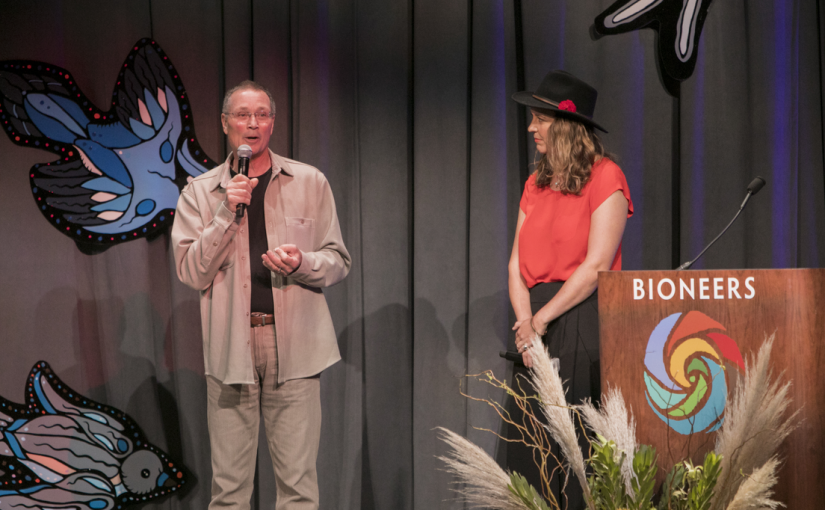
Jeremy Kagan is an award-winning (including Emmy and Cable ACE awards) director/writer/producer of feature films and television, and a film professor at USC where he runs the Change Making Media Lab. He served as Artistic Director of the Sundance Institute and is the author of Directors Close Up and My Death: A Personal Guidebook. Jeremy is a long-time member of the Bioneers Community and has lead panels at multiple Bioneers Conferences including The Crossroads of Social Change and The Choir and Beyond.

******

Jeremy Kagan

Dear Friends:

Like many of us I have been deeply troubled by excessive gun violence in our country. I wanted to tell a story that would help us to face the realities of this issue and to feel what others have had to feel.

Rather than produce another documentary about gun violence, I decided to address this critical issue from a humanistic, dramatic narrative perspective, and to tell two stories at once. By using a multiple screens process, I have intertwined the story of the person who is shot simultaneously with the story of the shooter, to create an impacting visceral experience.

My experience over the last decades with Bioneers, having made some videos for the organization, has been a source of inspriation on how to use media to make a difference.

SHOT is a captivating roller coaster ride with terrific performances from Noah Wyle, Sharon Leal, and Jorge Lendeborg, Jr. The powerful visual storytelling involves you in an extreme real time drama when an innocent bystander is shot standing next to his wife, while we also experience the tense tale of the shooter, who is trying not to get caught.

We go to the movies to meet people we care about in challenging situations.  We identify with the choices these characters make, and sometimes what happens to them, encourages us to take action in our own lives.  SHOT is this kind of movie

The movie ends with a call to action giving the viewers an opportunity to join the efforts to change this gun epidemic.

SHOT opens in theaters in NY and LA on September 22. We will also be opening in Seattle, Portland, San Francisco, Boulder, Santa Fe, Chicago, Detroit, New Orleans, Philadelphia, and Washington, D.C.

Follow us on Facebook, Twitter and Instagram: www.shotmovie.org

Here is the trailer: https://trailers.apple.com/trailers/independent/shot/

I hope this movie will make real and positive change.

In solidarity and compassion,

Jeremy Kagan

Film and Television Director, Writer, Producer

Founder of the Change Making Media Lab

Professor, School of Cinematic Arts, USC

Chairperson of Special Projects for the DGA

Facebook: @ShotEveryonePays

Twitter: @ShotEvery1Pays

Instagram: ShotEvery1Pays

*****

Get involved. SHOT is not just a movie, it’s a movement.


Shotmovie.org

#SHOTmovie #stopgunviolence


Investing in Our Future: Tom Van Dyck

For anyone paying attention to the decades of simply devastating news about the state of the environment and the human communities who inhabit it, the culprits are fairly clear. Our global economic system has incentivized much of the wrong activity, allowing massive globalized corporations to run rampant over human rights, social justice and the environment. “It’s the corporations, stupid,” as the bumper sticker says.

Thomas Van Dyck has been committed to reshaping this skewed economic incentive structure for his entire career. From helping to grow and meaningfully transform the field of Socially Responsible Investing to founding one of the leading Shareholder Advocacy networks in the world to providing key guidance and leadership for the Divest/Invest movement, Van Dyck has been, quite literally, doing everything he can possibly think of to transform our plunder-driven economic system. Routinely looked to as an expert by major publications like The New Yorker, The New York Times, The Washington Post and Moyers & Company, Thomas Van Dyck is a global leader and changemaker.

Several years ago, the Bioneers Conference hosted a panel session on Reforming Corporate Power with leading advocacy groups representing a range of different approaches, from working “within” the system (e.g. Future 500) to intense outside activist pressure (e.g. Greenpeace) – we called it Good Cop/Bad Cop. Given that corporations represent nearly 60% of the 150 largest economic entities in the world, it was clear that the answer is “yes”: both the carrot and the stick are necessary for any sort of substantive reform.

A glance at Van Dyck’s career path shows this exact inside/outside approach to corporate power. On the carrot side: he’s helped to shift billions of dollars in investments to realign corporate and investor ethics. On the stick side: in 1992 Van Dyck founded the innovative As You Sow Foundation, which works to hold corporations accountable by spearheading the aggressive use of shareholder advocacy to force corporate change at the institutional level while providing major support to influential advocacy/activism organizations (think Rainforest Action Network and The Ruckus Society). I’d encourage readers to take a look at the ‘recent accomplishments’ on the As You Sow webpage. Those folks are really making a difference that millions of us will benefit from on a daily basis.

A mover and shaker in the game since his start as a young man in the early 80s, Van Dyck shows no signs of slowing down. He’s been immensely influential in the Divest/Invest movement, which has been spreading like wildfire since the effort began on select college campuses several years ago. While serving as mentor and guide to young Divestment leaders like Chloe Maxmin and Katie Hoffman, Van Dyck was running the numbers in the background to contextualize the endeavor. Divest/Invest was a full circle return, given he got into the investing business in the early 80s when the Divest South Africa movement was in full swing. According to Van Dyck, major institutional investors pulling out of South Africa were being asked to eliminate up to 40% of the companies in the S&P 500 at the time. Today, it’s more like 8% and, as it turns out, by dropping carbon majors, institutional returns are essentially the same – slightly higher, in many cases. To date, the Divest/Invest movement has commitments on the books to reassign $5 trillion dollars, and rising.

The Same Basic Brain: Exploring Animal Consciousness

Can animals feel? Do they empathize? Do they experience sadness? The more we come to understand the natural world, the more compelling the argument for profound animal consciousness becomes.

beyond-words-book-cover

Human beings, throughout history, have placed themselves in a superior class—one that stands alone at the top of a complex web of Earthly life. Though we know that, by definition, we are animals, we’ve become rather used to distinguishing ourselves from the rest of that web. This manufactured divide allows us to assume that what is “animal” is not “human.” But what if the differences between the brains of humans and those of much of the rest of the animal kingdom are far less distinct than we once assumed? While humans are capable of incredibly complex thought patterns and emotions, writer and conservationist Carl Safina suggests that the historic practice of using humans as a measuring stick by which to diagnose “consciousness” may be flawed.

Explorations of animal and plant intelligence and consciousness have been a part of the Bioneers Conference for decades, and as the research piles up, popular interest continues to grow. We were stunned when a recent Bioneers video on the topic exploded online, now at well over two million views.

In his book Beyond Words (Picador, 2016), Safina describes evidence of radical animal consciousness in elephants, octopuses, honeybees … even worms. The following is an excerpt from the book’s chapter “The Same Basic Brain.”

We’re overjoyed to be hosting Carl Safina at the 2017 Bioneers conference to discuss animal consciousness and lessons from the natural world.

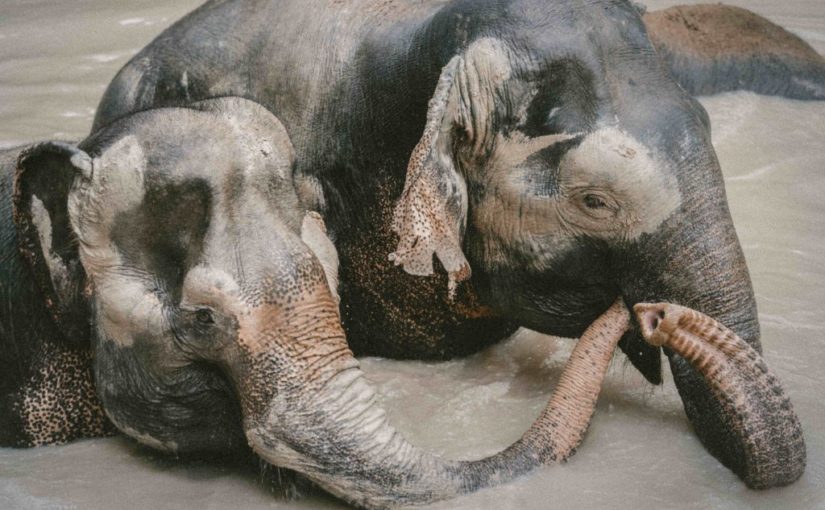
Four rounded babies are following their massive mothers across a broad, sweet-smelling grassland. The adults, striding with deliberate purpose as though keeping an appointment, are nodding toward the wide, wet marsh where about a hundred of their compatriots are mingling. Families commute daily between sleeping areas in brush-thicketed hills and the marshes. For many it’s ten miles (fifteen kilometers) round-trip. Between here and there and sun to sun, a lot can happen.

Our job: travel around in the morning, finding them as they’re coming in; see who’s where. The idea is simple, but there are dozens of families, hundreds of elephants.

“You have to know everyone. Yes!,” Katito Sayialel is saying. Her lilting accent is as clear and light as this African morning. A native Maasai, tall and capable, Katito has been studying free-living elephants with Cynthia Moss for more than two decades.

How many is “everyone”?

“I can recognize all the adult females. So,” Katito considers, “nine hundred to one thousand. Say nine hundred. Yes.”

Recognizing hundreds and hundreds of elephants on sight? How is this possible? Some she knows by marks: the position of a hole in an ear, for instance. But many, she just glances at. They’re that familiar, like your friends are.

When they’re all mingling, you can’t afford to say, “Wait a minute; who was that?” Elephants themselves recognize hundreds of individuals. They live in vast social networks of families and friendships. That’s why they’re famous for their memory. They certainly recognize Katito.

“When I first arrived here,” Katito recalls, “they heard my voice and knew I was a new person. They came to smell me. Now they know me.”

Vicki Fishlock is here, too. A blue-eyed Brit in her early thirties, Vicki studied gorillas and elephants in the Republic of the Congo before bringing her doctoral diploma here to work with Cynthia. She’s been here for a couple of years and has no plans to go anywhere else if she can help it. Usually Katito takes attendance and rolls on. Vicki stays and watches behavior. Today we’re out on a bit of a jaunt; they’re kindly orienting me.

Just outside the high “elephant grass,” five adults and their four young babies are selecting a shorter and far less abundant grass. It’s more work; it must taste better. They haven’t read a treatise on the nutritional content of grass. In a sense, their subconscious tells them what to do by rewarding them with pleasure for making the richer choice. It works the same for us—that’s why sugar and fat taste so good.

The grazing elephants trail a train of egrets and an orbiting galaxy of swirling swallows. The birds rely on elephants to stir up insects as, like great gray ships, they plow through the grassy sea. Light shifts on their wide, rolling backs like sun on ocean waves. Sounds of ripping, chewing. Flap of ear. Plop of dung. The buzz of flies and swoosh of swatting tails. Soft tom-tom footfalls. And, mostly, the quiet ways of ample beasts. Wordlessly they speak of a time before human breath. They get on with their lives, ignoring us.

“They’re not ignoring us,” Vicki corrects. “They have an expectation of politeness, and we’re fulfilling it. So they’re not paying us any mind.

“They weren’t always like this to me,” she adds. “When I started, they were used to vehicles snapping a few pictures and moving along. They were not wildly happy about me just sitting and watching them for long periods. They expect you to behave a certain way. If you don’t, they will let you know that they notice. Not in a threatening way. You might get a head shake and a look like, ‘What’s your problem?’ ”

Through hummocks and the bush, in our vehicle we amble with them. An elephant named Tecla, walking just a few yards ahead to our right, suddenly turns, trumpets, and generally objects to us. To our left , a young elephant wheels and screams.

“Sorry, sorry, sorry,” Katito says to Tecla. She brakes to a stop, turning off the ignition. It appears to me that we have separated this mother from her baby. But Tecla is not the mother. Another female, whose two breasts are full of milk, runs over, cutting just in front of us. This one is actually the mother. Basically Tecla was communicating, “The humans are getting between you and your baby; come and do something.”

“Elephants, they are like human beings,” offers Katito. “Very intelligent. I like their characters. I like the way they behave and hold their family, the way they protect. Yes.”

Like human beings? In some fundamental ways we seem—we are—so similar. But I can see Cynthia wagging a finger of caution, reminding me that elephants are not us; they are themselves.

Mother rejoins baby, restoring order. We slowly proceed. When one individual knows another’s relationship to a third—as Tecla knows who the baby’s mother is—it’s called “understanding third-party relationships.” Primates understand third-party relationships too, and so do wolves, hyenas, dolphins, birds of the crow family, at least some parrots. A parrot, say, can act jealous of its keeper’s spouse. When the vervet monkeys that are common around camp hear an infant’s distress call, they instantly look to the infant’s mother. They know exactly who they and everyone else are. They understand precisely who is important to whom. When free-living dolphin mothers want young ones to stop interacting with humans, the mothers sometimes direct a tail slap at the human who has the baby’s attention, signaling, in effect, “End the game; I need my child’s attention.” When the dawdling youngsters are interacting with dolphin researcher Denise Herzing’s graduate assistants, their mothers occasionally direct these—what could we call them: reprimands?—at Herzing herself. This shows that the dolphins understand that Dr. Herzing is the leader of all the humans in the water. For free-living creatures to perceive rank order in humans—just astonishing.

“What I find most amazing about it,” Vicki sums up, “is that we can understand each other. We learn the elephants’ invisible boundaries. We can sense when it’s time to say, ‘I don’t want to push her.’ Words like ‘irritated,’ ‘happy’ or ‘sad’ or ‘tense’—they really do capture what that elephant is experiencing. We have a shared experience because,” she adds with a twinkle, “we’ve all got the same basic brain.” \

I look at these elephants, so relaxed about us that they’re passing within a couple of paces of our vehicle. Vicki says, “This is one of the greatest privileges, moving along with elephants who are okay with you being here. These guys all go into Tanzania, where there are poachers everywhere. But here—.” Vicki talks to them in soothing tones, saying, “Hello, darling” and “Aren’t you a sweet girl.” Vicki recalls that after the famed Echo’s death, her family went away for three months under the leadership of Echo’s daughter Enid. “And when they returned, I started saying things like ‘Hello, I missed you—’ And suddenly Enid’s head swept up, and she gave this huge rumble; her ears were flapping and they all came around, close enough that I could have touched them, and the glands on all their faces were streaming with emotion. That’s trust. I felt as though,” Vicki says fondly, “I was getting an elephant hug.”

Once, I was watching elephants with another scientist in another African reserve. Several adult elephants were resting with their young in the shade of a palm, fanning their ears in the heat. The scientist opined that the elephants we were watching “might simply be moving to and away from heat gradients, without experiencing anything at all.” He declared,“I have no way of knowing whether that elephant is any more conscious than this bush.”

No way of knowing? For starters, a bush behaves quite differently from an elephant. The bush shows no sign of having a mental experience, of showing emotions, of making decisions, of protecting its offspring. On the other hand, humans and elephants have nearly identical nervous and hormonal systems, senses, milk for our babies; we both show fear and aggression appropriate to the moment. Insisting that an elephant might be no more conscious than a bush isn’t a better explanation for the elephants’ behavior than concluding that an elephant is aware of what’s going on around it. My colleague thought he was being an objective scientist. Quite the opposite; he was forcing himself to ignore the evidence. That’s not scientific—at all. Science is about evidence.

At issue, here, is: Who are we here with? What kinds of minds populate this world?

This is hazardous terrain. We won’t assume that other animals are or aren’t conscious. We’ll look at evidence and go where it leads. It’s too easy to assume wrongly, then carry those assumptions around for, say, centuries.

In the fifth century b.c.e., the Greek philosopher Protagoras pronounced, “Man is the measure of all things.” In other words, we feel entitled to ask the world, “What good are you?” We assume that we are the world’s standard, that all things should be compared to us. Such an assumption makes us overlook a lot. Abilities said to “make us human”—empathy, communication, grief, toolmaking, and so on—all exist to varying degrees among other minds sharing the world with us. Animals with backbones (fishes, amphibians, reptiles, birds, and mammals) all share the same basic skeleton, organs, nervous systems, hormones, and behaviors. Just as different models of automobiles each have an engine, drivetrain, four wheels, doors, and seats, we differ mainly in terms of our outside contours and a few internal tweaks. But like naïve car buyers, most people see only animals’ varied exteriors.

We say “humans and animals” as though life falls into just two categories: us and all of them. Yet we’ve trained elephants to haul logs from forests; in laboratories we’ve run rats through mazes to study learning, let pigeons tap targets to teach us Psychology 101; we study flies to learn how our DNA works, give monkeys infectious diseases to develop cures for humans; in our homes and cities, dogs have become the guiding protectors for humans who see only by the light of their four-legged companions’ eyes. Throughout all this intimacy, we maintain a certain insecure insistence that “animals” are not like us—though we are animals. Could any relationship be more fundamentally miscomprehended?

To understand elephants we must delve into topics like consciousness, awareness, intelligence, and emotion. When we do, we realize with dismay that there aren’t standard definitions. The same words mean different things. Philosophers, psychologists, ecologists, and neurologists are the blind men all feeling and describing different parts of the same proverbial elephant. But, silver lining: their lack of agreement frees us to walk out of the academic bar brawls into clearer air and a wider view, and do a little of our own thinking.

So let’s start by defining consciousness. The standard we’ll use is: Consciousness is the thing that feels like something. That simple definition comes from Christof Koch, who heads the Allen Institute for Brain Science, in Seattle. Cut your leg, that’s physical. If the cut hurts, you’re conscious. The part of you that knows that the cut hurts, that feels and thinks, is your mind. Relatedly, the ability to feel sensations is called sentience. The sentience of humans, elephants, beetles, clams, jellyfish, and trees ranges on a sliding scale, from complex in people to seemingly none in plants. Cognition refers to the capacity to perceive and acquire knowledge and understanding. Thought is the process of considering something that’s been perceived. Like everything about living things, thought also happens on a wide-ranging sliding scale; thinking can take the form of a jaguar assessing how to approach a wary peccary from directly behind, an archer aiming at a target, or a person considering a proposal of marriage. Sentience, cognition, and thinking are overlapping, processes of conscious minds.

Consciousness is a bit overrated. Heartbeat, breathing, digestion, metabolism, immune responses, healing of cuts and fractures, internal timers, sexual cycling, pregnancy, growth—all function without consciousness. Under general anesthesia we remain very much alive though not conscious. And during sleep our unconscious brains are working hard, cleansing, sorting, rejuvenating. Your body is run by a competent staff that’s been on the job since before the company acquired consciousness. Too bad you can’t personally meet your team.

We might imagine consciousness as the computer screen we see and interact with, one run by software codes that we can’t detect and don’t have a clue about. Most of the brain runs in the dark. As science author and former Rolling Stone magazine editor Tim Ferris wrote, “One’s mind neither controls nor comprehends most of what’s going on in one’s brain.”

Why be conscious at all? Trees and jellyfish do just fine, yet may not experience sensations. Consciousness seems necessary when we must judge things, plan, and make decisions.

How does consciousness—elephant, human, whatever—arise in the mush of our physical cells and the mesh of their electrical and chemical impulses? How does a brain create a mind? No one knows how nerve cells, also called neurons, create consciousness. What we know: consciousness can be affected by brain damage. So consciousness does happen in the brain. As Nobel Prize–winning mind-brain scientist Eric R. Kandel wrote in 2013, “Our mind is a set of operations carried out by our brain.” Consciousness seems to somehow result from, and depend on, neurons networking.

How many networked neurons are needed? No one knows where the most rudimentary consciousness lurks. Jellyfish, probably not conscious; worms, maybe so. With about one million brain cells, honeybees recognize patterns, scents, and colors in flowers and remember their locations. The bees’ “waggle dance” communicates to their fellow hivemates the direction, distance, and richness of nectar they’ve found. Bees “show superb expertise,” says famed neurologist Oliver Sacks. Honeybees will interrupt a colleague’s waggle dance if they’ve experienced trouble at the same flower source, such as a brush with a predator like a spider. Honeybees subjected by researchers to simulated attack show, said researchers, “the same hallmarks of negative emotions that we find in humans.” Even more intriguingly, honeybee brains contain the same “thrill-seeker” hormones that in human brains drive some people to consistently seek novelty. If those hormones do deliver some tingle of pleasure or motivation to the bees, it means bees are conscious. Certain highly social wasps can recognize individuals by their faces, something previously believed the sole domain of a few elite mammals. “It is increasingly evident,” says Sacks, “that insects can remember, learn, think, and communicate in quite rich and unexpected ways.”

Honeybee

Can elephants, insects, or any other creature really be conscious without the big wrinkly cerebral cortex where human thinking happens? Turns out, yes; even humans can be. A thirty-year-old man named Roger lost about 95 percent of his cortex to a brain infection. Roger can’t remember the decade before the infection, can’t taste or smell, and has great difficulty forming new memories. Yet he knows who he is, recognizes himself in a mirror and in photographs, and generally acts normal around people. He can use humor and can feel embarrassed. All with a brain that does not resemble a human brain.

The common human notion that humans alone experience consciousness is backward. Human senses have evidently dulled during civilization. Many animals are superhumanly alert—just watch these elephants when anything changes—their detection equipment exquisitely tuned for the merest crackle of danger or whiff of opportunity. In 2012, scientists drafting the Cambridge Declaration on Consciousness concluded that “all mammals and birds, and many other creatures, including octopuses,” have nervous systems capable of consciousness. (Octopuses use tools and solve problems as skillfully as do most apes—and they’re mollusks.) Science is confirming the obvious: other animals hear, see, and smell with their ears, eyes, and noses; are frightened when they have reason for fright and feel happy when they appear happy.

As Christof Koch writes, “Whatever consciousness is . . . dogs, birds, and legions of other species have it. . . . They, too, experience life.”

My dog Jude was sleeping on the rug, dreaming of running, his wrists flicking, when he let out a long, eerily muffled howl. Chula, my other dog, instantly piqued, trotted over to Jude. Jude startled awake and leapt to his feet barking loudly, just as a person wakes from a night terror with a vivid image and a scream, taking a few moments to get oriented.

Each line we attempt to draw crisply, as between elephants and humans, nature has already blurred with the smudgy brush of deep relation. But what about living things with no nervous system? That is a dividing line. Isn’t it?

With no apparent nervous system, plants make the same chemicals—such as serotonin, dopamine, and glutamate—that serve as neurotransmitters and help create mood in animals, including humans. And plants have signaling systems that work basically as do animals’, though slower. Michael Pollan observes, a bit metaphorically, that “plants speak in a chemical vocabulary we can’t directly perceive or comprehend.” That’s not to say that plants experience sensations, necessarily, but they do some intriguing things. We detect chemicals by smell and taste; plants sense and respond to chemicals in air, soil, and on themselves. Plants’ leaves turn to track the sun. Growing roots approaching an obstacle or toxin sometimes alter course prior to contact. Plants have reportedly responded to the recorded sound of a munching caterpillar by producing defensive chemicals. Plants attacked by insects and herbivores emit “distress” chemicals, causing adjacent leaves and neighboring plants to mount chemical defenses, and alerting insect-killing wasps to move in, blunting the attack. Flowers are plants’ way of telling bees and other pollinators that nectar is ready.

But except for insectivorous and sensitive-leaved plants, most plants behave too slowly for the human eye. Gazing across a meadow, Pollan wrote, he “found it difficult to imagine the invisible chemical chatter, including the calls of distress, going on all around—or that these motionless plants were engaged in any kind of ‘behavior’ at all.” Yet Charles Darwin concluded his book The Power of Movement in Plants by noting, “It is hardly an exaggeration to say that the tip of the radicle [root] . . . acts like the brain of one of the lower animals . . . receiving impression from the sense organs and directing the several movements.” Granted, we are treading into a vast minefield of potential misinterpretation. Like Cynthia Moss with elephants, the late botanist Tim Plowman, wasn’t interested in comparing plants to people. He appreciated them as plants. “They can eat light,” he said. “Isn’t that enough?”

My main reason for getting into the weeds here is to realize that, compared to the strangeness of plants and the large differences between plants and animals, an elephant nursing her baby is so like us that she might as well be my sister.

This excerpt on has been reprinted with permission from Beyond Words by Carl Safina, published by Picador, 2016. Catch Safina speaking on animal consciousness and lessons from the natural world at the 2017 Bioneers Conference.

Charlottesville and Beyond

Here at Bioneers, we’re shocked and horrified at the savage hate and violence by the alt-right in Charlottesville, but, sadly, we’re not surprised. Trump & Friends have spent years and decades brewing the toxic potion of bigotry into raw political power and plutocratic structures of domination. These are the death throes of an archaic worldview that’s being fueled and manipulated by cynical elites.

These events reveal the poisonous id of American politics for all to see, unvarnished and unapologetic. We need to purge these toxins from our culture, our politics, and our hearts.

As Heather Heyer’s mother so very eloquently said at her daughter’s funeral, if you’re not outraged, you’re not paying attention, and we need to make her needless death count. The bigger the light, the longer the shadow. Even as we grieve and acknowledge the terrible trauma, this is our time to bring a whole lot of light into the world, to transform our pain into healing.

This is a transformational moment, and it’s up to us which way the nation will go. As this vicious underbelly of hate has slithered into the light, what it’s revealing and catalyzing is the revulsion to it by the vast majority of people. The culture has already moved far past these twisted ways of seeing and being. Diversity is an article of faith in the natural world – the way things are and are meant to be for healthy, thriving life.

Please let us know your thoughts, feelings and initiatives. This is the time for a massive change for transformation. May we be the change and transform our pain into power and love.

Kenny Ausubel, Bioneers Founder & CEO

Speaking Truth to Power, Bioneers on Charlottesville

This last weekend, in the city of Charlottesville, VA, a group of white supremacists including neo-Nazis and Ku Klux Klan members gathered for a “Unite the Right” march to “take America back”. They were met by counter-protesters and violence broke out.

#Bioneers faculty across the world responded to the events in Charlottesville this weekend:


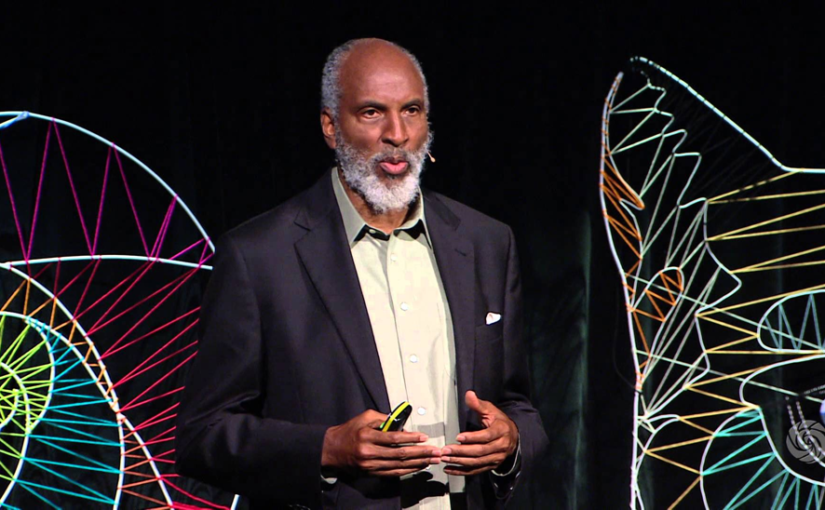
john a. powell

“We must continue to organize and participate and do more in the face of organized hate. We must come forward with not only messages but policies and platforms that advance equality and inclusion. We must protect the protestors who take a stand against hate. These are people helping America be its best self. If we are to pull America back from hate, there must be supporters from all political persuasions and voices from every race, ethnicity, religion, and faith. If we are to stand for equality and love, we must ground ourselves in these values and we must indeed take a stand. We are America’s present and its future.”


Rachel Bagby

“I do know there is something here for the women to heal, to come together, to dedicate ourselves to healing and continuing. What we have seen here and experienced here in Charlottesville today is not something that’s new. And it’s not something that just the folks that came from outside brought here. It’s something that’s simmering in the very foundation of the conditions, the attitudes, the bigotry, the izm schisms that help to make this country. And so we see what we have to heal.”


350.org

“Here at 350.org, we know white supremacy is not limited to klan rallies and alt-right forums. The hateful rally, violence and act of terrorism we witnessed yesterday were home grown, rooted in the racist history of this country, watered and tended by the bold hate speech and encouragement of the Trump administration, and harvested by each individual who chose to participate in the white supremacist rally.”


Terry Tempest Williams

“My thoughts exactly, written by Michael Gerson.


Van Jones

“Both sides are not mowing people down with cars.”


Malkia A. Cyril

“Just like 1960’s civil rights leaders used TV to shine a light on injustice, we use the #OpenInternet to witness and act. #Charlottesville

“Racial prejudice alone is not the problem. It’s prejudice, plus power and impunity that makes White Supremacy dangerous. #Charlottesville

“Trump said this is about hate. It’s not, it’s about power. He said it’s coming from many sides. White Supremacy only has one side: its own.


Race Forward

“Race Forward stands behind all of the people on the frontlines who are putting themselves in harm’s way to beat back hate, racism, xenophobia, and violence. A strong multiracial movement is the only solution for dismantling structural racism. Race Forward is committed to building that movement. Together, we have the power to shape a future that elevates the voices of communities of color that have been most marginalized and oppressed, and together build a multiracial, inclusive democracy in which all can thrive.  ”


Tony Porter

“All forms of group oppression are rooted in our collective socialization. We can undo racism, sexism, heterosexism, etc., through education.” #CharlottesvilleCurriculum


Michael Brune, Sierra Club

“Hatred and racism have long played a disgraceful part of American history, but there can be no doubt that those who spew white supremacy feel empowered right now when they see allies in the corridors of power. These bigots must be condemned, not coddled, and we are in solidarity with those elected officials, residents of Charlottesville, and people all over this country who are speaking out for an America that pushes forward toward justice, not slides backward into hatred and fear.”


Eriel Deranger

“Some days you just have to push through the hard. Other days you have to lean into it.
The personal trials and tribulations this year are many. Many of them part and parcel to the multigenerational trauma experienced by my people that live their lives being told to get over it, while they slip deeper into the darkness created by society wrought with white supremacy.”


Pennie Opal Plant

“This time is about tearing the scabs off of the deep wounds in this country made by a nation created by genocide and torture. The infection runs deep and a wound cannot heal when it is hidden. White supremacists are still in the street in Charlottesville today. Now we can see their faces. We can see their fear masquerading as anger and violence. We can see their immaturity and ignorance regarding the history of this country. We see them. Look, pray, stand strongly together, family. This part will be difficult, it will be dangerous, we must stand together.”

How are you standing in solidarity with Charlottesville, #Bioneers? Stay connected with us – share your stories, resources, and visions.

Practical Ways to Transcend and Transform: john a. powell

By Kenny Ausubel, Bioneers CEO & Co-Founder

john a. powell’s decades of work delving deeply into the process of “Othering” shows practical ways we transcend and transform the all-too-human tendency to retreat into tribalized and racialized identities that diminish others as less than human.

I strongly encourage you to view the five-minute video with john telling the story of “The Invention of Whiteness” from my forthcoming movie (“Changing of the Gods,” 2018). As john points out, whiteness as a concept did not always exist and had to be invented by elites as a tool to divide and conquer.

john’s many years of racial justice work crystallized in his current role as Founder and Director of UC Berkeley’s esteemed Haas Institute for a Fair and Inclusive Society, which is a national beacon for the leading edges of how we can recognize our interconnectedness as people and as members of the diverse web of life, and turn it into systemic and policy change.

The Haas Institute brings together researchers and scholars, community partners, strategic communicators, and policymakers to identify and eliminate the barriers to an inclusive, just, and sustainable society and to create transformative change toward a more equitable world.

john is a Professor of Law, African American, and Ethnic Studies at the University of California at Berkeley, where he holds the Robert D. Haas Chancellor’s Chair in Equity and Inclusion. He’s an internationally recognized expert in the areas of civil rights and civil liberties and a wide range of issues including race, structural racialization, ethnicity, housing, poverty, and democracy. He joined the Bioneers Board early this year after many years of participating in the Bioneers conference.

In the filmed interview I did with john, he points out some of the hidden history of the New Deal that’s coming home to roost again today. The only way FDR could gain Congressional support for radical ideas such as the minimum wage and social security was to make a deal with Southern Dixiecrat politicians that the New Deal would be for only white people and would not disturb the racialized caste system of the South.

The 1960s civil rights movement, including Dr. King’s Poor People’s Campaign, was designed to finally bring to fruition the promise of the New Deal for African Americans and people of color. In turn, that provoked the white identity backlash exploited in the Southern Strategy by Barry Goldwater and Richard Nixon, stoking racial anxiety to divide and conquer ongoing.

Today’s racialized upheavals around white identity can be traced to the Southern Strategy becoming the national strategy of the Republican Party, of which Trump is the logical outcome.

In his most recent address to the Bioneers Conference, john sheds light on how we can move through this transformational moment in American society when an increasingly diverse national and global society calls for all of us to overcome the burdens of history and rise together as one in the recognition that we are one – on one Earth.

Carbon Farming: Building Soil to Radically Mitigate Climate Disruption

Calla Rose Ostrander and John Wick will address a keynote talk during the 2017 Bioneers Conference and host a workshop on Monday, October 23.

It doesn’t seem that long ago when carbon was not a topic of everyday conversation. But that’s changed now that carbon literally hangs over our heads like the sword of Damocles, a grim reminder of the dangers of continuing to feast blindly on the affluence of a fossil fuel economy.

The irony is that carbon, the basic building block of life, has been so systematically misused, it has become humanity’s greatest threat. The consequences of carbon’s excess in the atmosphere affect all life. After all, it’s carbon’s nature to be a foundational aspect of nearly all biological forms and processes.

So, is it a surprise to say the imbalance in carbon in the atmosphere can cause political instability?  Not according to former Secretary of State John Kerry who said: “It’s not a coincidence that, immediately prior to the civil war in Syria, the country experienced its worst drought on record.”

And it should also come as no surprise that climate disruption will affect food supply. A study from the Potsdam Institute for Climate Impact Research said that without substantial emission reductions, the US, the world’s largest food exporter, would suffer serious (20-40%) yield losses in wheat, soy and corn by the end of the century.

But many say a reduction in emissions alone will not get the job done even if the world gets serious about transitioning to a non-carbon economy at the rate of the Paris Climate Accord. Does that mean that the situation is insoluble?

“The most intractable problem today,” Margaret Mead said, “is not pollution or technology or war, but the lack of belief that the future is very much in the hands of the individual.”

Two individuals who decided to do something about the existential dilemma of our global climate unraveling from its evolved harmonious state into an unstable and inhospitable state are John Wick and Calla Rose Ostrander. John is the co-founder of the Marin Carbon Project and Calla Rose has spent almost 20 years working to transform large complex systems like the cities of Aspen, CO and San Francisco from climate problems to climate solutions.

As dead serious as both John and Calla Rose are about solving the climate quandary, they are, on a personal level, quite joyful; perhaps because they may have found the elixir of life–carbon.

What they want to do is re-shift the balance of excessive atmospheric carbon and capture it in the soil where, instead of being a disruptive force, it supports healthy life systems by increasing fertility and water retention, and kick-starts the biology of the soil food web resulting in increased yields and healthier more resilient plants while holding carbon deep in the soil in a stable form reducing the atmospheric overload.

Make no mistake, this is not some hobby project on the rural fringes of Marin. Soil carbon, as an answer to climate change, is being adopted into global climate thinking. France has introduced the 4 per 1000 Initiative, which promotes a 4% increase in soil carbon per year and is working to bring players in the public and private sectors to get on board.

The math is extremely encouraging in regards to how re-carbonizing depleted soils globally could play a transformative role in turning the clock back on climate change by drawing carbon from the atmosphere and storing it in the soil through the everyday ubiquitous magic of photosynthesis.

Wow, there is a future and it’s dirty and full of earthworms and mycorrhizae fungi, nematodes and billions of beneficial bacteria—all thanks to carbon.

Calla Rose Ostrander has teamed up with John Wick and the Marin Carbon Project team to do the trials and gather the rigorous science on how pasture lands can be managed to maximize carbon sequestration. They are working with ranchers to develop carbon farming plans and their work has been instrumental in influencing the potentially game changing California Healthy Soils Initiative that will monetarily incentivize carbon farming.

Agriculture and land management have been underestimated if not completely missing from the climate conversation. Food production accounts for about 40 % of the earth’s land use. A deeper understanding of how the carbon cycle works and how that informs climate smart soil management practices may very well be the most realistically hopeful solution in solving our most intractable problem.

John Wick and Calla Rose Ostrander share their momentous work on carbon farming research, practices, policies and how they are building a statewide network of carbon farmers and ranchers in a keynote presentation at the Bioneers conference (Oct. 20-22). And on October 23, in a full day workshop at Stemple Creek Ranch, they will be joined by an array of remarkable farmers, scientists, ecologists and food system activists who will make the connection between carbon and climate justice, local foods systems, organic agriculture, and agroforestry.

Yes, there is a future, its secret is in the soil and, like all life, it is made of carbon.

Never Acquiesce: Democracy Now! and Independent Media’s Role in War and Peace

Amy Goodman tells the story of reporting from a refugee camp, and discusses the ways in which her independent media organization, Democracy Now!, endeavors to ask the tough questions and change history.

In 1996, Democracy Now!—a well-known independent radio and television program—began telling stories the mainstream media overlooked. With award-winning journalist Amy Goodman at the helm, the nonprofit organization has grown to become the United States’ largest collaboration of public media, currently broadcast on more than 1,400 stations. Democracy Now!’s programming has covered wars, economic catastrophes, environmental degradation, and social movements, and its hosts, Goodman and Juan Gonzalez, have become trusted voices within a mass-media cacophony. Bioneers has been honored to host Goodman on our stage over the years, and we look forward to her appearance at the 2017 conference.

The independent media organization’s self-titled book, Democracy Now! (Simon & Schuster, 2017), recounts 20 years of groundbreaking storytelling through Goodman’s lens. The book’s first chapter, “The War and Peace Report,” is a deep-dive into the violence—and consequences thereof—witnessed and reported on by Democracy Now! journalists. The following is an excerpt from that chapter.

Endless wars have now spawned the largest migration of human beings since World War II. Europe has been the first stop for this wave of humanity.

In December 2015, my Democracy Now! colleagues and I visited a massive, makeshift refugee camp called “The Jungle” on the outskirts of the northern French town of Calais. The camp grows daily, swelling with asylum-seekers fleeing war in Afghanistan, Syria, Iraq, Sudan, and beyond. Their countries of origin are a map of the targets of US bombing campaigns. More than six thousand people in this, France’s largest refugee camp, hope for a chance to make the last, dangerous leg of their journey through the nearby Channel Tunnel to England. Wind whips off the North Sea, blasting the shelters made of tarps, tents, plastic sheeting, and scrap lumber in this sprawling, ramshackle end of the line. The roads in the camp are muddy; the portable toilets are filthy. The charity health clinic had been closed since mid-November. The main entrance to the camp is below a freeway, with several police vans parked with lights flashing and armed officers stationed above.

Most who arrive here have endured arduous journeys of thousands of miles, hoping to cross to the United Kingdom. The Channel Tunnel offers asylum-seekers a way to make it to the UK without risking a dangerous crossing of the English Channel, by stowing away on either a high-speed passenger train or a freight train. Accessing either type of train involves significant risk, and accidental deaths occur almost weekly when people leap onto moving trains or stumble under truck tires.

A few days before Democracy Now! visited the camp, a Sudanese man named Joseph was killed when he was run over by a car on the highway. Camp residents were protesting that the police had not stopped the driver, holding signs reading “We are Humans, Not Dogs” and “Do survivors of war not have the right to live in peace?” We asked a young man named Majd from Damascus, Syria, why he fled his country: “I escaped from the war. I don’t want to die. This war is not my war.” We asked him who was attacking his country. He said: “Who? Everyone. Russia and America and Iran—everyone.”

Days before we met Majd, the British Parliament voted to attack Syria and began bombing immediately. In the few months prior, the British government built multiple layers of high, razor-wire-topped fences in Calais, sealing off the tunnel entrance and the rail line for miles before the tunnel, as well as the staging area where freight trucks line up to drive onto the rail cars that will carry them through the tunnel. Each truck is also subjected to an infrared scan to look for stowaways. Before the enhanced security, scores of asylum-seekers might get through the tunnel nightly. Now, it is almost impossible. The more the West bombs their countries, the more it shuts out those who flee its wars.

In the Afghan section of the refugee camp, Sidiq Husain Khil was eager to speak about the fourteen-year-old US war in Afghanistan—the longest war in US history. Like many, he did not want his face to be filmed. We asked him about the effects of US bombing and drone strikes on Afghanistan. He replied: “If they are killing one person or ten persons, one hundred of them are joining the group of Taliban…. The war is not the solution for finishing terrorism. They have to talk face-to-face.”

As we roamed the camp, pulling our coats tightly around us in the cold, we looked for a woman who would be willing to speak. We met Dur, an Afghan professor of English, who also did not want her face shown. She traveled more than three thousand miles with her four children, by car, bus, horse, foot, and boat. In almost perfect English, her twelve-year-old daughter described their unimaginable route: “First we go to Nimruz province of Afghanistan. Then we went to Pakistan. Then we walked to Saravan, Balochistan. Then Iranshahr, Kerman, Shiraz, Tehran, Kurdistan, and Turkey. Then we start walking in mountains. Then we went to Istanbul, Izmir. Then we arrived to the sea.” Dur hired a smuggler to take them in a leaky boat from Turkey to Greece. She told me, “When I saw that boat… I called all my children and I start to cry… I spent all my money to buy them death.” Miraculously, they survived. Whether they make it to their destination, Britain, is another question.

As we left the camp, a man named Najibullah raced up to us. An Afghan who worked with the US Marines as a translator, he applied for a special visa for Afghans who put themselves at risk by working for the United States. He said he was turned down because he hadn’t worked for the marines for a full year. “Working with the US government… just one day or a year… it doesn’t matter to the Taliban,” he told me. “As long as you work with them just one hour, you’re condemned to death.”

“Today, Joseph. Tomorrow, who?” read one of the many signs at the protest earlier that day. These refugees are the roadkill of war.

A few days after we left the camp, a painting appeared on the concrete wall of the underpass, where the protest had occurred. It was painted by the globally renowned street artist Banksy, whose identity has never been revealed. Banksy painted a life-size depiction of Steve Jobs, the visionary founder of Apple, with a bag slung over his shoulders. Banksy released a statement to accompany the painting of Jobs:

“We’re often led to believe migration is a drain on the country’s resources but Steve Jobs was the son of a Syrian migrant. Apple is the world’s most profitable company, it pays over $7 billion a year in taxes—and it only exists because they allowed in a young man from Homs.”

A Noble Endeavor

Working for peace is among the most important and noble of human endeavors. Individuals might feel powerless when confronted with a nation intent on going to war, but history shows that movements matter; that small acts of defiance and dissent can ripple out and create change. Noam Chomsky is a Massachusetts Institute of Technology professor emeritus of linguistics, a field of science that he revolutionized. He is perhaps best known, though, as one of the world’s most prolific analysts of US foreign policy. He has authored over a hundred books and still, in his late eighties, is a tireless writer and speaker on issues of war and peace. In the early 1990s, Chomsky wrote an essay called “What You Can Do,” which reads in part,

One of the things [people in power] want is a passive, quiescent population. So one of the things that you can do to make life uncomfortable for them is not be passive and quiescent. There are lots of ways of doing that. Even just asking questions can have an important effect. Demonstrations, writing letters and voting can all be meaningful—it depends on the situation. But the main point is—it’s got to be sustained and organized. If you go to one demonstration and then go home, that’s something, but the people in power can live with that. What they can’t live with is sustained pressure that keeps building, organizations that keep doing things, people who keep learning lessons from the last time and doing it better the next time.

Covering social movements like those Chomsky was writing about, reporting on efforts to effect lasting change—the movements that make history—that is our daily labor at Democracy Now! The global protest on February 15, 2003, didn’t stop the invasion of Iraq. We can’t know for sure what impact it had, or continues to have, as the demands of those thirty million marchers continue to reverberate. Thousands of individuals and groups around the world continue to work for peace, each contributing a small share to what Martin Luther King Jr. called, in his “Beyond Vietnam” speech, “the long and bitter, but beautiful, struggle for a new world.”

This excerpt has been reprinted with permission from Democracy Now!: Twenty Years Covering the Movements Changing America by Amy Goodman, published by Simon & Schuster, 2017.

Watch a video of Amy Goodman’s 2006 Bioneers conference talk below, and check out her 2017 speaker page for more on her involvement in our upcoming conference.

Bioneers in the News: July 2017

Searching for the perfect news round-up? Look no further! We’ll keep you savvy with all the Bioneers creativity and inspiration you need in your life. Follow the Bioneers Blog for our bi-weekly news roundup: 

“Beyond the fields, women are working to make every aspect of the food system more sustainable, equitable, and innovative. Whether it is researching new technologies to reduce food waste or founding organizations to better feed the hungry, women are working around the world to build the future of food.” We are honored to have 2 of these incredible 22 women, Rowan White and Saru Jarayman, gracing the #Bioneers2017 stage.

Occidental folks, this one’s for you! The Forum on Religion and Ecology Conference at Yale is featuring two long-time #Bioneers, Kristin Rothballer and Brock Dolman, at an August retreat. Learn more »

Danny Kennedy’s Organization,  CalCEF, is putting together a virtual Hackathon to tap into the genius of our U.S. Veteran Community to crowd source design of the Ultimate Virtual Clean Energy Hackathon. The winners will receive $500 each! Learn more »

What would Thoreau think of climate change? Bill McKibben explores what “Walden” could teach us about our own time on his 200th birthday.

“All those girls who are growing up . . . need to see women who are really owning themselves in a self-loving way, and serving the transformation of the world.” How femininity can save humanity? Nina Simons, Bioneers co-founder, is interviewed by Lauren Schiller on her show, the Inflection Point – listen today!

“If you’re not incorporating the most brilliant ideas from the natural world into what you sell, you’re leaving money on the table. Biomimicry is now going mainstream.” How do you incorporate biomimicry into your life? Jay Harman is featured in this piece on “5 Trends to Ride in 2017” »

Paul Hawken speaks with VOX about his ambitious new effort to “map, measure, and model” global warming solutions.

“I’m not a fatalist. The reason I’m an activist is because I think that the future, at least in part, is up for grabs. I think that there are great forces that produce some outcomes that are deterministic or semi-deterministic. And there are other elements that are up for grabs.” #Bioneers2017 keynote speaker, Cory Doctorow

Listen to a new podcast episode of Deena Metzger, author of A Rain of Night Birds, in conversation with Nina Simons on Rare Bird Radio here!

Outdoor equipment and clothing companies led by Patagonia, but including names like REI, North Face, and Adidas, are joining together in an unprecedented alliance. These folks are organizing to resist the Trump administration’s attempts to roll back land protection in national monuments and forests, with the Bears Ears one of the hottest flash points. One of the #Bioneers2017 panels this year will focus on large-scale land conservation, and Deon Ben of the Grand Canyon Trust will be there to chat all about it.

“The change that we need is not going to come from a politician…it’s going to come from something that’s always been the driver of change – people power, power of young people” Board Member Xiuhtezcatl Martinez in Rolling Stone »

Xiuhtezcatl Martinez Bioneers Conference 2015 © Nikki Ritcher

Follow us on Facebook and Twitter to stay up to date on the latest Bioneers news in real time.

The Amazing Life of Bees and the Threat of Systemic Pesticides: An interview with urban beekeeper Terry Oxford.

Terry Oxford of UrbanBeeSF has been a successful treatment-free beekeeper on San Francisco rooftops gardens since 2011 and an outspoken advocate against pesticides that harm pollinators. Arty Mangan, program lead for the Restorative Food Systems Program at Bioneers sat down with Terry to talk about bees.

AM: Bee society is very sophisticated. Some people refer to the hive as a super organism.

Terry Oxford: It’s a completely intelligent being. You have to look at a hive as an entire entity. It’s made up of different components and living parts, but the whole thing operates as one system, and the entire goal is to keep itself alive. Everything it does is for the whole, for the group.

That’s why bees are so much more intelligent than humans are because bees are long-termers on the planet. They’ve been here for billions of years. They’re going to far outlive us because they work for the whole. They work for the group and help support each other. It’s very unselfish, whereas, humans – bless our souls – are much more focused on the individual and we don’t see ourselves as a group. We’re less sustainable as a species than bees are.

Bees sacrifice themselves for the others and interact with other parts of nature during pollination, that’s what makes them such special creatures and important to so many different parts of our existence.

The whole hive is largely a female group. There is the queen and the workers. The workers are the bees you typically see outside of the hive working in flowers. They bring in the nectar and the pollen. When they’re very young they stay home and they do jobs within the hive, such as nurse bees, taking care of the larvae, packing the pollen and doing all sorts of work.

The males, who are also very very important, reproduce with the queen. That’s their main job. They’re shorter lived and are often removed from the hive if they’re not needed. The ratio is much higher female to male within the hive at any given time.

The important thing about the hive to consider is that it is basically a uterus. The entire thing is a nest of eggs and larvae at varying stages of life, and the nest has to be protected, taken care of, fed, and the entire thing is constantly keeping itself at a certain temperature to keep the larvae alive, and also at a certain critical mass of larvae.

Bees plan for a future hive that may not include them individually, because they don’t live very long. Their whole existence is about keeping the babies healthy and safe. That’s what keeps them sustainable. I really admire that as a society.

AM: You’re in an urban environment, do the bees help put you in touch with nature in the city?

Terry Oxford: Raising bees in the city is critically important. About 6 or 7 years ago the majority of the planetary population shifted from rural to urban. Cities are now where most of us live, and one of the things that is making us suffer as a species- our madness and depressions- come from a lack of nature.

In 2010 I put bees on the roof of Quince and Cotogna restaurants. They’ve planted a pollinator garden on their roof. Any beekeeper knows that’s just a snack, but it’s an important message, and it’s symbolic of what you can do wherever you are. Now almost all of my rooftop gardens are all organic, largely native, and the restaurants pick flowers and vegetables for the meals. Everything serves a purpose.

I see all sorts of nature on the rooftops. I see stick bugs, swarms of beneficial insects like ladybugs. They come because there’s food. I see a lot of birds, and I feed them. They’ll eat the dead bees on the ground, or they just pick them out of the air.

I make a concerted effort to get companies interested in helping bees-grocers, hotels, all these groups- to put bees on their roofs. I ask that they make sure they’re planting plants that aren’t poisonous to bees. If they aren’t interested in doing that, then I don’t work with them. I only work with companies that will really, truly be green and do something effective to feed the nature in the city.

I work with a company that manages seven commercial properties in the city, and they’ve created little pollinator feeding stations all around downtown. It’s filled with all these native pollinators. You already see mason bees flitting around. It’s safe. It’s not filled with any chemicals.

AM: What are the issues with pesticides and pollinators?

Terry Oxford: There is so much to fight for right now on this planet. There are so many causes, so many fires going, so to save my sanity I picked one fight that I think I can make a little dent in – that’s the systemic pesticides or neonics that have been used in the United States. They were introduced on the market probably 18 years ago. Their invention and use matches exactly the decline of the pollinator system.

When I say pollinators, I’m talking about all the major important pollinators, not just honeybees, the birds, bats, butterflies, native bees, all of these creatures that don’t have as much of a voice as the honeybee does.

Systemic neonicotinoids are a class of pesticide/insecticide that are amazingly effective. Systemic refers to the delivery system for the poison. You can inject it into a tree trunk, you can drizzle it in a soil drench on the root ball, you can spray it on the leaf. It goes inside of the system of the plant and it comes out in the nectar, the pollen, and the moisture drops that ooze out of the leaf that a bumble bee will come along and take a sip of. It’s can be deadly immediately or it can be taken back to the hive and packed into that uterus in the pollen or nectar where it sits in the heat, off-gassing. The neonics kill the reproductive system of the queen, and they’re saying it might have an effect on the males’ reproductive systems as well. It kills over time. It also destroys their navigation system. A bee without navigation is a bee without a home, so it dies. That’s why these particular class of poisons are so incredibly horrible.

Photo By David Lawrence

There is so much money being made by the pesticide corporations with these poisons that there is no way that they will allow any legislation against them. They don’t care about the pollinator system.  They work really, really hard to fight any legislation to stop or even slow down these poisons. They don’t spend any money on fixing the problem and changing their products. They just intimidate. They’re just like the tobacco industry, and they control the narrative.

Last year in April, there was a really great bill in front of the Sacramento legislature – Senate Bill 1282, a pesticide bill that would have prevented the general public from buying neonicotinoid pesticides, a very bad poison that is so toxic that in agricultural conditions you have to be licensed to use it. But currently anybody can buy it and spray it all over their garden and kill everything. The bill was going to ban that, plus require that plants treated with neonics be labeled in California.

The pesticide industry has been working to control the narrative, often through beekeeper associations. Many beekeeper associations will not allow discussion against the pesticide industry. They just shut it down over and over again. The California Beekeepers Association voted with the pesticide industry to prevent the passage of this bill on imidacloprid, which is one of the worst poisons.

I’ve been to the meetings in Sacramento. I’ve tried to talk about this at beekeeping meetings. I’ve been silenced in my own beekeeping association. The pesticide industry operates with the same playbook as the tobacco industry, the oil industry.

The only measurement that we make of bees is honey, because that’s financially the reason that we’re tied to them and also the reason that they have a voice. Trees are the best source of food – pollen, that’s protein, and nectar, that’s carbohydrate. These two important nutritional factors are critical to the life of the pollinator system. Trees are the best way to ensure that bees are healthy, and that they get healthy, diverse nutrition.

In California, almost every major conventional farming tree nursery is treating their trees with some sort of systemic, making the flowers poisonous. When you plant a tree that has any sort of systemic in it, it will probably last for years, bloom after poisonous bloom, year after year these trees are emitting toxic levels of poison to pollinators.

Why these systemic poisons are so bad is they are persistent. They accumulate in all sorts of areas. They accumulate in the beehive. They may not kill instantly. The pesticide industry doesn’t have to prove their product is safe. They just grease the wheels and the product gets approved and overused by the general public and agriculture as well.

When you go out and buy a garden plant that’s good for pollinators, like lavender, for instance, if it’s not organic and if it’s treated with a neonic, it’s likely to kill pollinators. So you’re going to a store with the full intention of helping the planetary life system of pollinators, and you’re coming back with a little pod of poison and putting that in your garden. For the entire life of that plant or potentially up to 6 years in a tree, it’s poisonous to anything coming for some nectar or pollen.

Unless you are buying plants that are organic or native; no native plant nursery I’ve spoken to uses chemicals like that. But I feel like in these times you’ve got to know, you have to ask the question: What has this been treated with? The general public has a lot of trust in what they’re told. I think that we all need to be much more skeptical. Annie’s Annuals in the East Bay or Bay Area Natives in San Francisco don’t use systemic pesticides. There’s a new nursery in Santa Rosa called Bees and Blooms. They’re planting all organic, biodynamic trees that are great for the Bay Area and have flower blooms almost all year long. They’ve just completed a planting of 1100 flowering ornamental tree seedlings. If I have anything to do with it they’re going to be sold to the City of San Francisco in order to feed my pollinators. But the safest thing to do is to find an all organic nursery.

What I’m hoping to create is a need for systemic-free trees that the City of San Francisco will buy so they’ll stop planting their systemic-filled trees. San Francisco is going to be planting 55,000 trees over the next several years. 75% of those are treated with systemics.

California is the battleground we need to win. If we can get California tree nurseries on board, it will be able to create the financial necessity that the tree nursery industry will listen to.

I think if you want to be a healthy human being, you have to be focused on empathy and compassion for the things that don’t have any voice and don’t have any power. That’s basically the entire natural world.

My fight is for this city and the nature that we live with and need more of. I go to government and city meetings, and they all know me. I had a legislator say to me that I was the very first person to come to him defending earthworms. I took that as a compliment!

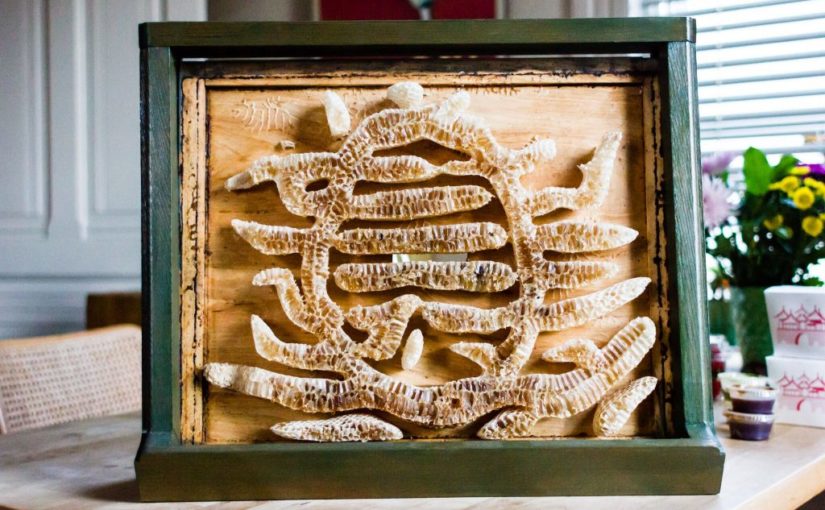
 Terry Oxford will be displaying her bee produced art at the Bioneers conference October 20-23

My Commitment to Becoming an Accessibility Evangelist

“What’s the appropriate term for referencing the broader community of people who are disabled in one way or another?” my colleague asked me the other day. “Seems like ‘disabled community’ is not quite right.”

How would you have answered this question? Have you thought about what our relationship is with the word “disabled” and all of the values, implicit and explicit, that accompany it?

Fortunately, I knew *the* person to go to with this question (and you will too when you see him speak at Bioneers this October). I asked my old friend and colleague James Thurston who will be introducing his collaborator and Bioneers plenary keynote speaker accessibility rights activist Victor Piñeda at Bioneers on October 20-22.

James is the Vice President, Global Strategy and Development at G3ict, the Global Initiative for Inclusive Information and Communication Technologies an NGO that works to facilitate and support the implementation of the dispositions of the United Nations Convention on the Rights of Persons with Disabilities (CRPD) related to the accessibility of Information Communication Technologies (ICTs) and assistive technologies.

Victor Piñeda is the President of World Enabled and of The Global Alliance on Accessible Technologies and Environments (GAATES), the leading international organization dedicated to the promotion of accessibility of the built and virtual environments.

In distilled terms, they are accessibility evangelists.

James and Victor travel around the world with their joint initiative, Smart Cities for All, meeting with municipal and civic leaders about digital inclusivity for all city residents, citizens and visitors. Together they have met with mayors and chief technology officers in Mexico, Brasil, Israel, India, Japan, and throughout the United States.

Their work is helping to raise the awareness of the importance of digital accessibility and inclusivity for all.

Possibly more significantly, they are working to change the narrative around the term and meaning of “disability”, which has become such a disempowering and polemic word in our society, often associated with other or less than.

Victor and James like to quote the words of Ambassador Luis Gallegos of Ecuador known to many as the “father of UN Convention on the Rights of Persons with Disabilities.”

“Ambassador Gallegos often says that being a person with a disability is the one minority group that we will all, if we live long enough, become a member of at some point in our life,” James told me. ”Either from aging (we all pick up impairments as we age and those affect how we use technology) or accidents, illnesses, wars, crime, etc.”

And that number is growing. According to the World Health Organization (WHO) approximately 15% of people on earth are people with a disability. Some quick math: that’s around one billion people.

There is still much work to be done to make the world aware of this issue. One of the points of entry is the workplace. James and his organization, G3ict, have launched a new campaign and web portal with a toolbox to help organizations, cities and countries incorporate accessibility and digital inclusivity policies and tools. It’s called BuyICT4all and includes resources in both Spanish and English. The portal includes a specific pathway to support people wanting to be evangelists in their own organizations.

So, what’s the appropriate term for referencing the broader community of people who are disabled in one way or another?

The answer was one that hit me viscerally and poignantly: “It’s persons with disabilities,” James told me. “Persons with disabilities are defined by their personhood, not their disability.”

That was enough to make me an accessibility evangelist.

Follow the work of James and Victor on Twitter.

Suzanne Simard and the Underground Fungal Networks

Professor of Forest Ecology in the Department of Forest and Conservation Sciences at the University of British Columbia, Suzanne Simard will address a keynote talk at Bioneers 2017.

One of the foundational, guiding principles of Bioneers since its inception nearly three decades ago is that we humans need to rediscover humility vis à vis the natural world. The scientific revolution that began with the European Enlightenment has produced many wonders and a powerful method to understand the workings of the universe, but in its noble quest to move beyond medieval superstition and ill-conceived notions it also went overboard and threw out the baby with the bathwater. It developed a view of nature as a soulless mechanism to be studied and dissected with no sense of its inherent sacredness, something that First Peoples, despite all the oppression they have had to endure, never lost and have been generously transmitting to those among the rest of us open to their teachings.

What the current era demands of us if we are to successfully transition to a genuinely sustainable and life-honoring civilization is that we find ways to reconcile and integrate the deep wisdom of First Peoples’ and ancient cultures’ worldviews applicable to our time with the best of modern science, especially its holistic and “whole systems” branches. Many Bioneers stalwarts, including Paul Stamets, Janine Benyus and Jeremy Narby, to cite only a few, have in their own ways been leading the way in using cutting edge scientific discoveries to reveal that nature is not a mindless machine but a complex adaptive system teeming with intelligence, and now we are thrilled to bring to the conference for the first time a scientist who might exemplify this quest more perfectly than anyone.

Suzanne Simard, Ph.D., a Professor of Forest Ecology in the Department of Forest and Conservation Sciences at the University of British Columbia, is a groundbreaking researcher who studies the astonishing complexity and symbiotic relationships in forest and other ecosystems, especially the underground fungal networks that connect trees and permit them to share nutrients and information. Her research, which was recently highlighted in the international bestseller by German forester Peter Wohlleben, The Hidden Life of Trees: What They Feel, How They Communicate—Discoveries from a Secret World, has shown beyond doubt that forests are in fact communities with highly complex and adaptive networks centered around what she calls “hub” or “mother” trees. Suzanne’s work has far-reaching implications about how to be wise stewards not only of forests, but wetlands, tundra, grasslands and alpine ecosystems as well. In revealing how these networks look a lot like human neural and social networks, her discoveries show us that if our species intends to survive, we had best seek to learn about how to live in balance in the biosphere from the webs of plant and fungal life that have been here far, far longer than we have and know far more than we do about resilience for the long haul.

We hope you will be able to join us in October to hear from not only one of the most important ecologists on the planet, but one of the best scientific communicators as well. Early-bird ticket rates end on July 31. Get yours now!