Founded in 2008, the Native-led Indigenous Forum at Bioneers is designed as a sovereign space for Indigenous People to bring their vision and message to Native and non-Native allies and to connect. Each year the Indigenous Forum works to amplify Indigenous voices, build networks and movements and enhance cross-cultural dialogue, learning, cultural sensitivity and informed action. The event is a core part of the Bioneers Conference, bringing together Indigenous activists, scientists, elders, youth, culture-bearers and scholars to share their knowledge and frontline solutions in dialogue with a dynamic, multicultural audience.
We invite you to join us in San Francisco for an incredible lineup of leaders making up the 2022 Indigenous Forum at Bioneers.
California is the world’s largest consumer of crude from the Amazon rainforest where it is converted into oil for some of America’s largest corporations and airports. Not only does this extraction contribute to climate change, Amazon crude is causing contamination and rights violations all along the supply chain. Extraction on Indigenous territories is driving deforestation and leaving a toxic legacy across Ecuador’s Amazon, tankers carrying crude across the Pacific threaten our oceans, and refineries processing the crude poison neighboring communities, while Californians are forced to consume goods and services that rely on Amazon-sourced crude oil. This presentation by Indigenous Amazonian forest protectors in partnership with Amazon Watch calls for Californians to take action to #EndAmazonCrude and demand corporate responsibility for people and planet.
Gail Pelletier, a member of the Treaty 6 Pukatawagan Cree Nation and a Cross Lake and Guy Hill Indian Residential School survivor, along with her son, Bioneers board member, author, director and campaigner, Clayton Thomas-Müller; and her grandson, thirteen year-old Jaxson Thomas-Müller, will share how they are practicing mindfulness and intention while their family is moving through and healing from the trauma of 150 years of Canada’s genocidal residential school policy. Join them to learn how working toward truth and reconciliation and healing from the violence of colonization and the intergenerational impacts of Indian Residential School Syndrome is a multigenerational endeavor.
As the world continues to grapple with the reality of the changing climate and the ever-more evident destructive consequences of capitalism and colonization, it is normal to feel an increase in anxiety about what our future may hold. This is even more true for Native people. Indigenous peoples are responsible for protecting and maintaining some 80% of the world’s remaining biodiversity as part of their deep cultural and spiritual connections to many of the lands, waters, species and biomes of the planet. Colonization didn’t just bring the displacement of First Peoples; it led to intense degradation of the critical ecosystems they were intrinsically connected to. As the climate emergency exacerbates this threat, Indigenous communities find themselves experiencing a more visceral and different form of eco-anxiety. Join Eriel Tchekwie Deranger as she invites us to explore holding this reality, yet also to discover how Indigenous ways of knowing can be a salve to these powerful tensions, as they can point the way to climate solutions and help us move from anxiety to inspiration. What might it look and feel like to live in a world where Indigenous peoples were thriving? How can we work through this collective emergency and crisis together with healing in mind?
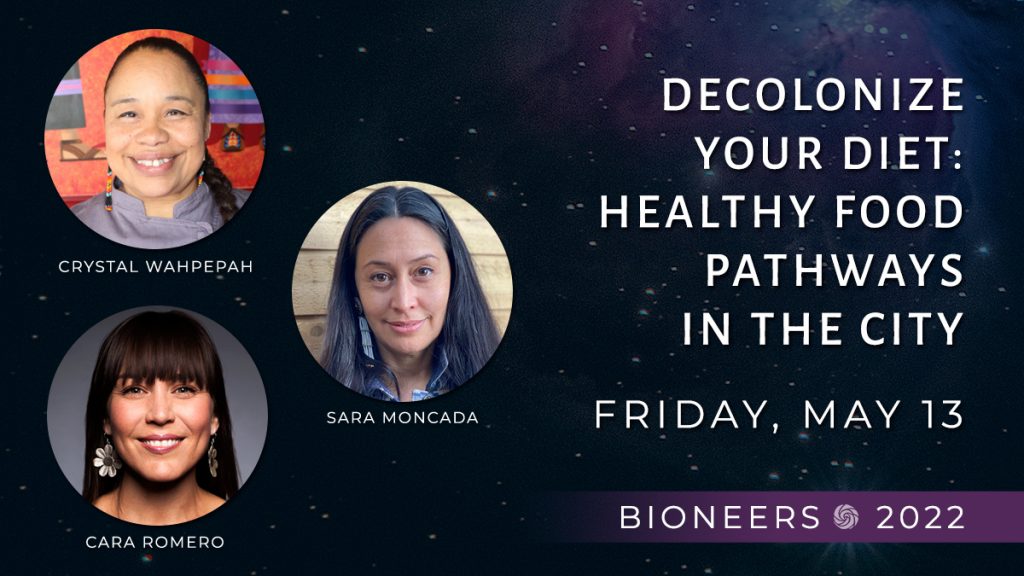
Revitalizing traditional Native foods are part of a re-indigenization renaissance happening from coast to coast. Many people are unaware that a key strategy of the American genocide was to destroy native food sources, create dependency, and replace healthy diets with nutrient deficient commodities. In this panel, Native leaders in the Bay Area will discuss how they have been shaping this movement to revitalize Indigenous foods. In addition to improving health, Indigenous foods local to place fosters community wellness and intergenerational healing by bringing people together, providing fun activities for youth, and decolonizing urban spaces. Join us to learn what you can do to be a part of this movement, and how to decolonize your own diet.
Gregg Castro (t’rowt’raahl Salinan / rumsien & ramaytush Ohlone), Association of Ramaytush Ohlone/San Francisco American Indian Cultural District
Sharaya Souza, San Francisco American Indian Cultural District
Moderated by Alexis Bunten (Unangan/Yupik)
About this panel
San Francisco is arguably America’s most progressive city, at the cutting edge of intersectional culture change for social and environmental good. To this end, city leaders, officials and local NGOs have made land acknowledgments, removed racist murals, established an American Indian Cultural District, and made partnerships to restore public lands hand-in-hand with Native American community leaders. Presenters will lead a frank discussion about how to revitalize cities through these kinds of re-indigenization efforts. Join us to learn about the unique issues that San Francisco’s urban Indian communities face through stories about successes and mistakes that have been made on the road to reconciliation.
Cree legends talk about the nefarious winter spirit Witigo’ and how it can possess you to such an extent that you become an all-consuming cannibal stricken with insatiable greed and hunger. 350.org‘s Cree Campaigner and best-selling author of Life in the City of Dirty Water: A Memoir of Healing, Clayton Thomas-Müller, will discuss how this sort of possession offers us an excellent metaphor for the mindset that has brought us the ravages of ruthless extractive capitalism and the oppression of First Peoples and other historically disenfranchised groups; and he will propose some answers to the question: What is it going to take for us to move through and heal from the violence of colonization?
The Rights of Nature movement protects nature (rivers, mountains, and entire ecosystems and the life forms supported within them) by recognizing their legal rights. This legal framework offers a radically different worldview from current legal premises. Instead of being seen as property, nature’s inherent rights to exist, persist, flourish and evolve can now be protected under the law. For over 15 years, the Rights of Nature movement has caught fire across the US and the rest of the world in the most and least expected places, from tribal lands to “progressive” cities, coal country, and more. Join us to hear the latest updates on the Rights of Nature movement and legal battles in the US from the attorneys leading the movement in Indian Country and beyond.
Indigenous Forum Day 2: Indigenous Solutions for Transformative Change
Eriel Deranger (Athabaska Chippeweyan First Nation), Indigenous Climate Action
Moderated by Alexis Bunten (Unangan/Yupik)
About this panel
Indigenous peoples in the north have been feeling the disastrous effects of climate change far longer than the rest of the planet’s population. According to NASA record sets, the arctic is warming up to four times faster than the rest of the planet, disturbing terrestrial and marine ecosystems, destroying villages, and disrupting healthy ways of life. Some of the most innovative solutions to the climate crisis are emerging from the circumpolar north born of the practicality and ingenuity rooted in Native knowledge systems. In this panel, leaders at the Native Conservancy, Native Movement and Indigenous Climate Action will share their strategies for addressing climate change in policy, civil society and economic sectors.
Indigenous Peoples already do “green jobs,” integrate cultural values into business activities, and protect 80% of the world’s biodiversity. In order to transform our economies through Indigenous-led solutions, we need to uplift movements and stories inspired by Indigenous resistance. To do this, we must change the culture of philanthropy and impact investing, which still largely circulates in privileged circles. In this panel, Sikowis, Nick Estes, and Alexis Bunten discuss colonial-capitalism and how Indigenous-led strategies offer a pathway towards an equitable and regenerative future.
Indigenous women entrepreneurs are leading the most innovative solutions for community wellness despite disproportionately facing rampant descrimination, violence and lack of access to social goods. For Native Peoples, economic empowerment is not just measured in dollars, but also in terms of challenging stereotypes, responsibilities to future generations, and relationship to ancestral homelands. Join this panel to learn more about how Native Women Lead in partnership with New Mexico Community Capital are at the cutting edge of supporting business women and healing communities. Topics discussed will include how to challenge current systems while working within them, new models for economic empowerment in communities incorrectly written off as “high risk,” quadruple bottom line evaluation metrics and centering Indigeonus women’s voices through storytelling through media.
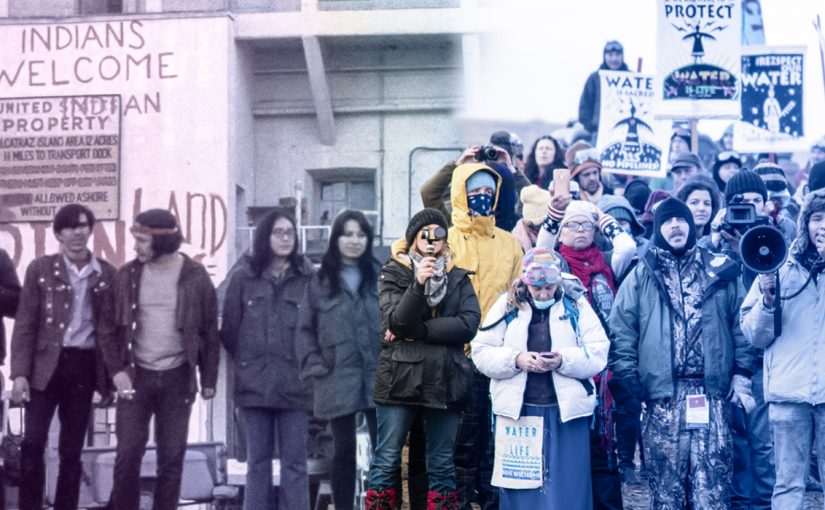
History doesn’t repeat itself, but it rhymes. From the historic Indigenous occupation of Alcatraz Island in 1969 to the fossil fuel fights throughout Canada and the U.S. today, Indigenous resistance illuminates an activism founded in a spiritual connection with the web of life and the human community – with Julian NoiseCat, Dr. LaNada War Jack and Clayton Thomas-Müller.
Featuring
Julian Brave NoiseCat is a polymath whose work spans journalism, public policy, research, art, activism and advocacy. He serves as Director of Green Strategy at Data for Progress, as well as “Narrative Change Director” for the Natural History Museum artist and activist collective.
Dr. LaNada War Jack is an enrolled member of the Shoshone Bannock Tribes of the Fort Hall Indian Reservation in Idaho.
Clayton Thomas-Müller is a member of the Mathias Colomb Cree Nation, also known as Pukatawagan, in Northern Manitoba. He serves as the “Stop it at the Source” campaigner with 350.org.
Credits
Executive Producer: Kenny Ausubel
Written by: Kenny Ausubel
Senior Producer and Station Relations: Stephanie Welch
Host and Consulting Producer: Neil Harvey
Producer: Teo Grossman
Program Engineer and Music Supervisor: Emily Harris
Production Assistance: Monica Lopez
Special thanks to Cara Romero and Alexis Bunten, co-producers of the Bioneers Indigeneity Forum.
This is an episode of the Bioneers: Revolution from the Heart of Nature series. Visit the radio and podcast homepage to find out how to hear the program on your local station and how to subscribe to the podcast.
This program features music by Justin Delorme, Chippewa Travelers and Mimi O’Bonsawin from Nagamo Publishing at Nagamo.ca.
Subscribe to the Bioneers: Revolution from The Heart of Nature podcast
Transcript
NEIL HARVEY, HOST: In this program, history doesn’t repeat itself, but it rhymes. From the historic Indigenous occupation of Alcatraz Island in 1969 to the fossil fuel fights throughout Canada and the U.S. today, Indigenous resistance illuminates an activism founded in a spiritual connection with the web of life and the human community.
I’m Neil Harvey. This is “Indigenous Rising: From Alcatraz to Standing Rock,” with Native leaders Julian Brave NoiseCat, Dr. LaNada War Jack and Clayton Thomas-Müller.
JULIAN BRAVE NOISECAT: [In Secwepemctsín] Weyt-kp xwexwéytep, Julian Brave NoiseCat ren skwekwst. Ren kiké7ce te skwest re Alexandra Roddy ell ren Qeqe7tsé te skwest re Ed Archie NoiseCat. Secwecwepmc-ken ell St’itlimx-ken. Te Tsq’escen re tst7ekwen. Te Oakland re tst7ekwen. Le7 ren pupsmen ne7elye tek tmícw w7ec re Piscataway-ulucw. Qweqwlut-ken te Bioneers. Te Coast Miwok ell Ohlone-ulucw re qw7éles. Me7 peqíqlc-ken te Secwepemc-ulucw. Pyin te sitq’t lexexyem-ken te necwepepl’qs re qelmucwúy ell re tmícw.
I chose to begin my keynote in my language tonight because I wanted to show you that in our words, and in our very being, Indigenous Peoples are refusing to be annihilated.
HOST: Julian Brave Noisecat is a polymath whose work spans journalism, public policy, research, art, activism and advocacy. He serves as Director of Green Strategy at the think tank Data for Progress, as well as “Narrative Change Director” for the Natural History Museum artist and activist collective.
Julian Brave NoiseCat spoke at a virtual Bioneers conference.
Julian Brave NoiseCat
JBN: In Secwepemctsín, I said who I am in relation to my kin, to my community, and to the places I come from because those things matter, not just to Indians, but to all people. At this dire juncture, with the concentration of carbon dioxide in the atmosphere climbing to levels not seen in 3.6 million years, we all need to remember who we are, how we are related, where we come from, and how the other-than-human world, to which we are also related, gives us life.
The next thing I did when I introduced myself in my language was I put myself in relation to my family and my people. I think it’s important to remember that we are not alone, that we have relatives, that we are, in fact, all related, and not just us humans. The other-than-human world shares some of our DNA too. If we remember that, maybe we will recognize that our fates are also interrelated.
Over the last five years, my father and I have participated in the tribal canoe journey. It’s an annual indigenous gathering on the West Coast, where tribal people organized into what are called “canoe families”, get into their ocean-going vessels, and paddle for days and even weeks across the seas. At the end of those voyages, we converge on a single community for a week-long celebration of food, gifts, speeches, dances, and songs.
My father wasn’t around for most of my childhood. He was struggling with alcoholism and the demons inherited from St. Joseph’s Mission and the cycles of poverty, dysfunction and abuse it unleashed on Canim Lake. But the canoe journeys have brought us back together, and they helped us recognize the importance of family. You see, the beautiful thing about the canoe is that it quickly teaches you that if you want to go anywhere, you need other people, you need a family, you need to go together.
I need you to understand how important the Alcatraz occupation was to Indigenous Peoples. It’s like our version of the Montgomery bus boycott. It launched a social movement that changed the hearts and minds of Native and non-Native people across the country and around the world. Alcatraz made Indians proud to be Indian again, and it transformed federal policy.
During the occupation, President Nixon, the frickin’ Watergate guy, shifted the federal government’s policy from an officially stated goal of termination to one of self-determination.
Working with our own canoe family, which we called the Occupied Canoe Family, my mother, father, and group of friends that included a youth worker and an Alcatraz occupation veteran, organized a paddle around Alcatraz Island on Indigenous Peoples Day in 2019. Eighteen canoes, including some from as far north as Canada, participated. Dozens of media outlets covered the story. A local TV station broadcast the canoes, circumnavigating the island from its traffic helicopter. Our little all-volunteer effort even made it into The New York Times. And for a day, Alcatraz was not seen as the former federal prison, but instead as a symbol of indigenous freedom, the way Native Peoples see it.
We can do a lot together when we recognize the fact that we need relatives, that we need family. Every time my father and I got out into the water, we rekindled and deepened our connection to the seas and places that gave us our Salish culture. If we don’t stop to remember and honor the places we come from, how can we possibly defend them?
RICHARD OAKES: We, the Native Americans, reclaim this land known as Alcatraz Island, in the name of all Native Americans by right of discovery. We wish to be fair and honorable with the caucasian inhabitants of this land, and hereby offer the following treaty. We will purchase said Alcatraz Island for twenty-four dollars in glass beads and red cloth, a precedent set by the white man’s purchase of a similar island, about 300 years ago…”
Richard Oakes clip: San Francisco Bay Area Television Archive
HOST: That’s the voice of the late Richard Oakes, Mohawk Native American activist and one of the leaders of the Alcatraz occupation. He famously proclaimed that, “Alcatraz is not an island, it’s an idea”.
The idea was that when you came into New York harbor, you’d be greeted by the Statue of Liberty. But when you came through the Golden Gate, you’d encounter Alcatraz, a former federal prison reclaimed by Indians of all tribes as a symbol of their rights, their pride, and their freedom.
It’s possible, says Julian NoiseCat, to draw a direct line from Alcatraz to Standing Rock and countless other subsequent acts of Indigenous resistance. That seminal moment of organized action by Indigenous elders changed history.
One of those elders is Dr. LaNada War Jack. She is an enrolled member of the Shoshone Bannock Tribes of the Fort Hall Indian Reservation in Idaho. She participated in the occupation, and spoke about it at a Bioneers Indigeneity Forum.
LaNada War Jack. Photo by Shalini Gopie, NPS
LANADA WAR JACK: We didn’t have any cell phones in those days. I don’t know how we did anything but—[LAUGHTER]. But we got on the phone and called all of our departments throughout the state of California and all the Native American students came. So we had our—kind of like an instant organization to take over Alcatraz, which we did, and it became a 19-month occupation. And I keep track of how many months it was because there were 19 Hopis that were imprisoned on Alcatraz during the late 1800s, and that’s where they kept all the war leaders from the last Indian Wars in the West. The Apache, the Shoshone Nation were having all their wars, the Paiutes, the Bannocks. And the last Indian War in the Northwest was the Bannock Indian War in 1880, so all of our leaders were taken to Alcatraz as well. So we have a little bit of history from our ancestors there as well. A lot of prayers have been spoken out there, because the 19 Hopi leaders were religious leaders, very powerful medicine people that were out there for that time, and they must’ve really put together a lot of prayers.
Unfortunately, the leader we picked, Richard Oakes, his daughter got into an accident and she was killed, so he and his family left the island. They were there for about six weeks. So we were left with the rest of the occupation. We organized the Bay Area Native American Council, which were all the native organizations across the Bay, and they came and supported us and met with us every time we negotiated with the federal government. Because they said we’re young and militant, and we didn’t have the support of the older, adult community, and we showed them that we did have that support, and told them we’re not militant, we’re non-violent, but we are young. That was our only sin at the time. [LAUGHTER] Anyway, we negotiated with the government throughout that time.
At a press conference celebrating the one year anniversary of the occupation, LaNada War Jack presents an architectural model and blueprint for the creation of a “$6 million tuition free university,” by the Indians All Tribes
HOST: For LaNada War Jack, as for so many other Indigenous leaders, the Alcatraz Occupation marked the beginning of a new beginning for First Nations in the U.S. The ferment of the 1960s brewed up an Indigenous rights movement and cultural revolution that would wash over countless arenas of society.
LWJ: I was sent to San Francisco on the Bureau of Indian Affairs Relocation Program when I was 18, and then I got involved in community development in the Mission District where a lot of us lived, and the blacks had a program where they were sending their youth to UC Berkeley, so I asked them if they could send me too, and they did. So, I was the first Native American student at UC Berkeley. [APPLAUSE] And then I recruited, they helped me recruit. From there we joined the Third World Strike for Native American studies, Chicano studies, Asian studies, and Afro-American studies.
So it was pretty turbulent during those days, and San Francisco State had the same thing going on. I was the leader of the Native American Student Group from Berkeley, and they arrested all of the leadership. But I was able to work on curriculum development with Dr. Forbes at Far West Research Laboratories in Berkeley. We got our curriculum implemented, and when that happens at Berkeley, it goes statewide to all the UC campuses. And we had an instant Native American studies organization throughout California. And we [APPLAUSE] conferenced, and pow-wowed, and we all knew each other.
HOST: The history of broken treaties between the US government and First Nations is long and egregious. LaNada War Jack went on to pursue the enforcement of treaty obligations and Indian Rights as a founding board member of the Native American Rights Fund. She has served as an elected councilwoman for her tribes and on many other boards locally and nationally. She is currently President of the Indigenous Visions Network.
But broken treaties were only one crime in a blood-stained 500-year campaign of genocide and cultural erasure. Despite impossible odds, First Peoples have endured and kept the faith.
LWJ: During the time that the laws were preventing us from practicing our ceremonies in the open, or speaking our languages, because that was all illegal, the government passed legislation to make that illegal. But we still maintained our ceremonies and tried to keep our languages, and still follow our natural ways.
That’s why it’s all our responsibility to maintain those prayers, and those songs, and those ceremonies because it helps balance all land and life, and without that, we don’t have anything. Then we experience all these problems like we’re going through now. And that’s why I really like to go out to Alcatraz for Sunrise Ceremony because what you’re doing there is you’re impacting the world when you go to the sunrise because on those first rays of light that come through and you’re saying your prayers, or you’re singing your songs, and it’s coming out as sound, and it travels on those light rays all the way back to the sun, and then it comes back again, and as the Earth turns, all those positive blessings come back and fall on the Earth.
HOST: LaNada War Jack illuminates a deeper Indigenous cosmology grounded in an Earth-honoring spirituality. That spiritual foundation has continued to hold the center of contemporary Indigenous rights and resistance movements. At the same time, Indigenous leadership has increasingly held the center in the global multicultural social movements to sustain the web of life and bring equity into a broken world.
When we return, Canadian Indigenous rights and climate action leader Clayton Thomas-Müller takes the long view of intergenerational leadership and the restoration of the sacred.
I’m Neil Harvey. You’re listening to The Bioneers. This is “Indigenous Rising: From Alcatraz to Standing Rock”.
HOST: “Worldviews create worlds,” says cultural historian Richard Tarnas. Today, what’s old is new again: An Indigenous worldview of interconnection and the sacred.
Clayton Thomas-Müller spoke at a Bioneers conference…
CLAYTON THOMAS-MÜLLER: You know, in our Indian way, we have this way of seeing the world—In Cree way, when we talk about thinking in terms of seven generations, we’re thinking about the past three generations, okay, and the lessons that they’ve taught us, the sacrifice they made so that we could be here; the generation that we’re in right now, the here; and three generations ahead, and that’s how we make the decision, and it’s a different way of worldview, of seeing, of thinking about the consequences of the actions that you take in the now.
HOST: Clayton Thomas-Müller is a member of the Mathias Colomb Cree Nation, also known as Pukatawagan, in Northern Manitoba in Canada. He serves as the “Stop it at the Source” campaigner with 350.org, a leading global climate action nonprofit.
He’s an award-winning Indigenous Rights and Climate Justice activist, media producer and author.
He has led delegations to major UN and other international conclaves. His award-winning book and film are “In the City of Dirty Water.”
But for Clayton Thomas-Müller, his personal journey began very differently.
Clayton Thomas-Müller
CTM: I started off my career as an organizer in my home city in Winnipeg in Canada. It’s about six hours north of Standing Rock just across the US/Canada medicine line. You know, my older brothers, they started the largest native gang in the country, the Manitoba Warriors, and so I grew up in that inner city gang culture that so many of our young brown and black youth grow up in who have become urbanized. Luckily, I was able to be introduced back to our culture, and for us back home, that’s Sundance. I was taken to my first Sundance when I was 18-years old, and it really cracked my heart and my head wide open to a vision of what could be possible, something I could’ve never imagined in the time I’d spent on the Earth up to that point. And I started to engage other young people to try and share this beauty that I had discovered in our people’s connection to the sacredness of our land.
And so at that time in the ‘90s, a bunch of us young natives, we got together and we started the Native Youth Movement, and we began to do work across the country, decolonization work, work aimed at helping our young people decolonize their minds to bring them back, to establish that connection to the sacredness of Mother Earth.
Today, I see young people have stepped up, and they’re leading the global climate movement now. Yes, there’s this phenomenal inspiring young woman from Sweden, Greta, but there are hundreds of brown and black young women all across the planet [APPLAUSE] that have been leading. And I think what is inspiring about this moment right now on a global scale is that when you look back at social movement history here in the United States, what they call the U.S.A., the Civil Rights movement, the movement to end racial segregation, racial apartheid in this country, it wasn’t until they brought the children out to the frontline that those racist police stopped busting heads, because even the most conservative of conservative here in the U.S.A. knew that you couldn’t bust kids’ heads open on camera. [LAUGHTER] I’m serious. And they shifted the Overton window in that moment of what could be possible.
HOST: In late September 2019, the largest climate strikes in history rocked the world with 150 countries taking part in 4,500 locations. 350.org reported that over 7 and a half million people participated in what was known as Global Week for Future. Canada had some of the highest numbers. For Clayton Thomas-Müller, it got very personal.
The 2019 Climate Strike in Montreal. Photo by Phil Desforges.
CTM: We put 900,000 people on the streets, [APPLAUSE] 500,000 alone in the city of Montreal; 12,000 people marched in my city in Winnipeg in Treaty 1 Territory. I went and marched that day with my sons, Felix and Jack. Felix is 13. Jack just turned 11. You know, this moment in time right now has given me an opportunity to share what I’m very passionate about with my sons. When we go protest, they climate strike, every Friday, we go to the legislature in Winnipeg and we protest. And it’s cool because, you know, I’m very cautious, not just politically, but also spiritually to never impose what I believe too heavily on my sons. I want them to choose and they’re like right in it. They’re like let’s do this shit, Dad. You know, [LAUGHTER] Screw big oil. Keep it in the ground. [LAUGHTER] Climate justice now!
And I seen these children, streaming out of school buses, little kids carrying the signs that they had made, and it snapped something in my heart, and I just knew this shit is done. Big oil is done. Like these kids are going to—like that power, that life, that force of life, and the positivity is just something to behold. And so there’s something to be said about intergenerational strategies.
And what I remember from when I was a young person is that people told us we were crazy when we started the Native Youth Movement, that we couldn’t do something about the gangs in the inner city. When we started the Tar Sands Campaign and took on every frickin’ oil company operating in the Canadian Tar Sands, they told us we were crazy, and that would never be able to keep the Tar Sands land-locked, that they were going to build all the pipelines they wanted to build, and you know what? We’ve been knocking those pipelines down one after the other. [APPLAUSE]
HOST: Just three years earlier in 2016, history had rhymed yet again with a surge of Indigenous resistance in an obscure Indigenous community in North Dakota called Standing Rock. What began as a grassroots protest against the Dakota Access Pipeline became an iconic marker in the struggle for Indigenous rights and social and environmental justice. The pipeline endangered the safety not only of the community’s water, but of the region’s 17 million people. It further threatened the community’s ancient burial grounds and precious cultural sites.
The campaign was initially catalyzed by Native youth from Standing Rock and surrounding Native communities. It soon spread to adults who organized a “water protectors” camp as a locus of direct action. The #NoDAPL hashtag blew up on social media and the camps were soon teeming with Native and non-Native water protectors from around the nation and the world.
Like Alcatraz, Standing Rock became an idea. Again, it changed history.
CTM: Standing Rock was the largest gathering of indigenous people since pre-colonialism. It became literally the fifth biggest city in the state of North Dakota, was the Standing Rock occupation. It was interesting watching it happen and watching the stories coming out of there. And I think the biggest, most powerful and profound story was very simple. It was a simple native teaching with huge implications, and that teaching was mni wiconi, water is life. Regardless of your gender, or race, or what you believe in, as members of the five-fingered nation, we all start our existence here on Mother Earth as mortal existence, suspended in amniotic fluid inside our mother’s womb, and the sound we hear for nine months, other than the muffled voice of our mother and the people she’s talking to, is her heartbeat [TAPPING ON MIC TO MIMIC HEARTBEAT].
And that’s very sacred, that’s your shared experience. And what Standing Rock, and the people of Standing Rock, and all their supporters who came there to stop that DAPL pipeline from threatening their water source, the Missouri River, they gave the world a teaching about our way of seeing the world, and that teaching was mni wiconi. And so there’s a spiritual dimension that comes with native activism that I think humanity needs if we’re going to solve the global climate crisis. [APPLAUSE] And that is fundamentally a connection to the sacredness to the place where you live. If you are connected to the sacredness of the place that you call home, then you’ll give a shit enough about it to go out there and fight the evildoers that would destroy your home for profit.
HOST: Clayton Thomas-Müller, LaNada War Jack and Julian Brave NoiseCat. “Indigenous Rising: From Alcatraz to Standing Rock”
This article was authored by Mark Trahant and originally published at Indian Country Today. Read the original here.
The list goes on and on: The pandemic. George Floyd’s murder and the growing call for racial justice. Pro-democracy protests in Hong Kong, and, at the same time, an orchestrated attempt to overturn a democratic election. Global protests over vaccines and masks. And now war. How does this make any sense?
“Could there be a symbiotic relationship between COVID-19 and conflict?” ask scholars Alexi Gugushvilil and Martin McKee. In a paper written in October 2020 for the Scandinavian Journal of Public Health.
“At the beginning of the pandemic, UN Secretary-General António Guterres appealed for an immediate global ceasefire to enable the world to confront ‘a common enemy’ but his plea went largely unheeded,” the scholars wrote. “We argue that there is a bidirectional relationship between COVID-19 and conflicts: on the one hand, circumstances associated with wars may facilitate pandemic spread; on the other hand, COVID-19 has already heightened xenophobia and nationalism, which in turn can encourage armed confrontations.”
Gugushvilli is an associate professor of sociology at the University of Oslo. McKee is professor of European Public Health at the London School of Hygiene and Tropical Medicine. He is also past president of The European Public Health Association and a health policy expert on the former Soviet Union.
“Wars and epidemics have a long and close history, going back at least to the well-documented Plague of Athens in the 5th century BCE,” the scholars wrote. And a common thread is when the national economies are shrinking.
The link between war and plague is also a familiar story in Indigenous communities. Europeans brought with them dozens of infectious diseases along with their weapons of war. Smallpox, chickenpox, cholera and even, the common cold.
There is also a relationship between mass protests over such things as mask requirements and war. There were more than 139,000 recorded protests in 2020, an increase of 68.5 percent from the previous year. More than 33,000 of those protests were directly related to COVID-19 and responses to the pandemic such as the trucker blockade in Canada and the convoy of trucks now headed to Washington, D.C.
“These protests are an obvious marker of public discontent that can easily be exploited by powerful forces. here, history again offers a warning,” the scholars wrote. “Those German municipalities that suffered most in the 1918 influenza outbreak were the ones that saw the greatest electoral gains for the Nazi Party a decade later.”
So what now? Will history repeat or even, as some say, rhyme? That question depends on the policy choices that are ahead.
The Economist says: “Over the past decade, intensifying geopolitical risk has become a feature of world politics, yet the world economy and financial markets have shrugged it off … Russia’s invasion of Ukraine is likely to break this pattern, because it will result in the isolation of the world’s 11th-largest economy and one of its largest commodity producers.”
That means higher oil and gas prices because Russia is one the world’s largest producers, and it dominates the European market for natural gas. On Thursday the price of oil topped $100 a barrel (a cost that will soon show up at gas stations) and Germany said it would no longer permit a pipeline project that is supposed to transport natural gas from Russia to Europe.
And while it’s true that Russia views NATO as a threat; this invasion is also about natural resources, climate change, and shrinking economies.
“First, we know that it is only because of oil and gas that Russia is able to afford this military invasion,” said Jade Begay, climate justice campaign director for NDN Collective. “This makes it clear that not only are oil and gas used to carry out war but are also a root cause for exponential climate change. Second, as an organizer who is actively working to shut down fossil fuel infrastructure, I am hyper aware that this conflict will potentially drive up domestic oil and gas development, onshore and offshore gas leasing, and/or potentially roll back recent wins when it comes to fossil fuels, thus contributing to an increase in carbon emissions. Finally, I’d be remiss to not mention the impact that militaries have on the climate, when it comes to the U.S., our military is the single largest institutional polluter in the world, which creates more greenhouse emissions than 140 other countries.”
The Economist predicted that Russia may deliberately create bottlenecks in order to raise prices.
Normally governments go out of their way to limit the impact of war (or any other disaster) on the price at the pump. Governments do not want people mad at them over higher prices. But what if this time is different? What if this is a proxy war for oil?
President Joe Biden has talked about climate change as an existential threat. So perhaps the smart play is to lean into the price increases and cut off Russia’s ability to market oil and gas.
As the president said after the invasion: “President Putin has provided the world with an overwhelming incentive to move away from Russian gas and to other forms of energy.”
Some fear that the White House won’t make the hard call.
“First and foremost, our organization, the Indigenous Environmental Network, stands against any and all forms of imperialist expansionism, which we’re seeing right now with Russia invading Ukraine. But we also saw that when they already invaded and annexed Crimea, which impacted Indigenous communities who live in Crimea, and now we’re seeing potential violations of human rights in Ukraine at this very moment,” said Dallas Goldtooth from the network. “It has to be stated that almost any and all conflicts in the world today implicate fossil fuels. Russia is the second largest producer of natural gas in the world behind the United States. And is the top supplier of gas to Europe. Our fear is that this conflict will only deepen the pockets of the oil and gas industry as any modern war does, but more, it will give the Biden administration further reason to delay action, to stop the expansion of fossil fuels here in the United States.”
But there is another alternative.
Begay is Diné and Tesuque Pueblo of New Mexico. “Over the last month,” she said, “fossil fuels have been at the center of how nations are holding leverage against one another, point and case, the Nord Stream 2 Pipeline. This should be a clear signal to our leaders that we need a Just Transition & Green New Deal now, so that we are liberated from this toxic dependency on oil & gas.”
“This is a moment to seize on the call and demand for a just transition away from fossil fuels,” Goldtooth said. Too often the conflict over fossil fuels come at the detriment of Black, Brown, Indigenous and working class peoples. “Here’s a moment for us to step up to the plate and say, ‘Hey, we’re not gonna be feeding the beast anymore. We’re gonna stop the exports of oil and gas.’ We can take an opportunity to set the path forward because the U.S. is the largest provider of natural gas on the planet. They can take, make a solid step in the right direction by stopping the expansion of that sector and investing in communities for a just transition.”
A Russian-controlled Ukraine could add to the global warming matrix because it could expand oil and gas as well as uranium and other minerals that can be mined.
Then again Europe might be ready for a different energy.
“There’s this narrative, this false narrative out there, that to step away from fossil fuels is impossible,” he said. Goldtooth is Mdewakanton Dakota and Dine. “Countries are already doing it. Iceland’s a great example. It’s getting the vast majority of its energy from renewable sources. On a smaller scale, tribal nations and small communities are already set in the path forward on how to step away from oil and gas.
And so we just need to continue to invest in those local visions of how we wanna make a better future for our communities, for our people and for the ecosystems around us. So that the path forward is out there, we’re just not elevating those uplifting those stories.”
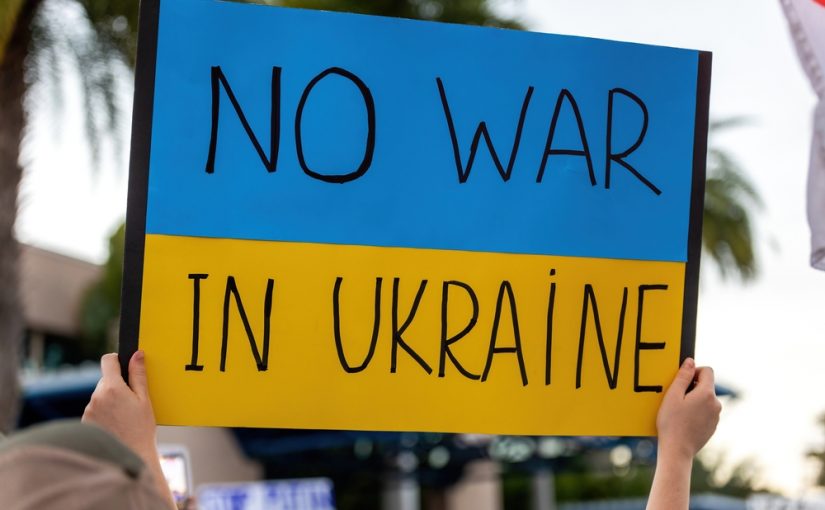
Putin’s invasion of Ukraine has shocked the world. We stand, along with millions of others, in solidarity for Ukrainians at this time of unimaginable hardship. Underlining this solidarity should be a vision for a more peaceful, secure future free of fossil fuel dependency.
The invasion has highlighted the core role that fossil fuels play in driving conflict and have become a key battleground upon which this war in particular, and responses to it, are being played out. As long as we are dependent on fossil fuels, our geopolitical, economic, and energy security will be at the behest of an ever-changing political-economic landscape that climate change will only exacerbate.
As the IPCC’s Sixth Assessment Report on climate impacts, adaptation, and vulnerability released last week confirmed, the effects of climate change are manifesting at a faster rate than scientists had predicted. The report confirms that unless drastic action to limit greenhouse gas emissions are enacted swiftly, we will miss the short window we have to avert the worst impacts of climate change. It’s not too late, but we must act now.
We need a concerted government-sponsored push to energy efficiency and renewables. Rather than replace one source of fossil fuels with another, we must use our collective power to demand from our leaders that they invest in a new path forward. It’s our responsibility, as the climate movement, to raise our voices louder than the vested interests in the fossil fuel industry are doing. We are calling for a radical shift to renewable energy — for a more resilient, peaceful, and secure future.
“Climate change and conflict have the same roots — fossil fuels — and our dependence on them. We will not surrender in Ukraine, and we hope the world will not surrender in building a climate resilient future.”- Svitlana Romanko
Fossil fuels create conflict, and are the backbone of Russia’s power
The invasion of Ukraine demonstrates how our dependence on Russian oil and gas enables dictators like Putin to use fossil fuel money to carry out and sustain devastating wars. As the second-largest exporter of gas and the third largest exporter of oil, the Russian economy is heavily dependent on oil and gas exports, which make up 36% of the country’s total budget. Oil and gas also contribute significantly to Putin’s personal wealth while fueling the country’s military resources and keeping the Russian currency, the Ruble, afloat.
25% of Europe’s oil and 40% of its fossil gas comes from Russia. Russia’s position as one of the world’s dominant energy suppliers serves as a point of leverage for Putin geopolitically — particularly in Europe — as Western leaders know that directly sanctioning the supply of oil and gas would create dire economic hardship for their constituents. If Putin decided to hold hostage Russia’s supply of oil to Europe, prices would directly impact the livelihoods of millions of people who depend on it.
The fossil fuel industry’s response to the invasion
Since the start of the war, the tightening of supplies of oil and gas coming out of Russia have resulted in a sharp rise in prices globally. The fossil fuel industry outside Russia didn’t waste any time in attempting to leverage this situation in their favor. On February 24th, the day of the invasion, the American Petroleum Institute called for increasing fossil fuel extraction saying it was ‘crucial’ that the United States invest in more pipelines, drilling, and fracking.
In response to the invasion, we are seeing Western fossil fuel companies announce their intention to pull out of the country. BP announced it will cut ties with Russia’s state-owned oil company Rosneft, a significant development as the company constitutes the biggest foreign investor in Russia, and abandoning its stake will amount to a $25 billion loss while shrinking its oil and gas reserves in half.
ExxonMobil has newly released a statement announcing it will comply with sanctions imposed on Russia by “discontinuing operations and developing steps to exit the Sakhalin-1 venture” (a project which has exported over 1 billion barrels of oil and 1.03 billion cubic feet of natural gas since it began operations in 2005). Shell has announced plans to exit operations in Russia including its flagship Sakhalin 2 LNG plant, Engie of France, ENI of Italy, Equinor of Norway, and Uniper of Germany have stated intention to pull out out varying degrees.
In President Biden’s State of the Union address on March 1st, he announced the US and its allies will release 60 million barrels of oil to help alleviate the surge in prices that will come as a result of sanctions against Russian oil, with US oil accounting for half of this amount.
The fossil fuel industry has never done anything like this. It’s a clear signal that a major shift in global energy markets is underway. We need to demand that our leaders direct that shift towards clean energy, not more fossil fuels.
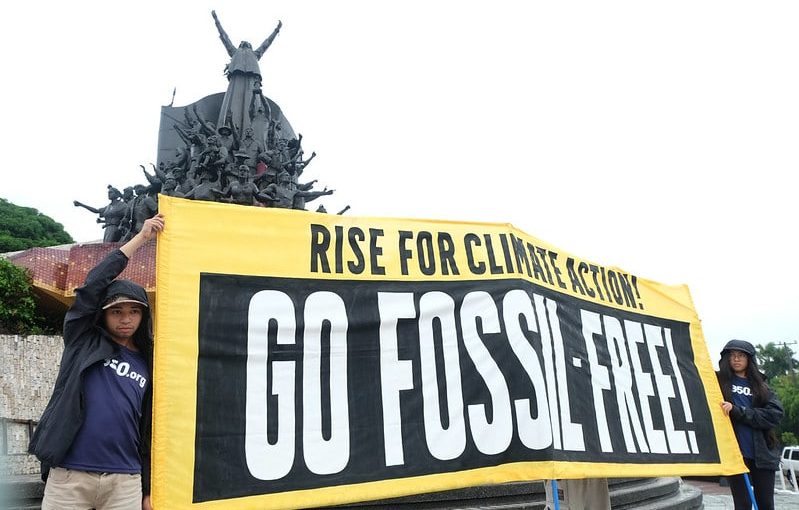
We need a just transition to renewable energy, now
Germany has responded by announcing it will move up its 100% renewable energy goals to 2035, rapidly accelerating expansion of wind and solar power and moving off from fossil fuels fifteen years sooner than it had previously declared. This is a significant step, and we’d love to see more of this climate leadership around the world. As we move further towards reducing dependency on gas and other fossil fuels, any one country or leader’s decision to cut off supply will lose its leverage.
A transition from Russian fossil fuels to non-Russian fossil fuels is not acceptable. Though this transition will not be seamless, we must push leaders to accelerate the investment required. Waiting will only make it harder.
We in the climate movement are the counter-voice to the fossil fuel industry. If we don’t speak up, the only voice making demands of our politicians are fossil-fueled voices. In our globalized world, crises like this impact us all, though not equally.
The latest IPCC report concluded with the following statement: “climate change is a threat to human well-being and planetary health. Any further delay in concerted anticipatory global action on adaptation and mitigation will miss a brief and rapidly closing window of opportunity to secure a liveable and sustainable future for all”.
We stand in solidarity with the people and communities affected by this attack on their lives and livelihoods, and fully support Ukrainian calls for sanctions, international solidarity and resources. People in Ukraine, like people on the frontlines of the climate crisis, are demanding an end to economic systems that allow their lives to be thrown into violent chaos on the whims of despots and profiteers.
It is our responsibility to show leaders that a transition to renewable energy is the only promising pathway to bringing about the peace and resilience we all deserve. A better world is possible.
As a member of the Bioneers community, you frequently hear and learn from leaders on the frontlines of local, national, and global movements of dire importance. These are individuals who rise up for justice and a brighter future, even as many of the obstacles they face seem, at times, insurmountable. When we ask these leaders what gives them hope for the future, we often hear the same response: the resilience and vision of young people – and the power of intergenerational partnerships to drive change. Youth leaders and activists, having inherited a world warped by their forebears, are taking matters into their own hands and realizing incredible progress.
This week, we highlight the next generation of leaders and the inspiring movements that they’ve built.
9 Inspiring Bioneers Youth Leaders Share Their Knowledge
For many young people, it is easier to imagine the end of the world than it is the end of the systems that exploit the planet at the expense of future generations. With their futures on the line, youth are inspiring hope, kindling a generation of changemakers and leaders. In this article, we highlight just a few of the incredible next generation of movement activists who are taking on the mantle of leadership.
Young people are prime movers of social change, and the values and skills they absorb in their formative years impact our collective future. Nurturing youth leadership helps sow the seeds for a more regenerative, sustainable, and equitable society. Three inspiring youth leaders, Nalleli Cobo, Alexandria Gordon, and Alexia Laclerqc are a few of the incredible leaders inheriting the mantle of tomorrow.
Nalleli Cobo – On the Frontlines of Environmental Injustice: Standing up to Urban Oil Drilling | Nalleli Cobo began her journey as a youth activist growing up across the street from an oil drilling site in Los Angeles. As her family and neighbors suffered from health problems as a result, Nalleli marched to the frontlines of a growing movement of youth climate justice leaders.
Alexandria Gordon – The Power of Young People | With a seemingly insurmountable mantle defined by climate change, systemic racism, and corruption, youth activists are leading the movement to pave a path toward a sustainable future. Alexandria Gordon, a winner of this year’s prestigious Brower Youth Award, shares her experiences as a young person working to create a world that can work for everyone.
Alexia Leclercq – Climate Justice Must Be Social Justice for All | Building a sustainable climate justice movement means centering the needs of the communities at the nexus of intersecting violences. Environmental justice organizer and one of this year’s Brower Youth Award winners Alexia Leclercq shares her passion for these rarely discussed aspects of intersectionality.
Our Power: Exemplary Young Activists—the 2021 Brower Youth Awards Winners
The Brower Youth Awards, named after the late, legendary environmental giant, David Brower, are one of the most prestigious prizes for youth activists. These young mobilizers, organizers, and paradigm-shifting leaders discuss their activist trajectories, the challenges they face, and their aspirations for the future.
Start:Empowerment | Social and environmental justice education non-profit implementing a justice-focused education and programming in schools and community spaces to achieve social-environmental justice and liberation for all.
Apache-Stronghold | A nonprofit community organization resisting colonialism by building a better community through neighborhood programs and civic engagement in Arizona.
Zero Hour | A movement of young people acting on the urgency of climate change, Zero Hour is coordinating a march and advocacy day in Washington D.C.
Youth vs Apocalypse | Oakland-based org of diverse climate justice activists working together to lift the voices of youth for a livable climate and an equitable, sustainable, and just world.
March for Our Lives | Born out of the Parkland tragedy, March For Our Lives is a youth-led movement dedicated to promoting civic engagement, education, and direct action by youth to eliminate the epidemic of gun violence.Sunrise Movement | A youth movement to stop climate change, end the corrupting influence of fossil fuel executives on our politics, and elect leaders who stand up for the health and wellbeing of all people while creating millions of green jobs.
Music Video – “Remember” by MaMuse featuring Claudia Cuentas
Inspired by traditions of folk and gospel, MaMuse is a musical duo comprised of Sarah Nutting and Karisha Longaker. Interweaving brilliant and haunting harmony with lyrics born of honed emotional intelligence, MaMuse invokes a musical presence that inspires the opening of the heart to nurture love and inspire. In their latest song, “Remember”, MaMuse collaborates with Claudia Cuentas, a Peruvian artist whose work explores trauma, Indigenous knowledge, decolonization, and healing.
The Religion and Psychedelics Forum will feature three days of panels and discussion exploring the role psychedelics may have played in the history of religion, as well as the role that religion plays in the modern psychedelic renaissance. Take a multidisciplinary and intercultural approach, this forum will examine important questions around mystical experience, Indigenous spirituality, religious freedom, and drug policy, and how psychedelics intersect with both Eastern and Western religious traditions.
From Mother Jones: “The Oil Industry Is Terrified of College Kids” | Harvard University’s decision to stop investing in fossil fuel companies was heralded as a win in the fight against climate change. In this interview from Mother Jones, Connor Chung, one of the students behind the movement that led to the historic decision, talks about the role of climate finance and divestment.
From The Lawrence Hall of Science: “Lingering Concerns & Signs of Hope for Nation’s Outdoor Science Programs” | Despite outdoor learning being an ideal environment for students during the pandemic, a new policy brief from the Lawrence Hall of Science found that millions of children have missed out on enriching outdoor science education.
Sole Food Street Farms in Vancouver, British Columbia, founded by farmer, author, photographer, and organic and urban farming pioneer, Michael Ableman, is North America’s largest urban farm project. It has transformed acres of previously vacant and contaminated land into urban farms that grow artisanal quality fruits and vegetables. By providing jobs, agricultural training, and inclusion in a dynamic farming community, the Sole Food project has empowered dozens of individuals with limited resources who are managing addiction and chronic mental health problems.
In his poignant and inspiring book, Street Farm: Growing Food, Jobs, and Hope on the Urban Frontier (Chelsea Green Publishing, 2016), Michael Ableman chronicled in words and images the challenges, growth and success of this groundbreaking project, sharing his life-changing experiences as well as those of the residents-turned-farmers whose lives have been touched by Sole Food. It contains a number of moving accounts from residents in the notoriously low-income, drug-blighted neighborhood about how the farm changed their lives.
Michael Ableman also runs the 125-acre Foxglove Farm in British Columbia selling a wide diversity of crops at local farmers markets and regional restaurants.
In this transcribed, edited excerpt from a conversation with Michael, he discussed his experiences with people, the process of creating and sustaining the project, and the agricultural innovations he implemented in the context of the urban environment of a very distressed community. All photos were taken by Michael Ableman.
MICHAEL ABLEMAN: I founded Sole Food Street Farms 14 years. My primary goal was to provide training and meaningful agricultural employment to individuals on the Downtown Eastside of Vancouver, many of whom were dealing with long-term addiction, mental illness, and material poverty. It’s the poorest postal code in Canada, and it encompasses about a 15-square-block area almost entirely inhabited by people dealing with serious drug addiction. The open use of drugs on the streets is a daily norm.
The goal of the project is to give some of these residents a little bit of support and a reason to get out of bed each day, to provide them with an opportunity to join a community of farmers and to grow food, and to give them a sense of purpose and belonging.
Sole Food Street Farm photo by Michael Ableman
When you’re growing food and you work with your hands in the soil, all kinds of amazing things can happen for your mental health. People who work at Sole Food are able to step out of the very stressful, dangerous neighborhood streets and enter these farms where they can do meaningful work in a supportive environment.
We produce a pretty staggering amount of food–30 to 40 tons of food annually on giant parking lots. We designed an innovative system that allows us to both isolate the growing medium from pavement or contaminated soil (which are issues that exist in every city) and to move on short notice (because the value of the land is quite high). We’ve employed a ton of people, and had, I believe, a fairly profound effect on a lot of folks’ lives. I’m not in the business of saving anyone, or even getting them off of drugs; we’re just trying to provide them with a sense of purpose and belonging.
With Sole Food Farms, we tried to do something with agricultural credentials. The 30 tons of food we grow is a respectable agricultural scale, but also the quality of what is grown is high enough that our food is sought after by top chefs, and it’s coming from the labor of people dealing with some pretty heavy shit and very tough lives.
The late Jesus Cristobal-Esteban photo by Michael Ableman
Jesus was a lovely man. You can see in his smile. In spite of the hardships in his life and his personal issues, every time I saw him he had a beautiful smile and something nice to say.
Jesus traveled during the civil war in Guatemala by foot through the US into Canada as a refugee to escape the violence in his home country. Sadly, two years ago, on New Year’s Day, he was the victim of violence. He died in a park at the hands of someone else. I wrote about him in an Op-ed piece that appeared in the Vancouver Sun and other papers because the reportage of his death wrote him off as just another lowlife. That was hard for all of us who knew him, not only because he was a friend, co-worker and elder in the Latino community, but also because the reporting done on people from Vancouver’s Downtown Eastside portray them as less than the rest of us. So, I took that on in a piece I wrote, which was initially rejected. Then after a long conversation with the editor of the paper, it was accepted. I was quite critical of not only that paper, but also many papers and how they depict the murder of someone in that neighborhood versus if that person had been living in a more upscale neighborhood in Vancouver.
Miranda photo by Michael Ableman
There’s a feeling of joy that comes from abundance, especially when it’s been your hands that have helped manifest it. It’s a hard thing to describe unless you’ve experienced creating that abundance through seeds and soil. You are able to stand before your community and say: “Here, this incredible abundance that we’ve created is available for you.”
When I started this project, I came to Sole Food with the same prejudices and preconceptions about the population that I was going to be working with that everybody else has. I’d see people on the streets with needles in their arms, or somebody looking through my car window. You make judgments. We all do. We look the other way or roll our window up, or try to pretend we don’t see it, but as I’ve gotten to know these people on a regular basis over the years, I’ve developed relationships and seen that they are amazing, creative people, and just like us. They want all of the same things we want. They have big hearts and the desire to do something meaningful in the world.
Addiction is a tough situation, and so is poverty. Miranda was somebody who I think was able to pull her life together to some degree. She worked with us early on in the history of Sole Food and left when she became a mother.
Sole Food Farm Orchard photo by Michael Ableman
It’s one thing to grow vegetables in an urban environment, but when I proposed doing an orchard, people thought I was crazy. And because it is in a very high-profile location, I wasn’t going to be able to hide my mistakes, but I was confident that I could make it happen.
When you plant a tree into a large box of soil that’s above ground, the root systems warm up nicely and there is good drainage, so they really take off. These things looked like 20-year-old trees in two-or-three years; they just grew like crazy.
But what happens when the root system reaches the edges of the boxes? The way I handled it was to maintain a semblance of balance between the tops and the root systems, which means pruning the tops quite heavily. That more or less worked. We had more success with some trees than others. We discovered that when you take a bunch of soil and you separate it from the broader environment of a field, weird things start to happen because you don’t have all the dynamic biological interactions, which we can’t see, that go on in a broader, open, uninterrupted field space.
Biology tends to go downhill in a hurry under those conditions, so we had to learn how to compensate in a significant way. We tried all kinds of interesting things. Worm castings and compost tea are great. It requires a lot more attention than you’d have to pay in a field space. Soil fertility is important as well, but the bigger issue we found was maintaining organic matter and soil biology. At first, everyone thought that we were nuts until we started showing up at doors of restaurants with cases of beautiful persimmons, figs, lemons, cherries, apples, pears, plums, and quinces.
The habitat that this orchard created in a totally paved urban hardscape was remarkable. In the understory of these trees, in every other box, we had culinary herbs, and every bird, insect, creature for miles around showed up because of the amazing, inviting habitat that we’d created.
photo by Michael Ableman
This is not beginning gardening. This photo demonstrates a highly productive, pretty sophisticated system. It’s a hinged flat box that opens up and slides over the top of a pallet. We had a gazillion of them made, stamped with our name, but the boxes started degrading and delaminating within a year or two. It was a disaster, so we had to replace everything with plastic ones that we had made that will last forever. They’re indestructible, which one could say is not so good, but I think it is good. Forever’s a problem, but if they’re going to continue to be used in farming, it’s great.
I write very honestly about the compromises that we had to make, ecologically, socially, economically, etc., in the book. I am upfront about all the mistakes–and there’s a million of them–that we made in this whole process because I feel that’s much more valuable information for people than just hearing about all the great stuff we did.
Youth are inheriting a world smoldering at its edges. For many young people, it is easier to imagine the end of the world than it is the end of the system that exploits the planet at the expense of future generations. With their futures on the line, youth are inspiring hope, kindling a generation of changemakers and leaders.
Bioneers has long been committed to regularly featuring a variety of young leaders who are sowing a bright and brilliant future by centering their communities and realizing the true power of youth organizing and action. In this article, we highlight just a few of the incredible next generation of movement activists who are taking on the mantle of leadership.
1. Isha Clarke on Environmental Racism and Centering the Most Vulnerable in the Movement for Climate Justice
“Environmental racism is coal terminals through West Oakland, is oil refineries through Richmond, and oil pipelines through Indigenous lands. I thought to myself: If this is true if this is the root of environmental injustice, why doesn’t the environmental justice movement include anyone from these communities? And if they do, why are they not the leaders? And on top of all of this, why aren’t these movements talking about environmental racism and its importance?” – Isha Clarke, A New Era of the Climate Justice Movement
2. Naelyn Pike on the Recognizing Diversity as a Step Toward Protecting the Earth
“I cannot let this world be gone, and I cannot be a bystander because I’m afraid or I don’t want to talk about the truth or I don’t understand. In order to create change and make change for the people, we must unify. True unity is accepting one another’s diversity, because each and every one of you in this room is beautiful. We all have a story. I have my own story. My mom has her story. But as long as we understand each other’s stories and we accept that beautiful diversity in all people because we are human beings in this world, the one thing we can understand is that we all have one issue on which we can relate. And that’s that we need to protect this Earth.” Naelyn Pike, Youth Leadership For a More Just Future
3. Jamie Margolin on Finding Balance as a Youth Climate Activist
“How do we, as a movement, fight against a well-funded machine, without taking ourselves down in the process? We need people in this movement for the long run. We have more numbers than them. We have to find a way where we can maintain our humanity and who we are outside of fighting against the end of the world” – Jamie Margolin, Burnout and Balance: Finding an Identity Outside Of Your Activism
4. Alexia Leclercq on Intersectional Movements
“The climate crisis is predominantly a result of our global economic system. If we don’t address how people of color are disproportionately impacted by a ravaged environment and we aren’t willing to face the fact that a small group of giant corporations are directly responsible for much of the planet’s pollution and habitat degradation and climate destabilization and that our governments continue to support those corporations (and in some cases will literally go to war, such as in Iraq, where they killed perhaps two million people in order to maintain those corporations’ control of oil), we won’t get anywhere.” – Alexia Leclercq, Building An Intersectional Climate Justice Movement
5. Alexandria Gordon on the Power of Youth Climate Organizing
“My generation is the largest and most diverse in the history of the United States. We are going to be the ones most impacted by the climate crisis, and we are inheriting a world with a lot of huge problems all around us. It can be daunting to even think about: how can we even begin to tackle those immense challenges? I think that it’s going to take young people recognizing our power, getting the resources and the skills that we need to harness that power, and then ultimately organizing to create the change that we deem necessary, starting in our local communities.” -Alexandria Gordon, The Youth Movement Building Power for a Sustainable Future
6. Nalleli Cobo on Finding Her Passion For Climate Justice
“I started to experience body spasms so intense I had to be carried from place to place because I would freeze up. I got bad heart palpitations and had to use a heart monitor for several weeks. But it wasn’t just me or just my family—it was most of my community that was also suffering. We were living in a “sacrifice zone,” an area where people tend to be poor and don’t know much about their rights, and are too busy trying to survive day-to-day to resist. That’s where industries and governments choose to put their most polluting facilities: in the most vulnerable communities, but this time they chose the wrong community.” -Nalleli Cobo, Youth Activism on the Frontlines of Urban Oil Drilling
7. Mishka Banuri on the Intertwined Struggles and History of Indigenous Peoples in the U.S. and the Middle East
“This colonial and imperialistic behavior of the United States is not new. Literature has shown that the military has adopted a metaphor of referring to places with resources ripe for intervention, like the Middle East as “Indian Country.” The behavior modeled is not new because it is how the U.S. exists in the first place, stealing land, resources, and the lives of Indigenous and black people. So while we continue to see privatization and extraction on indigenous land, we will also see privatization, militarization, extraction and thievery from ethnic minorities, Muslims, and the Global South.”- Mishka Banuri, A First Generation Immigrant’s Perspective on Youth Climate Justice
8. Jayden Lim on Dehumanization and Native Stereotypes
“While Native American symbols have been popularized in media and commercial markets, those symbols are appropriated and devalued of their meaning once they are stripped from their Native communities. The popularity of the symbol of the headdress is a symptom of a much larger problem, and the problem is dehumanizing and exploitation of Native Peoples and their ancestral lands. We need to move from symbolism to reality. In order to start this movement, we must acknowledge the past.” – Jayden Lim, Beyond the Headdress: Breaking Free from Native American Stereotypes and Misinformation
9. Edna Chavez on the Role of Youth in the Climate Movement
“We’ve been ignored far too long, and for the first time in many years, all eyes are on us. People need to understand that they need to listen to us. This is our moment as young people, as Black and Brown youth leaders, to use our voices, to be more inclusive in these conversations, to share our stories, to reclaim our power, and most importantly, to hold policymakers accountable and demand they invest in young people and organizations that are creating spaces for young people to lead.” – Edna Chavez, Edna Chavez Is the Voice of a New Generation of Changemakers
The long trajectory of movements for racial justice in America, born of incredible oppression, has seen periods of breakthroughs and progress and periods of reaction and regression. Recent decades have been no different, and the last two years have offered an extreme example of that pattern. The extraordinary size and breadth of the demonstrations following the George Floyd murder lead to tremendous hope that a watershed moment was upon us, but the tenacious forces of racism are in the midst of mounting a massive, vicious reaction. We must not lose hope, however. These struggles for the soul of our civilization are long-term affairs, and we must be in it for the long haul, investing in the promise that the ark of progress will ultimately “bend toward justice” if only we keep our shoulders to the wheel.
This week, we share perspectives from some of the most important and eloquent figures in the contemporary effort to combat racism and build a far more equitable social order. These include: the co-founder of the Black Lives Matter movement, Patrisse Cullors; the brilliant thinker on race and justice, Heather McGhee; the incredibly influential academic Kimberlé Crenshaw, who coined the term “intersectionality” among other achievements; and several other major leaders.
Racial Justice Beyond Trump: Confronting an American Legacy
Racism and White Supremacy comprise the foundation of America’s historical and economic development. Understanding the systems that gave rise to figures like Trump is essential to disentangling the monolithic mythos that leads many to absolve us from facing our legacy as a nation. In this conversation, four powerful activists discuss the history of racial justice struggles, the current context, and paths forward. With Bakari Kitwana, LaTosha Brown, Mutale Nkonde, and Greisa Martínez Rosas.
Patrisse Cullors is the co-founder of Black Lives Matter, a movement that has swept our nation into a reckoning with historical and systemic violence. Cullors is a performance artist and award-winning organizer from Los Angeles and is one of the most effective and influential movement builders of our era. Listen as Patrisse Cullors shares the moving story of her work helping in the fight against racism.
Heather McGhee: A New ‘We the People’ for a Sustainable Future
In our current U.S. political, economic, and social environment, how do we find ways to come together and to believe in a better future? Heather McGhee, an award-winning author, and policy analyst on the national stage has helped shape key provisions of the Dodd-Frank Wall Street Reform and Consumer Protection Act. McGhee led the important nonprofit, Demos, which is also one of the most subtle and profoundly compassionate thinkers on America’s social contradictions and how to work toward a sustainable and equitable future for everyone.
Backlash Moment: Converging at the Crossroads of Identity and Justice – Kimberlé Crenshaw
Visionary law professor and change-maker Kimberlé Crenshaw shows that it’s only at the crossroads of our many identities that we will find a story big enough to embrace the diversity and complexity of our globalized 21st-century world.
“False Alarm” by Ryan Amador & Alixa García | As a ballad to healing and recommitment to the future generations who will share in the world we leave them, Alixa Garcia & Ryan Amador’s new song “False Alarm” is an anthem for inspiration calling us to protect what’s most sacred.
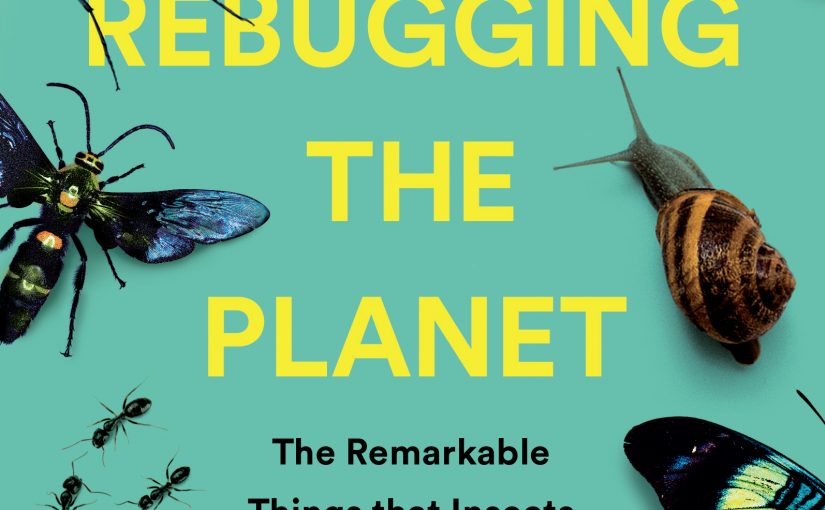
Rebugging the Planet | Vicki Hird is an experienced and award-winning environmental campaigner and researcher. In this excerpt from her latest book, “Rebugging the Planet: The Remarkable Things that Insects (and Other Invertebrates) Do – And Why We Need to Love Them More,” Vicki introduces the importance of bugs to a healthy landscape and lays out a blueprint for ecological restoration and sustainability.
Why Rewildling Our Landscapes Needs to Include Bugs
What is rewilding? Basically, it’s the attempt to recreate the natural ecological systems that once covered our landscapes — woods, rivers, wetlands — and trusting nature to look after itself, perhaps with some help at the start to fix the most broken pieces.
Many rewilding projects are large in scale, to allow nature to really do its stuff without interference and pollution from us. It is about vast estates and landscapes, large herbivores or carnivores and huge decisions made by distant landowners or institutions. These are invaluable. But is not always about completely removing people — after all, humans are part of the natural world.
Instead, we need to find new ways to live while reconnecting with the ecosystems we live in, creating a richer world in which people and nature can thrive together. We can live alongside more bees, worms and flies, and I believe there is a benefit to taking the debate on rewilding down to the tiny scale of some of the smallest creatures on the planet.
Invertebrates are core to any rewilding project: ideal foot soldiers for the cause at every level as they travel, adapt and multiply so brilliantly. And, aside from farmed honeybees, silk moths and biological control agents, almost all the invertebrates we encounter, wherever we encounter them, are wild. They may be there because we created the environment for them, but they are not domesticated or tame — or even that interested in us.
How Does Rewilding Help Bugs?
Rebugging is looking at the ways, small and large, to nurture complex communities of these tiny, vital players in almost all the natural and not-so-natural places on earth. It means conserving them where they are managing to hang on, and restoring them where they are needed as part of a rewilding movement. And it means putting bugs back into our everyday lives, our homes and where we play and work.
But what does “good” look like for the bugs? We need to better know what the “perfect” habitats and conditions would be for bugs to thrive: the baselines against which recent losses occurred. We can’t tell what the true losses are as we don’t know what was there before people arrived, or even a hundred years ago. But how exciting to discover more new insect habitats through rebugging, as we let nature make its way.
Even rewilding a relatively small area can create something akin to the original habitats of the invertebrates, and we will discover so many intriguing aspects in the process. Rewilding projects are already throwing up some challenges to our previous knowledge about their favored habitats as species take to a habitat in a rewilded area that we had no idea they liked.
Viki Hird (photo by Tim Rice)
Bringing Back Lost Species
Which animals belong where is a fascinating issue in rewilding. It can involve reintroducing a species to re-establish it or to boost numbers of a native animal or plant at risk of going extinct. Or it can be about recreating an ecosystem that has got out of balance, such as a flood plain that needs the plants and animals back to slow water flow.
Would we want to bring invertebrate species back into countries and regions that have lost them? The removal of keystone species — a species that is fundamental to the existence of a particular ecosystem — can be catastrophic for a wild ecosystem, but reintroduction can work in unforeseen ways.
The reintroduction of wolves to Yellowstone National Park in the western U.S. created unexpected and positive results for the park ecology. When wolves were removed from the park 70 years ago, elk overgrazing became a problem and only resolved when the wolves were reintroduced, and so elks were naturally managed better. But there was a further impact: beaver populations grew now that their willow trees were not overgrazed by the elk. This created new fish and water invertebrate habitats, which then influenced other species feeding on the bugs and fish. Everything is connected, and while many focus on the furry vertebrate species, we need to recognize and nurture the bugs, too, as vital parts of the arrangement.
Beavers are also being reintroduced into UK river systems, leading to new habitats, more diversity, and even floodwater management and boosting green tourism. Sometimes iconic species can be hugely important for building public support for conservation, but also can help fund projects through carefully managed tourism.
But what about invertebrates? Rebugging could allow species lost to an area to be introduced successfully and this is indeed happening.
Given their size and ability to produce numerous offspring quickly, invertebrates have the wonderful ability to recolonize far more quickly when they spot the opportunity than larger species. Just take the aphid, which can produce five to 10 offspring every day. The African driver queen ant can produce an estimated three to four million eggs a month. And they do not need so much careful handling as, say, a wolf.
However, it makes sense also to focus on protecting the native bug species that are still in their habitats, but are just hanging on in pockets of scrub, hedgerows or small woodlands, and even urban parks, where once their habitats would have been far more widespread. And they can help rewild the small spaces as well as the big ones.
The School of Rebugging
Critical to keeping places wild and protected will be helping people to have a stronger relationship with nature. Making public access safe and easy in rewilded space will help create a movement for rebugging. Great wilderness parks such as the 63 federally designated U.S. national parks present a whole other level of invertebrate opportunity. As these areas are managed by government bodies largely for wildlife, rather than farming or other purposes, they can be described as wild — and over 80% of the areas involved are managed as wilderness.
They maintain some of the best habitats, perfect for invertebrates to thrive. This is an extraordinary asset, but one which compares dramatically with other land management in the U.S.: the empty prairies and often car-filled cities, where insects and other invertebrates are subject to massive pressures from industrial farming, pollution and development.
Take the sub-arctic Denali National Park and Preserve in Alaska where there is an abundance of invertebrates such as bees and flower flies. People visit this park to see the grizzly bears but the other fur-covered animals should also gain attention. Alongside the flies, the bumblebees are critical for pollination and they have recently found a new species of bumblebee in this park — always an exciting moment.
These are keystone species and the Denali park’s grizzly bears, caribou and wolves would not survive without the bugs because they all need the wildflowers and shrubs for their food or the food of their prey. The grizzlies in particular need the bees to pollinate the blueberries, one of the bear’s main foods. As we know, honeybees are under threat globally, so it is vital that we protect the other pollinators like bumblebees so they can pollinate both wild plants and farmed crops.
Wildlife parks do have threats such as the pressure of visitors, especially at peak holiday periods. Other dangers respect no boundaries — for instance, climate change, illegal hunting and invasive species. But these places provide a fantastic way to conserve bugs in their natural world and to show what they can do.
Rebugging Actions
The joy of rebugging is that you can do it almost anywhere. Give people the chance to act and to encourage some bees, or even hummingbird hawkmoths, in a green patch of land, and you can start to change hearts and minds. From a Costa Rican municipality giving bees citizenship to an amazing three thousand food-growing spaces making space for nature in London, it is possible — and it is happening.
The “rebugging” title of this book was inspired by another, recent book Rebirding: Rewilding Britain and its Birds by Benedict Macdonald, who argues that to have more birds around, larger mammals must be allowed to do their work and re-engineer the landscapes. Letting nature heal itself and letting it get messy is key to a revival in birds and other species. If we can use the lens of birds and beavers to understand rewilding, we should also use bugs.
About Vicki Hird
Vicki Hird is Head of the Sustainable Farming Campaign for Sustain: The Alliance for Better Food and Farming, and she also runs an independent consultancy. An experienced and award-winning environmental campaigner, researcher, writer and strategist working mainly in the food, farming and environmental policy arenas, Vicki has worked on government policy for many years and is the author of Perfectly Safe to Eat?: The Facts on Food. Vicki has a masters in pest management and is a fellow of the Royal Entomological Society (FRES).
At the core of the impact of climate change are communities that live at the nexus of systemic violence. Gender, race, class, ability, and other socio-economic variables factor into one’s experience of climate destabilization. Building a sustainable climate justice movement means centering the needs of those who bear the chief impact of the problem. One of this year’s Brower Youth Award winners, Alexia Leclercq, an environmental justice organizer based in Austin TX, and NYC, shares her passion for these rarely discussed aspects of intersectionality.
Here in the U.S., we’re all told to recycle if we care about the environment. Mainstream environmental groups, many founded in the late 19th or in the 20th century by white middle-class lobbying groups, usually encouraged individual actions and the preservation of national parks as solutions to the climate crisis. They didn’t take social justice into consideration, and the creation of those national parks in a number of cases directly led to the displacement of Indigenous folks who had lived sustainably in those places for centuries. And campaigns for recycling fail to mention that only 9% of plastic actually gets recycled and that a lot of it was being dumped abroad. These recycling campaigns in fact often wind up helping corporations create and sell more plastic.
Currently, around 100 corporations are responsible for about 70% of emissions. Their actions result in mass ecocide, spewing toxic waste and spilling millions of gallons of crude oil, leaving hazardous waste on forest floors. These practices are illegal, but corporations get away with it because their interests are so often above the law.
When we address environmental issues as separate from social justice issues, things like environmental racism are ignored. Environmental racism is the fact that people of color disproportionately live next to polluting industries, leading them to suffer from far more than their share of extreme health issues such as cancers and respiratory diseases. Because of this, environmental justice organizers came together in the 1990s to create their own movement, the Environmental Justice Movement, because they had been left out of the mainstream environmental movement.
If we are going to achieve climate justice, we are going to have to address the systems of oppression that caused the climate crisis in the first place, and these include capitalism and colonialism. These are systems that encourage the exploitation of land and labor in order to accumulate wealth. To cite only one example, British colonialists transformed the Malay Peninsula into a plantation economy to meet industrial Britain and America’s need for cheap rubber, leading to extreme deforestation. Recovery from this sort of extensive devastation perpetrated on native ecosystems is extremely difficult. The great colonial powers created a global infrastructure in which countries from the Global North ruthlessly exploited countries from the Global South for resources while simultaneously destabilizing their Indigenous and local cultures. This pattern is still in place. Today, Indigenous groups make up 5% of the global population but preserve 80% of the planet’s biodiversity on their remaining territories, so we need to support them in the defense of their lands and cultures and look to them for solutions.
Social justice is climate justice because the root causes of social and environmental destruction are the same. For example, the redlining by banks of black neighborhoods, which prevented people in those communities from building wealth, also allowed, through related zoning policies, companies and governments to place their most polluting facilities in those same neighborhoods. And police brutality, which we think of as strictly a social justice issue, is also an environmental justice issue because many Indigenous land defenders are attacked by law enforcement here and are frequently murdered in countries such as the Philippines and Colombia and throughout Central America and around the world for their activism.
The climate crisis is predominantly a result of our global economic system. If we don’t address how people of color are disproportionately impacted by a ravaged environment and we aren’t willing to face the fact that a small group of giant corporations are directly responsible for much of the planet’s pollution and habitat degradation and climate destabilization and that our governments continue to support those corporations (and in some cases will literally go to war, such as in Iraq, where they killed perhaps two million people in order to maintain those corporations’ control of oil), we won’t get anywhere. If we don’t center social justice in the fight for climate justice, we will fail to tackle climate change.
A wide range of justice movements, such as disability rights and economic, racial, LGBTQ and gender justice, need to be linked. Just to cite the example of disability justice, which is almost never talked about in the context of discussions around climate: a lot of disabled folks are often left out of climate emergency plans. We need to understand we are all in this together, and if we leave whole groups behind, we won’t win.
So, what do we do? There are a lot of things that need to be done and can be done. On my end, I co-created a group called Start: Empowerment, a social and environmental justice education nonprofit that seeks to bridge the gap between education and action, that seeks to educate people about these issues and the systems of oppression we need to dismantle using a wide range of approaches, including formal and informal education, storytelling and sharing the voices of community elders.
I am also an organizer with a local environmental justice organization in Austin, Texas called PODER. I urge every single one of you to either join or to support in some way a grassroots environmental justice organization. Volunteer your skills or donate. There are many ways to get involved in supporting people in frontline communities most directly impacted by the crises we are facing, and by helping them now, you will be helping all of us down the line.
At the end of the day, social justice and climate justice are not separate; they are one in the same, so we can’t fight them separately, we have to fight them together, but I believe we can create a new world based on community care and sustainability.
With a seemingly insurmountable mantle defined by climate change, systemic racism, and corruption, youth activists are nurturing a sustainable future for all. Growing up frustrated with inaction by adults and with the rest of their lives at stake, youth activists are a crucial force in the movement to transform our reality. Student PIRGs (Public Interest Research Groups) are working to train the next generation of activists, and Alex Gordon, one of these young activists, a winner of this year’s prestigious Brower Youth Award for her organizing prowess on the “Break Free from Plastic Pledge,” voter registration drives and other student power initiatives, shares her experiences as a young person working to create a world that can work for everyone.
My name is Alex Gordon. I’m in my fourth year at Eckerd College (in St. Petersburg, Florida), and I organize with the Student PIRGs (Public Interest Research Groups) to empower and train the next generation of youth activists.
I started doing activism work with absolutely no idea of what organizing was. I’m originally from Houston, Texas, so I’m definitely no stranger to the impact of climate change, and while I was growing up, I always wanted to make a difference, but I really just didn’t know how to go about it, so when I first found Florida PIRG students at my campus, I was really excited because I could see that that organization offered me a way to finally get to take action. I got trained on all the basics of grassroots organizing, and I jumped into our voter registration campaign. The work we did that semester helped increase voter turnout by 350%, and seeing the impact that just a small group of students could have on an entire city really empowered me, so after working on voter registration and turnout, I decided to tackle plastic pollution at Eckerd.
And to make a long story short, after months of campaigning, we were ultimately successful, and the president of Eckerd signed what’s called the “Break Free from Plastic Campus Pledge.” This was the first and most stringent campus-wide purchasing guideline to be enacted in the nation. It effectively eliminated the purchase of all non-essential, single-use plastics on our campus, and it all started with me not even knowing what organizing was. And that passion for tackling plastic pollution grew into something much bigger than success on one campus. Working with the national PIRGs network of student-run and mostly student-funded, non-partisan, nonprofits, I started building a movement of young people who would tackle the plastic pollution crisis on their own campuses all over the country. And doing that national work really helped me see that, at the end of the day, organizing for environmental protections was more than just working on one issue or problem: it was really about bringing young people, who are so often sidelined in conversations dealing with our future, into a space where we could make the changes we want to see.
If we want to take huge action, we all have to start somewhere. For some folks, that can involve organizing at the state level or on national policies, but for many of us, it’s addressing the immediate needs in the communities we live in. And for students, that’s often on our campuses, and there are many issues that need addressing on campuses. To name just one that I’ve worked on, students shouldn’t have to choose between their next meal and being able to pay for their course books. In general, young people should feel that they have a voice in our democratic process and are able to use that voice.
My generation is the largest and most diverse in the history of the United States. We are going to be the ones most impacted by the climate crisis, and we are inheriting a world with a lot of huge problems all around us. It can be daunting to even think about: how can we even begin to tackle those immense challenges? I think that it’s going to take young people recognizing our power, getting the resources and the skills that we need to harness that power, and then ultimately organizing to create the change that we deem necessary, starting in our local communities. There has never been a large successful movement for change without young people.
Campuses are potential powerhouses. They have always served as incubators and avenues for change. Campuses are little microcosms of our larger communities, so models that can spread to cities and states can be initiated there. Colleges have a lot of purchasing power and influence in their communities and a lot of students and employees, and groups such as our PIRG chapters have been able to leverage that power and influence. By building a culture of agency among students on campuses, we can create much longer-lasting, sustained change. Successful campaigns such as the one to get the entire University of California system to phase out single-use plastics, efforts to stop the automatic textbook billing that leaves students without a choice and broke, and lobbying at the state and even national levels to make higher education more affordable, have shown over and over that students can be highly effective agents for change when they’re organized and empowered. It all starts when young people decide we want to do something, but to build that impulse into effective action, we need support and resources.
I started working on voter registration, not because I knew I wanted to be an organizer, but because I was searching for a way to protect my future. I was then invested in by an organization that saw the value of my story and my voice, and by working on the campaigns that I do, I’ve been able to bring other young people into the change-making process. The more young people there are working for change, the better our world will be. Imagine if all of the passionate students across the globe were given the support and the tools they needed to organize effectively. We young people today feel the weight of the world on our shoulders, but often we don’t have the tools or the training we need to do something about it. Having access to those tools and that support is not a reality we should be having to imagine, but one that should be the standard.
Although a new year signifies new beginnings, many of the challenges we face are years in the making. This week, we are highlighting innovative work from Deanna Van Buren and Rupa Marya, two leaders at the forefront of architecture/design and medicine, respectively, who are challenging our failing approaches to our justice system and to public health. By transforming how we relate to care and community, these leaders are creating a blueprint for a future of profound equitable healing.
Deep Medicine for Bodies and a World Inflamed: Healing Requires the Right Diagnosis | Rupa Marya
Our world, our bodies, and our society are inflamed with mass uprisings in the wake of racist violence and climate change induced illnesses. In this presentation, physician and activist Rupa Marya explores how structural injustice affects human and environmental health and calls for the right diagnosis to create deep healing.
Designing Spaces for Justice & Care | Deanna Van Buren
Our nation’s current punitive architecture is designed with cruelty compounded by a criminal justice system that disproportionately impacts communities of color. Architect Deanna Van Buren committed her life to create spaces that harness care and restorative justice. As co-founder and Executive Director of the Oakland-based architecture and real estate development non-profit Designing Justice + Designing Spaces (DJDS), Deanna works to counter the traditional adversarial and punitive architecture that characterizes our legal system by creating spaces and buildings that enable Restorative Justice, community building, and housing for people coming out of incarceration.
Achieving profound socio-economic, environmental, and political changes calls for radical and intensive re-visioning of our world. In this conversation, Rupa Marya and Deanna Van Buren weave together their respective knowledge in medicine, architecture, and law to share how their work can radically transform professional paradigms.
How can we reconnect with water and understand our relationship with water bodies based on values of kinship? In this unique online course from Guardians Worldwide, learn from practitioners from many different nations about traditional water knowledge and global confluences of water thinking. Want to become a River Guardian? Use code “bioneers20” for an exclusive 20% discount.